广告
加载中

小鹅通AI管家再升级 新增四项店铺经营对话操作技能

龚作仁 2026-10-15 15:11
龚作仁 2026/10/15 15:11

邦小白快读

EN
全文速览

总1:AI管家新增考试管理、店铺装修、优惠券管理、邀请码管理四项对话技能,商家用自然语言就能完成操作,不用频繁切换后台。

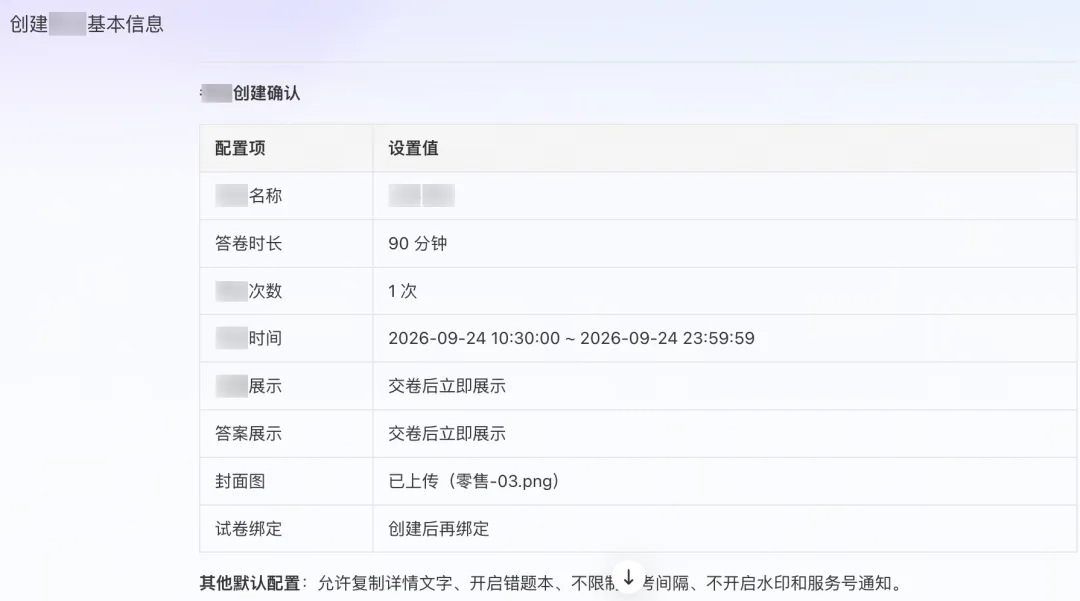
1.考试管理:可对话查询发布状态、参与人数;新建考试只需确认名称、时长、可考次数、起止时间,其余默认,确认后发布。

2.店铺装修:描述场景或指定行业模板,AI自动匹配模板,用轮播图、导航、商品列表、会员组件生成页面;创建前核对页面名称和板块顺序,生成后提供访问和编辑链接。

3.优惠券管理:四类券均支持对话创建,AI核对名称、门槛、数量、有效期并自动校验金额折扣;可查询领取核销数据,定向发放前预估触达人数,支持暂停补发。

4.邀请码管理:确认挂载资源后AI创建邀请码、统计领取状态和使用明细,直接提供领取和编辑链接。

总2:注意边界:删除停用编辑已发布考试、录入考核内容还要回管理台;实物商品、服务商品、线下活动邀请码需手动创建;作废二维码一次只能作废一个。AI解决重复操作,复杂修改还需人工兜底。

总1:对品牌商,核心价值是营销活动上线更快,运营人力可转向选品和内容策略。

1.页面高效搭建:用描述需求让AI匹配行业模板并生成页面,核对页面名称和板块顺序后发布,适合上新和节点促销快速换页。

2.用户分层运营:优惠券支持通用券、专属券、礼品券、兑换券;专属券可做会员定向关怀,礼品券和兑换券可与赠品、积分活动结合,带动复购和活跃。

3.互动营销与分发:考试管理可做品牌答题互动,发布后直接给链接,增加停留时长;邀请码创建后统计领取状态和使用明细,适合限量体验、种子用户招募和私域推广。

4.数据可追踪:经授权可查询优惠券领取核销、考试参与人数、邀请码使用明细,为营销效果评估提供数据。

总2:文章显示AI已覆盖内容、实时互动、经营数据与交易场景。品牌商可把对话式操作嵌入日常运营,但要留意实物商品、服务商品和线下活动的邀请码仍需手动创建,已发布考试的删除编辑也须回管理台,重要操作要保留人工确认。

总1:文章没有涉及平台政策调整,干货是平台工具升级带来的操作提效和机会点。

1.提效点:考试管理支持对话查询和创建考试,确认后直接发;店铺装修可描述需求自动生成页面,生成后给编辑链接;优惠券管理支持四类券、数据查询、定向发放、暂停补发;邀请码从创建到修改由AI辅助并返回领取编辑链接。

2.风险提示:已发布考试删除、停用、编辑和录入考核内容需回管理台;实物商品、服务类商品、线下活动的邀请码需手动创建;作废二维码单次只能作废一个。

3.机会点:定向发券前预估触达人数,适合私域精准营销;邀请码统计使用明细,可用于裂变追踪。实物类卖家若做线下活动邀请码,要提前安排人工创建。

4.可学习点:把常见操作转为自然语言指令,熟悉AI核对项目可减少表单错误;店铺装修可反复提调整,适合低成本测试多版本页面。

总1:工厂类读者如果自建电商或分销渠道,这篇文章有两点可直接参考:一是店铺页面搭建越来越依赖模板和描述式操作,工厂应把产品素材按组件化思路整理;二是实物商品相关操作仍有手动限制,需要提前规划人力。

1.产品素材要求:AI装修店铺时调用轮播图、图文导航、商品列表、会员组件,工厂做电商素材时可以把产品图、卖点文案按这些组件拆分,方便快速套入模板。

2.培训与促销结合:考试管理可用于经销商培训考核,能用对话方式创建考试,减少行政成本;优惠券支持四种券型,适合工厂电商试水会员专属价、以旧换新等玩法。

3.邀请码与实物业务:邀请码可以由AI创建,但实物商品、服务商品、线下活动对应的邀请码必须在管理台手动创建。工厂若用邀请码做样品申请、线下订货会或售后服务,要安排运营人员手工配置,且作废二维码一次只能作废一个。

4.数字化电商启示:AI管家已覆盖内容、实时互动、经营数据与交易场景,说明电商工具正把重复操作标准化。工厂数字化不必先追求大系统,可从推广、考试、发券这类小场景切入,用对话式工具减轻后台负担,把人力集中到生产与产品迭代上。

总1:这篇文章给服务商的启发很直接:客户在店铺运营中的痛点是步骤琐碎、入口分散、反复填表;解法是在统一对话入口中加入考试管理、店铺装修、优惠券管理、邀请码管理四项技能,背后是AI操作加人工确认的落地模式。

1.客户痛点:运营人员大量时间消耗在编排考试、搭建活动页、创建优惠券、批量发邀请码等操作上,需要多个后台入口反复切换,成本高、易出错。

2.新技术方向:自然语言对话成为操作入口;AI自动匹配行业模板和组件,自动校验金额、折扣、时间格式;创建后返回访问链接和编辑链接,减少查找入口的时间。考试从查询到发布、优惠券从创建到数据统计、邀请码从创建到使用明细,均可对话完成。

3.解决方案边界:AI在页面生成前会核对布局方案,优惠券定向发放前预估触达人数,强调人在环路;但删除、停用、编辑已发布考试,录入考核内容,实物商品和服务类商品邀请码创建,作废二维码等仍需要管理台人工处理。服务商设计类似产品时应保留风险操作的管理台兜底,并在对话流中做明确确认。

4.行业趋势:AI能力不再局限于内容生成,而是扩展到了内容、实时互动、经营数据与交易等店铺运营场景;服务商可围绕具体运营动作的对话化开发差异化效率工具,而不是只做通用客服或内容生成。

总1:这次升级给平台商的启示是:用AI助理把分散的后台操作统一收口,可以显著降低商家运营成本,同时增加平台工具的粘性。值得关注的是它的功能组织方式和风险控制。

1.平台最新做法:不是新开多个功能模块,而是在AI管家中新增考试管理、店铺装修、优惠券管理、邀请码管理四项对话操作技能,商家用自然语言描述需求即可完成任务,页面生成后主动返回链接。

2.运营管理价值:商家减少切换后台、查找入口的耗时,会将更多精力投入业务经营与客户维护;平台可通过这类能力沉淀商家对对话式操作的信任,带动更多付费转化。

3.功能覆盖逻辑:AI管家已覆盖内容、实时互动、经营数据与交易等店铺运营场景,说明平台在从提供工具向提供运营助理演进。平台商可借鉴这种按场景扩展的做法,先挑高频重复操作落地。

4.风险规避要点:高风险操作仍保留管理台,例如已发布考试的删除、停用、编辑,实物和服务类邀请码手动创建,二维码单次作废;对话操作在关键节点会与商家核对并需授权,比如查询考试、优惠券数据前授权。平台商应把授权、确认和撤回机制设计好,避免AI误操作引发资损或内容事故。

5.招商与生态:文章虽未直接写招商政策,但这类能力会增强平台对中小商家的吸引力,也可成为平台服务差异化卖点;平台商可关注如何以AI能力辅助新手商家上手,降低开店运营门槛。

总1:这篇文章提供了一个观察产业SaaS与AI Agent落地方式的样本:AI管家从内容能力走向店铺经营场景,并在高价值操作中保留人工确认,反映了AI应用从生成内容到执行交易动作的延伸,以及自动化与风控的平衡。

1.产业新动向:对话式AI开始承担考试管理、店铺装修、优惠券管理、邀请码管理等具体经营操作,覆盖内容、实时互动、经营数据与交易等场景。产品策略不是一次性全自动化,而是把查询、创建、发放等流程拆解,逐项确认后执行。

2.商业模式演进:AI能力作为店铺运营的统一入口,用自然语言指令替代后台表单操作,可能带来SaaS商业模式的变化,从按功能模块收费转向按运营任务和AI调用深度增值。

3.新问题与治理启示:AI会在页面创建前核对布局、发放前预估触达人数、操作前需要授权;同时有些操作仍被明确留在管理台,如删除编辑已发布考试、实物商品邀请码创建、二维码单次作废。这提示未来AI代理的可靠性不仅依赖模型能力,还需要权限控制、确认机制和操作留痕。

4.数据与用户行为研究价值:系统统计考试参与人数、优惠券领取核销数据、邀请码领取状态和使用明细,可为研究者提供真实交易与互动行为数据基础。

5.政策法规建议方向:文章中的经授权后查询数据和确认后执行,已体现数据最小化与用户同意识别;建议进一步明确AI操作的责任归属、错误纠正渠道和日志审计要求,以支持规模化部署。

返回默认

声明:快读内容全程由AI生成,请注意甄别信息。如您发现问题,请发送邮件至 run@ebrun.com 。

我是 品牌商 卖家 工厂 服务商 平台商 研究者 帮我再读一遍。

Quick Summary

Summary 1: The AI assistant now adds four conversational skills—exam management, store decoration, coupon management, and invite code management—enabling merchants to complete operations in natural language without frequent backend switching.

1. Exam management: Query publication status and participant counts in conversation; create a new exam by confirming name, duration, allowed attempts, and start/end times, with the rest using defaults, then publish after confirmation.

2. Store decoration: Describe the scene or choose an industry template, and the AI automatically matches a template and generates a page with carousels, navigation, product lists, and membership components; before creation, it verifies the page name and section order, and after generation provides access and editing links.

3. Coupon management: All four coupon types support conversational creation; the AI verifies names, thresholds, quantities, and validity periods, and automatically checks amounts and discounts; it can query redemption and verification data, estimate reach before targeted distribution, and support pausing and reissuing.

4. Invite code management: After confirming attached resources, the AI creates invite codes, counts claim status and usage details, and directly provides claim and editing links.

Summary 2: Note the boundaries: deleting, deactivating, or editing published exams and entering assessment content still require returning to the dashboard; invite codes for physical goods, service products, and offline events must be created manually; QR codes can only be voided one at a time. AI handles repetitive operations, but complex modifications still require human fallback.

Summary 1: For brands, the core value is faster marketing campaign launch, with operations staff freed to focus on product selection and content strategy.

1. Efficient page building: Describe needs to have the AI match an industry template and generate the page; review the page name and section order before publishing—ideal for rapid page changes during launches and seasonal promotions.

2. Segmented user operations: Coupons support general, exclusive, gift, and exchange types; exclusive coupons can be used for targeted member care, while gift and exchange coupons can pair with giveaways and points programs to drive repeat purchases and engagement.

3. Interactive marketing and distribution: Exam management enables brand quizzes; once published, a link is provided to increase dwell time; after invite codes are created, claim status and usage details are tracked, suitable for limited experiences, seed-user recruitment, and private-domain promotion.

4. Trackable data: With authorization, merchants can query coupon claims/redemptions, exam participation, and invite-code usage, providing data for marketing effectiveness assessments.

Summary 2: The article shows that AI now covers content, real-time interaction, business data, and transaction scenarios. Brands can embed conversational operations into daily workflows, but note that invite codes for physical goods, service products, and offline events still require manual creation, and deleting or editing published exams must return to the dashboard; important operations should retain human confirmation.

Summary 1: The article does not address platform policy changes; the practical value lies in the operational efficiency gains and opportunities from the platform tool upgrade.

1. Efficiency gains: Exam management supports conversational queries and creation, publishing directly after confirmation; store decoration auto-generates pages from described needs and returns an edit link; coupon management supports four coupon types, data queries, targeted distribution, and pause/reissue; invite code creation to modification is AI-assisted and returns claim/edit links.

2. Risk notes: Deleting, deactivating, editing published exams, and entering assessment content require returning to the dashboard; invite codes for physical goods, service products, and offline events must be created manually; voiding QR codes is limited to one at a time.

3. Opportunities: Reach estimates before targeted coupon distribution suit precision private-domain marketing; invite-code usage tracking enables referral tracking. Sellers of physical goods running offline events should schedule manual creation in advance.

4. Learnings: Turning common operations into natural-language commands and familiarizing oneself with AI verification steps can reduce form errors; store decoration allows repeated adjustments, making it suitable for low-cost testing of multiple page versions.

Summary 1: For factory readers operating their own e-commerce or distribution channels, this article offers two directly relevant points: store page building increasingly relies on templates and descriptive operations, so factories should organize product materials into a component-based structure; and operations related to physical goods still have manual limits, requiring planned staffing.

1. Product material requirements: AI-powered store decoration uses carousels, image-text navigation, product lists, and membership components. When factories prepare e-commerce materials, they can break product images and selling-point copy into these components for faster template integration.

2. Training and promotions: Exam management can support dealer training and assessment via conversational exam creation, reducing administrative costs; coupons support four types, suitable for factory e-commerce experiments with member-exclusive pricing or trade-in programs.

3. Invite codes and physical-goods business: Invite codes can be created by AI, but those for physical products, service products, and offline events must be created manually in the dashboard. If factories use invite codes for sample requests, offline ordering meetings, or after-sales service, they need staff to configure them, and QR codes can only be voided one at a time.

4. Digital e-commerce implications: The AI assistant now covers content, real-time interaction, business data, and transaction scenarios, showing that e-commerce tools are standardizing repetitive operations. Factory digitization need not start with a large system; it can begin with small scenarios such as promotions, exams, and coupon distribution, using conversational tools to reduce backend burden and focus manpower on production and product iteration.

Summary 1: The implication for service providers is direct: customers' pain points in store operations are fragmented steps, scattered entry points, and repetitive form-filling; the solution is to add four skills—exam management, store decoration, coupon management, and invite code management—into a unified conversational entry, underpinned by an AI-operation-plus-human-confirmation model.

1. Customer pain points: Operations staff spend significant time on arranging exams, building campaign pages, creating coupons, and batch-sending invite codes, requiring constant switching across backend entries—costly and error-prone.

2. New technology direction: Natural-language dialogue becomes the operation entry; AI automatically matches industry templates and components, validates amounts, discounts, and time formats, and returns access/edit links after creation, reducing time spent locating entries. From exam queries to publishing, coupon creation to data statistics, and invite-code creation to usage details, all can be done conversationally.

3. Solution boundaries: AI verifies layout plans before page generation and estimates reach before targeted coupon distribution, emphasizing human-in-the-loop; however, deleting, deactivating, or editing published exams, entering assessment content, creating invite codes for physical and service products, and voiding QR codes still require manual handling in the dashboard. Service providers designing similar products should keep manual fallback for high-risk operations and build explicit confirmation into the dialogue flow.

4. Industry trend: AI capabilities are no longer limited to content generation but extend to store-operations scenarios including content, real-time interaction, business data, and transactions. Service providers can develop differentiated efficiency tools by making specific operational actions conversational rather than focusing only on generic customer service or content generation.

Summary 1: The key takeaway for platform operators is that using an AI assistant to consolidate scattered backend operations can significantly reduce merchant operating costs while increasing stickiness to the platform's tools. The functional organization and risk control are particularly noteworthy.

1. Latest platform approach: Rather than adding multiple new feature modules, the platform has added four conversational operation skills to its AI assistant—exam management, store decoration, coupon management, and invite code management. Merchants describe needs in natural language to complete tasks, and links are automatically returned after page generation.

2. Operational management value: Merchants spend less time switching backends and locating entries, allowing them to devote more energy to business operations and customer maintenance; the platform can use such capabilities to build merchants' trust in conversational operations and drive more paid conversions.

3. Functional coverage logic: The AI assistant now covers store-operations scenarios including content, real-time interaction, business data, and transactions, indicating a platform shift from providing tools to providing an operations assistant. Platform operators can follow this scenario-based expansion approach, starting with high-frequency repetitive operations.

4. Risk mitigation points: High-risk operations remain in the dashboard—such as deleting, deactivating, or editing published exams, manual creation of invite codes for physical and service products, and one-by-one QR code voiding; conversational operations confirm with merchants at key points and require authorization, such as before querying exam or coupon data. Platform operators should design authorization, confirmation, and rollback mechanisms to prevent AI misoperations from causing financial losses or content incidents.

5. Merchant recruitment and ecosystem: Although the article does not directly discuss recruitment policies, these capabilities strengthen the platform's appeal to small and mid-sized merchants and can become differentiated service selling points. Platform operators should consider how AI capabilities can help onboard new merchants and lower the barrier to store operation.

Summary 1: This article provides a sample for observing how industrial SaaS and AI agents are deployed: the AI assistant is moving from content capabilities into store-operations scenarios, while retaining human confirmation for high-value operations, reflecting the extension of AI applications from generating content to executing transactional actions, and the balance between automation and risk control.

1. Industry developments: Conversational AI is beginning to handle specific operational tasks such as exam management, store decoration, coupon management, and invite code management, covering content, real-time interaction, business data, and transactions. The product strategy is not full automation at once, but rather decomposing processes like query, creation, and distribution into steps and executing after step-by-step confirmation.

2. Business model evolution: AI capabilities serve as a unified entry for store operations, replacing form-based backend actions with natural-language commands, which may shift the SaaS business model from charging by feature module to charging by operational tasks and AI-call depth.

3. New issues and governance insights: AI verifies layouts before page creation, estimates reach before distribution, and requires authorization before operations; meanwhile, some operations remain explicitly in the dashboard, such as deleting or editing published exams, creating invite codes for physical goods, and one-by-one QR voiding. This suggests that the reliability of future AI agents depends not only on model capability but also on permission controls, confirmation mechanisms, and operation trails.

4. Value for data and user behavior research: The system tracks exam participation, coupon claim/redemption data, and invite-code claim status and usage details, providing researchers with real transaction and interaction behavior data.

5. Suggested policy and regulatory directions: The article's practices of querying data after authorization and executing after confirmation already reflect data minimization and user-consent identification; it is recommended to further clarify accountability for AI actions, error-correction channels, and logging/audit requirements to support large-scale deployment.

Disclaimer: The "Quick Summary" content is entirely generated by AI. Please exercise discretion when interpreting the information. For issues or corrections, please email run@ebrun.com .

I am a Brand Seller Factory Service Provider Marketplace Seller Researcher Read it again.

商家在开展日常店铺运营时,大量时间消耗在步骤琐碎、需要反复调整的操作中。编排考试、搭建活动页面、创建优惠券、批量发放邀请码等工作分散在后台不同入口,需要多次点击、反复填写信息,增加运营操作成本。近期,小鹅通AI管家完成能力升级,在AI管家对话能力中新增考试管理、店铺装修、优惠券管理、邀请码管理四项实操技能。商家可以在统一入口用自然语言描述业务需求,无需频繁切换后台,完成多项店铺操作。

在考试管理模块,AI管家支持从查询到发布的对话式操作。商家向AI管家提出查询指令,经授权后,即可获取考试名称、发布状态、考核项、参与人数等信息,直接跳转考试编辑页面。新建考试不用填写冗长表单,仅确认名称、时长、可考次数、起止时间等核心信息,其余参数默认配置,确认信息后考试直接发布。删除、停用、编辑已发布考试,录入考核内容等操作仍需在管理台完成,AI管家会提供对应操作入口指引。

店铺装修功能支持商家用自然语言描述页面需求,AI管家自动匹配行业模板、挑选组件搭建页面。商家只需描述场景,或是指定行业模板,AI管家即可调用轮播图、图文导航、商品列表、会员组件生成页面方案。在AI管家执行操作前,会和商家核对页面布局方案,包含页面名称、板块顺序等内容,确认后才执行创建发布,中途可以随时提出调整需求;页面生成后,AI管家返回访问链接与编辑链接。

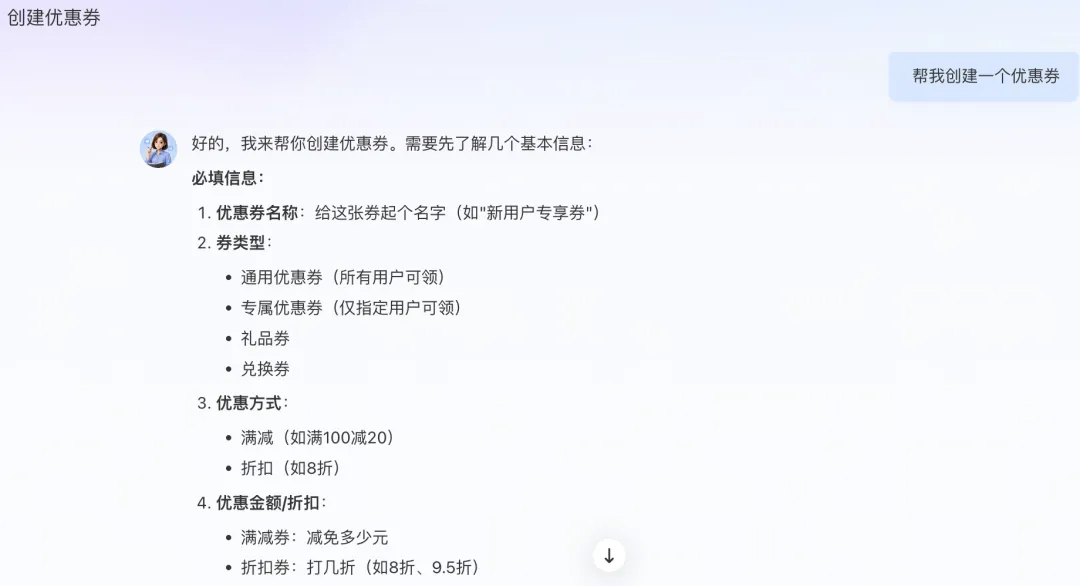
针对营销工具,AI管家新增优惠券管理能力,覆盖优惠券创建、定向发放与数据统计。通用优惠券、专属优惠券、礼品券、兑换券四类券型均可对话创建,AI管家逐项核对券面名称、门槛、发放数量、有效期等信息,自动校验金额、折扣、时间格式细节。经授权后,商家可以查询券的领取、核销相关数据;定向发放前AI管家预估触达人数,待确认后执行,同时支持暂停发放、重新补发。

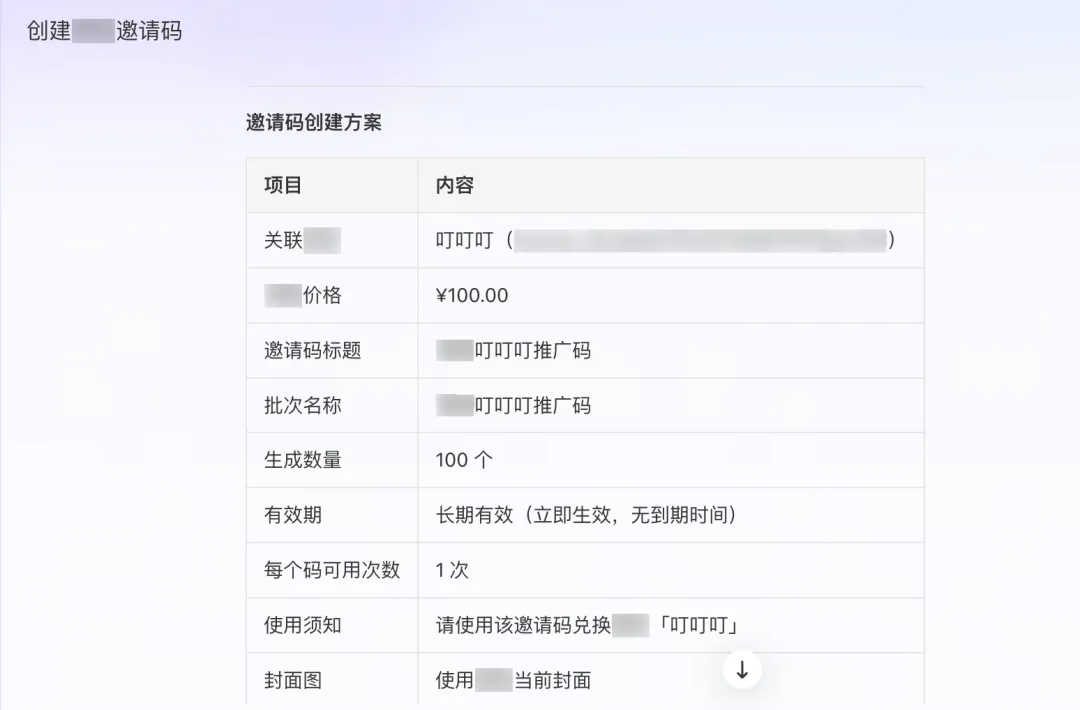
本次升级同步上线邀请码管理能力,邀请码从创建、发放到信息修改,均可由AI管家辅助完成。商家确认挂载资源后,AI管家可以创建邀请码,统计领取状态并整理使用明细,创建成功之后,领取链接和编辑链接会直接给到商家,无需前往列表翻找。实物商品、服务类商品、线下交流活动对应的邀请码,需要商家前往管理台手动创建;作废二维码目前仅支持一次作废一个。

持续扩展的AI能力,核心服务商家真实经营场景,依托沉淀多年的内容经营与用户服务能力,AI管家现已覆盖内容、实时互动、经营数据与交易等店铺运营场景。商家口述业务需求,借助AI辅助完成操作,减少切换后台、查找入口的耗时,帮助运营人员减少后台重复操作,将更多精力投入业务经营与客户维护,优化店铺运营流程。

注:文/龚作仁,文章来源:Laborer,本文为作者独立观点,不代表亿邦动力立场。

文章来源:Laborer

广告
微信
朋友圈

FAQ回顾

小鹅通AI管家是什么?能做什么?

小鹅通AI管家是小鹅通面向商家的智能运营助手,覆盖内容、实时互动、经营数据与交易等店铺运营场景。近期新增考试管理、店铺装修、优惠券管理、邀请码管理四项对话操作技能,商家可以用自然语言描述业务需求,由AI辅助完成操作,减少后台切换和重复操作。

小鹅通AI管家现在支持哪些店铺经营操作?

目前支持考试管理、店铺装修、优惠券管理、邀请码管理四项新增技能,同时覆盖内容、实时互动、经营数据与交易等场景。具体包括考试查询与创建发布、页面模板匹配与组件搭建、四类优惠券创建与发放统计、邀请码创建与使用明细整理等。

商家如何使用小鹅通AI管家完成店铺装修?

商家用自然语言描述页面需求,AI管家自动匹配行业模板、挑选轮播图、图文导航、商品列表、会员组件生成页面方案。执行前会核对页面名称、板块顺序等布局,确认后创建发布,生成后返回访问链接与编辑链接,过程中可随时提出调整需求。

小鹅通AI管家的优惠券管理支持哪些券型?

支持通用优惠券、专属优惠券、礼品券、兑换券四类券型对话创建,并逐项核对券面名称、门槛、发放数量、有效期等信息,自动校验金额、折扣、时间格式。经授权后可查询领取、核销数据,定向发放前预估触达人数,支持暂停发放和重新补发。

小鹅通AI管家相比传统后台操作有什么优势?

商家只需在统一入口用自然语言描述业务需求,AI管家即可辅助完成考试发布、店铺装修、优惠券创建、邀请码管理等操作,减少多次点击、反复填写和后台切换,帮助运营人员减少重复操作,将更多精力投入业务经营与客户维护。

这么好看,分享一下?

朋友圈 分享

APP内打开

赞 +1
+1
微信好友 朋友圈 新浪微博 QQ空间
关闭
收藏成功
发送
/140 0