





广告
加载中

中百罗森 300 家门店补货换新石器无人车 成本降 15%

龚作仁 2026-10-10 10:43
龚作仁 2026/10/10 10:43

邦小白快读

EN
全文速览

总:无人车正在改变城市便利店的补货方式,中百罗森用大半年时间验证了这一变化。

分:1. 中百集团自去年11月起用新石器无人车为300家门店补货,服务半径约35公里,配送成本下降15%以上,综合效率提高约20%,门店几乎没有物流投诉。

2. 无人车最大的好处是准时。它每天按计划停靠,店员不用再边理货边迎客。尤其在春节、暴雪、防汛等特殊天气里仍然能正常配送,保障了早高峰和午餐时段的商品供应。

3. 使用无人车不需要门店增加任何成本,店员的操作也很简单——网格员卸货,手机按一下就完成。对普通顾客来说,这意味着便利店的货品更新更稳定,临时缺货的情况会减少,5分钟解决一顿饭的体验更有保障。

总:中百罗森通过无人车物流升级,为品牌商展现了便利店业态在消费趋势、成本效率和渠道管理上的新打法。

分:1. 消费趋势:便利店是电商直播冲击下少数逆势增长的实体生意,用户追求24小时、近距离开店、5分钟解决一顿饭的即时满足,品牌商应重视配送准时性对消费体验的关键影响。

2. 成本与价格竞争:无人车帮助配送成本下降15%以上,效率提高约20%,品牌在价格竞争中可腾出更多空间,同时无需新增门店设备成本,一线员工也容易上手。

3. 渠道建设:中百先自营社超试点,再扩大到加盟社超,最后才上便利店,分阶段验证无人车,确保渠道各环节满意后再推广,这种稳妥的渠道建设思路值得品牌商借鉴。

4. 产品研发与合作:新石器冷链无人车已控制货损率在5%以内,未来中百罗森将叠加夜间错峰配送和冷链温控,品牌商可关注与新石器等无人车企业共建标准化配送样板。

总:无人车配送正在打开本地即时配送的新市场,卖家可从政策、需求、商业模式和风险等角度寻找机会。

分:1. 增长市场:报告显示2024年连锁店送货服务市场规模已达4862亿元,预计2026年突破6200亿元,说明物流配送需求持续上升,卖家布局无人车相关服务有市场空间。

2. 消费需求变化:便利店单店订货量少、网点密、补货频次高,对配送准时有硬要求。无人车能提频直发、复跑能力强,正好解决传统货车人累、效率低的问题。

3. 机会提示:新石器已在青岛、深圳开启夜间配送服务,并向双汇物流批量交付冷链无人车,冷链货损率低于5%,说明无人车在冷链和夜配场景正在落地,卖家可探索相关合作。

4. 可学习点:中百与新石器的合作采取自营试点、加盟扩大、便利店推广的分步模式,每次试点让相关方满意后再推进,这种验证需求再规模化的方法值得借鉴。

5. 风险提示:目前公开信息未涉及无人车购置成本和法规细节,卖家在跟进时需评估地方政策、路权以及特定天气下的适应性。

总:无人车大规模进入便利店物流,给工厂带来了明确的生产设计需求和数字化升级信号。

分:1. 产品需求:中百300家门店使用无人车补货,要求车辆具备强复跑能力,以扛住更大出货量。工厂在无人车整车、核心零部件和调度系统设计上,需要满足高频次、多网点的配送需求。

2. 设计需求:新石器向双汇物流交付的冷链无人车搭载L4级自动驾驶和专业冷链温控系统,货损率控制在5%以内,说明冷藏保温、温控监测等配套部件有真实采购需求。

3. 商业机会:连锁店送货服务市场规模2024年达4862亿元,且仍在增长,无人车及配套设备的市场前景可观,工厂可提前规划产能。

4. 数字化启示:中百将数字化列为未来三大核心策略,用数智化调度替代堆人堆车,工厂也应推进生产流程的数字化和自动化,提高对高效物流的适配能力。

总:无人车配送案例为服务商提供了行业趋势、技术方案和客户痛点的清晰参照。

分:1. 客户痛点:便利店单店量少、网点密、补货频次高,传统4米2货车需要司机、卸货员和跟车人员,人越跑越累,配送质量越低。这些痛点正是无人车方案的切入点。

2. 解决方案:无人车到店仅需一名网格员卸货,手机操作,提频直发后更准点,配送成本降15%以上,综合效率提高约20%,门店投诉基本消失。

3. 新技术:L4级自动驾驶、冷链温控系统已在冷链无人车中应用,货损率控制在5%以内;夜间配送服务在青岛、深圳开启,中转时效和城配成本得到优化。

4. 行业趋势:市场规模报告显示2024年连锁店送货服务达4862亿元,预计2026年突破6200亿元,物流正从堆人堆车转向数智化升级,服务商可相应调整产品组合。

总:无人车配送对平台商的运营管理、合作拓展和风险控制都有参考价值。

分:1. 运营管理:无人车支持提频直发,系统调度代替人工跟车,门店无需增加成本,物流服务更稳定。平台可借助无人车减少对司机的依赖,降低投诉率。

2. 平台做法:中百与新石器从自营社超试点到加盟社超,再扩展到中百罗森便利店,分阶段验证的方式降低了推广风险,平台商可参考这种渐进式落地策略。

3. 招商机会:新石器已在青岛、深圳开启夜间配送,并向双汇物流交付冷链无人车,说明无人车应用场景正从常温日配向夜间、冷链扩展,平台可借此吸引更多品牌商入驻。

4. 风险规避:目前应用仍以白天常温补货为主,夜间错峰配送和冷链温控还在规划中,平台商在引入时需根据实际场景充分测试,并关注路权、天气等风险。

总:中百罗森无人车案例提供了即时配送产业新动向与商业模式变革的实证样本。

分:1. 产业新动向:2024年连锁店送货服务市场规模达4862亿元,预计2026年突破6200亿元,物流供给正从堆人堆车转向数智化升级,无人车成为新增长点。

2. 商业模式:新石器从社超试点到300家门店推广,体现了市场先出现规模化需求、企业随后规模化交付的AI赛道逻辑,这种需求验证后再放量的模式值得研究。

3. 新问题:无人车复跑能力显著提升配送效益,但如何在特殊天气、夜间、冷链等复杂场景中保持稳定,以及如何制定与路权、保险相关的政策,仍是待解决问题。

4. 政策启示:中百作为供应链创新示范企业和国家级粮食应急保障企业,其无人车在暴雪、防汛等应急条件下的正常配送表现,为应急物流和供应链韧性政策提供了参考案例。

返回默认
声明:快读内容全程由AI生成,请注意甄别信息。如您发现问题,请发送邮件至 run@ebrun.com 。

我是 品牌商 卖家 工厂 服务商 平台商 研究者 帮我再读一遍。

Quick Summary

Overall: Unmanned vehicles are reshaping how convenience stores are restocked in cities, and Zhongbai Lawson has spent over half a year validating the shift.

1. Since last November, Zhongbai Group has used Xinqishi unmanned vehicles to replenish 300 stores, covering a service radius of about 35 km. Delivery costs have dropped by more than 15%, overall efficiency is up about 20%, and the stores have received almost no logistics complaints.

2. The biggest benefit is punctuality. Vehicles stop on schedule every day, so store staff no longer have to restock shelves while serving customers. During holidays, snowstorms, flood control, and other special conditions, deliveries still run normally, ensuring supply for the morning peak and lunch period.

3. Adopting unmanned vehicles requires no additional store costs, and staff operations are simple: a grid worker unloads the goods and completes the process with one tap on a phone. For ordinary customers, this means steadier shelf replenishment, fewer temporary stockouts, and a more reliable experience of getting a meal done in five minutes.

Overall: By upgrading its logistics with unmanned vehicles, Zhongbai Lawson offers brands a fresh playbook on consumption trends, cost efficiency, and channel management in the convenience store format.

1. Consumption trend: Convenience stores are one of the few physical retail formats still growing against e-commerce livestream competition. Users want 24/7 access, nearby locations, and instant gratification from a five-minute meal, so brands should pay attention to how delivery punctuality shapes customer experience.

2. Cost and price competition: Unmanned vehicles cut delivery costs by more than 15% and improve efficiency by about 20%. That gives brands more room to compete on price. The rollout requires no extra store equipment, and frontline staff can adopt it easily.

3. Channel building: Zhongbai first piloted unmanned vehicles in its self-operated community supermarkets, then expanded to franchised stores, and only afterward brought them to convenience stores. This staged validation ensures each link in the channel is satisfied before scaling—a cautious approach worth emulating.

4. Product development and partnerships: Xinqishi's cold-chain unmanned vehicles already keep damage rates below 5%. Zhongbai Lawson plans to add overnight off-peak delivery and cold-chain temperature control. Brands should watch for opportunities to build standardized delivery templates with unmanned vehicle companies like Xinqishi.

Overall: Unmanned vehicle delivery is opening a new market for local on-demand logistics, and sellers can find opportunities across policy, demand, business models, and risk.

1. Growth market: Reports put the 2024 chain-store delivery services market at RMB 486.2 billion, with expectations to exceed RMB 620 billion by 2026. Rising logistics demand leaves room for sellers to build unmanned-vehicle-related services.

2. Changing demand: Convenience stores order small volumes per store, have dense store networks, and restock frequently, creating hard requirements for on-time delivery. Unmanned vehicles enable higher-frequency direct runs and strong repeat-trip capability, solving the labor fatigue and low efficiency of traditional trucks.

3. Opportunity signals: Xinqishi has launched nighttime delivery in Qingdao and Shenzhen and delivered cold-chain unmanned vehicles in batch to Shuanghui Logistics, with cold-chain damage rates below 5%. This shows the technology is moving into cold-chain and nighttime scenarios, and sellers can explore related partnerships.

4. A useful playbook: Zhongbai's collaboration with Xinqishi followed a staged path—self-operated pilots, then franchised expansion, then convenience-store rollout, advancing only after each stage satisfies stakeholders. This validate-then-scale approach is worth borrowing.

5. Risk note: Public information so far does not cover vehicle purchase costs or regulatory details. Sellers should assess local policies, road-use rights, and performance in specific weather conditions before following this trend.

Overall: The large-scale entry of unmanned vehicles into convenience-store logistics sends manufacturers a clear signal about production design requirements and digital upgrading.

1. Product demand: With 300 Zhongbai stores using unmanned vehicles for replenishment, the vehicles need strong repeat-trip capability to handle larger shipment volumes. Manufacturers designing unmanned vehicles, core components, and dispatch systems must meet the requirements of high-frequency, multi-outlet delivery.

2. Design demand: The cold-chain unmanned vehicles Xinqishi delivered to Shuanghui Logistics feature L4-level autonomous driving and a professional cold-chain temperature-control system, keeping damage rates below 5%. This confirms real procurement demand for refrigeration, insulation, and temperature-monitoring components.

3. Commercial opportunity: The chain-store delivery services market reached RMB 486.2 billion in 2024 and is still growing, so the market outlook for unmanned vehicles and supporting equipment is promising. Factories can plan capacity in advance.

4. Digital upgrade lesson: Zhongbai has made digitalization one of its three core future strategies, using intelligent scheduling instead of throwing more people and trucks at the problem. Factories should also advance digitalization and automation in production to stay compatible with efficient logistics.

Overall: The unmanned-vehicle delivery case gives service providers a clear reference for industry trends, technical solutions, and customer pain points.

1. Customer pain points: Convenience stores have small volumes per store, dense networks, and frequent replenishment. Traditional 4.2-meter trucks require a driver, unloaders, and an accompanying staffer; the more they run, the more exhausted they become and the lower the delivery quality. These pain points are exactly where unmanned-vehicle solutions enter.

2. Solution: With unmanned vehicles, only one grid worker is needed to unload at each store, and the process is completed via mobile phone. Higher-frequency direct runs improve punctuality, delivery costs fall by more than 15%, overall efficiency rises about 20%, and store complaints essentially disappear.

3. New technologies: L4-level autonomous driving and cold-chain temperature-control systems are already deployed in cold-chain unmanned vehicles, with damage rates below 5%. Nighttime delivery has started in Qingdao and Shenzhen, improving transit efficiency and urban distribution costs.

4. Industry trend: Market-size reports show chain-store delivery services reached RMB 486.2 billion in 2024 and are expected to exceed RMB 620 billion by 2026. Logistics is shifting from labor-intensive models to digital and intelligent upgrading, so service providers should adjust their product portfolios accordingly.

Overall: Unmanned-vehicle delivery offers platform operators useful lessons in operations management, partnership expansion, and risk control.

1. Operations management: Unmanned vehicles support higher-frequency direct delivery, and system-based dispatch replaces manual ride-along supervision. Stores incur no additional costs, and logistics services become more stable. Platforms can reduce dependence on drivers and lower complaint rates by adopting unmanned vehicles.

2. Platform approach: Zhongbai and Xinqishi started with self-operated community supermarkets, moved to franchised stores, and then expanded to Zhongbai Lawson convenience stores. The staged validation model reduces rollout risk and is a useful gradual-landing strategy for platform operators.

3. Merchant recruitment opportunities: Xinqishi has launched nighttime delivery in Qingdao and Shenzhen and delivered cold-chain unmanned vehicles to Shuanghui Logistics. The application scenarios are expanding from daytime ambient-temperature delivery to nighttime and cold-chain operations, which platforms can use to attract more brands.

4. Risk avoidance: Current applications are still mainly daytime ambient-temperature replenishment; nighttime off-peak delivery and cold-chain temperature control are still in planning. Platform operators should test thoroughly based on actual scenarios and pay attention to road-access rights and weather risks before introduction.

Overall: The Zhongbai Lawson unmanned-vehicle case provides empirical evidence of new dynamics in instant delivery and business-model transformation.

1. New industry dynamics: The chain-store delivery services market reached RMB 486.2 billion in 2024 and is expected to exceed RMB 620 billion by 2026. Logistics supply is shifting from labor- and vehicle-heavy models to digital and intelligent upgrades, with unmanned vehicles becoming a new growth point.

2. Business model: Xinqishi moved from piloting in community supermarkets to rollout across 300 stores, illustrating an AI-market logic where scaled demand first emerges in the market and suppliers then deliver at scale. This validate-demand-before-scaling model deserves study.

3. Emerging questions: Unmanned vehicles significantly improve delivery efficiency through repeat-trip capability, but how to maintain stability in special weather, nighttime, cold-chain, and other complex scenarios, and how to design policies for road-use rights and insurance, remain open questions.

4. Policy implications: As a supply-chain innovation demonstration enterprise and a national-level grain emergency support enterprise, Zhongbai's unmanned vehicles delivered normally during snowstorms and flood-control conditions, offering a reference case for emergency logistics and supply-chain resilience policy.

Disclaimer: The "Quick Summary" content is entirely generated by AI. Please exercise discretion when interpreting the information. For issues or corrections, please email run@ebrun.com .

I am a Brand Seller Factory Service Provider Marketplace Seller Researcher Read it again.

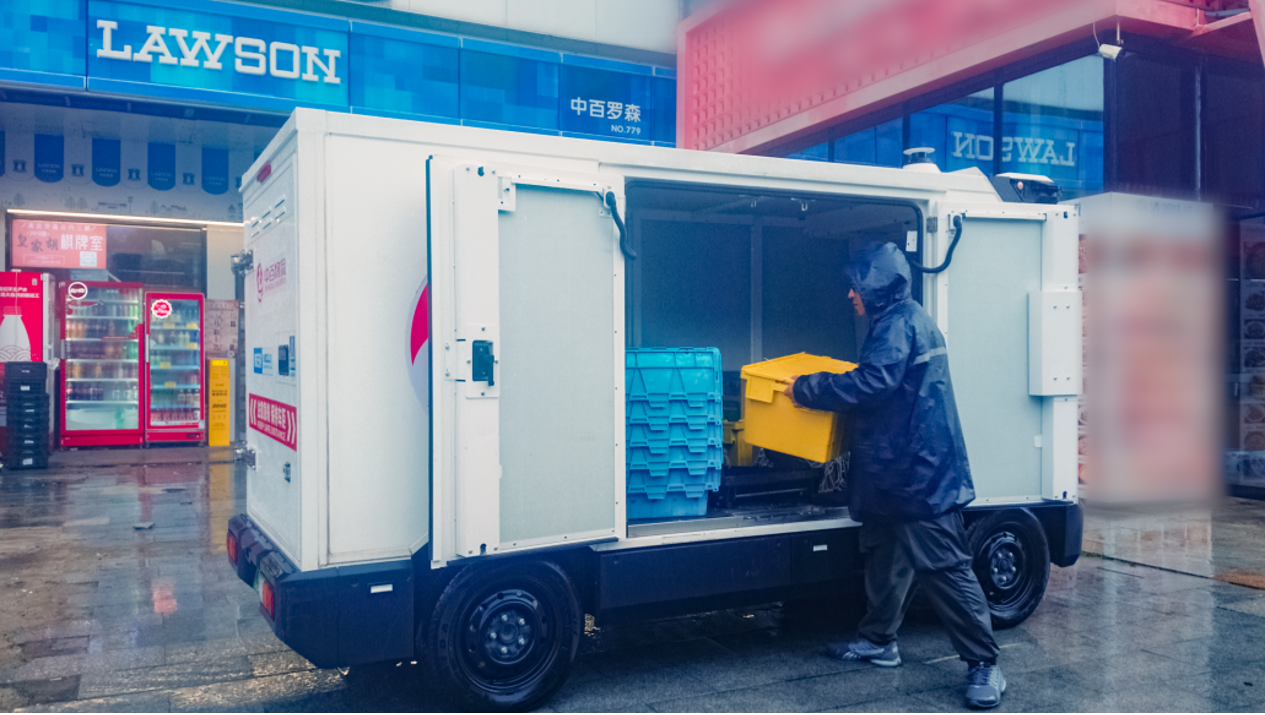
自去年11月起,中百集团开始用新石器无人车跑物流,服务半径约35公里,覆盖全城300多家各类门店。截至目前配送成本降了15%以上,综合效率提高了约20%,门店基本没再为物流打过投诉电话。

下午一点半,一辆无人车准时停靠到中百罗森东澜岸店前,网格员打开车门卸货,店员接着理货、补货,327件新品趁店里人不多时被码上货架,赶在客流晚高峰前补齐。“以前物流老迟到,动不动就得边理货边迎客,简直搞不赢。”店长说。

便利店生意集中在早高峰、午饭这几个点,货上晚几分钟,当天的销售额就会受影响。

“无人车很准时,不会耽误我们正常营业。”店长回忆,去年春节、今年初那场暴雪、还有暑期防台防汛等特殊情况下,无人车都能正常配送、准时送达,“刚用时还有点怀疑,但它跑了两三趟我就放心了。”

在电商直播等冲击下,便利店是少数还在逆势增长的实体生意。24小时开着,隔500米就有一家,5分钟能解决一顿饭,很多人都离不了它。但便利店运营又非常考验物流配送能力:单店订货量少,网点却铺得密,补货频次高,运输卡得死、要得又急。

一线物流员工段师傅介绍,以前中百物流用4米2的厢式货车,一车要配一个司机、一个卸货员,还得有人全程跟车。“货车是比无人车能装,一趟能多带几个点,但人会越跑越累,配送质量越跑越低。”换成新石器无人车以后,到店只需要一个网格员卸货,“车不累,手机上按一下就走,提频直发之后反而更准点。”

物流配送的要求在提高,需求也在上升。《2025中国本地即时配送行业研究报告》显示,2024年连锁店送货服务市场规模已达到4862亿元,并预计在2026年突破6200亿元。光靠加人加车去顶,不是个聪明的办法。中百选的路子,是用技术把配送和调度“数智化”,而不是一味堆人堆车。

“无人车我们用了大半年,最意外的是它的复跑能力很强。”段师傅说,出货量大小直接决定物流效益,复跑能力强,意味着同样的时间能扛下更大的出货量。“传统配送为了提效,常常一辆车串好几个点,每个点都要装要卸,加上续航限制,上午跑一趟就得回来充电。无人车能跑更多趟,配送质量也稳定。”

线下渠道被线上分流,实体业态也在承压。作为全国首批供应链创新与应用示范企业及国家级粮食应急保障企业,中百集团把"数字化"列进了未来三大核心策略,在物流和供货上找新办法。“我们与新石器的合作是一步步建立起来的:先在自营的中百社超试点无人车配送,再扩大到加盟社超,最后才是中百罗森这种便利店。”中百物流负责人介绍,从自营到加盟、从社超到便利店,“每次得让当前试点的这几方都满意了,才能往要求更高的业态上推。”

这也是新石器的节奏。今年3月,创始人兼CEO余恩源在接受新华网专访时谈过他对这个行业的判断:"这是一个典型的被市场需求推动的人工智能新兴赛道,市场先出现规模化需求,企业随后根据需求规模化交付。"从社超试点到中百300多家门店,正是需求被验证一步,运力就跟上一步。

“门店用无人车,没有任何新增成本,物流服务反倒更好了;一线物流员工会玩手机就会用无人车,切换过来也顺。”中百物流负责人认为,从集团看,省下的物流成本和提上来的效率,都符合当初的预期,“这个决定值。”

据了解,新石器无人车已经在青岛、深圳等城市正式开启“夜间配送”服务,中转时效压缩了,城配成本也跟着往下降。前不久,新石器向双汇物流批量交付了冷链无人车,搭载L4级自动驾驶能力与专业冷链温控系统,冷链货损率控制在5%以内。

"在中百罗森,现在跑顺的是白天的常温补货。夜里的错峰配送、冷链温控等,会接着往上加——晚上路上不堵、门店不忙,补货效率还能再提一截。”新石器中百项目负责人说,“便利店是城市里离人最近的生意,我们希望把与中百罗森的合作做成便利店物流的样板,让更多便利店品牌用得上这套经验。"

物流从"堆人堆车"转向"数智化升级",无人车正在成为助力实体经济增长的新动力。

注:文/龚作仁,文章来源:Laborer,本文为作者独立观点,不代表亿邦动力立场。

文章来源:Laborer

广告
微信
朋友圈

FAQ回顾

无人车配送能降低便利店物流成本、提高效率吗?

中百集团自去年11月起用新石器无人车为中百罗森等300多家门店补货,服务半径约35公里。目前配送成本降低15%以上,综合效率提高约20%,门店基本没再为物流投诉;春节、暴雪、防汛等特殊情况下也能准时送达。

新石器无人车如何完成便利店补货配送?

新石器无人车按计划定时停靠门店,由网格员卸货、店员理货补货。无人车服务半径约35公里,无需司机和跟车员,手机操作即可发车;提频直发后到店更准点,能赶在客流晚高峰前完成补货。

中百集团为什么用无人车替代传统货车?

便利店单店订货量少、网点密、补货频次高,传统4米2厢式货车需司机、卸货员和跟车员,人越跑越累、配送质量下降。无人车复跑能力强,配送质量稳定,门店无新增成本,一线员工会玩手机就能使用,因此中百集团选择用无人车替代传统货车。

中百集团是一家什么样的企业?

中百集团是全国首批供应链创新与应用示范企业及国家级粮食应急保障企业,运营中百罗森等便利店,并将数字化列为未来三大核心策略之一;其物流部门与新石器合作,用无人车完成300多家门店配送,省下物流成本、提升综合效率。

新石器无人车在夜间和冷链配送上有哪些应用?

新石器已向双汇物流批量交付冷链无人车,搭载L4级自动驾驶能力与专业冷链温控系统,冷链货损率控制在5%以内。夜间配送已在青岛、深圳等城市开启,可压缩中转时效、降低城配成本;后续还计划在中百罗森增加夜间错峰配送与冷链温控。

这么好看,分享一下?

朋友圈 分享

APP内打开

赞 +1
+1
微信好友 朋友圈 新浪微博 QQ空间
关闭
收藏成功
发送
/140 0

