广告
加载中

慧博科技亮相2026阿里云栖大会 CTO贾世龙现场解析AI做真实经营路径

龚作仁 2026-10-08 15:33
龚作仁 2026/10/08 15:33

邦小白快读

EN
全文速览

总:这篇文章的核心干货是:AI已经能替商家完整跑通一次生意机会,而不只是聊天或出报表。

1. 效率数据:某头部宠物食品品牌原先做经营报表要手动5步、至少1天;用AI小慧Claw后变成5个自动化动作,压缩到分钟级。

2. 实操案例:AI按每个人购买的商品规格和消耗速度推算补货窗口。例如1500g宠物粮按日均消耗100g约15天用完,4000g约40天用完,同一天购买的人,补货提醒日期并不相同。

3. 四阶段触达法:补货日前7天种草,前3天优化文案渠道,当天提醒购买,后7天视转化二次召回或延后;消费者已购买、退款、退订或有任务冲突时,自动停止触达。

4. 观点启发:AI的价值在于把一次机会完整推进到结果,普通人可关注这类自动化工具带来的效率提升。

总:品牌商可把这个案例当作一套以AI驱动复购和会员运营的参考打法,核心是从人群运营转向每个消费者的经营时钟。

1. 品牌营销:可复制四阶段复购策略——预计补货日前7天启动种草,前3天优化触达文案与渠道,补货当天做购买提醒,补货后7天按转化状态二次召回或延后;每次触达前自动核查是否已购买、是否退款、是否退订、是否与其他任务冲突,命中即停。

2. 用户行为观察:购买日期相同不等于补货日期相同,需结合商品规格、数量、平均消耗周期和历史购买行为推算个人补货时间;同类商品不同规格会形成不同复购窗口。

3. 产品与数字化建设:慧博定位中大型品牌全域消费者AI运营服务商,提供全域CDP数据中台、全渠道数据治理、集团化会员体系、公私域一体化SCRM;已落地周期复购、流失召回、试吃转正装、入会未购、会员经营、私域运营6大场景,适合服装、食品、美妆、母婴、宠物、3C、酒水等品牌。

总:卖家可以从宠物食品复购案例中学到一套用AI自动追复购的经营方法,核心收益是省人力、抓准补货时机。

1. 增长机会:AI能把经营报表从至少1天压缩到分钟级,并主动发现潜在补货或复购窗口;周期复购、流失召回、试吃转正装、入会未购、会员经营、私域运营6大场景已经跑通,说明这类能力有复制空间。

2. 消费需求层面变化:买家会根据商品规格和消耗速度形成自己的复购时钟,运营不能再用统一日期打扰所有人;按预计补货日前7天、前3天、当天、后7天制定分阶段触达更有效。

3. 风险提示与应对:触达前必须核查买家是否已购买、是否退款、是否退订、是否与其他营销任务冲突,任一命中就停止,避免预算浪费和消费者反感。

4. 合作方式:本文未提具体扶持政策,但慧博科技是阿里合作服务商,卖家可通过接入阿里生态或类似零售Agent服务商获得AI经营能力;商业模式是小慧Claw把数据查询、报表、标签、人群、周期模型等能力封装为Skill接口,在真实服务中不断迭代。

总:工厂虽然不在文章核心案例中,但商品规格与消耗周期直接影响补货节奏,这对产品设计和数字化排产有直接启发。

1. 产品设计:宠物粮1500g和4000g规格,在日均消耗100g时分别约15天和40天用完;工厂可思考不同包装规格如何制造更合理的复购周期,把包装设计纳入消费者运营。

2. 生产与库存:AI根据购买商品、规格、数量、平均消耗周期、历史购买行为推算预计用尽时间;工厂可借鉴这一逻辑,按真实消耗节奏安排生产、备货和上架,减少库存错配。

3. 数字化电商启示:零售端数据、系统、工具已就绪,真正挑战是组织分散能力;工厂要接入AI经营工具,需要先沉淀清晰的商品规格、数量、消耗周期等基础数据,才能被Agent用于自动诊断和触达。

4. 商业机会:慧博已在服装、食品、美妆、母婴、宠物、3C、酒水等行业落地,工厂可与这类服务商合作,把产品数据接入全域消费者运营链路。

总:对服务商而言,这是一套从AI问答升级到AI经营闭环的落地样板,核心是把客户分散能力组织成持续运行的Agent。

1. 行业趋势:云栖大会主题是智以致用,蔡崇信强调AI要在真实场景落地、规模化应用,吴泳铭判断机器思考总量将达人类1000倍以上,AI模型、AI芯片、AI云是机器智能时代三大基石。

2. 客户痛点:零售数据、系统、工具都已就绪,但客户缺的不是报表,而是有人理解经营问题、组织分散能力,把一次机会完整推进到结果。

3. 解决方案:慧博CTO贾世龙现场拆解四步法——从经营数据主动发现问题、预测每个消费者的补货时间、将预测编排为四阶段运营策略、用“感知—判断—决策—执行—反馈—再判断”闭环持续运行;触达前自动核查已购买、退款、退订和任务冲突。

4. 产品化参考:将数据查询、报表、标签、人群、周期模型、内容、触达、任务、复盘封装为可调用的Skill接口,由经营Agent统一组织;已跑通6大场景,服务商可参考这种案例驱动迭代模式。

总:平台商可以从中看到平台如何通过全栈AI生态吸引服务商,以及商家对AI真实经营的明确需求。

1. 最新布局:阿里云栖大会以智以致用为主题,阿里巴巴宣布坚定投入覆盖芯片、云、模型、模型服务与智能体应用的全栈AI建设;吴泳铭提出AI模型、AI芯片、AI云是机器智能时代三大基石。

2. 生态合作:慧博科技作为阿里合作服务商亮相,说明平台需要联合零售服务商把AI能力落到经营场景;平台可招募类似慧博的Agent服务商,并提供底层模型、数据接口和运行环境。

3. 运营管理需求:品牌商需要的不是孤立报表,而是能统一编排数据查询、报表、标签、人群、周期模型、内容、触达、任务、复盘的经营Agent;平台应帮助商家建立持续运行的经营闭环。

4. 风控参考:Agent在执行营销触达前需自动核查消费者是否已购买、退款、退订、是否与其他任务冲突;平台在设计规则引擎和自动化营销风控时可借鉴这四道检查,避免无效打扰。

总:本文提供了一个AI Agent进入零售经营链路的案例,值得研究的新动向是:AI从辅助分析工具变为承担经营编排与执行的组织者。

1. 产业新动向:云栖大会传递智以致用信号,蔡崇信提出AI要在真实场景落地、规模化应用;吴泳铭预测机器思考总量将达人类1000倍以上,智能成为规模化商品。

2. 商业模式创新:慧博以小慧Claw建设AI原生零售全域Agent,把业务能力封装为Skill接口,由经营Agent统一组织,并在真实服务中不断沉淀迭代;已跑通周期复购、流失召回、试吃转正装、入会未购、会员经营、私域运营。

3. 新问题:零售数据、系统、工具已就绪,真正瓶颈是谁来理解经营问题、组织分散能力;Agent若自动决定触达,还需解决已购买、退款、退订、任务冲突等实时状态核查问题。

4. 研究框架:复购经营可基于商品规格、数量、消耗周期、历史购买行为预测个体补货窗口,形成每个消费者自己的经营时钟;四阶段运营策略和“感知—判断—决策—执行—反馈—再判断”闭环,为AI经营系统研究提供了可复制的分析框架。

返回默认
声明:快读内容全程由AI生成,请注意甄别信息。如您发现问题,请发送邮件至 run@ebrun.com 。

我是 品牌商 卖家 工厂 服务商 平台商 研究者 帮我再读一遍。

Quick Summary

Total: The core takeaway is that AI can now help a merchant run a complete business opportunity end-to-end, rather than just chatting or generating reports.

1. Efficiency data: A leading pet food brand previously needed 5 manual steps and at least one day to produce operating reports; with AI Xiaohui Claw, this became 5 automated actions compressed to minutes.

2. Practical case: AI calculates repurchase windows based on each consumer's purchased product specifications and consumption speed. For example, a 1500g pet food bag at an average daily consumption of 100g lasts about 15 days; a 4000g bag lasts about 40 days. Even if two people buy on the same day, their replenishment reminders fall on different dates.

3. Four-stage outreach method: 7 days before replenishment, drive interest; 3 days before, optimize copy and channels; on the day, remind the consumer to purchase; 7 days after, follow up or delay based on conversion. If the consumer has already purchased, requested a refund, unsubscribed, or has a conflicting task, the system automatically stops outreach.

4. Perspective: AI's value lies in pushing an opportunity all the way to a result. Ordinary readers can watch for the efficiency gains of such automation tools.

Total: Brand owners can treat this case as a reference playbook for AI-driven repeat purchases and membership operations. The core shift is from broad audience management to each consumer's own operating clock.

1. Brand marketing: Replicate the four-stage repurchase strategy — start seeding 7 days before the expected replenishment date, optimize copy and channels 3 days before, send purchase reminders on the day, and follow up or delay 7 days after based on conversion status. Before each touchpoint, automatically check whether the consumer has already purchased, refunded, unsubscribed, or has a conflicting task; stop if any condition is hit.

2. User behavior observation: Same purchase date does not mean same replenishment date. You need to derive individual replenishment time from product specifications, quantity, average consumption cycle, and historical purchase behavior. Different specifications create different repeat purchase windows.

3. Product and digitalization: Huibo positions itself as an AI consumer-operations service provider for mid-to-large brands, offering a full-domain CDP data platform, omnichannel data governance, a group-wide membership system, and public-private integrated SCRM. Six scenarios are live: periodic repurchase, churn recall, trial-to-full-size conversion, joined-but-not-purchased, membership operations, and private-domain operations. This is suitable for apparel, food, beauty, maternal/baby, pet, 3C, and alcoholic beverage brands.

Total: Sellers can learn from the pet food repurchase case a method to automate repurchase tracking with AI. Core benefits: save labor and time replenishment outreach precisely.

1. Growth opportunities: AI compresses operating reports from at least one day to minutes and proactively finds potential replenishment or repurchase windows. The six proven scenarios show the capability is replicable.

2. Consumer demand changes: Buyers form their own repurchase clock based on product specifications and consumption speed. Operations should not bother all consumers on a single date. A staged approach based on 7 days before, 3 days before, the day of, and 7 days after expected replenishment is more effective.

3. Risks and responses: Before any touchpoint, verify whether the buyer has purchased, refunded, unsubscribed, or has a conflicting marketing task. Stop immediately on any match to avoid budget waste and consumer annoyance.

4. Cooperation path: The article does not mention specific subsidy policies, but Huibo is an Alibaba cooperative service provider. Sellers can access AI operating capabilities through Alibaba's ecosystem or similar retail Agent service providers. The business model is that Xiaohui Claw packages data query, reporting, labeling, audience segmentation, and cycle models into Skill interfaces, iterating continuously in real services.

Total: Although factories are not the core case, product specifications and consumption cycles directly affect replenishment rhythm, offering direct implications for product design and digital production planning.

1. Product design: A 1500g pet food bag and a 4000g pet food bag, at 100g daily consumption, last about 15 days and 40 days respectively. Factories can think about how different packaging sizes create more reasonable repurchase cycles and fold packaging design into consumer operations.

2. Production and inventory: AI estimates depletion time based on purchased product, specification, quantity, average consumption cycle, and historical purchase behavior. Factories can borrow this logic to plan production, stocking, and listing according to real consumption pace, reducing inventory mismatch.

3. Digital e-commerce implications: Retail data, systems, and tools are ready; the real challenge is organizing fragmented capabilities. To adopt AI operating tools, factories must first establish clean base data on product specification, quantity, and consumption cycle, or Agents cannot perform automated diagnosis and outreach.

4. Business opportunity: Huibo has implemented projects in apparel, food, beauty, maternal/baby, pet, 3C, and alcoholic beverages. Factories can cooperate with such service providers to connect product data into the full-domain consumer operations chain.

Total: For service providers, this is a replicable template for moving from AI question-answering to an AI operations loop. The core is organizing customers' fragmented capabilities into a continuously running Agent.

1. Industry trend: The Apsara Conference theme is Intelligence for Action. Joe Tsai emphasized that AI must land in real scenarios and scale; Eddie Wu predicted machine thinking volume will reach 1000x human. AI models, AI chips, and AI Cloud are the three pillars of the machine-intelligence era.

2. Customer pain point: Retail data, systems, and tools are ready. What customers lack is not reports but someone who understands operational problems, organizes fragmented capabilities, and pushes an opportunity to a result.

3. Solution: Huibo CTO Jia Shilong unpacked a four-step method: proactively discover issues from operating data, predict each consumer's replenishment time, orchestrate the predictions into a four-stage operating strategy, and run continuously with a sense-judge-decide-execute-feedback-rejudge loop. Before outreach, automatically check for purchases, refunds, unsubscriptions, and task conflicts.

4. Productization reference: Package data query, reporting, labels, audiences, cycle models, content, outreach, tasks, and review into callable Skill interfaces, all organized by an operating Agent. Six scenarios are already live; service providers can adopt this case-driven iterative model.

Total: Platform operators can see how platforms attract service providers through a full-stack AI ecosystem and how clearly merchants demand real AI operations.

1. Latest layout: Alibaba Cloud's Apsara Conference adopted Intelligence for Action. Alibaba announced firm investment in full-stack AI covering chips, cloud, models, model services, and agentic applications. Eddie Wu proposed AI models, AI chips, and AI Cloud as the three pillars of the machine-intelligence era.

2. Ecosystem cooperation: Huibo, as an Alibaba cooperative service provider, shows that platforms need retail service providers to land AI capabilities in operating scenarios. Platforms can recruit similar Agent service providers and provide underlying models, data interfaces, and runtime environments.

3. Operations management demand: Brands need not standalone reports but an operating Agent that can uniformly orchestrate data query, reporting, labels, audiences, cycle models, content, outreach, tasks, and review. Platforms should help merchants build a continuously running operations loop.

4. Risk-control reference: Before marketing outreach, Agents need to automatically verify whether consumers bought, refunded, unsubscribed, or conflict with other tasks. Platforms can borrow these four checks when designing rules engines and automated marketing risk control to avoid ineffective interruption.

Total: This article provides a case of an AI Agent entering the retail operation chain. The new direction worth studying is AI shifting from an auxiliary analysis tool to a coordinator that orchestrates and executes operations.

1. Industry movement: The Apsara Conference signals Intelligence for Action. Joe Tsai proposed that AI must land in real scenarios and scale. Eddie Wu predicted machine thinking volume will exceed 1000x human, making intelligence a scalable commodity.

2. Business model innovation: Huibo built an AI-native full-domain retail Agent with Xiaohui Claw, packaging business capabilities into Skill interfaces, organized by an operating Agent, and continually iterating through real services. Six scenarios are live: periodic repurchase, churn recall, trial-to-full-size conversion, joined-but-not-purchased, membership operations, and private-domain operations.

3. New questions: Retail data, systems, and tools are ready. The real bottleneck is who understands operational issues and organizes fragmented capabilities. If Agents automatically decide outreach, they must solve real-time status checks for purchase, refund, unsubscribe, and task conflicts.

4. Research framework: Repurchase operations can predict individual replenishment windows based on product specification, quantity, consumption cycle, and historical purchase behavior, forming each consumer's own operating clock. The four-stage strategy and the sense-judge-decide-execute-feedback-rejudge loop provide a replicable analytical framework for AI operations research.

Disclaimer: The "Quick Summary" content is entirely generated by AI. Please exercise discretion when interpreting the information. For issues or corrections, please email run@ebrun.com .

I am a Brand Seller Factory Service Provider Marketplace Seller Researcher Read it again.

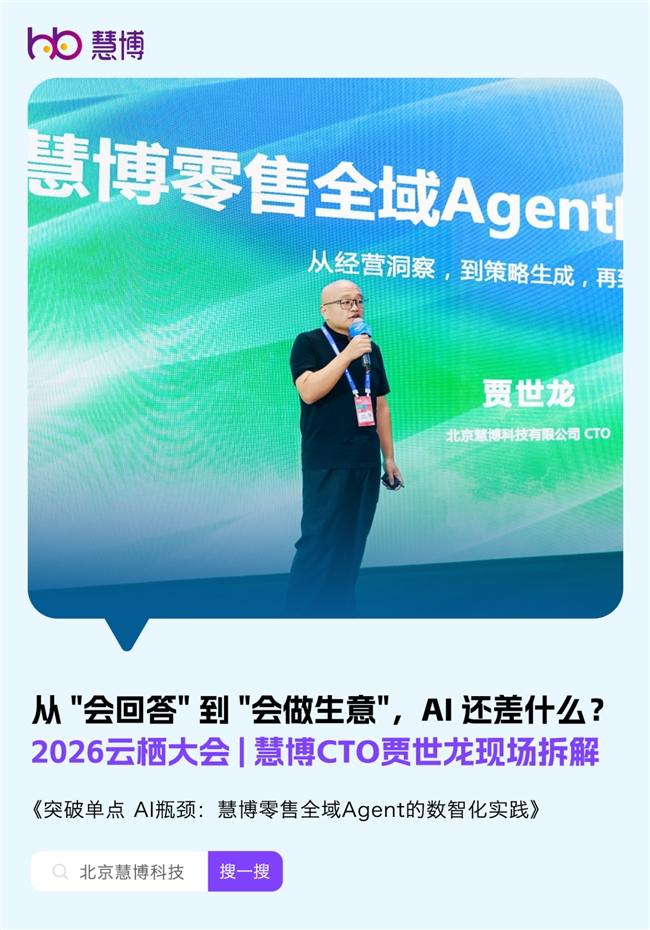
2026年 9月 22日,2026阿里云栖大会在杭州国际博览中心正式开幕。北京慧博科技有限公司(以下简称「慧博科技」)作为阿里合作服务商,受邀亮相本届大会。公司CTO贾世龙在云栖大会分论坛现场发表题为《突破单点AI瓶颈:慧博零售全域Agent的数智化实践》的主题演讲,首次系统拆解慧博旗下AI应用产品「小慧Claw」如何以「零售全域Agent」形态进入真实经营链路。演讲以某头部宠物食品品牌的复购经营案例为主线,给出从经营诊断到持续执行的四步法完整路径,并分享六大已跑通Agent场景。

一、行业趋势:AI价值在于「在真实场景中解决问题」

2026阿里云栖大会以「智以致用」为主题,设立三大主论坛与120余场分论坛,联合1000余家企业打造超5 万平方米展区,汇聚2000余位全球行业领袖与技术专家,共同探讨一个判断:技术突破必须回到场景,才能释放真正的价值。

开幕当日,阿里巴巴集团董事会主席蔡崇信在致辞中指出:「AI有广阔的发展空间,关键在于能在真实场景落地,实现规模化应用。」他透露,阿里巴巴正坚定投入全栈AI建设,构建覆盖芯片、云、模型、模型服务与智能体应用的全栈体系。同日,阿里巴巴集团CEO吴泳铭在主论坛主旨演讲中提出:「机器正在成为思考的主力,智能正在成为一种规模化的商品。」他判断,未来机器思考总量将达到人类的1000倍以上,AI模型、AI芯片、AI云将是机器智能时代的三大基石。

从战略判断到产业落地,本届大会的信号清晰而坚定——AI的价值,在于「智以致用」,在于「在真实场景中解决问题」。这也是慧博科技本次分享的整体立意。

二、主题分享:把一次机会完整推进到结果

贾世龙在演讲开场提出一个核心判断:「AI不能只停留在对话与报表,必须进入经营链路,把一次机会完整推进到结果。」围绕这一判断,他以小慧Claw近期服务的某头部宠物食品品牌复购经营为案例,现场拆解零售Agent完成一次真实经营任务的完整全过程。

贾世龙在演讲中表示:「零售行业的数据、系统、工具今天都已就绪——真正的挑战是:谁来理解经营问题、组织分散能力?慧博的答案是建设以小慧Claw为核心的AI原生零售全域Agent,让AI承担经营任务的编排与执行,而不仅仅是提供问答。从系统能力到Agent组织能力,是慧博十余年积累开启的新范式。」

三、小慧Claw:零售全域Agent四步法

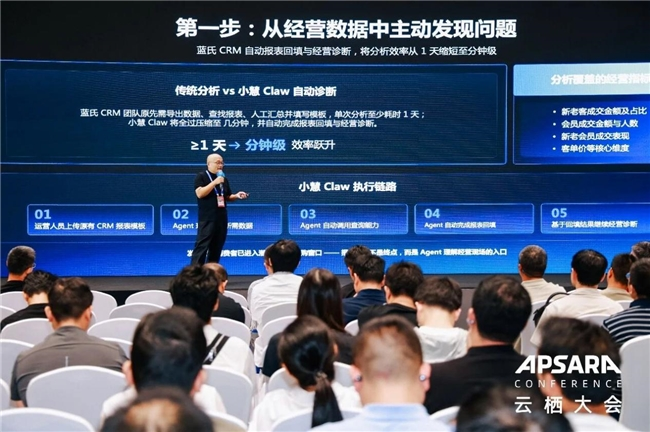
第一步:从经营数据中主动发现问题

贾世龙指出:「报表回填不是终点,而是Agent理解经营现场的入口。」以服务的某头部宠物食品品牌CRM经营场景为例,该品牌运营团队原本需要手动完成5 步操作——导出数据、查找报表、人工汇总、填写模板、再生成分析——才能获得完整的经营数据报表,单次分析至少耗时1 天。

接入小慧Claw后,这条链路被压缩为5 个自动化执行动作:运营人员上传原有CRM报表模板 →Agent理解模板所需数据 →Agent自动调用查询能力 →Agent自动完成报表回填 → 基于回填结果继续经营诊断。整套链路从1 天压到分钟级,分析覆盖新老客成交金额及占比、会员成交金额与人数、新老会员成交表现、客单价等核心维度。

更关键的是,Agent在自动回填之后继续做经营诊断,主动发现部分消费者已进入潜在补货或复购窗口——这正是经营决策的起点。

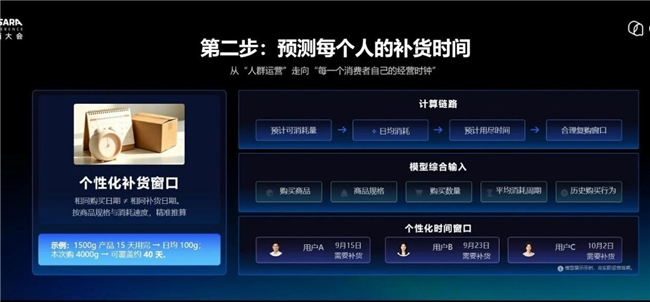
第二步:预测每个人的补货时间

「相同的购买日期,并不意味着相同的补货日期。」这是很多品类做复购触达时的难题。

小慧Claw帮助品牌按商品规格与消耗速度,为每位消费者精准推算补货窗口。具体做法分三步:

· 输入:购买商品、规格、数量、平均消耗周期、历史购买行为;

· 算法:推算预计可消耗量,除以日均消耗,得到预计用尽时间;

· 输出:每位消费者自己的合理复购时间窗口。

仍以该宠物食品品牌为例,宠物粮的规格有大有小,例如1500g与 4000g。以1500g规格为例:日均消耗100g、15天用完,买4000g覆盖约40天,同日购买的三位消费者补货窗口分别落在9 月15日、9月 23日、10月 2日。

「运营由此从人群运营,走向每一个消费者自己的经营时钟。」贾世龙说。

第三步:把预测转化为运营策略

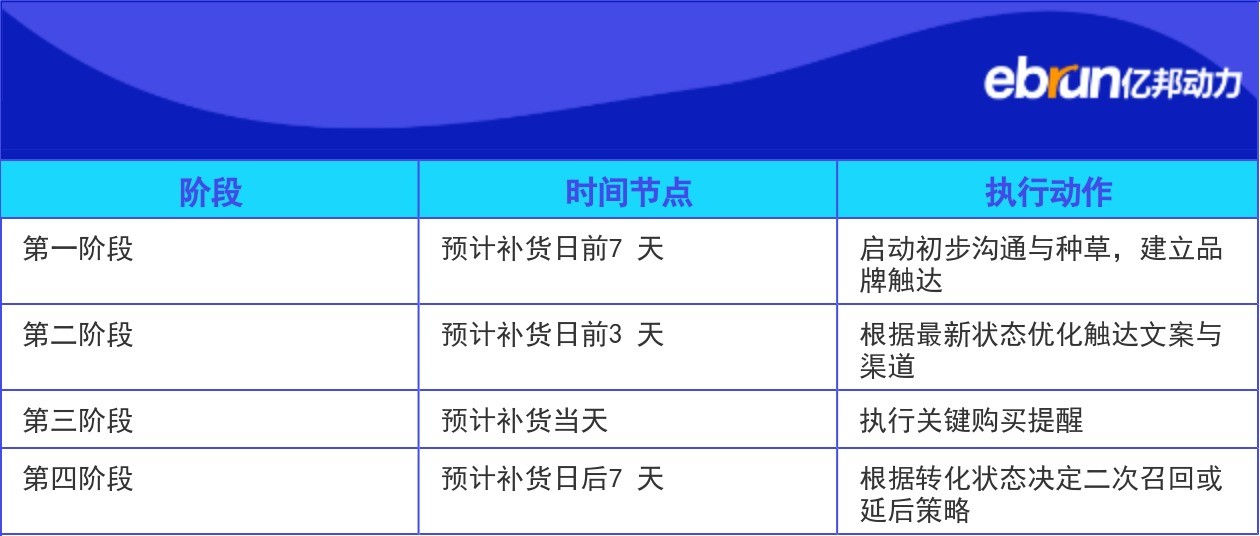
「复购模型解决『什么时候该找谁』,策略画布解决『找到以后做什么』。」小慧Claw把预测结果编排为四阶段运营策略,每个阶段都包含明确的时间节点、进入条件、执行动作与退出规则。

阶段 时间节点 执行动作
第一阶段 预计补货日前7 天 启动初步沟通与种草,建立品牌触达
第二阶段 预计补货日前3 天 根据最新状态优化触达文案与渠道
第三阶段 预计补货当天 执行关键购买提醒
第四阶段 预计补货日后7 天 根据转化状态决定二次召回或延后策略

更关键的是,每次触达前,Agent都会自动核查四件事:消费者是否已购买、是否发生退款、是否已经退订、是否与其他运营任务冲突。任何一个命中,触达自动停止。

第四步:让策略成为持续运行的经营Agent

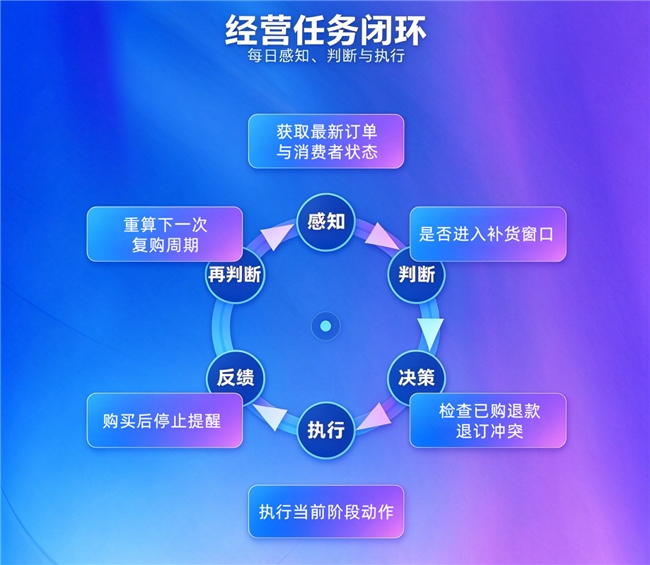
「真正的经营Agent,需要每天结合最新业务状态持续运行。」作为以AI Native(AI原生)为底层逻辑的小慧Claw,通过「感知—判断—决策—执行—反馈—再判断」的经营任务闭环,把一次经营任务组织成自动流转、持续运转的整链路:

· 感知:获取最新订单与消费者状态;

· 判断:该消费者是否进入当前补货窗口;

· 决策:核查已购、退款、退订或任务冲突;

· 执行:对符合条件的消费者执行当前阶段动作;

· 反馈:一旦购买,立即停止剩余阶段;

· 再判断:读取新订单,重新计算下一次复购周期,进入下一轮循环。

「持续运行依赖任务状态与底层流程管理,而非让模型一直在线盯着每一位消费者。」贾世龙强调,这是经营Agent与「对话框式AI」的根本区别。

四、能力体系:从一次复购走向一类经营

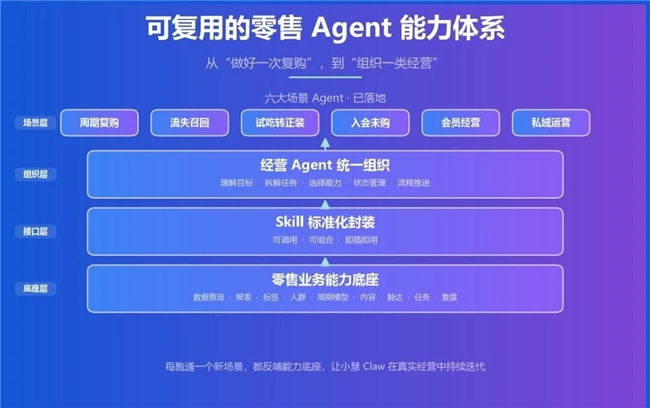
贾世龙指出,复购案例跑通不是终点,而是起点:小慧Claw由此从「做好一次复购」走向「组织一类经营」——把可复用的能力沉淀成体系,让更多经营场景可以快速复制。

小慧Claw不是静态产品,而是在服务各类商家中不断生长。基于一个个客户服务案例与商家反馈,慧博科技不断优化和更新小慧Claw,将数据查询、报表、标签、人群、周期模型、内容、触达、任务、复盘等业务能力封装为可调用、可组合的Skill接口,由经营Agent统一组织,生成适配多行业商家的场化经营Agent。

目前,周期复购、流失召回、试吃转正装、入会未购、会员经营、私域运营6 大场景Agent均已落地;每一类新场景的跑通,都会反哺能力底座,让小慧Claw在一次又一次真实经营中迭代升级。

写在最后

零售AI落地的关键不在算法,而在组织——是Agent把分散能力组织成持续运转的经营闭环。作为AI驱动型全域消费者数字化运营服务商,慧博科技将持续紧跟阿里的脚步,携手行业伙伴一起,把小慧Claw推进到更多零售品牌与经营场景,沉淀美妆、服饰、快消等行业运营方法论,打通全渠道数据壁垒,放大消费者资产长期价值。

「AI最终不是再给运营一份报告,而是把一次机会完整推进到结果。」从经营洞察、策略生成到持续执行,慧博科技正让AI从「懂零售」走向「做经营」,让零售行业的每一次增长机会,真正落到结果。

【北京慧博科技 | 全域消费者AI运营服务商】

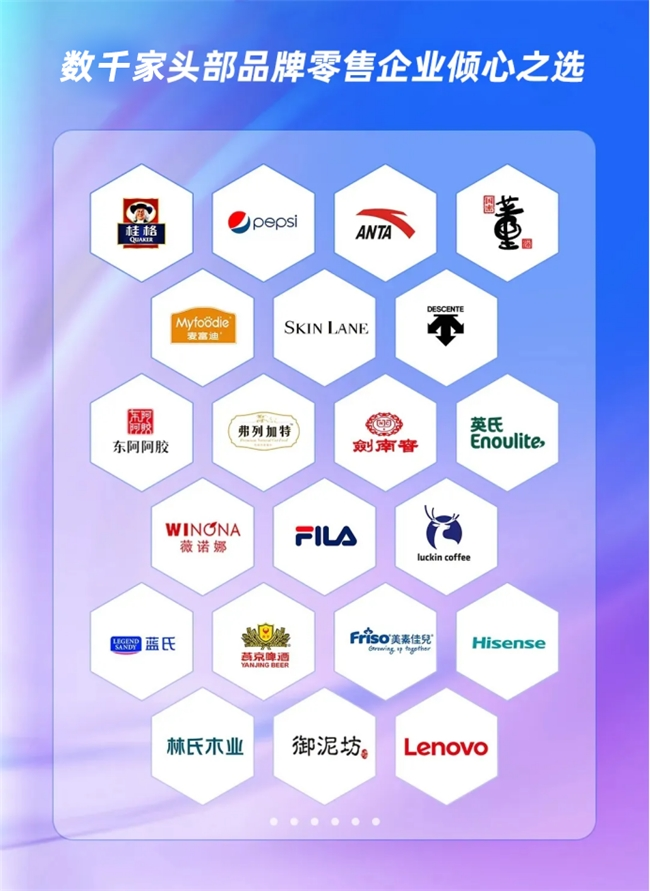
北京慧博科技有限公司(简称"慧博科技")是中大型品牌的全域消费者AI运营服务商。成立于2013年,是国家高新技术企业、专精特新企业,深耕零售全域消费者数字化领域十余年。公司现阶段核心战略聚焦中大型消费品牌,专注为服装、食品、美妆、母婴、宠物、3C、酒水等多个行业等全赛道头部及成长型品牌,提供全域CDP数据中台、全渠道数据治理、集团化会员体系、公私域一体化SCRM、零售AI Agent智能运营等项目级定制落地服务,目前已累计落地数千家中大型品牌数字化标杆项目。在技术路线上,慧博把Agentic AI技术融入品牌消费者运营工作流,让AI跃升为品牌经营的原生能力,形成AI时代消费者运营的新范式。


注:文/龚作仁,文章来源:Laborer,本文为作者独立观点,不代表亿邦动力立场。

文章来源:Laborer

广告
微信
朋友圈

FAQ回顾

小慧Claw是什么?有哪些功能?

小慧Claw是慧博科技推出的零售全域Agent产品,以AI原生形态进入品牌经营链路。它覆盖周期复购、流失召回、试吃转正装、入会未购、会员经营、私域运营六大落地场景,能自动完成数据查询、报表回填、经营诊断与策略执行,把一次经营机会完整推进到结果。

零售全域Agent是什么?和普通AI问答工具有什么区别?

零售全域Agent是能进入真实经营链路执行任务的AI系统,与只提供对话和报表的AI不同,它按“感知—判断—决策—执行—反馈—再判断”闭环持续运行,能主动发现问题、制定策略并自动执行,例如自动核查消费者是否已购、退款、退订或任务冲突,并在购买后立即停止触达。

品牌如何用AI Agent做复购经营?

慧博科技在宠物食品复购案例中采用四步法:第一步从经营数据中主动发现问题;第二步按商品规格与消耗速度推算每位消费者的补货窗口;第三步把预测编排为四阶段运营策略,覆盖补货前7天到补货后7天;第四步让策略在Agent闭环中持续运行、自动迭代。接入后,单次经营分析从1天压缩到分钟级。

慧博科技是做什么的?服务哪些行业?

北京慧博科技有限公司是中大型品牌的全域消费者AI运营服务商,成立于2013年,为国家高新技术企业和专精特新企业。公司主要为服装、食品、美妆、母婴、宠物、3C、酒水等行业品牌提供全域CDP数据中台、全渠道数据治理、集团化会员体系、公私域一体化SCRM及零售AI Agent运营服务,已累计落地数千家品牌项目。

零售AI落地的关键是什么?

慧博科技CTO贾世龙在2026云栖大会上表示,零售AI落地的关键不在算法,而在组织——由Agent把分散的数据、系统与工具组织成持续运转的经营闭环。AI不能只停留在对话与报表,必须进入经营链路,把一次机会完整推进到结果。

这么好看,分享一下?

朋友圈 分享

APP内打开

赞 +1
+1
微信好友 朋友圈 新浪微博 QQ空间
关闭
收藏成功
发送
/140 0