广告
加载中

跨境大卖 一半赚钱一半失血?

王昱 2026-10-06 19:45
王昱 2026/10/06 19:45

邦小白快读

EN
全文速览

总:跨境电商大卖上半年业绩分化,营收增长不等于赚钱,普通读者可从几组数据中看懂行业真实状态。

1. 能卖货不等于能赚钱。27家上市大卖中18家营收增长超10%,但14家利润负增长或亏损,仅12家营收利润双增。典型如影石创新营收增超50%,净利却缩水超九成;华凯易佰营收下降19%,利润反增350%。

2. 现金和库存是健康度关键。上半年仅7家企业经营现金流改善,9家净流出;行业平均存货周转天数101天,同比增12%,八成企业库存上涨。企业是否健康要关注现金流和周转,而非只看销售额。

3. 真正赚钱的企业有共同点:创新业务放量,形成第二增长曲线。安克、绿联、传音靠新产品和海外拓展实现稳健增长;华凯易佰主动砍掉低利润业务,聚焦精品,客单价提升到307元。

这些信号说明,盲目扩张不如优化结构,备货和营销投入需匹配真实需求。

总:跨境品牌商的竞争格局正在从卖货能力转向品牌溢价、研发投入和用户运营。

1. 品牌溢价与精品化更能抗周期。华凯易佰主动砍掉低利润泛品,聚焦精品业务,客单价307元是泛品的2.7倍,利润大增350%。品牌商应重视产品升级,而非追求无利润的流水。

2. 研发投入决定第二增长曲线。安克、绿联、传音等研发增长快的企业,创新业务已放量:安克UV打印机、割草机、光储产品占领细分市场;绿联NAS业务营收增85%;传音储能业务年复合增速825%。而家具家居等企业研发费用率不足1%,缺乏长期竞争力。

3. 渠道建设加速转向非美市场。安克在巴西组建本地团队并携手美客多;华宝新能在欧洲营收增123%,日本市场连续7年第一;致欧科技拉美收入翻倍。品牌商应把新兴市场作为增量重点。

4. 软件生态和内容社区成为用户粘性新抓手。创想三维会员收入增60%,影石云存储付费用户增124%,说明围绕产品做软件服务能延长生命周期、提升复购。

5. 警惕价格战和成本上涨。3D打印行业因竞争价格战白热化,存储芯片涨价直接拖累影石利润。品牌定价需留足成本缓冲,避免陷入低价内耗。

总:跨境电商卖家可从大卖半年报中识别市场变化、风险信号和可复制的打法。

1. 增长市场正在转移。拉美热度最高,安克联手美客多,致欧科技拉美收入翻倍,三态股份来自美客多的收入占比已达9.2%;华宝新能欧洲营收增123%,日本市场连续7年第一。卖家可重点关注美客多等区域平台和新市场本地化布局。

2. 平台策略要重新评估。华凯易佰大幅收缩Temu等性价比平台业务,上半年营收降19%但利润增350%。这说明低价平台流量不一定带来利润,卖家应计算综合成本,砍掉无利润订单。

3. 警惕三类风险:库存膨胀,行业平均周转天数达101天、八成企业库存上涨;汇率波动,九号公司汇兑损失3.71亿元;原材料涨价,影石存储芯片采购近20亿元。卖家要控制备货节奏、做好汇率锁定和供应链议价。

4. 可学习点:把运营能力产品化。吉宏、三态、华凯易佰正将选品、广告投放、库存管理等经验做成SaaS和AI Agent卖给外部客户,卖家可关注此类工具来降本增效。

5. 事件应对:关税风波中,安克因关税退款实现现金流转正。卖家应关注关税政策调整的退款机会,同时分散市场降低单一国家政策风险。

总:跨境大卖半年报透露出产品升级方向,工厂可据此调整生产和设计思路。

1. 热门品类集中在智能硬件和新能源。安克的UV打印机、割草机、光储产品,绿联NAS,华宝新能100kWh家用储能柜,创想三维3D打印设备等均在放量。工厂可关注这些品类的零部件、结构件和整机代工需求。

2. 原材料涨价倒逼供应链提前锁货。影石存储芯片采购近20亿元,绿联因存货增加占用4.68亿元现金,传音存货接近190亿元。工厂若能提供稳定产能或协助备货,更容易成为大卖的核心供应商。

3. 软件生态成为硬件新卖点。创想三维围绕3D打印机建创作者平台,会员收入增60%;影石App云存储付费用户增124%。工厂在设计产品时应预留智能化、连接性和软件服务能力。

4. 新品发布喜欢用众筹验证。创想三维的桌面级耗材生产系统在Indiegogo拿下上半年全球3D打印众筹金额榜首。工厂可借助众筹平台收集需求、测试市场,再排产。

5. 新兴市场带来增量订单。拉美、欧洲、日本成为大卖重点开拓区域,工厂可配合大卖做本地化设计和合规适配,获取外贸订单。

总:跨境行业正在从卖硬件转向卖服务和软件,服务商面临新的客户痛点和解决方案需求。

1. 客户痛点集中在资金效率和库存管理。行业平均存货周转天数101天,八成企业库存上涨;三态股份因电商回款周期和物流垫资导致应收账款连续上涨。服务商可提供库存优化、回款管理和物流协同方案。

2. 运营经验正在产品化。吉宏、三态、华凯易佰把选品、广告投放、库存管理、供应链协同能力做成SaaS和AI Agent,服务外部客户。AI降低软件开发门槛,是服务商切入跨境软件市场的好时机。

3. 软件生态是硬件企业的第二增长曲线。创想三维的创想云、影石App均实现用户和付费高速增长。服务商可帮助硬件品牌搭建内容社区、云存储、会员体系和AI功能。

4. 营销效率有待优化。上半年13家企业销售费用增幅超15%,但已有15家营收增速高于销售费用增速。服务商应聚焦ROI提升工具,帮助客户把投放预算花在刀刃上。

5. 非美市场衍生本地化服务需求。拉美和欧洲市场增长快,但涉及语言、合规、物流和平台运营。服务商可提供本地化代运营、多平台管理和跨境物流服务,抓住机会。

总:跨境大卖的平台选择出现明显风向,平台商可从财报数据中找到招商和运营管理重点。

1. 低价性价比平台吸引力下降。华凯易佰大幅收缩Temu等平台业务,因为无利润流水拖累业绩,砍掉后利润反增350%。平台商若只靠低价拼量,难以留住优质卖家;应转向帮助卖家提升客单价和利润。

2. 拉美电商平台蕴含招商机会。安克、致欧、三态都在快速接入美客多,三态来自美客多的收入占比已达9.2%,且仍在提升。平台商可加大对新兴市场品类的招商,尤其是消费电子、家居和储能产品。

3. 卖家对回款周期非常敏感。三态股份应收账款连续上涨,受电商平台回款周期掣肘,物流业务还需垫资。平台商若能优化账期、提供更透明的结算服务,能显著增强卖家粘性。

4. 众筹平台成为新品冷启动阵地。创想三维的桌面级耗材生产系统在Indiegogo拿下3D打印众筹榜首。平台商可关注众筹与量产衔接的扶持政策。

5. 风险规避提示:美国关税风波后,欧盟新一轮关税和监管接踵而至。平台商需要及时解读政策,帮助卖家调整品类布局和合规方案,降低平台内卖家流失风险。

总:跨境上市大卖半年报呈现产业结构性调整,研究者可关注以下动向和问题。

1. 产业新动向是营收与利润倒挂。27家样本中18家营收增长超10%,但14家利润负增长或亏损,仅12家双增。这说明行业规模扩张并未转化为同步盈利,增长质量出现分化。

2. 经营模式正在从铺货向精品化升级。华凯易佰收缩泛品和低价平台业务,聚焦精品后利润增350%;安克、绿联、传音依靠创新业务放量获得第二增长曲线。这种战略收缩与多元化组合值得深入研究。

3. 现金流与库存问题普遍化。仅7家企业经营现金流改善,9家净流出;行业存货周转天数101天,同比增12%,存货金额增38%。传统泛品大卖的应收账款问题和消费电子企业的主动备货形成两种典型模式。

4. 软件生态与AI Agent成为新商业形态。创想三维、影石通过社区和云服务变现;吉宏、三态、华凯易佰将运营能力产品化,提供SaaS和AI服务。AI降低软件门槛催生新的收入类型。

5. 政策法规启示:美国关税退款成为安克现金流改善因素,欧盟新一轮关税和监管形成新压力;平台回款周期和物流垫资加剧中小企业资金压力。研究者可进一步探讨跨境税收协调、平台账期规范和供应链金融支持政策。

返回默认

声明:快读内容全程由AI生成,请注意甄别信息。如您发现问题,请发送邮件至 run@ebrun.com 。

我是 品牌商 卖家 工厂 服务商 平台商 研究者 帮我再读一遍。

Quick Summary

Summary: Cross-border e-commerce top sellers' H1 results diverged sharply; revenue growth does not equal profitability. A few data points reveal the industry's real state.

1. Selling products is not the same as making money. Among 27 listed top sellers, 18 posted revenue growth above 10%, but 14 saw profit declines or losses, and only 12 achieved both revenue and profit gains. Notable examples: Insta360's revenue rose more than 50%, but net profit shrank by over 90%; Huakai Yibai's revenue fell 19%, yet profit surged 350%.

2. Cash and inventory are the key health indicators. Only 7 companies improved operating cash flow in H1, while 9 had net outflows. The industry's average inventory turnover days reached 101, up 12% year over year, and 80% of companies saw inventory levels rise. A company's health should be judged by cash flow and turnover, not just sales.

3. Profitable companies share common traits: innovative businesses scale up and create a second growth curve. Anker, Ugreen, and Transsion achieved steady growth through new products and overseas expansion. Huakai Yibai proactively cut low-margin lines to focus on premium products, lifting its average order value to RMB 307.

These signals indicate that structural optimization beats blind expansion, and inventory and marketing spending must match real demand.

Summary: The competitive landscape for cross-border brand sellers is shifting from selling capability to brand premium, R&D investment, and user operations.

1. Brand premium and premium product strategies are more resilient to economic cycles. Huakai Yibai cut low-margin generic products to focus on premium lines; its average order value of RMB 307 is 2.7 times that of generic goods, and profit surged 350%. Brands should prioritize product upgrades over pursuing unprofitable revenue.

2. R&D investment determines the second growth curve. Companies with fast-growing R&D, such as Anker, Ugreen, and Transsion, have scaled innovative businesses: Anker's UV printers, robotic mowers, and solar-plus-storage products are gaining niche market share; Ugreen's NAS business grew 85%; Transsion's energy storage business achieved an 825% CAGR. By contrast, furniture and home goods companies with R&D expense ratios below 1% lack long-term competitiveness.

3. Channel building is accelerating toward non-US markets. Anker formed a local team in Brazil and partnered with Mercado Libre; EcoFlow's European revenue grew 123% and it has led Japan for seven consecutive years; ZIEL doubled its Latin America revenue. Brands should treat emerging markets as key incremental opportunities.

4. Software ecosystems and content communities are becoming new levers for user stickiness. Creality's membership revenue rose 60%, and Insta360's cloud storage paid users grew 124%, showing that software services built around hardware can extend product lifecycles and boost repurchase rates.

5. Beware of price wars and rising costs. The 3D printing industry faces intense price competition, and memory chip price hikes directly squeezed Insta360's profits. Brands need to build cost buffers into pricing and avoid destructive low-price competition.

Summary: Sellers can identify market shifts, risk signals, and replicable playbooks from top sellers' H1 reports.

1. Growth markets are shifting. Latin America is the hottest; Anker joined forces with Mercado Libre, ZIEL doubled Latin America revenue, and Sanstate already derives 9.2% of its revenue from Mercado Libre, with that share still rising. EcoFlow grew European revenue by 123% and has held the No.1 position in Japan for seven straight years. Sellers should focus on regional platforms like Mercado Libre and invest in new-market localization.

2. Platform strategy needs reassessment. Huakai Yibai sharply reduced operations on value-priced platforms such as Temu; H1 revenue fell 19%, but profit surged 350%. Traffic from low-price platforms does not guarantee profit; sellers should account for total costs and cut unprofitable orders.

3. Watch for three risks: inventory inflation—average turnover days hit 101 and 80% of companies saw inventory rise; currency swings—Ninebot recorded exchange losses of RMB 371 million; raw material price hikes—Insta360 spent nearly RMB 2 billion on memory chip procurement. Sellers should control restocking pace, hedge currency exposure, and negotiate with suppliers.

4. A useful lesson: productize operational capabilities. Jihong, Sanstate, and Huakai Yibai are turning product selection, ad placement, and inventory management expertise into SaaS and AI agents for external clients. Sellers should watch for such tools to cut costs and improve efficiency.

5. Event response: Amid tariff turmoil, Anker achieved positive cash flow from tariff refunds. Sellers should look for refund opportunities arising from tariff policy adjustments while diversifying markets to reduce single-country policy risk.

Summary: Top sellers' H1 reports reveal product upgrade directions that factories can use to adjust production and design strategies.

1. Hot categories concentrate in smart hardware and new energy. Anker's UV printers, robotic mowers, and solar/storage products, Ugreen's NAS, EcoFlow's 100kWh home storage cabinet, and Creality's 3D printing equipment are all scaling up. Factories should watch for demand from components, structural parts, and OEM assembly in these categories.

2. Raw material cost increases are forcing early supply chain lock-in. Insta360 procured nearly RMB 2 billion of memory chips; Ugreen's inventory buildup consumed RMB 468 million in cash; Transsion's inventory approached RMB 19 billion. Factories that can provide stable capacity or assist with stocking are more likely to become core suppliers to top sellers.

3. Software ecosystems are becoming a new selling point for hardware. Creality built a creator platform around its 3D printers, with membership revenue up 60%; Insta360's cloud storage paid users grew 124%. Factories should incorporate intelligence, connectivity, and software service capability into product design.

4. Crowdfunding is becoming the go-to method for new product validation. Creality's desktop filament production system ranked first globally in 3D printing crowdfunding on Indiegogo in H1. Factories can use crowdfunding platforms to gauge demand and test markets before production.

5. Emerging markets are providing incremental orders. Latin America, Europe, and Japan are key expansion regions for top sellers; factories can work with them on localized design and compliance adaptation to secure export orders.

Summary: The cross-border industry is shifting from hardware sales to services and software, creating new client pain points and solution demands for service providers.

1. Client pain points center on capital efficiency and inventory management. The industry's average inventory turnover days reached 101, and 80% of companies saw inventories rise; Sanstate suffered rising accounts receivable due to e-commerce settlement cycles and logistics advances. Service providers can offer inventory optimization, receivables management, and logistics coordination solutions.

2. Operational expertise is being productized. Jihong, Sanstate, and Huakai Yibai are packaging product selection, ad placement, inventory management, and supply chain coordination capabilities into SaaS and AI agents for external clients. AI lowers the barrier to software development, making this a favorable moment for service providers to enter the cross-border software market.

3. Software ecosystems represent a second growth curve for hardware companies. Creality Cloud and the Insta360 app both achieved rapid user and paid growth. Service providers can help hardware brands build content communities, cloud storage, membership systems, and AI features.

4. Marketing efficiency still needs improvement. In H1, 13 companies saw selling expense growth above 15%, yet 15 companies already had revenue growth exceeding selling expense growth. Service providers should focus on ROI-enhancing tools to help clients allocate budgets effectively.

5. Non-US markets are generating localization service demand. Latin America and Europe are growing quickly but involve language, compliance, logistics, and platform operations. Service providers can capture these opportunities by offering localized operation management, multi-platform management, and cross-border logistics services.

Summary: Top sellers' platform choices are shifting clearly, giving marketplace operators data-driven priorities for merchant recruitment and operations management.

1. Low-price platforms are losing appeal. Huakai Yibai sharply cut its presence on platforms such as Temu because profitless revenue dragged down performance; after the cuts, profit surged 350%. Marketplaces that rely only on low-price volume will struggle to retain quality sellers; they should instead help sellers raise average order value and profitability.

2. Latin American e-commerce platforms hold recruitment opportunities. Anker, ZIEL, and Sanstate are rapidly integrating with Mercado Libre; Sanstate's revenue share from Mercado Libre has reached 9.2% and is still climbing. Marketplaces should step up merchant recruitment for emerging-market categories, especially consumer electronics, home goods, and energy storage.

3. Sellers are extremely sensitive to settlement cycles. Sanstate's accounts receivable kept rising, constrained by marketplace payment cycles, while its logistics arm also had to advance funds. Marketplaces that optimize payment terms and offer more transparent settlement can significantly strengthen seller loyalty.

4. Crowdfunding platforms are becoming a launching pad for new products. Creality's desktop filament production system took the top spot for 3D printing on Indiegogo. Marketplaces should pay attention to policies bridging crowdfunding and mass production.

5. Risk management: After the US tariff turmoil, a new round of EU tariffs and regulations is arriving. Marketplaces need to interpret policy changes quickly and help sellers adjust category strategies and compliance programs to reduce seller attrition.

Summary: The H1 reports of listed cross-border sellers reveal structural industry adjustments; researchers should focus on the following trends and questions.

1. A new industry dynamic is revenue-profit divergence. Of the 27 sample companies, 18 grew revenue over 10%, but 14 saw profit declines or losses, and only 12 had simultaneous growth in both. This shows that industry scale expansion has not translated into synchronized profitability, and growth quality is splitting.

2. Business models are upgrading from mass merchandising to premium specialization. Huakai Yibai contracted its generic-product and low-price platform operations and saw profit jump 350% after focusing on premium lines; Anker, Ugreen, and Transsion built second growth curves by scaling innovative businesses. This combination of strategic contraction and diversification merits deeper study.

3. Cash flow and inventory issues are widespread. Only 7 companies improved operating cash flow, while 9 saw net outflows. Industry average inventory turnover days reached 101, up 12% year over year, with inventory value up 38%. The accounts receivable problems of traditional mass-market sellers and the proactive stockpiling of consumer electronics companies form two distinct patterns.

4. Software ecosystems and AI agents are becoming new business forms. Creality and Insta360 monetize through communities and cloud services; Jihong, Sanstate, and Huakai Yibai are productizing operational capabilities into SaaS and AI offerings. AI lowers software barriers and creates new revenue types.

5. Policy implications: US tariff refunds helped improve Anker's cash flow, while a new round of EU tariffs and regulations adds pressure; marketplace settlement cycles and logistics advances are exacerbating capital constraints for SMEs. Researchers can further examine cross-border tax coordination, marketplace payment term standards, and supply chain finance support policies.

Disclaimer: The "Quick Summary" content is entirely generated by AI. Please exercise discretion when interpreting the information. For issues or corrections, please email run@ebrun.com .

I am a Brand Seller Factory Service Provider Marketplace Seller Researcher Read it again.

有预期,但也有压力。

文丨王昱    编辑丨何洋

【亿邦原创】2026年已过去大半,跨境电商从去年的“主震”中走出后,又不得不直面“余震”,整个行业可谓在一次次调整中寻找新航向。

美国关税风波刚告一段落,欧盟新一轮关税与监管调整又接踵而至;AI技术从曾经新潮的概念,逐渐落地为高度普及的生产力工具;欧美市场加速淘汰旧有打法,而新兴国家市场则敞开怀抱、吸纳增量……对于跨境企业而言,这无疑是一段充满变量的时期。

而作为行业中最具代表性的领军玩家,跨境大卖们的一举一动,折射出这个行业顶尖的一批操盘手对未来的战略判断。他们的半年报,也是观察行业的最佳窗口。

揭穿“预期乐观”的表面姿态,在营收增长、大举备货等动作背后,究竟有多少企业从市场中赚到真金白银?有多少企业能够穿越周期、业绩长青?又有多少企业艰难维持,在频繁震荡中“受了内伤”?

对此,亿邦动力从跨境电商板块梳理出27家具有代表性的上市企业,涵盖多个品类赛道、兼顾品牌与铺货型大卖,试图从财务数据中窥见行业增长的真实成色。

营收与利润“倒挂”?有人赚钱,有人只赚吆喝

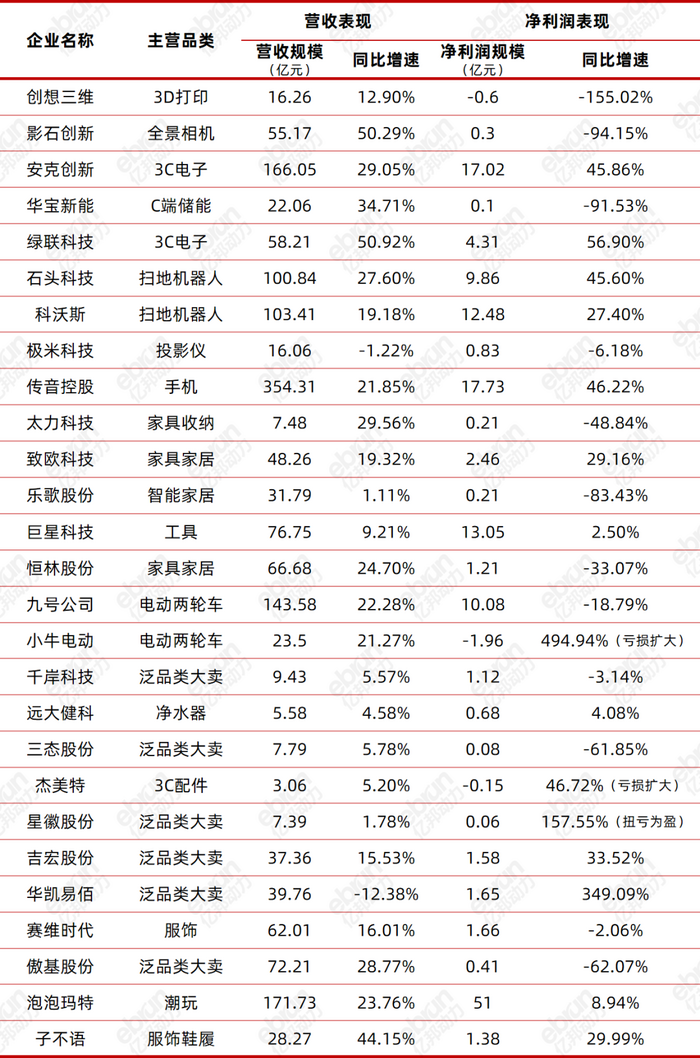
图片

从财报数据看,上半年的关键词是“倒挂”——能卖货不等于能赚钱。

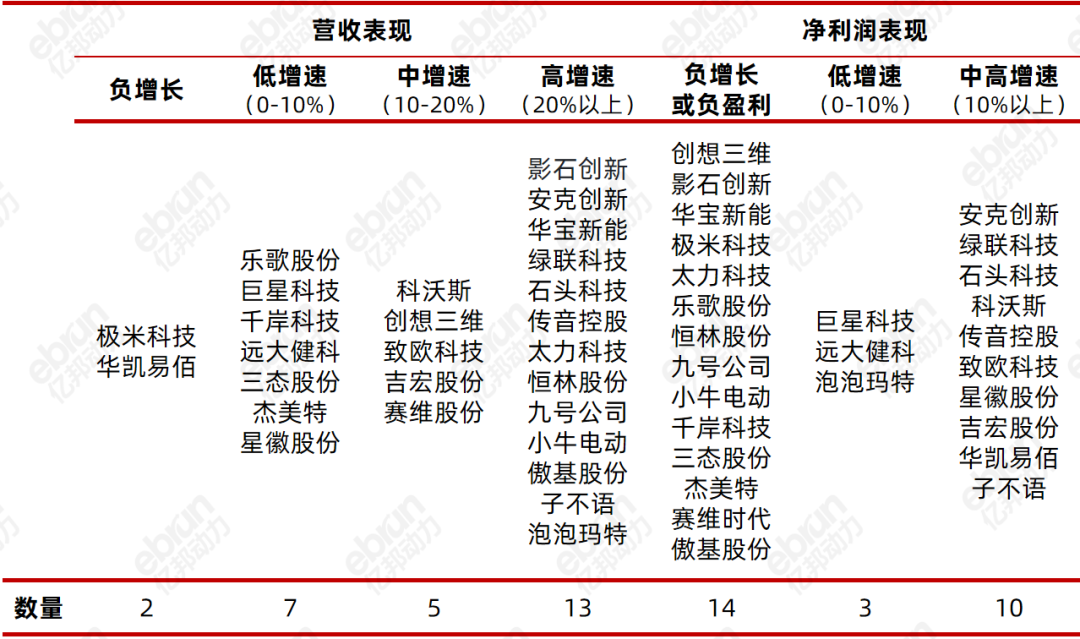
营收端,27家企业中,多达18家企业保持10%以上的同比增长,负增长的仅有两家;其中,影石创新、绿联科技、子不语等头部企业增幅更达到40%—50%。但把视线转向利润端,14家企业利润负增长,甚至陷入亏损,能够实现10%以上增长的仅有10家。

整体来看,营收与利润双双正增长的企业有12家,不足半数;增收不增利或利润仅有微增,是更多企业的共同处境。

图片

具体而言,大致可以分为三类典型企业画像。

第一类,是营收低增长,但利润表现亮眼,靠大刀阔斧的战略收缩真正“赚到实惠、闷声发财”的企业。

华凯易佰是其中的典型。从账面数据来看,华凯易佰是业内上半年营收跌幅最大的一家,但其350%的利润增幅却位列榜首——堪称老牌泛品大卖的一次成功“自救”。

反差背后,是其主动做减法,砍掉“没有利润的流水”。上半年,该公司大幅收缩Temu等性价比平台业务,泛品业务也被明显压缩,营收同比下降19.24%,大量低效SKU下架。与此同时,其重点押注精品业务,实现营收9.96亿元,同比增长11.56%,平均客单价达307元,是泛品客单价的2.7倍。

第二类,是营收狂飙猛进,但利润明显承压的企业。

这一阵营中,不乏耳熟能详的赛道龙头。如影石创新上半年营收增长超50%,净利润却缩水超九成。溯及原因,一是存储芯片等原材料价格持续上涨,二是全景无人机这一新业务仍处于投入期,研发、产线建设和渠道拓展均需要大量资金,对整体利润形成拖累。

3D打印领域的创想三维也面临类似压力。多种关键元件涨价推高成本;汇率波动则进一步侵蚀利润,仅汇兑收益较上年同期减少就接近5000万元。与此同时,面对拓竹科技的竞争,价格战白热化,也进一步压缩了盈利空间。

电动两轮车赛道,九号公司上半年汇兑损失达到3.71亿元,而去年同期为汇兑收益2.57亿元;与此同时,受产品集中迭代影响,其电动两轮车主业毛利率降至年内低位。小牛电动持续失血且看不到明确止血点,上半年净亏损高达1.96亿元,已远超去年全年,海外销量也同比下跌了10.6%。

第三类,是营收与利润双高,真正业绩长青、稳健成长的企业。

安克创新、绿联科技、传音控股是其中代表。除关税退款、线下渠道扩张、库存及原材料增值等阶段性利好外,三家还有一个值得关注的共性:创新业务均已进入放量期,开始贡献第二增长曲线。

例如,安克创新的UV打印机、割草机、光储产品持续放量,并已在细分市场占据可观份额;绿联科技NAS业务营收同比增长85%,进一步跻身全球消费级NAS头部阵营;传音控股则在南亚、中东、非洲等市场加速拓展储能业务,仅用三年实现9.5亿元营收,年复合增长率约825.58%。

“失血问题”普遍化,库存大涨背后喜忧参半

上下滑动查看完整内容

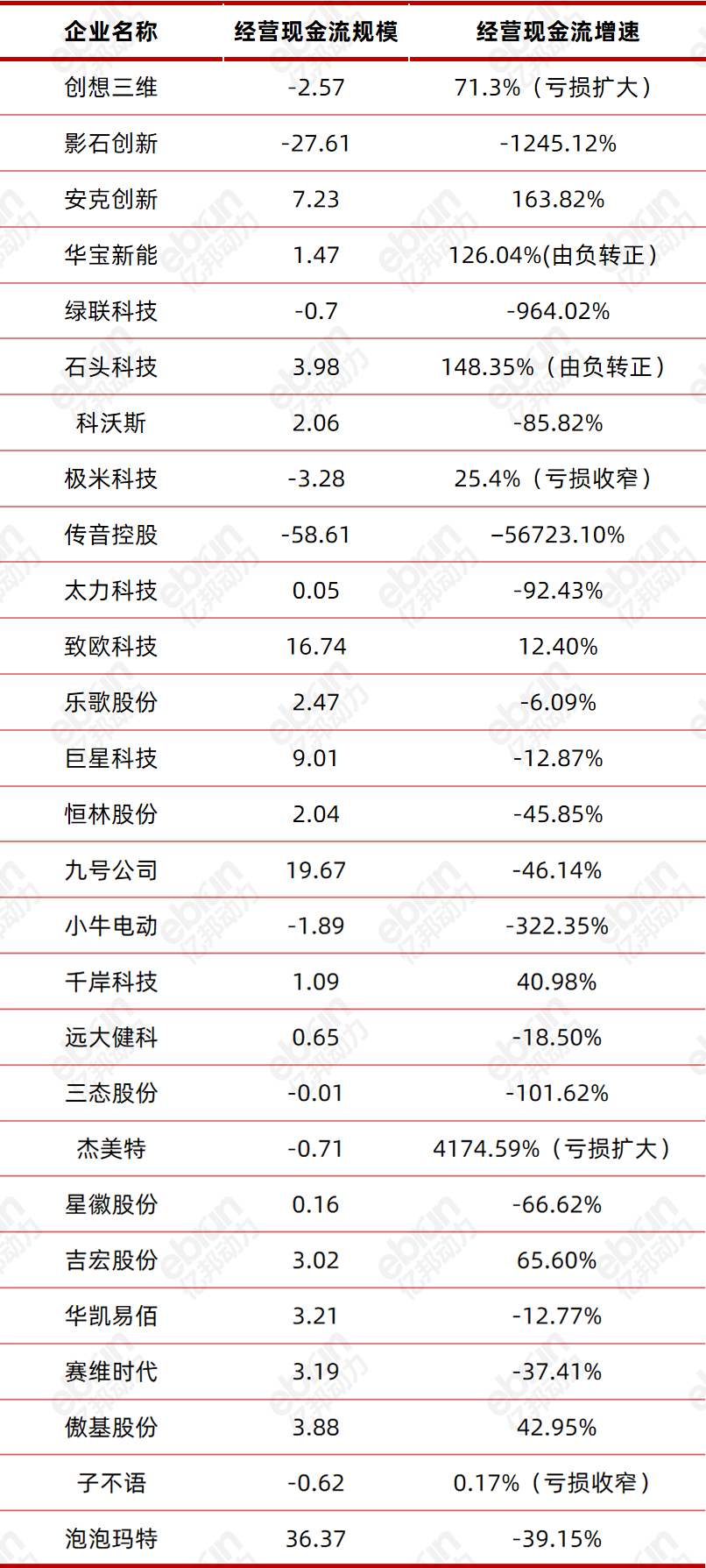
图片

将视角从营收与利润的数据上挪开,转而洞察现金流量表、成本支出表和资产负债表,或许能看清一家公司真正的底色。

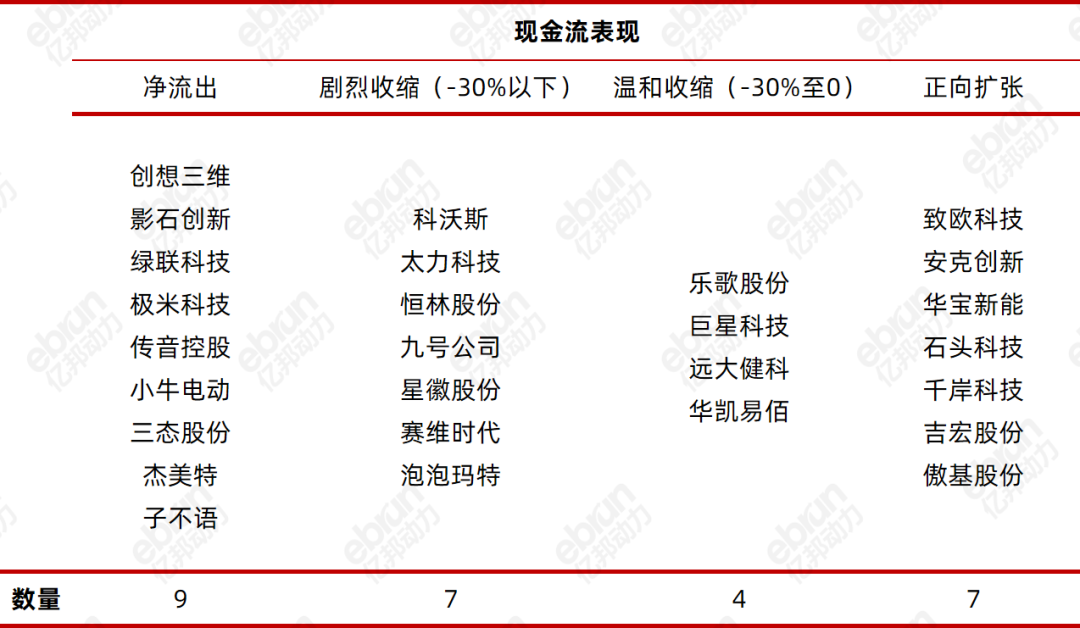
其中,经营现金流是最值得关注的“晴雨表”,直接反映企业的自我造血能力。上半年,27家跨境赛道头部玩家中,仅7家同比改善,11家同比收缩,另有9家出现经营现金净流出——既有全球化品牌,也有老牌铺货大卖,但两者背后的原因并不相同。

绿联、影石、传音的现金流承压,更像是主动为未来“广积粮、高筑墙”。三家均大幅增加原材料和库存储备,以应对近期芯片、内存等价格上涨。影石上半年存储芯片采购金额接近20亿元;绿联因存货增加占用约4.68亿元现金;传音则更为激进,截至报告期末存货已接近190亿元。

对于消费电子企业而言,提前采购芯片、存储和结构件本是常态。在收入高速增长阶段,经常出现采购现金先流出去,产品销售以后确认利润,现金再晚一步回来的情况。

反观传统泛品类大卖的现金流枯竭则更多与转型期应收账款的居高不下密切相关。比如,三态股份应收账款连续多个季度上涨,除了电商平台的回款周期掣肘以外,其物流业务也需要先行垫资,加剧了资金压力。

在现金流改善的企业中,安克一枝独秀。上半年其现金流转负为正,同比暴增163.82%,主要得益于业务现金净流入以及关税退款到账。

另一值得关注的明星企业是泡泡玛特。半年前,其现金流曾同比增长125%。但仅过半年,该数字便同比下滑近40%。这与海外扩张所需的持续投入有关。不过,公司目前仍有充足弹药,期末现金及现金等价物高达124亿元之巨。

图片

如果说,现金流是看“钱袋子”鼓不鼓,那么成本结构就是看钱有没有“用到刀刃上”。

上半年,多数企业继续加大营销投入,销售费用增幅超过15%的企业达到13家,平均增幅达20.85%。其中,影石创新、太力科技、恒林股份的销售费用增幅均超过50%。背后的逻辑各不相同:有的赶上新品密集发布期,需要持续投流、打造爆款;有的则处于OBM扩张阶段,需要加大品牌曝光、拓展渠道。

一个值得高兴的变化是,营销投放的边际效益也有所改善。本轮半年报中,有15家企业的营收增速高于销售费用增速,超过样本企业半数;而半年前的年报盘点中,这一比例仅约四分之一。

相比销售费用的普涨,研发投入则显著分化。14家企业研发费用增速超过10%,主要集中在消费电子、智能硬件等领域。其中,影石、安克、华宝、绿联、九号的增幅均超过40%。而家具家居等“无电传统类目”和泛品类大卖则构成了另一极端,其中不少企业的研发费用率不足1%,几乎放弃了新技术储备。

不少“全球首发”性质的重磅新品也陆续披露:例如,绿联发布新一代AI智能体中枢MasterAgent,超高算力支持本地运行122B参数规模的大模型;华宝新能推出全球首款100kWh家用储能柜,将目标客户从公寓家庭延伸至超大户型住宅;创想三维则推出“桌面级耗材生产系统”,在Indiegogo拿下上半年全球3D打印众筹项目金额榜首。

图片

此外,半年报还揭示出一个普遍现象:库存快速膨胀,周转效率却在下滑。

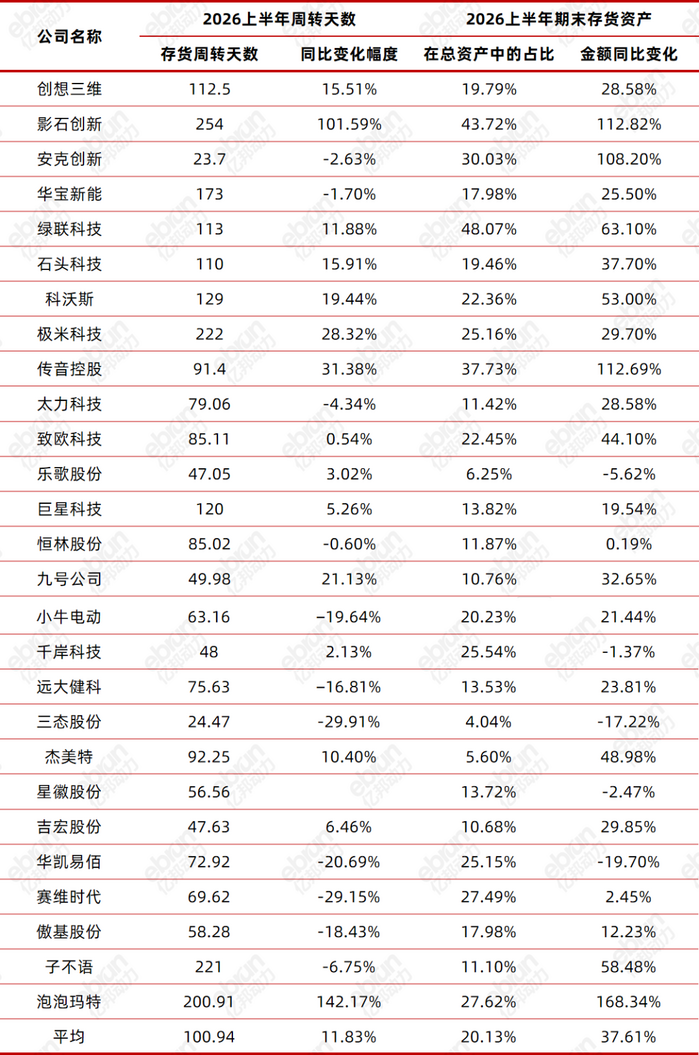
统计显示,上半年行业平均存货周转天数达到101天,同比增长近12%;存货占总资产的平均比重超过20%,存货金额同比增长近38%。其中,超过半数企业周转天数延长,八成企业库存金额上涨;库存增幅超过30%的有11家,更有4家翻倍。

当然,库存增长并不意味着经营恶化。例如安克创新就不怕滞销,因为存货周转天数仅为23.7天,去化速度冠绝行业。对其而言,提前备货有着出于“抄底原料”和“看多年末旺季销量”的积极考量。但对另一部分企业而言,过长的存货周转天数情况却并不乐观。

做深软件配套,加速开拓非美市场

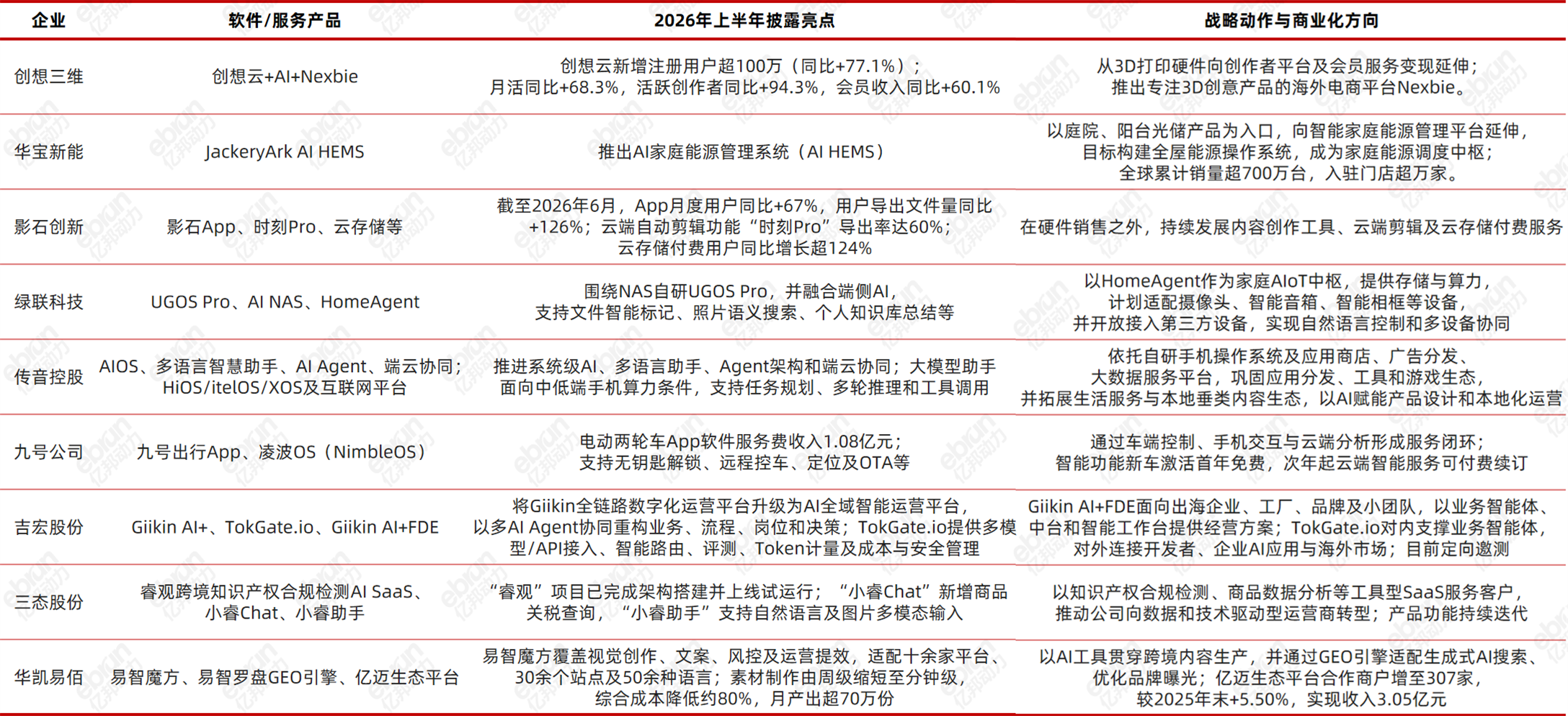
对于不少跨境大卖而言,产品销售并非终点。伴随用户规模扩大,围绕主业形成的软件生态、用户服务和运营能力体系,正在成为新的增量来源。据亿邦动力不完全统计,在本次盘点的27家企业中有9家均在财报中披露了软件服务领域的布局。

一方面,不少科技硬件企业基于核心产品的使用场景,不断丰富应用生态和增值服务体系。

例如,创想三维正在围绕3D打印设备打造创作者生态平台。公司披露,2026年上半年,创想云新增注册用户超过100万,同比增长77.1%;月活用户同比增长68.3%,活跃创作者同比增长94.3%,会员收入同比增长60.1%。与此同时,公司还推出专注3D创意产品的海外电商平台Nexbie,进一步探索从硬件销售向内容、社区及会员服务变现延伸。

与之相似,影石创新也在持续完善软件生态。于其而言,软件服务并非简单的辅助工具,而正在成为连接用户、提升复购和延长产品生命周期的重要入口。截至2026年6月,影石App月度用户同比增长67%,用户导出文件量同比增长126%;旗下云端自动剪辑功能“时刻Pro”导出率达到60%,云存储付费用户同比增长超过124%。

另一方面,除了科技品牌向软件生态延伸,一些传统大卖,如吉宏、三态与华凯易佰等,也开始尝试将自身多年积累的运营经验产品化、工具化,通过SaaS和AI Agent等形式服务外部客户。过去,选品、广告投放、库存管理、供应链协同等能力更多隐藏在企业内部运营体系中。如今,随着AI技术降低软件开发门槛,这些能力正在逐渐转化为可商业化的标准产品。

此外,在欧美市场竞争日趋激烈的背景下,越来越多跨境企业将目光转向非美市场——其中拉美地区热度尤为突出。

例如,安克创新已在巴西等重点国家组建本地运营团队,并携手美客多等区域头部电商平台导入优势品类,推动拉美业务起步。致欧科技将拉美视为“第三增长引擎”,上半年在该区域收入实现翻倍增长,并首次在巴西完成仓储布局。三态股份亦将美客多视为新的增长点,其2026年上半年来自美客多平台的收入占比已提升至9.20%,成为重要销售渠道之一。

华宝新能则重点发力欧洲和日本市场。其在欧洲市场实现业绩爆发式增长,涨幅达123.15%,报告期内销售规模达3.14亿元。在日本,旗下品牌Jackery不久前获得沙利文颁发的“日本市场连续7年销量与销售额No.1”认证,进一步印证了其在亚洲市场的渗透力。

亿邦持续追踪报道该情报,如想了解更多与本文相关信息,请扫码关注作者微信。

本文首发于 亿邦动力 官方网站

文章来源:亿邦动力

广告
微信
朋友圈

FAQ回顾

2026年上半年跨境大卖整体业绩表现如何?

亿邦动力盘点的27家上市跨境大卖中,18家营收同比增长超10%,但仅12家实现营收与利润双增长;14家利润负增长甚至陷入亏损。整体呈现增收不增利、企业分化明显的特征,能卖货不等于能赚钱。

华凯易佰为什么营收下滑但利润却大幅增长?

华凯易佰主动做减法,收缩Temu等性价比平台业务,并下架大量低效泛品SKU,上半年营收同比下降19.24%;同时重点押注精品业务,实现营收9.96亿元、同比增长11.56%,平均客单价达307元,是泛品客单价的2.7倍,利润增幅达350%。

影石创新上半年净利润为何大幅下滑?

影石创新上半年营收增长超50%,但净利润缩水超九成。主要原因有两方面:一是存储芯片等原材料价格持续上涨,二是全景无人机新业务仍处于投入期,研发、产线建设和渠道拓展需大量资金,对整体利润形成拖累。

跨境大卖如何应对关税和原材料涨价压力?

主要策略是提前备货和开拓非美市场。例如影石创新上半年存储芯片采购金额接近20亿元,传音控股期末存货接近190亿元;安克创新在巴西组建本地团队并与美客多合作,致欧科技拉美收入翻倍增长,华宝新能欧洲市场销售规模达3.14亿元、同比增长123.15%。

安克创新为何上半年现金流大幅改善?

安克创新上半年经营现金流转负为正,同比暴增163.82%,主要得益于业务现金净流入以及关税退款到账。其存货周转天数仅23.7天,去化速度位居行业前列,反映出较强的库存管理和资金运营能力。

这么好看,分享一下?

朋友圈 分享

APP内打开

赞 +1
+1
微信好友 朋友圈 新浪微博 QQ空间
关闭
收藏成功
发送
/140 0