广告
加载中

PPIO亮相AICC算力大会:以智能Token工厂打造Agent时代的智能生产线

龚作仁 2026-09-24 11:07
龚作仁 2026/09/24 11:07

邦小白快读

EN
全文速览

总体:文章核心是AI时代Token需求爆发,PPIO公司提出智能Token工厂为Agent时代提供算力基础设施。

1.Token成为AI时代新资源:我国日均Token调用量突破500万亿,较2024年增长约5000倍;Token价格较GPT-3.5/4时代下降100至200倍,AI推理进入普惠阶段,普通用户用AI成本大幅降低。

2.Agent,即智能体,正在变成主要使用者:Hermes Agent等产品已成最大Token消耗方,Agent可自主完成任务,从分钟级对话到天级复杂调研,普通用户借助云端沙箱可用手机管理24小时运行的AI任务,无需本地电脑长期开机。

3.实操干货:PPIO的Auto智能调度可把Token开销节省60%,Fusion融合模型用约1/10成本实现旗舰模型智能水平;推理加速引擎实现300%吞吐提升,模型服务TPS≥55个/秒、TTFT≤0.9秒、调用成功率≥99.9%,意味着用户体验更快更稳。

4.全球算力调度让资源更普惠:PPIO覆盖6大洲5000+节点,跨时区潮汐复用,GPU利用率75%以上,有望让智能算力像水电一样普惠可用。

总体:这篇文章对品牌商的价值,在于帮助理解AI与Agent带来的用户行为变化,以及可用的低成本智能基础设施。

1.用户行为观察:AI Agent已成为Token消耗的最大来源,数字世界越来越多任务由Agent自动完成;品牌在做用户运营和数字渠道触达时,要意识到交互对象可能从人类用户扩展到Agent。

2.成本与定价:行业Token价格较GPT-3.5/4时代下降约100至200倍,单价跌破1美元/百万Token;品牌商自建或采购AI客服、内容生成等服务的成本大幅降低,为产品定价和促销策略留出空间。

3.产品研发与体验:PPIO智能模型网关的Auto模式可节省60% Token开销,Fusion模式用约1/10成本达到旗舰模型智能水平,推理加速引擎承诺TPS≥55个/秒、TTFT≤0.9秒、成功率≥99.9%。品牌可将这些能力嵌入自身产品或业务流程,提升智能化体验。

4.渠道与全球市场:PPIO覆盖6大洲5000+节点,提供遵循各地区数据保护法规的本地化部署;品牌出海时可借助这类算力网络保证AI服务的稳定性与合规性。

总体:卖家可以从文章中读到AI服务市场的爆发信号、政策风向和可借鉴的商业模式。

1.增长市场:截至2026年6月,我国日均Token调用量突破500万亿,较2024年增长约5000倍;中国开源模型在OpenRouter平台上的Token调用量连续多周超越美国模型。Token生产和流通是一个高速增长的新赛道。

2.需求变化:Agent已成为最大Token消耗方,需求从分钟级对话延伸到小时、天乃至周级复杂任务;卖家可围绕长时运行、自主重试、安全执行等需求设计产品或增值服务。

3.政策与合规:文章引用工信部和国家数据局数据,PPIO入选中国信通院Token服务能力攀登计划,说明监管和行业标准正在建立;出海需遵守各地区数据保护法规,这是风险点也是服务机会。

4.商业模式参考:PPIO用智能模型网关、推理加速引擎、全球算力和Agent沙箱组成智能Token工厂,并验证了Auto调度节省60% Token、Fusion用1/10成本实现旗舰智能、沙箱一年超百倍增长。卖AI服务或算力服务的商家可借鉴按任务复杂度调度资源、跨时区降本增效的方法。

5.机会与风险:机会在中国AI技术出海和全球开发者生态合作;风险是Token价格持续下降,竞争将更激烈,需靠工程化能力保持毛利。

总体:对工厂而言,文章的最大干货不是算力技术本身,而是可迁移的生产理念和新的商业切入点。

1.生产设计启示:AI模型服务可像生产线一样被调度。PPIO用Auto模式按任务复杂度把请求路由给轻量或强模型,并设置预算护栏与失败回退,实测节省60% Token开销。这相当于按需分配产能加异常自动处理,工厂做数字化排产和成本控制时可以借鉴。

2.质量与效率:Fusion融合模型让多个专家模型并行作答、交叉验证,用约1/10成本实现旗舰模型智能水平,类似生产中的多源校验和会诊机制;推理加速引擎通过PD分离、KV Cache优化实现300%吞吐提升,对应产线优化中的吞吐和延迟指标。

3.商业机会:AI推理需求爆发,日均Token调用量500万亿,且Token价格较GPT-3.5/4时代下降100至200倍,工厂可更低价地把AI能力嵌入质检、预测性维护、供应链管理等场景。

4.数字化与出海:PPIO全球算力网络覆盖6大洲5000+节点,跨时区潮汐调度让GPU利用率达75%以上,并提供遵循各地区数据保护法规的本地化部署;制造企业推进海外数字化时可借助此类基础设施满足合规和稳定运行要求。

总体:对服务商而言,文章揭示了AI算力与Agent服务赛道的机会、客户痛点和可参考的解决方案。

1.行业趋势:Token爆发,日均调用量突破500万亿;Agent成为最大Token消耗方,需求从分钟级对话升级到小时、天和周级复杂任务,云基础设施要从为人提供服务转向为Agent提供智能生产环境。

2.客户痛点:模型选择困难,数百款模型难以抉择;Token成本高;算力利用率低;Agent长任务需要24小时运行、安全可控。

3.解决方案:智能模型网关用Auto动态路由和Fusion多模型交叉验证,节省60% Token开销,用约1/10成本达到旗舰模型水平;推理加速引擎通过PD分离、KV Cache优化等实现300%吞吐提升和99.9%调用成功率;全球算力调度把GPU利用率拉到75%以上。

4.新服务机会:Agent Harness与安全沙箱把本地工具搬到云端,支持24小时连续运行、手机管理、隔离试错,已服务大模型厂商并实现沙箱一年超百倍增长,是服务商可切入的增值赛道。

总体:平台商可从PPIO的实践中看到面向Agent时代的平台升级方向、运营方法和生态合作路径。

1.平台需求:Agent使用云的行为模式与人类不同,传统请求-响应式同步交互已不够,平台需要支持长时任务、自主重试和自我纠错,为Agent提供智能生产环境。

2.平台最新做法:PPIO智能模型网关将评测榜单内化,按场景和复杂度自动调度模型,并设预算护栏和失败回退;推理加速引擎实现300%吞吐提升;Agent Harness与安全沙箱支持云端24小时执行。这些都可作为平台能力建设参考。

3.招商与合作:PPIO与GitHub、Hugging Face、OpenRouter、vLLM、SGLang等全球社区深度合作,平台想要吸引AI开发者,需要融入开源生态、提供多模型支持和本地化部署方案。

4.运营管理与风险规避:通过东西半球峰谷差跨时区潮汐调度,GPU平均利用率达75%以上;同时遵循各地区数据保护法规做本地化部署,可有效规避合规风险并最大化资源利用。

总体:文章提供了AI基础设施产业变迁的典型样本和丰富数据,值得作为研究案例。

1.产业新动向:从人使用Token转向Agent使用Token,Token工厂概念爆发;云基础设施被要求从为人提供资源转向为Agent提供智能生产环境。引用工信部和国家数据局数据,截至2026年6月日均Token调用量突破500万亿,较2024年增长约5000倍;中国开源模型在OpenRouter上Token调用量一度超过美国模型。

2.商业模式:PPIO提出Agent生产力等于Token智能密度乘以Agent Loop时长,通过智能模型网关、推理加速引擎、全球算力调度、Agent Harness与安全沙箱构建智能Token工厂,形成可复制的基础设施范式,为中国AI技术出海提供参考。

3.关键技术方案与问题:用Auto调度和Fusion融合模型解决模型选择与成本问题;用PD分离、KV Cache优化等提升推理性能;用跨时区潮汐调度提升算力利用率。这些带来新的研究问题:如何衡量Token智能密度、如何优化Agent长时间任务的服务质量。

4.政策建议与启示:PPIO入选信通院Token服务能力攀登计划,显示政策标准正在建立;海外扩张需要遵守各地区数据保护法规。研究可重点关注中国AI企业全球化合规路径、开源生态合作机制以及算力基础设施的公共属性。

返回默认
声明:快读内容全程由AI生成,请注意甄别信息。如您发现问题,请发送邮件至 run@ebrun.com 。

我是 品牌商 卖家 工厂 服务商 平台商 研究者 帮我再读一遍。

Quick Summary

Overall: The article centers on the surge in token demand in the AI era, and PPIO's vision of building an "intelligent token factory" to provide computing infrastructure for the agent era.

1. Tokens have become a new resource in the AI era: China's daily token calls have exceeded 500 trillion, a roughly 5,000-fold increase from 2024; token prices have dropped 100 to 200 times compared with the GPT-3.5/4 era, making AI inference broadly affordable and dramatically lowering the cost for everyday users.

2. Agents are becoming the primary consumers: Products such as Hermes Agent have become the largest token consumers. Agents can autonomously complete tasks, from minute-level conversations to multi-day complex research. With cloud-based sandboxes, ordinary users can manage 24-hour AI tasks from their phones without keeping a local computer running.

3. Practical takeaways: PPIO's Auto intelligent scheduling can cut token spending by 60%; its Fusion hybrid model achieves flagship-level intelligence at roughly one-tenth the cost; the inference acceleration engine delivers a 300% throughput increase, with model serving at 55+ TPS, TTFT under 0.9 seconds, and a 99.9%+ call success rate, meaning faster and more stable user experiences.

4. Global computing orchestration makes resources more accessible: PPIO covers 5,000+ nodes across six continents, uses cross-timezone tidal reuse, and maintains GPU utilization above 75%, with the goal of making intelligent computing as universally available as water and electricity.

Overall: For brands, the article's value lies in understanding how AI and agents are changing user behavior, and in discovering low-cost intelligent infrastructure options.

1. User behavior insights: AI agents have become the largest source of token consumption, and an increasing share of digital tasks are completed automatically. Brands should recognize that in user operations and digital channel outreach, the entities they interact with may expand from human users to agents.

2. Cost and pricing: Industry token prices have fallen roughly 100 to 200 times compared with the GPT-3.5/4 era, with unit prices dropping below $1 per million tokens. This significantly lowers the cost for brands to build or procure AI customer service and content generation, leaving room for product pricing and promotional strategies.

3. Product development and experience: PPIO's intelligent model gateway Auto mode can save 60% of token costs, Fusion mode achieves flagship-level intelligence at about one-tenth the cost, and the inference acceleration engine promises 55+ TPS, TTFT under 0.9 seconds, and a 99.9%+ success rate. Brands can embed these capabilities into their own products or workflows to enhance intelligent experiences.

4. Channels and global markets: PPIO covers 5,000+ nodes across six continents and offers localized deployment that complies with regional data protection regulations. Brands expanding overseas can leverage such computing networks to ensure stability and compliance for their AI services.

Overall: Sellers can glean signals of an exploding AI services market, policy direction, and replicable business models.

1. Growth market: As of June 2026, China's daily token calls exceeded 500 trillion, roughly 5,000 times the 2024 level; Chinese open-source models have outpaced US models in token calls on OpenRouter for multiple consecutive weeks. Token production and distribution represent a high-growth new track.

2. Demand shifts: Agents have become the largest token consumers, with demand extending from minute-level conversations to hour-, day-, and even week-level complex tasks. Sellers can design products or value-added services around long-running execution, autonomous retry, and secure execution.

3. Policy and compliance: The article cites data from MIIT and the National Data Administration, and notes PPIO's inclusion in the CAICT Token Service Capability Climbing Program, signaling that regulatory and industry standards are being established. Going global requires compliance with regional data protection regulations—both a risk and a service opportunity.

4. Business model reference: PPIO's intelligent token factory combines an intelligent model gateway, inference acceleration, global computing power, and agent sandboxes. It has validated Auto scheduling saving 60% of tokens, Fusion achieving flagship intelligence at one-tenth the cost, and sandbox usage growing over 100x in a year. Sellers of AI or computing services can borrow the approaches of routing resources by task complexity and cutting costs via cross-timezone scheduling.

5. Opportunities and risks: Opportunity lies in China's AI technology going global and collaborating with the global developer ecosystem. The risk is that continued token price declines will intensify competition, so maintaining margins will require strong engineering capability.

Overall: For factories, the most practical value in this article is not the computing technology itself, but transferable production principles and new business entry points.

1. Production design insights: AI model serving can be scheduled like a production line. PPIO's Auto mode routes requests to lightweight or strong models based on task complexity, with budget guardrails and failure fallback, achieving a measured 60% reduction in token spending. This is equivalent to allocating capacity on demand plus automated exception handling—a useful reference for digital production scheduling and cost control.

2. Quality and efficiency: Fusion combines multiple expert models in parallel with cross-validation to achieve flagship-level intelligence at roughly one-tenth the cost, similar to multi-source verification and consultation mechanisms in manufacturing. The inference acceleration engine uses PD separation and KV Cache optimization to boost throughput by 300%, corresponding to throughput and latency metrics in production line optimization.

3. Business opportunities: AI inference demand is exploding—daily token calls at 500 trillion and token prices down 100 to 200 times versus the GPT-3.5/4 era—so factories can embed AI into quality inspection, predictive maintenance, and supply chain management at much lower cost.

4. Digitalization and going global: PPIO's global network covers 5,000+ nodes across six continents, with cross-timezone tidal scheduling lifting GPU utilization above 75%, and provides localized deployment meeting regional data protection regulations. Manufacturing companies advancing overseas digitalization can use such infrastructure to meet compliance and stable-operation requirements.

Overall: For service providers, the article reveals opportunities, customer pain points, and reference solutions in the AI computing and agent services space.

1. Industry trends: Token usage is exploding, with daily calls surpassing 500 trillion; agents have become the largest token consumers, and demand is moving from minute-level conversations to hour-, day-, and week-level complex tasks. Cloud infrastructure must shift from serving humans to providing intelligent production environments for agents.

2. Customer pain points: Model selection is difficult given hundreds of options; token costs are high; computing utilization is low; and agent long-running tasks require 24/7 operation, security, and control.

3. Solutions: The intelligent model gateway uses Auto dynamic routing and Fusion multi-model cross-validation to cut token spending by 60% and achieve flagship-level performance at roughly one-tenth the cost. The inference acceleration engine delivers 300% throughput improvement and 99.9% call success via PD separation and KV Cache optimization. Global computing orchestration raises GPU utilization above 75%.

4. New service opportunities: Agent Harness and secure sandboxes move local tools to the cloud, enabling 24-hour continuous operation, phone-based management, and isolated trial-and-error. Having served major model vendors and achieved over 100x sandbox growth in a year, this represents a value-added track for service providers.

Overall: Marketplace operators can see from PPIO's practice a direction for platform upgrades in the agent era, along with operational methods and ecosystem collaboration paths.

1. Platform requirements: Agents use the cloud differently from humans. Traditional request-response synchronous interactions are no longer sufficient; platforms need to support long-running tasks, autonomous retry, and self-correction, providing an intelligent production environment for agents.

2. Latest practices: PPIO's intelligent model gateway internalizes evaluation leaderboards, automatically routes models by scenario and complexity, and sets budget guardrails and failure fallbacks. The inference acceleration engine achieves 300% throughput improvement. Agent Harness and secure sandboxes support 24/7 cloud execution. These are all references for platform capability building.

3. Attracting developers and partnerships: PPIO works deeply with global communities including GitHub, Hugging Face, OpenRouter, vLLM, and SGLang. Platforms seeking to attract AI developers need to integrate into the open-source ecosystem, offer multi-model support, and provide localized deployment options.

4. Operations and risk management: By exploiting the peak-valley differences between eastern and western hemispheres through cross-timezone tidal scheduling, GPU utilization averages above 75%. Meanwhile, localized deployment that complies with regional data protection regulations helps avoid compliance risks and maximize resource efficiency.

Overall: The article offers a representative sample of the AI infrastructure industry's transformation and rich data, making it a worthy research case.

1. New industry dynamics: The shift is from humans consuming tokens to agents consuming tokens, and the "token factory" concept is gaining traction. Cloud infrastructure is being asked to move from providing resources for people to providing intelligent production environments for agents. Citing MIIT and the National Data Administration, daily token calls surpassed 500 trillion as of June 2026, up roughly 5,000 times from 2024; Chinese open-source models once surpassed US models in token calls on OpenRouter.

2. Business model: PPIO defines agent productivity as token intelligence density multiplied by agent loop duration. It builds an intelligent token factory through an intelligent model gateway, inference acceleration, global computing orchestration, and Agent Harness with secure sandboxes—forming a replicable infrastructure paradigm and a reference for China's AI technology going global.

3. Key technical approaches and open questions: Auto scheduling and Fusion hybrid models address model selection and cost; PD separation and KV Cache optimization improve inference performance; cross-timezone tidal scheduling raises resource utilization. These raise new research questions: how to measure token intelligence density and how to optimize service quality for long-running agent tasks.

4. Policy implications: PPIO's inclusion in the CAICT Token Service Capability Climbing Program shows that policy standards are being established. Overseas expansion must comply with regional data protection regulations. Future research could focus on the compliance paths of Chinese AI companies going global, open-source ecosystem collaboration mechanisms, and the public-good nature of computing infrastructure.

Disclaimer: The "Quick Summary" content is entirely generated by AI. Please exercise discretion when interpreting the information. For issues or corrections, please email run@ebrun.com .

I am a Brand Seller Factory Service Provider Marketplace Seller Researcher Read it again.

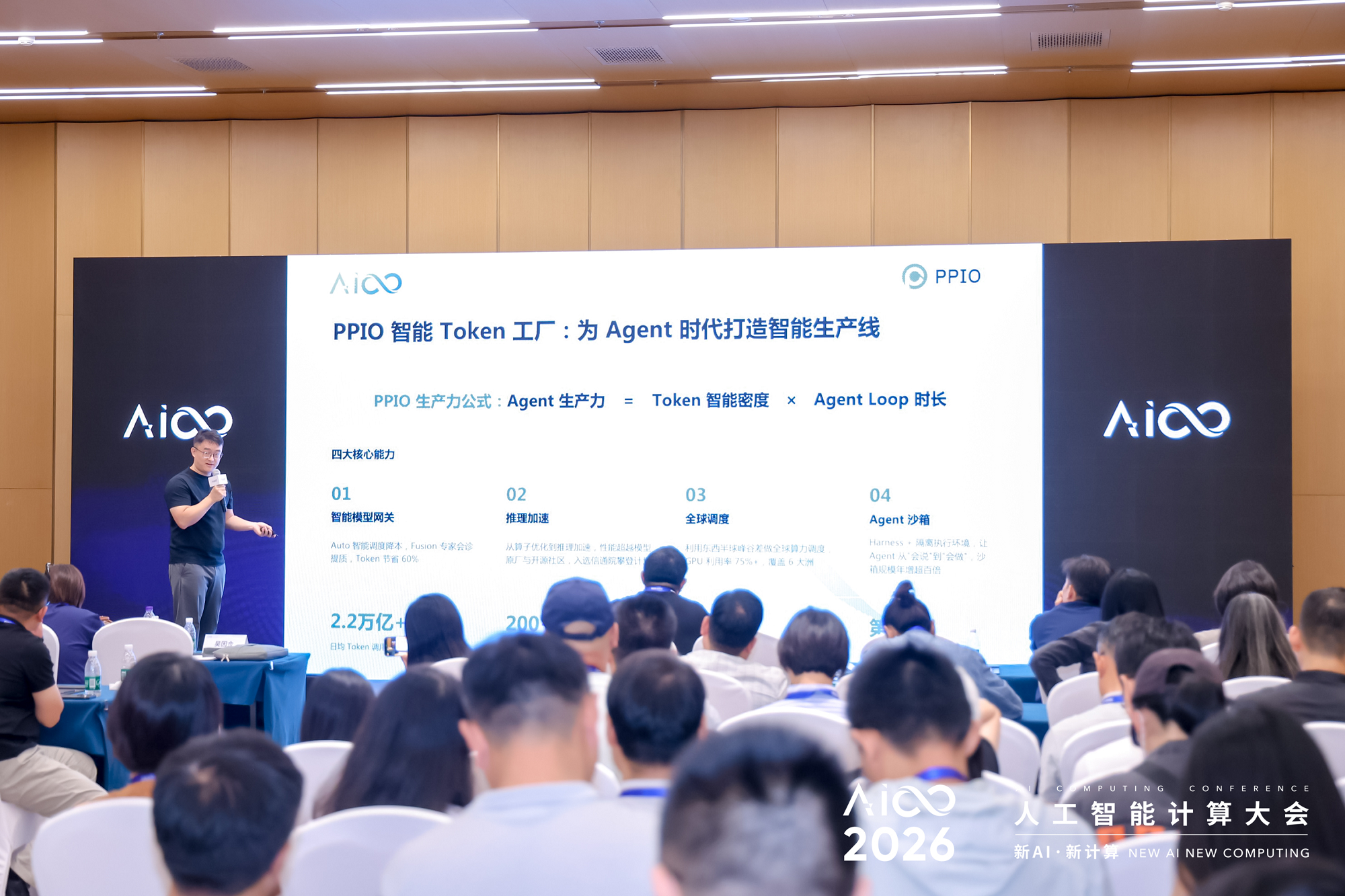
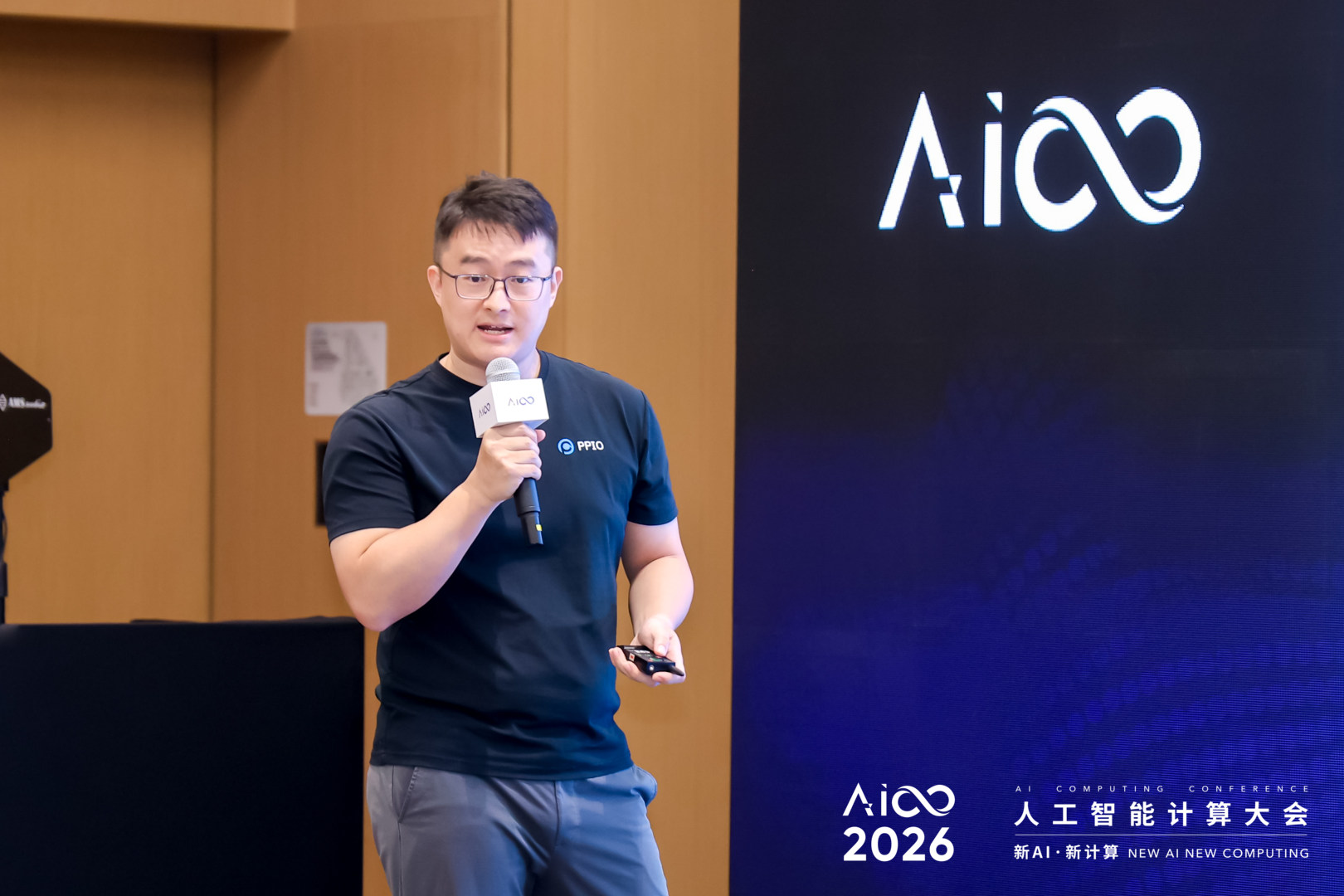
近日,PPIO受邀参加AICC 2026人工智能计算大会。

PPIO研发副总裁李星星发表了题为《PPIO的 Token工厂与智能模型网关实践》的主题演讲,分享了PPIO在智能模型网关、推理加速引擎、全球算力调度与Agent沙箱等核心能力,系统阐述了面向Agent时代的智能Token工厂方法论与全球化实践。

从人使用Token,到Agent使用Token

Token工厂这一概念由英伟达较早提出,今年以来随着AI产业的高速发展,Token工厂正式进入爆发期。李星星指出,5G时代比拼的是手机流量,AI时代比拼的则是Token。

来自工业和信息化部、国家数据局的最新数据显示,截至2026年 6月,我国日均Token调用量已突破500万亿,较2024年增长约5000倍。在OpenRouter全球平台上,中国开源模型的Token调用量连续多周超越美国模型,位居全球第一。

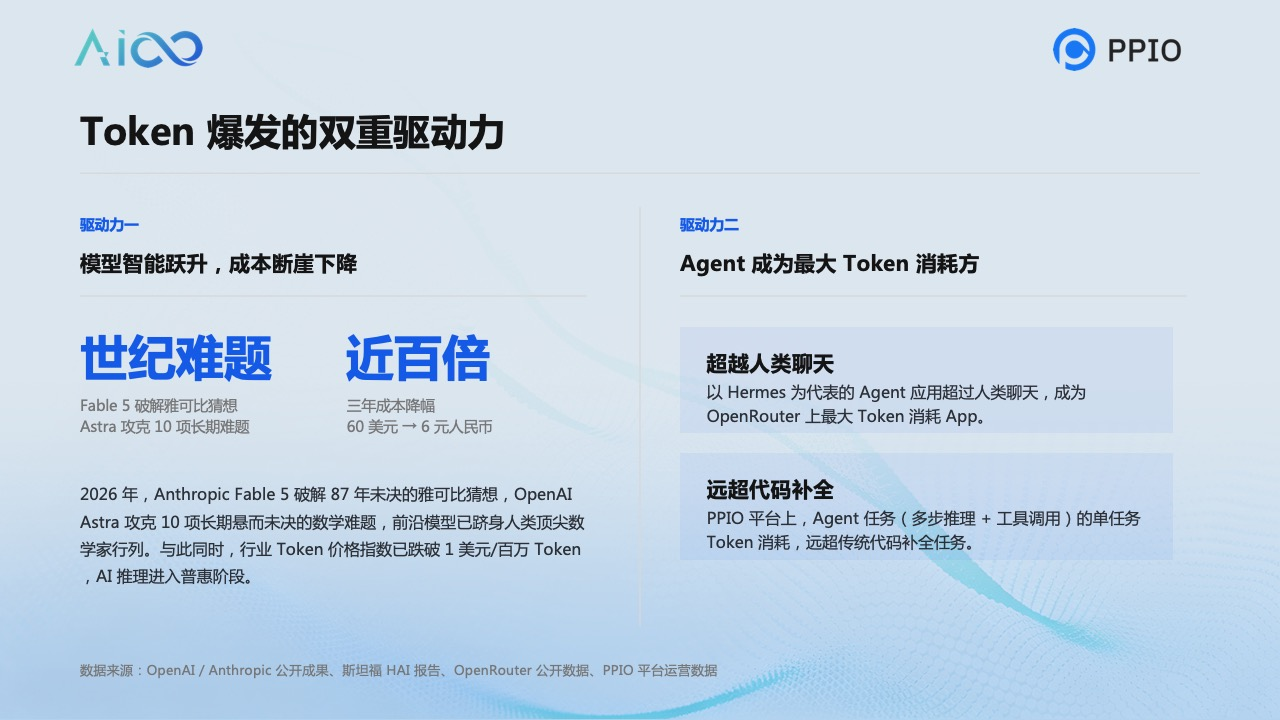
李星星总结了Token爆发的双重驱动力。第一重驱动力,来自于大模型智能的持续跃升以及成本的断崖式下降。以海外模型为例,Anthropic与 OpenAI正在SOTA模型上激烈竞逐,接连攻克多项长期悬而未决的数学难题。与此同时,行业Token价格较GPT-3.5/4时代已下降约100至 200倍,单价跌破1 美元/百万Token,AI推理全面进入普惠阶段。

第二重驱动力,则来自于Agent的爆发。Hermes Agent、OpenClaw这类Agent产品已经成为Openrouter平台最大的Token消耗方,PPIO平台上的Token消耗也以Agent任务为主。

Agent使用云的行为模式与人类截然不同。传统云服务以“请求—响应”的同步交互为主,使用节奏与人的作息一致;而Agent被交付复杂任务后可以持续自主探索,任务时长从分钟级的对话、10分钟级的PPT生成,延伸到小时级、天级乃至周级的复杂调研,并具备自主重试、策略调整与自我纠错能力。

“云基础设施需要被重新定义——从为人提供资源转向为Agent提供智能生产环境。”李星星总结道。

PPIO智能Token工厂:为Agent时代打造智能生产线

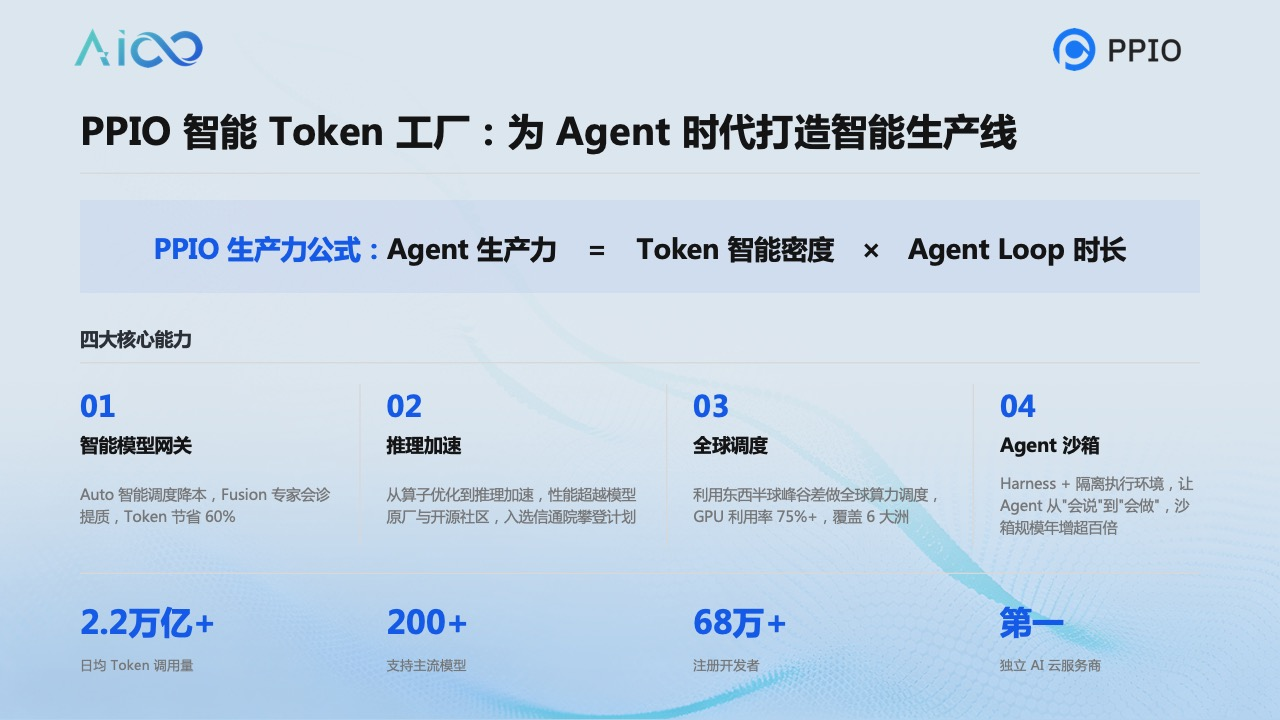
针对Agent时代的智能新命题,PPIO提出了“智能Token工厂”的系统性解法,并给出一条生产力公式:Agent生产力 =Token智能密度 ×Agent Loop时长。Token智能密度指单位Token所携带的智能总量,Agent Loop时长则对应任务复杂度。

围绕这一公式,PPIO的智能Token工厂构建了以下核心能力:

一是智能模型网关。 面对累计已上架数百款模型带来的“选择困难”,PPIO把繁复的评测榜单内化进网关,根据用户输入内容与使用场景(写作、Coding等)自动调度不同模型,用Auto智能调度与Fusion融合模型“双引擎”分工协作。

Auto模式按任务复杂度动态路由最优模型,简单任务用轻量模型、复杂任务用强模型,辅以冗余上下文压缩、预算护栏与失败回退机制,实测可节省60% 的Token开销。

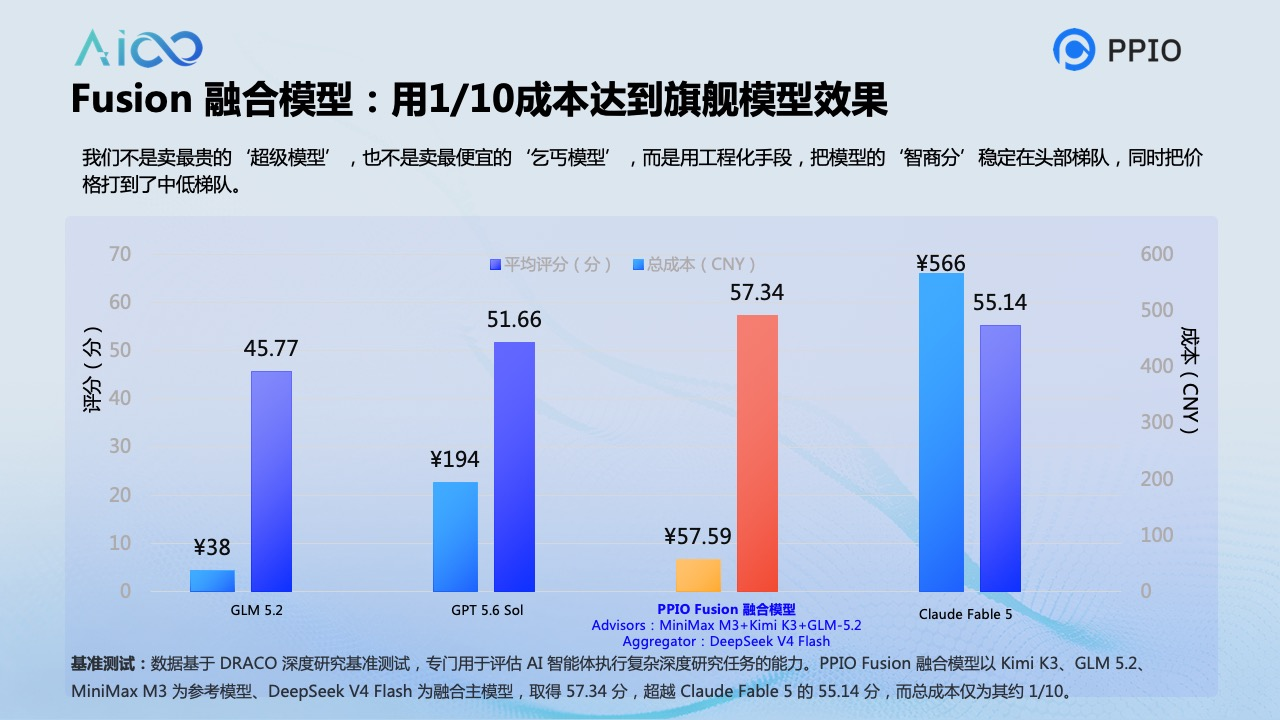
Fusion模式则将一次请求同时分发给多个专家模型并行作答,通过思考编排与交叉验证融合生成最终答案,用约1/10的成本实现了旗舰模型的智能水平。

“我们不是卖最贵的‘超级模型’,也不是卖最便宜的‘乞丐模型’,而是用工程化手段,把模型的‘智商分’稳定在头部梯队,同时把价格打到中低梯队。”李星星表示,这正是智能模型网关“Auto调度降本 +Fusion会诊提质”方法论的核心价值。

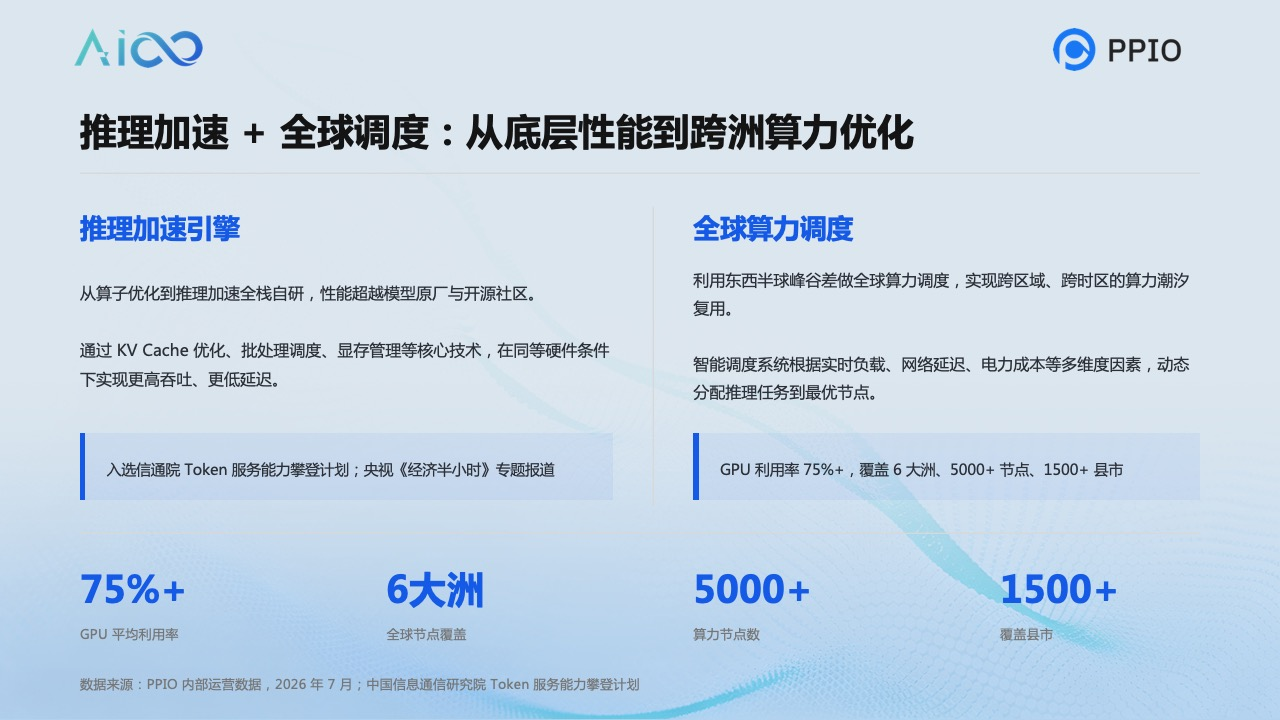
二是推理加速引擎。PPIO从算子优化到推理加速实现全栈自研,通过PD分离、KV Cache优化、批处理调度、显存管理等核心技术,在同等硬件条件下实现更高吞吐与更低延迟,可实现300% 的吞吐提升,性能超越模型原厂与开源社区。

PPIO在今年6 月入选中国信息通信研究院Token服务能力攀登计划,在通用场景下PPIO模型服务可实现TPS≥55个/秒、TTFT≤0.9秒、调用成功率 ≥99.9%。

三是全球算力调度。PPIO构建了全球算力网络,覆盖6 大洲、5000+ 节点、1500+ 县市。PPIO利用东西半球的峰谷差实现算力跨时区潮汐复用,智能调度系统根据实时负载、网络延迟、电力成本等多维因素动态分配推理任务,GPU平均利用率达75% 以上,远高于行业平均水平。

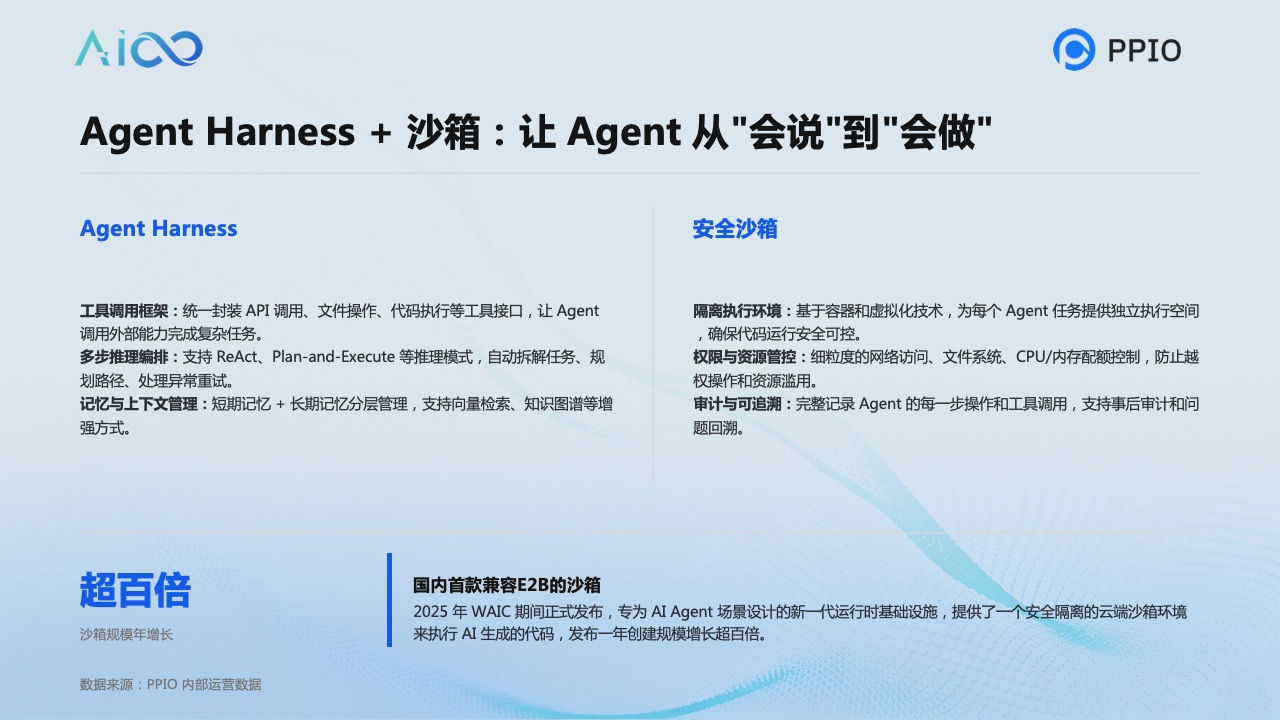
四是Agent Harness与安全沙箱。 通过统一封装工具调用、支持ReAct、Plan-and-Execute等多步推理编排以及分层记忆管理,配合虚拟机级隔离的沙箱执行环境、细粒度权限管控和全链路审计,让Agent真正从“会说”走向“会做”。

李星星指出,当前主流的Agent Harness产品大多只能在本地运行,PPIO做的一件事是把Harness搬到云端——复杂任务可以24小时连续不间断执行,用户甚至能用手机管理任务,无需本地电脑长期开机;同时所有运行都在云端隔离沙箱内完成,支持大量试错、代码编写与验证,不安全操作被限制在独立环境中。目前已有不少大模型厂商使用PPIO的安全沙箱进行强化学习验证,沙箱推出一年后已实现超百倍增长。

Token出海,PPIO的技术全球化实践

李星星还分享了PPIO的全球化布局与中国AI技术出海实践。

PPIO通过东西半球潮汐调度实现算力跨半球流动——亚洲白天高峰调度至美洲夜间低谷、欧洲高峰调度至亚太夜间,实现全球算力利用率最大化;同时以200+ 主流模型的多语言多模型支持、遵循各地区数据保护法规的本地化部署方案,服务全球开发者生态。

PPIO深度融入全球AI开源生态,与GitHub、Hugging Face、OpenRouter、vLLM、SGLang等全球主流开发者社区建立紧密合作,与数十家AI工具与产品完成生态对接合作。

李星星表示,从互联网、移动互联网时代“产品创新在中国、技术创新在美国”的格局,到AI时代中国的技术能力同样强劲、并更多面向全球输出,PPIO希望把Token工厂的服务带到全世界。PPIO的全球化实践证明,中国AI企业不仅能在本土市场取得成功,更能通过技术创新和基础设施布局参与全球AI产业竞争。智能Token工厂模式为中国AI技术出海提供了可复制的基础设施范式。

PPIO致力于构建面向Agent时代的智能Token工厂,以技术创新驱动AI产业可持续发展,让智能算力像水电一样普惠可用,与行业伙伴和开发者社区共创智能未来。

注:文/龚作仁,文章来源:Laborer,本文为作者独立观点,不代表亿邦动力立场。

文章来源:Laborer

广告
微信
朋友圈

FAQ回顾

智能Token工厂是什么?

Token工厂概念由英伟达较早提出,指将Token生产、调度与优化变成标准化基础设施。PPIO进一步提出智能Token工厂,通过智能模型网关、推理加速引擎、全球算力调度与Agent沙箱,为Agent时代构建智能生产线,其生产力公式为Agent生产力=Token智能密度×Agent Loop时长。

AI时代Token调用量增长有多快?

据工业和信息化部、国家数据局数据,截至2026年6月,中国日均Token调用量已突破500万亿,较2024年增长约5000倍;在OpenRouter全球平台上,中国开源模型的Token调用量连续多周超越美国模型,位居全球第一。

Token价格为什么会大幅下降?

主要受大模型智能跃升和成本断崖式下降驱动。Anthropic、OpenAI在SOTA模型上展开竞赛,推动能力持续提升;行业Token价格较GPT-3.5/4时代下降约100至200倍,单价跌破1美元/百万Token,AI推理全面进入普惠阶段。

Agent对云基础设施提出了哪些新要求?

Agent被交付复杂任务后可自主探索,任务时长从分钟级延伸到小时、天甚至周级,并能自主重试、自我纠错。传统以“请求—响应”同步交互、按人作息设计的云服务不再适用,云基础设施需从为人提供资源转向为Agent提供智能生产环境。

PPIO智能模型网关的Auto调度和Fusion模式有什么优势?

Auto模式按任务复杂度动态路由模型,简单任务用轻量模型、复杂任务用强模型,实测可节省60% Token开销;Fusion模式将一次请求分发给多个专家模型并行作答并交叉验证,用约1/10成本实现旗舰模型智能水平,体现“Auto调度降本、Fusion会诊提质”的价值。

这么好看,分享一下?

朋友圈 分享

APP内打开

赞 +1
+1
微信好友 朋友圈 新浪微博 QQ空间
关闭
收藏成功
发送
/140 0