广告
加载中

从 "人找货" 到 "AI调度":磅旗科技3C半导体智慧物流的全链路无人化实践

龚作仁 2026-09-22 15:52
龚作仁 2026/09/22 15:52

邦小白快读

EN
全文速览

这篇文章核心介绍了3C半导体行业传统物流的现实痛点,以及磅旗科技推出的AI驱动全链路无人化智慧物流方案的落地价值与低门槛接入模式,有不少可参考的实操信息。

1. 3C半导体行业存在普遍物流困境:SKU规模大,人工管理库存准确率仅85%-90%;晶圆、面板等精密件人工搬运货损率高,洁净车间人员进出受限;产线高频换线时,人工配送易出现线边堆料或断料;人工记录追溯信息易错,审计合规被动;行业搬运岗位年员工流失率达30%-46%,招工难、成本高。

2. 方案实际落地效果明确:比如月台装卸时间从45分钟缩短至15分钟,人工成本节省70%以上,货损率降至0;企业已有的不同品牌物流机器人无需淘汰,可接入统一调度系统降低改造成本。

3. 方案接入门槛灵活,可选择RaaS按月付费模式,无需大额一次性投入,淡季还能弹性缩减设备规模,避免闲置浪费。

3C半导体品牌当前正面临物流环节制约产能弹性、人力成本持续挤压利润的现实问题,AI驱动的全链路无人化智慧物流,是强化供应链韧性、支撑产品快速迭代的重要升级方向。

1. 从供应链升级的核心需求看,当前多品种、小批量、高频换线的生产模式下,传统人工物流存在库存准确率低、精密件货损高、配送节拍不匹配、批次追溯难、一线人员流失率高五大痛点,直接影响产品交付效率与品质稳定性,是品牌供应链升级的核心切入点。

2. 升级无需盲目堆叠单点设备,要注重全链路系统协同:以工业AI智能体为调度核心,打通生产、仓储数据预判物料需求,同时可兼容存量物流机器人,控制改造成本,覆盖从原料入库到成品出库的全流程场景。

3. 投入模式灵活,可选择RaaS轻资产模式,无需千万级一次性投入,按月付费即可使用服务,还能根据淡旺季产能弹性调整设备规模,适配3C行业产品迭代快、产能波动大的特点,落地项目普遍实现出入库效率提升2倍以上、人力成本降低70%的效果。

3C半导体领域的经营主体,既可以通过智慧物流升级破解当前经营痛点、提升盈利空间,也可抓住行业智慧改造的蓝海机遇拓展业务。

1. 现有经营模式下的风险提示:传统人工物流模式库存准确率不足90%,易引发断货或库存积压;精密元器件人工搬运货损率高,叠加旺季招工难、配送滞后,容易影响订单交付履约;搬运岗位年流失率最高达46%,招聘、培训成本持续攀升,会直接挤压经营利润。

2. 可直接落地的提效路径:引入全链路无人化物流方案,可实现月台装卸效率提升2倍、出入库效率提升2倍以上,拣选差错率大幅降低,仓储能力最高提升3倍,人力成本节省超70%。

3. 低门槛合作提示:无需一次性投入千万级采购设备,可选择RaaS机器人即服务模式,由服务商提供设备与运维,企业按月付费,淡季可弹性缩减机器人规模规避闲置风险,也可对接服务商生态,切入3C制造智慧升级的增量市场。

3C半导体工厂推进物流环节数字化、无人化改造,是破解当前生产瓶颈、提升产能弹性的核心方向,已有经过头部客户验证的成熟落地路径可参考。

1. 工厂生产端的核心物流改造需求集中在五大维度:解决海量SKU下人工库存准确率仅85%-90%的账实不符问题,满足晶圆、显示面板等精密元器件搬运的零震动、零碰撞、防静电、高洁净要求,匹配多机型高频换线的精准物料配送节拍,实现全批次物料可追溯满足合规要求,缓解搬运岗位年流失率30%-46%带来的招工、管理压力。

2. 数字化改造的实操启示:无需盲目淘汰存量物流设备,可通过支持多品牌机器人接入的统一调度系统盘活现有AGV/AMR资产,打通生产、仓储系统数据,用AI预判物料需求,覆盖月台装卸、产线配送等五大核心物流场景。

3. 改造投入灵活,可选择RaaS轻资产模式降低前期压力,已落地项目显示改造后存储面积可缩减50%、整体效率提升2倍,出入库效率提升超2倍。

3C半导体行业智慧物流改造市场空间广阔,服务商可围绕客户的系统性痛点,打造技术+硬件+灵活商业模式的一体化解决方案,抢占市场增量。

1. 行业客户的核心痛点已从单点设备采购转向全链路协同需求:客户普遍面临海量SKU库存精度低、精密件搬运要求高、高频换线配送响应慢、批次追溯合规压力大、一线岗位流失率高五大难题,且多数客户已采购不同品牌的AGV/AMR设备,存在设备孤岛无法统一调度的问题,同时千万级的一次性改造成本门槛,让很多企业望而却步。

2. 可参考的成熟解决方案框架:技术层打造融合3C行业工艺规则的工业AI智能体为调度大脑,配套生产数据协同系统、多品牌机器人混合调度系统;硬件层搭建覆盖全场景的AMR硬件矩阵;商业模式层推出RaaS弹性付费服务,降低客户准入门槛。

3. 该类方案的价值已在半导体显示、LED、电子制造服务等多个细分领域头部客户处验证,可实现客户人力成本节省70%以上、货损率降至0、作业效率提升2倍以上。

3C半导体企业的智慧化升级需求,对工业服务、产业互联网类平台的生态整合、服务供给能力提出了新要求,也为平台招商、运营优化、风险防控指明了方向。

1. 平台需重点响应企业的核心需求:当前3C制造企业在物流升级中,普遍存在存量多品牌机器人无法协同调度、生产与仓储系统数据不通、一次性改造成本过高难以承担、淡旺季产能波动大易出现设备闲置等问题,需要平台提供可兼容、低门槛、弹性化的服务,而非单一的硬件产品售卖。

2. 平台招商与运营可参考的方向:可引入具备全链路智慧物流服务能力的服务商,整合AI调度系统、多场景AMR硬件、专业运维等资源,一方面为存量制造客户提供可快速落地的升级服务,优先盘活客户现有设备降低改造成本;另一方面推出RaaS类弹性付费服务,支持企业按月付费、按需调整设备规模,降低客户准入门槛。

3. 运营风险规避提示:平台引入相关服务时,要优先选择已在细分领域有头部客户落地验证的方案,确保适配3C行业的特殊生产要求,避免方案与场景不匹配。

3C半导体行业的物流无人化升级实践,展现了智能制造领域的产业新动向、新模式,也为产业政策引导、行业研究提供了现实参考样本。

1. 当前产业发展面临的新问题:3C半导体行业多品种、小批量、高频换线的生产模式下,传统人工物流已成为产能提升的核心制约,具体表现为SKU爆炸下库存精度不足、精密件搬运零容错要求难满足、换线配送响应慢、批次追溯合规成本高、一线搬运岗位年流失率30%-46%导致人力供给不稳,且早期智能化改造存在单点设备堆叠、多品牌设备形成数据孤岛、一次性投入成本过高等堵点。

2. 产业新动向与新模式:智慧物流升级正从单点设备自动化转向全链路系统智能化,以工业AI智能体为数字大脑,打通生产、仓储数据,通过多品牌机器人统一调度盘活存量资产,实现全场景无人化作业;同时出现RaaS机器人即服务的轻资产模式,将大额固定资产投入转化为弹性运营服务,适配3C行业生产特征。

3. 落地项目验证,相关方案可帮助企业作业效率提升2倍以上、人力成本降低70%、货损率趋近于0,为制造端产能弹性提升提供了可复制路径。

返回默认
声明:快读内容全程由AI生成,请注意甄别信息。如您发现问题,请发送邮件至 run@ebrun.com 。

我是 品牌商 卖家 工厂 服务商 平台商 研究者 帮我再读一遍。

Quick Summary

This article outlines the longstanding pain points of traditional logistics in the 3C semiconductor industry, as well as the practical value and low-barrier adoption model of the AI-powered end-to-end unmanned smart logistics solution launched by Pangqi Technology, with actionable insights for industry practitioners.

1. Logistics challenges are widespread across the 3C semiconductor sector: manual inventory management only achieves 85%-90% accuracy amid massive SKU portfolios; manual handling of fragile components such as wafers and display panels leads to high cargo damage rates, while cleanroom access restrictions for personnel add further operational friction; frequent production line changeovers often cause line-side material overstock or stockouts under manual delivery; manual record-keeping for traceability is error-prone, creating compliance risks during audits; and annual turnover for material handling roles reaches 30%-46%, leading to persistent labor shortages and rising costs.

2. The solution has delivered measurable results in real-world deployments: for example, dock loading and unloading time has been cut from 45 minutes to 15 minutes, labor costs reduced by over 70%, and cargo damage rates brought down to zero. Businesses do not need to replace existing logistics robots of different brands, as these can be connected to a unified scheduling system to lower retrofit costs.

3. The solution offers flexible adoption terms, including a pay-as-you-go RaaS (Robotics as a Service) monthly subscription model that eliminates large upfront capital expenditures. Businesses can also scale down their device fleets during off-peak seasons to avoid idle asset waste.

3C semiconductor brands currently face practical constraints from logistics operations that limit production flexibility and continuously squeeze profit margins. AI-powered end-to-end unmanned smart logistics represents a critical upgrade direction to strengthen supply chain resilience and support rapid product iteration.

1. From the perspective of core supply chain upgrade needs, under the current production model of high-mix, low-volume runs and frequent line changeovers, traditional manual logistics creates five key pain points: low inventory accuracy, high damage rates for precision components, mismatched delivery cadence, difficult batch traceability, and high frontline staff turnover. These issues directly undermine product delivery efficiency and quality stability, making them core entry points for brand supply chain upgrading.

2. Upgrades should not rely on blindly stacking discrete point solutions; instead, priority should be placed on end-to-end system coordination. Taking an industrial AI agent as the core scheduling layer to integrate production and warehouse data and predict material demand, while remaining compatible with existing logistics robots, helps control retrofit costs and covers full-scenario workflows from raw material inbound to finished goods outbound.

3. The solution offers flexible investment terms, including an asset-light RaaS model that eliminates tens of millions in upfront capital expenditure via monthly service fees. It also allows enterprises to adjust their robot fleet size elastically based on peak and off-peak production capacity, fitting the 3C industry’s characteristics of fast product iteration and volatile production demand. Deployed projects have commonly achieved over 2x improvement in inbound and outbound efficiency and a 70% reduction in labor costs.

Operators in the 3C semiconductor sector can not only resolve current operational pain points and expand profit margins through smart logistics upgrades, but also capture the blue-ocean opportunity of industry-wide intelligent transformation to expand their business scope.

1. Risk warnings under existing operating models: Traditional manual logistics delivers less than 90% inventory accuracy, which easily leads to stockouts or overstock; manual handling of precision components causes high damage rates, which, combined with labor shortages during peak seasons and delivery delays, can hurt order fulfillment performance; annual turnover for handling roles reaches up to 46%, driving rising recruitment and training costs that directly erode operating profits.

2. Actionable efficiency improvement pathways: Deploying an end-to-end unmanned logistics solution can deliver 2x improvement in dock loading and unloading efficiency, over 2x higher inbound and outbound efficiency, sharply reduced picking error rates, up to 3x higher storage capacity, and over 70% labor cost savings.

3. Low-barrier cooperation guidance: Enterprises do not need to make tens of millions in upfront equipment purchases. They can opt for the RaaS model, where service providers supply equipment and operation and maintenance support for a monthly fee, and scale down robot fleets during off-peak seasons to avoid idle asset risks. Operators can also partner with service provider ecosystems to tap into the incremental market of 3C manufacturing intelligent upgrades.

Advancing digital and unmanned logistics transformation is a core priority for 3C semiconductor factories to resolve current production bottlenecks and improve capacity flexibility, with mature, proven deployment pathways validated by leading industry customers available for reference.

1. Core logistics transformation needs on the factory production side fall into five key dimensions: resolving account-inventory discrepancies under massive SKU portfolios, where manual inventory accuracy only reaches 85%-90%; meeting the zero-vibration, zero-collision, anti-static, and high-cleanliness requirements for handling precision components such as wafers and display panels; matching precise material delivery cadence for high-frequency, multi-model line changeovers; enabling full-batch material traceability to meet compliance requirements; and alleviating recruitment and management pressure caused by 30%-46% annual turnover in handling roles.

2. Practical insights for digital transformation: Factories do not need to blindly phase out existing logistics equipment. Instead, they can revitalize current AGV/AMR assets via a unified scheduling system compatible with multi-brand robots, integrate production and warehouse system data, leverage AI to predict material demand, and cover five core logistics scenarios including dock loading and unloading and production line delivery.

3. Transformation investment is flexible, with the asset-light RaaS model available to reduce upfront pressure. Data from deployed projects shows that after transformation, storage area can be reduced by 50%, overall operational efficiency improved by 2x, and inbound and outbound efficiency increased by over 2x.

The smart logistics transformation market for the 3C semiconductor industry holds broad growth potential. Service providers can capture market share by developing integrated solutions combining technology, hardware, and flexible business models that address customers’ systemic pain points.

1. Industry customers’ core pain points have shifted from single-point equipment procurement to end-to-end collaboration needs: Most customers face five common challenges, including low inventory accuracy for massive SKU portfolios, strict handling requirements for precision components, slow delivery response during frequent line changeovers, high compliance pressure for batch traceability, and high frontline staff turnover. Many customers have already purchased AGV/AMR equipment from different brands, creating isolated equipment silos that cannot be scheduled uniformly. Meanwhile, the tens of millions in upfront capital required for traditional transformation creates a high entry barrier that deters many enterprises.

2. A proven solution framework for reference: On the technology layer, build an industrial AI agent integrated with 3C industry process rules as the core scheduling brain, supported by a production data collaboration system and a multi-brand robot hybrid scheduling system; on the hardware layer, deploy an AMR hardware matrix covering all operational scenarios; on the business model layer, launch flexible RaaS payment plans to lower customer entry barriers.

3. The value of this type of solution has been validated by leading customers across multiple sub-sectors including semiconductor displays, LED, and electronics manufacturing services, delivering over 70% labor cost savings, zero cargo damage rates, and over 2x improvement in operational efficiency for customers.

The intelligent upgrade demand of 3C semiconductor enterprises poses new requirements for the ecosystem integration and service delivery capabilities of industrial service and industrial internet platforms, while also pointing to clear directions for platform merchant recruitment, operational optimization, and risk control.

1. Platforms need to prioritize responding to enterprises’ core needs: During logistics upgrades, 3C manufacturers commonly face issues such as inability to coordinate and schedule existing multi-brand robot fleets, disconnected data between production and warehouse systems, prohibitive upfront transformation costs, and idle equipment risks caused by volatile capacity across peak and off-peak seasons. This requires platforms to provide compatible, low-barrier, flexible services rather than simply selling standalone hardware products.

2. Reference directions for platform merchant recruitment and operations: Platforms can onboard service providers with end-to-end smart logistics service capabilities, integrating AI scheduling systems, multi-scenario AMR hardware, and professional operation and maintenance resources. On one hand, this allows platforms to deliver rapidly deployable upgrade services for existing manufacturing customers, prioritizing the revitalization of customers’ existing equipment to lower retrofit costs; on the other hand, platforms can launch flexible RaaS payment services that support monthly subscriptions and on-demand fleet size adjustment to reduce customer entry barriers.

3. Operational risk mitigation guidance: When onboarding relevant services, platforms should prioritize solutions that have been validated by leading customers in targeted sub-sectors to ensure alignment with the special production requirements of the 3C industry and avoid mismatches between solutions and on-site scenarios.

The unmanned logistics upgrade practices in the 3C semiconductor industry reveal new industry trends and models in the smart manufacturing space, while also providing real-world reference samples for industrial policy guidance and academic and industry research.

1. Emerging challenges facing industrial development: Under the 3C semiconductor industry’s production model of high-mix, low-volume runs and frequent line changeovers, traditional manual logistics has become a core constraint on capacity improvement. Specific manifestations include insufficient inventory accuracy amid SKU proliferation, difficulty meeting zero-tolerance handling requirements for precision components, slow delivery response during line changeovers, high compliance costs for batch traceability, and unstable labor supply caused by 30%-46% annual turnover in frontline handling roles. In addition, earlier intelligent transformation efforts faced bottlenecks such as disconnected stacks of single-point automation equipment, data silos across multi-brand devices, and excessively high upfront investment costs.

2. New industry trends and models: Smart logistics upgrades are shifting from single-point equipment automation to end-to-end system intelligence. Using industrial AI agents as the digital core, solutions integrate production and warehouse data, revitalize existing assets via unified scheduling of multi-brand robots, and enable full-scenario unmanned operations. Meanwhile, the asset-light RaaS (Robotics as a Service) model has emerged, converting large fixed asset investments into flexible operational services that align with the production characteristics of the 3C industry.

3. Validation from deployed projects shows that relevant solutions can help enterprises achieve over 2x improvement in operational efficiency, 70% reduction in labor costs, and near-zero cargo damage rates, providing a replicable pathway to improve capacity flexibility on the manufacturing side.

Disclaimer: The "Quick Summary" content is entirely generated by AI. Please exercise discretion when interpreting the information. For issues or corrections, please email run@ebrun.com .

I am a Brand Seller Factory Service Provider Marketplace Seller Researcher Read it again.

3C半导体行业,是一场与时间的赛跑。产品迭代以月计,SKU数以万计,物流环节正成为制约产能弹性与交付效率的关键变量。

多品种、小批量、高频换线的生产模式,以及精密元器件的严苛搬运要求,让传统人工作业难以为继。而一线劳动力成本上行、招工难、流失率高的问题也正日益突出。

工业AI智能体与AMR智能机器人的协同应用,正帮助3C半导体企业在这场与时间的赛跑中赢得主动。

3C半导体物流的五大核心挑战

深入3C半导体制造车间和仓储现场,会发现物流痛点并非孤立存在,而是环环相扣的系统性挑战。

01 SKU爆炸与库存精度的矛盾

一款智能手机物料清单动辄数千SKU,传统人工管理库存准确率仅85%-90%,账实不符影响生产连续性。

02精密件搬运的零容错要求

晶圆、芯片、显示面板对震动、碰撞、静电敏感,人工搬运货损率高;洁净度要求也限制人员进出。

03高频换线下的物料配送时效

3C产线一天切换数个机型,物料配送须精准匹配节拍,传统呼叫式配送响应慢,线边仓易堆积或断料。

04批次追溯与合规压力

半导体对物料批次、效期、制程参数追溯要求严格,人工记录、纸质单据低效易错,审计回溯中被动。

05人力成本与管理负担的双重挤压

仓储搬运岗位劳动强度大,行业年均员工流失率30%-46%,招聘培训成本攀升,旺季招工更难。

这五大挑战,每一个都指向同一个方向:用AI驱动的自动化物流系统,替代重复性人工作业,实现从原料入库到成品出库的全链路无人化。

从设备自动化到系统智能化

在3C半导体物流的智能化升级中,真正的效率提升,不是单点设备的堆叠,而是从顶层规划到底层执行的全链路系统协同。

磅旗科技面向3C电子及半导体行业推出的智慧物流解决方案,以全流程无人化为目标,构建了一套覆盖原料入库、产线配送、工序流转、成品仓储、智能拣选、出入库作业的端到端闭环系统。

工业AI智能体:物流系统的数字大脑

传统物流系统的核心瓶颈在于各系统之间数据不通,调度依赖人工经验。磅旗科技自研的工业AI智能体,基于工业大模型底座,自主完成排产协同、库存调度、订单拆解和路径优化,再将搬运指令下发给AMR智能机器人集群。它深度融合了3C半导体行业的工艺规则和现场数据,确保调度指令精准可靠。

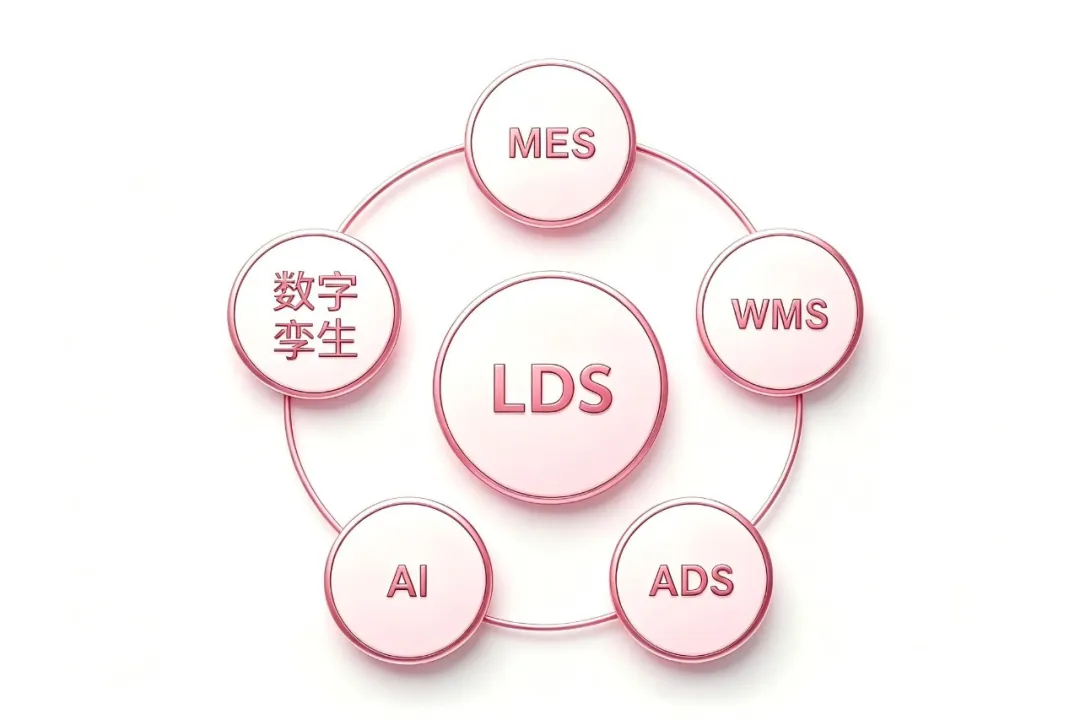
LDS生产协同无人拉动系统:让物料按需而动

磅旗科技行业首创的LDS生产协同无人拉动系统,通过打通MES与WMS的数据流,联动全场AMR集群,实现产线物料的按需自动拉动。AI算法可以预判产线物料消耗速度,提前调度设备配送物料,消除待料停工风险。

ADS多品牌机器人混合调度系统:打破设备孤岛

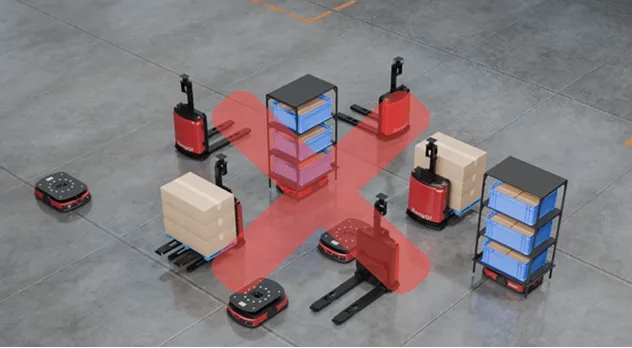
很多3C半导体企业在智能化改造中面临一个现实:车间里已经有了不同品牌、不同型号的AGV/AMR设备,但各品牌无法统一调度,形成了一个个设备孤岛。

磅旗科技的ADS多品牌机器人混合调度系统,正是为解决这一痛点而生。一套调度平台可兼容不同品牌、不同型号的AGV/AMR设备,在同一张地图上混跑作业,自主完成全局路径规划、交通管制、任务优先级分配。存量设备无需淘汰即可接入磅旗调度中台,显著降低改造成本。

全自研AMR硬件矩阵:覆盖3C半导体全物流场景

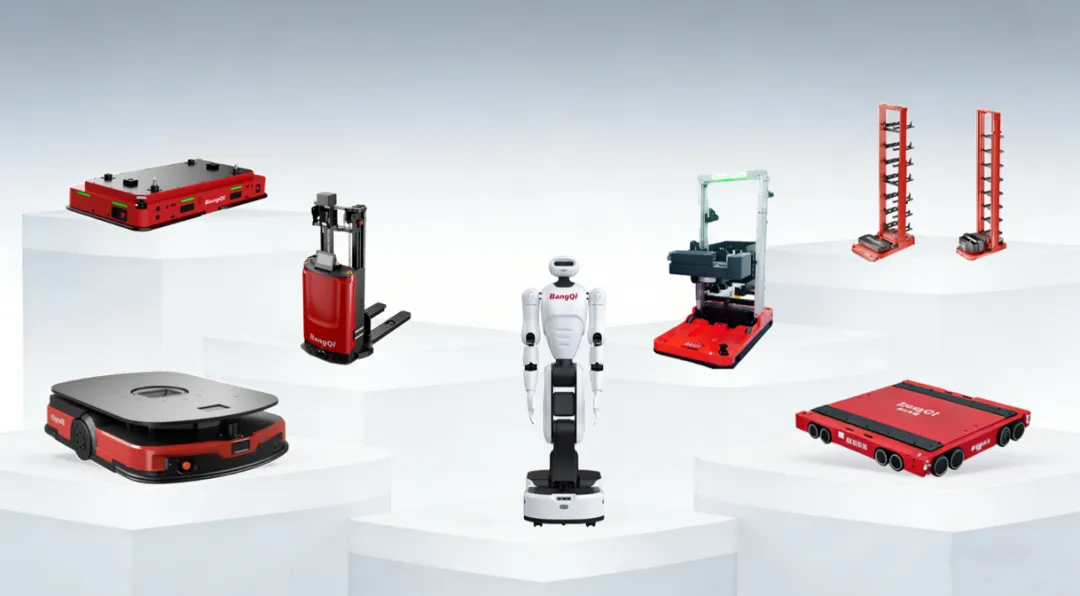
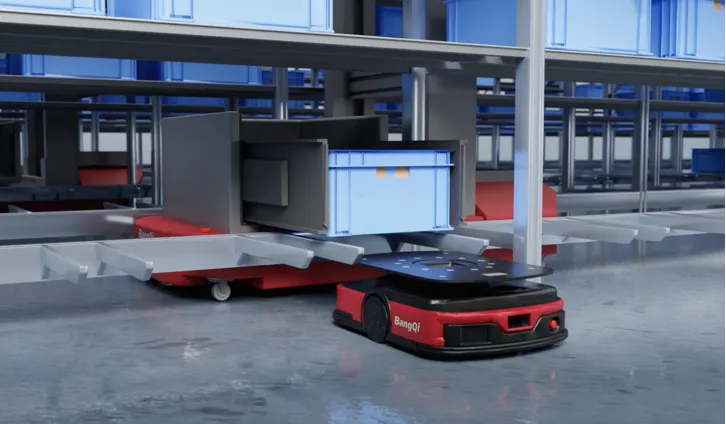
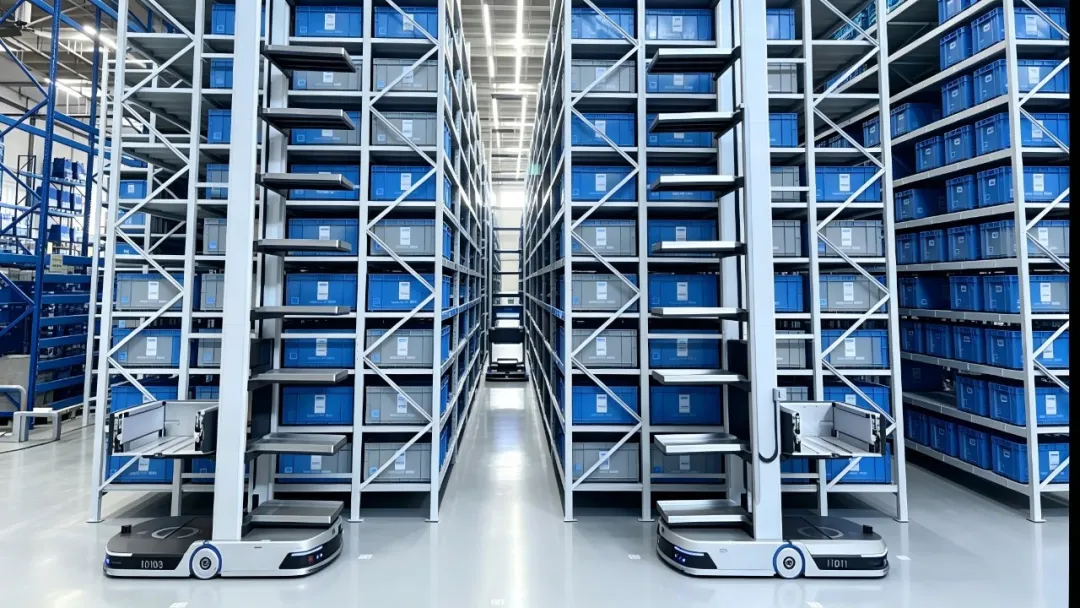
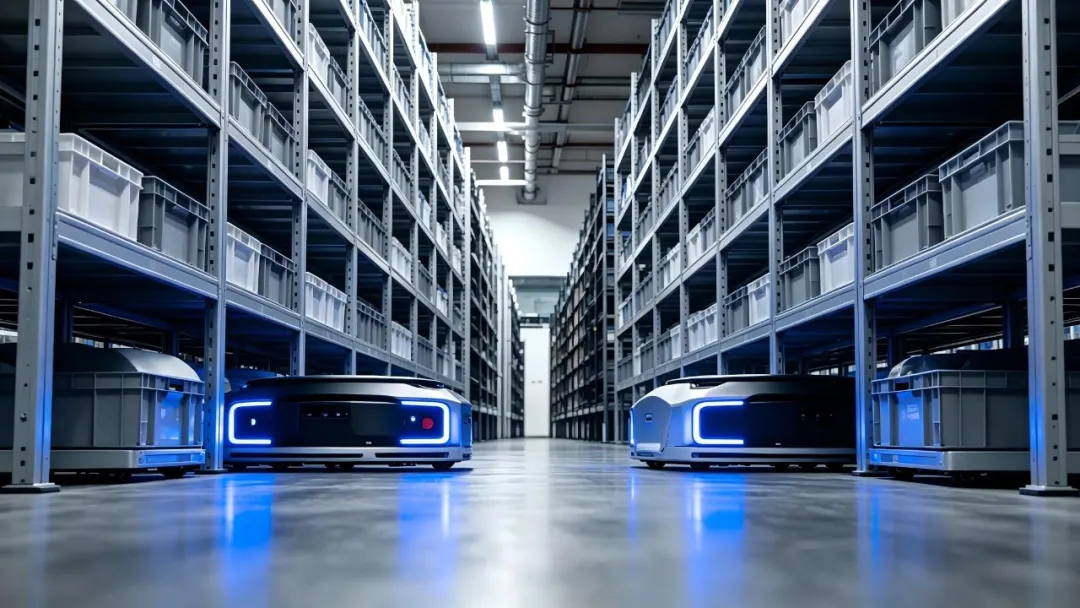
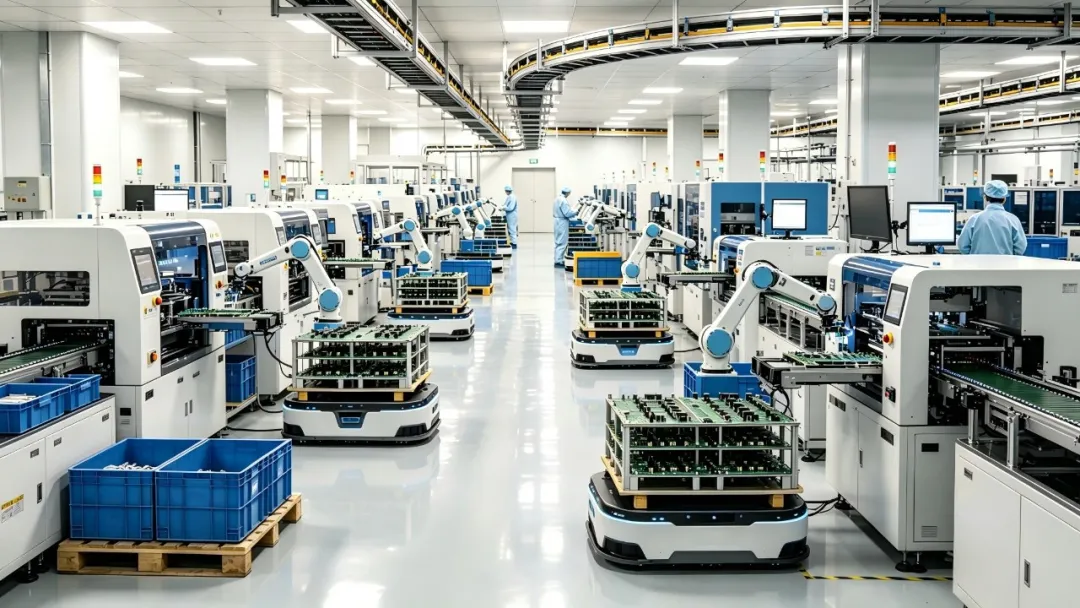
磅旗科技全自研AMR硬件矩阵覆盖3C半导体全物流场景:潜伏式AMR适配SMT、PCBA、整机装配的线边物料转运;料箱AMR(CTU)面向海量SKU的高密度存储拣选;叉取式AMR负责原料仓、成品仓托盘流转;四向穿梭车提升仓储密度;巡检机器人实现24小时AI视觉安全巡查。实现从轻载小件到吨级托盘一站式交付。

五大核心场景:从月台装卸到智能拣选的全链路无人化

磅旗科技面向3C电子及半导体行业的智慧物流解决方案,覆盖月台装卸、产线配送、工序流转、智能拣选、立体存储五大核心场景,实现从货物入库到成品出库的全链路自动化。

场景一:月台自动装卸货

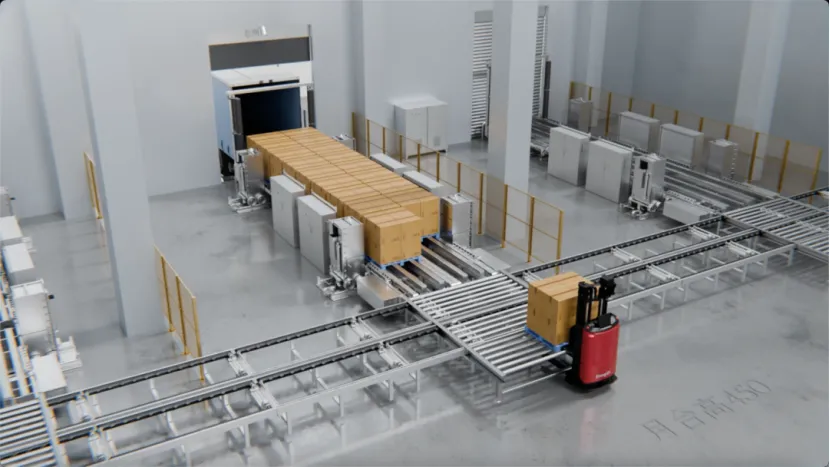
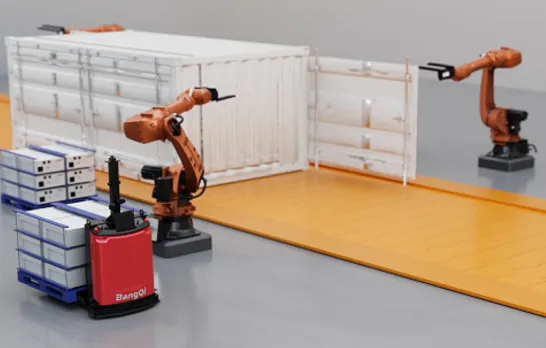
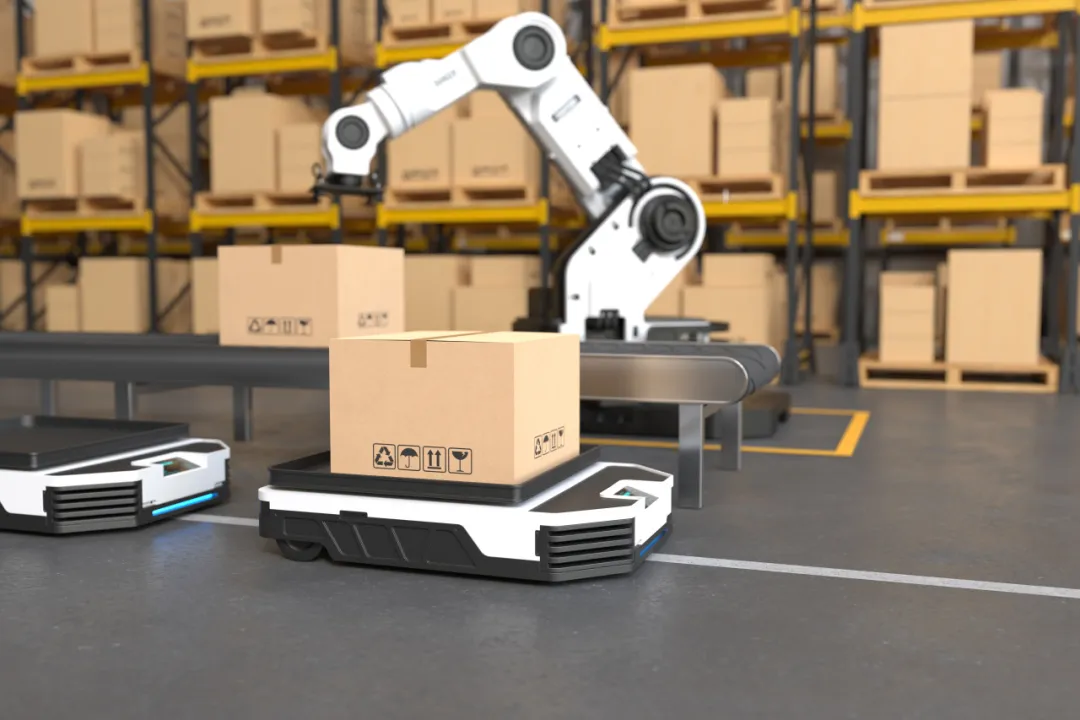
3C半导体工厂原料和成品装卸货量大、吨级货物多,人工装卸效率低、安全隐患大。磅旗科技采用定制化叉轨设备+标准托盘+MES/WMS系统联动,实现全流程自动化装卸,装卸时间从45分钟缩短至15分钟,其中仅需3分半即可实现整车卸货。人工成本节省70%以上,货损率降至0。

场景二:产线物料智能配送

3C产线物料需求多样、节拍不同、换线频繁,人工配送难精准匹配。磅旗科技LDS生产协同无人拉动系统+潜伏式AMR,实时读取MES生产数据,AI算法预判物料需求,提前调度AMR精准配送到工位,换线时自动识别新机型物料清单,大幅缩短换线时间。

场景三:工序间智能流转

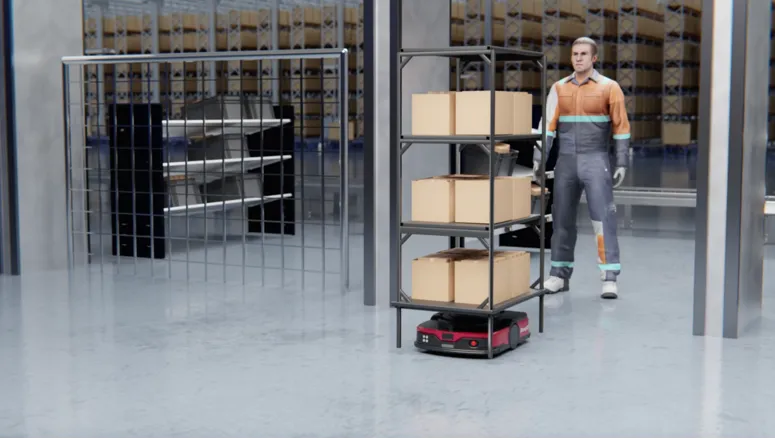
半成品在不同工序、楼层、车间之间流转时,人工搬运效率低且易错料、磕碰损坏。磅旗科技通过AMR集群+ADS统一调度,潜伏式AMR负责轻载转运,叉取式AMR负责托盘搬运,可自动对接货梯、提升机,实现半成品按工序节拍精准流转。

场景四:货到人/货架到人智能拣选

3C成品仓SKU多、订单碎片化,促销节点订单量爆发,人工拣选难应对。磅旗科技提供货到人、货架到人等多种智能拣选方案,潜伏式AMR和拣选机器人分别适配不同场景,配合LDS/ADS系统智能调度,大幅降低拣选差错率。

场景五:上存下拣四向车立体存储

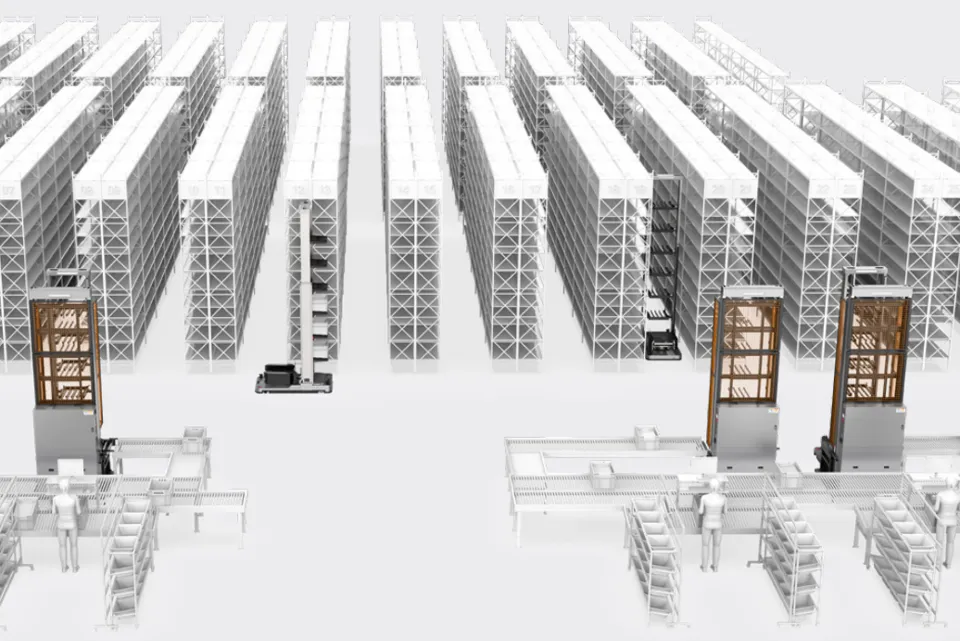
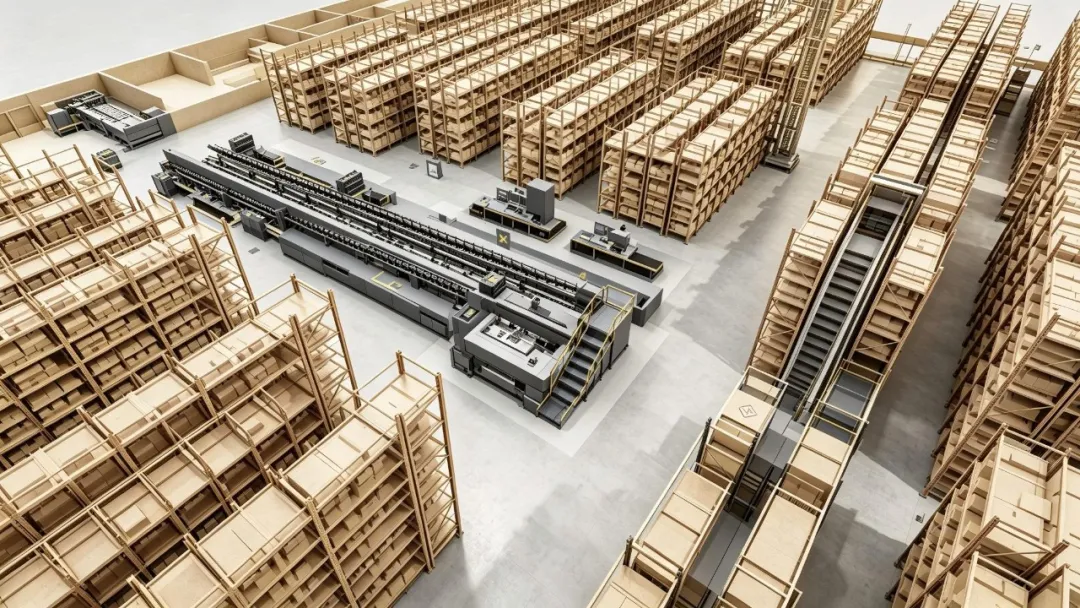
3C半导体工厂仓储空间有限,传统平面仓存取效率低。磅旗科技上存下拣四向车方案颠覆标准平面仓自动化存取,由四向车+拣选机器人+提升机+输送线组成存拣一体化系统,同时满足高存储、高吞吐、高柔性和高性价比,实现上层存储、下层拣选的高效协同。

标杆实践:真实项目中的效率跃迁

磅旗科技在3C电子及半导体行业已服务多个标杆客户,解决方案的价值,在落地项目中得到了真实验证。

案例一:某知名半导体显示企业——平库存储、搬运及拣选自动化

客户为国内领先的半导体显示器件制造商,产品广泛应用于消费电子、车载显示等领域。随着产能扩张,仓库存储、搬运及拣货过度依赖人工,效率低、差错率高。

解决方案

磅旗科技为其部署货到人拣选自动化方案,引入AMR机器人完成商品存储、搬运及拣货操作,实现与上游系统的实时数据同步。

项目价值

- 仓库人力大幅减少,拣选效率显著提升

- 库存数据实时准确,账实不符问题得到解决

- 为企业后续产能扩张提供可复制的物流能力底座

案例二:某LED行业头部企业——跨楼层智慧仓储升级

客户为全球领先的LED应用产品及光显解决方案供应商,其生产基地拥有多楼层厂房,成品存储和物料转运需频繁跨楼层作业,人工搬运效率低下。

解决方案

磅旗科技为其打造覆盖多楼层的智慧仓储系统,部署四向车立体库及多型号AMR机器人,实现成品存储、拣选、跨楼层转运的全流程自动化。

项目价值

- 存储面积减少50%,整体效率提升2倍

- 实现货物在不同楼层之间的自动化转运

- 线边供料数字化、智能化,减少人工作业

案例三:某全球电子制造服务商——自动化智慧工厂

客户背景为全球领先的电子制造服务提供商,服务于众多国际消费电子品牌。工厂原材料存储及送料流程过度依赖人工,随着订单量增长,人工配送难以满足产线节拍要求。

解决方案

磅旗科技为其部署多种AMR机器人组合方案,构建覆盖原材料存储、产线送料、成品仓储的全流程自动化物流系统。

项目价值

- 入库效率提升2.5倍,出库效率提升2.15倍

- 存储能力提升2-3倍

- 大幅降低人力成本,提升物料配送精准度

轻资产运营:RaaS模式让智能仓储零门槛启动

传统一次性买断模式动辄千万级设备投入,加上运维团队建设,让很多企业望而却步。尤其是产能波动大、产品迭代快的3C行业,设备闲置风险不容忽视。磅旗科技创新推出RaaS(Robot as a Service,机器人即服务)模式,由磅旗投入设备、拎包入驻、按月付费,企业无需大额固定资产投入即可享受全套智能仓储服务。

企业按需按量付费,AMR硬件、调度系统、运维服务全部由磅旗承接,淡季可弹性缩减机器人数量,规避设备闲置浪费。

无人化不是终点,而是新起点

3C半导体行业的物流升级,是一场持续的效率精进。磅旗科技以工业AI智能体与AMR机器人为核心,构建覆盖原料入库、产线配送、工序流转、成品仓储、跨楼层转运的全链路智慧物流方案。配合RaaS轻资产合作模式,让智能仓储从高门槛的技术投入,变为可快速落地的运营能力,助力3C半导体企业的产能弹性与业务扩张。

注:文/龚作仁,文章来源:Laborer,本文为作者独立观点,不代表亿邦动力立场。

文章来源:Laborer

广告
微信
朋友圈

FAQ回顾

磅旗科技是一家什么样的公司?

磅旗科技是面向3C电子及半导体行业的智慧物流解决方案提供商,以自研工业AI智能体与AMR机器人,覆盖原料入库、产线配送、工序流转、成品仓储、智能拣选、跨楼层转运等场景,并通过RaaS模式提供按月付费的智能仓储服务。

3C半导体行业物流环节面临哪些主要挑战?

3C半导体物流主要有五大挑战:SKU数量庞大,人工库存准确率仅85%-90%;晶圆、芯片等精密件搬运零容错;高频换线下物料配送响应慢;批次追溯依赖人工低效易错;仓储搬运岗位年均流失率30%-46%,招工和人力成本压力大。

不同品牌的AGV/AMR设备能否统一调度?

可以。磅旗科技推出的ADS多品牌机器人混合调度系统,能兼容不同品牌、不同型号的AGV/AMR设备,在同一张地图上完成全局路径规划、交通管制和任务优先级分配,存量设备无需淘汰即可接入统一调度中台,降低智能化改造成本。

磅旗科技的智慧物流解决方案覆盖哪些场景?

磅旗科技面向3C电子及半导体的方案覆盖月台装卸、产线配送、工序流转、智能拣选、立体存储五大核心场景,实现从原料入库到成品出库的全链路自动化;硬件矩阵包括潜伏式AMR、料箱AMR(CTU)、叉取式AMR、四向穿梭车和巡检机器人。

3C半导体企业采用RaaS模式有什么好处?

RaaS即机器人即服务,企业无需一次性大额采购设备和自建运维团队,由磅旗投入AMR硬件和调度系统,企业按月付费;淡季可弹性缩减机器人数量,规避产能波动和产品迭代带来的设备闲置风险,降低智能仓储落地门槛。

这么好看,分享一下?

朋友圈 分享

APP内打开

赞 +1
+1
微信好友 朋友圈 新浪微博 QQ空间
关闭
收藏成功
发送
/140 0