广告
加载中

姓名贴、护脊书包、社交书:95后家长在天猫买出“开学新三件套”

龚作仁 2026-08-31 11:28
龚作仁 2026/08/31 11:28

邦小白快读

EN
全文速览

本文披露了当前95后家长主导的开学季消费新变化,诞生了“开学新三件套”,同时给普通家长准备开学装备提供了明确的实操参考。

1. 姓名贴可根据需求选择:追求防刮选3D水晶姓名贴,不想手工缝制选免缝熨烫贴,需要重复用选智能便携标签机,担心盖印歪选带透明底座的晨光可视衣物印章。

2. 选儿童书包优先看自重,空包超过800克不建议考虑,优先选带人体工学护脊背板、悬浮减重系统的护脊减负款,比如卡拉羊的8维减负款、分年龄段设计的tigerfamily款都可以选。

3. 帮助孩子适应新环境,可以选择社交主题绘本提前做社交预演,缓解入园入学的焦虑情绪,此外入手AI学习伙伴也成为当前新趋势。

本文披露了95后家长主导的开学消费新趋势,给母婴开学品类品牌商指明了产品研发和渠道布局方向,核心干货如下。

1. 整体消费趋势:当前开学消费已经从简单备齐装备转向解决具体育儿问题,哪怕是姓名贴这类小品类也已经形成完整的细分赛道,存在大量增长机会。

2. 产品研发方向:需要贴合95后家长的细分痛点做设计,姓名贴要覆盖防刮、免缝、复用等不同场景需求;书包要主打护脊减负,控制自重,显性化参数设计,适配家长选品习惯;绘本要围绕入园具体场景做社交主题开发,解决孩子的适应焦虑。

3. 渠道布局:天猫是开学消费核心增长阵地,多个细分品类都获得了数倍的环比增长,适合品牌切入布局,目前已有趣然、星星舟等品牌凭借细分产品实现快速增长。

本文披露了天猫平台开学季多个细分赛道的增长数据和机会,给做母婴开学品类的卖家提供了明确的方向参考,核心干货如下。

1. 高速增长市场梳理:当前多个细分品类都获得了爆发式增长,8月下旬姓名贴相关品类成交环比增长超400%,近两周儿童书包成交环比增长209%,社交主题入园绘本成交环比增长40%,智能玩具品类增长达到49.9%,均处于红利期。

2. 需求变化机会:95后家长愿意为解决具体育儿痛点付费,从物品标识、孩子脊柱保护到入学心理过渡,都有明确的未被充分满足的需求,卖家可围绕细分痛点做产品布局。

3. 机会提示:小品类也能跑出大增长,原本不起眼的姓名贴已经形成完整细分赛道,主打细分功能就能获得用户青睐,卖家可切入功能细分赛道抢占市场。

本文披露了当前开学消费赛道的需求变化,给生产相关母婴产品的工厂指明了产品调整方向和商业机会,核心内容如下。

1. 产品生产设计需求:当下下游用户需求越来越精细化,需要围绕具体痛点做产品设计升级:姓名贴要开发不同工艺的细分款,满足3D防刮、免缝、可复用等差异化需求;书包要强化护脊减负功能,加入人体工学背板、悬浮减重等技术,严格控制空包自重。

2. 商业机会:围绕95后家长育儿需求的新品类增长强劲,除传统书包外,姓名贴、社交绘本、AI智能玩具都实现了高速增长,工厂可对接品牌拓展这些品类的生产订单,开辟新的增长空间。

3. 发展启示:用户愿意为精细化功能设计付费,小品类也有大市场,工厂可深耕细分功能,打造差异化竞争力,挖掘新的增长机会。

本文展现了当前母婴育儿消费领域的新发展趋势,给面向开学消费赛道的服务商提供了核心参考信息,干货如下。

1. 行业发展趋势:当前95后家长已经成为育儿消费主力,消费需求从基础功能满足转向精细化痛点解决,越来越多原本的小众小品类成长为独立的细分赛道,整个行业向细分化、功能化方向发展,市场空间持续扩容。

2. 客户核心痛点:品牌和商家迫切需要贴合新一代家长的需求做产品升级,无论是姓名贴的使用痛点、书包的护脊痛点,还是孩子入园的心理适应痛点,都需要对应的产品和营销解决方案。

3. 自身发展机会:服务商可围绕细分赛道的品牌需求,提供产品设计、营销策划、供应链对接等针对性服务,对接天猫等核心渠道的增长红利,帮助品牌抓住细分品类的增长机会,同时开辟自身新的业务增长点。

本文展现了当前开学季消费在天猫平台的增长变化,给布局母婴育儿品类的平台商提供了运营、招商方向的参考,核心干货如下。

1. 用户需求变化:95后家长成为开学消费主力后,需求已经发生结构性变化,催生了“开学新三件套”的新消费热点,平台可围绕新消费热点打造专题活动,匹配流量扶持,拉动相关品类整体增长。

2. 招商布局方向:细分功能品类有充足的增长空间,主打工艺细分的姓名贴品牌、主打护脊功能的书包品牌、社交主题绘本品牌、AI智能玩具品牌都获得了高速增长,平台可针对性引入这类细分品牌,丰富平台品类供给,满足用户需求。

3. 运营优化方向:可围绕用户选品习惯做调整,将产品功能参数做显性化展示,贴合95后家长对比功能做决策的习惯提升转化,同时可提前节点布局开学季热点,提前蓄水拉动品类增长。

本文展现了当前国内育儿消费领域的最新产业动向,为研究新消费趋势的研究者提供了一手的市场案例,核心参考内容如下。

1. 产业新动向:随着95后家长成为生育消费主力,国内开学消费市场已经出现结构性变化,诞生了由姓名贴、护脊书包、社交绘本组成的“开学新三件套”新消费组合,消费需求从简单的装备准备,升级为覆盖物质准备、身体健康保护、入学心理铺垫的全链条育儿问题解决方案。

2. 品类发展新特征:原本不起眼的小众小品类已经逐步成长为完整的细分赛道,比如姓名贴从简单的标识用品,分化出多种工艺、多种场景的细分产品,还催生了多个新品牌实现快速增长,验证了小品类的大市场空间。

3. 商业模式参考:当前新消费的核心增长机会来源于对用户细分痛点的挖掘,围绕具体场景痛点开发产品就能获得增长,为研究新消费细分赛道的商业模式提供了典型案例。

返回默认
声明:快读内容全程由AI生成,请注意甄别信息。如您发现问题,请发送邮件至 run@ebrun.com 。

我是 品牌商 卖家 工厂 服务商 平台商 研究者 帮我再读一遍。

Quick Summary

This article reveals new consumption changes in the back-to-school season led by Gen Z parents (born after 1995), which has given rise to the "New Back-to-School Three Essentials," and offers practical, actionable guidance for parents preparing school supplies for their children.

1. Choose name labels based on your needs: Opt for 3D crystal name labels for scratch resistance, iron-on no-sew labels if you want to avoid hand stitching, a smart portable label maker for reusable options, and M&G visible clothing stamps with a transparent base if you worry about misstamping.

2. Prioritize weight when selecting a children's schoolbag. We do not recommend bags that weigh over 800g when empty. Look for ergonomic spine-protecting back panels and suspension weight-reduction systems for pressure relief. Notable options include Caramelo's 8-dimensional pressure-relief model and tigerfamily's age-grouped designs.

3. To help your child adjust to a new environment, you can use social-themed picture books to practice social scenarios in advance and ease anxiety about entering kindergarten or primary school. Additionally, purchasing an AI learning companion has emerged as a new popular trend among today's parents.

This article identifies new back-to-school consumption trends driven by Gen Z parents (born after 1995), and outlines clear directions for product development and channel strategy for maternal and baby back-to-school category brands. Key takeaways are as follows:

1. Overall consumption trend: Back-to-school consumption has shifted from simply stocking up on supplies to solving specific parenting pain points. Even small categories like name labels have formed complete, mature niche tracks with enormous growth potential.

2. Product development direction: Brands should design products to address the segmented pain points of Gen Z parents. For name labels, this means covering diverse use cases including scratch resistance, no-sew application and reusability. For schoolbags, the core selling point should be spine protection and pressure relief, with strict weight control and clearly displayed parameters that align with how parents shop. For picture books, develop social-themed content tailored to the kindergarten transition scenario to help ease children's adjustment anxiety.

3. Channel strategy: Tmall is the core growth market for back-to-school consumption, where multiple niche categories have recorded several-fold month-on-month growth, making it an ideal channel for brands to enter. Already, brands such as Quren and Xingxingzhou have achieved rapid growth by focusing on segmented niche products.

This article shares growth data and opportunity insights for multiple niche back-to-school tracks on Tmall, and provides clear directional guidance for sellers of maternal and baby back-to-school categories. Key takeaways are as follows:

1. Overview of high-growth markets: Multiple niche categories have seen explosive growth recently. In late August, name label-related categories recorded over 400% month-on-month transaction growth. Over the past two weeks, children's schoolbags have grown 209% month-on-month, social-themed kindergarten transition picture books grew 40%, and smart toy categories grew 49.9% — all of these segments are currently in a period of high growth dividend.

2. Opportunity from shifting demand: Gen Z parents are willing to pay for solutions to specific parenting pain points. From item labeling, children's spinal protection to easing school transition anxiety, there are clear unmet or underserved needs. Sellers can build their product assortment around these segmented pain points.

3. Opportunity note: Small categories can deliver outsized growth. The once-overlooked name label category has already developed into a complete niche track. Focusing on segmented functions will win over consumers, so sellers can enter these function-focused niche tracks to capture market share.

This article outlines shifting demand in the back-to-school consumption track, and clarifies product adjustment directions and business opportunities for factories producing maternal and baby-related products. Key insights are as follows:

1. Product design and manufacturing requirements: Downstream consumer demand is becoming increasingly refined, requiring product design upgrades centered on specific pain points. For name labels, factories need to develop segmented variants with different processes to meet differentiated demands for 3D scratch resistance, no-sew application and reusability. For schoolbags, factories need to strengthen spine protection and pressure relief functions by integrating ergonomic back panels and suspension weight reduction technologies, and strictly control empty bag weight.

2. Business opportunities: New categories aligned with Gen Z parents' parenting needs are growing strongly. Beyond traditional schoolbags, name labels, social-themed picture books and AI smart toys have all achieved rapid growth. Factories can partner with brands to expand production orders for these categories and open up new growth avenues.

3. Strategic takeaway: Consumers are willing to pay for refined, function-focused product design, and small categories hold large market potential. Factories can deepen their expertise in segmented functions, build differentiated competitiveness, and unlock new growth opportunities.

This article outlines new development trends in the maternal and parenting consumer sector, and provides core reference information for service providers targeting the back-to-school consumption track. Key takeaways are as follows:

1. Industry development trend: Gen Z parents have become the main force of parenting consumption, and demand has shifted from meeting basic functional needs to solving refined pain points. A growing number of once-niche small categories have evolved into independent niche tracks, driving the entire industry toward greater segmentation and functional focus, with continuous market expansion.

2. Core client pain points: Brands and merchants urgently need to upgrade their products to align with the needs of the new generation of parents. Whether it is pain points related to name label use, spine protection for schoolbags, or children's psychological adjustment for kindergarten entry, brands need targeted product and marketing solutions.

3. Growth opportunities for service providers: Service providers can offer tailored services including product design, marketing planning and supply chain matching to meet the needs of brands in niche tracks, leverage the growth dividend of core channels such as Tmall, help brands capture growth opportunities in segmented categories, and open up new business growth points for themselves.

This article presents growth shifts in back-to-season consumption on Tmall, and provides reference for operation and investment attraction direction for marketplaces focusing on maternal and parenting categories. Key insights are as follows:

1. Shifts in user demand: After Gen Z parents became the main force of back-to-school consumption, demand has undergone structural changes, giving rise to the new consumption hot spot of the "New Back-to-School Three Essentials." Platforms can build themed events around new consumption hot spots, match them with traffic support, and drive overall growth of related categories.

2. Investment attraction and assortment strategy: Segmented function-focused categories have ample room for growth. Name label brands focused on process segmentation, spine-protecting schoolbag brands, social-themed picture book brands and AI smart toy brands have all achieved rapid growth. Platforms can strategically introduce these segmented brands to enrich category assortment and meet user demand.

3. Operation optimization: Platforms can adjust to align with user shopping habits by displaying product function parameters prominently, which fits Gen Z parents' decision-making process of comparing functions to improve conversion. Platforms can also schedule back-to-school hot spot activities ahead of time and build pre-event momentum to drive category growth.

This article presents the latest industry developments in China's parenting consumer sector, and provides first-hand market cases for researchers studying new consumption trends. Key reference content is as follows:

1. New industry developments: As Gen Z parents have become the main force of parenting consumption, China's back-to-school consumption market has undergone structural changes, giving rise to a new consumption bundle called the "New Back-to-School Three Essentials" consisting of name labels, spine-protecting schoolbags and social-themed picture books. Consumption demand has upgraded from simply preparing school supplies to a full-chain parenting solution covering material preparation, physical health protection, and psychological preparation for school entry.

2. New characteristics of category development: Once-overlooked niche small categories have gradually evolved into complete niche tracks. For example, name labels have evolved from simple marking supplies to segmented products for multiple processes and use cases, and have spawned multiple new brands that achieved rapid growth, verifying the large market potential of small categories.

3. Business model reference: The core growth opportunity in today's new consumer landscape comes from tapping into segmented user pain points. Developing products centered on specific scenario-based pain points delivers strong growth, making this a typical case for research on business models in new consumer niche tracks.

Disclaimer: The "Quick Summary" content is entirely generated by AI. Please exercise discretion when interpreting the information. For issues or corrections, please email run@ebrun.com .

I am a Brand Seller Factory Service Provider Marketplace Seller Researcher Read it again.

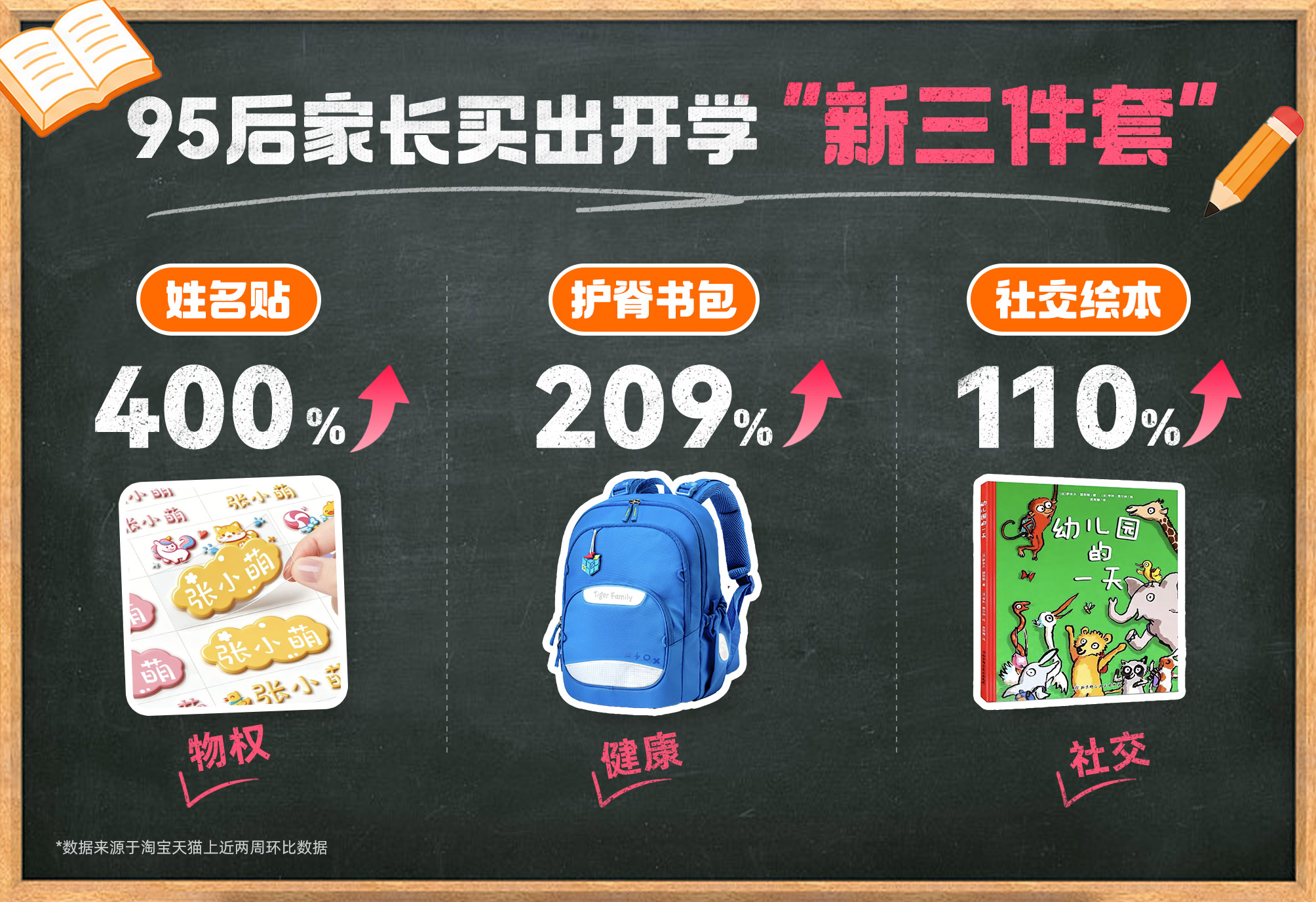
随着开学季到来,由95后父母主导的开学消费出现明显变化:给物品打标签的“姓名贴”、主打护脊减负的儿童书包,以及帮助孩子适应新环境的"社交绘本",正在成为今年开学的“新三件套”。

(图说:95后家长买出开学新三件套)

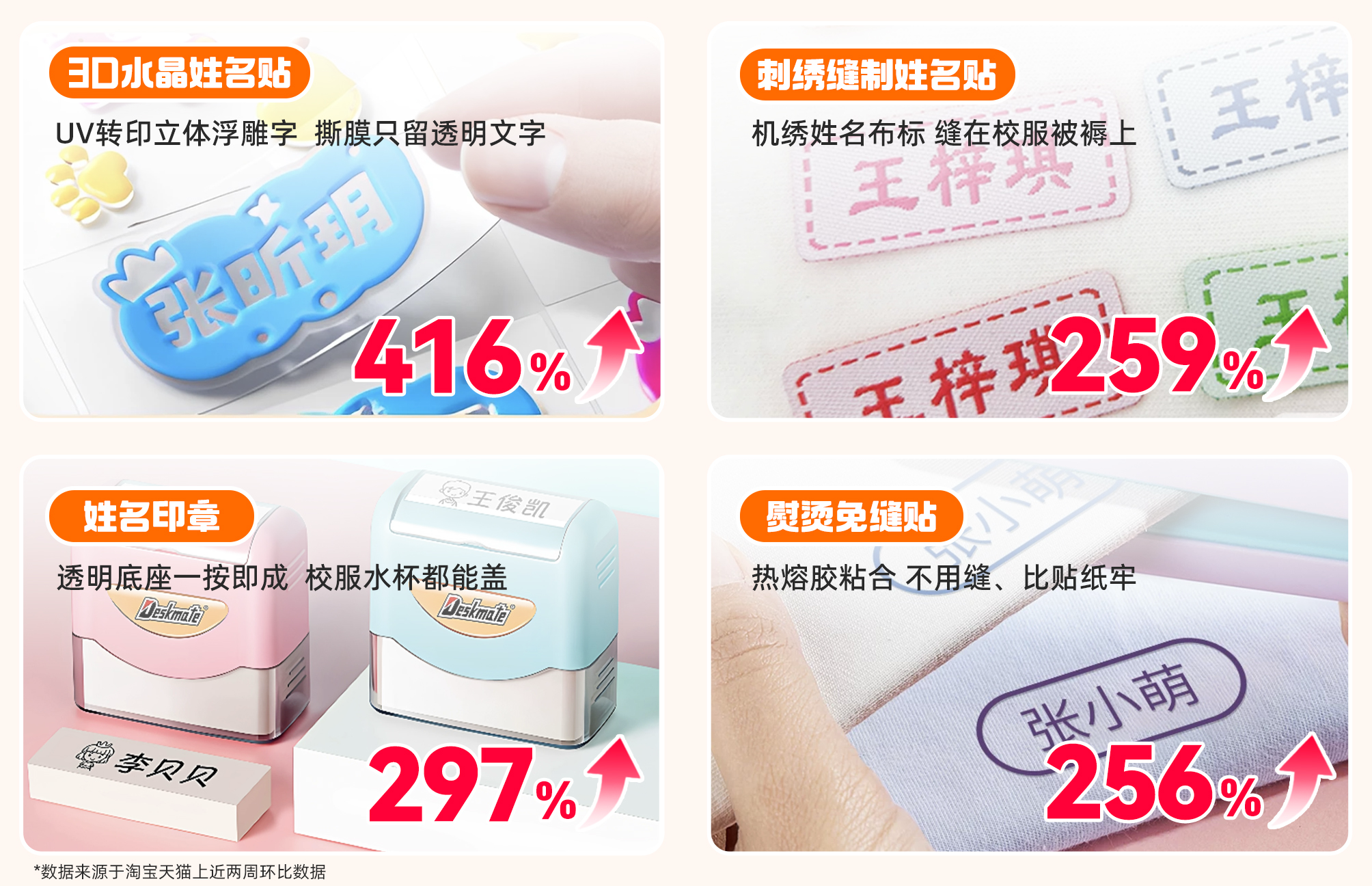
开学第一件事,是给孩子的物品贴上“姓名贴”。从水杯、校服到午睡被子,新生入校平均要标注近20件个人物品。天猫数据显示,8月下旬姓名贴相关品类成交环比增长超400%。其中,采用UV转印、立体防刮工艺的“3D水晶姓名贴”近一个月成交同比增长247%,带动趣然、星星舟等品牌快速增长;“不想动针线”的需求则催生了电熨斗一烫即牢的“免缝熨烫贴”。此外,精臣的“智能便携标签机”实现了标签长期复用;晨光的“可视衣物印章”凭透明底座设计解决了“印歪”痛点。从材质到设计,姓名贴这一小品类已经形成了完整的细分赛道。

(图说:姓名贴热门款式)

物品备齐之后,家长的注意力集中到了书包上——更准确地说,是书包的重量和设计对孩子脊柱的保护。天猫数据显示,近两周以来,儿童背包成交环比增长209%。对95后家长来说,"结实耐用"只是基本要求,"自重轻"和"护脊减负"才是核心决策因素。

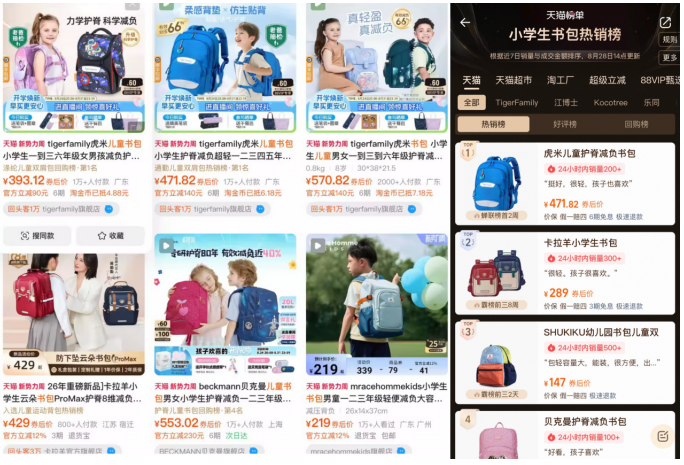
"以前买书包看容量、耐脏和好不好看,现在挑书包上来先看克重。"一位准一年级新生妈妈表示,空包超过800克的直接不考虑。为满足减负需求,人体工学护脊背板、悬浮减重系统等技术已在主流产品中全面普及。"Pro""Max""8维减负"等命名方式,让选书包越来越像比对数码产品参数。在儿童书包的热销榜上,品牌基本都主打护脊和减负——卡拉羊采用8维减负防下坠设计,tigerfamily依据不同年龄段脊柱发育特点设计减负功能,挪威品牌BECKMANN则用高饱和度配色和硬挺箱型,兼顾外观与护脊。

(图说:护脊书包成为儿童书包标配)

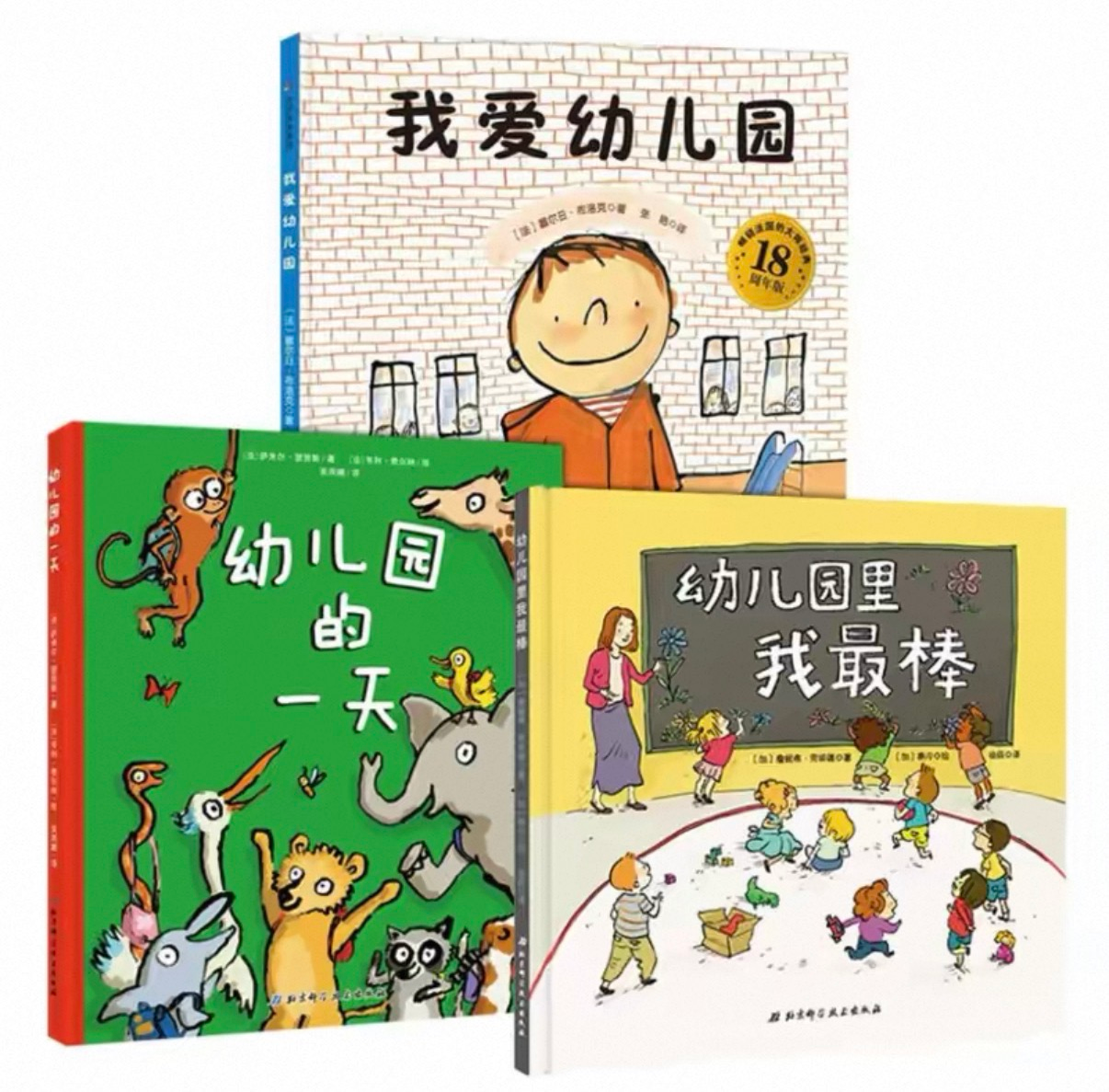
书包和姓名贴解决的是物质准备,绘本要解决的问题则更隐性——孩子第一次走进全是陌生面孔的环境,心理上怎么过渡?开学前一周,天猫上幼儿园入园绘本订单环比增长近110%,其中社交主题类绘本成交环比增长40%。想上厕所该说什么?玩具被抢了该怎么办?《幼儿园里的一天》《我爱幼儿园》等热销绘本大多围绕这些具体场景展开,近一周成交环比增长超50%。这类绘本相当于一份"社交预演单":先知道一天怎么过,再建立"我能行"的信心,最后学会接受新环境。一位妈妈在买家评论里写:"睡前读一遍,读到第五天他自己问我,我的书包放在哪个柜子,是不是也有小朋友跟我一起吃饭。"

(图说:幼儿园社交绘本成开学爆款)

除了“新三件套”,为孩子入手一台“AI学习伙伴”也正在成为新趋势,天猫智能玩具品类因此增长49.9%。

从姓名贴的细节打磨,到书包的科学选择,再到绘本的心理铺垫,今年的开学消费已经不只是"备齐装备",而是95后家长用消费决策回应具体育儿问题的过程。

注:文/龚作仁,文章来源:Laborer,本文为作者独立观点,不代表亿邦动力立场。

文章来源:Laborer

广告
微信
朋友圈

FAQ回顾

开学季95后家长热门选购的开学装备有哪些?

95后家长开学季热门选购的核心开学装备为姓名贴、护脊书包、社交绘本三类,被称为开学新三件套,此外选购AI学习伙伴也成为新趋势。天猫数据显示8月下旬姓名贴品类成交环比增长超400%,近两周儿童背包成交环比增长209%,入园绘本订单环比增长近110%。

家长选购儿童书包的核心参考因素有哪些?

当前95后家长选购儿童书包时,“结实耐用”仅为基本要求,“自重轻”和“护脊减负”才是核心决策因素,不少家长明确不考虑空包重量超过800克的产品,目前主流产品已普及人体工学护脊背板、悬浮减重系统等技术。

社交类幼儿园入园绘本有什么作用?

社交类幼儿园入园绘本围绕孩子入园后的如厕、社交等具体场景展开,相当于社交预演单,能帮助孩子提前了解幼儿园一日流程,建立自信心,快速适应陌生新环境,开学前一周这类绘本成交环比增长超50%。

这么好看,分享一下?

朋友圈 分享

APP内打开

赞 +1
+1
微信好友 朋友圈 新浪微博 QQ空间
关闭
收藏成功
发送
/140 0