广告
加载中

让孩子未来驾驭AI,猿编程推出AI素养新编程

龚作仁 2026-08-27 13:07
龚作仁 2026/08/27 13:07

邦小白快读

EN
全文速览

本文核心是猿编程在2026全球智慧教育大会上推出面向青少年的AI素养新编程教育,核心目标是培养孩子驾驭AI的底层能力,回应AI进入孩子成长后的教育需求。

1. 明确AI时代教育逻辑重构:AI掌握的知识总量远超任何个体,传统以知识积累为核心的教育模式已经失效,编程教育的核心不是培养未来程序员,而是训练孩子的思维能力与创造能力。

2. 给出了可落地的培养参考路径:学习层面强调“敢于犯错、动手产出”的教育心理学双引擎学习法,通过编程改错的过程倒逼深度思考,借助AI降低动手门槛,让孩子产出解决真实问题的作品;培养体系采用5A体系,从理解AI到驾驭AI形成完整成长链路。

本文透露了少儿AI教育赛道的消费需求变化和品牌创新方向,对少儿教育品牌的运营和产品研发有较高参考价值。

1. 行业与消费趋势:目前AI已经深度渗透未成年人的日常生活,数据显示超半数孩子用AI完成作业,超五分之一孩子将AI当成亲密倾诉对象,培养青少年AI素养已经成为行业和用户层面的迫切需求,是新的赛道增长点。

2. 产品研发创新可借鉴方向:猿编程对少儿编程做了底层重构,打造出和传统编程有本质差异的AI素养新编程,同时联合顶级学术机构共建研究中心,发布行业蓝皮书,搭建专业育人体系,有效强化品牌专业背书,这套路径具备参考性。

3. 品牌影响力打造可借鉴:发起一线AI教学案例征集活动,紧扣国家教育数字化战略,聚焦基础教育核心命题,聚拢行业一线资源,有效提升品牌在行业内的认可度。

对从事少儿素质教育的卖家而言,本文透露了AI教育赛道的新增长机会、政策方向以及可借鉴的发展路径。

1. 政策与市场机会:国家正在推进教育数字化战略行动2.0,AI+基础教育是政策明确鼓励的发展方向,同时AI已经深度融入未成年人的日常学习生活,用户对青少年AI素养培养有迫切需求,属于潜力巨大的新增长市场。

2. 可借鉴的商业模式:不同于传统少儿编程只售卖编程技能课程,新模式以培养孩子驾驭AI的能力为核心,走学术合作研发、体系化产品落地、联动一线实践的闭环路线,更容易建立差异化竞争力。

3. 风险提示:如果卖家仍然沿用传统知识传递、技能培训的旧产品逻辑,会无法适应AI时代的用户需求,逐渐丧失市场竞争力,需要及时完成产品逻辑的重构。

对生产教育相关产品的工厂而言,AI教育的新发展带来了明确的产品需求、商业机会,也指明了业务升级的方向。

1. 产品生产和设计需求变化:AI素养新编程引入具身智能理念,要求产品支持孩子制作三维物理世界中可交互、可运行的真实作品,需要搭配适配课程的智能硬件套件,且要降低小学生动手制作的门槛,未来这类智能硬件的需求会持续增长。

2. 明确的商业机会:工厂可以和头部少儿编程教育品牌合作,开发适配课程体系的标准化智能硬件套件,绑定成熟课程体系打开B端学校和C端家庭市场,当前市场需求已经得到落地验证。

3. 数字化升级启示:工厂可以围绕AI教育场景升级自身产品设计,对接教育品牌的差异化需求,借助AI教育的行业风口拓展新的业务增长曲线,完成自身业务的数字化转型。

对AI教育相关的服务商而言,本文明确了当前行业的发展趋势、核心客户痛点,也给出了可参考的解决方案方向。

1. 行业发展趋势:AI+基础教育是未来教育的核心发展方向,教育的底层逻辑正在从传统的知识积累向能力培养转型,市场对系统化的青少年AI素养培养解决方案有非常迫切的需求。

2. 行业核心客户痛点:当前一线基础教育阶段的AI教育实践多是零散自发的,缺乏成体系的培养框架,一线教师探索出的优质实践没有便捷的流通分享渠道,整个行业缺乏对一线AI应用的系统梳理和总结。

3. 可落地的解决方案参考:可以参考猿编程的路径,先联合顶级学术机构共同开发系统化的育人体系,再发起一线优秀实践征集活动,聚合分散的一线实践经验,整理成可复制的案例输出给全行业,既满足行业需求,也能建立自身的行业影响力。

对从事教育相关业务的平台商而言,本文透露了AI教育领域参与者对平台的核心需求,也给出了平台布局、运营的方向参考。

1. AI教育领域对平台的核心需求:行业需要平台聚合学术资源、一线教育实践资源,打通从理论研发到落地应用的完整链路,当前一线的优质AI教育实践高度分散,缺乏集中展示交流的渠道,广大从业者也需要可参考的成熟落地方案。

2. 平台可借鉴的最新运营做法:可以紧扣国家教育数字化战略2.0的方向,围绕课堂教学、个性化学习、教育评价等基础教育核心场景,发起相关的案例征集、展示活动,吸引一线教育工作者、教育品牌入驻,丰富平台内容生态,完成平台招商和用户增长。

3. 风向规避提示:平台要避免布局不符合行业趋势的旧知识培训类内容,要聚焦AI素养培养的新赛道,提前布局符合未来发展方向的内容生态,规避产品逻辑落后被市场淘汰的风险。

对AI教育、教育产业领域的研究者而言,本文呈现了AI时代基础教育领域的最新产业动向、创新实践,具备较高的研究价值。

1. 产业新动向:AI已经深度渗透未成年人的日常生活,推动传统少儿编程教育发生底层重构,猿编程提出的AI素养新编程是少儿编程领域的全新范式,它不是传统少儿编程的简单AI升级,而是从教育目标、培养方法到产品形态的全面重构。

2. 值得研究的新问题:AI时代教育的底层逻辑需要从传统的知识传递转向培养孩子驾驭AI的核心能力,如何搭建系统化的AI素养培养体系,如何打通学术研究、产品研发到一线落地的完整闭环,都是当前AI教育领域值得深入研究的新问题。

3. 新商业模式研究价值:猿编程采用“顶级学术机构合作研发+系统化育人体系搭建+一线实践征集闭环”的商业模式,通过发起案例梳理活动聚合全行业资源,推动AI教育落地,这个全新的商业模式也具备很高的研究价值。

返回默认
声明:快读内容全程由AI生成,请注意甄别信息。如您发现问题,请发送邮件至 run@ebrun.com 。

我是 品牌商 卖家 工厂 服务商 平台商 研究者 帮我再读一遍。

Quick Summary

This article centers on Yuan Coding's launch of a new AI literacy-focused coding education program for teenagers at the 2026 Global Smart Education Conference. The program’s core goal is to cultivate children’s foundational capabilities to master AI, addressing new educational demands brought by AI integration into children’s growth.

1. It clarifies the logic reconstruction of education in the AI era: AI holds a far larger total volume of knowledge than any single individual, making the traditional knowledge accumulation-focused education model obsolete. The core of coding education is not to train future programmers, but to cultivate children’s thinking and creative capabilities.

2. It provides a actionable cultivation framework: On the learning side, it emphasizes a "dare to fail, create by doing" dual-engine learning method rooted in educational psychology. It forces deep thinking through a coding error-correction process, lowers the barrier to hands-on creation with AI support, and lets children build projects that solve real-world problems. Its 5A cultivation system forms a complete growth path from understanding AI to mastering AI.

This article outlines shifting consumer demands and brand innovation directions in the children’s AI education track, offering high reference value for operations and product R&D for children’s education brands.

1. Industry and consumer trends: AI has already deeply penetrated minors’ daily lives. Data shows more than half of children use AI to complete schoolwork, and over one-fifth view AI as a close confidant. Cultivating youth AI literacy has become an urgent demand for both the industry and consumers, representing a new growth driver for the sector.

2. Actionable references for product R&D innovation: Yuan Coding has fundamentally restructured children’s coding to create a new AI literacy-focused model that differs essentially from traditional coding education. It also co-established a research center with top academic institutions, released an industry bluebook, and built a professional cultivation system to effectively strengthen its brand’s professional credibility – this full path is highly replicable for other players.

3. References for building brand influence: By launching a collection campaign for frontline AI teaching cases that aligns with China’s national digital education strategy, focuses on core basic education topics, and gathers industry frontline resources, Yuan Coding has effectively boosted its industry recognition, a strategy other brands can follow.

For sellers operating in children’s quality education, this article reveals new growth opportunities, policy directions and actionable development paths in the AI education track.

1. Policy and market opportunities: China is advancing the 2.0 version of its national digital education strategy, and AI plus basic education is an explicitly encouraged development direction. Meanwhile, AI has been deeply integrated into minors’ daily study and life, and consumers have an urgent demand for youth AI literacy cultivation, making this a new high-potential growth market.

2. A replicable new business model: Unlike traditional children’s coding that only sells coding skill courses, the new model centers on cultivating children’s capability to master AI, and follows a closed-loop path of academic cooperative R&D, systematic product launch, and frontline practice linkage. This approach makes it far easier to build differentiated competitive advantages.

3. Risk warning: Sellers that stick to the old product logic of traditional knowledge transfer and skill training will fail to meet user demands in the AI era, and gradually lose market competitiveness. They need to restructure their product logic as soon as possible.

For factories producing education-related products, the new development of AI education brings clear product demand, business opportunities, and points the direction for business upgrading.

1. Shifts in product manufacturing and design demand: The new AI literacy-focused coding integrates embodied intelligence concepts, requiring products that support children to build interactive, operable real projects in a 3D physical world, paired with intelligent hardware kits adapted to the curriculum. It also needs to lower the barrier for primary school students to create hands-on projects, and demand for this type of intelligent hardware will continue to grow going forward.

2. Clear business opportunities: Factories can partner with leading children’s coding education brands to develop standardized intelligent hardware kits adapted to the brand’s curriculum system. By binding to a mature curriculum, they can access B-side school and C-side household markets, and this market demand has already been validated with real-world implementations.

3. Insights for digital upgrading: Factories can upgrade their product design around AI education scenarios, meet the differentiated demands of education brands, leverage the AI education industry boom to expand new business growth curves, and complete their own digital business transformation.

For service providers focused on AI education, this article clarifies current industry development trends, core client pain points, and provides reference directions for solutions.

1. Industry development trends: AI plus basic education is the core development direction of future education, and the underlying logic of education is shifting from traditional knowledge accumulation to capability cultivation. There is extremely urgent market demand for systematic youth AI literacy cultivation solutions.

2. Core industry pain points: Most current frontline AI education practices in basic education are scattered and spontaneous, lack systematic cultivation frameworks, and high-quality practices developed by frontline teachers have no convenient channels for circulation and sharing. The entire industry lacks systematic organization and summarization of frontline AI applications.

3. Reference for actionable solutions: Players can follow Yuan Coding’s path: first co-develop a systematic cultivation system with top academic institutions, then launch a collection campaign for outstanding frontline practices to aggregate scattered frontline experience, organize it into replicable cases, and share them across the industry. This approach meets industry demand while building a player’s own industry influence.

For platform operators with education-related businesses, this article reveals the core demands of AI industry participants for platforms, and provides reference directions for platform layout and operations.

1. Core demands from the AI education industry for platforms: The industry needs platforms to aggregate academic resources and frontline education practice resources, and connect the full value chain from theoretical R&D to practical implementation. Currently, high-quality frontline AI education practices are highly fragmented, lack centralized channels for display and exchange, and the majority of practitioners need accessible mature implementation references.

2. Replicable latest operational practices for platforms: Platforms can align with the direction of National Digital Education Strategy 2.0, launch case collection and display events focused on core basic education scenarios including classroom teaching, personalized learning, and educational evaluation. This attracts frontline educators and education brands to settle on the platform, enriches the platform’s content ecosystem, and drives merchant acquisition and user growth.

3. Risk avoidance guidance: Platforms should avoid layout of outdated knowledge training content misaligned with industry trends. They should instead focus on the new AI literacy cultivation track, lay out content ecosystems aligned with future development directions in advance, and avoid the risk of being phased out by the market for outdated product logic.

For researchers focused on AI education and the education industry, this article presents the latest industrial trends and innovation practices in basic education in the AI era, with high research value.

1. New industrial trends: AI has already deeply penetrated minors’ daily lives, driving fundamental restructuring of traditional children’s coding education. The AI literacy-focused coding model launched by Yuan Coding represents an entirely new paradigm in the children’s coding space. It is not a simple AI upgrade of traditional children’s coding, but a full restructuring from educational goals and cultivation methods to product form.

2. New research-worthy questions: In the AI era, the underlying logic of education needs to shift from traditional knowledge transfer to cultivating children’s core capabilities to master AI. Questions including how to build a systematic AI literacy cultivation system, and how to connect the full closed loop from academic research and product R&D to frontline implementation are all new topics worthy of in-depth research in the AI education space.

3. Research value of the new business model: Yuan Coding adopts a business model of "coordinated R&D with top academic institutions + systematic cultivation system building + closed-loop frontline practice collection". It aggregates industry-wide resources through a case organizing campaign to advance the implementation of AI education, and this entirely new business model also carries high research value.

Disclaimer: The "Quick Summary" content is entirely generated by AI. Please exercise discretion when interpreting the information. For issues or corrections, please email run@ebrun.com .

I am a Brand Seller Factory Service Provider Marketplace Seller Researcher Read it again.

你家孩子的作业,有多少是AI写的?这个问题可能让很多家长心头一紧。数据显示,超过半数的孩子正在用AI完成作业,超过五分之一的孩子把AI当成了最亲密的倾诉对象。

究竟该把AI当成孩子成长路上的神助攻,还是蚕食认知能力的猪队友?

这正是2026全球智慧教育大会的核心议题之一。8月18日至20日,大会由北京师范大学与联合国教科文组织教育信息技术研究所联合主办,以“人工智能与教育可持续发展”为主题,汇聚来自60多个国家的国际嘉宾、十余国教育部门部长级官员,以及联合国教科文组织、经济合作与发展组织、东南亚教育部长组织等国际机构代表,围绕人工智能与教育深度融合的可持续发展路径,共同探索智能时代公平包容、优质普惠的全球教育发展新模式。

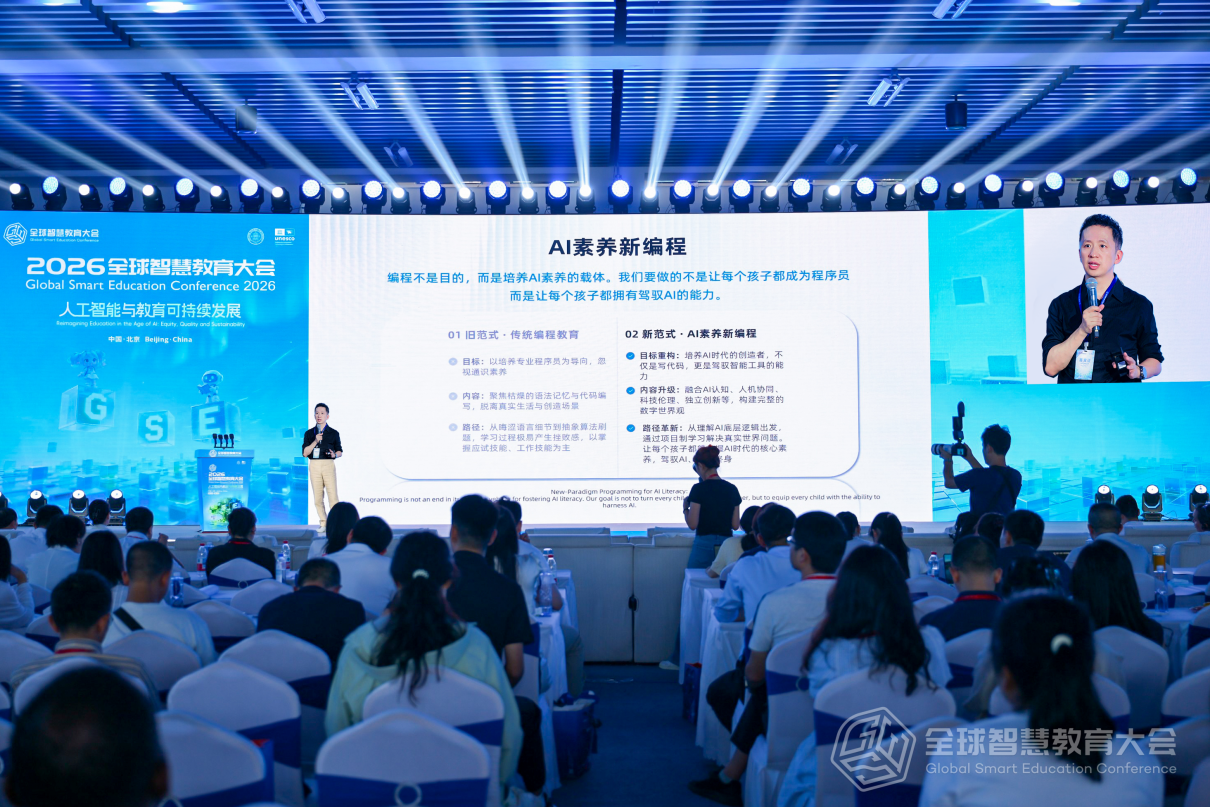
在“人工智能与未来教师”平行会议上,猿编程创始人、清华大学心理与认知科学系AI教育研究中心学术委员会副主任李翊带来题为《AI素养新编程,让孩子未来驾驭AI》的演讲,给出了他的答案。

猿编程创始人李翊主题演讲

AI素养新编程:重写AI时代教育的底层逻辑

当AI无处不在、随时可用、边际成本趋近于零,教育的底层逻辑就必须被重写。过去两百年的教育体系,核心是知识的传递与积累。但AI的出现让这个逻辑开始失效:AI掌握的知识量是任何个体的亿万倍。如果教育的目标仍然是“比AI掌握更多知识”,这场比赛从一开始就输了。

正是在这个背景下,猿编程提出了“AI素养新编程”——一套以培养孩子驾驭AI的底层能力为核心的编程教育新范式。它不是传统少儿编程的AI升级版,而是一次从目标、方法到产出的全面重构。

与传统编程相比,AI素养新编程有三个根本不同。第一,从屏幕到物理世界。传统编程让孩子在手机、平板里写出应用,AI素养新编程则引入具身智能,让孩子做出在三维物理世界真实运行的作品——知识不再停留在屏幕上,而是变得可触摸、可交互。第二,从写代码到驾驭AI。传统编程培养的是代码技能及计算思维,AI素养新编程培养的是驾驭AI的能力——精准定义问题的能力、遴选最优方案的判断力、从0到1的创造力等等。第三,从demo到真实作品。传统编程受限于代码门槛,孩子做的往往是短小的演示程序;借助AI,孩子可以把精力集中在核心需求和模型搭建上,产出真正能解决实际问题的完整作品。

“我们做猿编程,从来不是为了让孩子将来当程序员。”李翊直言,编程的价值从来不在职业层面,而在教育层面,编程是对思维能力、创造能力最全面的训练场景。AI的出现非但没有削弱这种价值,反而进一步放大了它:借助AI,孩子可以做出比以前更真实、更复杂的作品,前提是他知道自己要什么,并且能看懂、判断、修改AI生成的结果。

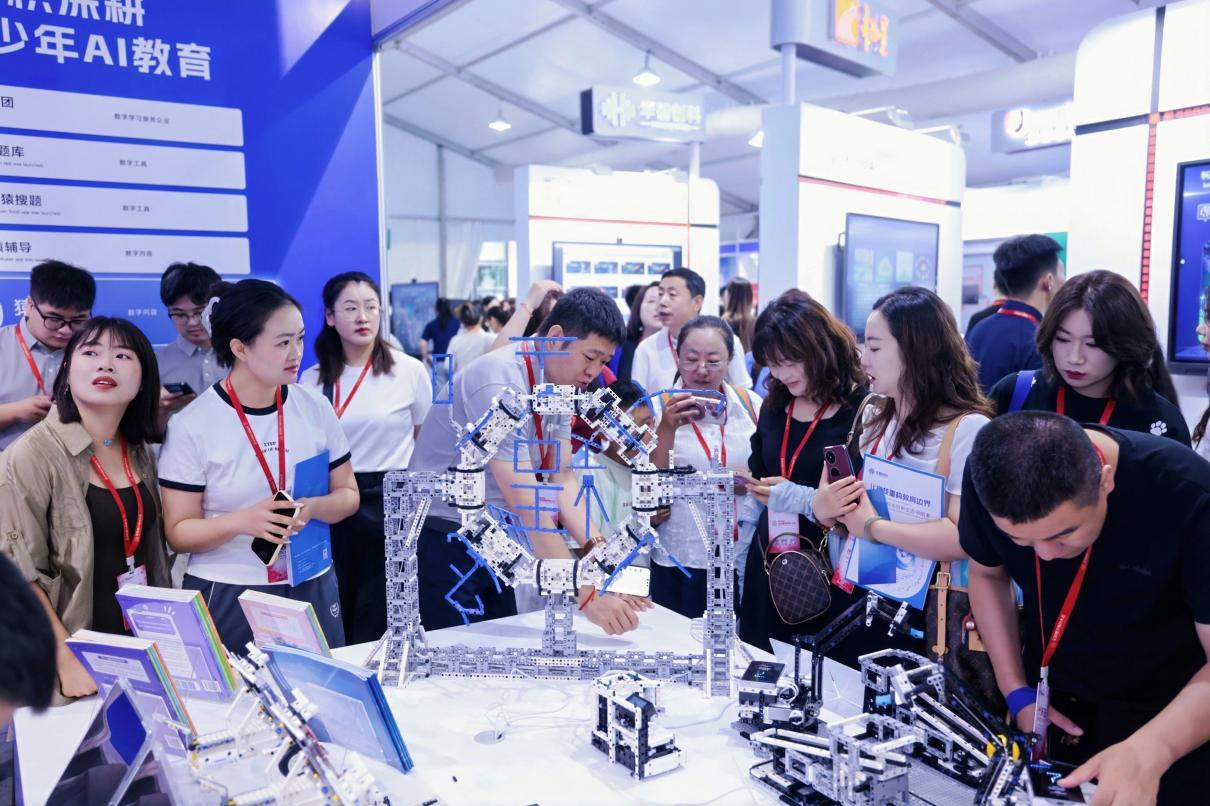
猿编程产品注重动手实操,现场展品受到与会者广泛欢迎

如果说AI素养新编程回答了“学什么”的问题,那么李翊提出的教育心理学双引擎,则回答了“怎么学”的根本问题。从教育心理学看,让孩子拥有更强的学习动力,本质上只有两件事:敢于犯错误,动手做出来。

敢于犯错误,是因为太多孩子的“学会”只是“假学会”——记了笔记、套了模板、考试能答对,却没有经过大脑的深度思考。编程恰恰是治疗“假学会”的最佳场景,程序员百分之八九十的时间在debug,“只有敢于犯错,后面能改错,才是让大脑真正产生深度认知的过程。”

动手做出来,是因为学了很多知识却从不知道它在真实世界里有什么用,学习动力必然下降。AI和具身智能让“动手做出来”的门槛前所未有地降低,小学生借助AI和智能硬件套件,就能做出真实运行的具身智能作品。所谓学科融合,不是把语文和历史放在一块讲,而是用一个具象化的产品,把知识展现出来。

从理念到方法,从“学什么”到“怎么学”,还需要一套科学的育人体系来承载。

猿编程携手清华大学心理与认知科学系共建AI教育研究中心,并发布国内首部《中国青少年AI素养蓝皮书》。扎根于扎实的学术研究,淬炼于一线的教学沉淀,猿编程创新研发“5A体系”育人框架——以Acknowledge理解本质、Apply灵活实操、Assess理性甄别、Align恪守准则、Ascend高阶驾驭五个维度,搭建起“理解AI—应用AI—判断AI—规范AI—驾驭AI”的完整成长链路,聚焦提升青少年的AI素养与AI协同能力。

5A体系最终培养出什么样的人?李翊分享了一个学生的故事。湖北襄阳的初三留守少年罗霄,小学时好友确诊中度抑郁却封闭自己不敢求助,这份刺痛让他在猿编程学会AI技术后,花近一年打磨出一套青少年心理问答系统——不提供标准答案,而是用苏格拉底式提问引导情绪梳理,用第三人称对话建立内在力量。作品获湖北省青少年科创大赛一等奖,已在当地学校落地。一个留守少年,用AI为无声的痛苦开了一扇窗,这正是5A体系的答案:教孩子用技术回应真实世界的需求,用AI创造有温度的价值。

猿编程广撒英雄帖,激活“AI+教育”一线智慧

AI教育的真正落地发生在每一间教室里——发生在一个语文老师不再照本宣科,而是用AI让学生和千年前的诗人“对话”的那一刻;发生在一个数学老师不再凭经验判断,而是用AI学情数据为每个孩子定制练习路径的那一刻。这些散落在一线的实践智慧,才是AI教育最鲜活的生命力。

“人工智能+基础教育”应用场景典型视频征集活动正式发布

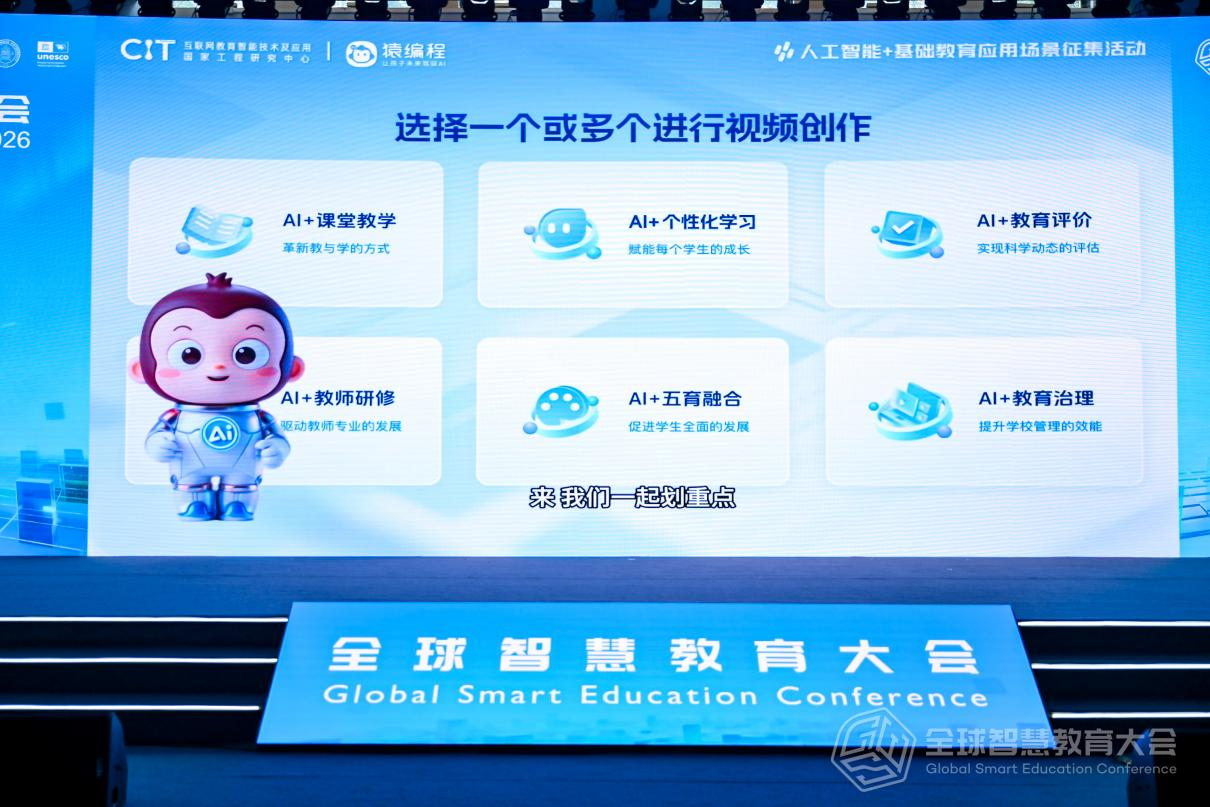
正是基于这样的判断,在大会现场,猿编程联合互联网教育智能技术及应用国家工程研究中心,正式发起“人工智能+基础教育”应用场景典型视频征集活动。这不是一次普通的作品评选,而是一次对中国基础教育一线AI实践的系统梳理。活动紧扣国家教育数字化战略行动2.0,聚焦六大典型应用场景——课堂教学、个性化学习、教育评价、教师研修、五育融合、教育治理,面向全国一线教师、教研员与校长征集。

六大场景,对应基础教育最核心的六个命题:课堂教学要回答的是“AI如何让知识活起来”,个性化学习要突破的是“每个孩子如何被真正看见”,教育评价要实现的是“从分数到成长的全维度评估”,教师研修要回应的是“AI时代老师如何持续成长”,五育融合要探索的是“技术如何让德智体美劳真正落地”,教育治理要达成的是“数据如何让学校决策更科学”。每一个场景,都是AI赋能教育的真实切口。

“AI教育不是一家公司的事,”李翊表示,“我们希望通过这个征集活动,把散落在全国每一间教室里的AI教学智慧挖掘、展示出来,让更多老师看到AI怎么用得好,最终赋能更多学校、更多孩子。”

教育的终极检验,从来不在考场上,而在孩子走出校门后面对未知时的那份从容。猿编程广撒英雄帖,征集“AI+基础教育”优秀案例——这不是征集作品,而是采集火种,让每一间教室里的AI实践被看见,让每一个先行者的智慧被借鉴。

当学术研究、育人体系与一线实践在猿编程的全链路中完成闭环,我们看到的不仅是AI教育的“中国路径”,更是一代少年从“学会知识”到“驾驭AI”的成长跃迁。

注:文/龚作仁,文章来源:Laborer,本文为作者独立观点,不代表亿邦动力立场。

文章来源:Laborer

广告
微信
朋友圈

FAQ回顾

什么是AI素养新编程?

AI素养新编程是猿编程推出的以培养孩子驾驭AI的底层能力为核心的编程教育新范式,和传统编程相比,它实现了从屏幕到物理世界、从写代码到驾驭AI、从demo到真实作品的三大核心转变,可支撑孩子产出解决实际问题的完整作品。

提升青少年AI素养有什么成熟的培养体系?

猿编程联合清华大学心理与认知科学系共建AI教育研究中心,推出“5A体系”育人框架,从理解本质、灵活实操、理性甄别、恪守准则、高阶驾驭五个维度,搭建起从理解AI到驾驭AI的完整成长链路,聚焦提升青少年AI素养与AI协同能力。

孩子学习AI素养新编程有什么用?

学习AI素养新编程不需要孩子死磕代码技能,可将精力集中在核心需求和模型搭建上,掌握精准定义问题、遴选最优方案、从0到1创造的能力,最终学会用AI回应真实世界需求,创造有社会价值的相关作品。

AI时代少儿编程教育的核心目标是什么?

AI时代少儿编程教育的核心目标不是培养职业程序员,而是通过编程场景全面训练孩子的思维能力、创造能力,让孩子学会看懂、判断、修改AI生成的结果,具备驾驭AI的核心素养,从容应对未来的各类未知挑战。

这么好看,分享一下?

朋友圈 分享

APP内打开

赞 +1
+1
微信好友 朋友圈 新浪微博 QQ空间
关闭
收藏成功
发送
/140 0