广告
加载中

从全球销售到全域经营:安克创新吴灼辉将亮相2026品牌供应链创新私董会

亿邦会展 2026-08-25 15:04
亿邦会展 2026/08/25 15:04

邦小白快读

EN
全文速览

本文核心介绍了中国品牌出海行业的最新动向,以及即将举办的2026品牌供应链创新私董会的核心信息,干货内容如下:

1. 活动核心信息:本次活动由亿邦动力与中通云仓科技联合主办,将于8月28日在杭州城中香格里拉大酒店举办,安克创新副总裁、海翼电商CEO吴灼辉将出席并做《中国品牌如何构建全域出海能力》主题演讲。

2. 当前中国品牌出海的新发展阶段:过去品牌出海只需要把产品卖到全球,现在已经进入新的阶段,品牌覆盖多市场多渠道后,经营复杂度大幅提升,需要解决不同区域需求差异、全球库存流动、供应链支撑等新问题。

3. 普通读者可以通过本次分享了解头部出海品牌安克创新的最新经营情况和实战经验,深入理解中国品牌全球化的发展路径。

本文围绕中国品牌出海从全球销售到全域经营的新趋势,结合头部品牌的实践给出了多方面参考干货,符合品牌出海布局的需求:

1. 当前行业与消费趋势:品牌出海已经从“进入市场”转向“长期经营市场”,多区域多渠道布局下经营复杂度提升,需要协调不同区域需求差异、全球库存流动、前端响应速度与后端供应链稳定性的平衡。

2. 参考经营数据:安克创新2026年一季度营收76.08亿元,同比增长26.93%,境外收入占比95.3%,其中线上渠道增长25.17%,线下增长30.79%,品牌官网增长46.73%,可见多元化渠道布局是增长核心动力,线下和自有渠道增量空间更大。

3. 全域经营核心要求:全渠道不是简单增加销售入口,需要重构产品、营销、库存与供应链体系,还要保持品牌体验一致性,同时需要开放对接供应链服务商,实现能力互补协同。

本文点明了当前出海行业的新变化,为出海卖家梳理了新的增长机会和可学习的经验,干货如下:

1. 行业阶段变化:过去出海卖家的关注点集中在选品、流量与平台运营,当前随着业务规模扩大,行业已经从“如何进入市场”转向“如何长期经营市场”,单一渠道、复制成熟模式的做法已经无法适配新发展。

2. 新增增长机会:从安克创新的经营数据来看,线下渠道和品牌官网的增速远高于整体线上渠道,说明多元全域布局是新的增量方向,卖家可以通过布局多渠道分散单一平台风险,挖掘新的增长空间。

3. 核心经营提示:多渠道布局会提升后端运营难度,核心瓶颈在供应链的支撑能力,卖家需要主动对接专业供应链服务商解决履约库存问题,8月的私董会会有头部品牌的实战分享,卖家可参与获取更多实操经验。

本文结合安克创新全域出海的实践,为出海相关工厂提供了产品方向、商业机会和数字化升级的多方面启示,干货如下:

1. 产品生产和设计需求变化:当前品牌出海走向全域全渠道,不同区域市场的消费需求不同,不同渠道的交付、库存要求也存在差异,工厂不能只做标准化大批量生产,需要提升柔性生产能力,适配品牌方多场景多规格的需求。

2. 新的商业机会:中国品牌出海全域经营的发展,催生了大量对柔性生产、灵活交付的需求,工厂可以针对性调整自身产能结构,对接品牌方的新需求,拓展更多合作订单。

3. 自有品牌出海的启示:工厂做自有品牌出海,可以学习安克创新的全域布局思路,同步布局线上线下多元渠道,同时可借助第三方供应链服务商的能力,降低后端重资产投入,聚焦产品研发。

本文清晰梳理了品牌全域出海背景下供应链服务行业的发展趋势,点明了客户痛点和业务升级方向,干货如下:

1. 行业发展趋势:中国品牌出海已经进入全域经营新阶段,品牌对供应链服务的需求已经从基础的仓储发货,升级为深度适配经营节奏的一体化协同服务,行业有很大的增长空间和升级需求。

2. 客户核心痛点:品牌多渠道多区域布局后,面临复杂的仓储布局、跨区域库存调配、多渠道履约协同的难题,传统只做末端配送的标准化服务无法满足品牌的个性化需求。

3. 解决方案方向:服务商需要深入理解品牌全域经营的需求,搭建适配全球多渠道的仓网体系和信息系统,为不同市场不同渠道提供灵活的库存履约支持,和品牌形成能力互补的生态协同,本次私董会也提供了对接头部品牌的合作机会。

本文结合品牌出海全域经营的新趋势,点明了品牌对平台的新需求,为平台商的运营、招商和风险规避指明了方向,干货如下:

1. 品牌对平台的最新需求:当前出海品牌已经不满足于只入驻单一第三方平台,普遍在推进第三方平台、品牌官网、线下零售的多元布局,品牌需要平台适配自身全域经营的整体规划,提供多渠道打通的服务。

2. 行业最新变化:从安克创新的增长数据来看,品牌官网和线下渠道的增速已经超过第三方线上平台,品牌对自主掌控用户关系、全渠道均衡布局的需求在持续提升,第三方平台需要及时调整策略应对变化。

3. 平台运营升级方向:平台需要打通不同渠道之间的库存、订单、数据,帮助品牌解决多渠道割裂的问题,同时可以和专业供应链服务商合作,为品牌提供后端履约支撑,提升平台吸引力,本次私董会也为平台提供了对接头部品牌、拓展招商的机会。

本文呈现了中国品牌出海产业的最新发展动向,提出了产业升级过程中的新问题,为相关研究提供了宝贵的样本和方向,干货如下:

1. 产业最新动向:中国品牌出海已经完成了从0到1的产品出海阶段,进入到从1到N的全域经营新阶段,核心目标已经从“把产品卖向全球”转向“在全球持续经营”,这是中国品牌全球化发展的重要升级节点。

2. 产业新问题:新阶段品牌出海面临很多新课题,包括如何平衡全球统一品牌体验和本地区域差异化需求,如何协调多渠道库存订单实现高效履约,如何平衡前端增长和后端运营效率,这些都是值得深入研究的新问题。

3. 新商业模式参考:本文提出了品牌全域出海的开放式生态协同模式,品牌负责前端产品、用户和市场运营,供应链服务商负责后端仓配履约,双方能力互补,这种新的产业分工模式,为研究品牌全球化的组织体系提供了新的样本,安克创新的公开经营数据也为实证研究提供了支撑。

返回默认
声明:快读内容全程由AI生成,请注意甄别信息。如您发现问题,请发送邮件至 run@ebrun.com 。

我是 品牌商 卖家 工厂 服务商 平台商 研究者 帮我再读一遍。

Quick Summary

This article covers the latest developments in China’s cross-border brand industry, and shares key details of the upcoming 2026 Private Board Meeting on Brand Supply Chain Innovation. Key takeaways are as follows:

1. Event core information: Co-hosted by Yibang Power and ZTO Cloud Warehouse Technology, the event will be held on August 28 at the Midtown Shangri-La, Hangzhou. Wu Zhuohui, Vice President of Anker Innovation and CEO of SeaDigital E-commerce, will attend and deliver a keynote speech titled "How Chinese Brands Build Omnichannel Global Expansion Capabilities".

2. The new stage of Chinese brand global expansion: In the past, brands only needed to sell products globally. Today, the industry has entered a new phase: after expanding across multiple markets and channels, operational complexity has risen sharply, and brands now need to address new challenges such as regional demand differences, global inventory flow, and supply chain support.

3. Through this event, general readers can learn about the latest operations and practical experience of leading cross-border brand Anker Innovation, and gain an in-depth understanding of the development path of Chinese brand globalization.

This article centers on the new trend of Chinese brands shifting from global sales to omnichannel global operation, and provides multi-faceted practical insights based on leading brands’ practices to meet the needs of brand global expansion planning:

1. Current industry and consumer trends: Cross-border brand expansion has shifted from "market entry" to "long-term market operation". With multi-region and multi-channel布局, operational complexity has increased, and brands need to coordinate regional demand differences, manage global inventory flow, and balance front-end response speed with back-end supply chain stability.

2. Operational reference data: In the first quarter of 2026, Anker Innovation posted 7.608 billion yuan in revenue, a 26.93% year-on-year increase, with 95.3% of revenue coming from overseas markets. Revenue grew 25.17% from online channels, 30.79% from offline channels, and 46.73% from the brand’s official website. This confirms that diversified channel布局 is the core growth driver, with greater room for incremental growth in offline and owned channels.

3. Core requirements for omnichannel operation: Omnichannel is not simply adding more sales entry points. It requires restructuring product development, marketing, inventory and supply chain systems, while maintaining consistent brand experience. Brands also need to openly partner with supply chain service providers to achieve complementary capability collaboration.

This article outlines the latest shifts in the cross-border industry, organizes new growth opportunities and actionable lessons for cross-border sellers. Key takeaways are as follows:

1. Industry phase change: Previously, cross-border sellers focused on product selection, traffic, and platform operation. As businesses scale today, the industry has shifted from "how to enter the market" to "how to operate long-term in the market". Single-channel strategies and replicating mature business models no longer fit new development needs.

2. New growth opportunities: Anker Innovation’s operating data shows that offline channels and brand official websites are growing much faster than overall online channels, proving that diversified omnichannel布局 is the new direction for incremental growth. Sellers can diversify risks from relying on a single platform and unlock new growth by expanding into multiple channels.

3. Core operational reminder: Multi-channel布局 increases back-end operational difficulty, with supply chain support capability as the core bottleneck. Sellers need to actively partner with professional supply chain service providers to solve fulfillment and inventory challenges. The August Private Board Meeting will feature practical sharing from leading brands, and sellers can attend to gain more hands-on experience.

Drawing on Anker Innovation’s omnichannel global expansion practice, this article provides multiple insights on product direction, business opportunities, and digital upgrade for export-oriented factories. Key takeaways are as follows:

1. Changes in product production and design requirements: As cross-border brands shift to omnichannel operations, consumer demand varies across regional markets, and delivery and inventory requirements also differ across channels. Factories can no longer rely solely on standardized mass production; they need to improve flexible manufacturing capabilities to adapt to brands’ multi-scenario, multi-specification demands.

2. New business opportunities: The growth of omnichannel operations for Chinese cross-border brands has generated substantial demand for flexible production and on-demand delivery. Factories can adjust their capacity structure accordingly, match brands’ new needs, and secure more cooperation orders.

3. Insights for factories building their own brands: For factories developing their own cross-border brands, they can learn from Anker Innovation’s omnichannel布局 strategy, expand simultaneous布局 across online and offline channels, and leverage third-party supply chain service capabilities to reduce heavy back-end asset investment and focus on product R&D.

This article clearly organizes the development trends of the supply chain service industry against the background of brands’ omnichannel global expansion, and points out customer pain points and directions for business upgrading. Key takeaways are as follows:

1. Industry development trends: Chinese cross-border brands have entered a new stage of omnichannel operation. Brands’ demand for supply chain services has upgraded from basic warehousing and shipping to integrated collaborative services that deeply align with their operating rhythm, bringing substantial growth space and upgrading demand for the industry.

2. Core customer pain points: After brands expand across multiple channels and regions, they face challenges including complex warehousing layout, cross-regional inventory allocation, and multi-channel fulfillment coordination. Traditional standardized services that only cover last-mile delivery can no longer meet brands’ personalized needs.

3. Direction for solution development: Service providers need to deeply understand the needs of brands’ omnichannel operation, build a global multi-channel-compatible warehouse network and information system to provide flexible inventory and fulfillment support for different markets and channels, and form capability-complementary ecological collaboration with brands. The upcoming Private Board Meeting also offers opportunities to connect with leading brands for cooperation.

Combined with the new trend of brands’ omnichannel global operation, this article points out brands’ evolving demand for marketplaces, and clarifies directions for marketplace operation, merchant recruitment, and risk mitigation. Key takeaways are as follows:

1. Brands’ latest demand for marketplaces: Today’s cross-border brands are no longer satisfied with only being present on a single third-party platform; they are generally advancing diversified布局 across third-party platforms, brand official websites, and offline retail. Brands need platforms to adapt to their overall omnichannel operation plans and provide services that connect multiple channels.

2. Latest industry changes: Anker Innovation’s growth data shows that growth rates for brand official websites and offline channels have outpaced those of third-party online platforms. Brands’ demand for independent control of user relationships and balanced omnichannel布局 continues to rise, and third-party platforms need to adjust their strategies in time to respond to this shift.

3. Direction for platform operation upgrading: Platforms need to connect inventory, orders and data across different channels to help brands solve the problem of channel silos. They can also partner with professional supply chain service providers to offer back-end fulfillment support for brands and boost platform attractiveness. The upcoming Private Board Meeting also provides platforms with opportunities to connect with leading brands and expand merchant recruitment.

This article presents the latest development trends of China’s cross-border brand industry, raises new issues emerging during industrial upgrading, and provides valuable samples and research directions for relevant studies. Key points are as follows:

1. Latest industry trends: Chinese cross-border brands have completed the 0-to-1 product expansion phase, and have entered the 1-to-N phase of omnichannel global operation. Their core goal has shifted from "selling products globally" to "long-term operation in global markets", which marks an important upgrading node for the globalization of Chinese brands.

2. New industrial issues: In the new phase, cross-border brands face many new research topics, including how to balance unified global brand experience with localized regional demand differences, how to coordinate multi-channel inventory and orders to achieve efficient fulfillment, and how to balance front-end growth with back-end operational efficiency. All these are new questions worthy of in-depth research.

3. Reference for new business models: This article proposes an open ecological collaboration model for omnichannel brand global expansion, where brands take charge of front-end product, user and market operation, while supply chain service providers handle back-end warehousing and fulfillment, with complementary capabilities on both sides. This new industrial division model provides a new sample for research on the organizational system of global brands, and Anker Innovation’s public operating data also provides support for empirical research.

Disclaimer: The "Quick Summary" content is entirely generated by AI. Please exercise discretion when interpreting the information. For issues or corrections, please email run@ebrun.com .

I am a Brand Seller Factory Service Provider Marketplace Seller Researcher Read it again.

对于走向全球市场的中国品牌而言,产品成功进入一个国家、一个平台,只是全球化的开始。

当品牌覆盖的市场越来越多,线上平台、品牌官网与线下零售同时发展,经营复杂度也随之上升:不同区域的消费需求、渠道规则和交付要求并不相同,库存却需要在更大范围内保持流动;前端要快速响应市场变化,后端的仓储、履约与供应链体系也必须提供足够稳定的支撑。

如何从“把产品卖向全球”,进一步走向“在全球持续经营”,正在成为中国品牌出海的新课题。

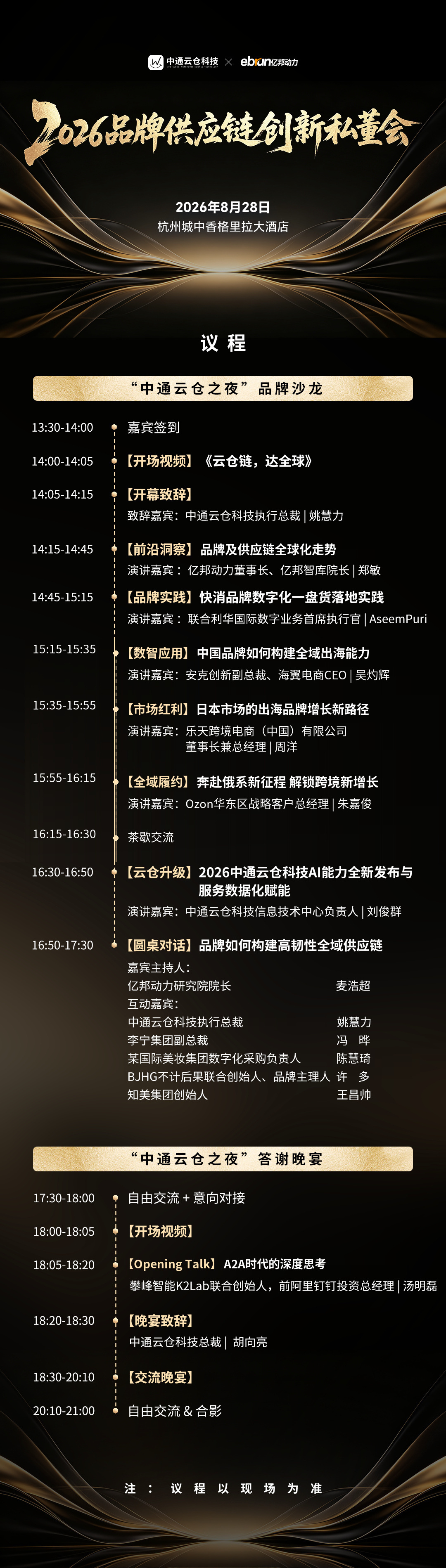
8月28日,由亿邦动力与中通云仓科技联合主办的“2026品牌供应链创新私董会暨‘中通云仓之夜’答谢晚宴”将在杭州城中香格里拉大酒店举行。安克创新副总裁、海翼电商CEO吴灼辉已确认出席,并将在现场带来《中国品牌如何构建全域出海能力》主题演讲。

01

增长背后,全渠道正在成为品牌全球经营的基础

安克创新最新披露的2026年第一季度报告显示,公司当期实现营业收入76.08亿元,同比增长26.93%。其中,境外营业收入为72.50亿元,占总营收的95.30%。

如果进一步观察收入结构,安克创新的渠道布局正在呈现出更加明显的多元化特征。报告期内,公司线上渠道实现营业收入51.42亿元,同比增长25.17%;线下渠道实现营业收入24.65亿元,同比增长30.79%;公司官网贡献收入8.14亿元,同比增长46.73%。

这些数据所体现的,不只是销售规模的扩大,也是品牌全球经营方式的变化。

从第三方电商平台到品牌官网,从线上销售到线下零售,品牌与消费者建立连接的场景正在不断增加。渠道越丰富,企业能够触达的消费者越多,但不同渠道之间的商品、库存、订单和履约关系也会变得更加复杂。

因此,全渠道布局并不是简单增加销售入口,而是要求品牌重新组织产品、营销、库存与供应链:既要保持各渠道的经营特点,也要避免不同渠道彼此割裂;既要贴近当地市场,也要在全球范围内保持品牌、产品与服务体验的一致性。

安克创新的实践,为中国品牌如何从渠道扩张走向全域经营提供了一个值得观察的样本。

02

从进入市场到经营市场,全域出海需要哪些能力?

过去谈品牌出海,关注点往往集中在选品、流量与平台运营。但随着业务规模扩大,品牌面对的问题会逐渐从“如何进入市场”,转向“如何长期经营市场”。

一方面,不同国家和区域存在消费习惯、渠道结构与市场节奏的差异,品牌需要形成更加贴近本地用户的产品与运营能力;另一方面,线上平台、独立站和线下渠道同时发展,也会对库存配置、订单管理和履约效率提出更高要求。

这意味着,全域出海不能只依靠单一渠道的突破,也不能只复制某个市场已经验证的经营方式。品牌需要在全球视野与本地经营之间,在渠道增长与运营效率之间,建立一套能够持续调整的业务体系。

在本次演讲中,吴灼辉将结合安克创新的全球经营实践,介绍企业如何理解全域、全渠道布局,并围绕中国品牌从产品出海走向品牌全球化过程中需要建立的关键能力展开分享。

对于正在拓展海外市场的品牌而言,这场分享的价值不仅在于了解一家全球化企业取得了怎样的经营结果,更在于理解这些结果背后,产品、渠道与运营体系如何相互支撑。

03

品牌走向全球,需要更开放的生态协同

品牌的全球化经营,很难依靠一家企业独立完成。

渠道不断增加、市场持续扩展之后,品牌需要面对更加复杂的仓储布局、库存调配、跨区域履约和服务协同问题。前端的市场机会能否转化为稳定增长,很大程度上取决于后端供应链能否及时响应。

这也意味着,品牌与供应链服务商之间的关系需要发生变化。供应链服务商不能只在订单产生后完成仓储和配送,还需要理解品牌的渠道结构与经营节奏,为不同市场、不同渠道提供更灵活的库存与履约支持。

吴灼辉也将在现场表达安克创新与更多生态伙伴开展合作的意愿,并结合品牌全域出海的实际需求,探讨品牌企业与中通云仓等供应链伙伴可以建立怎样的协同关系。

这种合作并不只是资源之间的连接,更是能力之间的互补:品牌更接近产品、用户与市场,供应链服务商则通过仓网、系统与履约服务支撑业务落地。只有当前端经营与后端供应链形成有效协同,品牌才能在拓展更多市场和渠道的同时,保持稳定的交付能力与消费者体验。

从财报中的增长表现,到线上线下渠道的同步拓展,再到与供应链生态伙伴的开放合作,安克创新的全域布局呈现出一条清晰路径:品牌全球化不仅要把产品带到更多市场,也要建立能够支持长期经营的渠道、组织与供应链体系。

8月28日,安克创新副总裁、海翼电商CEO吴灼辉将在2026品牌供应链创新私董会现场,进一步分享中国品牌构建全域出海能力的实践与思考。

本文首发于 亿邦动力 官方网站

文章来源:亿邦动力

广告
微信
朋友圈

FAQ回顾

中国品牌出海做全域经营需要具备哪些能力?

中国品牌出海全域经营首先要形成贴近本地用户的产品与运营能力,适配不同区域的消费习惯、渠道结构差异;其次要搭建适配多渠道协同的库存配置、订单管理和履约体系;同时要和供应链服务商建立能力互补的生态协同关系,保障稳定的交付与消费体验。

安克创新2026年第一季度的营收情况怎么样?

安克创新2026年第一季度实现营业收入76.08亿元,同比增长26.93%,其中境外营收占比95.30%。渠道收入方面,线上渠道营收同比增长25.17%,线下渠道营收同比增长30.79%,品牌官网营收同比增长46.73%,全渠道增长态势明显。

品牌出海做全渠道布局有哪些注意事项?

品牌出海全渠道布局并非简单增加销售入口,需要重新组织产品、营销、库存与供应链,既要保持各渠道的经营特点,避免不同渠道彼此割裂,也要贴近当地市场,在全球范围内保持品牌、产品与服务体验的一致性。

2026品牌供应链创新私董会的举办信息是什么?

2026品牌供应链创新私董会暨“中通云仓之夜”答谢晚宴由亿邦动力与中通云仓科技联合主办,将于8月28日在杭州城中香格里拉大酒店举行,会议将围绕品牌供应链创新、全域出海等主题展开分享。

这么好看,分享一下?

朋友圈 分享

APP内打开

赞 +1
+1
微信好友 朋友圈 新浪微博 QQ空间
关闭
收藏成功
发送
/140 0