





广告
加载中

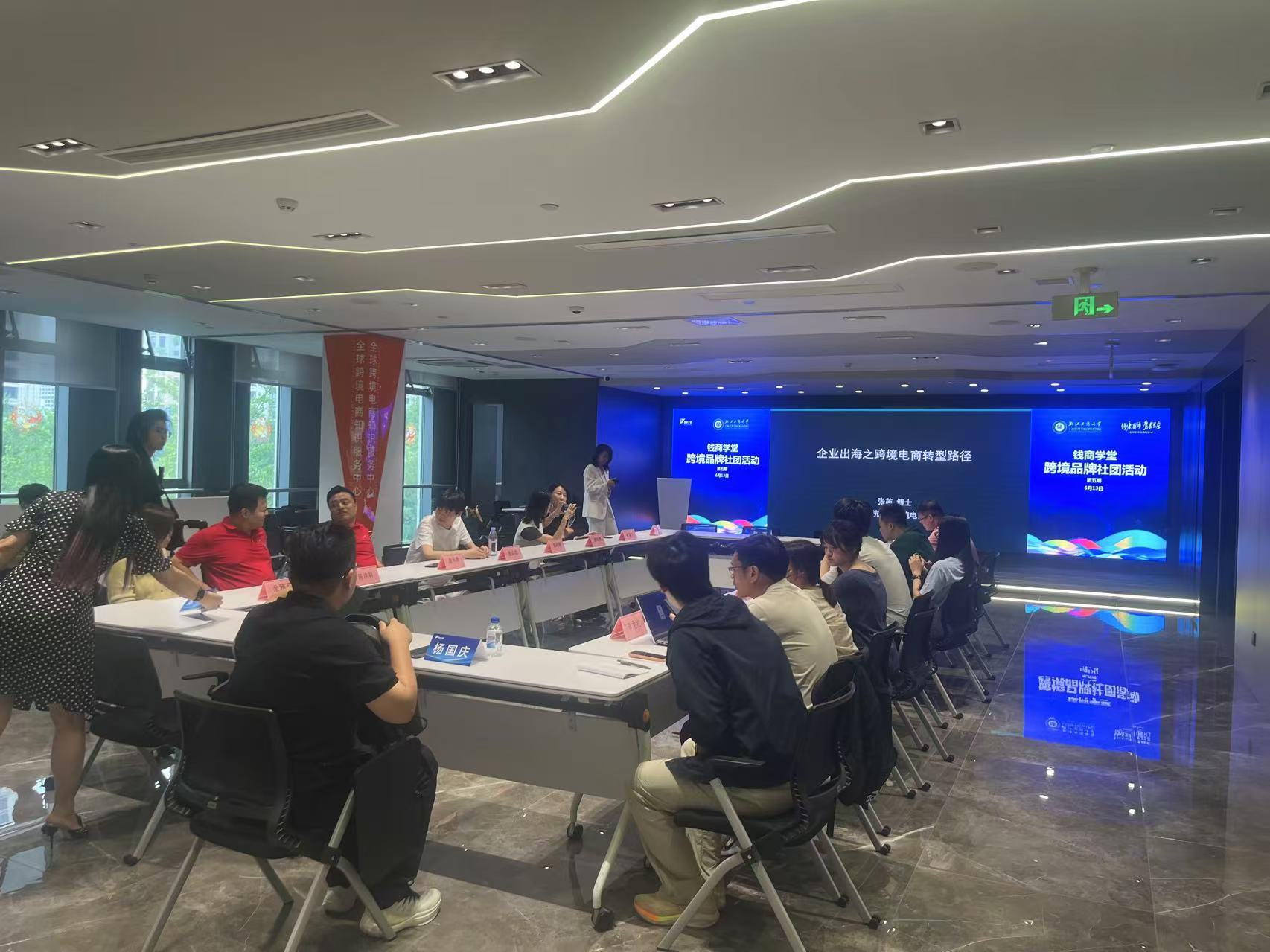
钱商学堂跨境品牌社团活动在知识服务中心举办

亿邦动力 2026-08-22 16:50
亿邦动力 2026/08/22 16:50

邦小白快读

EN
全文速览

本文核心信息围绕一次跨境电商领域的研修参访活动展开,可提取的核心干货如下

1. 活动基本信息:5月28日,浙江大学云南省昆明市官渡区产业转型专业化能力研修班到访杭州全球跨境电商知识服务中心,参访过程中,研修班人员了解了跨境电商发展历程、杭州跨境电商综试区的创新政策与发展模式,还接触了杭州当地的优秀跨境电商企业。

2. 知识服务中心核心信息:该中心是行业首个城市产业知识公共服务平台,由杭州跨境电商综试区、萧山区政府等政企媒多方联合建设运营,目前已经形成产业打卡地、创新观察哨、跨境会客厅三位一体的公共服务功能,目标是立足杭州服务全国,为全球跨境电商发展输出成熟的知识理论与实践经验。

本文可为布局跨境电商赛道的品牌商提供以下参考干货

1. 公开产业资源信息:杭州已经建成全球跨境电商知识服务中心这一官方背景的公共服务平台,品牌商可前往该平台对接行业资源,学习杭州跨境电商综试区经过验证的创新政策、成熟运营模式,对标当地优秀跨境电商企业,梳理自身品牌的发展方向。

2. 业务优化参考:该平台聚焦跨境电商产业高质量发展,能够输出系统化的知识理论与实践经验,品牌商可依托平台资源把握跨境电商领域的消费趋势,深入了解目标用户行为特征,进而优化自身的品牌营销布局、出海渠道建设与产品研发策略,借助跨境电商赛道实现品牌增长。

本文可以给从事跨境电商业务的卖家提供以下干货信息

1. 优质学习资源提示:杭州跨境电商综试区已经摸索出一套成熟的创新政策和发展模式,还有政企媒多方共建的官方跨境电商知识服务中心,卖家可以前往参访学习,获取准确的跨境电商政策解读,对接行业上下游资源,学习头部卖家的成熟运营经验。

2. 转型发展机会提示:当前国内跨境电商产业已经形成了完善的公共服务支撑体系,这类公共服务平台面向全国从业者开放,想要布局跨境电商或者实现原有业务转型的卖家,可以借助平台资源了解消费需求层面的新变化,把握细分赛道的新机会,学习最新的商业模式,降低转型试错成本,同时还能提前了解行业风险,做好应对准备。

想要借助跨境电商实现转型的传统工厂,可以从本文提取以下干货内容

1. 转型学习渠道信息:跨境电商已经成为传统制造工厂实现产业转型的核心方向之一,杭州建成了官方背景的全球跨境电商知识公共服务平台,工厂可以组织人员前往参访学习,直观了解跨境电商市场对产品生产、设计的具体需求,及时调整自身的产品研发方向,匹配市场需求。

2. 数字化转型启示:杭州跨境电商综试区已经摸索出成熟的创新发展模式,也培育了一大批优秀的跨境电商企业,工厂可以通过该平台对接行业资源,把握跨境电商赛道带来的新商业机会,学习行业内推进数字化改造和电商转型的成熟经验,找到适合自身的转型路径,推动工厂实现高质量发展。

本文可为跨境电商领域的服务商提供以下干货内容

1. 行业发展趋势信息:当前国内跨境电商产业已经从高速扩张转向高质量发展阶段,产业对系统化的知识服务、公开的资源对接公共平台的需求正在持续提升,已经出现了专门的城市产业知识公共服务平台,这是产业服务领域的新发展趋势,服务商可以据此调整自身的业务布局方向。

2. 商业模式与解决方案参考:本次建成的全球跨境电商知识服务中心采用政企媒多方联合建设运营的模式,打造了三位一体的公共服务功能,能够整合各方资源满足不同主体的需求,服务商可以参考这一模式,优化自身的服务解决方案,更好解决不同客户对跨境电商知识学习、资源对接的痛点,拓展自身的客户群体。

本文可以给布局跨境电商领域的平台商提供以下干货参考

1. 平台建设模式参考:当前跨境电商产业对产业知识公共服务有明确的市场需求,杭州打造全球跨境电商知识服务中心采用的政企多方联合共建运营的模式,定位开放型公共服务平台,形成了产业打卡地、创新观察哨、跨境会客厅三位一体的功能,这一成熟模式可以给同类平台建设提供直接参考。

2. 平台运营与招商启示:该平台采用立足杭州服务全国的开放定位,以促进产业高质量发展为核心目标,能够吸引全国各地的产业转型研修、参访活动,说明这类开放公共服务定位能够帮助平台汇聚行业资源,获得更多合作与招商机会,平台商可以参考这一定位调整自身运营方向,规避同质化竞争的风险。

本文可以给跨境电商产业研究者提供以下干货内容

1. 产业发展新动向:当前国内跨境电商产业已经从早期的规模扩张阶段进入高质量发展新阶段,行业已经诞生了首个城市层面的跨境电商产业知识公共服务平台,说明产业发展对系统化知识输出、公共资源对接的需求正在快速提升,这是跨境电商产业服务化发展的新动向,具备较高的研究价值。

2. 创新商业模式研究案例:该全球跨境电商知识服务中心采用政府、产业园区、行业媒体多方联合建设运营的模式,打造了三位一体的公共服务功能,明确立足杭州服务全国的定位,这种政企媒产学研结合的公共服务平台模式,是跨境电商产业服务领域的创新商业模式,也为研究国内跨境电商综试区的政策创新提供了新的典型样本,可供深入研究总结。

返回默认
声明:快读内容全程由AI生成,请注意甄别信息。如您发现问题,请发送邮件至 run@ebrun.com 。

我是 品牌商 卖家 工厂 服务商 平台商 研究者 帮我再读一遍。

Quick Summary

This article summarizes key takeaways from a recent cross-border e-commerce industry study tour in China:

1. Event basics: On May 28, a specialized industrial transformation training program from Zhejiang University, based in Guandu District, Kunming, Yunnan Province, visited the Hangzhou Global Cross-border E-commerce Knowledge Service Center. During the tour, participants learned about the development history of China’s cross-border e-commerce sector, the innovative policies and development models of the Hangzhou Cross-border E-commerce Comprehensive Pilot Zone, and connected with leading local cross-border e-commerce companies.

2. Introduction to the Knowledge Service Center: As the industry’s first public urban industrial knowledge service platform, it is co-developed and operated by a multi-stakeholder partnership including the Hangzhou Cross-border E-commerce Comprehensive Pilot Zone administration and the Xiaoshan District government. It currently delivers three core public services: an industry exchange hub, an innovation observation post, and a cross-border networking venue. Aligned with its mission of "rooted in Hangzhou, serving the whole country", the platform aims to share proven knowledge, theory and practical experience for cross-border e-commerce development worldwide.

This article offers key insights for brands looking to enter or expand in the cross-border e-commerce space:

1. Access to public industry resources: Hangzhou has launched the government-backed Global Cross-border E-commerce Knowledge Service Center, an official public service platform. Brands can visit the platform to connect with industry resources, study the validated innovative policies and mature operation models of the Hangzhou Cross-border E-commerce Comprehensive Pilot Zone, benchmark against leading local cross-border e-commerce brands, and refine their own brand development strategies.

2. Guidance for business optimization: Focused on driving high-quality development of the cross-border e-commerce industry, the platform provides systematic knowledge, theory and practical experience. Brands can leverage its resources to identify consumer trends in the cross-border space, gain deeper insights into target user behavior, and optimize their brand marketing layout, global channel development and product R&D strategies to achieve brand growth via cross-border e-commerce.

This article shares key takeaways for sellers engaged in cross-border e-commerce business:

1. Access to high-quality learning resources: The Hangzhou Cross-border E-commerce Comprehensive Pilot Zone has developed a set of mature innovative policies and development models, and the government-backed Global Cross-border E-commerce Knowledge Service Center is co-built by government, industry and media stakeholders. Sellers can visit the center for study tours, get authoritative policy interpretations, connect with upstream and downstream industry resources, and learn proven operational experience from top industry players.

2. Opportunities for transformation and growth: China’s cross-border e-commerce industry now has a complete public service support system, and this type of public platform is open to practitioners across the country. For sellers looking to enter cross-border e-commerce or transform their existing business, the platform’s resources help you identify new shifts in consumer demand, capture opportunities in niche segments, learn the latest business models, reduce trial-and-error costs during transformation, and prepare in advance for industry risks.

Traditional manufacturers looking to transform via cross-border e-commerce can extract the following key insights from this article:

1. Channels for transformation learning: Cross-border e-commerce has become one of the core directions for industrial transformation of traditional manufacturing. Hangzhou has launched the government-backed Global Cross-border E-commerce Knowledge Service Center. Factories can organize teams to visit and study, gain first-hand understanding of cross-border market requirements for product design and manufacturing, adjust R&D directions in a timely manner, and align product offerings with market demand.

2. Insights for digital transformation: The Hangzhou Cross-border E-commerce Comprehensive Pilot Zone has developed a mature innovative development model and nurtured a large number of outstanding cross-border e-commerce companies. Via the platform, factories can connect with industry resources, capture new business opportunities from the cross-border e-commerce boom, learn proven experience in digital transformation and e-commerce upgrading from industry players, identify a transformation path suitable for their own operations, and drive high-quality development of the factory.

This article provides key insights for service providers in the cross-border e-commerce industry:

1. Updates on industry development trends: China’s cross-border e-commerce industry has shifted from high-speed expansion to a high-quality growth phase, and demand for systematic knowledge services and open public resource matching platforms continues to rise. The emergence of the dedicated urban industrial knowledge public service platform marks a new development trend in the industrial service sector, which service providers can reference to adjust their business layout.

2. Reference for business models and solutions: The newly launched Global Cross-border E-commerce Knowledge Service Center adopts a joint construction and operation model involving government, enterprise and media stakeholders, and delivers an integrated three-in-one public service offering that整合各方资源 to meet the needs of different market players. Service providers can reference this model to optimize their own service solutions, better address client pain points related to cross-border knowledge learning and resource matching, and expand their customer base.

This article offers actionable insights for platform operators in the cross-border e-commerce sector:

1. Reference for platform development models: There is clear market demand for public industrial knowledge services in the cross-border e-commerce industry. The Hangzhou Global Cross-border E-commerce Knowledge Service Center adopts a joint construction and operation model with multiple government and industry stakeholders, positions itself as an open public service platform, and has developed an integrated three-in-one function as an industry exchange hub, innovation observation post, and cross-border networking venue. This mature model offers direct reference for the development of similar platforms.

2. Insights for platform operation and business recruitment: With its "rooted in Hangzhou, serving the whole country" open positioning and core mission of promoting high-quality industrial development, the platform attracts industrial transformation training programs and study tours from across China. This demonstrates that an open public service positioning helps platforms aggregate industry resources and unlock more cooperation and business recruitment opportunities. Platform operators can reference this positioning to adjust their operation strategy and avoid the risk of homogenized competition.

This article provides valuable insights for researchers focused on the cross-border e-commerce industry:

1. New industrial development trends: China’s cross-border e-commerce industry has moved from early-stage scale expansion to a new phase of high-quality development. The launch of the first city-level cross-border e-commerce industrial knowledge public service platform indicates that demand for systematic knowledge output and public resource matching is growing rapidly. This marks a new trend toward service-based development in the cross-border e-commerce industry, with high research value.

2. A new case for innovative business model research: The Global Cross-border E-commerce Knowledge Service Center is co-developed and operated by a multi-stakeholder partnership of government, industrial parks, and industry media, delivers an integrated three-in-one public service function, and has a clear "rooted in Hangzhou, serving the whole country" positioning. This public service platform model, which combines government, industry, media, academia and research, is an innovative business model in the cross-border e-commerce industrial service sector. It also provides a new typical case for research on policy innovation in China’s cross-border e-commerce comprehensive pilot zones, worthy of in-depth study and summary.

Disclaimer: The "Quick Summary" content is entirely generated by AI. Please exercise discretion when interpreting the information. For issues or corrections, please email run@ebrun.com .

I am a Brand Seller Factory Service Provider Marketplace Seller Researcher Read it again.

6月13日,钱商学堂跨境品牌社团活动在杭州全球跨境电商知识服务中心举办。参会企业围绕“企业出海之跨境 电商转型路径”进行深入交流沟通。


全球跨境电商知识服务中心由杭州跨境电商综试区、萧山区人民政府、萧山经济技术开发区、杭州信息港小镇、亿邦动力联合建设运营。中心作为跨境电商行业首个城市产业知识公共服务平台,已经形成了产业打卡地、创新观察哨、跨境会客厅三位一体的产业知识公共服务功能。中心将以促进跨境电商产业高质量发展为首要任务,立足杭州、服务全国、沟通世界,为全球跨境电商高质量发展持续输出有效的知识理论和实践经验。


本文首发于 亿邦动力 官方网站

文章来源:亿邦动力

广告
微信
朋友圈

FAQ回顾

杭州全球跨境电商知识服务中心的建设运营主体有哪些?

杭州全球跨境电商知识服务中心由杭州跨境电商综试区、萧山区人民政府、萧山经济技术开发区、杭州信息港小镇、亿邦动力联合建设运营,是跨境电商行业首个城市产业知识公共服务平台。

杭州全球跨境电商知识服务中心具备哪些功能?

杭州全球跨境电商知识服务中心已经形成产业打卡地、创新观察哨、跨境会客厅三位一体的产业知识公共服务功能,以促进跨境电商产业高质量发展为首要任务,立足杭州、服务全国、沟通世界。

到杭州全球跨境电商知识服务中心考察可以了解哪些内容?

在杭州全球跨境电商知识服务中心可了解跨境电商的发展历程,杭州跨境电商综试区成立以来的创新政策、模式,以及杭州当地的优秀跨境电商企业相关情况。

这么好看,分享一下?

朋友圈 分享

APP内打开

+1
+1
微信好友 朋友圈 新浪微博 QQ空间
关闭
收藏成功
发送
/140 0

