广告
加载中

光帆AI技术正式落地韶音OpenFit 2 AI耳机 携手突破AI边界

龚作仁 2026-08-20 17:39
龚作仁 2026/08/20 17:39

邦小白快读

EN
全文速览

本文核心内容是韶音联合光帆科技发布搭载系统化AI能力的开放式耳机新品OpenFit 2 AI,给消费者带来了全新的AI耳机体验,核心干货信息如下:

1. 核心功能:新品上线光帆自研AI OS支撑的AI实验室功能合集,包含智能对话、日程待办、快记快查、智能消息等效率功能,瞄准强沟通人群的高效需求

2. 实操方法:用户双击耳机按键就能唤醒智能助手晓帆,可自动安排日程、添加定制备忘,还能自动筛选长消息要点读出来,功能近期推送,后续会通过OTA持续升级

3. 行业变化:现在AI耳机的竞争已经从单点AI功能转向系统化AI能力比拼,接入大模型不再稀缺,体系化能力才是体验差距的核心

本次韶音与光帆科技的合作,为音频硬件品牌的AI化转型提供了可参考的实操案例,核心干货如下:

1. 产品研发方向:当前AI硬件竞争焦点已经迁移,接入大模型不再是稀缺能力,真正拉开差距的是AI系统化能力,品牌做AI产品要从单点功能布局转向主动智能、跨场景调度的系统化能力搭建,重点瞄准强沟通人群的效率需求开发功能

2. 合作与生态建设:可以走技术+硬件的强强联合路线,硬件品牌发挥自身产品积累和用户理解优势,对接专业AI技术厂商的系统能力,同时走开放生态路线,可联合多 AI 伙伴共同打造产品功能

3. 消费趋势判断:未来AI耳机将成为随身AI入口,形态会更多元,生态会更加开放,提前布局系统化AI能力的品牌会占据先机

本次合作透露出AI耳机行业的最新变化,给音频品类卖家带来了明确的机会和方向提示,核心干货如下:

1. 市场机会:AI耳机已经完成从单点功能尝试到系统化AI能力落地的升级,主打效率功能的AI耳机精准击中强沟通人群的需求缺口,是接下来值得布局的增长赛道

2. 选品与风险提示:当前行业已经不再比拼是否接入大模型,只做单点AI功能的产品已经没有竞争力,卖家选品要避开概念炒作类产品,优先布局搭载系统化AI能力、能真正解决用户效率需求的产品

3. 合作机会:现在已经有专业AI厂商开放系统化AI能力输出,卖家对接品牌方的时候,可以优先选择已经和这类技术厂商合作的产品,快速获得差异化竞争优势,降低选品踩坑风险

光帆AI技术首次落地第三方头部硬件品牌,给硬件生产工厂带来了明确的产品方向和商业机会,核心干货如下:

1. 产品生产设计方向:当前用户对AI耳机的需求已经从基础的单点智能,升级为主动、多样的系统化效率智能,工厂在做AI硬件产品设计时,要顺应趋势调整方向,围绕用户真实的效率需求设计功能,不要再停留在单点功能的堆叠

2. 商业机会:光帆科技已经完成了AI OS的自有产品验证,正式向行业伙伴开放AI技术输出,工厂不需要投入大量资金自研AI系统,可以直接和这类专业AI技术厂商合作,降低AI产品的研发门槛,快速推出符合市场需求的AI硬件

3. 数字化转型启示:AI硬件已经明确成为未来随身AI的入口,行业增长空间大,工厂要提前对接AI技术资源,布局AI硬件赛道,跟上行业升级的步伐

本次合作反映了AI硬件行业对AI技术服务的最新需求,给AI技术服务商指明了行业发展方向,核心干货如下:

1. 行业发展趋势:AI硬件已经从概念验证阶段进入落地竞争阶段,接入大模型已经成为基础能力不再稀缺,市场对系统化AI能力的需求越来越高,AI技术服务的重心从提供大模型接入转向提供系统化解决方案

2. 客户核心痛点:绝大多数硬件品牌都有AI化转型的需求,但大多没有能力自研AI原生操作系统,只能做单点AI功能接入,无法满足用户对主动智能、多场景效率提升的需求,缺口很大

3. 解决方案方向:像光帆这样自研AI OS,依托端云协同、多模型调度、多Agent协作打造系统化AI能力,再开放输出给硬件品牌的模式,正好匹配了硬件品牌的核心需求,是接下来AI技术服务商非常有前景的业务方向

本次韶音与光帆的合作,反映了AI硬件领域的最新变化,给智能硬件平台的招商运营带来了很多启示,核心干货如下:

1. 当前商家核心需求:大量硬件品牌都在推进AI化转型,但是普遍缺乏系统化AI技术能力,需要对接优质的AI技术服务商完成产品升级,平台可以针对性搭建技术服务商和硬件品牌的对接通道,完善平台服务能力

2. 招商布局方向:平台接下来可以重点引入两类商家,一类是具备系统化AI能力输出的AI技术服务商,另一类是已经布局系统化AI能力的硬件品牌,打造平台在AI硬件赛道的差异化竞争力

3. 风向规避提示:当前行业已经从大模型概念炒作转向真实用户体验落地,平台要引导商家聚焦真实场景的功能落地,规避概念炒作带来的风口风险,重点扶持真正能满足用户效率需求的AI硬件产品

本次合作是AI技术落地硬件产业的标志性事件,反映了AI硬件产业的诸多新动向,对产业研究有很高的参考价值,核心干货如下:

1. 产业新动向:AI技术落地硬件的发展阶段已经进阶,从最初的单点功能尝试,到技术厂商的自有产品验证,现在已经进入到技术厂商开放系统化AI能力输出给第三方硬件品牌的阶段,产业分工越来越清晰,专业人做专业事的分工模式开始成型

2. 行业竞争逻辑变化:AI硬件的竞争逻辑已经发生改变,原来的竞争点是谁先接入大模型,现在的竞争分水岭变成谁能提供更好的系统化AI体验,比拼的是主动智能能力、跨应用调度能力,而非简单的功能叠加

3. 新商业模式观察:本次合作诞生了AI技术厂商输出AI OS、硬件厂商负责硬件产品落地的分工协作模式,这种模式充分发挥双方优势,未来很可能会复制到更多AI硬件品类,是值得深入研究的产业新商业模式

返回默认

声明:快读内容全程由AI生成,请注意甄别信息。如您发现问题,请发送邮件至 run@ebrun.com 。

我是 品牌商 卖家 工厂 服务商 平台商 研究者 帮我再读一遍。

Quick Summary

This article covers the core details of Shokz and Guangfan Technology's newly launched OpenFit 2 AI, an open-ear headphone integrated with systematic AI capabilities that delivers a brand-new AI audio experience for consumers. Key takeaways are as follows:

1. Core Functions: The new model features a suite of AI Lab functions powered by Guangfan's self-developed AI OS, including efficiency tools such as intelligent conversation, calendar and to-do management, quick note-taking and search, and smart message processing. These features are tailored to meet the productivity needs of frequent communicators.

2. How It Works: Users can activate the Xiafan intelligent assistant by double-tapping the headphone button. The assistant can automatically arrange schedules, add custom reminders, and summarize and read out key points from long messages. All functions will roll out in the near future and receive ongoing updates via OTA.

3. Industry Shift: Competition in the AI headphone space has shifted from competing on standalone AI features to competing on comprehensive systematic AI capabilities. While integrating large language models is no longer a rare differentiator, systematic AI capability is now the core factor that separates user experience quality across products.

The collaboration between Shokz and Guangfan Technology offers a actionable reference case for audio hardware brands pursuing AI transformation. Key insights are as follows:

1. Product R&D Direction: The competitive focus of the AI hardware industry has shifted. Integrating large language models is no longer a scarce capability, and the real gap between products comes down to systematic AI capability. Brands developing AI products should shift their focus from rolling out isolated features to building systematic capabilities that support proactive intelligence and cross-scenario orchestration, with a focus on developing features that address productivity needs for frequent communicators.

2. Collaboration and Ecosystem Building: Brands can adopt a "technology + hardware" strong partnership model: hardware brands leverage their existing product expertise and user insight, while partnering with professional AI technology providers to access mature systematic AI capabilities. Brands should also pursue an open ecosystem strategy, collaborating with multiple AI partners to co-develop product features.

3. Consumer Trend Outlook: AI headphones will emerge as ubiquitous portable AI entry points in the future, with more diverse form factors and more open ecosystems. Brands that build out systematic AI capabilities early will gain a first-mover advantage.

This collaboration reveals the latest shifts in the AI headphone industry, and provides clear guidance on opportunities and direction for audio category sellers. Key takeaways are as follows:

1. Market Opportunity: AI headphones have completed their upgrade from testing isolated AI features to deploying full systematic AI capabilities. Productivity-focused AI headphones precisely fill an unmet demand among frequent communicators, making this a high-growth category worth prioritizing for sellers.

2. Product Selection and Risk Warning: The industry no longer competes on whether a product integrates a large language model, and products with only isolated AI features no longer have competitive edge. Sellers should avoid concept-only hype products, and prioritize stocking products with integrated systematic AI capabilities that actually solve users' productivity needs.

3. Collaboration Opportunity: Professional AI vendors have started opening up their systematic AI capabilities to the market. When sourcing from brands, sellers can prioritize products that have already partnered with these technology vendors, to quickly gain differentiated competitive advantage and reduce the risk of bad product selection.

This marks the first deployment of Guangfan's AI technology in a leading third-party hardware brand, and it provides clear product direction and business opportunities for hardware manufacturing factories. Key insights are as follows:

1. Product Design and Manufacturing Direction: User demand for AI headphones has upgraded from basic isolated intelligence to proactive, versatile systematic productivity-focused intelligence. When designing AI hardware products, factories should adjust their direction in line with industry trends, design features around users' actual productivity needs, and stop relying on stacking isolated AI features.

2. Business Opportunity: Guangfan Technology has already completed product validation of its AI OS on its own devices, and has officially opened its AI technology output to industry partners. Factories do not need to invest heavily to develop an AI system in-house; they can partner directly with professional AI technology vendors like Guangfan to lower the R&D barrier for AI products and quickly launch AI hardware that meets market demand.

3. Digital Transformation Insights: AI hardware is clearly positioned to become the future portable AI entry point, with large industry growth potential. Factories should connect with AI technology resources early, lay out positioning in the AI hardware track, and keep up with the pace of industry upgrading.

This collaboration reflects the latest demand for AI technology services in the AI hardware industry, and points out the direction of industry development for AI technology service providers. Key takeaways are as follows:

1. Industry Development Trend: AI hardware has moved from the proof-of-concept stage to the competitive deployment stage. Integrating large language models has become a commodity basic capability and is no longer rare. Market demand for systematic AI capabilities is growing rapidly, so the focus of AI technology services is shifting from providing large model access to delivering full systematic solutions.

2. Core Customer Pain Points: The vast majority of hardware brands have demand for AI transformation, but most lack the capability to develop a native AI operating system in-house. They can only integrate isolated AI features, which cannot meet users' demand for proactive intelligence and multi-scenario productivity improvement, leaving a large market gap.

3. Solution Direction: The model pioneered by Guangfan — developing a self-owned AI OS, building systematic AI capabilities through edge-cloud collaboration, multi-model scheduling, and multi-agent collaboration, then opening this capability to hardware brands — perfectly matches the core demand of hardware brands. This is a very promising business direction for AI technology service providers going forward.

The collaboration between Shokz and Guangfan reflects the latest changes in the AI hardware space, and offers many insights for the recruitment and operations of smart hardware platforms. Key takeaways are as follows:

1. Current Core Merchant Needs: A large number of hardware brands are pushing forward AI transformation, but most generally lack systematic AI technology capabilities, and need to connect with high-quality AI technology service providers to complete product upgrades. Platforms can build dedicated connection channels between AI technology service providers and hardware brands to improve platform service capabilities.

2. Recruitment and Layout Direction: Going forward, platforms can prioritize onboarding two types of merchants: AI technology service providers capable of outputting systematic AI capabilities, and hardware brands that have already built out systematic AI capabilities. This will help platforms build differentiated competitive advantage in the AI hardware track.

3. Risk Mitigation Guidance: The industry has shifted from large model concept hype to delivering real user experiences. Platforms should guide merchants to focus on functional deployment for real use cases, avoid hype-driven trend risks, and prioritize supporting AI hardware products that actually meet users' productivity needs.

This collaboration is a landmark event for the integration of AI technology into the hardware industry, reflecting multiple new trends in the AI hardware industry and offering high reference value for industrial research. Key insights are as follows:

1. New Industry Trends: The deployment of AI technology in hardware has entered a new development stage. It started with testing isolated AI features, then moved to technology vendors validating the technology on their own products, and has now entered the stage where technology vendors open systematic AI capabilities to third-party hardware brands. Industrial division of labor is becoming increasingly clear, and a "let professionals do professional work"分工model is starting to take shape.

2. Shift in Industry Competitive Logic: The competitive logic of AI hardware has changed. Previously, competition centered on who was first to integrate a large language model. Today, the competitive dividing line has shifted to who can deliver a better systematic AI experience, with competition focusing on proactive intelligence capability and cross-application orchestration capability, rather than simple feature stacking.

3. Observation of New Business Models: This collaboration has given rise to a division-of-labor collaboration model where AI technology vendors output AI OS, and hardware manufacturers are responsible for hardware product delivery. This model gives full play to the respective advantages of both parties, and is likely to be replicated across more AI hardware categories in the future, making it a new industrial business model worthy of in-depth research.

Disclaimer: The "Quick Summary" content is entirely generated by AI. Please exercise discretion when interpreting the information. For issues or corrections, please email run@ebrun.com .

I am a Brand Seller Factory Service Provider Marketplace Seller Researcher Read it again.

图片

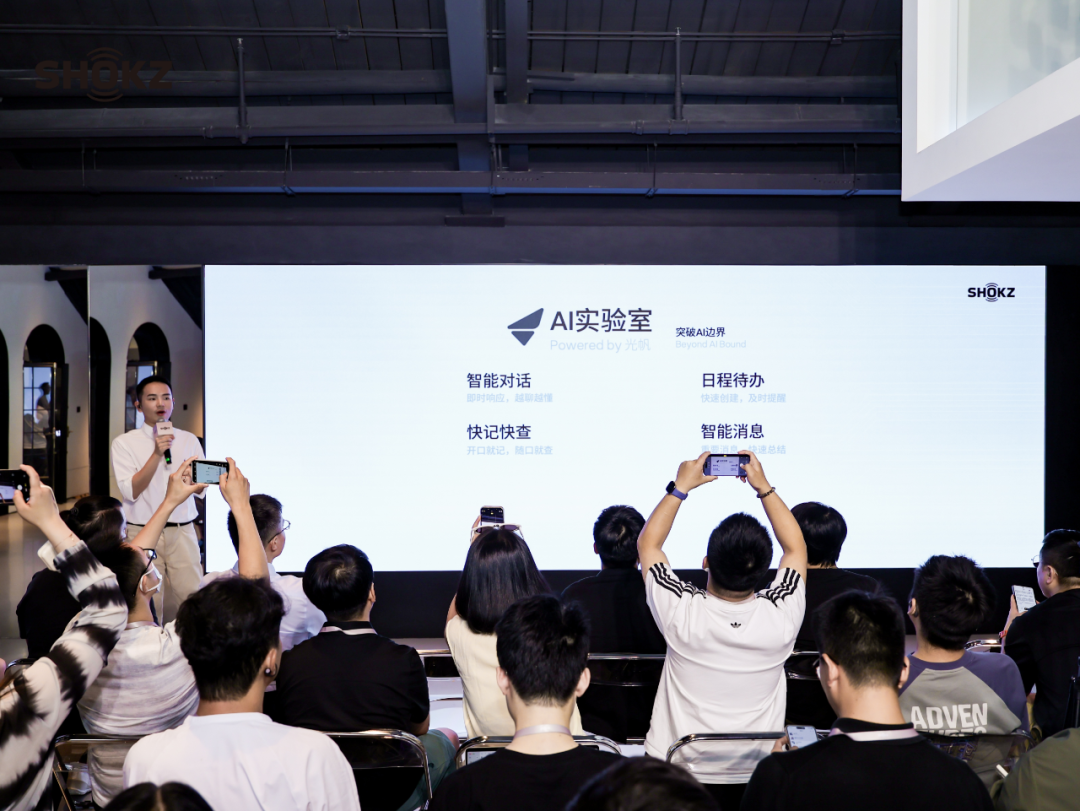
2026年 8月18日,韶音在上海举办媒体沟通会,正式发布开放式耳机新品OpenFit 2 AI。光帆科技作为韶音重要的技术合作伙伴,为本款产品提供了AI技术支撑。

沟通会上,韶音宣布与光帆科技达成AI技术合作,将在OpenFit 2 AI中上线基于光帆自研AI OS的效率功能合集 ——"AI实验室",为智能对话、日程待办、快记快查、智能消息等创新类AI能力提供技术支撑,助力韶音为强沟通人群打造更高效的AI耳机体验。这是光帆AI技术能力首次正式落地第三方头部硬件品牌,标志着光帆系统化AI能力已从自有产品验证,进阶为可向行业伙伴输出。

图片

基于光帆自研AI OS的效率功能合集——“AI实验室”,即将在韶音OpenFit 2 AI耳机上线。作为该品类的全球头部品牌,韶音此次与光帆的合作,让开放式耳机率先从单点AI功能走向系统化AI能力。

与此同时,AI硬件的竞争焦点正在迁移:接入大模型不再是稀缺能力,真正拉开体验差距的是AI体系化能力。过去几年AI在耳机上的落地多为降噪、佩戴监测等单点功能,而真正的分水岭在于AI能否提供更主动智能、更多样化的能力,并依托系统化支撑实现跨应用调度;此次光帆与韶音的合作,正是这一行业趋势的代表性落地。

光帆此次在OpenFit 2 AI耳机上落地的AI能力,以效率功能合集形式面向强沟通人群,包含智能对话、日程待办、快记快查、智能消息等。开启后,用户可通过双击按键唤醒智能助手“晓帆”,OpenFit 2 AI可按需自动安排日程、添加定制化备忘;即使收到超长消息,也能筛选要点读给你听。相关功能将在近期推送给OpenFit 2 AI耳机用户,并通过持续OTA不断升级。

光帆为OpenFit 2 AI提供的AI技术支撑,区别于单点功能接入,是基于光帆自研AI OS,通过端云协同、多模型调度、多Agent协作等系统化AI能力实现,而非单一功能的简单叠加。

光帆相关负责人表示,韶音在开放式耳机领域有深厚的产品积累和用户理解,光帆科技专注于AI原生操作系统研发,双方的合作是技术能力与产品体验的强强联合。此次合作是光帆AI能力在开放式耳机上的一次重要落地,也是 "突破AI边界" 的一次实践。未来双方将持续探索,在更多场景中深化AI技术合作。

在圆桌讨论环节,韶音相关产品负责人分享了AI耳机未来发展的两大趋势。其一,AI耳机的概念将不断延伸,未来可能会出现更多元的形态载体,硬件将承载语音输入与输出的任务,成为AI随身的入口。其二,AI硬件的生态将更加开放。韶音OpenFit 2 AI已与千问大模型达成合作,此次又与光帆科技联合推出“AI实验室”功能。未来韶音将与光帆携手持续探索,让AI硬件在真实场景中释放更大价值,更好地满足用户在更多场景下的真实需求。

此次合作,是光帆自研AI OS从自有产品验证走向行业开放输出的重要一步。未来,光帆将持续突破AI边界,与更多硬件伙伴携手,让基于AI OS的系统化能力在更多真实场景中落地。

注:文/龚作仁,文章来源:Laborer,本文为作者独立观点,不代表亿邦动力立场。

文章来源:Laborer

广告
微信
朋友圈

FAQ回顾

韶音OpenFit 2 AI耳机的AI功能适合哪些人群使用?

韶音OpenFit 2 AI的AI功能面向强沟通人群打造,搭载光帆科技自研AI OS支撑的“AI实验室”效率功能合集,可实现智能对话、日程待办管理、长消息要点提炼播报等能力,能大幅提升用户日常沟通、事务处理的效率。

当前AI耳机行业的竞争焦点发生了什么变化?

当前AI硬件的竞争焦点已出现迁移,接入大模型不再是稀缺能力,真正拉开体验差距的是AI体系化能力;此前AI在耳机上的落地多为降噪、佩戴监测等单点功能,现在的分水岭是AI能否提供主动智能、多样化能力并实现跨应用调度。

未来AI耳机的发展趋势有哪些?

未来AI耳机主要有两大发展趋势,一是概念将不断延伸,会出现更多元的形态载体,硬件承载语音输入输出任务,成为AI随身入口;二是AI硬件生态将更加开放,联合更多技术合作伙伴拓展场景能力,满足用户多元需求。

这么好看,分享一下?

朋友圈 分享

APP内打开

赞 +1
+1
微信好友 朋友圈 新浪微博 QQ空间
关闭
收藏成功
发送
/140 0