广告
加载中

京东京麦服务市场 × 慧博科技集客 CRM:两套高 ROI 复购实战案例拆解

龚作仁 2026-08-20 15:48
龚作仁 2026/08/20 15:48

邦小白快读

EN
全文速览

本文核心分享了京东商家提升用户复购、跳出一锤子买卖困局的可复制高ROI实战干货,适合电商从业者参考学习。

1.核心结论:做高复购的通用方法论是以全域数据为底座,按用户生命周期做分层运营,用自动化SOP放大运营效率,再借力平台资源放大转化效果。

2.可直接借鉴的实操方法:采用T+N延时触发机制,抓住京东物流收货后的开箱好感峰值做运营,针对不同层级用户推送匹配的权益与商品,摒弃传统一刀切的粗放群发模式。

3.案例验证效果:两个标杆案例分别跑出ROI 1:160+、1:251的超高回报,证明这套方法落地性强,成本低,适合大多数京东商家复用。

本文为布局京东渠道的品牌分享了存量用户运营、提升复购与品牌价值的实战经验,适配品牌多维度运营需求。

1.当前消费趋势与用户特征:京东平台用户消费力强,但3C品类用户多为按需单品采购,存在品类连带率低的痛点;母婴品类用户反感无差别营销,精准匹配需求才能提升唤醒率。

2.可落地的品牌运营方法:对接京东全域数据搭建自动化运营体系,针对倍思这类多SKU品牌,可通过T+N延时触达实现跨品类连带,提升客单价与用户生命周期价值;针对母婴品牌,可通过分层错峰触达+阶梯权益闭环提升沉睡用户唤醒率。

3.成果验证:这套方法能实现超高ROI,还能帮助品牌构建独家竞争壁垒,头部品牌也可用来解决品类割裂、数据归因模糊等运营瓶颈。

本文为京东卖家指明了存量市场的增长机会,给出了破解复购难题的可落地方案与风险提示。

1.核心痛点与机会:当前多数京东卖家面临买完即走、复购断崖、粗放营销ROI低、人力成本高的问题,存量用户激活是低成本可持续的增长方向,已有成熟可复制的解法。

2.可实操的落地路径:可以入驻京东京麦服务市场,对接慧博科技集客CRM这类工具,打通平台全域数据,搭建符合自身品类的自动化运营SOP,充分借力京东物流节点、PLUS会员、百亿补贴等平台资源提升转化。

3.风险提示:传统一刀切短信群发不仅浪费营销预算,还容易引发用户反感,一定要替换为分层精准触达模式,才能拿到高回报。两个案例均验证了这套方法的有效性,最高能拿到1:251的ROI。

本文给布局电商渠道的生产工厂提供了数字化转型、挖掘电商增长空间的启示与商业机会。

1.行业方向转变:当前电商已经从增量拉新进入存量竞争阶段,工厂做电商不能只关注新客成交,要转变思路挖掘已有用户的复购价值,复购运营的投入产出比远高于新客拉新。

2.数字化运营启示:工厂做电商不需要从零搭建运营体系,可以对接成熟的第三方数字化运营工具,打通平台全域数据,把人工运营经验转化为自动化SOP,降低人力成本,减少转化窗口的错失。

3.商业机会:如果工厂已经搭建了多SKU产品矩阵,可以参考倍思的跨品类连带运营方法,对已有用户做长期品类渗透,把单一品类买家转化为全品类用户,提升单用户价值,获得额外的营收增长;单一品类工厂也可以用这套方法唤醒沉睡用户,提升复购率。

本文披露了当前电商运营服务领域的客户痛点、成熟解决方案与行业发展趋势,对电商服务商有较高参考价值。

1.商家核心痛点:当前大多数电商商家都面临复购增长难的问题,传统粗放营销模式ROI极低,人工运营成本高、效率低,大促数据归因模糊,商家急需能落地的精细化复购运营解决方案。

2.成熟可落地的解决方案方向:服务商需要打造打通多平台的全域数据底座,结合用户全生命周期分层逻辑,输出可复制的自动化运营SOP,帮助商家实现精准触达,降低运营成本,撬动高ROI。

3.行业发展趋势:电商运营已经进入数据+AI驱动的新阶段,服务商需要向“数据+AI应用”双擎驱动的智能运营中枢转型,把AI大模型和交易场景结合,重构消费者运营逻辑,实现从人工配置到人机协同的范式升级,慧博科技的转型路径就是典型代表,已经落地多个标杆案例。

本文反映了平台商家的核心需求,展示了平台联合第三方服务商赋能商家的成功路径,对平台运营管理有参考价值。

1.商家核心需求:存量竞争阶段,商家对复购运营工具的需求强烈,需要平台开放全域数据能力,对接优质第三方服务商,解决商家自身做不好精细化复购运营的痛点。

2.平台已验证的成功做法:平台可以通过服务市场联合优质第三方服务商,一起打造标杆案例,输出可复制的运营方法论,帮助商家提升运营能力;同时平台本身的物流节点、会员体系、营销活动都是商家做转化的放大器,可以结合第三方工具放大平台资源的价值。

3.运营方向提示:平台可以围绕商家复购痛点进一步优化服务市场,引入更多优质服务商,推广标杆案例,提升整体商家运营水平;同时需要引导商家放弃粗放群发营销,避免影响平台用户体验,推动商家做精细化分层运营,实现商家和平台的双赢。

本文呈现了当前电商零售产业在存量竞争阶段的新动向、新商业模式,对产业研究有较高的资料价值。

1.产业新动向:国内电商已经完成从增量拉新到存量运营的转型,商家的竞争核心从争夺流量转向挖掘已有用户的全生命周期价值,传统粗放的营销模式已经被市场淘汰,精细化、数据化、自动化运营成为主流方向。

2.新验证的商业模式:第三方服务商打通30+主流平台的全域数据,结合AI技术打造智能运营中枢,为品牌商家提供可复制的复购运营解决方案,这种服务模式已经得到市场验证,两个标杆案例分别跑出1:160+和1:251的超高ROI,模式可复制性强。

3.研究启示:未来电商运营会逐步走向人机协同的运营范式,平台开放生态、第三方服务商提供专业工具、商家落地运营的三方合作模式,会成为存量竞争阶段电商产业的主流形态,数据+AI双驱动是明确的发展方向。

返回默认
声明:快读内容全程由AI生成,请注意甄别信息。如您发现问题,请发送邮件至 run@ebrun.com 。

我是 品牌商 卖家 工厂 服务商 平台商 研究者 帮我再读一遍。

Quick Summary

This article shares actionable, high-ROI, replicable tactics for JD merchants to boost customer repurchase rates and break out of the one-and-done sales trap, making it a valuable reference for e-commerce practitioners.

1. Core conclusion: The universal framework for driving strong repurchase performance is built on full-scenario platform data. It involves tiered user operation based on the customer lifecycle, amplifying operational efficiency through automated SOPs, and leveraging platform resources to boost conversion.

2. Actionable takeaways: Instead of the traditional one-size-fits-all bulk outreach, merchants should adopt a T+N delayed trigger mechanism that targets customers when their positive impression peaks right after receiving JD Logistics orders, and delivers matched benefits and product recommendations to different user segments.

3. Verified results: Two benchmark cases recorded ultra-high ROIs of over 1:160 and 1:251 respectively, proving this framework is highly implementable, low-cost, and replicable for most JD merchants.

This article shares practical experience in existing user operation, repurchase growth and brand value enhancement for brands with a presence on JD, tailored to meet brands' multi-dimensional operational needs.

1. Current consumer trends and user characteristics on JD: JD users have high purchasing power, but 3C category buyers tend to make on-demand single-item purchases, dragging down category cross-sell rates; for the maternal and baby category, generic marketing alienates users, and only demand-aligned precision outreach can improve user re-engagement rates.

2. Implementable brand operation strategies: Brands can connect to JD's full-domain data to build an automated operation system. For multi-SKU brands like Baseus, T+N delayed outreach enables cross-category cross-selling to boost average order value and customer lifetime value. For maternal and baby brands, tiered staggered outreach combined with a closed-loop阶梯 benefits system improves the re-activation rate of dormant users.

3. Proven outcomes: This framework delivers ultra-high ROI and helps brands build exclusive competitive moats. Even leading brands can use it to solve operational bottlenecks such as siloed category management and unclear data attribution.

This article identifies growth opportunities in the saturated stock market for JD sellers, and provides implementable solutions and risk warnings for solving repurchase growth challenges.

1. Core pain points and opportunities: Most JD sellers currently struggle with customers leaving after one purchase, plummeting repurchase rates, low ROI from粗放 marketing, and high labor costs. Activating existing users is a low-cost, sustainable growth path, and a mature, replicable solution already exists.

2. Implementable roadmap: Sellers can join the JD Jingmai Service Market, connect to tools like Huibo Technology Jike CRM, unify full-domain platform data, build category-specific automated operation SOPs, and leverage JD platform resources including JD Logistics nodes, PLUS membership and Billion Subsidies to boost conversion.

3. Risk warning: Traditional one-size-fits-all bulk SMS campaigns not only waste marketing budget but also alienate customers. Sellers must replace this with tiered precision outreach to achieve high returns. The approach's effectiveness is verified by two cases, with a maximum ROI of 1:251.

This article provides insights and business opportunities for manufacturing factories with e-commerce channels to complete digital transformation and unlock new e-commerce growth.

1. Shifting industry direction: E-commerce has transitioned from new customer acquisition growth to stock market competition. Factories operating e-commerce should shift their focus from only new customer conversions to unlocking repurchase value from existing users, as the return on investment for repurchase operation far outpaces that of new customer acquisition.

2. Insights for digital operation: Factories do not need to build an operation system from scratch. They can connect to mature third-party digital operation tools, unify full-domain platform data, convert manual operation experience into automated SOPs, reduce labor costs, and avoid missing conversion windows.

3. Business opportunities: Factories with a multi-SKU product matrix can refer to Baseus' cross-category cross-selling strategy to conduct long-term category penetration among existing users, convert single-category buyers into full-category customers, boost per-user value, and unlock incremental revenue. Even factories focused on a single category can use this framework to re-activate dormant users and boost repurchase rates.

This article outlines current customer pain points, mature solutions and industry development trends in the e-commerce operation service sector, offering high reference value for e-commerce service providers.

1. Core merchant pain points: Most e-commerce merchants currently struggle to grow repurchase rates. Traditional粗放 marketing models deliver extremely low ROI, while manual operation is costly and inefficient, and data attribution for major promotions is unclear. Merchants urgently need implementable, precision-focused repurchase operation solutions.

2. Direction for mature, implementable solutions: Service providers need to build a full-domain data infrastructure that connects multiple platforms, adopt a tiered user framework aligned with the full customer lifecycle, and deliver replicable automated operation SOPs to help merchants achieve precision outreach, cut operational costs, and unlock high ROI.

3. Industry development trends: E-commerce operation has entered a new stage driven by data and AI. Service providers need to transform into "data + AI application" dual-driven intelligent operation hubs, integrate large AI models with transaction scenarios, restructure consumer operation logic, and upgrade the operational paradigm from manual configuration to human-machine collaboration. Huibo Technology's transformation path is a typical example, with multiple benchmark cases already launched.

This article outlines the core needs of platform merchants and showcases a successful path for platforms to empower merchants in collaboration with third-party service providers, offering reference value for platform operation and management.

1. Core merchant needs: In the stock competition era, merchants have strong demand for repurchase operation tools. They need platforms to open up full-domain data capabilities and connect them with high-quality third-party service providers to solve the pain point that merchants cannot deliver high-quality precision repurchase operation on their own.

2. Proven successful practices for platforms: Platforms can partner with high-quality third-party service providers through their service markets to co-develop benchmark cases and share replicable operation methodologies to help merchants improve their operational capabilities. Meanwhile, the platform's own logistics nodes, membership system and marketing campaigns all act as conversion amplifiers for merchants, and can be combined with third-party tools to maximize the value of platform resources.

3. Guidance for future operation: Platforms can further optimize their service markets around merchants' repurchase pain points, onboard more high-quality service providers, promote benchmark cases, and raise the overall operational level of merchants. They should also guide merchants to abandon bulk粗放 marketing that harms platform user experience, and encourage precision tiered operation to achieve a win-win outcome for both merchants and the platform.

This article presents new trends and emerging business models in the current e-commerce retail industry during the stock competition era, offering high value as source material for industry research.

1. New industry trends: China's e-commerce industry has completed its transition from growth via new customer acquisition to stock-focused operation. The core of competition for merchants has shifted from争夺 traffic to unlocking full lifetime value from existing users. Traditional粗放 marketing models have been phased out by the market, and precision, data-driven, automated operation has become the mainstream.

2. Newly validated business model: Third-party service providers unify full-domain data from over 30 major platforms, build intelligent operation hubs powered by AI, and deliver replicable repurchase operation solutions to brand merchants. This service model has been validated by the market, with two benchmark cases delivering ultra-high ROIs of over 1:160 and 1:251 respectively, proving strong replicability.

3. Research insights: E-commerce operation will gradually shift toward a human-machine collaboration paradigm. The tripartite cooperation model—where platforms open up their ecosystems, third-party service providers provide professional tools, and merchants implement operations—will become the mainstream structure of the e-commerce industry in the stock competition era, with data + AI dual-driven development as the clear future direction.

Disclaimer: The "Quick Summary" content is entirely generated by AI. Please exercise discretion when interpreting the information. For issues or corrections, please email run@ebrun.com .

I am a Brand Seller Factory Service Provider Marketplace Seller Researcher Read it again.

在京东做生意,最难的从来不是第一次成交,而是第二次。单品买家买完即走、营销短信越发越没人看、大促结束后复购断崖式下滑——如何激活存量用户、跳出“一锤子买卖”的单品成交困局,实现低成本、可持续的复购,是众多京东商家持续探寻的核心难题。

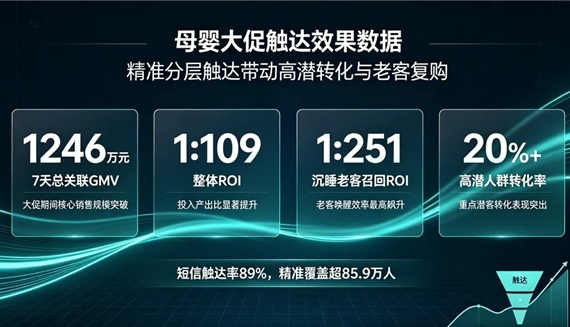
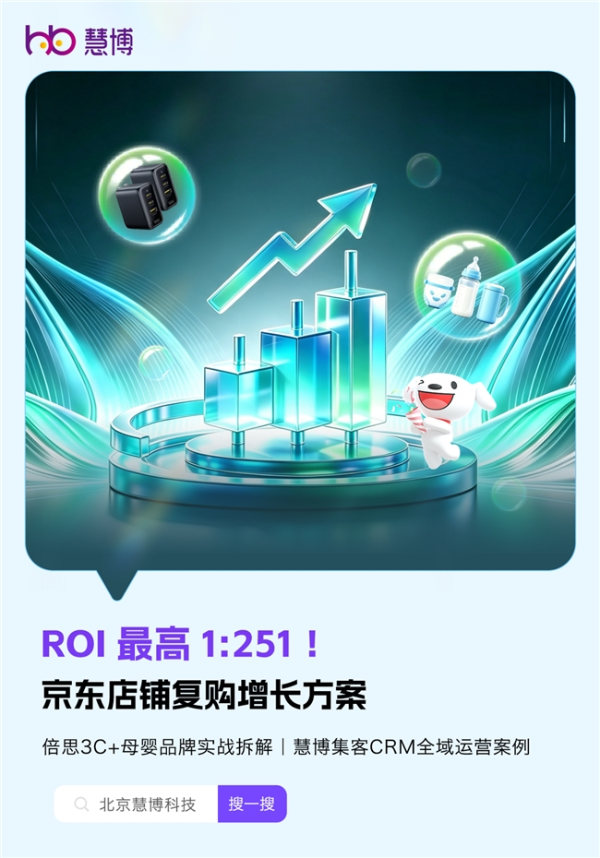
京东京麦服务市场联合慧博科技,用集客CRM的两套标杆实战给出了可复制的答案:倍思(Baseus)3C配件与母婴品牌两大客户,摒弃传统粗放群发模式,依托平台全域数据搭建自动化运营体系,对处于不同生命周期的用户进行精准分层触达,先后跑出ROI 1:160+ 与1:251的超高回报。

核心看点:

倍思:用T+N延时触达打通跨品类连带,自动化投放撬动ROI 1:160+;

母婴品牌:告别“一刀切”短信轰炸,分层运营唤醒沉睡用户,ROI飙升至1:251;

共同内核:全域数据做底座、生命周期做分层、自动化SOP做杠杆。

案例一:倍思京东3C——ROI 1:160+,跨品类连带增长实战拆解

1. 市场洞察:3C配件的“连带率之痛”

京东是3C数码的核心经营阵地,平台用户消费力强、对物流履约效率要求高。但3C配件普遍存在强目的性消费问题:用户大多按需单品采购,买完即离场。品牌若无法将单品买家转化为充储、音频、车品等全品类复购用户,就难以释放京东高净值流量的长期价值。

2. 品牌痛点:头部品牌的三重瓶颈

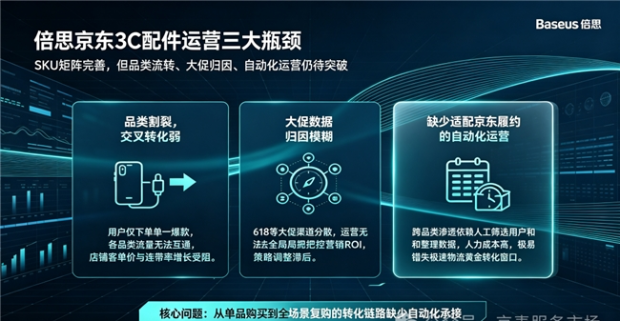
倍思作为京东3C配件头部品牌,SKU矩阵完善,但店铺运营长期受三大瓶颈制约:

品类割裂,交叉转化弱:用户仅下单单一爆款,各品类流量无法互通,店铺客单价、连带率增长受阻;大促数据归因模糊:618等大促渠道分散,运营无法全局把控营销ROI,策略调整滞后;缺少适配京东履约的自动化运营:跨品类渗透依赖人工筛选用户、整理数据,人力成本高,极易错失极速物流带来的黄金转化窗口。

3. 破局方案:全域打通,构建京东自动化SOP

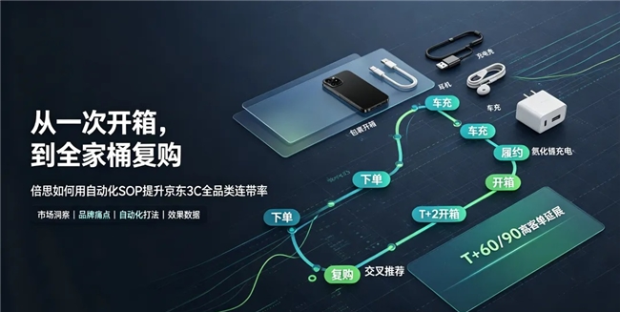
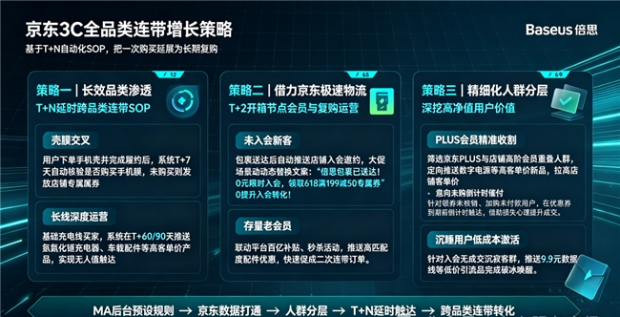
接入慧博集客CRM,深度对接京东平台全域数据,把倍思线下人工运营经验标准化,搭建基于京东完整用户旅程的自动化SOP:通过精细化人群分层,搭配「T+N」延时触发机制,自动完成跨品类连带转化。

策略一|长效品类渗透:T+N延时跨品类连带SOP

壳膜交叉:用户下单手机壳完成履约后,系统T+7天自动核验是否配套购买手机膜,未购买则定向发放店铺专属券 + 短信提醒;长线深度运营:基础充电线买家,系统将在T+60/90天推送氮化镓充电器、车载配件等高客单价产品,实现无人值守的长期品类渗透。

策略二|借力京东极速物流:T+2开箱节点会员 & 复购运营

京东物流多为次日/隔日达,锁定用户收货T+2天的“开箱好感峰值”分层运营:

未入会新客:自动推送店铺入会邀约,大促场景动态替换营销文案(例:“倍思包裹已送达!0元限时入会,领取618满 199减 50专属券”),有效提升入会转化;存量老会员:联动平台百亿补贴、秒杀活动,推送高度匹配的配件优惠,快速促成二次连带订单。

策略三|精细化人群分层:深挖高净值用户价值

PLUS会员精准收割:筛选“京东PLUS+ 店铺高阶会员”双重叠人群,定向推送数字电源等高客单价新品,拉高店铺客单价上限;意向未购倒计时催付:针对领券未核销、加购未付款用户,在优惠券到期前倒计时触达,借助损失心理提升成交;沉睡用户低成本激活:针对入会无成交的沉寂客群,推送9.9元数据线等低价引流品,完成破冰唤醒。

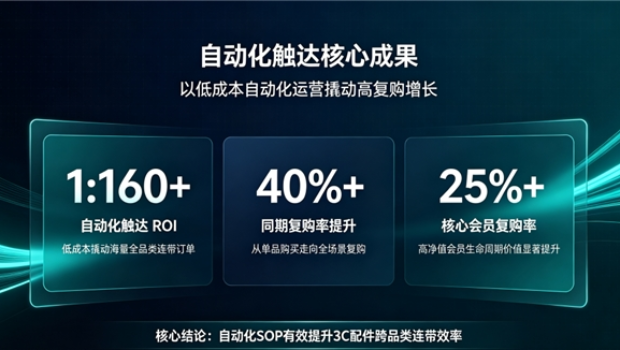
4. 效果数据

自动化投放成本极低,撬动大量跨品类连带订单,突破3C配件传统营销效率天花板;

“买头推线、壳膜交叉”长效渗透模式落地成熟,用户消费习惯从单一单品采购转向全套配件一站式选购;

深度绑定京东PLUS与店铺高阶会员,用户生命周期价值大幅提升,构建品牌独家竞争壁垒。

案例二:母婴品牌——告别短信轰炸,分层运营唤醒沉睡用户,ROI 1:251

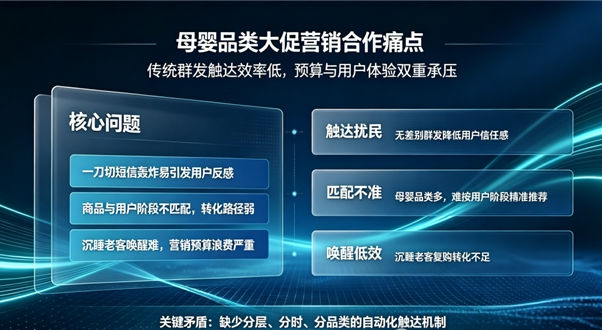
618大促期间,传统“一刀切”式营销短信轰炸极易引发用户反感;且母婴品类繁多,难以将合适的商品精准匹配给不同阶段的用户,导致营销预算浪费、沉睡老客唤醒率低下。

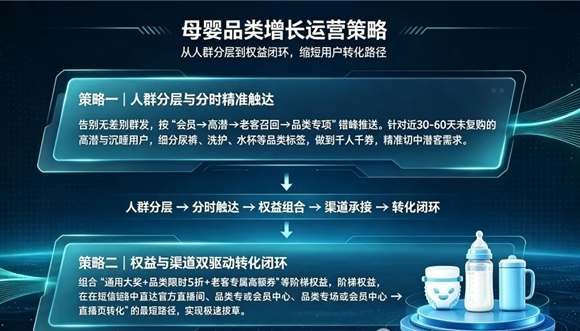
破局方案:从人群分层到权益闭环,缩短用户转化路径

策略一|人群分层与分时精准触达

告别无差别群发,按“会员→高潜→老客召回→品类专项”错峰推送,避免无效打扰。针对高潜与沉睡用户(近30-60天未复购),细分尿裤、洗护、水杯等品类标签,做到千人千券,精准切中潜客需求。

策略二|权益与渠道双驱动转化闭环

组合“通用大奖 + 品类限时5 折 + 老客专属大额券”等阶梯权益,并在短信链路中直达官方直播间、品类专场或会员中心。以“短信触达 → 权益吸引 → 直播间/商品页转化”的最短路径,实现极速拔草。

效果数据

结语:

对比两个案例可以发现,高ROI背后并非巧合,而是一套可复制的方法论:

数据是底座:深度对接平台全域数据,让每一次触达都有据可依;

分层是前提:按用户生命周期分层,匹配差异化的权益与内容,避免无效打扰;

自动化是杠杆:把人工经验固化为SOP+ 延时触发机制,实现无人值守的持续运营;

平台是放大器:借力京东物流节点、PLUS会员、百亿补贴等平台资源,放大转化效率。

从“一锤子买卖”到“全生命周期复购”,考验的不是营销预算,而是运营体系的颗粒度。慧博科技集客CRM给出的答案是:用全域数据 + 自动化SOP,让每一个用户旅程节点都成为增长机会。

【北京慧博科技 | 全域消费者数字化AI运营服务商】

自2013年成立以来,慧博科技始终扎根电商零售一线,凭借十三年深厚的行业Know-How,成功构建了全面打通淘宝、京东、抖音等30+主流平台生态的全域数据底座。面对AI新纪元,慧博科技率先完成了从“全域数字化运营服务商”向“【数据+AI应用】双擎驱动的智能运营中枢”的战略转型。 我们不仅仅为企业提供业务赋能工具,而是以『小慧Claw』等AI应用矩阵为先锋阵列,将前沿AI大模型技术结合全域交易场景重塑消费者运营逻辑——帮助品牌打造策略即执行的“数字大脑”,实现从人工配置到人机协同的运营范式重构。

注:文/龚作仁,文章来源:Laborer,本文为作者独立观点,不代表亿邦动力立场。

文章来源:Laborer

广告
微信
朋友圈

FAQ回顾

京东商家如何提升用户复购的ROI?

京东商家可借助慧博科技集客CRM,以全域数据为底座,按用户生命周期分层匹配差异化权益与内容,将人工运营经验固化为自动化SOP搭配延时触发机制,同时借力京东物流节点、PLUS会员、百亿补贴等平台资源放大转化效率,最高可实现1:251的超高复购ROI。

3C配件类商家怎么提升跨品类连带率?

3C配件类商家可接入适配京东生态的慧博集客CRM,搭建用户全旅程自动化运营SOP,采用T+N延时触发机制,在用户履约后不同节点定向推送配套、高客单价相关品类专属优惠,分层运营不同价值用户,可撬动最高1:160的复购ROI。

母婴品类商家如何提升短信营销效果?

母婴品类商家可摒弃传统一刀切的短信轰炸模式,按会员、高潜、老客召回、品类专项维度错峰推送,针对不同用户匹配细分品类标签与千人千券,组合阶梯权益并将短信链路直接对接转化入口,复购ROI最高可达1:251。

这么好看,分享一下?

朋友圈 分享

APP内打开

赞 +1
+1
微信好友 朋友圈 新浪微博 QQ空间
关闭
收藏成功
发送
/140 0