广告
加载中

跨境下半场 供应链是一场“舍与得”的战略抉择

龚作仁 2026-08-17 13:22
龚作仁 2026/08/17 13:22

邦小白快读

EN
全文速览

本文核心讲跨境电商进入下半场,竞争核心从速度转向供应链的稳定性,梳理了当前跨境供应链的风险和实操干货。

1. 当前行业风险:2026年3月洛杉矶多家低价海外仓集中暴雷,波及近2000名中国卖家,涉及总货值超2亿元;8月亚洲主要港口拥堵,美线运价单周涨幅超12%,旺季备货发货面临多重不确定性。

2. 选海外仓实操建议:不能只看报价,要重点考察服务商的技术标准、履约能力、合规保障和平台认证,靠谱海外仓既能守住库存资金安全,也能提升消费者体验,事前防控远胜事后补救。

3. 头程物流选择建议:优先选时效稳定的快船,采用小批量、多频次的弹性补货模式,打通在途和仓内库存,提升整体周转效率,靠稳定供应链抓住旺季机遇。

本文分析了跨境电商下半场的竞争逻辑变化,对品牌出海布局供应链有诸多参考价值。

1. 行业竞争与消费趋势变化:当前跨境电商已经告别跑马圈地的增量阶段,进入比拼稳定性的下半场,供应链体系能力是品牌长期增长的核心护城河,确定性出海已经成为行业共识。

2. 品牌供应链的避坑要点:不少品牌此前一味压缩物流成本,只看报价选择低价海外仓和物流,忽略了合规保障、抗风险能力等隐性投入,一旦出事会直接影响品牌交付体验,甚至引发资金链断裂,反而损伤品牌长期发展。

3. 可落地的参考方案:品牌可以选择以星ZEX这类高确定性海运服务,该航线准点率达100%,承诺保舱保柜,换成该服务后物流成本较空运降低约65%,还能保持15天左右的履约时效,帮助品牌优化库存和资金周转,支撑海外市场稳步拓展。

本文针对2026年跨境旺季出现的供应链问题,梳理了核心风险、常见错误和应对策略,给卖家提供了明确的行动参考。

1. 核心风险提示:当前低价海外仓暴雷风险极高,已经造成近2000名卖家超2亿货值损失,部分中小卖家亏损数十万;旺季港口拥堵、运价暴涨,不少卖家的全部利润都被上涨的运费吞噬,发货和备货全面受阻。

2. 常见错误操作提醒:多数卖家容易陷入三个误区:只看价格不看服务商价值、只拆分看局部成本不做全链路协同、只解决当下问题不提前做长期供应链建设,这些问题都会让卖家在行业波动中陷入被动。

3. 实操应对方案:选海外仓优先关注履约能力和合规资质,选头程优先选择时效稳定、保舱保柜的快船,采用小批量多频次弹性补货;可以选择以星ZEX快船搭配万邑通仓到仓一体化服务,提升全链路履约稳定性,优化库存周转。

本文分析了跨境电商下半场供应链的需求变化,给做跨境业务的工厂带来不少启示和商业机会。

1. 产品生产需求变化:随着跨境卖家转向小批量、多频次的弹性补货模式,传统大批量生产备货的模式已经不再适配新的需求,工厂需要调整生产体系,提升柔性生产能力,才能适配卖家新的补货节奏,拿到更多订单。

2. 工厂自主出海的启示:如果工厂计划打造自有品牌自主出海,供应链稳定是核心竞争力,不能为了压缩成本选择低价不靠谱的海外仓和物流,否则一次暴雷或延误就会打乱整体布局,吞噬前期投入,一定要提前布局稳定可控的供应链体系。

3. 新商业机会:当前全行业都在追求确定性供应链,工厂如果能抓住这个趋势,适配品牌和卖家的小批量高频补货需求,打造稳定的供货能力,就能在内卷的行业中脱颖而出,获得更多稳定长期的合作订单,同时还可以参考行业做法推进供应链数字化,提升自身竞争力。

本文梳理了当前跨境供应链服务行业的发展趋势,点出了客户核心痛点,也给出了可参考的发展方向,对服务商有较高参考价值。

1. 行业发展趋势:跨境电商进入精细化运营的下半场,卖家和品牌对供应链的需求已经从低价转向稳定可控,确定性供应链成为行业刚需,只打价格战的低端服务会逐步被市场淘汰,具备稳定履约能力的服务商将获得更多市场空间。

2. 客户核心痛点:当前客户的核心痛点是旺季舱位无保障、海外仓不安全、时效不可控,这些问题直接影响客户的库存周转和资金安全,很多中小客户因为缺乏判断能力,踩了低价服务商的坑,出现巨额损失,对靠谱稳定的服务需求迫切。

3. 可参考的解决方案:服务商可以参考以星的发展路径,打造高确定性的核心产品,保证时效和舱位稳定,配套智能技术实现货物全程溯源,同时联合上下游合作伙伴打造一体化服务网络,形成标准化可复制的服务体系,满足客户全链路供应链需求,建立自身的核心竞争力。

本文暴露了当前跨境电商行业供应链端的共性问题,也点出了卖家的核心需求,对平台商优化生态、规避风险有较高参考价值。

1. 平台卖家的核心需求:当前卖家经营中最大的不确定性来自供应链端,海外仓暴雷、物流延误不仅会造成卖家财产损失,还会导致卖家无法按时履约,影响平台的用户评分和订单转化,供应链不稳定已经成为影响卖家生存和平台生态稳定的核心因素。

2. 平台运营优化方向:平台可以建立海外仓、物流服务商的资质认证体系,帮助卖家筛选合规靠谱的服务商,提前排除低价低质的风险服务商,降低卖家踩坑的概率;还可以对接优质的确定性供应链服务商,给卖家推出配套的服务选项,提升卖家的经营稳定性。

3. 平台风险规避方向:平台可以通过官方渠道向卖家传递供应链风险防控提示,引导卖家跳出只看价格的误区,提前布局长期供应链能力,降低行业波动对卖家群体的整体冲击,巩固平台生态的稳定性,降低卖家大规模流失的风险。

本文提出了跨境电商下半场产业发展的新动向,暴露了行业存在的新问题,提出了新的战略逻辑,对产业研究有较高的参考价值。

1. 产业新动向:跨境电商已经完成从早期跑马圈地到下半场精细化运营的转型,行业竞争核心已经从流量运营、产品价格比拼转向全链路供应链体系能力的比拼,“确定性出海”成为行业新的共识,头部物流企业已经推出了对应高确定性供应链服务产品,探索出新的服务模式。

2. 行业新问题:当前行业存在明显的低价内卷问题,卖家群体普遍缺乏供应链风险意识,一味追求低成本催生了不合格低价海外仓的生存空间,此次大规模暴雷不仅造成卖家损失,也损伤了整个海外仓行业的信任度;同时多数卖家缺乏全链路供应链思维,不重视长期供应链建设,行业整体抗风险能力偏低。

3. 新研究方向:文章提出供应链“舍与得”的战略选择,指出企业需要放弃短期的低成本收益,选择长期稳定可控的供应链能力,为跨境产业供应链升级研究提供了新的视角,也为后续相关研究提供了真实的行业案例和数据支撑。

返回默认

声明:快读内容全程由AI生成,请注意甄别信息。如您发现问题,请发送邮件至 run@ebrun.com 。

我是 品牌商 卖家 工厂 服务商 平台商 研究者 帮我再读一遍。

Quick Summary

This article focuses on the new phase of cross-border e-commerce, where competition has shifted from growth speed to supply chain stability. It sorts out current risks facing cross-border supply chains and shares practical actionable insights.

1. Current industry risks: In March 2026, multiple low-cost overseas warehouses in Los Angeles collapsed, affecting nearly 2,000 Chinese sellers with total goods value exceeding 200 million yuan. In August, congestion hit major Asian ports, driving up freight rates on U.S.-bound routes by more than 12% in a single week, creating multiple uncertainties for peak season stocking and shipment.

2. Practical tips for choosing overseas warehouses: Sellers should not base decisions solely on pricing. Instead, they should prioritize evaluating service providers’ technical standards, fulfillment capacity, compliance guarantees and platform certifications. A reliable overseas warehouse protects inventory and capital security while improving end-consumer experience, and proactive risk prevention far outperforms after-the-fact remediation.

3. Recommendations for first-mile logistics selection: Prioritize reliable fast container shipping services, adopt a flexible small-batch, high-frequency restocking model, integrate in-transit and in-warehouse inventory to improve overall turnover efficiency, and leverage a stable supply chain to capture peak season opportunities.

This article analyzes the changing competition logic in the new phase of cross-border e-commerce, and offers valuable references for brands building their supply chains for global expansion.

1. Shifts in industry competition and consumer trends: Cross-border e-commerce has moved past its early land-grab growth phase and entered a new era where stability is the key competitive advantage. Supply chain capability has become the core moat for sustained long-term brand growth, and "certainty-focused global expansion" is now an industry-wide consensus.

2. Pitfalls to avoid for brand supply chains: Many brands previously focused solely on cutting logistics costs, choosing low-cost overseas warehouses and logistics providers based only on price while ignoring implicit priorities such as compliance guarantees and risk resistance. When disruptions occur, they directly damage brand delivery experience, and can even trigger capital chain breaks that harm long-term brand development.

3. Actionable solutions: Brands can opt for high-certainty shipping services such as Yang Ming’s ZEX. This route boasts a 100% on-time rate and guaranteed space and container allocation. Switching to this service cuts logistics costs by roughly 65% compared to air freight while maintaining a fulfillment lead time of around 15 days, helping brands optimize inventory and capital turnover to support steady expansion in overseas markets.

This article addresses supply chain issues arising during the 2026 cross-border peak season, sorts out core risks, common mistakes and coping strategies, and provides clear actionable guidance for sellers.

1. Core risk alerts: Low-cost overseas warehouses currently carry extremely high collapse risk. Failures so far have caused more than 200 million yuan in losses for nearly 2,000 sellers, with many small and medium-sized sellers losing hundreds of thousands of yuan. Peak season port congestion and skyrocketing freight rates have wiped out all profits for many sellers, completely blocking their shipment and stocking plans.

2. Warnings on common missteps: Most sellers fall into three common traps: making decisions based only on price rather than service provider value, looking only at isolated local costs instead of end-to-end supply chain coordination, and solving only immediate problems instead of building long-term supply chain capacity. All of these leave sellers vulnerable during industry volatility.

3. Practical coping strategies: When selecting an overseas warehouse, prioritize fulfillment capacity and compliance qualifications. For first-mile shipping, choose fast services with stable transit times and guaranteed space and container allocation, and adopt flexible small-batch, high-frequency restocking. Sellers can pair Yang Ming’s ZEX fast shipping with Winit’s warehouse-to-door integrated service to improve end-to-end fulfillment stability and optimize inventory turnover.

This article analyzes shifting supply chain demand in the new phase of cross-border e-commerce, and offers key insights and business opportunities for factories engaged in cross-border business.

1. Shifts in production demand: As cross-border sellers shift to flexible small-batch, high-frequency restocking models, traditional mass production and bulk stocking no longer fit new demand. Factories need to adjust their production systems and build flexible production capacity to adapt to sellers’ new restocking rhythms and win more orders.

2. Insights for factories going direct-to-global with own brands: For factories planning to build their own brand and expand overseas directly, supply chain stability is the core competitive advantage. Factories should not choose unreliable low-cost overseas warehouses and logistics just to cut costs; one collapse or delay can derail your entire expansion plan and wipe out early investments. It is essential to build a stable, controllable supply chain system in advance.

3. New business opportunities: The entire industry is now pursuing certain, reliable supply chains. If factories can seize this trend, adapt to the small-batch, high-frequency restocking demand of brands and sellers, and build stable supply capacity, they can stand out in a highly competitive market, secure more stable long-term cooperative orders, and improve competitiveness by adopting digital supply chain tools following industry best practices.

This article sorts out current development trends in the cross-border supply chain service industry, highlights core customer pain points, and outlines reference development directions, offering high value for service providers.

1. Industry development trends: As cross-border e-commerce enters a new era of refined operation, sellers and brands have shifted their demand from low prices to stable, controllable services. Certain supply chains have become an industry-wide necessity. Low-end providers that only compete on price will gradually be phased out of the market, while service providers with reliable fulfillment capabilities will capture greater market share.

2. Core customer pain points: Customers’ top pain points are unguaranteed peak season space, unsafe overseas warehouse operations, and unpredictable transit times. These issues directly harm customers’ inventory turnover and capital security. Many small and medium-sized customers lack the ability to vet providers, fall prey to low-cost unreliable services, and suffer massive losses, creating strong unmet demand for reliable, stable services.

3. Reference development strategies: Service providers can follow Yang Ming’s development path to build high-certainty core products that guarantee stable transit times and space allocation, support full cargo tracking via intelligent technology, and partner with upstream and downstream players to build an integrated service network. This allows providers to build a standardized, replicable service system that meets customers’ end-to-end supply chain needs and establishes their own core competitiveness.

This article identifies common pain points on the supply chain side of the cross-border e-commerce industry and clarifies sellers’ core demands, offering high value for marketplaces looking to optimize their seller ecosystem and mitigate risk.

1. Core demands of marketplace sellers: Today, the biggest uncertainty sellers face comes from the supply chain side. Overseas warehouse failures and logistics delays not only cause property losses for sellers, but also prevent on-time fulfillment, dragging down platform user ratings and order conversion. Unstable supply chains have become a core threat to seller survival and overall ecosystem stability.

2. Directions for platform operational optimization: Platforms can build a qualification and certification system for overseas warehouses and logistics service providers to help sellers screen for compliant, reliable partners, proactively eliminate low-cost, low-quality risky providers, and reduce sellers’ risk of running into problems. Platforms can also partner with high-quality certain supply chain service providers to offer integrated service options for sellers and improve their operational stability.

3. Directions for platform risk mitigation: Platforms can distribute supply chain risk prevention guidance to sellers via official channels, guide sellers to move beyond the price-only mindset, proactively build long-term supply chain capacity, reduce the overall impact of industry volatility on the seller base, strengthen ecosystem stability, and lower the risk of large-scale seller churn.

This article identifies new industry trends in the new phase of cross-border e-commerce development, exposes emerging industry problems, and proposes a new strategic logic, offering high reference value for industrial research.

1. New industry trends: Cross-border e-commerce has completed its transition from early-stage land-grab expansion to refined operation in the new phase. Industry competition has shifted from battles for traffic and product price competition to competition in end-to-end supply chain system capability. "Certainty-focused global expansion" has become a new industry-wide consensus, and leading logistics companies have already launched corresponding high-certainty supply chain services and explored new service models.

2. New industry problems: The industry is currently plagued by cutthroat price competition. Sellers broadly lack supply chain risk awareness, and their single-minded pursuit of low costs has created room for unqualified low-cost overseas warehouses to operate. The recent large-scale wave of warehouse failures has not only caused losses for sellers, but also damaged trust in the entire overseas warehouse industry. Additionally, most sellers lack end-to-end supply chain thinking and do not prioritize long-term supply chain development, leaving the industry with overall low risk resistance.

3. New research directions: The article proposes a "give-and-take" strategic logic for supply chains, arguing that enterprises need to forgo short-term low-cost gains in exchange for long-term stable, controllable supply chain capacity. This offers a new perspective for research on cross-border industrial supply chain upgrading, and provides real industry cases and data support for future related research.

Disclaimer: The "Quick Summary" content is entirely generated by AI. Please exercise discretion when interpreting the information. For issues or corrections, please email run@ebrun.com .

I am a Brand Seller Factory Service Provider Marketplace Seller Researcher Read it again.

如果说前几年的跨境电商比的是谁跑得更快,那么在跨境下半场,比的就是谁走得更稳、更远。

这个旺季,还能不能好好发货了

2026年跨境电商的“旺季之战”,还没开打,就已经让卖家们睡不着觉了:

一边是3月洛杉矶海外仓连环暴雷

——近2000名卖家、超2亿货值一夜蒸发

一边是8月亚洲主要港口全线拥堵

——美线运价单周暴涨超12%,旺季备货计划全面告急

货出不去、仓不敢入……这个旺季,还能不能好好发货了?

仓:低价之下,藏着怎样的代价

据多家行业媒体报道,2026年3月,美国洛杉矶周边超5家主打低价一件代发的海外仓集中暴雷。

仓库被查封、负责人失联、成百上千个集装箱滞留……这场突发事件波及近2000名中国卖家,涉及总货值突破2亿元,单笔最高损失超千万,中小卖家也面临数万至数十万的亏损。

图片

作为深耕行业近15年的海外仓服务商,我们看到这样的新闻,心情十分复杂。卖家辛苦备货却钱货两空、海外仓行业信任度持续受损,这是彻底的双输局面。

当下,跨境行业内卷加剧,不少卖家总想从物流成本上挤出利润、“哪家便宜就用哪家”。

但海外仓的"价值",从来不是一张简单的报价单就能完全呈现:水面之上,是你看得见的“价格冰山”;水面之下,是看不见的“隐性投入”,自动化设备、合规保障、保险赔付机制等,这才是每一单稳定履约的保障

海外仓更不仅仅只是简单的一件代发仓库,而是支撑企业销量、资金使用效率和端到端成本优化的重要战略支点。单点“比价”,短期确实得到了"低价",但长期却舍去了"稳定"。一旦出事,资金链和平台考评双双承压,周转空间几乎为零。

那么,卖家在选择海外仓时,到底应该如何“取舍”?

——不能只看价格,谁便宜就选谁,更重要的是它的技术标准、履约能力和质量、有没有平台认证等等。一个靠谱的海外仓,不仅能保障你的库存安全、履约稳定,帮助你提升消费者体验,还能在行业波动、旺季订单翻倍等突发状况下,守住库存与资金安全底线,为生意兜底。

对于所有跨境卖家而言,事前预防远比事后补救更管用。唯有重新审视供应链重要性,在追求时效与成本平衡的同时,强化风险防控意识,才能更好的在复杂、激烈的全球化竞争中稳健出海。

运:真正贵的不是运价,是稳定

跨境旺季在即,对于跨境卖家来说,“备货旺季”是眼下的头等大事。

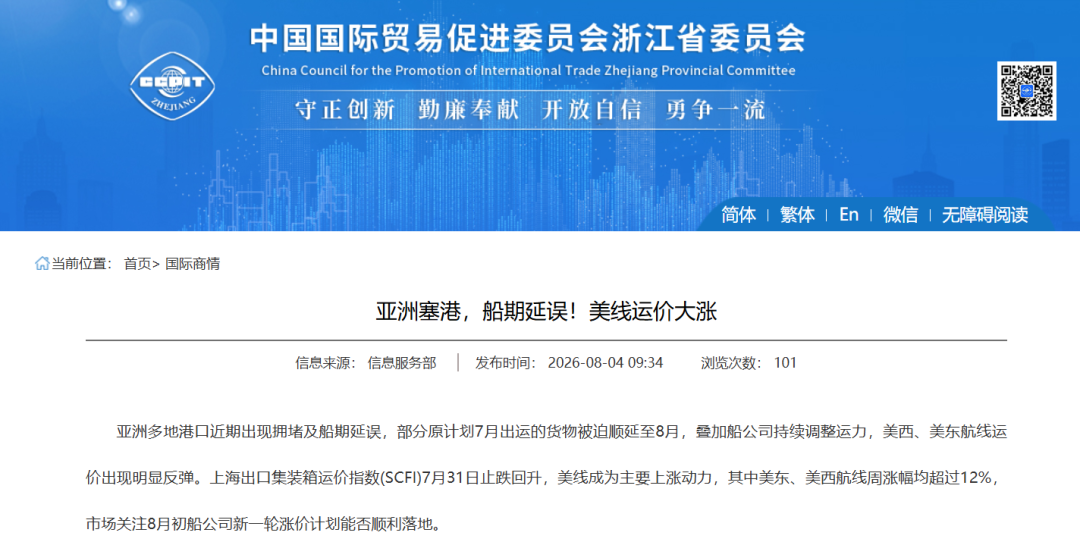
但现实是,8月以来亚洲多个主要港口持续拥堵、船期大面积延误,部分原计划7月出运的货物被迫顺延。与此同时,美线市场运价仍处于相对高位。美西、美东航线周涨幅双双超过12%,美线现货市场涨幅预期可能超过1000美元/大柜(40英尺柜)。

图片

图源自中国国际贸易促进委员会浙江省委员会,如侵删

对于跨境卖家来说,运价上涨直接压缩了本就微薄的利润空间。某卖家算完帐后发现,最近一批发往美国的货,上涨的运费甚至已经“吃掉了”原本的利润,他坦言"货发出去,实际上也没钱赚"。

但更让人焦虑的,是旺季要备的货根本发不出去。舱位是否空余、船期是否准点、货品能否顺利入仓上架,这都直接影响了卖家的货还能不能准时交付到消费者手上。

那么,在运价波动成为常态的当下,卖家又该如何"取舍"?

——旺季选头程,更要看重服务的稳定性。优先选择适配跨境电商业务、时效稳定且有保障的快船,充分发挥 “小批量、多频次”弹性补货模式的优势。以以星ZIM快船为例,时效稳定、班期可控,卖家可以更精准地判断节奏,把 "船上库存" 和 "库内库存" 打通来看,提升整体库存周转效率。

稳定才是抵御市场波动的长期底气。守住全链路可控的供应链底盘,确保运力稳定与准时交付,才能从容扛住港口拥堵、运价暴涨等各类突发波动,稳稳抓住旺季增长机遇。

问题之下,还有更深的问题

海外仓暴雷、港口拥堵、运价飙升……这些突发事件,更能暴露卖家长期忽视的供应链短板;同时,也照出了不少新手卖家普遍存在的“问题”:

1 只看价格,不看价值

选海外仓比单价、选物流比运费,却忽视了服务商的履约能力、系统水平、抗风险能力。一味追求低价,往往就会在关键时刻 “掉链子”。

2 只看局部,不看整体

头程、仓储、尾程“分开算账”,缺乏全链路的协同视角。头程省了3天,尾程却慢了一周,整体时效反而更慢。

3 只看当下,不看未来

供应链能力的建设,是需要时间、需要投入、需要深耕的长期工程,不是旺季前突击补救就能见效。平时不建设供应链能力,关键时刻只能被动承受溢价和风险。

再往下看,还有更深的“问题”——

你有没有想过,为什么:

同样是旺季备货,有人从容应对,而你却手忙脚乱?

同样是运价上涨,有人利润稳定,而你的利润瞬间蒸发?

同样是多平台扩张,有人供应链平滑复制,而你每开一个新站点就要推翻重来?

这些问题的答案,不在某一篇行业报道里,也不在闭门造车的反复试错里。它们藏在那条贯穿头程、仓储、尾程的供应链全链路里,藏在"舍与得"的战略取舍里。

三位掌舵人,聊透新一代供应链

跳出运价、仓租的表层博弈,当下跨境电商的竞争,本质比拼的是供应链的系统能力。这场直播,请来了三位跨境圈里的“最强大脑”。从顶层战略到落地实操——在舍与得之间,再构供应链新世界:

图片

立即扫码报名

读懂供应链,才算真正读懂跨境下半场。

流量、产品、价格……短期的运营技巧只能换来阶段性增量。抛开浅层比价误区,跳出碎片化运营思维,所有的跨境竞争,最终都会落脚于供应链体系能力的比拼。唯有确定性、高灵活、可拓展的供应链生态,才能成为卖家穿越周期、守住利润、持续增长的核心护城河。

图片

立即扫码报名

以星:打造全流程高确定性海运服务体系

在全球跨境电商提质增效的大背景下,构建稳定、高效的供应链,已成为企业迈向全球市场的核心要素。"确定性出海"正逐渐成为行业共识——即通过可预测、可管控的物流履约,保障企业在海外市场的平稳运营与持续拓展。

为此,以星以ZEX(ZIM eCommerce Xpress)电商快线 为核心,打造全流程高确定性的海运服务体系,帮助跨境企业降低运营风险、优化资金与库存管理,实现稳健出海。

· 时效稳定 :100%准点率,保障物流计划落地

运输时效的稳定,是供应链高效运转的基础。ZEX快线自盐田直达洛杉矶,海上航程仅需12.5天,并采用"每周三固定截关、周班班轮化运营"模式,使企业能够按照既定节奏规划发货与上架流程。

根据权威海运分析机构Sea Intelligence的报告,2026年3月至6月期间,以星ZEX与 ZX2在亚洲—美西航线的准点率达到100%,位列行业第一。 在船期延误频发的当下,这份稳定的航程表现,为企业全球化运营提供了清晰可预期的运输保障。

· 舱位可靠:保舱保柜,保障货物按时出运

在业务高峰期,舱位的稳定性尤为关键。ZEX在产品设计之初即明确承诺"保舱保柜、绝不甩柜(Space and Equipment Guarantee)",确保企业货物能够如期装船出运。

在目的港环节,ZEX同步配套专属车架直提、专用进闸通道及免预约提柜等便利措施,显著提升货物落地后的提柜效率。在此基础上,ZEX航线还提供"先查后装"服务——在装柜环节完成前置查验,有助于降低目的港查验概率,让货物从起运环节起就更有保障。顺畅的履约流程,帮助企业按既定战略稳步推进海外市场的备货与销售,避免因物流卡顿影响业务进度。

· 成本可控:弹性补货,优化资金周转

依托稳定的时效与舱位保障,企业得以改变传统的大批量囤货模式,转向"小批量、高频次"的弹性补货策略,在降低库存积压风险的同时,提升资金使用效率。行业实践数据显示,企业将部分空运需求转为ZEX快船服务后:

物流成本较空运降低约65%

端到端履约时效保持在15天左右,带来接近空运的时效体验

库存周转维持稳健水平(回调幅度仅约10%)

在运价相对平稳的机制下,企业能够更清晰地核算运营成本,真正实现降本增效。

"确定性出海"不仅依赖单条航线的表现,更需要完整的供应链生态支撑。以星通过多维度的服务网络,为企业出海布局提供综合保障:

运力网络多点联动:

ZEX与ZX2协同覆盖华南、华东及越南市场,形成区域联动的运力网络

智能技术全程追溯:

应用Hoopo智能集装箱,实现24小时全程货物状态追溯与可视化管理

仓到仓高效衔接:

联合合作伙伴万邑通打造"仓到仓"一体化服务联盟,提升端到端履约效率

套标准化、模块化的底层能力,为企业构筑起可预测、可复制的供应链底盘。企业规划的,不再只是单一批次的货运,而是未来数个季度的资金安排与海外库存布局。

随着跨境电商迈入精细化发展的新阶段,供应链的确定性,已成为企业海外竞争力的重要组成部分。万邑通与以星将携手,以标准化的服务与稳定的履约能力,帮助跨境企业建立可控的供应链体系,以"确定性出海"助力企业在全球市场中行稳致远。

注:文/龚作仁,文章来源:Laborer,本文为作者独立观点,不代表亿邦动力立场。

文章来源:Laborer

广告
微信
朋友圈

FAQ回顾

跨境电商卖家选择海外仓要注意哪些方面?

选择海外仓不能只看价格,需重点考察服务商的技术标准、履约服务质量、是否具备平台认证等资质,靠谱的海外仓可保障库存安全、履约稳定,提升消费者体验,在行业波动时守住资金与库存安全底线,为生意兜底。

跨境旺季港口拥堵、运价上涨,卖家该如何应对?

旺季选择头程物流要优先看重服务稳定性,优选适配跨境电商业务、时效稳定有保障的快船,采用“小批量、多频次”的弹性补货模式,打通船上库存与库内库存管理,提升整体库存周转效率,保障准时交付。

以星ZEX电商快线有哪些核心服务优势?

以星ZEX电商快线盐田直达洛杉矶航程仅12.5天,2026年3-6月亚洲-美西航线准点率达100%,承诺保舱保柜绝不甩柜,配套目的港优先提柜等服务,物流成本较空运低约65%,端到端履约时效约15天,可助力企业降本增效。

跨境电商下半场企业的核心竞争力是什么?

跨境电商下半场的竞争核心是供应链系统能力,企业需跳出浅层比价误区,打造确定性、高灵活、可拓展的供应链生态,才能穿越周期、守住利润,成为实现长期持续增长的核心护城河。

这么好看,分享一下?

朋友圈 分享

APP内打开

赞 +1
+1
微信好友 朋友圈 新浪微博 QQ空间
关闭
收藏成功
发送
/140 0