广告
加载中

耐克终止与中国数千家线上经销商合作 统一渠道严格控价

廖紫琳 2026-07-22 13:36
廖紫琳 2026/07/22 13:36

邦小白快读

EN
全文速览

本文核心事件是耐克从2027年1月起,终止与中国数千家线上经销商的合作,重构中国线上数字化销售体系,核心干货信息整理如下:

1. 本次调整覆盖所有第三方线上经销商,头部经销商滔搏的耐克线上销售也将全面终止,调整后耐克中国线上销售体系以耐克官网、官方APP,以及天猫、京东、抖音三大平台官方旗舰店为主。

2. 调整背景是原有多级经销商模式引发价格混乱、假货串货频发、服务质量参差不齐等问题,同时耐克大中华区已经连续八个季度营收负增长,业绩承压。

3. 业内对此次调整有不同观点:有人认为这是此前决策失误的后遗症,会进一步冲击在华业绩;有人认为调整利于控价,能盘活线下,对经销商福祸相依;还有观点认为核心问题是产品力下滑,调整渠道治标不治本。

本次耐克中国渠道大调整,给各类品牌经营者带来诸多参考干货,整理如下:

1. 渠道管理层面:原有多级线上分销模式会引发渠道碎片化,进而出现价格体系混乱、假货串货难以管控、消费者体验参差不齐等问题,长期会严重损害品牌口碑,品牌方需要警惕这类风险。

2. 价格管控层面:本次耐克调整核心目标之一是严格控价,改变当前国内耐克价格成为全球洼地的乱局,当前多个头部品牌都在推行线上线下同价、线上限售控价模式,这套管理方式值得品牌参考。

3. 增长逻辑层面:耐克大中华区连续八个季度业绩下滑,业内指出核心原因是本土品牌崛起、耐克自身产品品质下滑,只调整渠道不优化产品无法解决问题,提醒品牌方需要重视产品研发,维护用户心智。

本次耐克中国渠道重大调整,给各类相关卖家带来了明确的影响、机会和风险提示,核心干货整理如下:

1. 影响与应对:原耐克第三方线上经销商卖家,2027年1月起将无法线上售卖耐克全系列产品,需要提前调整业务方向,清理库存,拓展其他品牌合作,头部经销商滔搏已经提前布局安踏等本土品牌业务,这个方向值得参考。

2. 新机会:耐克收拢线上经营权后,核心布局天猫、京东、抖音三大主流平台官方渠道,这三大平台的配套运营服务商、供应链相关卖家会获得更多业务空间;同时耐克有意回归线下经销,线下运动品类卖家也会获得更多发展机会。

3. 风险提示:近年品牌方越来越重视渠道和价格管控,第三方卖家需要降低单一品牌依赖,提前适配品牌政策变化,规避业务调整带来的风险。

本次耐克中国渠道调整,给运动服饰鞋类代工生产工厂带来诸多干货启示,整理如下:

1. 市场需求与商业机会:当前品牌方对产品品质管控、品牌口碑维护的要求越来越高,工厂需要升级生产环节的品控管理,匹配品牌方的需求。同时当前本土运动品牌快速崛起,市场份额不断提升,工厂可以积极拓展本土品牌订单,把握新的增长机会。

2. 数字化转型启示:耐克重构统一的数字化直营销售体系,说明品牌端数字化直营已经成为行业大趋势,上游工厂需要加快自身数字化转型,优化生产管理流程,适配品牌直连渠道对小单快反、灵活生产的新需求。

3. 行业趋势适配:当前越来越多运动品牌选择线上线下同价,回归线下经销渠道,工厂可以根据这一趋势调整生产和铺货节奏,更好适配线下渠道的拿货需求。

本次耐克渠道调整,反映了运动品牌电商行业的新趋势和客户痛点,给相关服务商整理核心干货如下:

1. 客户痛点总结:当前很多采用多级分销模式的运动品牌,普遍存在渠道碎片化、价格体系混乱、假货串货管控难、消费者购物体验不一致等痛点,这些问题已经严重影响品牌业绩和口碑,是服务商可以切入解决的核心方向。

2. 行业发展趋势:头部运动品牌已经开始收拢线上经营权,打造统一的官方线上渠道体系,同时行业整体趋向线上线下同价、回归线下经销,这意味着为品牌方提供官方渠道运营、数字化用户管理、统一服务交付的服务商,将迎来更大的市场需求。

3. 解决方案方向:服务商可以围绕品牌方控价、渠道管控、正品溯源的核心需求,开发对应的数字化解决方案,帮助品牌整合渠道、规范价格、提升消费体验,匹配品牌方当前的转型调整需求。

本次耐克中国线上渠道重构,给各类电商平台带来了诸多干货参考,整理如下:

1. 品牌方的核心需求:当前头部品牌越来越希望收拢线上流量,打造统一的官方运营渠道,对主流头部平台的官方旗舰店资源和流量扶持需求更高,希望依托大平台的流量和管控能力,搭建规范统一的官方销售体系。

2. 平台发展机遇:耐克重构后的新销售体系,核心就是耐克自有渠道加上天猫、京东、抖音三大主流平台官方旗舰店,这意味着三大平台会获得头部品牌更多资源倾斜,中小平台也可以据此优化针对品牌直营的服务政策,吸引更多品牌入驻官方直营。

3. 运营风向规避:品牌方越来越重视价格管控和正品管理,平台需要加强对第三方经销商店铺的规范管理,配合品牌方做好价格和正品管控,规避低价倾销、假货泛滥带来的平台秩序混乱问题,还可以推出针对性的品牌直营扶持政策,吸引品牌入驻。

本次耐克中国渠道大调整,反映了国际运动品牌在华发展的产业新动向和新问题,对相关研究的干货整理如下:

1. 产业新动向:国际运动品牌在华发展已经从早年依靠多级经销商扩张跑马圈地的阶段,转向收拢线上渠道、统一价格管控、回归线下经销的新阶段,目前萨洛蒙、可隆、迪桑特等多个头部品牌都在推行线上线下同价、线上控价的模式,已经成为行业新趋势。

2. 暴露的新问题:当前国际运动品牌在华普遍遇到业绩增长瓶颈,耐克更是连续八个季度营收负增长,一方面是品牌自身渠道决策摇摆不定,多次调整打破了原有渠道平衡,损害了经销商和消费者信任;另一方面核心问题是中国本土品牌崛起,国际品牌产品力下滑,用户心智不断流失。

3. 研究启示:本次调整为研究数字化时代品牌渠道转型、国际品牌在华发展战略提供了典型案例,证明渠道调整只是治标,提升产品力才是业绩增长的根本,对研究品牌增长逻辑有重要参考价值。

返回默认

声明:快读内容全程由AI生成,请注意甄别信息。如您发现问题,请发送邮件至 run@ebrun.com 。

我是 品牌商 卖家 工厂 服务商 平台商 研究者 帮我再读一遍。

Quick Summary

This article centers on Nike’s decision to end partnerships with thousands of online distributors in China starting January 2027, as part of a complete restructuring of its digital online sales system in the country. Key takeaways are as follows:

1. The overhaul affects all third-party online distributors, including Topsports, Nike’s largest distributor, which will see all its online Nike sales operations terminated. After the restructuring, Nike’s online sales in China will be centered on its official website, official app, and the official flagship stores on three major platforms: Tmall, JD.com and Douyin.

2. The restructuring comes amid ongoing issues with Nike’s existing multi-level distribution model, including widespread price chaos, counterfeit goods, unauthorized cross-region sales, and inconsistent service quality. It also follows eight consecutive quarters of declining revenue for Nike Greater China, leaving the business under significant performance pressure.

3. Industry observers hold mixed views on the overhaul: Some argue it is a lingering consequence of past missteps and will further erode Nike’s performance in China. Others believe the changes will improve price control, revitalize offline sales, bringing both risks and opportunities for distributors. A third perspective holds that the core issue for Nike is declining product competitiveness, so a channel overhaul only treats the symptoms, not the root cause.

Nike’s major channel restructuring in China offers valuable insights for brand operators across sectors, summarized below:

1. Channel management: A multi-level online distribution model fragments channels, leading to unmanageable price chaos, counterfeit goods, cross-region sales, and uneven consumer experiences. Over time, these issues severely damage brand reputation, and brands should proactively guard against these risks.

2. Price control: One of Nike’s core goals in this overhaul is to enforce strict price control and reverse the situation where Nike products are priced far lower in China than in global markets. A growing number of leading brands have already adopted aligned online-offline pricing and controlled online inventory practices, a model that holds value for other brands to reference.

3. Growth fundamentals: Following eight consecutive quarters of falling sales for Nike Greater China, industry analysts identify the core drivers as the rise of domestic Chinese brands and declining product quality at Nike. Adjusting channels without improving products cannot resolve underlying issues, a reminder for brands to prioritize product R&D and preserve consumer brand loyalty.

Nike’s major channel restructuring in China brings clear impacts, opportunities and risk warnings for relevant sellers, with key takeaways summarized below:

1. Impact and response: All existing third-party online Nike distributors will be banned from selling any Nike products online starting January 2027. These sellers need to adjust their business strategy early, clear inventory, and expand partnerships with other brands. Leading distributor Topsports’ early expansion into partnerships with domestic brands such as Anta offers a useful reference for this transition.

2. New opportunities: After consolidating online operating rights, Nike will focus its online presence on official channels across Tmall, JD.com and Douyin. This will create more business opportunities for operation service providers and supply-side vendors supporting these three platforms. At the same time, Nike’s plan to refocus on offline distribution will open up more growth opportunities for offline athletic goods sellers.

3. Risk warnings: In recent years, brands have increasingly prioritized channel and price control. Third-party sellers should reduce reliance on any single brand, adapt proactively to brand policy changes, and mitigate risks brought by business adjustments.

Nike’s channel restructuring in China offers key insights for contract manufacturers of athletic apparel and footwear, outlined below:

1. Market demand and business opportunities: Brands are increasingly demanding higher product quality control and stronger brand reputation protection. Factories need to upgrade quality management across production processes to align with brands’ requirements. Meanwhile, domestic Chinese athletic brands are growing rapidly and gaining market share, so factories can actively pursue orders from these domestic brands to capture new growth opportunities.

2. Digital transformation insights: Nike’s restructuring of a unified direct-to-consumer digital sales system confirms that direct digital DTC is a major industry trend among brands. Upstream factories need to accelerate their own digital transformation, optimize production management processes, and adapt to the new requirements of direct-to-consumer channels for small-batch production and fast order turnaround.

3. Aligning with industry trends: A growing number of athletic brands have adopted aligned online-offline pricing and are refocusing on offline distribution channels. Factories can adjust their production and stocking rhythm in line with this trend to better meet the stocking needs of offline channels.

Nike’s channel restructuring reflects new trends and unmet customer pain points in the athletic brand e-commerce sector, with key insights for relevant service providers summarized below:

1. Customer pain point summary: Many athletic brands that use multi-level distribution models face widespread problems including fragmented channels, chaotic pricing, unmanageable counterfeits and cross-region sales, and inconsistent consumer shopping experiences. These issues are already seriously hurting brand performance and reputation, and represent a core opportunity for service providers to address.

2. Industry development trends: Leading athletic brands are already consolidating online operating rights to build unified official online channel systems. The broader industry is also moving toward aligned online-offline pricing and a refocus on offline distribution. This means service providers that offer official channel operation, digital user management and unified service delivery will see growing market demand.

3. Solution directions: Service providers can develop targeted digital solutions aligned with brands’ core needs for price control, channel management and product authentication. These solutions help brands integrate channels, standardize pricing, and improve consumer experiences, matching brands’ current transformation and adjustment needs.

Nike’s online channel restructuring in China offers valuable insights for e-commerce platforms, outlined below:

1. Core needs of brands: Leading brands increasingly want to consolidate online traffic and build unified official operating channels. They have stronger demand for official flagship store resources and traffic support from major leading platforms, and rely on large platforms’ traffic and regulatory capabilities to build a standardized, unified official sales system.

2. Platform development opportunities: Nike’s new restructured sales system is centered on Nike’s own channels plus official flagship stores on the three major platforms Tmall, JD.com and Douyin. This means the three platforms will gain greater resource commitment from leading brands. Smaller platforms can also adjust their service policies for brand direct sales to attract more brands to open official direct-sale stores on their platforms.

3. Operational guidance: As brands increasingly prioritize price control and product authenticity management, platforms need to strengthen regulation of third-party distributor stores, cooperate with brands on price and authenticity control, and prevent platform disorder caused by predatory pricing and widespread counterfeits. Platforms can also launch targeted support policies for brand direct sales to attract more brand partners.

Nike’s major channel restructuring in China reflects new industry dynamics and emerging challenges for international athletic brands operating in China, with key insights for researchers outlined below:

1. New industry dynamics: International athletic brands in China have transitioned from the early stage of rapid expansion via multi-level distributors to a new phase of consolidating online channels, implementing unified price control, and refocusing on offline distribution. Today, multiple leading brands including Salomon, Kolon Sport and Descente have all adopted aligned online-offline pricing and online price control, making this a clear new industry trend.

2. New emerging challenges: International athletic brands in China are broadly facing growth bottlenecks, with Nike recording eight consecutive quarters of year-on-year revenue decline. On one hand, inconsistent past channel decisions and repeated restructurings have broken existing channel balances and eroded trust among distributors and consumers. On the other hand, the core issue is the rise of Chinese domestic brands combined with declining product competitiveness of international brands, leading to steady erosion of consumer brand loyalty.

3. Research implications: This restructuring provides a典型案例 for research on brand channel transformation in the digital age and the development strategies of international brands in China. It confirms that channel adjustments only address surface-level issues, while improving product competitiveness is the foundation of sustainable growth, offering important reference value for research on brand growth logic.

Disclaimer: The "Quick Summary" content is entirely generated by AI. Please exercise discretion when interpreting the information. For issues or corrections, please email run@ebrun.com .

I am a Brand Seller Factory Service Provider Marketplace Seller Researcher Read it again.

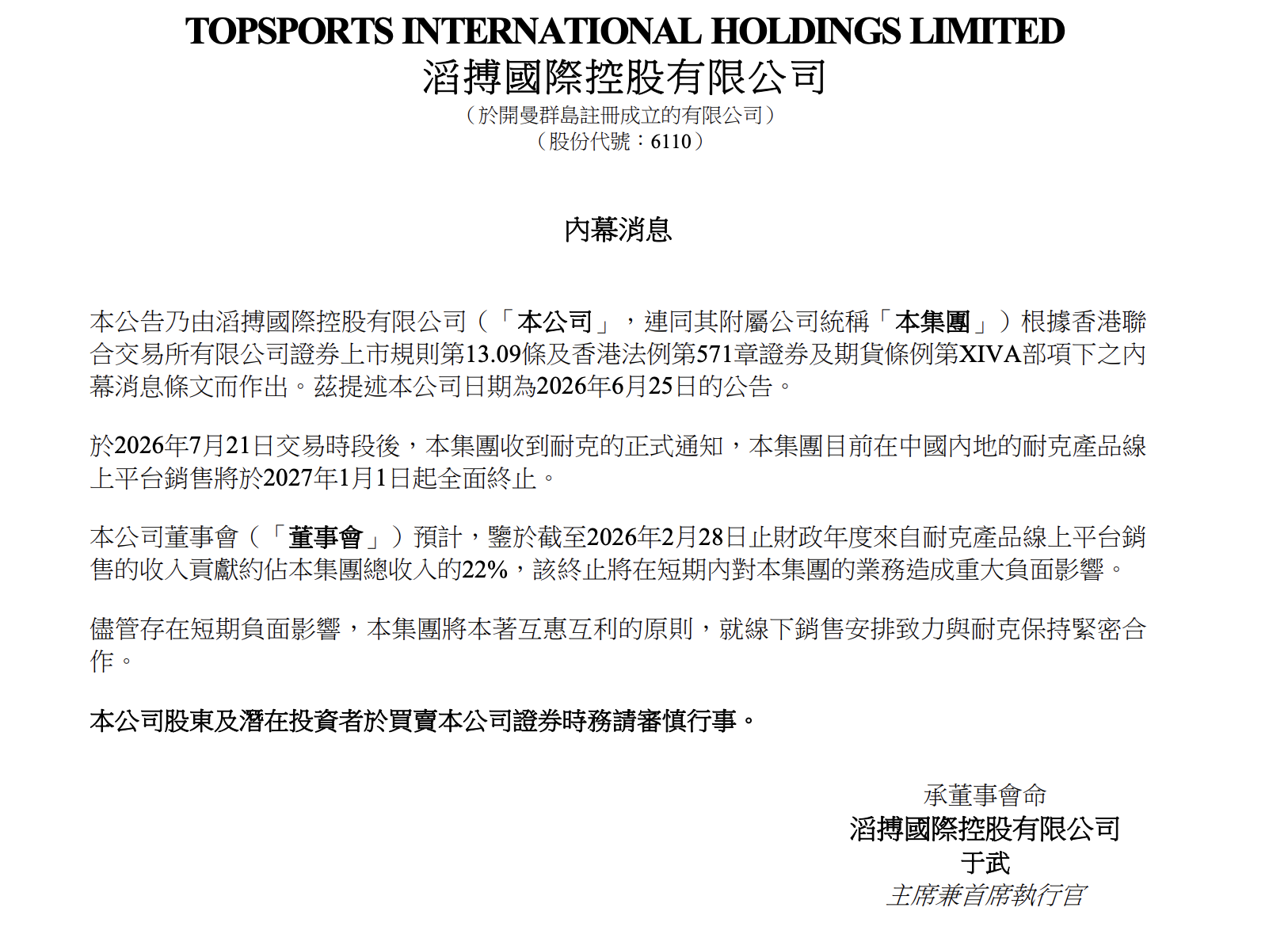
【亿邦原创】2027年1月起,耐克将终止与中国数千家线上经销商合作。其中中国头部经销商滔搏已收到耐克正式通知,滔搏目前在中国内地的耐克产品线上平台销售将在明年1月1日起全面终止,并将相关讯息在港交所进行公告(如下图)。

除了滔搏,届时市场上所有由第三方经销商运营的耐克线上店铺将全部停售耐克全系产品,重构后的耐克中国数字化销售体系将以耐克官网、耐克官方APP,以及天猫、京东、抖音三大主流平台官方旗舰店为主。

本次重大调整的背景是,长期以来,耐克采用“品牌方+多级经销商”的分销模式,大量中小线上经销商涌入市场,引发一系列行业乱象。比如,部分经销商为清理库存低价倾销,打乱品牌官方定价体系,造成价格体系混乱;渠道层级过多导致正品管控难度加大,假货、串货、水货问题频发,严重损害品牌口碑;同时,参差不齐的第三方店铺服务质量,使得消费者购物体验无法统一等。

耐克集团副总裁、大中华区总经理申凯希(Cathy Sparks)表示,公司并非要减少消费者购买产品的机会,而是希望减少渠道碎片化,将消费者引导至统一的官方平台。

业绩承压是更为现实的问题。2026财年(截至5月31日的一年内),耐克全球营收为464亿美元,与上一财年基本持平。其中大中华区营收为58.47亿美元(约合395.6亿元人民币),同比下降11%,已经连续八个季度负增长。

对于此次重大调整,业内人士讨论激烈。有人认为耐克与经销商的关系一直摇摆不定,对在华业绩的冲击是肯定的。“上一任CEO打破了多年平衡,搞直营,App抽签,好货一律不分给经销商,滔搏这类的都拿不到货,没办法滔搏就去做安踏系了,NIKE给的烂货卖不掉都扔进折扣。一来二去,中国这种大量靠经销商网络的市场就把Nike忘了,再赶上球鞋热退潮。后来换了个CEO,又来舔经销商,来不及了。”在他看来,耐克中国的失利与两任CEO的决策失误有关。

也有行业人士站在滔搏的角度考虑,认为福祸相依。“虽然Ni­ke是滔搏收入的大头,但是这次未必是坏事。Ni­ke总部那边说目的是为了控价,现在国内Ni­ke价格太便宜了,放在全球都有点价格洼地了,所以涨价不是坏事。另一方面,现在感觉品牌方在有意回归线下经销模式,最近看萨洛蒙、可隆、迪桑特,都基本线上线下同价,外加线上限售+控价。如果Ni­ke拿回去线上的经营权,把这个东西好好做做,价格体系管理好,线下还有得玩。”

还有人看到了耐克中国业绩下滑的本质原因,不在于渠道混乱带来的一系列连锁反应,而是产品丢了人心。耐克重塑线上渠道或许治标不治本。“本质是中国品牌比如安踏崛起,耐克的产品品质没做好,丢了用户。我这穿20多年耐克鞋的眼睁睁看着耐克的鞋破洞、鞋带绑不住,如果不能沉下心做产品做服务,老折腾销售渠道,我猜耐克还要更惨。巨无霸为了生意忽视了产品,把自己搞死的和差点把自己搞死的多了去了,典型的就是乔布斯把斯卡利请进苹果。”有消费者如是说道。

亿邦持续追踪报道该情报,如想了解更多与本文相关信息,请扫码关注作者微信。

文章来源:亿邦动力

广告
微信
朋友圈

FAQ回顾

耐克为什么要终止和中国线上经销商的合作?

耐克终止合作主要是为解决原多级分销模式引发的价格体系混乱、假货串货水货频发、第三方店铺服务参差不齐等问题,同时通过统一官方渠道严格控价,改善其中国区连续八个季度营收负增长的业绩困境。

耐克终止线上经销商合作后官方购买渠道有哪些?

调整后耐克中国数字化销售体系将以耐克官网、耐克官方APP,以及天猫、京东、抖音三大主流平台的官方旗舰店为主,消费者可通过上述官方正规渠道选购耐克全系产品。

耐克中国区近年的业绩表现如何?

截至2026年5月31日的2026财年,耐克全球营收为464亿美元与上一财年基本持平,其中大中华区营收为58.47亿美元,约合395.6亿元人民币,同比下降11%,已经连续八个季度出现负增长。

滔搏还能在线上平台销售耐克产品吗?

作为耐克中国头部经销商,滔搏已收到耐克正式通知,其在中国内地的耐克产品线上平台销售将于2027年1月1日起全面终止,届时所有第三方经销商运营的线上耐克店铺都将停售耐克全系产品。

这么好看,分享一下?

朋友圈 分享

APP内打开

赞 +1
+1
微信好友 朋友圈 新浪微博 QQ空间
关闭
收藏成功
发送
/140 0