广告
加载中

“NFC果汁”没水果 究竟还有什么是真的!

专注餐饮供应链的 2026-07-20 13:00
专注餐饮供应链的 2026/07/20 13:00

邦小白快读

EN
全文速览

本文曝光了NFC果汁行业的造假乱象,科普了NFC果汁的基础知识,给普通消费者整理了实用避坑干货。

1. 正规NFC果汁的定义:NFC是非浓缩还原果汁,按照国标要求,配料只能有水果或果汁,不能添加水、浓缩汁、添加剂,和浓缩还原的FC果汁工艺、成本差异很大,目前多数消费者都分不清两者区别。

2. 当前行业常见乱象:不少商家玩文字游戏,瓶身正面用大字体标注“NFC”“100%鲜果冷榨”,把实际NFC添加量、浓缩勾兑的信息缩成小字印在不起眼的角落,部分代工厂甚至直接用浓缩原浆勾兑,生产车间根本没有新鲜水果。

3. 实用避坑建议:不要贪低价,按照真实NFC的供应链成本,9.9元1升的产品基本不符合成本逻辑,大概率造假,购买时不要只看正面宣传,要仔细翻看配料表,优先选择正规头部品牌产品。

本文梳理了NFC果汁行业的发展现状、乱象与未来趋势,整理了对品牌商的干货内容如下。

1. 市场与消费趋势:当前我国纯果汁品类年增速接近10%,显著高于果汁行业整体增速,NFC果汁符合当下消费者追求无添加、纯天然、少加工的消费需求,已经完成从高端精品到大众消费品的跨越,市场增长空间充足。

2. 行业现存问题:目前NFC果汁仅橙汁有统一行业标准,其他品类缺乏统一规范,标准约束力不足,造假、虚假宣传乱象频发,品类信任已经被严重透支,劣币驱逐良币现象突出,正规品牌利益受损。

3. 品牌发展方向:可依托全产业链布局把控品质,走平价大众路线,也可依托成熟代工能力为渠道做OEM,所有品牌都需要合规宣传,未来监管会逐步收紧,只有坚守品质才能抓住长期增长机会。

本文披露了NFC果汁行业的发展现状、政策动向与机会风险,整理了对卖家的干货内容如下。

1. 市场机会:NFC果汁赛道仍处于增长阶段,消费者健康意识提升后,对无添加NFC果汁的需求不断上涨,平价NFC产品的销量很高,9.9元产品单品类销量可达几十万件,市场需求旺盛。

2. 风险提示:目前行业造假乱象多发,品类多次爆发信任危机,消费者投诉集中在虚假标注、货不对板等问题,监管层面正在收紧,2025年公布的《食品标识监督管理办法》将于2027年施行,明确禁止虚假宣传,违规产品会面临重罚。

3. 经营建议:不要为了逐利售卖低价假冒的NFC产品,选品时要仔细核对供货方资质、产品配料表,主动向消费者说明产品真实成分,选择正规头部品牌的产品,避开合规风险,抓住真实的健康消费需求。

本文分析了NFC果汁行业的生产要求、市场变化与商业机会,整理了对工厂的干货内容如下。

1. 生产要求与现状:真正的NFC果汁生产门槛很高,鲜果采摘后需要数小时内完成加工,对冷链运输、杀菌技术要求高,生产成本高,只有拥有完整供应链的工厂才能稳定生产;当前很多中小工厂走代工贴牌路线,靠浓缩原浆勾兑假冒NFC获利,虽然进入门槛低,但合规风险很高。

2. 商业机会:当下市场对平价NFC的需求旺盛,代工模式成熟,大量跨界品牌、零售渠道都需要OEM代工服务,有能力的工厂可以做代工,也可以依托全产业链能力打造自有品牌,市场空间充足。

3. 发展启示:未来监管会逐步收紧,标准也会逐步完善,靠造假贴牌、低价勾兑的模式难以长期持续,只有主动布局上游供应链,提升生产技术,做合规真材实料的产品,才能避开处罚风险,长期扎根赛道。

本文梳理了NFC果汁行业的发展现状、痛点与趋势,整理了对服务商的干货内容如下。

1. 行业发展趋势:NFC果汁符合健康消费升级的方向,市场规模持续增长,纯品类年增速接近10%,远高于果汁行业整体增速,大量跨界品牌、零售品牌都在入局NFC果汁赛道,代工需求、配套服务需求不断上涨。

2. 客户核心痛点:中小品牌和新进入者的核心痛点是自建工厂成本高、技术门槛高,行业没有统一的标准规范,企业很容易触碰监管红线,出现虚假宣传违规问题;另外真NFC对冷链物流的要求很高,多数中小品牌没有能力搭建完整冷链体系。

3. 服务发展机会:服务商可以针对新进入者推出OEM代工配套服务、专业化冷链物流服务,也可以为企业提供合规咨询服务,帮助企业理清标签标识的规范要求,应对未来收紧的监管,抓住行业增长的红利。

本文披露了NFC果汁行业的乱象和监管动向,整理了对平台商的干货内容如下。

1. 品类现状:NFC果汁当前市场需求大,低价产品销量高,是平台的热门引流品类,但同时也是假冒伪劣、虚假宣传的高发品类,消费者投诉量很高,存在不少经营风险。

2. 平台潜在风险:目前大量第三方商家在售低价假冒的勾兑NFC果汁,一旦爆发负面事件,不仅会影响平台的用户信任,还可能会被监管问责,给平台带来不必要的损失。

3. 运营与风险规避建议:监管层面已经明确收紧要求,2027年新的《食品标识监督管理办法》即将施行,平台需要加强对入驻商家和在售商品的审核,要求商家明确标注NFC含量和真实配料,及时下架低价违规产品,开展专项整治规范品类,同时引入正规头部品牌的产品,满足消费者的真实需求。

本文梳理了NFC果汁产业的发展历程、现存问题与监管动向,整理了对研究者的干货内容如下。

1. 产业发展新动向:NFC果汁2004年实现国产化,2020年后借健康消费升级、冷链网络普及快速增长,目前纯果汁品类年增速接近10%,已经从高端精品走向大众消费,当前行业衍生出全产业链自有品牌模式、OEM代工模式、零售自有品牌模式、跨界品牌入局等多种商业模式。

2. 产业核心新问题:当前NFC果汁产业仅NFC橙汁有统一行业标准,其他品类缺乏统一规范,团体标准约束力不足,造假成本远低于正规生产,导致劣币驱逐良币,行业陷入价格战→造假→透支信任的恶性循环,正规坚守品质的企业利益受损。

3. 政策研究启示:目前监管已经开始逐步收紧,新的食品标识管理办法即将施行,研究层面可以推动完善全品类统一的NFC果汁国家或行业标准,明确定义与规范,探索更有效的监管方式,推动NFC产业健康发展。

返回默认
声明:快读内容全程由AI生成,请注意甄别信息。如您发现问题,请发送邮件至 run@ebrun.com 。

我是 品牌商 卖家 工厂 服务商 平台商 研究者 帮我再读一遍。

Quick Summary

This article exposes common fraud practices in the not-from-concentrate (NFC) juice industry, explains basic knowledge about NFC juice, and provides practical tips to help ordinary consumers avoid rip-offs.

1. Definition of authentic NFC juice: NFC stands for "not-from-concentrate". Per Chinese national standards, its ingredient list can only contain fruit or juice, with no added water, concentrated juice or additives. It differs greatly from from-concentrate (FC) juice in production process and production cost, and most consumers currently cannot tell the two apart.

2. Common malpractices in the industry: Many brands play word games: they print "NFC" and "100% freshly cold-pressed" in large font on the front of bottles, while shrinking information about actual NFC content and concentrated blending into small text placed in inconspicuous corners. Some contract manufacturers even blend products directly from concentrated pulp, with no fresh fruit used in their production workshops at all.

3. Practical tips to avoid fraud: Do not opt for unreasonably low-priced products. Based on the supply chain cost of authentic NFC juice, a 1-liter product priced at 9.9 yuan (≈$1.4) barely fits the cost structure and is most likely counterfeit. When purchasing, do not only trust front-label marketing claims; check the ingredient list carefully, and prioritize products from established leading brands.

This article sorts out the current development status, industry chaos and future trends of the NFC juice sector, with key takeaways for brands as follows:

1. Market and consumer trends: China's pure juice category is currently growing at nearly 10% annually, outpacing the overall growth of the juice industry. Aligning with consumers' current demand for additive-free, all-natural and minimally processed products, NFC juice has completed its transition from a high-end niche product to a mass consumer good, with substantial room for further market growth.

2. Existing industry problems: Currently, only NFC orange juice has a unified industry standard, while other NFC juice categories lack consistent regulations. Weak standard enforcement has led to frequent fraud and false marketing, severely eroding consumer trust in the category. The "bad money drives out good" phenomenon is prominent, hurting the interests of compliant, legitimate brands.

3. Direction for brand development: Brands can control product quality through whole-supply-chain layout and pursue a mass-market affordable positioning, or offer OEM services for channels based on mature contract production capabilities. All brands need to maintain compliant marketing. As regulation will gradually tighten, only brands that uphold product quality can capture long-term growth opportunities.

This article discloses the current development status, policy trends and opportunity-risk landscape of the NFC juice industry, with key takeaways for sellers as follows:

1. Market opportunities: The NFC juice track is still in a growth phase. Rising consumer health awareness has driven growing demand for additive-free NFC juice, and affordable NFC products have seen strong sales. A 9.9 yuan low-priced SKU can reach hundreds of thousands of units in sales, reflecting strong market demand.

2. Risk warnings: The industry currently sees widespread fraud and repeated trust crises, with consumer complaints concentrated on false labeling and mismatched products. Regulation is tightening: the *Measures for the Supervision and Administration of Food Labels*, released in 2025, will take effect in 2027, explicitly banning false marketing, and non-compliant products will face heavy penalties.

3. Operational recommendations: Do not sell low-cost counterfeit NFC juice for profit. When sourcing products, carefully verify supplier qualifications and check product ingredient lists, proactively disclose the true composition of products to consumers, and prioritize products from legitimate leading brands to avoid compliance risks and capitalize on authentic consumer demand for healthy products.

This article analyzes production requirements, market changes and business opportunities in the NFC juice industry, with key takeaways for manufacturers as follows:

1. Production requirements and current status: Authentic NFC juice has very high production barriers. Fresh fruit must be processed within hours of picking, with high requirements for cold chain transportation and sterilization technology, leading to high production costs. Only factories with complete supply chains can achieve stable production. Currently, many small and medium-sized factories engage in contract manufacturing for private labels, profiting from counterfeit NFC juice blended from concentrated pulp. While this model has low entry barriers, it carries very high compliance risks.

2. Business opportunities: The market currently sees strong demand for affordable NFC juice, and the contract manufacturing model is mature. A large number of cross-industry entrants and retail channels need OEM services. Capable factories can either take on contract manufacturing orders, or build their own brands based on whole-supply-chain capabilities, with abundant market space available.

3. Insights for long-term development: Regulation and industry standards will gradually improve in the future. The model of counterfeit private labeling and low-cost blending is unsustainable long-term. Only by proactively laying out upstream supply chains, upgrading production technology, and producing compliant, authentic products can factories avoid penalty risks and establish a long-term foothold in the track.

This article sorts out the development status, core pain points and trends of the NFC juice industry, with key takeaways for service providers as follows:

1. Industry development trends: NFC juice aligns with the direction of health-focused consumption upgrade, and its market size continues to expand. The pure juice category grows at nearly 10% annually, far outpacing the overall growth of the juice industry. A growing number of cross-industry and retail brands are entering the NFC juice track, driving rising demand for contract manufacturing and supporting services.

2. Core pain points of clients: The core pain points for small and medium-sized brands and new entrants are the high cost and technical barriers of building in-house production facilities. The absence of unified industry standards makes it easy for companies to cross regulatory red lines and run into false marketing non-compliance issues. In addition, authentic NFC juice has strict requirements for cold chain logistics, and most small and medium-sized brands lack the capacity to build a complete cold chain system.

3. Development opportunities for service providers: Service providers can offer OEM supporting services and specialized cold chain logistics for new entrants, or provide compliance consulting services to help companies understand labeling and marking requirements, prepare for upcoming tighter regulation, and capture the growth dividend of the industry.

This article discloses the industry chaos and regulatory trends in the NFC juice sector, with key takeaways for platform operators as follows:

1. Current category status: NFC juice has strong market demand, and low-priced NFC products deliver high sales volume, making it a popular traffic-driving category for platforms. However, it is also a high-risk category for counterfeit goods and false marketing, with high volumes of consumer complaints and substantial operational risks.

2. Potential risks for platforms: A large number of third-party sellers currently sell low-cost counterfeit NFC juice blended from concentrate. If a major scandal breaks out, it will not only erode user trust in the platform, but also may lead to regulatory accountability, bringing unnecessary losses to the platform.

3. Recommendations for operation and risk mitigation: Regulators have explicitly tightened requirements, and the new *Measures for the Supervision and Administration of Food Labels* will take effect in 2027. Platforms need to strengthen审核of入驻商家and在售商品, require sellers to clearly mark NFC content and true ingredients, promptly remove low-cost non-compliant products, launch special campaigns to standardize the category, and onboards products from legitimate leading brands to meet consumers' authentic demand.

This article sorts out the development history, existing problems and regulatory trends of the NFC juice industry, with key takeaways for researchers as follows:

1. New industrial development trends: NFC juice achieved localization in China in 2004, and grew rapidly after 2020 driven by health-focused consumption upgrade and the expansion of cold chain networks. Today, the pure juice category grows at nearly 10% annually, and NFC juice has transitioned from a high-end niche product to mass consumption. The industry has now evolved multiple business models, including whole-supply-chain own-brand, OEM contract manufacturing, retail private label, and cross-industry brand entry.

2. New core industrial problems: Currently, only NFC orange juice has a unified industry standard, while other categories lack consistent regulation. Group standards have weak binding force, and the cost of fraud is far lower than that of legitimate production. This has led to a "bad money drives out good" dynamic, trapping the industry in a vicious cycle of price war → fraud → eroded trust, hurting the interests of legitimate quality-focused enterprises.

3. Insights for policy research: Regulation has already started to gradually tighten, and the new food label management regulation is upcoming. The research community can promote the improvement of unified national or industry standards covering all NFC juice categories, clarify official definitions and specifications, explore more effective regulatory approaches, and support the healthy development of the NFC industry.

Disclaimer: The "Quick Summary" content is entirely generated by AI. Please exercise discretion when interpreting the information. For issues or corrections, please email run@ebrun.com .

I am a Brand Seller Factory Service Provider Marketplace Seller Researcher Read it again.

NFC果汁的信任被透支后,行业靠什么活下去。

“车间里没有一箱水果。”

当山东广播电视台记者深入河南多家代工厂后,看到的不是鲜果飘香的生产线,而是一排排塑料桶和浓缩原浆。所谓“鲜果冷榨果汁”,全靠水、浓缩原浆勾兑而成。

厂家倒也坦诚:“低价不可能鲜果现榨。”

很快,“NFC果汁生产车间无水果,原浆勾兑”的话题冲上了热搜,也点燃了网友们的愤怒。

但这并非NFC果汁第一次陷入信任危机。

今年5月,央视《东方时空》就曝光了果汁标签乱象,其中提到,零食品牌“好想来”的一款果汁,外包装醒目印着“NFC非浓缩还原”,配料表前两位却是水和浓缩果汁,NFC原汁含量极低。市面上不少标称“添加NFC果汁”的产品,实际NFC含量微乎其微,有的仅十万分之几。

NFC这三个字母,正在被掏空。

但与此同时,这个品类的市场仍在增长。据弗若斯特沙利文数据,2024年我国果汁市场规模约为1584亿元。其中,纯果汁(包括FC和NFC)市场规模约占整体果汁市场的23%。预计2024–2029年,中国果汁市场的年复合增长率将保持低个位数增长,纯果汁品类的增速预计将达到近10%的水平,显著高于行业整体。

事实上,大多数消费者还分不清NFC和FC有什么区别。一个连国家标准都没统一的品类,市面上却充斥着9.9元就能买到1升的“鲜果冷榨”产品。价格战打得火热,但行业的地基,已经开始悄悄松动了。

一瓶“真果汁”的起落

NFC果汁并不是一个新概念。

所谓NFC,是"Not From Concentrate"的缩写,即"非浓缩还原果汁"。按照国家标准《果蔬汁类及其饮料》,它指的是以水果为原料,采用机械方法直接制成、未经浓缩的汁液。配料表里只能有水果或果汁,不能有水,不能有浓缩汁,不能有添加剂。

与它相对应的是FC,即浓缩还原果汁——先浓缩再加水复原。两者都可以达到100%果汁标准,但工艺和成本完全不同。

中国农业大学食品科学与营养工程学院院长廖小军曾介绍,2004年,重庆派森百公司成立,中国第一瓶NFC橙汁问世,开启了我国NFC果蔬汁产业元年。

但NFC真正进入大众视野,其实是2011年以后的事情。

这一年,上海嘉隽饮料推出“零度果坊”系列NFC果蔬汁,之后,零度果坊又在行业内较早推动并落实了NFC果汁的“五0标准”,即0添加、0加水、0加糖、0-6度储藏低温冷链运输、100%鲜榨0复原。

2015年,汇源推出NFC果蔬汁“鲜榨坊”系列;2016年,农夫山泉17.5°NFC果汁上市。根据零度果坊创始人孙隽提供的数据,当时市场一度涌现30多个NFC果汁品牌。

随着越来越多大品牌入局,NFC果汁也逐渐从专业圈层走向普通消费者。但同一时期,新式茶饮兴起,NFC果汁在创意、价格等方面缺乏优势,致使行业进入震荡期,部分中小企业被淘汰。

转折发生在2020年之后。当消费者健康意识全面觉醒,开始盯着配料表买东西,“无添加、纯天然、少加工”成为新的购买逻辑,NFC果汁恰好踩中了这个缺口。与此同时,冷链网络全面铺开,HPP高压冷杀菌技术逐步推广,上游产区直采模式兴起,也进一步推动了NFC果汁市场的发展。

也是从2020年开始,益正元这家原本靠乳酸菌风口起家的企业全力转向果汁,并锚定“平价NFC果汁”的定位,通过“上游直采+自建工厂”的全产业链模式,将NFC果汁的价格打到了10元以下。2025年,益正元销售规模突破5亿元。

这期间,作为市场早期培育者的零度果坊,其母公司乐源生物还发展成为重要的NFC果汁代工厂,为盒马鲜生等零售渠道提供代工服务。

代工模式的出现,让新进入者绕过了自建工厂的高昂成本和复杂技术门槛。与此同时,成熟的OEM能力让零售商能够推出高性价比的自有品牌。这也是一批跨界玩家试水NFC果汁的底气。过去几年里,喜茶、奈雪的茶等茶饮品牌先后推出了瓶装NFC果汁,试图在瓶装饮料市场寻找第二增长曲线。

NFC果汁由此完成了从精品超市“专属品”到大众消费品的跨越。社区楼下的餐饮店、商圈里的连锁超市、直播间和社区团购的清单里,它的身影越来越常见。

但热闹之下,乱象从未停止。

当标准还没跟上,"李鬼"就来了

NFC果汁的产业链门槛,其实比大多数人想象的要高。

真正的NFC果汁,从果园采摘到压榨灌装,全程链路极短。鲜果采摘后需要在数小时内完成清洗、压榨、杀菌、灌装,对冷链运输和存储有很高要求,保质期通常较短,一般为20~40天,即便采用无菌冷灌工艺,也最多做到6个月。任何一个环节的疏漏,都可能导致整批产品报废。

这也是早期只有农夫山泉、零度果坊、汇源等拥有完整供应链的企业能在这个赛道扎根的原因。

但“NFC”这三个字母的含金量,在流量面前会被稀释。

最普遍的套路,是文字游戏。

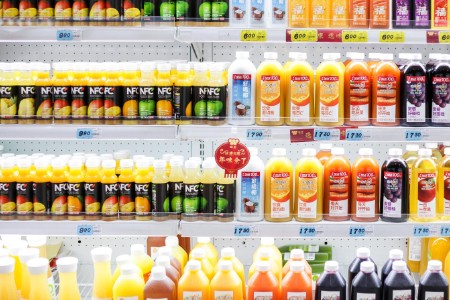
厂家在瓶身正面用超大加粗字体印刷“NFC”“100%鲜果冷榨”,把高端概念放在第一眼就能看到的位置。而“添加少量NFC原汁”“浓缩果汁调配”等关键说明,缩成极小字体,印在瓶身侧面不起眼的角落。消费者第一眼只看到醒目的“100%NFC”,很少仔细翻看配料表。

还有更隐蔽的操作——在NFC字母角落加上几乎看不清的“+”号,对外宣传是NFC果汁,细看配料表才发现主要成分依旧是水和浓缩果汁。

部分商家或销售员则宣称,“NFC+”即产品添加了NFC纯果汁。但有专家指出,果汁分类中根本不存在“NFC+”这个概念,纯属营销噱头。

还有更极端的,就像这次暗访曝光的情况——车间里连水果都没有。

在河南多家代工厂的生产区,没有新鲜水果,也没有鲜果清洗、机械压榨设备。所谓“鲜果冷榨果汁”,全靠水、浓缩原浆勾兑而成。

根据山东广播电视台齐鲁频道的报道,漯河市味纯食品饮料有限公司的货架上摆满了各种各样的果汁样品,苹果汁、石榴汁、荔枝汁、葡萄汁,应有尽有。除了自有品牌,怡滕、植觉等品牌也都在这里代加工,工作人员直言“就是贴个标签的事”。漯河申农生物科技有限公司的工作人员也表示,可以随意贴牌生产。

红餐供应链指南查阅发现,被曝光的河南爱杞枣食品有限公司,今年6月就因白桦树汁、凤梨汁、车厘子汁并非100%果蔬汁而故意在标签显著位置标注“100%”,被罚没11万余元。

另一家被曝光的河南赞漾饮品有限责任公司,今年5月被处罚三次,罚款总金额14.4万元。

很明显,被罚也没能挡住造假的脚步。暗访视频显示,这些企业被停产整改后,线上仍有相关产品售卖,部分瓶身外包装标识甚至未作更改。

品质混乱的背后,是标准层面的真空。

目前,NFC果汁加工层面没有统一的国家标准和行业标准,仅有一项《非浓缩还原果汁橙汁》(QB/T 5627-2021)规定了NFC橙汁的技术要求,其他品类(如苹果汁、葡萄汁)仍缺乏统一规范。

还有其它一些行业协会和团体也发布了NFC果汁的团体标准,这些团体标准虽然更具针对性,但通常仅在其所属团体或区域内适用,约束力有限。

所以,同样一瓶标注“NFC”的果汁,背后可能是鲜果直榨,也可能是浓缩汁加水复原,还可能是只加了一滴NFC原汁的FC果汁。消费者无从判断,监管部门也难以介入。

而且,随着益正元等品牌对“平价NFC”产品的普及,消费者的购买逻辑也在发生改变,他们往往只认“便宜”和“真果汁”,品牌是谁不重要。这就导致一个很现实的问题:只要有一款配方差不多、价格更低的竞品冒出来,消费者很容易就被吸引走。

红餐供应链指南在电商平台搜索“9.9元1升装NFC果汁”,发现在售商品不少,苹果汁、水蜜桃汁、葡萄汁等单品销量动辄几十万件。按照真实NFC果汁的供应链成本反推——鲜果采购、冷链锁鲜、保鲜灌装、短保质期流通,这个价格本身就是一个值得存疑的信号。

说到底,大多数消费者并不知道NFC果汁应该是什么味道,也很难通过口感判断品质差异。当产品之间的差别越来越难被感知,竞争就会回到最直接的价格。

而低价,恰恰是造假的温床。

透支的信任,谁来买单?

真正的问题,从来不只是某几家工厂被曝光,而是当造假成为行业公开的秘密,消费者还能信任“NFC”这三个字母多久。

事实上,NFC果汁市场的信任危机早有征兆。在黑猫投诉平台上,消费者对NFC果汁的相关投诉有上百条,集中反映的问题包括“虚假标签”“货不对板”“配料表造假”。不少消费者表示,看到“100%NFC果汁”的商品标签就下单,但收到货后发现配料表含有水、浓缩果汁、白砂糖等成分。

一个值得对照的案例是椰子水。

2022年前后,椰子水作为健康饮品迅速走红,大量品牌涌入,1升装椰子水产品价格从几十元暴跌至9.9元,甚至更低。低价竞争的背后,是原料掺假、浓度虚标等问题频发。消费者发现,热销的100%椰子水,其实是椰子水味饮料。品类信任被透支后,大量中小品牌退出,市场逐渐向少数拥有供应链优势的企业集中。

NFC果汁正在经历类似的路径。

当大量代工厂用浓缩原浆勾兑出“NFC果汁”,当“NFC+”成为行业心照不宣的营销话术,当9.9元2.5升的“鲜果冷榨”在电商平台月销几十万件……这个品类正在快速透支消费者好不容易建立起来的信任。

不过,NFC果汁与过去饮料市场上曾出现的“网红饮料”不同,它并非纯粹的流量产物。它有真实的供应链基础,有农夫山泉、零度果坊等坚守品质的品牌,有健康消费升级的长期趋势支撑。

但它面临的挑战也更为复杂,当造假的成本远低于真材实料,当消费者无法通过口感辨别真伪,当标准缺失让监管难以落地,劣币驱逐良币的戏码就会反复上演。

好在监管层面正在收紧。

市场监管总局2025年公布的《食品标识监督管理办法》将于2027年3月16日起施行,明确禁止食品标识以欺骗、误导方式作虚假描述。新版《食品安全国家标准 预包装食品标签通则》也对配料定量标示提出更细致要求,强调添加配料需明确标注含量。

此次,河南NFC果汁生产车间被曝无水果后,个别地方监管部门也表示,将举一反三,开展饮料等重点行业专项整治。

从这个角度看,NFC果汁的真正考验,不在于今天有几家工厂被曝光,而在于当“NFC”这三个字母的公信力被消耗殆尽之后,这个品类还能靠什么留住消费者。

那些真正在果园里种树、在产线上压榨、在冷链里奔跑的企业,是这场信任危机中最大的受害者。

而只有当消费者不再轻信标签上的三个字母、开始追问“这瓶果汁到底是怎么来的”时,留下来的需求,可能才是这个品类真正的市场规模。

注:文/专注餐饮供应链的,文章来源:餐饮供应链指南(公众号ID:cygylzn),本文为作者独立观点,不代表亿邦动力立场。

文章来源:餐饮供应链指南

广告
微信
朋友圈

FAQ回顾

NFC果汁是什么?和FC果汁有什么区别?

NFC是非浓缩还原果汁的缩写,指以水果为原料采用机械方法直接制成、未经浓缩的汁液,配料只能有水果或果汁,不能有水、浓缩汁、添加剂。FC是浓缩还原果汁,先浓缩再加水复原,二者都可达到100%果汁标准,但工艺和成本完全不同。

NFC果汁行业目前存在哪些乱象?

目前NFC果汁行业乱象包括部分商家玩文字游戏误导消费者,比如用极小字体标注真实配料、推出无标准依据的“NFC+”营销噱头,甚至有无水果的代工厂用水和浓缩原浆勾兑标称“鲜果冷榨NFC果汁”,虚假标注、配料表造假问题频发。

为什么低价NFC果汁大概率是假冒产品?

真实NFC果汁从鲜果采摘到压榨灌装链路极短,需在数小时内完成清洗、压榨、杀菌、灌装多道工序,对冷链存储运输要求高,供应链成本较高,低于合理价格的NFC果汁基本是用浓缩原浆勾兑而成,并非真正的非浓缩还原果汁。

NFC果汁行业监管有哪些新的政策要求?

2025年市场监管总局公布的《食品标识监督管理办法》将于2027年3月16日起施行,明确禁止食品标识以欺骗、误导方式作虚假描述。新版《食品安全国家标准 预包装食品标签通则》也对配料定量标示提出更细致要求,强调添加配料需明确标注含量。

这么好看,分享一下?

朋友圈 分享

APP内打开

赞 +1
+1
微信好友 朋友圈 新浪微博 QQ空间
关闭
收藏成功
发送
/140 0