广告
加载中

重仓短剧!快手新设业务中心 “砸钱”争夺优质版权方

姜琪 2026-04-02 10:42
姜琪 2026/04/02 10:42

邦小白快读

EN
全文速览

快手推出短剧生态计划,提供多重权益和合作机会,助力内容制作与变现。

1. 四重权益包括现金投资(数十万到最高200万元)、分成政策、流量激励(最高超过1亿)、宣发资源(从定制化到重点资源位),根据剧集类型、画风和评级差异化配置。

2. 评级体系从B到S,S级漫剧(如AI仿真人剧)可获最高200万投资、顶格分成和全矩阵宣发,使用快手可灵工作流AI工具可获评级加分。

3. 两种合作方式:快手制片+合作方承制模式(平台提供IP和资金,合作方赚承制费,知识产权归快手);按比例投资共创模式(平台与成熟方共享投资和知识产权)。

4. 行业趋势显示短剧从流量争夺转向内容资产化,用户对品质要求提升,IP复用和制作精良成为关键,推动平台提供系统能力。

快手短剧计划对品牌营销和产品研发有直接启示,结合消费趋势优化渠道建设。

1. 品牌营销方面,平台提供全矩阵宣发资源,可借力提升曝光;合作模式(如共创知识产权)支持品牌IP植入和渠道拓展。

2. 产品研发上,强调AI工具深度应用(如可灵工作流),引导技术导向创新,评级加分机制激励高效制作。

3. 消费趋势显示用户对短剧品质要求提高,角色延续性和IP价值成为焦点,品牌需关注精品化内容以吸引用户。

4. 用户行为观察表明行业转向资产化,平台系统能力(生产到变现)提供新机遇,品牌可参与合作抢占市场。

快手短剧政策解读揭示增长市场和合作机会,需关注消费需求变化与风险提示。

1. 政策权益包括现金投资、流量激励和分成政策,评级体系(B到S)差异化配置,S级可获高额投资,提供资金扶持机会。

2. 增长市场体现在短剧行业精品化趋势,用户需求转向高品质内容,卖家可借合作模式(如承制或共创)切入新领域。

3. 机会提示:两种合作路径(平台主导或比例投资)针对不同卖家类型(中小工作室或成熟MCN),带资进组可共享知识产权;风险提示包括知识产权归属差异,需谨慎选择模式。

4. 正面影响:AI应用加分降低技术门槛,负面风险是竞争加剧;平台系统能力推动高效变现,卖家可学习最新商业模式。

快手计划对产品生产需求提供商业机会,启示推进数字化和电商化。

1. 产品生产和设计需求上,评级体系(如S级要求)强调制作精良和AI应用(可灵工作流),工厂需提升技术标准以满足内容品质。

2. 商业机会体现在合作模式:承制模式(按件计费)提供外包生产机会;共创模式(比例投资)允许带资参与,共享知识产权,拓展业务范围。

3. 推进数字化启示:AI工具深度应用加分机制鼓励工厂采用快手工作流,提升效率;行业趋势(内容资产化)推动工厂向电商化转型,优化生产流程。

4. 机会提示:平台现金投资和流量激励支持规模化生产,风险是需适应评级标准,工厂可借机升级设备和技术。

短剧行业发展趋势揭示新技术和解决方案,快手计划针对客户痛点提供系统能力。

1. 行业发展趋势:从流量产品转向内容资产化,用户品质要求提升,IP复用和制作精良成为关键,推动平台构建完整产业链。

2. 新技术应用:强调AI工具(可灵工作流)深度使用,评级加分开启技术导向,服务商可开发类似工具解决效率痛点。

3. 客户痛点:中小工作室缺乏资金和IP,平台提供承制模式;成熟方需变现能力,共创模式共享资源;解决方案是快手四重权益(现金、流量等)打通生产到变现。

4. 机会提示:服务商可参与宣发或技术合作,平台系统能力(如全域分发)启示创新服务模式,应对行业精品化需求。

快手短剧策略回应商业需求,最新做法聚焦招商和运营管理,规避风向风险。

1. 商业对平台的需求:用户要求品质提升,需提供系统能力(生产到变现),快手成立生态业务中心推出“磁力新剧计划”,构建精品共创链路。

2. 平台最新做法:四重权益(现金投资、分成、流量激励、宣发)差异化配置,评级体系(B到S)引导内容质量;AI应用(可灵工作流)加分落地技术能力。

3. 招商方式:两种合作模式(快手制片+承制或比例投资共创)针对不同版权方,招商策略包括知识产权管理(归平台或共享)。

4. 运营管理:通过评级和AI工具优化分发;风向规避:强调内容资产化减少流量风险,机会是提升平台竞争力,管理需平衡投入与回报。

短剧产业新动向揭示新问题和商业模式,政策启示推动专业发展。

1. 产业新动向:行业从流量争夺转向内容资产化,用户品质要求提升,IP复用价值和角色延续性成为关键,推动平台系统能力建设。

2. 新问题:如何平衡低成本与精品化?快手方案通过评级体系和AI应用解决;政策法规启示:权益配置(如现金投资)可优化行业扶持。

3. 商业模式:两种合作路径(平台采购外包或资产合资)提供创新案例,知识产权共享模式启示风险分摊;代表企业快手推动行业专业化。

4. 建议启示:研究者需关注AI技术落地影响,趋势显示内容资产化将重塑产业,政策应支持数字化和变现效率。

返回默认

声明:快读内容全程由AI生成,请注意甄别信息。如您发现问题,请发送邮件至 run@ebrun.com 。

我是 品牌商 卖家 工厂 服务商 平台商 研究者 帮我再读一遍。

Quick Summary

Kuaishou has launched a short drama ecosystem plan, offering multiple benefits and collaboration opportunities to support content production and monetization.

1. The four-tier benefits include cash investment (ranging from hundreds of thousands to a maximum of 2 million RMB), revenue sharing policies, traffic incentives (up to over 100 million views), and promotional resources (from customized support to premium placement), allocated based on drama type, style, and rating.

2. A rating system from B to S is implemented; S-rated dramas (e.g., AI simulation series) can receive up to 2 million RMB investment, maximum revenue share, and full-matrix promotion. Using Kuaishou's Keling workflow AI tool grants rating bonuses.

3. Two collaboration models are available: Kuaishou Production + Partner Co-production (platform provides IP and funding, partners earn production fees, intellectual property belongs to Kuaishou); and Proportional Investment Co-creation (platform and mature partners share investment and IP rights).

4. Industry trends show short dramas shifting from traffic competition to content assetization, with rising user quality demands making IP reuse and high production values key, driving platforms to provide systematic capabilities.

Kuaishou's short drama plan offers direct implications for brand marketing and product development, guiding channel optimization aligned with consumer trends.

1. For marketing, the platform provides full-matrix promotional resources to boost exposure; collaboration models (e.g., IP co-creation) support brand IP integration and channel expansion.

2. In product development, the emphasis on AI tools (like Keling workflow) encourages tech-driven innovation, with rating bonuses incentivizing efficient production.

3. Consumer trends indicate rising user expectations for short drama quality, with character continuity and IP value becoming focal points—brands should prioritize premium content to attract audiences.

4. User behavior analysis reveals an industry shift toward assetization, where platform capabilities (from production to monetization) create new opportunities for brands to collaborate and capture market share.

Kuaishou's short drama policy reveals growth markets and collaboration opportunities, highlighting evolving consumer demands and risk considerations.

1. Policy benefits include cash investment, traffic incentives, and revenue sharing, with a B-to-S rating system allocating resources differentially; S-tier offers high investment, providing financial support opportunities.

2. Growth markets reflect the industry's premiumization trend, as user demand shifts toward high-quality content—sellers can leverage collaboration models (e.g., co-production or co-creation) to enter new segments.

3. Opportunities: Two collaboration paths (platform-led or proportional investment) cater to different seller types (e.g., small studios or mature MCNs), with capital participation enabling IP sharing; risks include varying IP ownership, requiring careful model selection.

4. Positives: AI adoption lowers technical barriers via rating bonuses; negatives include intensified competition. Platform systemic capabilities drive efficient monetization, offering sellers insights into latest business models.

Kuaishou's plan presents commercial opportunities for product production needs, highlighting digital and e-commerce advancement.

1. For production and design, the rating system (e.g., S-tier requirements) emphasizes high-quality production and AI tool use (Keling workflow), urging factories to upgrade technical standards.

2. Commercial opportunities arise from collaboration models: Co-production (piece-rate fees) offers outsourcing opportunities; Co-creation (proportional investment) allows capital participation and IP sharing, expanding business scope.

3. Digital advancement: AI tool adoption with rating bonuses encourages factories to integrate Kuaishou's workflow for efficiency gains; industry trends (content assetization) push factories toward e-commerce transformation and optimized production.

4. Opportunities: Platform cash investment and traffic incentives support scaled production; risks include adapting to rating standards—factories can leverage this to upgrade equipment and technology.

Short drama industry trends reveal new technologies and solutions, with Kuaishou's plan addressing client pain points through systemic capabilities.

1. Industry trends: Shift from traffic-driven products to content assetization, with rising user quality demands making IP reuse and production excellence key, driving platforms to build full industrial chains.

2. New tech applications: Emphasis on deep AI tool use (Keling workflow) and rating bonuses foster tech-driven innovation; service providers can develop similar tools to address efficiency gaps.

3. Client pain points: Small studios lack funds and IP—platform offers co-production models; mature players need monetization—co-creation models enable resource sharing; solutions include Kuaishou's four-tier benefits (cash, traffic, etc.) streamlining production-to-monetization.

4. Opportunities: Service providers can engage in promotion or tech partnerships; platform capabilities (e.g., omnichannel distribution) inspire innovative service models to meet industry premiumization demands.

Kuaishou's short drama strategy addresses commercial needs, with latest practices focusing on merchant acquisition and operational management to mitigate risks.

1. Commercial demands on platforms: Users seek higher quality, requiring systemic capabilities (production to monetization); Kuaishou established an ecosystem business center launching "Magnet New Drama Plan" to build premium co-creation pipelines.

2. Latest platform practices: Four-tier benefits (cash investment, revenue share, traffic incentives, promotion) allocated differentially; B-to-S rating system guides content quality; AI tool (Keling workflow) bonuses operationalize tech capabilities.

3. Merchant acquisition: Two collaboration models (Kuaishou production + co-production or proportional investment co-creation) target different rights holders; acquisition strategies include IP management (platform-owned or shared).

4. Operational management: Rating systems and AI tools optimize distribution; risk mitigation: Emphasis on content assetization reduces traffic volatility risks; opportunity lies in enhancing platform competitiveness, requiring balanced investment and returns management.

Short drama industry developments reveal new issues and business models, with policy implications advancing professional growth.

1. Industry developments: Shift from traffic competition to content assetization, with rising user quality demands elevating IP reuse value and character continuity as key drivers, prompting platform systemic capability building.

2. New issues: How to balance low cost and premiumization? Kuaishou's rating system and AI tools offer solutions; policy insights: Benefit allocation (e.g., cash investment) can optimize industry support mechanisms.

3. Business models: Two collaboration paths (platform procurement outsourcing or asset joint ventures) provide innovative cases; IP sharing models illustrate risk distribution; lead firm Kuaishou drives industry professionalization.

4. Recommendations: Researchers should monitor AI technology implementation impacts; trends suggest content assetization will reshape the industry, urging policies that support digitalization and monetization efficiency.

Disclaimer: The "Quick Summary" content is entirely generated by AI. Please exercise discretion when interpreting the information. For issues or corrections, please email run@ebrun.com .

I am a Brand Seller Factory Service Provider Marketplace Seller Researcher Read it again.

【亿邦原创】短剧的战事正在从流量争夺走向内容资产化。在这场几近白热化的竞争中,快手选择用更重的投入、更系统化的机制,把优质版权方拉进自己的生态腹地。

快手磁力引擎近期正式成立短剧生态业务中心,同步推出“磁力新剧计划”。核心任务是打通内容生产、制作发行与商业变现的产业环节,构建“精品共创、全域分发、高效变现”的完整链路。

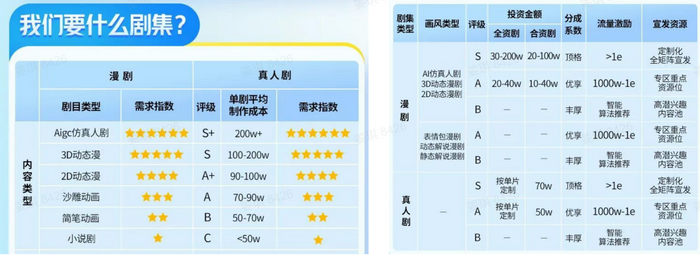
从政策层面看,“磁力新剧计划”最直接的吸引力在于四重权益:现金投资、分成政策、流量激励与宣发资源。平台根据剧集类型、画风、评级进行差异化配置,投资金额从数十万到最高200万元不等,流量激励最高超过1亿,宣发资源则从定制化全矩阵宣发到专区重点资源位逐级匹配。

具体来看,快手对漫剧和短剧设置B到S的评级体系。S级漫剧(AI仿真人剧、3D动态漫剧、2D动态漫剧)可获得最高200万元的现金投资,以及顶格分成系数和全矩阵宣发。值得注意的是,快手特别强调了对AI工具的深度应用,明确表示使用快手可灵工作流的团队可获得评级加分。这既是技术导向的引导,也是自身AI能力在业务场景中的一次精准落地。

在合作方式上,快手提供了两种路径。一种是“快手制片+合作方承制”模式,适用于缺乏自有IP和初始资金的中小工作室,快手提供IP、创意方向、全额投资,合作方按件计费或赚取承制费,知识产权归快手所有。另一种是“按比例投资共创”模式,面向拥有爆款IP资产、有历史成功数据的成熟MCN或承制方,快手按S级或A级评级支付部分制作费用,合作方带资进组,双方按比例共享知识产权。两种模式的区别在于,前者是平台主导的内容采购与生产外包,后者是平台与优质内容方的资产合资。

早期的短剧更多是低成本、快节奏的流量产品,靠投流和算法分发获取用户。但当下,用户对短剧的品质要求明显提升,IP的复用价值、角色的可延续性、制作的精良程度,正在成为决定一部短剧能否跑出长尾效应的关键。因此,平台方不仅要能提供流量,还要能提供从内容生产到多元商业变现的系统能力。这既是平台顺应行业变局的必要选择,也是推动行业愈发精品化与专业化的关键一步。

亿邦持续追踪报道该情报,如想了解更多与本文相关信息,请扫码关注作者微信。

文章来源:亿邦动力

广告
微信
朋友圈

FAQ回顾

快手磁力新剧计划提供哪些核心权益?

快手磁力新剧计划提供四重权益:现金投资金额从数十万到最高200万元,流量激励最高超过1亿,差异化分成政策,以及从定制化全矩阵宣发到专区重点资源位的宣发资源。

快手短剧合作有哪两种模式?

快手提供两种合作模式:一是‘快手制片合作方承制’模式,平台提供IP和全额投资,知识产权归快手;二是‘按比例投资共创’模式,双方按比例投资并共享知识产权,面向成熟内容方。

快手如何对短剧进行评级和激励?

快手设置B到S的评级体系,S级漫剧可获得最高200万元现金投资和顶格分成系数。使用快手可灵AI工作流的团队可获得评级加分,强调AI工具深度应用。

这么好看,分享一下?

朋友圈 分享

APP内打开

赞 +1
+1
微信好友 朋友圈 新浪微博 QQ空间
关闭
收藏成功
发送
/140 0