广告
加载中

零一万物牵手阿里云背后 是正在加剧的AI人才荒

胡镤心 2025-01-08 16:59
胡镤心 2025/01/08 16:59

邦小白快读

EN
全文速览

总1:文章核心信息是AI人才荒加剧背景下零一万物与阿里云的战略合作。

1. 双方成立产业大模型联合实验室,零一万物预训练和Infra团队转手阿里云,实现资源共享。

2. AI人才短缺表现突出,字节跳动挖走阿里云核心技术负责人周畅及其团队,提供千万级薪酬;小米也高薪聘请95后AI工程师罗福莉。

3. 人才竞争数据:大模型算法研究员平均月薪6.4万元,AI工程师67460元;2030年中国AI人才需求将达600万,缺口400万。

总2:实操干货包括企业应对策略和影响。

1. 零一万物在人员动荡中模型训练取得突破,Yi-Lightening在LMSYS盲测榜排名第六,使用MoE架构等创新技术。

2. 合作后零一万物轻装上阵冲刺商业化,阿里填补技术空缺稳定市场。

3. 风险案例:阿里起诉前员工违反竞业协议,提示企业需法律防范。

总1:AI人才趋势对品牌产品研发和消费趋势的启示。

1. 产品研发案例:零一万物在模型训练中采用MoE架构、混合注意力机制等技术,成本仅需xAI的1%-2%却效果显著,启示品牌研发高效创新。

2. 消费趋势观察:AI应用普及加速,各行业加入人才争夺,如金融科技AI工程师月薪67460元,提示品牌关注用户行为向AI驱动转变。

3. 品牌营销参考:企业合作如零一万物与阿里云,展示战略联盟增强品牌影响力;高薪抢人事件显示投资研发团队对品牌定位的重要性。

总2:品牌渠道建设和竞争风险。

1. 人才流动案例:字节挖走阿里人才,品牌需渠道保护核心团队。

2. 数据支持:AI人才集中于应用层(占比54.3%),品牌可借此积累经验推动产品迭代。

总1:政策解读和市场机会。

1. 政策法规案例:阿里起诉前员工周畅违反竞业协议,仲裁要求赔偿,提示卖家关注法律合规风险。

2. 增长市场分析:AI领域需求旺盛,算法工程师岗位占比46.45%,自然语言处理占11.04%,卖家可布局AI相关业务。

3. 消费需求变化:人才荒推动薪酬高涨,如大模型岗位月薪6.4万元,创造就业机会。

总2:事件应对措施和可学习点。

1. 正面影响案例:零一万物与阿里合作,卖家可学习整合资源应对动荡;阿里通过合作填补技术空缺。

2. 风险提示:人才流失导致企业调整战略,如零一万物缩减团队;机会提示:AI缺口400万,卖家可进军培训或服务市场。

3. 最新商业模式:联合实验室合作模式,提供各取所需范例。

总1:产品生产和设计需求中的AI启示。

1. 生产设计案例:零一万物模型训练使用多阶段训练和动态Top-P路由等技术,成本低效率高,启示工厂优化数字化流程。

2. 商业机会挖掘:AI人才缺口400万,工厂可拓展AI硬件或培训业务;高薪岗位如销售经理月薪高于行业,提示就业市场潜力。

3. 推进数字化启示:企业合作如阿里云整合团队,展示电商和数字化整合范例。

总2:技术应用和行业趋势。

1. AI在工业应用潜力:人才集中于应用层(54.3%),工厂可借积累经验加速智能生产。

2. 案例参考:零一万物轻装上阵冲刺商业化,启示工厂聚焦核心业务;小米高薪挖人,显示人才投资价值。

总1:行业发展趋势和客户痛点。

1. 趋势分析:AI人才荒加剧,需求2030年增至600万,缺口400万;基础层人才仅占17.1%,痛点明显。

2. 新技术应用:零一万物使用MoE架构、混合注意力机制等创新,提升模型性能。

3. 客户痛点案例:阿里云人才流失,字节和小米高薪挖人,暴露企业技术维护难题。

总2:解决方案和案例启示。

1. 合作方案:零一万物与阿里云成立联合实验室,深度整合团队,解决资源鸿沟。

2. 高薪招聘策略:字节提供8位数薪酬吸引人才,小米开千万元offer,启示服务商薪酬设计。

3. 数据支持:大模型开发人员需求激增,算法工程师占比46.45%,服务商可开发培训或外包服务。

总1:商业对平台需求和平台最新做法。

1. 需求分析:平台如阿里云需稳定技术团队,人才流失暴露空缺;案例中字节挖走周畅团队,平台需招商吸引人才。

2. 最新做法:阿里云与零一万物成立联合实验室,整合预训练和Infra团队,展示平台资源互补模式。

3. 运营管理启示:合作后阿里填补技术空缺稳定市场信心,平台可借鉴规避风险。

总2:平台招商和风险管理。

1. 招商机会:AI人才高薪如月薪6.4万元,平台可推出人才扶持政策;增长市场算法工程师需求最大。

2. 风向规避案例:竞业协议仲裁事件,提示平台制定法律保护措施。

3. 合作方式:零一万物剥离团队冲刺商业化,平台可优化资源分配。

总1:产业新动向和新问题。

1. 动向观察:AI人才流动事件,如字节挖走阿里和零一万物人才,周畅案例;零一万物模型排名第六,显示技术突破。

2. 新问题分析:人才缺口400万,基础层短缺仅17.1%;预训练与商业化鸿沟导致企业调整。

3. 政策法规启示:阿里竞业协议仲裁,提供法律建议基础。

总2:商业模式和政策建议。

1. 商业模式研究:零一万物与阿里合作各取所需,剥离团队轻装冲刺;小米高薪挖人模式,显示创新雇佣策略。

2. 数据支持:应用层AI人才占54.3%,推动产业应用;需求预测2030年600万,建议政策培养人才。

3. 案例参考:联合实验室合作,启示产业整合解决资源失衡。

返回默认

声明:快读内容全程由AI生成,请注意甄别信息。如您发现问题,请发送邮件至 run@ebrun.com 。

我是 品牌商 卖家 工厂 服务商 平台商 研究者 帮我再读一遍。

Quick Summary

Summary 1: The core development is the strategic partnership between 01.AI and Alibaba Cloud amid an intensifying AI talent shortage.

1. The two companies established a joint industry large model lab, with 01.AI transferring its pre-training and infrastructure teams to Alibaba Cloud for resource sharing.

2. The talent shortage is stark: ByteDance poached Alibaba Cloud's core technical lead Zhou Chang and his team with a compensation package reportedly exceeding 10 million RMB; Xiaomi also offered a multi-million RMB package to hire 95-born AI engineer Luo Fuli.

3. Talent competition data: The average monthly salary for a large model algorithm researcher is 64,000 RMB, and 67,460 RMB for an AI engineer. China's AI talent demand is projected to reach 6 million by 2030, with a shortfall of 4 million.

Summary 2: Practical insights include corporate response strategies and impacts.

1. Despite internal turbulence, 01.AI achieved a breakthrough in model training; its Yi-Lightening model ranks 6th on the LMSYS blind test leaderboard, utilizing innovative techniques like MoE architecture.

2. Post-collaboration, 01.AI is now leaner and focused on commercialization, while Alibaba fills its technical gaps to stabilize the market.

3. Risk case: Alibaba sued a former employee for violating a non-compete agreement, highlighting the need for legal safeguards.

Summary 1: AI talent trends offer insights for brand product R&D and consumer trends.

1. Product R&D case: 01.AI's use of MoE architecture and hybrid attention mechanisms in model training achieved significant results at just 1%-2% of xAI's cost, demonstrating efficient innovation for brands.

2. Consumer trend observation: Accelerating AI adoption across industries fuels talent wars (e.g., FinTech AI engineers earn 67,460 RMB/month), signaling a shift towards AI-driven user behavior that brands must monitor.

3. Brand marketing reference: Strategic alliances like 01.AI-Alibaba Cloud enhance brand influence; high-salary poaching shows the importance of R&D investment for brand positioning.

Summary 2: Brand channel building and competitive risks.

1. Talent mobility case: ByteDance's poaching of Alibaba talent underscores the need for brands to protect core teams.

2. Data insight: With 54.3% of AI talent concentrated in the application layer, brands can leverage this experience for product iteration.

Summary 1: Policy interpretation and market opportunities.

1. Regulatory case: Alibaba's lawsuit against former employee Zhou Chang for breaching a non-compete clause, resulting in arbitration for damages, highlights legal compliance risks for sellers.

2. Growth market analysis: High demand in AI (algorithm engineers account for 46.45% of roles, NLP 11.04%) presents opportunities for sellers to expand into AI-related businesses.

3. Consumer demand shift: Talent shortages drive soaring salaries (e.g., 64,000 RMB/month for large model roles), creating new job markets.

Summary 2: Response strategies and actionable takeaways.

1. Positive case: The 01.AI-Alibaba collaboration demonstrates resource integration to navigate volatility; Alibaba fills technical gaps via partnership.

2. Risk alert: Talent loss forces strategic shifts (e.g., 01.AI downsizing); opportunity: The 4-million AI talent gap opens markets for training or services.

3. Emerging business model: The joint lab partnership offers a template for mutual benefit.

Summary 1: AI implications for product manufacturing and design.

1. Production design case: 01.AI's use of multi-stage training and dynamic Top-P routing in model training achieved high efficiency at low cost, offering a model for factories to optimize digital processes.

2. Business opportunity: The 4-million AI talent gap suggests potential in AI hardware or training; high salaries (e.g., for sales managers) indicate a robust job market.

3. Digitalization insight: Collaborations like Alibaba Cloud's team integration exemplify e-commerce and digital consolidation.

Summary 2: Technology applications and industry trends.

1. AI's industrial potential: With 54.3% of talent in the application layer, factories can leverage this experience to accelerate smart manufacturing.

2. Case reference: 01.AI's lean focus on commercialization suggests prioritizing core business; Xiaomi's high-value hiring shows the ROI on talent investment.

Summary 1: Industry trends and client pain points.

1. Trend analysis: The AI talent crunch worsens, with demand hitting 6 million by 2030 and a 4-million gap; a mere 17.1% of talent is in the foundational layer, highlighting a key pain point.

2. New tech applications: 01.AI's innovations like MoE architecture and hybrid attention mechanisms boost model performance.

3. Client pain point: Talent loss at Alibaba Cloud, poached by ByteDance and Xiaomi, exposes corporate challenges in maintaining technical capabilities.

Summary 2: Solutions and case insights.

1. Collaboration model: The 01.AI-Alibaba Cloud joint lab deeply integrates teams to bridge resource gaps.

2. Recruitment strategy: ByteDance's 8-figure offers and Xiaomi's 10-million-RMB packages inform competitive compensation design for service providers.

3. Data insight: Surging demand for large model developers (algorithm engineers: 46.45%) suggests opportunities in training or outsourcing services.

Summary 1: Platform demands and latest practices.

1. Demand analysis: Platforms like Alibaba Cloud require stable tech teams; talent loss reveals vulnerabilities, necessitating attractive recruitment policies, as seen in the Zhou Chang case.

2. Latest practice: The Alibaba Cloud-01.AI joint lab, integrating pre-training and infrastructure teams, showcases a resource-complementary model for platforms.

3. Operational insight: Alibaba's post-collaboration market stabilization demonstrates risk mitigation strategies for platforms.

Summary 2: Platform recruitment and risk management.

1. Recruitment opportunity: High AI salaries (e.g., 64,000 RMB/month) justify platform-led talent support policies; algorithm engineers represent the largest demand segment.

2. Risk mitigation case: The non-compete agreement arbitration underscores the need for legal protections on platforms.

3. Collaboration model: 01.AI's team spin-off for commercialization offers a lesson in optimized resource allocation for platforms.

Summary 1: Industry developments and emerging issues.

1. Trend observation: AI talent mobility events, like ByteDance poaching from Alibaba and 01.AI, and the Zhou Chang case; 01.AI's model ranking 6th indicates technical breakthroughs.

2. Issue analysis: A 4-million talent gap, with only 17.1% in foundational layers; the pre-training-commercialization gap forces corporate adjustments.

3. Policy insight: Alibaba's non-compete arbitration provides a basis for legal recommendations.

Summary 2: Business models and policy suggestions.

1. Business model study: The 01.AI-Alibaba partnership exemplifies mutual benefit through team spin-offs for lean commercialization; Xiaomi's high-salary hiring reflects innovative employment strategies.

2. Data support: Application-layer talent (54.3%) drives industry adoption; the 2030 demand forecast of 6 million suggests policy initiatives for talent cultivation.

3. Case reference: Joint lab collaborations demonstrate how industry integration can address resource imbalances.

Disclaimer: The "Quick Summary" content is entirely generated by AI. Please exercise discretion when interpreting the information. For issues or corrections, please email run@ebrun.com .

I am a Brand Seller Factory Service Provider Marketplace Seller Researcher Read it again.

【亿邦原创】过去两天,零一万物的热度超过正在进行的CES。

1月2日,零一万物与阿里云成立“产业大模型联合实验室”,推动大模型从技术到应用的发展。其背后的更深入合作,则是零一万物预训练团队和Infra团队转手阿里云,双方达成一次各取所需的合作与交接。

除了大模型公司在预训练投入与商业化缓慢之间的巨大鸿沟,国内的AI人才荒也是本次双方合作的重要基石。

在过去一年半,字节开启空前的人才网罗行动,阿里则成为人才流失的重灾区。公开信息显示,字节不仅挖走零一万物前预训练负责人黄文灏,谷歌原VideoPost项目负责人蒋路、面壁智能原核心成员,也从阿里云挖走通义千问核心技术负责人周畅,及其手下的十多名团队成员。据介绍,字节为周畅提供一份难以拒绝的8位数的薪酬包,其团队成员同样获得了相当于阿里P10、P9级别的优厚待遇。字节的Seed团队(专注大模型底层技术研发)和Flow团队(负责AI原生应用研发)的规模分别迅速扩张到150人和300人。

此次阿里云与零一万物的战略合作,也被认为是在填补阿里云的技术空缺,稳定市场信心。

“一些成员擅长和愿意投入Scaling Law,所以部分团队会通过联合实验室和阿里深度整合。”李开复在回应媒体采访时公开表示。

1、“强强联合”背后

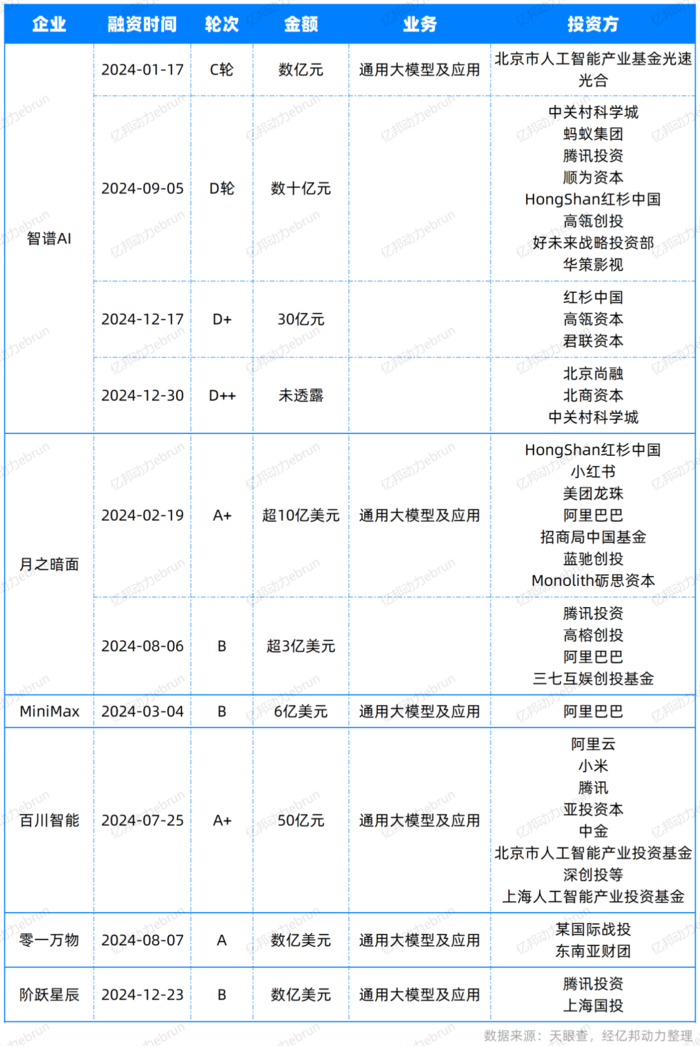
在过去一年,零一万物三位重量级负责人相继离职——8月技术联创、算法副总裁黄文灏转投字节,9月产品负责人曹大鹏离职。零一万物8月完成A轮融资,来自某国际战投东南亚财团,融资额在“六小虎”中并不突出。

 人员动荡下,零一万物的大模型训练依然取得不错成绩。

2024年10月,零一万物曾发布新旗舰模型Yi-Lightening,在国际权威盲测榜单LMSYS上,超越OpenAI的GPT-4o-2024-05-13和Anthropic Claude 3.5 Sonnet,排名世界第六。

这个成绩在当时超出零一万物团队的预想。LMSYS属于盲测榜,通过平台随机比试与匿名众筹,进行线上盲测评选,测评结果受到OpenAI、Anthropic、Google、Meta等企业的认可。

零一万物内部员工表示,团队也没有想到Yi-Lightening取得这样的好成绩,本来只打算将结果简单发布,成绩出来后随即决定开线上发布会。李开复在会上宣布,“零一万物紧随OpenAI、Google之后,与xAI打平,进击全球前三大模型企业。”

这是对零一万物大模型团队的一次证明,比如与稠密模型架构不同的MoE架构、独特的混合注意力机制(Hybrid Attention)、动态Top-P路由、 多阶段训练(Multi-stage Training)等。“我们有更成熟的训练方法,只花了xAI成本的1%或2%,做出来的Pre-training模型跟Grok-2-08-13打平。”李开复解释。

同时零一万物还透露,李开复博士正在接触“一位预训练大咖,非常厉害。”目前看来正是《LoRA:Low-Rank Adaptation of Large Language Models》的二作YeLong Shen,曾任微软Azure AI首席研究员。

尽管由于预训练投入与商业化营收之间鸿沟,让零一万物调整战略缩减团队,这样一支成熟的大模型训练团队依然价值不菲。

《智能涌现》报道称,零一万物预训练团队收到阿里“通义”的offer,Infra团队则收到了阿里智能云团队的offer。

2、AI人才荒凸显,缺口高达数百万

过去一年,阿里云不仅要在模型性能面临国内外挑战,在人才争夺上也面临激烈竞争。

2024年11月,阿里起诉通义前员工周畅违反竞业协议的仲裁案,暴露了大厂之间的人才军备竞赛。周畅2017年加入阿里巴巴,花名“钟煌”,曾参与多款语言模型和多模态模型的研发。2024年7月,周畅以创业为名提出离职,并签署了竞业协议,随之离开的还有十几名团队成员。几个月后该团队均低调加入字节跳动,从事大模型相关工作。

阿里对周畅提出仲裁并要求巨额赔偿,同时寻找新的“AI战略人才”。

急于补充AI人才的不止阿里,近期小米集团董事长雷军亲自挖来95后AI女工程师罗福莉,或供职于小米AI实验室,领导小米大模型团队,并开出了千万元级别的薪酬offer。

事实上,不仅AI顶尖人才的年薪破千万,各行各业都加入这场AI人才争夺战。

脉脉高聘发布的报告显示,大模型算法研究员新发岗位平均月薪高达6.4万元,领跑高薪岗位榜。新金融科技行业为多个岗位开出了全行业最高薪资,如人工智能工程师平均月薪为67460元;智能硬件行业的产品经理和销售经理薪资也高于其他行业。

随着大模型应用的普及,大模型开发人员也水涨船高。算法工程师作为人工智能技术的核心岗位,需求量最大,新发岗位占比接近一半,达到46.45%。自然语言处理岗位占比11.04%,位居第二。

同时国内的AI人才更多集中于应用层。根据中科科界的数据,应用层AI人才占比达到54.3%。这些人才在实际项目中积累了丰富的经验,能够迅速推动AI技术的应用和普及。而基础层人才存量较低,仅占17.1%。

高薪抢人背后,AI人才缺口仍然明显。麦肯锡公司此前发布的报告预计,2030年中国对熟练AI专业人员的需求将增至2022年的六倍,达到600万,而AI人才缺口可能多达400万。

在本次人才竞速中,阿里与零一万物无疑完成一次各取所需的合作。零一万物剥离投入巨大的预训练和Infra团队,轻装上阵,为全力冲刺商业化做好准备。阿里则补充弹药,填补技术空缺,稳定市场信心。

只是不知道,下一个面临着陆的大模型公司,会不会有零一万物的智慧和运气。

文章来源:亿邦动力

广告
微信
朋友圈

FAQ回顾

零一万物与阿里云的合作内容是什么?

双方成立产业大模型联合实验室,零一万物的预训练团队和Infra团队转至阿里云。预训练团队加入阿里通义项目,Infra团队加入阿里智能云团队,旨在填补阿里云技术空缺。

中国AI人才缺口有多大?

麦肯锡报告预计,2030年中国对熟练AI专业人员的需求将达600万,人才缺口可能多达400万。大模型算法研究员平均月薪6.4万元,凸显人才供需失衡。

AI顶尖人才的薪酬待遇如何?

字节为通义千问前负责人周畅提供8位数薪酬包,其团队成员获阿里P10、P9级别待遇。小米为95后AI工程师罗福莉开出千万元级offer,显示顶尖人才争夺激烈。

这么好看,分享一下?

朋友圈 分享

APP内打开

赞 +1
+1
微信好友 朋友圈 新浪微博 QQ空间
关闭
收藏成功
发送
/140 0