广告
加载中

餐饮规范再升级:美团外卖推出食安举措

姜琪 2024-11-01 16:35
姜琪 2024/11/01 16:35

邦小白快读

EN
全文速览

美团外卖近期推出食品安全三大举措,旨在提升餐饮行业规范,为消费者提供更安全的外卖服务。

1. 第一举措是建立违规商家公示机制:平台将对证照资质问题或食安违规的商家进行下线处理,并在APP规则中心定期公开披露违规信息,同时提高资质监测频次,全面排查证照失效或未更新的问题,督促商家整改。

2. 第二举措是推进平台巡检和第三方抽检:组建食品安全专项服务团队,通过实地巡检对不符合标准的商家提出整改意见,并引入第三方机构,针对高销量、高客诉商家定期开展餐品安全抽检,确保食品安全。

3. 第三举措是数字化赋能食安管理:建设食品安全智控系统,采用AI与大数据技术自动研判商家风险并实施分级管理,前置识别和拦截违规商品,精准定位问题并治理整改,同时内置资质临期预警功能,全方位提升商家数字化管理水平。这些措施是“繁盛计划”的延续,未来将持续迭代并联动产业上下游。

美团外卖的食安举措对品牌建设有重要影响,凸显食品安全趋势和用户需求变化。

1. 消费趋势和用户行为观察:用户对食品安全的需求日益增强,此举响应了消费者对可信赖外卖平台的偏好,品牌商可通过提供更安全的产品吸引用户,避免因违规被下线而损害形象。

2. 品牌营销和渠道建设:合规经营商家可能获得平台曝光机会(如公示机制中的正面披露),这有助于品牌渠道拓展;同时,数字化管理启示品牌商采用技术提升产品研发,确保食品安全标准。

3. 品牌定价和竞争策略:在良性竞争环境下(参考“繁盛计划”鼓励良性竞争),食品安全作为核心价值,可支撑品牌溢价,避免价格战,并通过用户反馈(如客诉抽检)优化策略。

美团外卖的食安新政策为卖家提供解读、风险和机会指引。

1. 政策解读和事件应对措施:平台加强食安管理,要求卖家确保资质合规,进行自查自纠;对不合规商家将直接下线并公示,卖家需及时更新证照、避免违规。

2. 风险提示和正面影响:不合规卖家面临下线风险,带来流量和信誉损失;但合规卖家可受益于平台信任,减少客诉,并通过数字化工具(如智控系统)提升经营效率,获得潜在扶持。

3. 机会提示和可学习点:食安举措为卖家提供增长市场,如采用巡检和抽检经验优化自身食品安全流程,学习数字化管理(AI和大数据技术)降低运营风险;同时,“繁盛计划”暗示合作方式,卖家可借机与平台联动,参与产业共建。

美团外卖的食安举措对工厂生产带来需求和数字化启示,创造商业机会。

1. 产品生产和设计需求:食品安全标准升级,要求工厂确保原材料和成品符合平台要求,避免因供应不合格产品被下线;这启示工厂优化生产流程,如通过抽检机制提升质量控制。

2. 商业机会:合规工厂可为平台商家提供安全食品,获得更多合作订单;高销量商家的抽检重点,为工厂打开市场入口,通过可靠供应建立长期伙伴关系。

3. 推进数字化和电商启示:数字化食安管理(如AI风险研判和预警系统)启示工厂采用类似技术,如大数据监控生产线,提升效率;同时,电商平台规范推动工厂加速数字化转型,适应线上销售需求。

美团外卖的食安举措反映行业趋势和技术创新,提供解决方案灵感。

1. 行业发展趋势:平台主导食安数字化升级,推动外卖行业向更规范、智能化发展,服务商可关注此动向,开发相关服务。

2. 新技术应用:AI和大数据技术用于风险研判、分级管理和前置拦截,展示了前沿工具在食安领域的应用;服务商可借鉴这些技术,为客户提供类似风险监测系统。

3. 客户痛点和解决方案:针对商家资质管理和食安风险痛点,智慧食安体系(如智控系统和三方抽检)提供端到端解决方案;服务商可基于此设计定制化服务,帮助客户提升合规水平。

美团作为平台的最新食安做法,聚焦运营管理和风险规避。

1. 平台的最新做法和运营管理:建立违规公示机制、推进平台巡检和第三方抽检,并通过专项团队实地检查;同时,数字化赋能(如智控系统)实施分级管理,提升运营效率。

2. 商业对平台的需求和问题:商家需资质合规支持,平台通过在线监测和排查响应需求;问题如高客诉商家,通过抽检精准定位,确保平台生态健康。

3. 平台招商和风向规避:食安举措吸引合规商家入驻(招商机会),并通过前置风险识别(如AI拦截违规商品)规避食安风波,减少负面影响;未来迭代计划提供持续管理框架。

美团外卖的食安举措揭示产业新动向和政策启示,探讨商业模式创新。

1. 产业新动向和新问题:平台主导食安规范升级,反映线上餐饮监管趋势;新问题包括如何有效管理高销量商家的风险,以及数字化工具在规模化应用中的挑战。

2. 政策法规建议和启示:举措通过公示、抽检和数字化自律,为政府政策提供参考,如推动平台企业承担更多社会责任;启示包括加强产业上下游联动,促进基础建设落地。

3. 商业模式:智慧食安体系(AI和大数据管理)展示创新模式,研究者可分析其效率;同时,“繁盛计划”的生态共建模式,为餐饮行业提供可持续合作框架,值得深入探讨。

返回默认

声明:快读内容全程由AI生成,请注意甄别信息。如您发现问题,请发送邮件至 run@ebrun.com 。

我是 品牌商 卖家 工厂 服务商 平台商 研究者 帮我再读一遍。

Quick Summary

Meituan Waimai has recently rolled out three major food safety initiatives aimed at elevating industry standards and providing consumers with safer food delivery services.

1. First, the platform will establish a mechanism for publicizing non-compliant merchants: Businesses with license irregularities or food safety violations will be delisted, and violation details will be regularly disclosed in the app’s rule center. The platform will also increase license monitoring frequency, conduct comprehensive checks for expired or outdated credentials, and urge merchants to rectify issues.

2. Second, Meituan will enhance on-site inspections and third-party sampling: A dedicated food safety team will conduct physical inspections and provide corrective guidance to substandard merchants. Third-party agencies will perform regular safety checks on high-volume or frequently complained-about merchants to ensure food safety compliance.

3. Third, the platform will digitalize food safety management: A smart control system powered by AI and big data will automatically assess merchant risks and implement tiered management. It will preemptively identify and block non-compliant products, pinpoint issues for targeted remediation, and include alerts for expiring licenses—boosting merchants’ digital operational capabilities. These measures extend the "Prosperity Plan" and will be iterated continuously with industry-wide collaboration.

Meituan’s food safety measures significantly impact brand building, highlighting evolving consumer trends and safety expectations.

1. Consumer trends and user behavior insights: Growing demand for food safety aligns with consumer preference for trustworthy platforms. Brands can attract users by offering safer products and avoid reputational damage from delisting due to violations.

2. Brand marketing and channel expansion: Compliant merchants may gain visibility through positive disclosures in the publicity mechanism, aiding channel growth. The digital approach also inspires brands to adopt technology for product development and safety standardization.

3. Pricing and competitive strategy: In a良性竞争 environment (referencing the "Prosperity Plan’s" emphasis on fair competition), food safety as a core value supports premium pricing, reduces price wars, and allows strategy optimization via user feedback (e.g., complaint-based inspections).

Meituan’s new food safety policies offer sellers guidance on compliance, risks, and opportunities.

1. Policy interpretation and response: Sellers must ensure license compliance and conduct self-reviews. Non-compliant merchants face delisting and public exposure, necessitating timely license updates and violation avoidance.

2. Risks and benefits: Violators risk traffic and reputation loss, while compliant sellers gain platform trust, fewer complaints, and efficiency boosts from digital tools (e.g., the smart control system), potentially receiving support.

3. Growth opportunities: Sellers can optimize food safety processes using inspection and sampling insights, adopt digital management (AI/big data) to lower operational risks, and leverage the "Prosperity Plan" to collaborate with the platform in industry co-development.

Meituan’s food safety initiatives create demand and digital insights for factories, opening business opportunities.

1. Production and design requirements: Elevated safety standards require factories to ensure raw materials and finished products meet platform criteria, avoiding delistings. This encourages optimized production, such as enhancing quality control via sampling mechanisms.

2. Business opportunities: Compliant factories can secure more orders by supplying safe products to platform merchants. Focus on high-volume merchants’ inspections provides market entry points for building long-term partnerships through reliable supply.

3. Digital and e-commerce adoption: Digital food safety management (e.g., AI risk assessment and alerts) inspires factories to use similar tech, like big data for production monitoring, boosting efficiency. Platform norms also accelerate digital转型 to meet online sales needs.

Meituan’s food safety measures reflect industry trends and tech innovation, offering solution inspiration.

1. Industry trends: Platform-led digital upgrades are pushing the delivery sector toward greater standardization and intelligence, presenting service providers with opportunities to develop relevant offerings.

2. Tech applications: AI and big data for risk assessment, tiered management, and preemptive blocking demonstrate cutting-edge tools in food safety; providers can adapt these for client risk monitoring systems.

3. Client pain points and solutions: Smart food safety systems (e.g., control platforms and third-party checks) address merchant compliance and risk challenges end-to-end. Providers can design customized services to help clients improve compliance.

Meituan’s latest food safety practices focus on operational management and risk mitigation for platform operators.

1. Operational approaches: The platform implements violation publicity mechanisms, on-site inspections, third-party sampling, and dedicated team checks. Digital empowerment (e.g., smart control systems) enables tiered management for efficiency gains.

2. Merchant needs and issues: Sellers require compliance support, met through online monitoring and checks. Issues like high-complaint merchants are targeted via sampling to maintain ecosystem health.

3. Merchant attraction and risk avoidance: Safety measures attract compliant sellers (boosting recruitment) and preempt crises through AI-driven blockades of non-compliant goods, reducing negative impact. Future iterations offer a sustainable management framework.

Meituan’s food safety initiatives reveal industry shifts and policy implications, exploring business model innovation.

1. Industry trends and challenges: Platform-driven safety upgrades reflect growing online餐饮监管. New challenges include managing risks of high-volume merchants and scaling digital tools effectively.

2. Policy insights: Public disclosures, sampling, and digital self-regulation offer models for government policy, such as encouraging platform accountability. Lessons include strengthening supply chain coordination and infrastructure development.

3. Business models: The smart safety system (AI/big data management) showcases innovative efficiency. The "Prosperity Plan’s" ecosystem co-creation provides a sustainable collaboration framework worth deeper study for the餐饮 industry.

Disclaimer: The "Quick Summary" content is entirely generated by AI. Please exercise discretion when interpreting the information. For issues or corrections, please email run@ebrun.com .

I am a Brand Seller Factory Service Provider Marketplace Seller Researcher Read it again.

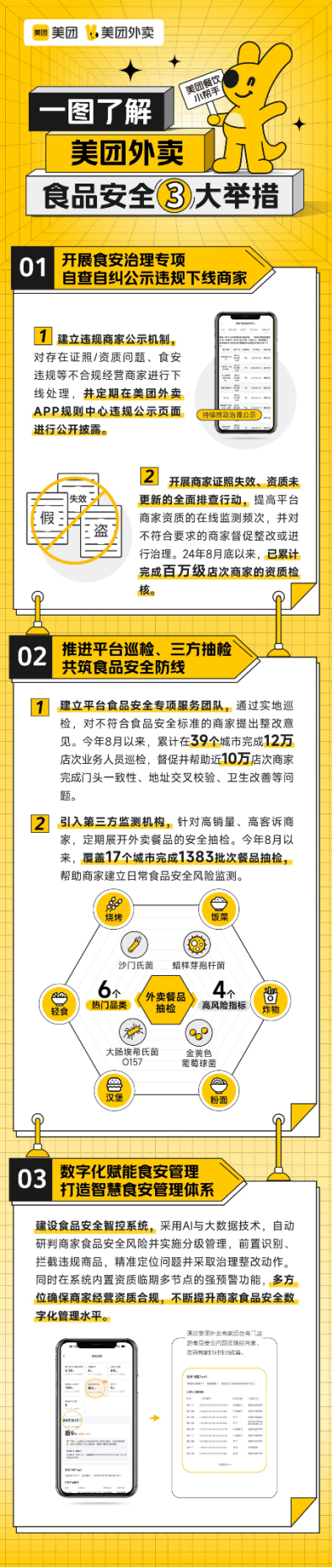
【亿邦原创】亿邦动力获悉,美团外卖近期对外发布食安三大举措,包括建立违规商家公示机制,推进平台巡检、三方抽检,打造智慧食安管理体系等系列措施。这也是继两周前调整流量倾斜政策、鼓励餐饮良性竞争之后,美团外卖根据“繁盛计划”整体规划,进行餐饮经营规范升级的又一动作。

具体而言,食安举措包括以下三个方面:

第一,开展食安治理专项,自查自纠公示违规下线商家。平台将对存在证照/资质问题、食安违规等不合规经营商家进行下线处理,并定期在美团外卖APP规则中心违规公示页面进行公开披露。与此同时,提高平台商家资质的在线监测频次。开展商家证照失效、资质未更新的全面排查行动,对不符合要求的商家督促整改或进行治理。

第二,推进平台巡检、三方抽检。平台建立食品安全专项服务团队,通过实地巡检,对不符合食品安全标准的商家提出整改意见。此外,还引入了第三方监测机构,针对高销量、高客诉商家,定期展开外卖餐品的安全抽检。

第三,数字化赋能食安管理。平台建设食品安全智控系统,采用AI与大数据技术,自动研判商家食品安全风险并实施分级管理,前置识别、拦截违规商品,精准定位问题并采取治理整改动作。同时在系统内置资质临期多节点的强预警功能,可多方位确保商家经营资质合规,提升商家食品安全数字化管理水平。

据了解,“繁盛计划”是美团于2022年面向餐饮商户推出的一项生态共建计划,每年根据商家提出的需求进行升级调整。美团外卖还表示,未来将持续迭代食品安全相关产品和举措,联动产业上下游,推动更多食安基础建设落地。

亿邦持续追踪报道该情报,如想了解更多与本文相关信息,请扫码关注作者微信。

文章来源:亿邦动力

广告
微信
朋友圈

这么好看,分享一下?

朋友圈 分享

APP内打开

+1
+1
微信好友 朋友圈 新浪微博 QQ空间
关闭
收藏成功
发送
/140 0