广告
加载中

Paytm mall总裁:数字推动新兴市场电商创新

亿邦动力网 2018-06-27 16:54
亿邦动力网 2018/06/27 16:54

邦小白快读

EN
全文速览

这篇文章是第三届全球跨境电商峰会上Paytm mall总裁的演讲实录,核心分享了数字丝绸之路推动新兴市场电商创新的相关内容,主要干货如下:

1. 本次演讲从库存、覆盖范围、创新三个维度分析新兴市场电商发展,同时提出投资也是重要的考量因素,要把资金投给合适的参与者才能推动行业更快发展。

2. 分享了印度电商市场的核心特征:印度有4亿手机用户,经济增速快,发展路径和中国不同,中国是先发展商业再完善支付,印度是先推进支付数字化再拓展电商业务,目前印度已有700万商家使用二维码支付,市场份额快速提升。

3. 当前印度市场线上线下消费大致五五开,线下仍是主要消费来源,中国商家品牌进入印度市场有很大的增长机会。

本文披露了印度新兴电商市场的消费趋势和商业机会,给想要出海新兴市场的品牌商提供了清晰的方向参考,核心干货如下:

1. 市场消费趋势:印度消费市场规模大,拥有4亿手机用户,经济增速领先全球,消费者对中国产品的关注度不断提升,存在明显的长尾需求机会,目前线下仍是印度最大的消费来源,线上线下份额大致五五开,品牌需要搭建全渠道连接体系。

2. 用户特征:印度用户非常关注交易便利性,支付习惯和中国差异较大,目前二维码支付渗透率快速提升,品牌出海需要适配多种本地支付方式,满足不同用户的付款需求。

3. 品牌发展路径:中国品牌独自进入印度市场打造知名度难度大,可依托本地平台提供的支付、销售、分销、售后一体化解决方案,最快6个月就能打出品牌知名度,同时要打造贴合本地用户的品牌故事,提供实实在在的产品价值才能获得用户认可。

本文针对想要出海新兴市场的卖家,分析了印度市场的增长机会和进入路径,给出了明确的机会提示和方向指导,核心干货如下:

1. 整体市场机会:当前全球共有30亿网民,仅20%在中国,海外新兴市场拥有更广阔的增长空间,其中印度人口基数大,手机用户达4亿,经济增速快,数字化支付快速普及,是非常有潜力的跨境电商增长市场。

2. 品类需求机会:印度消费者对海外优质产品需求旺盛,尤其青睐中国产品,其中电子产品是印度电商市场的核心大品类,存在大量的需求缺口,给中国卖家带来了明确的增量机会。

3. 市场进入路径:中国卖家独自进入印度市场难度大,搭建品牌知名度、客户服务体系周期长成本高,可以选择和Paytm mall这类本地平台合作,依托本地平台的全链路基础设施解决方案,仅需6个月即可打出产品知名度,大幅缩短市场启动周期。

本文为想要布局出海新兴市场的工厂,提供了明确的市场需求信息和数字化发展启示,核心干货如下:

1. 出海商业机会:印度作为全球成长最快的新兴电商大市场,消费者对中国产品的需求持续提升,其中电子产品的市场需求尤其旺盛,给国内消费电子类工厂带来了很大的出海增量机会,是工厂开辟海外营收新增长点的优质方向。

2. 产品生产设计要求:印度市场消费者非常看重产品性价比,要求产品能提供实实在在的使用价值,工厂出海需要调整产品定位,贴合印度本地的消费能力和使用习惯,开发适配本地需求的产品。

3. 数字化发展启示:印度电商走先支付数字化再拓展电商交易的路径,低成本的二维码支付比传统POS机更适合本地商家数字化转型,工厂出海不需要从零搭建数字化体系,可以借助本地平台的数字化能力快速打开市场。

本文分析了新兴市场电商行业的发展趋势,梳理了行业参与者的核心痛点,给出了解决方案的发展方向,核心干货如下:

1. 行业发展趋势:数字技术推动新兴市场电商实现弯道超车,新兴市场可以跳过传统发展阶段,直接借鉴成熟市场的发展经验快速落地,发展路径和成熟市场有明显差异,印度就呈现先做支付数字化再拓展电商交易的顺序,线上线下融合是未来主流方向。

2. 客户核心痛点:想要出海印度的中国品牌和商家,普遍面临品牌打造难、支付适配难、本地售后体系搭建难等问题,独自开拓市场周期长达一两年,时间成本和资金成本都很高。

3. 解决方案方向:服务商可以瞄准商家需求,打造覆盖支付、品牌推广、销售、分销、售后全链路的本地一体化解决方案,帮助出海商家快速打开市场,缩短品牌启动周期,满足商家快速布局新兴市场的核心需求。

本文分享了Paytm mall在印度市场的发展经验,给布局新兴市场的平台商提供了运营和发展参考,核心干货如下:

1. 商家对平台的核心需求:出海到新兴市场的商家,不只是需要销售渠道,更需要平台提供支付适配、品牌推广、客户服务、售后等全链路的基础设施服务,中小商家独自搭建本地体系的难度和成本都很高,对一体化服务的需求非常强烈。

2. 平台运营方向:新兴市场线下流量仍然占据半壁江山,平台需要打通线上线下的连接,打造能随时随地连接买卖双方的服务体系,同时要适配本地用户的支付习惯,大力推广低成本的二维码支付,加快本地商家数字化进程,形成用户增长的雪球效应。

3. 平台招商方向:印度消费者对中国产品尤其是电子产品需求旺盛,平台可以针对性引入中国消费电子商家,推出配套扶持服务帮助商家快速打造品牌知名度,既丰富平台品类供给,也能吸引更多消费者,实现平台的良性增长。

本文分享了新兴市场电子商务发展的新特征和新路径,为研究跨境电商和新兴市场产业发展提供了一手案例资料,核心干货如下:

1. 产业发展新动向:数字技术推动新兴市场电商实现创新跨越式发展,新兴市场可以跳过传统发展阶段,借鉴成熟市场经验实现弯道超车,不同新兴市场的发展路径存在差异,中国电商是先商业后支付,印度受本地用户习惯影响,走的是先支付数字化再发展商业零售的路径。

2. 商业模式创新特征:新兴市场电商呈现出鲜明的本地化创新特征,印度用低成本二维码支付替代高成本POS机,快速实现了商家数字化,形成了用户增长的雪球效应,当前发展线上线下融合,不强调单一渠道占比,更注重打造全场景连接买卖双方的体系。

3. 跨境电商新方向:数字丝绸之路推动了跨境商品和资本的流动,新兴市场为中国跨境电商提供了广阔的增长空间,全链路一体化本地服务已经成为新兴市场跨境平台的主流创新方向。

返回默认

声明:快读内容全程由AI生成,请注意甄别信息。如您发现问题,请发送邮件至 run@ebrun.com 。

我是 品牌商 卖家 工厂 服务商 平台商 研究者 帮我再读一遍。

Quick Summary

This article is a transcript of a speech delivered by the President of Paytm Mall at the 3rd Global Cross-Border E-Commerce Summit, focusing on how the Digital Silk Road drives e-commerce innovation in emerging markets. Key takeaways are as follows:

1. The speech analyzes e-commerce development in emerging markets from three dimensions: inventory, coverage and innovation, and highlights that investment is also a critical consideration. Only by directing capital to the right market participants can the industry grow faster.

2. It shares core characteristics of India’s e-commerce market: India has 400 million mobile internet users and rapid economic growth, and its development trajectory differs from China’s. China built out its commerce ecosystem first before完善ing digital payment infrastructure, while India pursued digital payment penetration first before scaling e-commerce. Currently, 7 million merchants in India accept QR code payments, and the market share of digital payments is growing rapidly.

3. Online and offline consumption currently split roughly 50/50 in India, with offline still accounting for half of total consumption. This leaves significant room for growth for Chinese brands and merchants entering the Indian market.

This article outlines consumer trends and business opportunities in India’s fast-growing emerging e-commerce market, providing clear directional guidance for brands targeting cross-border expansion into emerging markets. Key takeaways are as follows:

1. Market consumer trends: India has a large consumer market with 400 million mobile users and one of the fastest economic growth rates globally. Consumer interest in Chinese products is rising steadily, creating substantial opportunities in long-tail demand. Offline commerce still accounts for half of total consumption, so brands need to build an omnichannel engagement system to connect with consumers.

2. User characteristics: Indian consumers prioritize transaction convenience, and their payment habits differ sharply from Chinese consumers. QR code payment penetration is growing rapidly in India, so entering brands need to adapt by supporting multiple local payment methods to meet the payment needs of different users.

3. Brand expansion strategy: It is very difficult for Chinese brands to build brand recognition independently when entering India, as it requires significant time and resources. By leveraging the integrated one-stop solutions (covering payment, sales, distribution and after-sales) offered by local platforms, brands can build recognizable awareness in as little as 6 months. Brands also need to develop localized brand stories that resonate with local consumers and deliver tangible product value to win user trust.

This article analyzes growth opportunities and entry paths for cross-border sellers targeting emerging markets, providing clear opportunity alerts and directional guidance. Key takeaways are as follows:

1. Overall market opportunity: There are 3 billion internet users globally, and only 20% of them are based in China. Overseas emerging markets offer far broader room for growth. Among these markets, India stands out with its large population base, 400 million mobile users, rapid economic growth and fast-adopting digital payment infrastructure, making it a high-potential growth market for cross-border e-commerce.

2. Category demand opportunities: Indian consumers have strong demand for high-quality overseas products, and especially favor Chinese goods. Electronics are the core large category in India’s e-commerce market, with massive unmet demand that creates clear incremental opportunities for Chinese sellers.

3. Market entry strategy: Entering the Indian market independently brings high barriers for Chinese sellers, as building brand recognition and customer service systems requires long lead times and high costs. By partnering with local platforms like Paytm Mall that offer full-stack infrastructure solutions, sellers can build product recognition in just 6 months, drastically shortening their go-to-market timeline.

This article provides clear market demand insights and digital transformation inspiration for factories looking to expand into emerging markets. Key takeaways are as follows:

1. Cross-border expansion opportunities: As the world’s fastest-growing large emerging e-commerce market, India sees continuously rising consumer demand for Chinese products, especially for consumer electronics. This creates substantial incremental cross-border opportunities for Chinese consumer electronics factories, making India an attractive market to build a new revenue growth driver.

2. Product development and design requirements: Indian consumers prioritize cost-performance and tangible practical value from products. For factories expanding to India, this means adjusting product positioning to align with local purchasing power and usage habits, and developing products tailored to local demand.

3. Digital development inspiration: India’s e-commerce sector followed a trajectory of building digital payment infrastructure first before scaling e-commerce transactions. Low-cost QR code payments are far better suited for local merchants’ digital transformation than traditional POS machines. Factories expanding to India do not need to build their own digital systems from scratch; they can leverage the digital capabilities of local platforms to enter the market quickly.

This article analyzes e-commerce development trends in emerging markets, sorts out core pain points for industry players, and outlines directions for solution development. Key takeaways are as follows:

1. Industry development trends: Digital technology allows e-commerce in emerging markets to achieve leapfrog growth. Emerging markets can skip traditional development stages and directly implement lessons learned from mature markets, leading to development trajectories that differ sharply from those in mature markets. For example, India prioritized digital payment penetration before scaling e-commerce transactions, and online-offline integration has become the mainstream future development direction.

2. Core customer pain points: Chinese brands and merchants expanding to India普遍 face major barriers including difficulty building brand recognition, adapting to local payment systems, and building local after-sales networks. Independent market entry typically takes 1-2 years, with high time and capital costs.

3. Solution direction: Service providers can target merchant needs to build integrated end-to-end local solutions covering payment, brand marketing, sales, distribution and after-sales. These solutions help entering merchants open up the market quickly, shorten brand launch timelines, and meet the core demand of laying out in emerging markets at speed.

This article shares Paytm Mall’s operational experience in the Indian market, providing operational and development references for platforms expanding into emerging markets. Key takeaways are as follows:

1. Core merchant demand from platforms: Merchants expanding into emerging markets need more than just sales channels; they require full-stack infrastructure services from platforms covering payment adaptation, brand promotion, customer service and after-sales. Small and medium-sized merchants face extremely high costs and barriers to building local systems independently, leading to strong demand for integrated one-stop services.

2. Platform operational priorities: Offline traffic still accounts for half of consumer activity in emerging markets, so platforms need to unify online and offline connections to build a service ecosystem that connects buyers and sellers anytime anywhere. Platforms also need to adapt to local user payment habits by prioritizing low-cost QR code payments to speed up digital transformation for local merchants, creating a snowball effect of user growth.

3. Platform merchant recruitment strategy: Indian consumers have strong demand for Chinese products, especially electronics. Platforms can strategically recruit Chinese consumer electronics sellers and offer supporting services to help them build brand recognition quickly. This enriches the platform’s product assortment, attracts more consumers, and drives sustainable, healthy growth for the platform.

This article shares new characteristics and development trajectories of e-commerce in emerging markets, providing first-hand case material for research on cross-border e-commerce and industrial development in emerging economies. Key takeaways are as follows:

1. New industrial development trends: Digital technology enables innovative leapfrog growth of e-commerce in emerging markets. Emerging markets can skip traditional development stages and overtake mature markets by leveraging existing lessons from more developed markets. Development trajectories also vary across different emerging markets: China built out its commercial ecosystem first before完善ing payment infrastructure, while India, shaped by local user habits, prioritized digital payment penetration before developing commercial retail.

2. Characteristics of localized business model innovation: E-commerce in emerging markets features distinct localized innovation. In India, low-cost QR code payments replaced high-cost POS machines to rapidly digitize local merchants, creating a snowball effect of user growth. The current development focus is on online-offline integration: instead of prioritizing market share for a single channel, the emphasis is on building an omnichannel system that connects buyers and sellers across all scenarios.

3. New directions for cross-border e-commerce: The Digital Silk Road has accelerated the flow of cross-border goods and capital, and emerging markets offer vast growth space for Chinese cross-border e-commerce. Integrated end-to-end localized services have become the mainstream innovation direction for cross-border platforms operating in emerging markets.

Disclaimer: The "Quick Summary" content is entirely generated by AI. Please exercise discretion when interpreting the information. For issues or corrections, please email run@ebrun.com .

I am a Brand Seller Factory Service Provider Marketplace Seller Researcher Read it again.

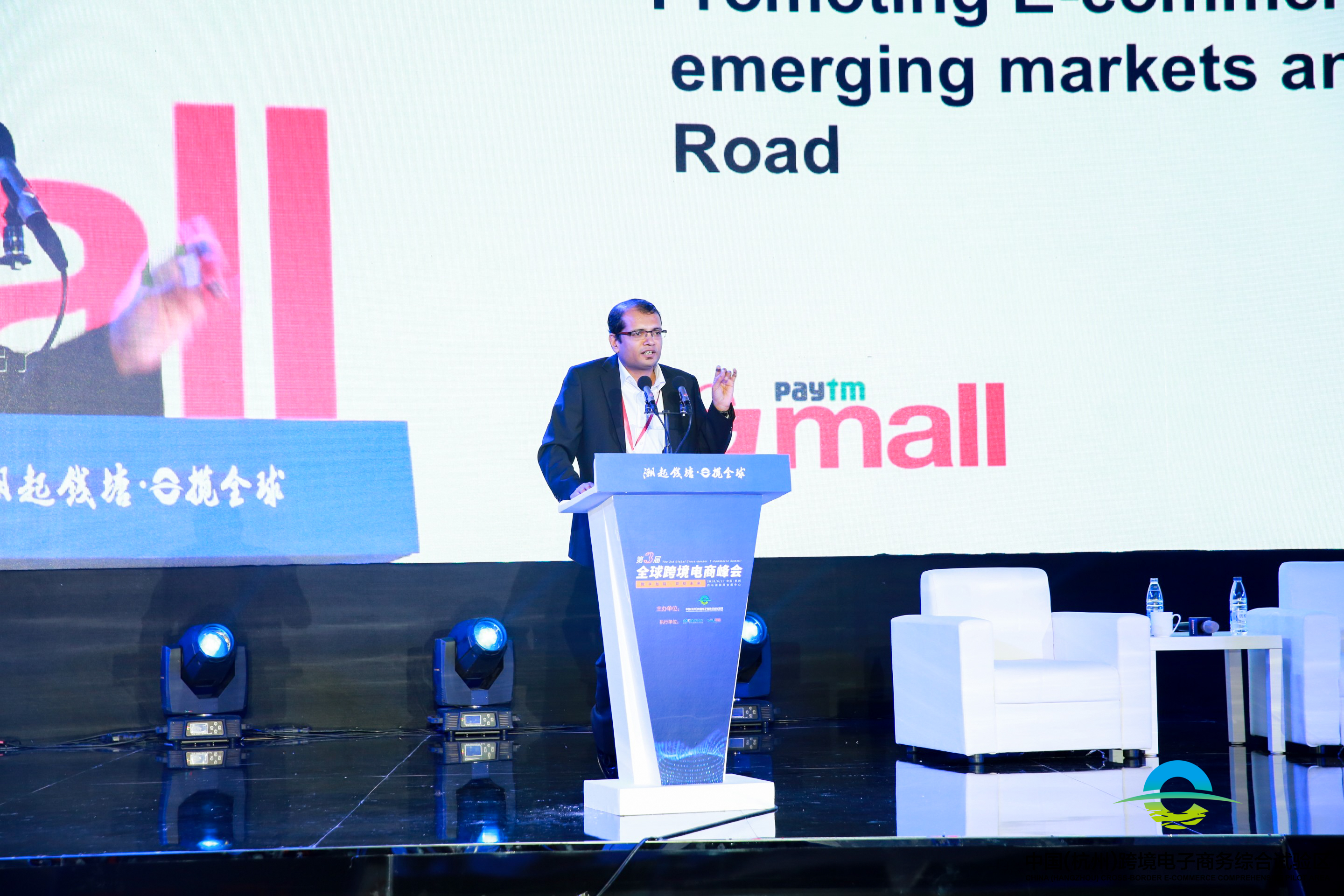
【亿邦原创】6月27日消息,在“潮起钱塘·E揽全球”第三届全球跨境电商峰会上,Paytm mall总裁Bhushan Pati发表了题为《数字丝绸之路推动新兴市场电子商务创新》的演讲。他从库存、覆盖范围、创新三个方面分析了新兴市场电子商务。

Bhushan Pati还表示,中国正在将数字技术和人工智能结合起来,不管是人工智能还是数字化的技术,只要能够将人们连接起来,不管是线上线下都是大家所乐于见到的。之后Paytm可能会将更多的消费者数据为大家连接起来,在印度已经有这样的现象了,希望大家更好的连接新兴市场、了解他们的创新。

据悉,大会以“数字丝路 联结未来”为主题,由中国(杭州)跨境电子商务综合试验区主办,亿邦动力、思路网执行。

Paytm mall总裁Bhushan Pati

温馨提示:本文为速记初审稿,保证现场嘉宾原意,未经删节,或存纰漏,敬请谅解。

以下是Bhushan Patil演讲实录:(根据同声传译录入)

两年前我在印度遇到过佟常委,我们进行了合作,两个公司的合作离不开综试区的支持,感谢你们成为其中的一个部分。

我想讲一个故事,2010年的时候,我来到中国,那个时候差不多40%-50%的网络用户,于是我来到中国,看看当时的网络。但是今天中国在不断的高速发展,世界也在高速发展,差不多有30亿网民在全世界,20%网民在中国,如果想做跨境电商更多还是在国外,不仅仅是在中国,因为国外还有更广大的力量,对于大家来说要走出去,看一下网络用户会发现这一点。

接下来讲一讲跨境电商的创意和创新,时代在变化,我们在走向全球,比如说这样一个创意,其实就是一个催化剂,能够推动我们的跨境电商的发展,今天的活动就是这样一个催化剂。

今天主要讲三个角度:第一,库存。第二,覆盖范围。第三,创新。今天不仅仅是货物和资本的流动,除了流动之外,我们如何创新性把商品和服务以更高速的方式让服务走出大门,这个过程当中创新非常重要,因为人们可能会国际性采购,这已经变成一个非常司空见惯的事情,所以创新就应该在另外一个国家,我会触及到这些创新方面,同时给大家一些理解讲创新。最后讲一下投资,这些也是我们需要考量的因素,比如说库存、创新,我们应该如何去创新,来打造传统的电子商务,如何进行投资,把钱放在合适的人手中,加上投资,这样可以更快的发展。

大多数电商公司、大多数机构都是非常关注印度的,印度人口非常大,所以在印度这方面是非常活跃的,印度手机有4亿,市场非常大的,这样印度公司很有可能成为下一代的独角兽公司。

我们可以看到经济数据非常稳定,印度经济增长速度比很多国家都要快,对于很多新兴市场来说,如果市场比较小的话,我们可以非常野心勃勃。当前现象就是,我们看到当前的市场,大多数经济体都是以数字为基础的,所以印度也是如此,如果我们可以看到印度就会发现,有4.5亿张信用卡,但是有很多人他们在印度不太使用信用卡,他们在购物的时候可能会用信用卡进行交易,但是更多的情况下, 他们会把钱取出来,然后在市场上使用,对他们来说很多人可能会恐惧,但是印度很多数字化是让银行更加数字化,比如说可以帮助他们数字化交易。

首先关注一下中国的商业,然后才是支付,但是印度是相反的,先关注支付再关注商业,今天我们有很多机会,因为在印度消费者非常关注交易的便利性。消费者的数字是非常庞大的,所以可以看到在印度有很多的创新,包括支付方面的创新,包括电商方面的创新,在中国有阿里巴巴、有支付宝,但是在印度首先关注的是支付,然后再关注创新。

可以看到,从新兴市场的角度来看,很多的人会先关注消费者,比如说能否解决消费者的问题,能否帮助他们解决支付的问题,能否给他们更便捷的提供产品。在中国消费者越来越多,供应商会想如何满足消费者需求。一直以来我都感受到中国有这样的现象,但是新兴市场商业并不是自己进行数字化的,我们也要帮助解决数字化过程当中的问题,对于今天大多数的印度用户来说,大多数支付手段仍然是POS机,他们会刷卡进行支付,但是我们希望用二维码的方式进行支付,这样就不需要POS机,就可以非常好的把商业进行数字化,而且成本非常低。

现在有700万商家开始使用二维码,仍然也会有一些商家在数字化,这个和中国状态非常像,之前我们使用的是POS机,印度也有支付方面的创新,再把创新进行扩大。现在我们延用二维码的方式,客户可以直接扫二维码就可以了,二维码支付市场份额正在增大。

(PPT图示)这张图片和中国状况非常相似,在印度也有这样一个现象,从早上起床到晚上会有各种各样的消费,比如说坐车、滴滴打车,所有的消费都是有一个类似的体系,但是现在很多的消费者、也有很多商家,要把他们连接起来。

比如说优步在印度,首先要有Paytm才能够成为优步的乘客,所以我不仅仅要关注到客户或者是供应商,如果能够关注到支付可以更快的把客户和商家连接起来。在印度有一个完整的体系,这对于新兴市场来说是一个有趣的现象,像是一个雪球效应,当有一定好的想法的时候,这个好的想法可以累计越来越多的客户,印度二维码支付也是呈现这样一种态势。

在销售方面,我们也希望帮助中国商家在印度进行出售,仅仅把消费者和商家联系起来还不够,因为有一些消费者使用的是美元,不同的平台支付手段可能不一样,一些人是使用信用卡,在平台上要提供各种支付方式,包括销售、分销、售后服务等等,他们都需要有一个类似的平台。

尤其是电子产品,这些都是比较大的业务,手机上的业务现在在中国有一些新的公司想要去印度进行经营就不太容易,想要创建一个平台,比如说要有自己的客户服务,要有自己的品牌知名度,这些在印度都不是很容易的,所以我们想帮助他们,我们希望在6个月可以把产品打出产品的知名度,而不是一两年以后才有知名度。所以,我的解决方案就是销售不仅仅是唯一需要关注的,我们还要关注解决方案,要有一个基于市场的整体的解决方案,要有相关的基础设施。

当然,我们还有很多不同的机会,可以让人们销售自己的产品,比如说可以有超市的模式,对于新兴市场来说,他们消费应该关注于当地和本地化,在中国我们都知道,我们可能在淘宝上买很多东西,或者从天猫上买很多东西,还有很多来自于国外的产品,印度也有类似的现象。很多人会买欧洲的产品或者澳洲的产品,这也是一个我的现象。还有长尾效应,现在印度的消费者越来越多关注到中国的产品,这是很好的机会,可以让我们进入到印度市场。

我们要有基于品牌的模式,要有品牌,对于到消费者要有品牌的故事。要有价值,为消费者提供实实在在的价值。这样才能够让客户更好的买我们的产品,这样能够更好的创新。现在我们有电商和支付平台、新零售平台,发展是有顺序的,比如说首先是电商,然后才是支付体系,现在是新零售,因为我们有各种新的技术来支持。对于大多数发展中国家来说会有顺序的发展,会先有什么东西,然后才有什么东西,现在有很多线下的品牌、线下商家,他们希望网络上的消费者能够去他们实体店买东西,这也是比较新的现象。所以,我们会有新零售的概念,我们也正在进行各种各样的实验。

(PPT图示)这张图片主要告诉大家,如果可以看到新兴国家的市场,他们有很多的创新,如果想要去向全世界出售我们的产品,线下市场也非常重要,线下仍然是最大的消费者来源,他们有很多的消费者、客户都是聚集在线下。所以有的时候是线上线下五五分的状态。一般来说,现在买方及卖方,不管是线上线下进行联系,这些不重要,重要的是创造一个体系,让大家随时随地相互连接,能够相互沟通。

中国正在将数字技术和人工智能结合起来,不管是人工智能还是数字化的技术,只要能够将人们连接起来,不管是线上线下都是大家所乐于见到的。之后我们可能会将更多的消费者数据为大家连接起来,在印度已经有这样的现象了,希望大家更好的连接新兴市场、了解他们的创新,他们会学习西方市场的概念,以更快的速度落实这些概念。

以上就是我和大家分享的内容,当然我和大家举了很多例子,也就是发生了什么,其他国家经历了什么,再次感谢大家邀请我来到这里,让我有这个机会演讲,恭喜综试区的企业家们,希望大家有更多的进步和成就。

文章来源:亿邦动力网

广告
微信
朋友圈

FAQ回顾

新兴市场电商创新可以从哪些方向推进?

可以从库存、覆盖范围、创新三个核心维度切入,配套打造覆盖销售、分销、售后服务的完整市场解决方案,完善相关基础设施,同时结合本地化消费特点,布局线上线下融合模式,适配新兴市场的用户需求。

印度和中国的电商、支付行业发展顺序有什么区别?

中国是先发展商业再完善支付体系,随后推进新零售布局;印度则是先普及支付基础设施,再发展电商相关业务,当前印度已有700万商家使用二维码支付,二维码支付的市场份额正在持续增长。

中国商家进入印度电商市场有哪些便利条件?

印度当前手机用户规模达4亿,电商市场增长潜力大,当地消费者对中国产品的关注度持续提升,Paytm mall可提供一站式服务,最快6个月就能帮助商家打出产品知名度,大幅降低出海运营门槛。

这么好看,分享一下?

朋友圈 分享

APP内打开

赞 +1
+1
微信好友 朋友圈 新浪微博 QQ空间
关闭
收藏成功
发送
/140 0