广告
加载中

佟桂莉:杭州综试区的实践和思考

亿邦动力网 2018-06-27 14:58
亿邦动力网 2018/06/27 14:58

邦小白快读

EN
全文速览

本文是杭州市委常委、杭州综试区建设领导小组办公室主任佟桂莉在第三届全球跨境电商峰会上的演讲,分享了杭州综试区发展跨境电商的认知、实践和未来展望,核心干货如下:

1.认知层面:跨境电商已经发展成为依托平台、以大数据为支撑的数字贸易新型贸易方式,缩短了贸易链,打破大企业垄断,为中小企业提供了变道超车的发展机会,推动数字丝绸之路建设,能惠及沿线各国的市场主体。

2.实践层面:杭州综试区经过三年探索,完成了从0到1的跨越,形成了六体系两平台的制度创新框架,培育了大批跨境电商大卖家、独角兽企业,构建了涵盖支付、物流、人才的完善产业生态。

3.展望层面:杭州接下来将加快打造综试区升级版,建设数字丝绸之路重要枢纽,重点完善四大核心枢纽功能,培育跨境电商新业态新模式,打造协同创新发展载体。

对布局跨境业务的品牌商而言,本文透露了行业发展趋势、渠道机会和政策支持,核心干货如下:

1.市场与消费趋势:数字贸易重构传统贸易链,打破了传统外贸的价格、渠道、品牌垄断,一带一路沿线国家移动互联网快速普及,数字贸易带来了普惠市场红利,降低了中小企业品牌融入全球价值链的门槛,为新品牌出海创造了良好条件。

2.可借鉴的成功模式:当前行业已经诞生平台+工厂、跨境电商+实体零售、社交电商下沉分销等多种创新商业模式,杭州纺织服装产业依托本土龙头跨境企业带动,已经形成规模超百亿元的跨境产业集群,走出了品牌化发展的成功路径。

3.未来发展支持:杭州综试区未来将实施十大专项行动,重点开展跨境电商品牌培育,支持本土品牌面向一带一路出海,同时会完善物流、金融、人才等全链条配套,助力品牌成长。

对跨境电商卖家来说,本文透露了杭州综试区的政策红利、市场机会和可借鉴的发展路径,核心干货如下:

1.政策利好与配套支持:杭州综试区推出多项便利化政策,实现保税与非保税货物同仓调拨,降低运营成本;打造数字口岸实现一键申报通关,还建立了企业信用体系,对A级优质企业给予通关退税便利、无抵押授信、物流账期延期等支持,还有EBOX创新平台提供在线精准服务。

2.市场增长机会:数字贸易背景下,一带一路沿线市场有广阔的增量空间,多种新兴商业模式打开了新渠道:既有天猫出海、全球工厂店等平台合作模式,也有社交电商下沉分销到三四线及农村市场的路径,还有跨境+实体零售的即时配送新场景。

3.发展环境利好:杭州全域布局13个错位发展的线下产业园,集聚了支付、物流、人才等全要素,未来还会开展品牌培育专项行动,支持卖家做大做强。

对传统制造工厂而言,本文指明了数字化转型方向,透露了新的商业机会,核心干货如下:

1.生产与设计需求变化:数字贸易驱动市场需求向个性化、柔性化转变,传统工厂可以通过上线触网获得数据赋能,突破传统外贸的渠道垄断、价格垄断,摆脱利润被多级环节稀释的困境,实现自主转型。

2.现有商业机会:杭州已经形成龙头跨境企业带动制造工厂转型的成熟路径,浙江执御等龙头企业带动大量本土服装工厂转型,杭州纺织服装跨境电商规模已经超过百亿元;同时头部平台推出全球工厂店等新模式,直接对接工厂和海外市场,降低工厂出海门槛。

3.转型的启示与支持:杭州综试区未来将实施新制造提升专项行动,培育数字化协同生产的新标杆,支持工厂开展数字化改造,还鼓励工厂跟随跨境企业出海,输出产品打造品牌,为传统工厂转型提供了良好的政策环境。

对跨境电商服务商而言,本文梳理了行业发展趋势,点明了市场需求和发展机会,核心干货如下:

1.行业发展趋势:跨境电商已经发展为新型数字贸易,围绕信息链、资金链、货物流三流合一,催生了全新的跨境服务生态,随着数字丝绸之路建设,面向一带一路沿线国家输出资本、技术、服务有广阔的增长空间。

2.客户核心痛点:传统贸易存在环节多、成本高的问题,中小企业面临通关不便利、融资难、物流成本高的痛点,传统制造工厂转型缺乏数字化能力和渠道资源,这些都为服务商创造了市场需求。

3.行业发展机会:杭州正在打造数字丝绸之路重要枢纽,需要数据服务、智能物流、数字金融、人才培训、知识产权服务等各类服务商参与,目前杭州已经形成了完善的产业集聚环境,未来会鼓励服务商创新产品服务,支持服务商面向一带一路沿线输出服务,拓展市场空间。

对跨境电商平台商而言,本文介绍了杭州综试区的发展需求、支持政策和未来方向,核心干货如下:

1.杭州综试区现有支撑体系:杭州已经搭建了线上综合服务平台,打造了全球首个跨境电商数字口岸,实现了一键申报、全国通关;汇聚多部门数据完成了超1.4万家企业的信用评级,能为平台运营提供信用体系支撑,线下布局13个产业园实现全域覆盖,错位发展集聚产业要素。

2.招商与发展需求:杭州要打造数字丝绸之路的四大枢纽,欢迎各类跨境交易平台、支付平台、物流平台落地杭州,支持平台立足杭州服务全球,创新商业模式,完善上下游产业链。

3.运营管理与风向指引:杭州支持平台创新平台+工厂、跨境+实体零售、社交跨境电商等新型模式,鼓励平台推动线上线下融合、境内境外联动,推动杭州模式海外复制,同时引导平台开展品牌培育,符合政策方向的平台能获得更多政策支持。

对跨境电商产业研究者而言,本文提供了杭州综试区的一手实践资料,涵盖产业新动向、制度创新和新模式,核心干货如下:

1.产业发展新动向:本文提出跨境电商已经从初期的经济现象发展为商业模式,最终升级为数字贸易这种新型贸易方式,数字贸易重构了全球贸易链、价值链、服务链,让贸易更加普惠透明,正在推动数字丝绸之路建设,这是当前跨境电商产业的核心发展方向。

2.制度创新成果:杭州综试区作为全国首个跨境电商综试区,经过三年探索首创了六体系两平台的制度框架,在通关监管、信用管理、便利化服务等方面完成了从0到1的制度创新,形成了可复制推广的杭州模式,为产业制度研究提供了完整样本。

3.商业模式研究素材:本文梳理了当前行业已经出现的平台+工厂、跨境+实体零售、社交跨境电商等多种新型商业模式,同时介绍了杭州未来打造综试区升级版、推进杭州模式海外复制的规划,为研究跨境电商产业发展提供了丰富的新内容。

返回默认

声明:快读内容全程由AI生成,请注意甄别信息。如您发现问题,请发送邮件至 run@ebrun.com 。

我是 品牌商 卖家 工厂 服务商 平台商 研究者 帮我再读一遍。

Quick Summary

This article is a keynote speech delivered by Tong Guili, Member of the Standing Committee of the CPC Hangzhou Municipal Committee and Director of the Office of the Leading Group for the Construction of Hangzhou Cross-Border E-Commerce Comprehensive Pilot Zone, at the 3rd Global Cross-Border E-Commerce Summit. Tong shares Hangzhou Pilot Zone’s insights, practices and future outlook for cross-border e-commerce development. Key takeaways are as follows:

1. **Core Insights**: Cross-border e-commerce has evolved into a new form of digital trade, powered by platforms and big data. It shortens traditional trade chains, breaks monopolies held by large corporations, creates opportunities for small and medium-sized enterprises (SMEs) to overtake via a lane change, and drives the development of the Digital Silk Road, benefiting market players across all participating countries.

2. **Practical Progress**: After three years of exploration, the Hangzhou Pilot Zone achieved a breakthrough from zero to one, establishing an institutional innovation framework of "six systems and two platforms". It has nurtured a large number of top cross-border sellers and unicorn startups, and built a complete industrial ecosystem covering payment, logistics and talent development.

3. **Future Outlook**: Hangzhou will accelerate the construction of an upgraded version of the pilot zone and build a key hub for the Digital Silk Road. It will focus on improving four core hub functions, nurture new business forms and models of cross-border e-commerce, and develop collaborative innovation carriers.

For brands laying out cross-border business, this article reveals industry trends, channel opportunities and policy support. Key takeaways are as follows:

1. **Market and Consumption Trends**: Digital trade is restructuring traditional trade chains and breaking the price, channel and brand monopolies of traditional foreign trade. The rapid popularization of mobile internet along the Belt and Road (BRI) has brought inclusive market dividends from digital trade, lowering the threshold for SME brands to integrate into the global value chain and creating favorable conditions for new brands to go global.

2. **Proven Successful Models**: The industry has already spawned multiple innovative business models, including platform plus manufacturing, cross-border e-commerce plus physical retail, and social e-commerce downline distribution. Driven by local leading cross-border enterprises, Hangzhou’s textile and apparel industry has formed a cross-border industrial cluster worth over 10 billion yuan, and successfully carved out a branded development path.

3. **Future Development Support**: The Hangzhou Pilot Zone will launch ten special initiatives in the coming period, with a key focus on cross-border e-commerce brand cultivation. It will support local Chinese brands to enter BRI markets, and improve full-chain supporting infrastructure including logistics, finance and talent development to help brands grow.

For cross-border e-commerce sellers, this article reveals policy dividends, market opportunities and proven development paths from the Hangzhou Pilot Zone. Key takeaways are as follows:

1. **Policy Benefits and Supporting Infrastructure**: The Hangzhou Pilot Zone has rolled out multiple facilitation policies, including allowing bonded and non-bonded goods to be stored and allocated in the same warehouse to cut operating costs. It has built a digital port enabling one-click customs declaration, established a corporate credit system that provides便利 for customs clearance and tax rebates, unsecured credit lines and extended logistics payment terms for Class-A high-quality enterprises, and runs the innovative EBOX platform to deliver targeted online services.

2. **Growing Market Opportunities**: Against the backdrop of digital trade, BRI markets offer enormous room for incremental growth, and multiple emerging business models have opened new channels. These include platform cooperation models such as Tmall Global Cross-Border and Global Factory Store, social e-commerce distribution paths reaching tier 3-4 cities and rural markets, and new instant delivery scenarios combining cross-border e-commerce and physical retail.

3. **Favorable Development Environment**: Hangzhou has laid out 13 offline industrial parks with differentiated development strategies across the city, gathering all key industrial factors including payment, logistics and talent. It will launch special initiatives for brand cultivation to support sellers to scale up in the future.

For traditional manufacturing factories, this article points out the direction for digital transformation and reveals new business opportunities. Key takeaways are as follows:

1. **Changes in Production and Design Demand**: Digital trade is driving market demand toward personalization and flexible production. Traditional factories can gain data empowerment by going online, breaking through the channel and price monopolies of traditional foreign trade, escaping the predicament of profits being diluted by multiple intermediate links, and achieving independent transformation.

2. **Existing Business Opportunities**: Hangzhou has developed a mature path for leading cross-border enterprises to drive manufacturing transformation. For example, leading player JollyChic has driven the transformation of a large number of local apparel factories, pushing Hangzhou’s cross-border apparel e-commerce scale to over 10 billion yuan. Meanwhile, leading platforms have launched new models such as Global Factory Store that directly connect factories with overseas markets, lowering the threshold for factories to go global.

3. **Transformation Insights and Support**: The Hangzhou Pilot Zone will launch a special initiative for new manufacturing upgrading, cultivate new benchmarks for digitally collaborative production, and support factories in carrying out digital transformation. It also encourages factories to go global alongside cross-border enterprises, export products and build their own brands, creating a favorable policy environment for the transformation of traditional factories.

For cross-border e-commerce service providers, this article sorts out industry trends and identifies market demand and development opportunities. Key takeaways are as follows:

1. **Industry Development Trends**: Cross-border e-commerce has evolved into a new form of digital trade centered on the integration of information flow, capital flow and goods flow, giving rise to an entirely new cross-border service ecosystem. With the construction of the Digital Silk Road, exporting capital, technology and services to BRI countries offers enormous growth potential.

2. **Core Pain Points of Clients**: Traditional trade suffers from excessive intermediate links and high costs, while SMEs face pain points including inconvenient customs clearance, difficult financing and high logistics costs. Traditional manufacturing factories lack digital capabilities and channel resources for transformation. All of these create market demand for service providers.

3. **Industry Development Opportunities**: Hangzhou is building a core hub for the Digital Silk Road, which requires the participation of a wide range of service providers, including data services, smart logistics, digital finance, talent training and intellectual property services. Hangzhou already has a well-developed industrial agglomeration environment, and will encourage service providers to innovate products and services, support them to export services to BRI markets and expand their market reach.

For cross-border e-commerce platform operators, this article introduces the development needs, supporting policies and future direction of the Hangzhou Pilot Zone. Key takeaways are as follows:

1. **Existing Support System in Hangzhou Pilot Zone**: Hangzhou has built an online comprehensive service platform and launched the world’s first cross-border e-commerce digital port, enabling one-stop declaration and customs clearance across China. It has aggregated data from multiple government departments to complete credit rating for over 14,000 enterprises, providing credit system support for platform operation. Offline, 13 industrial parks cover the entire city, with differentiated positioning to gather industrial factors.

2. **Investment and Development Needs**: To build the four core hubs of the Digital Silk Road, Hangzhou welcomes all types of cross-border trading platforms, payment platforms and logistics platforms to set up operations in the city. It supports platforms to base in Hangzhou and serve global markets, innovate business models, and improve upstream and downstream industrial chains.

3. **Operational Guidance and Policy Direction**: Hangzhou supports platforms in developing new models including platform plus factory, cross-border e-commerce plus physical retail, and social cross-border e-commerce. It encourages platforms to promote online-offline integration and domestic-global linkage, and support the replication of the Hangzhou model overseas. It also guides platforms to carry out brand cultivation; platforms aligned with this policy direction will receive greater policy support.

For researchers of the cross-border e-commerce industry, this article provides first-hand practical data from the Hangzhou Pilot Zone, covering new industry trends, institutional innovation and new business models. Key takeaways are as follows:

1. **New Industry Development Trends**: The article notes that cross-border e-commerce has evolved from an early-stage economic phenomenon to a mature business model, and finally upgraded into a new trade form of digital trade. Digital trade restructures global trade chains, value chains and service chains, makes trade more inclusive and transparent, and drives the construction of the Digital Silk Road, which is the core development direction of the current cross-border e-commerce industry.

2. **Institutional Innovation Outcomes**: As China’s first national cross-border e-commerce comprehensive pilot zone, after three years of exploration, Hangzhou created the original "six systems and two platforms" institutional framework, completed a zero-to-one breakthrough in institutional innovation in customs supervision, credit management and facilitation services, and formed the replicable and scalable Hangzhou Model, providing a complete sample for industrial institutional research.

3. **Research Materials on Business Models**: The article sorts out multiple emerging business models that have emerged in the industry, including platform plus factory, cross-border e-commerce plus physical retail, and social cross-border e-commerce. It also introduces Hangzhou’s future plans to build an upgraded pilot zone and promote the overseas replication of the Hangzhou Model, providing rich new content for research on cross-border e-commerce industrial development.

Disclaimer: The "Quick Summary" content is entirely generated by AI. Please exercise discretion when interpreting the information. For issues or corrections, please email run@ebrun.com .

I am a Brand Seller Factory Service Provider Marketplace Seller Researcher Read it again.

【亿邦原创】6月27日消息,在“潮起钱塘·E揽全球”第三届全球跨境电商峰会上,杭州市委常委、杭州综试区建设领导小组办公室主任佟桂莉发表了题为《打造综试区升级版 建设“数字丝绸之路”重要枢纽》的演讲。她从认知、实践、展望三个方面分享杭州综试区最新实践和思考。

据悉,大会以“数字丝路 联结未来”为主题,由中国(杭州)跨境电子商务综合试验区主办,亿邦动力、思路网执行。

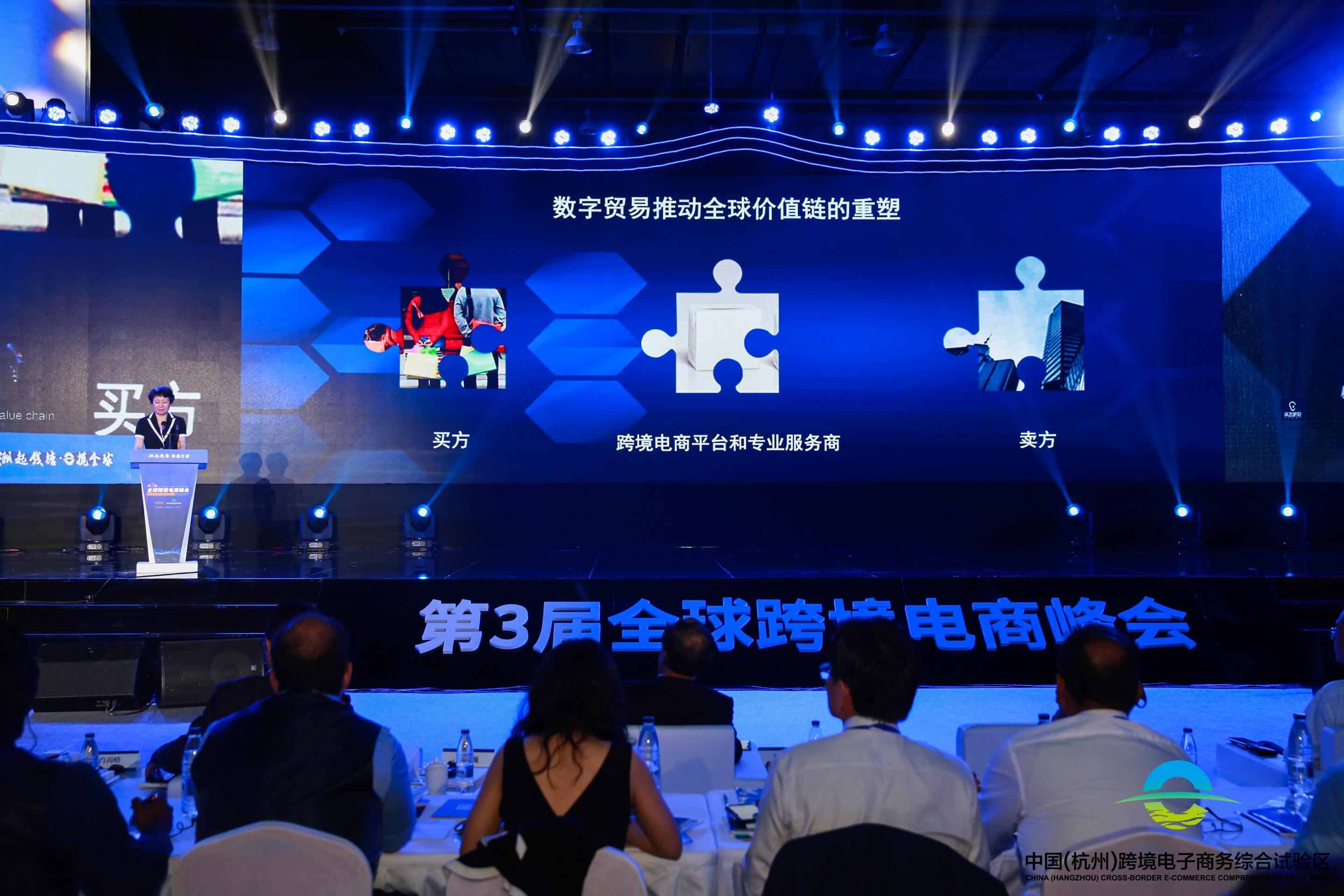
杭州市委常委、杭州综试区建设领导小组办公室主任佟桂莉

温馨提示:本文为速记初审稿,保证现场嘉宾原意,未经删节,或存纰漏,敬请谅解。

以下是演讲实录:

佟桂莉:尊敬的张司长、各位来宾、企业界的朋友们、媒体界的朋友们,大家下午好!

作为峰会的主办方再次感谢大家对杭州综试区建设对本次峰会的大力支持。到今年,全球跨境电商峰会已经连续举办三届,我们非常高兴的看到一届比一届精彩。今天是联合国中小微企业日,峰会放在今天不是有意为之,在这一天我们跨境电子商务的峰会为中小企业的发展搭建平台,非常有意义。我也提议,我们以后每年的全球跨境电子商务峰会就放在这一天,大家同意不同意?

在每届峰会上我会做一个报告和大家共同分享,今天同样想从认知、实践、展望三个方面和大家分享杭州综试区最新实践和思考。

一、我们的认知:数字贸易促进数字丝绸之路的发展

中共中央政治局常委汪洋在今年2月9日首届世界海关跨境电商大会上指出,近年来我国政府创出一条具有中国特色的跨境电商发展之路,跨境电商为更多的企业、更多的群体带来更多的发展机遇,是构建开放型世界经济的重要支撑。

跨境电商从一种经济现象到一种商业模式,进而发展成为一种新型贸易方式,这种新型贸易我理解为“数字贸易”,以跨境电商平台为依托,以大数据为支撑、以数字技术为驱动的一种贸易方式。它真正实现了贸易的在线化、直接化、贸易链的扁平化以及贸易价值的回归,也让“一带一路”沿线众多的中小企业享受到了普惠贸易的红利,享受到了数字丝绸之路发展的红利。

数字贸易大大缩短了跨境贸易链,传统贸易模式下由于信息不对称企业寻找订单只有通过展会参展,随着“一带一路”沿线国家的互联网,特别移动互联网的普及,每一个企业和个人都是丝绸之路的触点。通过电脑和手机人们可以进行商品的交易,借助数字技术实现了商品交易的在线化和直接化。

数字贸易也推动了全球价值链的重塑。在传统贸易通道中出口商品需要层层供应链才能够到达消费者手上,制造商利润被多重环节稀释,跨境电子商务降低了中小企业融入全球贸易价值链的门槛,通过跨境电商平台和专业服务商,直接连接买卖双方,大大减少了交流和交易的成本,打破了大企业对国际贸易的垄断,为中小企业通过数字贸易融入全球贸易的价值链实现变道超车提供了新的机会。

数字贸易催生了新型跨境贸易的服务链。围绕信息链、资金链、货物流,三流合一形成了跨境电子商务产业链、生态链,一大批电商平台、智能物流、数字支付技术开发、第三方服务机构快速崛起,并不断向更深、更广的领域拓展。全球跨境电商平台、跨境电商支付企业、物流企业,面向“一带一路”沿线国家输出资本、技术、数字贸易的消费文化,推动着输出国数字贸易平台设施、支付、物流、消费的快速升级,共享数字贸易和数字经济发展的机会。

跨境电商催生了新型的贸易链、价值链、服务链。可以说让贸易变得更加透明、更加普惠、更加公平。数字贸易的发展惠及中小企业、数字丝绸之路的建设必定会促进“一带一路”沿线国家的共同发展,数字丝绸之路连接的是我们共同的未来、共同的希望。

二、我们的实践:杭州综试区建设推动了数字贸易和数字经济的发展

建设跨境电商综试区是国家在跨境电子商务领域的综合改革试验,经过三年的实践探索,杭州综试区实现了从0到1的跨越,推动了数字贸易和数字经济的发展,主要体现在三个方面:

第一,“六体系两平台”开创了跨境电子商务制度创新的先河。杭州综试区创新构建了六体系两平台,以线上综合平台为基础,建立起了信息共享、金融服务、电商信用、风险风控等六大体系,并赋能线下平台产业园区的发展。

在制度创新方面,杭州是全国最早开展跨境电子商务小包出口,直邮进口、网购保税进口、跨境B2B出口、特殊监管区出口等业务的试点城市。今年起杭州推出特殊监管区出口,保税出口叠加海关仓储货物按状态分类监管政策以后,实现了区内备货的非保税货物和保税货物同仓调播,降低了建仓和运营成本。

管理创新方面,杭州综试区打造了全球首个跨境电商数字口岸,跨境电商企业通过综合服务平台率先实现一键申报、全国通关、一次申报、一次查验、一次放行。积极扩大信用评级范围和方向,依托综合服务平台汇聚40余个部门2.5亿条数据,完成对14000多家企业信用评级,建立了企业信用档案,对A级优质信用企业给予通关和退税便利化,为诚信企业无抵押担保授信,和电商平台共建用保障资金池,与物流部门联动开展在线智能物流服务,对信用良好的企业给予物流账期延期服务。同时上线了创新项目服务平台(EBOX),为企业开展在线化、数字化、精准化的服务。

第二,提升跨境电子商务产业发展能级。越来越传统外贸制造企业从上线触网开始,通过提交线上交易能力和数据赋能开始尝试个性化、柔性化的生产制造和营销推广,突破了传统外贸的价格垄断、渠道垄断、品牌垄断,加快实现数字化转型,有的成为了行业的隐形冠军。特别是呈现出了各个方面的气象:

一是跨境电商大卖家不断涌现,在杭州包括服装、纺织、家居、卫浴、户外休闲一大批行业企业,应用跨境电商平台成长为年销售额超过千万美元,甚至是过亿美元的行业大卖家,他们或拥有自建工厂、或对接上游供应商,带动一大批实体转型。2017年来自杭州新卖家销售额是2016年同期三倍。

二是跨境电商独角兽持续壮大。在杭州云集、浙江执御、贝贝网、连连支付、PingPong等一批跨境电子商务独角兽和准独角兽企业已经成为推动跨境电子商务创业创新的新兴力量。

三是产业集群迅速崛起。浙江执御公司旗下Jollychic的已经成为中东地区排名的移动购物APP,带动了众多服装制造企业的转型。子不语公司从国内电商起家,2013年转型为跨境电商以来业绩以100%的速度在成长。浙江执御、子不语等一批龙头企业带动下,杭州纺织服装跨境电商的规模已经超过了100亿元。

第三,形成较为完善的跨境电商生态体系。集聚了全球最为齐全跨境平台,通过在杭州设立孵化园、子公司、战略合作等方式纷纷落地杭州,阿里巴巴、网易纷纷创新商业模式走出去发展,阿里巴巴推出天猫出海,网易考拉推出全球工厂店,都是为了创新跨境电商平台+工厂的商业模式。

今年,这两家平台还创新了跨境电商+实体零售的模式,消费者线上下单,5公里内即可当日达、次日达。云集探索社交电商新路径,借助基于个体信任的社交渠道,将跨境商品快速分销到三四线城市,甚至农村地区。2017年跨境电商销售额已经达到了11.7亿元,环比增长4倍。

第四,形成了线下园区的小生态,杭州综试区的规划布局是全域覆盖整个杭州市,我们建设了13个线下产业园,这13个产业园错位发展、各显优势,广泛集聚了跨境电商企业、人才、资金等要素,为跨境电商企业提供完善服务体系。金融服务方面支付宝、连连盈通、网易宝等依托综试区开展跨境第三方支付业务,PingPong发展跨境收款业务,2018年超过100亿元,是中国首家拿到欧洲金融支付牌照的金融科技公司。

物流服务方面,杭州开通了直达美国芝加哥全货机往返航班,菜鸟网络开通了杭州到里加、莫斯科的洲际航线,提高了跨境物流体验和效率。人才服务方面,杭州综试区成立了跨境电商学院、跨境电商人才港、人才实训基地,建立了管理人才、创业人才、精英人才分层次分梯队体系。

三、我们的展望:加快打造综试区升级版,构建数字丝绸之路重要枢纽

杭州全面深化跨境电商综试区建设以及eWTP试验区建设,继续引领全球数字贸易发展,积极打造以数字贸易为核心的新型中心,努力成为全球电子商务核心功能区和数字丝绸之路的重要区域:

第一,完善功能,突出发展数据服务,在线交易、智能物流、数字金融、知识服务等枢纽功能。吸引更多的跨境电商交易平台立足杭州、服务全球、不断创新商业模式,完善上下游产业链,打造面向“一带一路”的在线交易枢纽。我们将拓展杭州到主要贸易国全货机航线,支持菜鸟在杭州、香港、吉隆坡、莫斯科、比利时、迪拜等加快全球物流布局,打造智能物流枢纽。将支持商业银行转型发展,鼓励跨境支付企业创新跨境金融服务产品,打造数字金融枢纽。我们将鼓励跨境电商平台和高效、社会培训机构以杭州为中心面向“一带一路”开展人才培训和智力输出,打造知识服务枢纽。

第二,发展业务,促进跨境电子商务新业态、新模式的发展,我们将实施新外贸、新服务、新制造“三新计划”,开展跨境电商新外贸业务发展,新制造产业提升、新服务优化,数字化产销对接和跨境电商品牌培育等十大专项行动。积极引导市场主体和企业应用数字化贸易驱动数字化服务和数字化改造,大力培育以技术、标准、品牌、质量、服务为核心的数字外贸新优势。我们将持续促进平台、金融、物流、人才、知识产权保护等数字服务资源集聚,培育一批数字化驱动生产制造、产品设计、原料采购、仓储运输、订单处理、经营批发和终端零售快速协同的数字经济新标杆。

第三,做强载体。打造一批协同创新发展的新平台,我们将坚持政府与市场的协同,既要发挥政府在推动创新,打造数字丝绸之路枢纽中的引导作用,又要发挥大企业、大平台市场主体作用,以开放促改革,进一步激发电商平台和中小企业的创新活力和创造动力。我们将坚持线上线下的融合,在推动线上监管的便利,交易闭环的形成和服务资源在线化的同时,积极推动线上和线下的产业园创业创新平台的联动,实现线上线下的融合发展。

我们将坚持境内与境外的联动,积极推动杭州综试区和境外数字自贸区实现互联互通,加快跨境电商杭州模式的海外复制推广,鼓励企业面向“一带一路”加快品牌出海,输出产品、技术和理念,加快建设一批境外跨境电商合作园区,为推进全球经济的更加开放、公平、包、均衡、共赢做出杭州以及杭州综试区应有的贡献。

谢谢大家。

文章来源:亿邦动力网

广告
微信
朋友圈

FAQ回顾

杭州跨境电商综试区有哪些核心制度创新成果?

杭州综试区创新构建“六体系两平台”制度框架,是全国最早开展多类跨境电商业务的试点城市,打造了全球首个跨境电商数字口岸,依托综合服务平台完成14000多家企业信用评级,上线EBOX创新项目服务平台为企业提供精准服务。

数字贸易对跨境电商行业发展有什么价值?

数字贸易是以跨境电商平台为依托、大数据为支撑、数字技术为驱动的新型贸易方式,可缩短跨境贸易链、重塑全球价值链、催生新型跨境贸易服务链,降低中小企业融入全球贸易门槛,让贸易更透明、普惠、公平,惠及一带一路沿线中小企业。

杭州跨境电商综试区产业发展取得了哪些成果?

杭州综试区已培育出大批年销售额超千万美元甚至过亿美元的跨境电商大卖家,云集、浙江执御、PingPong等独角兽企业持续壮大,纺织服装等跨境电商产业集群规模超百亿元,形成了完善的跨境电商生态体系和13个错位发展的线下产业园。

杭州跨境电商综试区未来的发展定位是什么?

杭州综试区未来将加快打造综试区升级版,构建数字丝绸之路重要枢纽,重点完善数据服务、在线交易、智能物流、数字金融、知识服务五大枢纽功能,实施“三新计划”,培育数字外贸新优势,推广杭州模式助力全球数字贸易发展。

这么好看,分享一下?

朋友圈 分享

APP内打开

赞 +1
+1
微信好友 朋友圈 新浪微博 QQ空间
关闭
收藏成功
发送
/140 0