广告
加载中

佟桂莉:跨境电商已成杭州外贸发展新动能

亿邦动力网 2018-06-27 09:57
亿邦动力网 2018/06/27 09:57

邦小白快读

EN
全文速览

本文是第三届全球跨境电商峰会上杭州跨境综试区负责人佟桂莉的演讲实录,核心干货信息如下:

1. 活动基本信息:本次峰会主题为“数字丝路 联结未来”,由中国(杭州)跨境电子商务综合试验区主办,汇聚了全球跨境电商领域的政企学界、“一带一路”国家代表,共同探讨数字贸易发展的新趋势、新机遇。

2. 杭州跨境电商发展基础与成果:杭州聚焦数字经济“一号工程”建设,人才净流入率、海归人才净流入率居全国首位;经过多年探索,创新出“六体系两平台”制度模式,经验被国务院两次复制推广。目前已有8000多家传统企业通过跨境电商实现转型,今年1-5月跨境电商交易额达42亿美元,进出口增速分别超22%,占杭州外贸比重近15%,已经成为杭州外贸新动能。

3. 未来发展方向:杭州将推进eWTP杭州试验区建设,打造数字丝绸之路重要战略枢纽,欢迎全球各方合作共享数字贸易机遇。

本文披露了杭州跨境电商的发展现状与政策方向,能给布局跨境业务的品牌商提供多重参考,干货如下:

1. 行业发展趋势:当前跨境电商已经成为外贸发展新动能,杭州跨境电商增速远超传统贸易,占杭州外贸比重接近15%,数字贸易、数字丝路是未来跨境贸易的核心发展方向,全球市场空间广阔,品牌出海迎来政策和市场红利。

2. 落地发展机遇:杭州已经构建了完备的跨境电商生态体系,打造了“六体系两平台”的制度框架,线上配套信息共享、金融服务、智能物流、风险管控等全链路服务,线下依托产业园区赋能企业发展,政府每年还会开展专项行动帮助企业提升线上交易能力,能降低品牌布局跨境的运营成本。

3. 未来长期红利:杭州正在推进eWTP杭州试验区建设,要打造全球电子商务核心功能区、数字丝路战略枢纽,未来会有更多全球跨境资源集聚,适合品牌商提前布局,依托杭州的通道对接“一带一路”沿线市场,实现品牌出海增长。

这篇演讲透露出杭州跨境电商的政策红利与市场机会,对跨境卖家的业务布局有重要参考价值,干货整理如下:

1. 政策支持清晰:杭州作为国家级跨境电子商务综合试验区,已经探索出成熟的“六体系两平台”制度框架,发展经验两次被国务院复制推广,政策体系成熟稳定;当地还出台多重人才政策,人才净流入率全国第一,能有效解决卖家的人才需求痛点。

2. 当前增长机会明确:杭州跨境电商增长速度远高于传统贸易,今年1-5月进出口增速分别达到22.19%、24.49%,整体生态体系完备,线上综合服务平台已经配齐信息、金融、物流、风控等各类配套服务,能帮助卖家降低运营门槛,提升运营效率。

3. 未来布局机遇:杭州正在推进eWTP杭州试验区建设,目标打造数字丝绸之路战略枢纽,公开欢迎全球跨境卖家开展合作,后续会释放更多市场和政策资源,适合卖家入杭布局出海业务,抢占数字贸易的发展红利。

本文介绍了杭州跨境电商的发展成果,能给传统制造工厂转型跨境电商提供方向和机会参考,干货如下:

1. 转型方向明确:当前跨境电商已经成为外贸发展新动能,增速远超传统贸易,杭州目前已有8000多家传统外贸和制造企业依托跨境电商实现了新发展,足以证明跨境电商是传统工厂转型的可行方向,能帮助工厂直接对接全球市场,拓展增长空间。

2. 转型有完备生态支持:杭州综试区已经创新构建了“六体系两平台”的完整制度框架,线上配套信息共享、金融服务、智能物流、风险风控等全链路服务,线下有产业园区提供赋能支持,政府还坚持每年开展专项行动,帮助企业提升线上交易能力,能大幅降低工厂转型跨境的门槛和风险。

3. 数字化转型启示:杭州将数字经济作为核心发展方向,推动传统产业数字化升级,工厂可以抓住当前数字贸易、数字丝路建设的机遇,依托杭州的跨境生态对接全球市场,完成自身的数字化转型,分享“一带一路”沿线市场的发展红利。

本文披露了杭州跨境电商行业的发展趋势和市场需求,能给跨境相关服务商明确业务拓展方向,干货整理如下:

1. 行业增长趋势明确:杭州跨境电商已经成为当地外贸发展新动能,增长速度远超传统贸易,目前占全市外贸比重接近15%,交易规模持续快速增长;未来杭州推进eWTP试验区建设、打造数字丝路战略枢纽,跨境电商行业规模会进一步扩大,服务商的整体市场空间也会持续增长。

2. 市场需求清晰:杭州有大量传统外贸和制造企业正在转型跨境电商,这些企业普遍缺乏线上运营能力,对于配套的信息服务、金融服务、物流服务、人才服务、运营服务等都有大量真实需求;当地政府每年也会开展专项行动帮助企业提升线上能力,服务商可以对接这类官方和企业需求,拓展客户群体。

3. 落地发展机遇:杭州已经形成了完备的跨境电商产业生态,集聚了全国最多的跨境电商人才,政策支持力度大,面向全球开放合作,服务商落地杭州可以对接大量优质客户,分享行业增长红利。

本文介绍了杭州跨境综试区的发展经验和未来规划,对各类跨境平台商的业务布局和运营管理有较高参考价值,干货如下:

1. 成熟运营经验可借鉴:杭州综试区经过多年探索,创新构建了“六体系两平台”的成熟发展架构:线上搭建综合服务平台,配套信息共享、金融服务、智能物流、电商信用、统计监测、风险风控六大核心服务,赋能线下产业园区发展,这套模式已经两次被国务院复制推广,平台商可以借鉴这套架构完善自身的服务体系,提升运营能力。

2. 落地招商机遇明确:杭州拥有良好的数字经济产业基础,人才净流入率、海归人才净流入率居全国首位,跨境电商生态完备,政府支持力度大,目前正在打造全球电子商务核心功能区和数字丝绸之路战略枢纽,公开欢迎各类平台商落地合作,后续会有大量政策和资源扶持。

3. 发展风向指引:当前数字贸易、“一带一路”数字丝路建设是政策和行业核心发展方向,平台商可以围绕沿线国家的贸易合作布局业务,贴合政策风向获得更大的发展空间。

本文披露了中国跨境电商综试区的发展成果和制度创新经验,对研究跨境电商产业的研究者来说有较高的研究价值,核心干货如下:

1. 产业发展新动向:当前跨境电商已经成为地方外贸发展的新动能和产业转型的新引擎,杭州跨境电商占本地外贸比重已经接近15%,增速远超传统贸易;未来数字贸易、数字丝绸之路建设、eWTP试验区建设是跨境电商产业新的发展方向,产业形态还会持续创新迭代。

2. 制度创新成果:杭州作为国家级跨境电商综试区,经过多年探索实践,创新总结出“六体系两平台”的制度框架,这套制度创新成果已经两次被国务院在全国复制推广,为全国跨境电商行业发展提供了可参考的制度模板,是非常重要的研究样本。

3. 发展模式研究价值:杭州依托本地数字经济基础,通过政策引导、人才吸引、生态构建推动跨境电商产业发展的路径,为研究地方跨境电商产业发展模式提供了典型案例,也为研究数字丝路建设的地方实践提供了一手样本,对相关研究有较高参考意义。

返回默认

声明:快读内容全程由AI生成,请注意甄别信息。如您发现问题,请发送邮件至 run@ebrun.com 。

我是 品牌商 卖家 工厂 服务商 平台商 研究者 帮我再读一遍。

Quick Summary

This article is the transcript of a speech delivered by Tong Guili, head of Hangzhou Cross-Border E-Commerce Comprehensive Pilot Zone, at the 3rd Global Cross-Border E-Commerce Summit. Key takeaways are as follows:

1. Event overview: Themed "Digital Silk Road, Connecting the Future", the summit is hosted by China (Hangzhou) Cross-Border E-Commerce Comprehensive Pilot Zone. It brings together government, business and academic stakeholders from the global cross-border e-commerce sector, as well as representatives from Belt and Road countries, to discuss new trends and opportunities in digital trade development.

2. Hangzhou's development foundations and achievements: Hangzhou prioritizes digital economy as its "No.1 Project", and ranks first in China for net inflow of total talents and returnee talents. After years of exploration, it has innovated the "six systems and two platforms" institutional model, whose experience has been replicated and promoted twice by the State Council. To date, more than 8,000 traditional enterprises in Hangzhou have completed transformation via cross-border e-commerce. From January to May this year, Hangzhou's cross-border e-commerce transaction volume reached US$4.2 billion, with import and export growth both exceeding 22% year-on-year. Cross-border e-commerce now accounts for nearly 15% of Hangzhou's total foreign trade, and has become a new growth engine for the city's foreign trade sector.

3. Future development direction: Hangzhou will advance construction of the eWTP Hangzhou Pilot Area, build itself into a key strategic hub of the Digital Silk Road, and welcomes global partners to collaborate and share opportunities in digital trade.

This article outlines Hangzhou's cross-border e-commerce development status and policy direction, providing multiple references for brands with cross-border business layouts. Key insights are as follows:

1. Industry development trends: Cross-border e-commerce has become a new growth driver for foreign trade. In Hangzhou, cross-border e-commerce grows far faster than traditional trade, and accounts for nearly 15% of the city's total foreign trade. Digital trade and the Digital Silk Road are set to be core development directions for future cross-border trade, opening up enormous global market space and bringing policy and market dividends for brands going global.

2. Local expansion opportunities: Hangzhou has built a complete cross-border e-commerce ecosystem and the "six systems and two platforms" institutional framework. It offers end-to-end supporting services including online information sharing, financial services, intelligent logistics and risk control, while offline industrial parks empower enterprise development. The local government also launches annual special programs to help enterprises improve online trading capabilities, all of which reduce operational costs for brands expanding cross-border business.

3. Long-term future dividends: Hangzhou is advancing construction of the eWTP Hangzhou Pilot Area, with goals to build a core functional zone for global e-commerce and a strategic hub of the Digital Silk Road. More global cross-border resources will gather in the city in the future, making it an ideal location for early布局 by brands. Brands can leverage Hangzhou's connectivity to access markets along the Belt and Road and drive global growth.

This speech reveals policy dividends and market opportunities in Hangzhou's cross-border e-commerce sector, offering valuable references for cross-border sellers on business layout. Key takeaways are as follows:

1. Clear policy support: As a national-level cross-border e-commerce comprehensive pilot zone, Hangzhou has developed the mature "six systems and two platforms" institutional framework, whose development experience has been replicated and promoted twice by the State Council, forming a stable and mature policy system. The city has also rolled out multiple talent policies, and ranks first in China for net talent inflow, effectively solving sellers' pain point of talent shortage.

2. Clear immediate growth opportunities: Cross-border e-commerce in Hangzhou grows far faster than traditional trade, with import and export growth reaching 22.19% and 24.49% respectively from January to May this year. The city has a complete ecosystem, and its online comprehensive service platform is fully equipped with supporting services including information, finance, logistics and risk control, helping sellers lower entry barriers and improve operational efficiency.

3. Future layout opportunities: Hangzhou is advancing construction of the eWTP Hangzhou Pilot Area, with the goal of becoming a strategic hub of the Digital Silk Road. It has publicly welcomed cross-border sellers from around the world to collaborate, and will release more market and policy resources going forward. It is an ideal location for sellers to establish operations and tap into the dividends of digital trade development.

This article summarizes Hangzhou's achievements in cross-border e-commerce development, providing direction and opportunity references for traditional manufacturing factories looking to transform into cross-border e-commerce. Key insights are as follows:

1. Clear transformation direction: Cross-border e-commerce has become a new growth driver for foreign trade, and grows far faster than traditional trade. To date, more than 8,000 traditional foreign trade and manufacturing enterprises in Hangzhou have achieved new growth via cross-border e-commerce, proving that cross-border e-commerce is a viable transformation path for traditional factories. It enables factories to directly connect with global markets and expand growth space.

2. Complete ecosystem support for transformation: The Hangzhou Pilot Zone has innovated and built the complete "six systems and two platforms" institutional framework, offering end-to-end online supporting services including information sharing, financial services, intelligent logistics and risk control. Offline industrial parks provide empowerment support, and the local government launches annual special programs to help enterprises improve online trading capabilities, greatly lowering the entry barriers and risks for factories transforming to cross-border e-commerce.

3. Insights for digital transformation: Hangzhou has positioned digital economy as its core development direction and promotes digital upgrading of traditional industries. Factories can seize the current opportunities brought by digital trade and Digital Silk Road construction, leverage Hangzhou's cross-border ecosystem to connect with global markets, complete their own digital transformation, and share the development dividends of markets along the Belt and Road.

This article reveals the development trends and market demand of Hangzhou's cross-border e-commerce industry, clarifying business expansion direction for cross-border-related service providers. Key takeaways are as follows:

1. Clear industry growth trajectory: Cross-border e-commerce has become a new growth driver for Hangzhou's foreign trade, growing far faster than traditional trade, and currently accounts for nearly 15% of the city's total foreign trade, with transaction scale continuing to expand rapidly. As Hangzhou advances construction of the eWTP Pilot Area and builds a strategic hub of the Digital Silk Road, the cross-border e-commerce industry will further expand, bringing sustained market growth for service providers.

2. Clear market demand: A large number of traditional foreign trade and manufacturing enterprises in Hangzhou are transforming to cross-border e-commerce, and most lack online operation capabilities, creating strong and real demand for supporting services including information services, financial services, logistics services, talent services and operation services. The local government also launches annual special programs to help enterprises improve online capabilities, so service providers can connect with these official and corporate demands to expand their customer base.

3. Local expansion opportunities: Hangzhou has formed a complete cross-border e-commerce industrial ecosystem, gathers the largest number of cross-border e-commerce talents in China, offers strong policy support, and is open to global cooperation. Service providers that establish operations in Hangzhou can access a large number of high-quality clients and share the dividends of industry growth.

This article introduces the development experience and future plans of the Hangzhou Cross-Border E-Commerce Comprehensive Pilot Zone, offering high reference value for business layout and operation management for all types of cross-border platforms. Key insights are as follows:

1. Replicable mature operation experience: After years of exploration, the Hangzhou Pilot Zone has innovated and built the mature "six systems and two platforms" development framework: it operates an online comprehensive service platform with six core services including information sharing, financial services, intelligent logistics, e-commerce credit, statistical monitoring and risk control, to empower the development of offline industrial parks. This model has been replicated and promoted nationwide twice by the State Council. Platforms can learn from this framework to improve their own service systems and enhance operational capabilities.

2. Clear local investment opportunities: Hangzhou has a solid foundation for the digital economy industry, ranks first in China for net inflow of total talents and returnee talents, boasts a complete cross-border e-commerce ecosystem, and enjoys strong government support. The city is currently building a core functional zone for global e-commerce and a strategic hub of the Digital Silk Road, and has publicly welcomed all types of platforms to establish operations and collaborate, with more policy and resource support to come.

3. Guidance on development direction: Digital trade and the Digital Silk Road under the Belt and Road Initiative are currently core development directions in policy and industry. Platforms can layout business around trade cooperation with countries along the route, and align with policy trends to unlock greater development space.

This article discloses development achievements and institutional innovation experience of China's cross-border e-commerce comprehensive pilot zones, offering high research value for scholars studying the cross-border e-commerce industry. Key insights are as follows:

1. New industry development trends: Cross-border e-commerce has become a new growth driver for local foreign trade and a new engine for industrial transformation. In Hangzhou, cross-border e-commerce already accounts for nearly 15% of local foreign trade, and grows far faster than traditional trade. Going forward, digital trade, Digital Silk Road construction and eWTP Pilot Area development will be new growth directions for the cross-border e-commerce industry, and the industry structure will continue to innovate and evolve.

2. Institutional innovation achievements: As a national-level cross-border e-commerce comprehensive pilot zone, Hangzhou has explored for years and innovated the "six systems and two platforms" institutional framework. This institutional innovation outcome has been replicated and promoted nationwide twice by the State Council, providing a referenceable institutional template for China's cross-border e-commerce industry and serving as an important research sample.

3. Research value of development model: Hangzhou's path of driving cross-border e-commerce development through policy guidance, talent attraction and ecosystem building, rooted in its local digital economy foundation, provides a typical case for researching local cross-border e-commerce industry development models. It also offers first-hand samples for studying local practice of Digital Silk Road construction, making it highly valuable for relevant research.

Disclaimer: The "Quick Summary" content is entirely generated by AI. Please exercise discretion when interpreting the information. For issues or corrections, please email run@ebrun.com .

I am a Brand Seller Factory Service Provider Marketplace Seller Researcher Read it again.

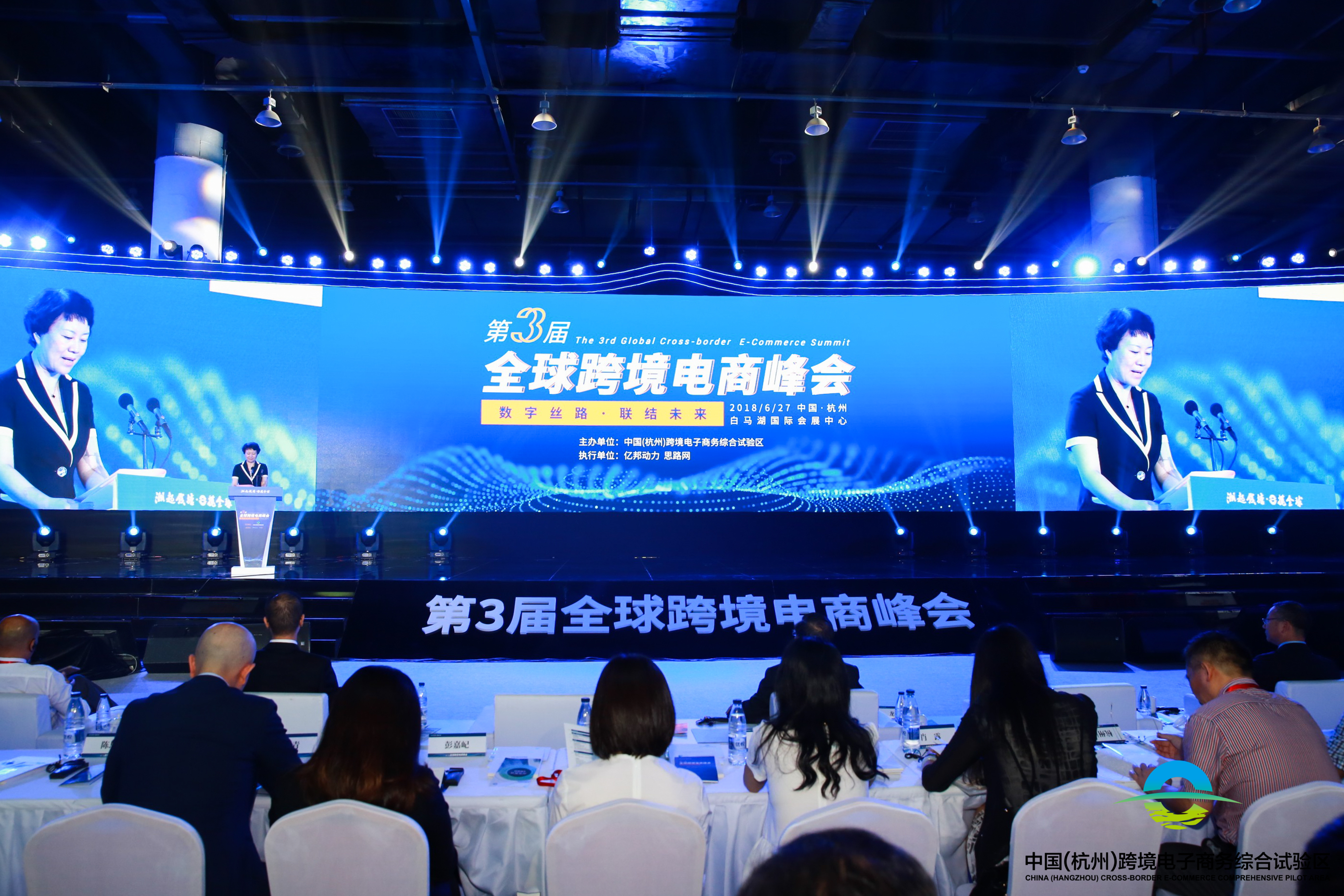
【亿邦原创】6月27日消息,在“潮起钱塘·E揽全球”第三届全球跨境电商峰会上,中共杭州市委常委、中国(杭州)跨境电子商务综合试验区建设领导小组办公室主任佟桂莉女士发表了开幕致辞。她指出,近年来,杭州深入实施创新驱动发展战略,聚焦数字经济“一号工程”建设,全力打造具有全球影响力的“互联网+创新创业”中心,各类创新资源加快集聚,经济发展呈现出增长中高速、质效中高端的良好态势。

据悉,大会以“数字丝路 联结未来”为主题,由中国(杭州)跨境电子商务综合试验区主办,亿邦动力、思路网执行。

中国(杭州)跨境电子商务综合试验区建设领导小组办公室主任佟桂莉女士

温馨提示:本文为速记初审稿,保证现场嘉宾原意,未经删节,或存纰漏,敬请谅解。

以下是演讲实录:

佟桂莉:尊敬的龙部长、张司长、各位来宾、女士们、先生们、媒体界的朋友们,大家上午好!

今天潮起钱塘、一览全球,第三届全球跨境电商峰会在壮美的钱塘江畔开幕,来自全球跨境电商领域的专家、学者、企业大咖、兄弟城市和“一带一路”国家的代表齐聚一堂,探讨数字贸易发展的新趋势、新格局、新机遇,共商数字丝绸之路的未来。

首先我谨代表中共杭州市委、杭州市人民政府、中国杭州跨境电子商务综合试验区向前来参加峰会的各位嘉宾表示热烈的欢迎和诚挚的感谢!

近年来,杭州深入实施创新驱动发展战略,聚焦数字经济“一号工程”建设,全力打造具有全球影响力的“互联网+创新创业”中心,各类创新资源加快集聚,经济发展呈现出增长中高速、质效中高端的良好态势。2017年,杭州实现生产总值12556亿元,增长8%,其中以新产业、新业态、新模式为主要特征的“三新经济”增加值占比为33.9%,增长20.4%。信息经济的增加值占比达到了25.6%,增长21.8%,对经济增长的贡献率超过了50%。

作为创新活力之城,杭州持续深化人才强市战略,相继出台了人才新政27条、22条,培育引进了众多具有国际水平的科技领军人才和一大批创业创新人才及研发团队。杭州人才净流入率和海归人才净流入率居全国城市首位。跨境电商人才加剧向杭州集聚。杭州经过三年多探索实践实现从0到的跨越,创新构建了6体系、两平台的制度安排,以线上综合服务平台为基础,建立起了信息共享、金融服务、智能物流、电商信用、统计监测、风险风控六大体系。并赋能线下平台产业园区的发展,国务院常务会议先后两次复制推广跨境电商杭州经验。

杭州互联网的创新应用发达,跨境电子商务生态体系完备,围绕促进产业发展,杭州综试区还坚持每年开展专项行动,帮助企业提升线上的交易能力。目前,全市已有8000多家传统外贸和制造企业运用跨境电子商务实现了新的发展。今年1-5月,杭州实现跨境电子商务交易额达到42亿美元,其中进口12.35亿美元,出口29.35亿美元,分别同比增长22.19%、24.49%,大大超越了传统贸易的增长。

杭州跨境电商进出口占全市外贸比重接近15%,无疑跨境电商已经成为杭州外贸发展的新动能和产业转型新引擎。

各位来宾、各位朋友,他总书记在不久前召开的全球网信工作会议上强调,要以“一带一路”建设为契机,加强同沿线国家特别是发展中国家在网络基础设施建设、数字经济、网络安全等方面的合作,建设21世纪数字丝绸之路,面对未来杭州将充分发挥基础设施互联互通、跨境电子商务双重便利优势,推进eWTP杭州试验区建设,继续引领全球数字贸易发展,积极打造以合资贸易为核心的新型贸易中心,成为全球电子商务核心功能区、数字丝绸之路重要的战略枢纽。

各位来宾、各位朋友,杭州拥有跨境电子商务发展最适宜的阳光、雨露和土壤,我们非常愿意与国内外城市、跨境电子商务企业、专家学者加强交流与合作,共享数字贸易新机遇,携手共建数字丝绸之路。

最后,祝本届峰会圆满成功,祝在座的各位来宾万事如意,谢谢大家!

文章来源:亿邦动力网

广告
微信
朋友圈

FAQ回顾

跨境电商对杭州外贸发展有什么作用?

2018年1-5月杭州跨境电商交易额达42亿美元,进出口占全市外贸比重接近15%,增速大幅超越传统贸易,已成为杭州外贸发展的新动能和产业转型新引擎,目前已有超8000家杭州传统外贸及制造企业借助跨境电商实现新发展。

杭州跨境电商综试区有哪些可推广的发展经验?

杭州跨境电商综试区创新构建了“六体系两平台”制度安排,以线上综合服务平台为基础,建立信息共享、金融服务、智能物流、电商信用、统计监测、风险防控六大体系,同时赋能线下产业园区发展,相关经验已被国务院两次复制推广。

杭州数字经济发展现状怎么样?

2017年杭州实现生产总值12556亿元,同比增长8%,其中信息经济增加值占比达25.6%,增长21.8%,对经济增长的贡献率超过50%,杭州人才净流入率、海归人才净流入率居全国城市首位,跨境电商人才加速向杭州集聚。

在杭州开展跨境电商业务有哪些优势?

杭州拥有完备的跨境电子商务生态体系,综试区每年开展专项行动帮助企业提升线上交易能力,同时具备基础设施互联互通、跨境电子商务双重便利优势,正在推进eWTP杭州试验区建设,积极打造新型贸易中心。

这么好看,分享一下?

朋友圈 分享

APP内打开

赞 +1
+1
微信好友 朋友圈 新浪微博 QQ空间
关闭
收藏成功
发送
/140 0