广告
加载中

铁建商城:搭建数智架构,智能支撑采购理性决策

亿邦智库 2026-10-21 09:47
亿邦智库 2026/10/21 09:47

邦小白快读

EN
全文速览

核心看点:央企采购平台如何用数字技术降本增效。

1. 铁建商城是中国铁建的非生产性物资电商化采购平台,业务覆盖二三类物资、办公用品、员工福利、商城自营等场景,2026年6月12日累计交易额突破100亿元。

2. 平台发展速度极快:2024年11月30日首单仅25小时送达;2025年4月突破1亿元;2025年9月年度交易额超30亿元;换新上线一年内累计交易额突破57亿元。

3. 降本效果显著:平均采购成本节约率超16%,流程效率提升40%,业务透明度100%;二三类物资、办公用品中标价格较头部电商市场价格低19.5%,采购减少6个环节,效率提升60%。

4. 平台用AI审核商品信息,单日可处理7000至10000个SKU;用实时价格监测支撑理性采购决策;还组织140场次培训覆盖超5万人次。

关注点:央企电商平台的品牌准入、品牌展示与价格竞争规则。

1. 品牌准入有门槛:铁建商城构建标准商品库、属性库与品牌库“三库一体”体系,供应商需通过严格准入评审与质量溯源要求,如中铁二十一局诚而信服装厂经全流程评审后入驻自营专区。

2. 商品信息质量管控严格:AI智能审核覆盖类目准确性、图片规范性、参数完整性等维度,自动过滤“三无”及资质过期商品,品牌商品须规范描述、提供完整资质。

3. 价格竞争透明化:平台通过同品比价、市场参考价、公允指导价与价格波动指数等机制,对异常高价分级预警,品牌定价需面对公开透明的比价环境。

4. 增长机会明确:平台商品从6万条增至58万条、覆盖30余个核心品类,并计划优先推荐绿色建材、新能源装备等低碳产品,落地员工福利业务与海外采购专区,为相关品牌提供新渠道。

关注点:央企自建商城政策导向下的入驻机会、合作模式与风险提示。

1. 政策机遇:平台紧扣国务院国资委鼓励中央企业自建电子商城、推进物资采购电商化转型的政策导向,是央企供应链管理提升行动的重要支点,供应商可借势进入央企采购体系。

2. 合作模式:采用“撮合交易+平台自营”双轨模式,构建“1+N”制度体系及AI商品数据标准化治理机制,供应商可选择自营专区入驻或平台撮合交易。

3. 准入与履约要求:平台建立标准化准入、线上交易、履约管控闭环体系,严格执行准入评审与质量溯源,如入驻企业需具备面料溯源、工艺巡检、出厂全检等质检能力。

4. 机会与风险提示:平台品类扩展至30余个核心品类、商品资源从6万条增至58万条,增长空间大;但价格监测体系会实时抓取多渠道行情、对异常高价分级预警,卖家需规范定价、保证资质合规。

关注点:生产端如何对接央企电商平台的标准与数字化要求。

1. 产品标准化需求:平台构建标准商品库、属性库与品牌库“三库一体”体系,并通过赋码引擎为每件商品生成唯一标准化编码,工厂产品需符合统一物资编码体系与分类标准。

2. 质量与溯源要求:AI审核系统开展图文链接核验、核心规格识别、资质溯源验证,对接GS1全球数据同步网络GDSN商品池;供应商需匹配集采物资溯源、履约、售后全流程监管,如三级质检体系。

3. 数字化协同启示:平台与供应商ERP、WMS系统无缝对接,库存动态实时共享;首个智慧分仓实现物资需求秒级响应、小时级送达,工厂需提升系统对接与仓储协同能力。

4. 商业机会:平台覆盖30余个核心品类、商品资源达58万条,并计划优先推荐绿色建材、新能源装备等低碳产品,相关工厂可争取进入央企集采供应链。

关注点:央企采购数字化的技术架构、客户痛点与可复用的解决方案。

1. 行业趋势:中央企业自建电子商城、推进物资采购电商化转型已成供应链管理变革的重要方向,铁建商城累计交易额突破100亿元,数字化采购服务市场空间广阔。

2. 客户痛点:商城SKU扩张带来商品信息庞杂、标准不一、数据孤岛林立,采购价格离散、缺乏公允锚点,长期困扰非生产性物资采购的理性决策。

3. 技术方案:平台搭建从数据采集、清洗、标准化到服务化的全链路数据治理体系,依托大模型与算法引擎实现智能审核、类目识别、同品匹配与赋码,并开放API;价格端以AI加编码校验实时监测。

4. 落地成效可参考:AI审核单日处理7000至10000个SKU;平均采购成本节约率超16%,流程效率提升40%;未来还将深度融合“铁骥”大模型,构建自感知、自学习、自决策的智慧供应链体系。

关注点:央企电商平台的架构设计、运营管理与招商逻辑。

1. 平台定位与架构:铁建商城是中国铁建统一数字化集采的核心载体,承担“商城采购”核心职能,与智慧物流、循环物资、铁建云租、智能商旅、供应链金融等模块协同,构成“1363”智慧供应链平台六大业务板块。

2. 运营管理做法:采用“撮合交易+平台自营”双轨模式,构建“1+N”制度体系,实现从商品定价、品质管控到供应商履约的全链条闭环管理;建立公开透明的“全民监督”价格监督机制。

3. 招商与品类扩展:产品覆盖扩展至五金劳保、水暖贯通、电工电料、办公耗材等30余个核心品类,优质商品资源从6万条增至58万条,并计划落地员工福利业务、海外采购专区。

4. 风险规避:通过AI智能审核从源头把控商品信息质量,自动过滤“三无”及资质过期商品;通过实时价格监测对异常高价分级预警,降低误报率,形成事前审查、事中监测、事后反馈的全流程管控闭环。

关注点:央企采购电商化的产业新动向、商业模式与制度启示。

1. 产业新动向:在数字经济与国资央企改革深度融合背景下,中央企业自建电子商城、推进物资采购电商化转型成为供应链管理变革的重要方向,铁建商城从0到100亿元仅用约500天,是央企数智化采购的典型样本。

2. 商业模式:平台以“规范透明、集约高效、数智赋能、协同共赢”为建设目标,采用“撮合交易+平台自营”双轨模式,构建“1+N”制度体系及AI商品数据标准化治理机制,形成数据资产可复用、可推广的实践。

3. 制度与政策启示:平台紧扣国务院国资委政策导向,集团层面制定统一编码标准,50万余条标准编码为云链平台与其他业务系统贯通协同奠定基础,为非生产性物资数字化采购提供制度样板。

4. 未来方向:围绕“数智铁建”“绿色铁建”战略,全面升级绿色供应链管理,优先推荐绿色建材、新能源装备等低碳产品,深度融合“铁骥”大模型,构建自感知、自学习、自决策的智慧供应链体系,输出可复制、可推广的“铁建方案”。

返回默认
声明:快读内容全程由AI生成,请注意甄别信息。如您发现问题,请发送邮件至 run@ebrun.com 。

我是 品牌商 卖家 工厂 服务商 平台商 研究者 帮我再读一遍。

Quick Summary

Key takeaways: how a central SOE procurement platform uses digital technology to reduce costs and improve efficiency.

1. Tiejian Mall is China Railway Construction Corporation's e-commerce procurement platform for non-production materials. Its business covers Class II and III materials, office supplies, employee benefits, and self-operated mall sales. As of June 12, 2026, its cumulative transaction value had exceeded RMB 10 billion.

2. The platform has grown very rapidly: its first order was delivered in just 25 hours on November 30, 2024; transaction value surpassed RMB 100 million in April 2025; annual transaction value exceeded RMB 3 billion in September 2025; and within one year of its revamped launch, cumulative transaction value surpassed RMB 5.7 billion.

3. The cost-reduction results are notable: average procurement cost savings exceed 16%, process efficiency is up 40%, and business transparency reaches 100%. Winning prices for Class II and III materials and office supplies are 19.5% lower than market prices on leading e-commerce platforms; procurement has eliminated six process steps and improved efficiency by 60%.

4. The platform uses AI to review product information, processing 7,000 to 10,000 SKUs per day; real-time price monitoring supports rational procurement decisions; and it has organized 140 training sessions covering more than 50,000 participants.

Focus: brand access, brand display, and price competition rules on a central SOE e-commerce platform.

1. Brand access has thresholds: Tiejian Mall has built a "three-library integrated" system comprising standard product, attribute, and brand libraries. Suppliers must pass strict access reviews and quality traceability requirements; for example, the Cheng'erxin Garment Factory under China Railway 21st Bureau entered the self-operated zone after a full-process review.

2. Product information quality is tightly controlled: AI-powered review covers category accuracy, image compliance, and parameter completeness, and automatically filters out products lacking essential credentials or with expired qualifications. Branded products must have standardized descriptions and complete qualifications.

3. Price competition is transparent: through mechanisms such as same-product price comparison, market reference prices, fair guidance prices, and price fluctuation indices, the platform issues tiered alerts for abnormally high prices. Brand pricing must face an open and transparent price comparison environment.

4. Growth opportunities are clear: products on the platform have increased from 60,000 to 580,000, covering more than 30 core categories. The platform plans to prioritize low-carbon products such as green building materials and new-energy equipment, launch employee benefits services and an overseas procurement zone, and provide new channels for relevant brands.

Focus: onboarding opportunities, cooperation models, and risk warnings under the policy orientation of central SOEs building their own malls.

1. Policy opportunity: the platform aligns with the policy direction of SASAC of the State Council, which encourages central enterprises to build their own e-commerce malls and advance the e-commerce transformation of material procurement. It is an important pillar of central SOE supply chain management improvement, and suppliers can use it to enter central SOE procurement systems.

2. Cooperation models: the platform adopts a dual-track model of "matchmaking transactions + platform self-operation" and has built a "1+N" institutional system and an AI-driven product data standardization governance mechanism. Suppliers can choose to join the self-operated zone or participate through platform matchmaking.

3. Access and fulfillment requirements: the platform has established a closed-loop system covering standardized access, online transactions, and fulfillment control, with strict access reviews and quality traceability. For example, onboarded companies need quality inspection capabilities such as fabric traceability, process inspections, and full factory inspections.

4. Opportunities and risks: categories have expanded to more than 30 core categories, and product resources have grown from 60,000 to 580,000, leaving substantial room for growth. However, the price monitoring system captures market conditions across multiple channels in real time and issues tiered alerts for abnormally high prices, so sellers must standardize pricing and ensure qualification compliance.

Focus: how manufacturers can align with the standards and digital requirements of a central SOE e-commerce platform.

1. Product standardization needs: the platform has built a "three-library integrated" system of standard product, attribute, and brand libraries, and uses a coding engine to generate a unique standardized code for each product. Factory products must conform to the unified material coding system and classification standards.

2. Quality and traceability requirements: the AI review system conducts image-text link verification, core specification identification, and qualification traceability checks, and connects to the GS1 Global Data Synchronization Network (GDSN) product pool. Suppliers must support full-process supervision of centralized procurement materials, including traceability, fulfillment, and after-sales service, such as a three-level quality inspection system.

3. Implications for digital collaboration: the platform connects seamlessly with suppliers' ERP and WMS systems and shares inventory dynamics in real time. The first smart sub-warehouse enables second-level response to material demand and hour-level delivery, so factories need to improve system integration and warehousing collaboration.

4. Business opportunities: the platform covers more than 30 core categories and has 580,000 product resources, and plans to prioritize low-carbon products such as green building materials and new-energy equipment. Relevant factories can seek to enter central SOE centralized procurement supply chains.

Focus: the technology architecture, customer pain points, and reusable solutions for central SOE procurement digitalization.

1. Industry trend: central enterprises building their own e-commerce malls and advancing the e-commerce transformation of material procurement has become an important direction of supply chain management reform. Tiejian Mall's cumulative transaction value has exceeded RMB 10 billion, indicating broad market space for digital procurement services.

2. Customer pain points: the expansion of mall SKUs has brought complex product information, inconsistent standards, and data silos. Procurement prices are dispersed and lack a fair anchor, which has long hindered rational decision-making in non-production material procurement.

3. Technical solution: the platform has built a full-chain data governance system from data collection, cleansing, and standardization to service delivery. Leveraging large models and algorithm engines, it enables intelligent review, category identification, same-product matching, and coding, and opens APIs. On the price side, it uses AI plus coding verification for real-time monitoring.

4. Results for reference: AI review processes 7,000 to 10,000 SKUs per day; average procurement cost savings exceed 16%, and process efficiency is up 40%. In the future, it will further integrate the "Tieji" large model to build a smart supply chain system capable of self-perception, self-learning, and self-decision-making.

Focus: the architectural design, operational management, and merchant recruitment logic of a central SOE e-commerce platform.

1. Platform positioning and architecture: Tiejian Mall is the core carrier of China Railway Construction Corporation's unified digital centralized procurement and undertakes the core function of "mall procurement." It coordinates with modules such as smart logistics, circular materials, CRCC Cloud Rental, intelligent business travel, and supply chain finance, forming the six major business segments of the "1363" smart supply chain platform.

2. Operational management practices: it adopts a dual-track model of "matchmaking transactions + platform self-operation" and builds a "1+N" institutional system to achieve closed-loop management across product pricing, quality control, and supplier fulfillment. It has established an open and transparent "public oversight" price supervision mechanism.

3. Merchant recruitment and category expansion: product coverage has expanded to more than 30 core categories, including hardware and labor protection, plumbing and heating, electrical materials, and office consumables. Quality product resources have increased from 60,000 to 580,000, and the platform plans to launch employee benefits services and an overseas procurement zone.

4. Risk mitigation: AI intelligent review controls product information quality at the source and automatically filters out products lacking essential credentials or with expired qualifications. Real-time price monitoring provides tiered alerts for abnormally high prices, reduces false positives, and forms a full-process control loop covering pre-event review, in-process monitoring, and post-event feedback.

Focus: new industry developments, business models, and institutional implications of e-commerce procurement by central SOEs.

1. New industry development: amid deep integration of the digital economy and SOE reform, central enterprises building their own e-commerce malls and advancing the e-commerce transformation of material procurement has become an important direction of supply chain management reform. Tiejian Mall took only about 500 days to go from zero to RMB 10 billion, making it a typical sample of central SOE digital and intelligent procurement.

2. Business model: with construction goals of "standardized transparency, intensive efficiency, digital-intelligent empowerment, and collaborative win-win," the platform adopts a dual-track model of "matchmaking transactions + platform self-operation." It has built a "1+N" institutional system and an AI-driven product data standardization governance mechanism, creating practices in which data assets can be reused and scaled.

3. Institutional and policy implications: the platform aligns with the policy orientation of SASAC of the State Council. At the group level, it has formulated unified coding standards, and more than 500,000 standard codes lay the foundation for interconnection and collaboration between the Cloud Chain platform and other business systems, providing an institutional model for digital procurement of non-production materials.

4. Future direction: around the "Digital-Intelligent CRCC" and "Green CRCC" strategies, it will comprehensively upgrade green supply chain management, prioritize low-carbon products such as green building materials and new-energy equipment, deeply integrate the "Tieji" large model, build a smart supply chain system capable of self-perception, self-learning, and self-decision-making, and export a replicable and scalable "CRCC solution."

Disclaimer: The "Quick Summary" content is entirely generated by AI. Please exercise discretion when interpreting the information. For issues or corrections, please email run@ebrun.com .

I am a Brand Seller Factory Service Provider Marketplace Seller Researcher Read it again.

【亿邦原创】作为中国铁建非生产性物资电商化采购平台,铁建商城(https://www.crccmall.com/)业务板块覆盖二三类物资、办公用品、员工福利、商城自营等场景,平台紧扣国务院国资委关于鼓励中央企业自建电子商城、推进物资采购电商化转型的政策导向,以“规范透明、集约高效、数智赋能、协同共赢”为建设目标[1]。在铁建云链一体化智慧供应链平台的总体布局中,铁建商城与智慧物流、循环物资、铁建云租、智能商旅、供应链金融等模块协同联动,共同构成“1363”铁建智慧供应链平台的六大业务板块[2],成为中国铁建供应链管理提升行动的重要支点。

在数字经济与国资央企改革深度融合的背景下,中央企业自建电子商城、推进物资采购电商化转型,已成为供应链管理变革的重要方向。作为中国铁建统一数字化集采的核心载体,铁建商城承担着供应链管理“三大采购”业务中“商城采购”的核心职能,以“战略引领、业务驱动、统筹推进、创新赋能、自主可控”为原则,走出了一条具有中国铁建特色的央企供应链创新之路。2026年6月12日,铁建商城累计交易额正式突破100亿元,标志着平台自2024年战略重构启动以来,实现了从0到1、从1到百亿的跨越式发展,成为中国铁建供应链管理提升行动与数字化转型深度融合的生动实践[1]。回望这一历程,从搭建数智架构、统筹全域物资主数据治理,到以AI智能审核从源头把控商品信息质量,再到依托实时价格监测智能支撑采购理性决策,铁建商城正以数据与智能的双轮驱动,重构非生产性物资采购的价值链条。

搭建数智架构,统筹全域物资主数据治理

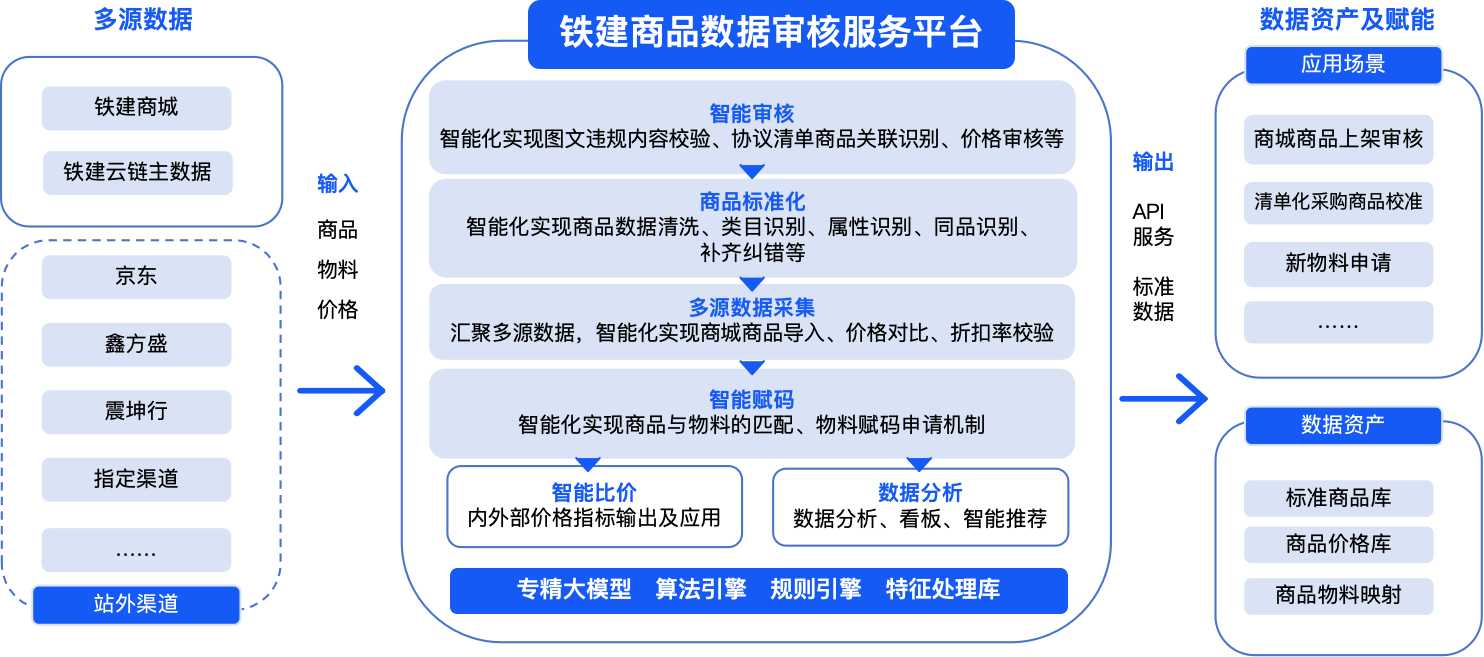
随着商城SKU持续扩张,商品信息庞杂、标准不一、数据孤岛林立,成为制约采购数字化升级的突出难题。针对这一痛点,铁建商城搭建起一体化数据治理架构,汇聚多源数据,依托大模型与算法引擎,形成完整数据链路。平台打通AI标准化处理,覆盖智能审核、类目识别、同品匹配与赋码,产出统一商品与价格数据库并开放API,配套风控引擎与行为分析,落地智能比价、供应商画像及采购推荐等应用,将零散数据转化为支撑决策与风控的数据资产,为非生产性物资数字化采购筑牢底层数据底座。

在数据治理架构层面,铁建商城构建了从数据采集、清洗、标准化到服务化的全链路数据治理体系。数据采集层汇聚来自ERP、SRM、财务系统、供应商系统等多源异构数据;数据清洗层利用大模型与规则引擎对原始数据进行去重、补全、校验与标准化处理;数据标准化层建立统一的物资编码体系与分类标准,实现跨系统、跨部门的数据互通;数据服务层通过开放API为上层应用提供高质量的数据服务。在集团层面,中国铁建已制定统一编码标准,50万余条标准编码为云链平台与其他业务系统的贯通协同奠定了坚实基础[2]。

针对建筑行业物资品类繁杂、属性多样的特点,铁建商城还构建了涵盖标准商品库、属性库与品牌库的“三库一体”数据体系,实现原本无序的商品信息标准化、规范化管理,为后续开展精准比价、智能推荐功能夯实数据根基,形成了建筑行业采购领域可复用、可推广的数据资产[3]。在AI应用落地方面,智能审核系统自动对商品信息进行合规性检查,覆盖类目准确性、图片规范性、参数完整性等多个维度;类目识别引擎利用图像识别与自然语言处理技术,自动识别商品所属类目并推荐标准分类;同品匹配引擎通过语义分析技术识别不同来源的同款商品,实现商品主数据的合并与去重;赋码引擎为每件商品生成唯一的标准化编码,确保全链路数据的一致性与可追溯性。铁建商城的实践,为非生产性物资的数字化采购提供了坚实的数据基础。

AI智能审核,源头把控商品信息质量

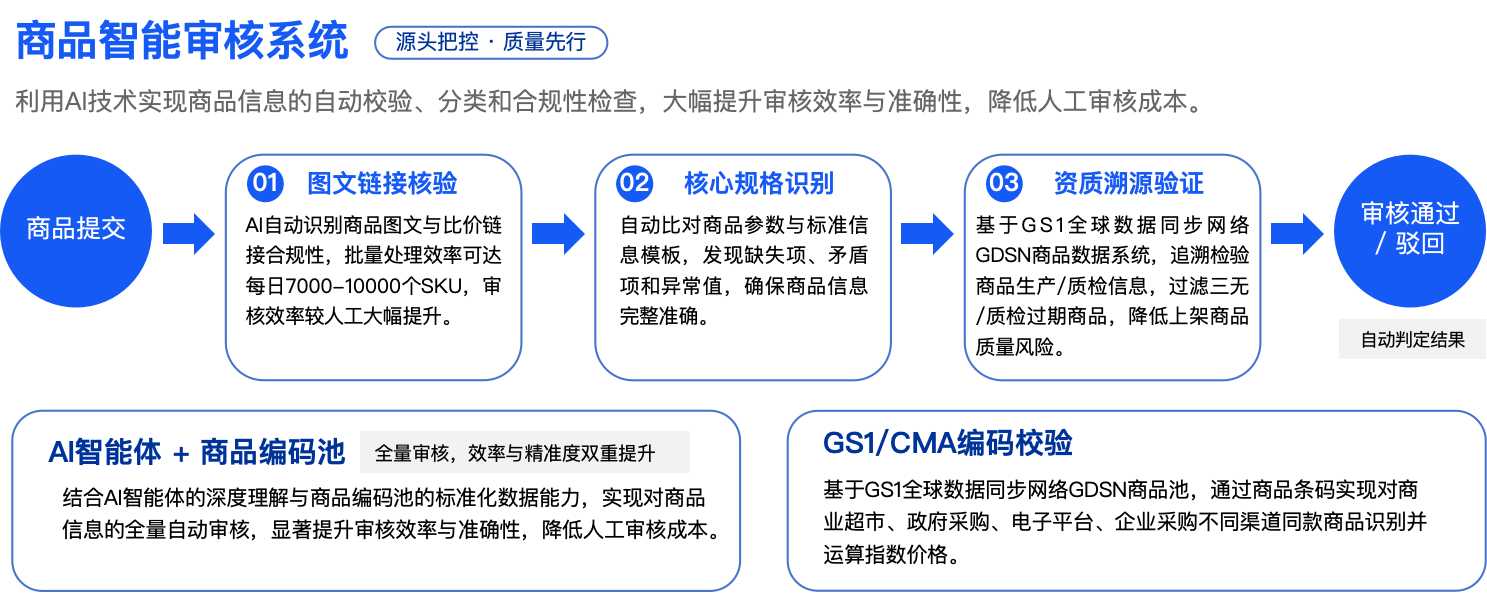
商品信息质量是电商化采购的生命线。铁建商城AI商品智能审核系统融合AI智能体与GS1编码体系,实现商品信息全流程自动化校验。系统围绕商品上架审核全链路,依次开展图文链接核验、核心规格识别、资质溯源验证三大环节工作,具备图文合规核验、核心规格比对及资质溯源验证能力,单日可处理7000至10000个SKU,审核效率相比人工模式大幅提升。

依托GS1与CMA编码体系,系统对接GS1全球数据同步网络GDSN商品池,可依托商品条码完成跨渠道同款商品识别与指数价格运算,自动过滤“三无”及资质过期商品,精准识别缺失项、矛盾项、异常参数,统一商品描述规范。系统深度嵌入商品上架、信息校准、物料申请等业务场景,在商品提交后自动完成合规性检查,智能判定审核通过或驳回,从源头清洗、规范原始物料数据。与此同时,平台严格按照物资设备管理相关规定建立标准化准入、线上交易、履约管控闭环体系,以“商城采购”为重要抓手压缩流通环节、规范采购流程、降低综合成本[4]。

从运营效果看,铁建商城围绕“规范透明、集约高效、数智赋能、协同共赢”建设目标,采用“撮合交易+平台自营”双轨模式,构建“1+N”制度体系及AI商品数据标准化治理机制,实现从商品定价、品质管控到供应商履约的全链条闭环管理[1]。2025年以来,商城平台将产品覆盖范围扩展至五金劳保、水暖贯通、电工电料、办公耗材等30余个核心品类,优质商品资源从6万条迅速增至58万条[5],商品准入与数据标准化能力经受住了规模化考验。在供应商端,严格的准入评审与质量溯源要求同样落地见效,例如中铁二十一局诚而信服装厂正是通过铁建商城全流程严格评审后入驻自营专区,并以“面料溯源、工艺巡检、出厂全检”三级质检体系匹配集采物资溯源、履约、售后全流程监管要求[4]。该模式充分发挥AI智能体深度理解能力与商品编码池标准化能力,在大幅压缩人工审核工作量、降低商品信息质量风险的同时,持续向标准商品库输送合规、结构化的高质量数据,以源头管控的思路提升平台商品信息质量,助力采购业务合规管理落地。

实时价格监测,智能支撑采购理性决策

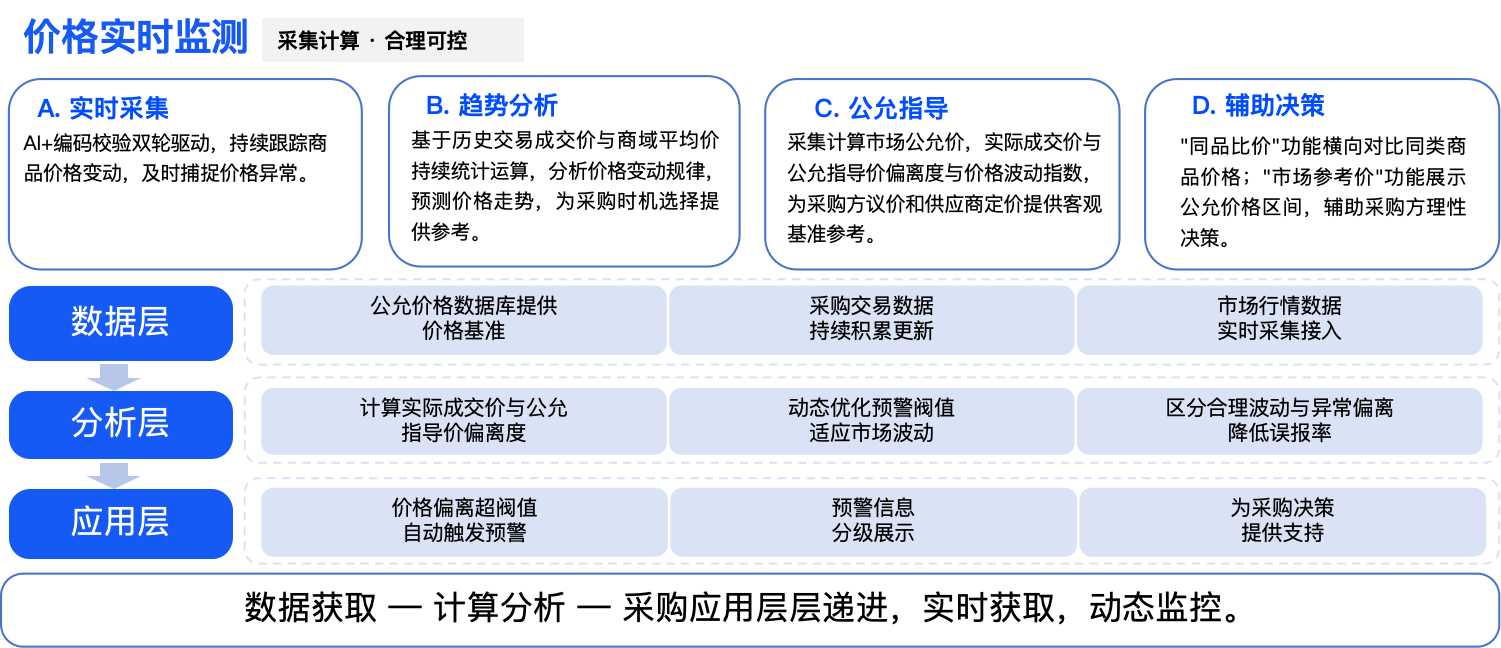
采购价格离散、缺乏公允锚点,长期困扰着非生产性物资采购的理性决策。铁建商城搭建AI驱动的价格实时监测体系,以AI加编码校验双轮驱动,实时抓取多渠道市场行情与内部交易数据,持续跟踪商品价格变动、捕捉价格异常;同时基于历史成交价与商城平均价开展趋势分析,统计价格变动规律、预测价格走势,为采购时机选择提供参考。

在公允价格机制上,系统通过采集计算市场公允价,动态生成公允指导价与价格波动指数,计算实际成交价与公允价的偏离度,区分合理波动与异常偏离并降低误报率;对异常高价进行分级预警,通过“同品比价”横向对比同类商品价格,“市场参考价”展示公允价格区间,为采供双方议价定价提供客观依据。平台沉淀海量数据形成公允价格数据库,联动风控模块持续迭代优化预警阈值,实现数据获取、计算分析到采购应用的层层递进,以量化数据扭转人工经验判断模式,实现采购价格全周期的数字化管控。在价格管控领域,铁建商城还依托大数据与AI技术实时分析市场行情,动态调整定价策略,实现标准商品“同屏比价”功能,并创新设置在线价格监督模块,建立公开透明的“全民监督”机制,形成“事前审查定标准、事中监测防偏差、事后反馈促优化”的全流程管控闭环[3]。

价格管控的成效直接体现在降本数据上。据中国铁建官网披露,依托数字技术赋能,铁建商城为各单位实现平均采购成本节约率超16%,流程效率提升40%,业务透明度100%[5]。从全系统口径看,二三类物资、办公用品商城采购中标价格较头部电商市场价格低19.5%,采购单位直接引用中国铁建采购成果,减少6个环节工作,采购效率提升60%[2]。早在平台运营初期,铁建商城平台采购与传统采购节资率即达10%至20%不等。截至2025年9月,平台年度交易额突破30亿元,累计节约采购成本超5亿元[3]。在线下供应端,铁建商城首个智慧分仓投入运营后,实现物资需求秒级响应、物资供应小时级送达,同步数据贯通打破信息壁垒,实现了采购系统与供应商ERP、WMS系统无缝对接,库存动态实时共享[6]。从线上比价到线下履约,铁建商城以全链条数据贯通,有效减少成本流失,助力采购方做出理性决策。

从“0”到“100亿”:数智化采购的央企样本

回望铁建商城的发展轨迹,一组时间节点清晰勾勒出央企采购电商化的成长曲线。2024年11月30日,中铁十一局项目率先完成全新版铁建商城首单业务,自下单到收到货物仅用时25小时,商城采购模式正式步入实施阶段;同年12月,铁建商城办公用品专区正式上线,截至2024年12月31日,中国铁建系统先后有26家单位累计下单58笔、成交金额8万余元。2025年4月25日,铁建商城累计交易额正式突破1亿元,从3月初至4月末仅35天即完成9000万元交易额的突破[5]。此后平台一路加速:截至2025年9月年度交易额突破30亿元[3];换新上线后一年时间内累计交易额突破57亿元[7];2026年6月12日,累计交易额正式突破100亿元[1]。

高速增长背后,是采购用户与供应商的双向协同。平台累计组织内部采购用户培训实操140场次,覆盖超5万人次,一线采购人员从“不会用”到“熟练用”,成为平台迭代升级的共建力量[1]。这一过程中,铁建商城的行业影响力持续提升——2025年9月斩获“中央企业最具影响力采购电商品牌”与“中央企业电商平台数智化创新领先企业”两项荣誉[3],同年12月又获评“2025年度中央企业集采供应链领军企业”[7]。面向未来,铁建商城将聚焦中国铁建“十五五”发展全局,围绕“数智铁建”“绿色铁建”战略方向,全面升级绿色供应链管理,优先推荐绿色建材、新能源装备等低碳产品,逐步落地员工福利业务、海外采购专区等功能,并深度融合“铁骥”大模型,构建自感知、自学习、自决策的智慧供应链体系,实现全链路可视、可控、可溯源,助推平台从电商化采购工具升级为具备综合服务能力的智慧供应链平台[1]。以数智架构为底座、以智能审核为关口、以价格监测为支撑,铁建商城正在为中国铁建乃至央企采购数字化转型,持续输出可复制、可推广的“铁建方案”。

信息来源

[1] 澎湃新闻·中国铁建官方澎湃号:《500天,0→100亿!》:https://m.thepaper.cn/newsDetail_forward_33377661

[2] 《中国铁道建筑报》:《供应链管理实现新跨越 高质量发展再上新台阶》:http://m.crcc.cn/html/2025-05/16/nw.D110000zgtdjzb_20250516_1-2.htm

[3] 中国铁建官网:《铁建商城斩获两项央企采购电商化荣誉》:https://www.crcc.cn/col/col1592/art/2025/art_01882d8ab8de45749aa5aed67a374b0d.html

[4] 中国铁建官网:《线上集采打通全系统供应通道(二十一局诚而信服装厂入驻铁建商城)》:https://www.crcc.cn/col/col43360/art/2026/art_dbb5c0fdc5ca464b8bbeb0bf910e89f0.html

[5] 中国铁建官网:《中铁物资:铁建商城采购交易突破亿元大关》:https://www.crcc.cn/col/col43360/art/2025/art_99247186c480455183e972d6930e44d7.html

[6] 中国铁建官网:《铁建商城首个智慧分仓正式投入运营》:https://www.crcc.cn/col/col17183/art/2025/art_2088869403.html

[7] 中国铁建官网:《铁建商城获“2025年度中央企业集采供应链领军企业”称号》:https://www.crcc.cn/col/col498/art/2025/art_339762b9ae5543c9935929754485f346.html

亿邦智库持续关注央国企数字化采购领域的最新进展,如想了解更多与本文相关信息,请扫码关注作者微信或发送邮箱。联系邮箱:zhangjing@ebrun.com

作为TO B领域年度风向标,“2026第八届亿邦产业互联网年会暨首届产业智能体大会”将于11月20日在北京召开。主题定为“AI与出海带来的模态进化”,聚焦产业智能体落地、AI供应链价值重构、数据要素与TOKEN经济、产业出海新生态等前沿议题深度思辨。大会将集结学界权威、央国企标杆、产业龙头、投资机构、服务生态伙伴,汇聚产业核心力量、拆解产业数智化转型路径、分享前沿实战经验。同期还将发布年度产业互联网报告及标杆案例,举办决策人闭门会、“千峰奖”颁奖盛典。

本文首发于 亿邦动力 官方网站

文章来源:亿邦动力

广告
微信
朋友圈

FAQ回顾

铁建商城是什么平台?主要服务哪些采购场景?

铁建商城是中国铁建的非生产性物资电商化采购平台,业务覆盖二三类物资、办公用品、员工福利、商城自营等场景,承担中国铁建供应链“三大采购”中的“商城采购”职能,并与智慧物流、循环物资、铁建云租、智能商旅、供应链金融共同构成“1363”铁建智慧供应链平台的六大业务板块。2026年6月12日,平台累计交易额突破100亿元。

央企自建电子商城如何解决商品信息标准不一、质量参差的问题?

可通过数据治理架构与AI智能审核从源头管控。铁建商城构建采集、清洗、标准化到服务化的全链路数据治理体系,形成标准商品库、属性库、品牌库“三库一体”体系;AI商品智能审核系统融合AI智能体与GS1编码体系,依次开展图文链接核验、核心规格识别、资质溯源验证,单日可处理7000至10000个SKU,并自动过滤“三无”及资质过期商品。

非生产性物资采购价格离散、缺乏公允价格参考,可以用什么方案管控?

可搭建AI驱动的价格实时监测体系。铁建商城实时抓取多渠道市场行情与内部交易数据,动态生成公允指导价与价格波动指数,计算成交价与公允价偏离度,对异常高价分级预警,并提供“同品比价”“市场参考价”和在线价格监督模块,形成事前审查、事中监测、事后反馈的全流程闭环。

央企电商化采购能带来哪些降本增效效果?

据中国铁建官网披露,依托数字技术赋能,铁建商城为各单位实现平均采购成本节约率超16%,流程效率提升40%,业务透明度100%;二三类物资、办公用品商城采购中标价格较头部电商市场价格低19.5%,采购单位直接引用中国铁建采购成果可减少6个环节工作,采购效率提升60%。截至2025年9月,平台累计节约采购成本超5亿元。

中央企业采购电商化转型有哪些可参考的平台实践?

铁建商城是可参考的央企样本:2024年战略重构后,2025年4月累计交易额突破1亿元,截至2025年9月年度交易额突破30亿元,2026年6月12日累计交易额突破100亿元;品类扩展至五金劳保、水暖贯通、电工电料、办公耗材等30余个核心品类,优质商品由6万条增至58万条,并获评“中央企业最具影响力采购电商品牌”等荣誉。

这么好看,分享一下?

朋友圈 分享

APP内打开

赞 +1
+1
微信好友 朋友圈 新浪微博 QQ空间
关闭
收藏成功
发送
/140 0