广告
加载中

继松鼠便利后 歪马送酒也“开门迎客”了

姜琪 2026-10-16 15:30
姜琪 2026/10/16 15:30

邦小白快读

EN
全文速览

这篇文章介绍了散酒消费的新动向,值得关注的是歪马送酒开起了线下鲜酒铺。它主打低度、新鲜、便宜、即饮,门店开在居民社区,卖啤酒、气泡米酒、纯粮白酒,还能按需按量购买、新鲜现打,很贴合年轻人夜间小酌的需求。

1.如果你想尝试或关注这个赛道,可以记住几个关键数据:2025年我国散酒市场规模已达800亿元,增速超过15%,未来可能突破千亿元。

2.歪马鲜酒铺是美团旗下歪马送酒孵化的实体店项目,已落地珠三角和川渝地区。其背后线上业务强势,歪马送酒门店超2400家,覆盖23个省份200多个市县,2025年交易额预计突破60亿元,核心卖点是15分钟送达和统一采购保真。

3.不过打酒铺生意并不好做,调研显示成都超半数打酒铺亏损,单店月入4万元才可能存活,现打鲜酒供应链半径有限、口感依赖短保配送,想入局要慎评估选址和运营成本。

散酒赛道正在成为品牌触达年轻人的新场景,歪马鲜酒铺的案例值得品牌商研究。它从线上送酒延伸到社区实体店,核心不是独立增长引擎,而是品牌触点,让歪马从手机图标变成社区里看得见、闻得到酒香的铺子,这种思路对提升品牌感知和信任度很有启发。

1.消费趋势上,低度、新鲜、便宜、即饮成为关键词,瞄准年轻人夜间小酌需求,门店扎根居民社区,按需购买、现打现卖,本质是围绕即时性和体验感做产品设计。

2.竞争格局已有多方入局:蜜雪冰城2025年9月以2.97亿元控股鲜啤福鹿家,后者门店突破3000家;盒马2026年5月在江苏开出盒马酒铺,以商超店中店试水现打散酒;古井贡酒推出轻养社·古井打酒铺,口子窖跟进口子酒坊;古茗也在杭州门店上线现打啤酒,单杯15元左右。

3.品牌商应关注散酒800亿元规模、超15%增速的市场机会,同时注意行业尚未跑出绝对标杆,成都超半数打酒铺亏损,单店月入4万元才能存活,布局前需想清楚品类组合、供应链半径和单店盈利模型。

散酒市场是一个增长较快的新渠道机会,值得卖家重点关注。文章显示2025年散酒市场规模已达800亿元,增速超15%,在传统酒业动销放缓背景下,这个赛道吸引了零售巨头、酒企和茶饮品牌涌入,存在明显的增量空间。

1.具体机会包括:歪马鲜酒铺在珠三角和川渝低调落地,主打社区店、现打鲜酒,瞄准夜间小酌场景;蜜雪冰城以2.97亿元控股鲜啤福鹿家,后者门店已突破3000家;唐三两、斑马侠、关爷等新式连锁品牌率先出圈并获得资本青睐,说明资本开始关注该赛道。

2.不过风险必须警惕:成都地区超半数打酒铺亏损,单店月入4万元才可能存活;现打鲜酒供应链半径有限,口感依赖短保配送,扩张速度受限,不适合盲目复制。

3.可学习的点是歪马送酒的线上线下联动模式:线上门店超2400家,覆盖23省200多市县,2025年交易额预计超60亿元,美团App酒水频道60%以上订单直接导流,这种流量入口优势能有效支撑线下门店冷启动。

散酒赛道为生产端和供应链端带来新的产品设计需求,工厂可以从中找到方向。歪马鲜酒铺、盒马酒铺等线下现打模式,要求酒水产品具备短保、新鲜、适合按量分装等特点,这对生产批次、包装规格和保质期管理提出了更高要求。

1.商业机会上,散酒市场规模已达800亿元且增速超15%,啤酒、气泡米酒、纯粮白酒等品类都有布局空间,工厂可关注鲜啤、短保质期酒饮等细分品类的产能配套。

2.在数字化和电商启示方面,歪马送酒门店超2400家,2025年交易额预计破60亿元,其线上订单导流线下铺子的模式,说明生产端也需要适应多渠道订单和即时配送需求,工厂可以考虑通过数字化系统对接前置仓或门店库存,减少短保产品损耗。

3.同时注意供应链半径限制:现打鲜酒口感依赖短保配送,成都超半数打酒铺亏损的现状也提醒工厂,不能只追求产能扩张,而要配合有效的冷链物流和区域化生产布局,才能帮助下游提升存活率。

散酒和鲜酒铺赛道正在形成新服务需求,行业趋势是低度、新鲜、即饮的社区零售形态。歪马送酒500强背景带来了线上线下一体化打法,其线下鲜酒铺与线上业务协同,服务商可关注其中的系统打通、门店运营和供应链管理机会。

1.客户痛点很明确:现打鲜酒供应链半径有限,口感依赖短保配送,成都超半数打酒铺亏损,单店月入4万元才可能存活,说明行业急需能降低损耗、提升履约效率的解决方案。

2.解决方案方面,可以围绕短保商品的全链路数字化做文章,包括库存预测、动销监控、路线规划、温控配送等,帮助门店扩大服务半径并控制成本。

3.歪马送酒的案例展示了流量优势如何赋能线下:美团App酒水频道60%以上订单直接导流,15分钟送达体系成熟,服务商可借鉴其线上线下联动逻辑,为传统打酒铺提供私域运营、即时零售接入和会员管理工具,帮助它们摆脱纯线下依赖。

平台商可以从歪马送酒的最新动作中看到线下布局和流量打法。歪马鲜酒铺是美团旗下歪马送酒孵化的实体店项目,已落地珠三角和川渝,定位社区店,主打低度、新鲜、便宜、即饮。说明平台自营品牌开始从线上走向线下,通过实体店增强品牌触点,把酒香渗透到社区。

1.平台的最新做法包括:继松鼠便利在上海启动店仓一体试点后,歪马送酒也开门迎客;线上歪马送酒门店突破2400家,覆盖23省200多市县,2025年交易额预计破60亿元;骑手15分钟送达,美团统一采购确保货品真实,美团App酒水频道60%以上订单直接导流,这种流量入口优势是其他玩家难以复制的。

2.平台商可以思考的是,如何为线下门店提供商圈选址、门店管理、履约配送等支持,帮助入驻或合作商家降低亏损风险。文章提到成都超半数打酒铺亏损,单店月入4万元才能存活,行业没有绝对标杆,说明粗放式开店不可行,平台需要输出更精细的运营标准。

3.同时要注意风向控制:现打鲜酒供应链半径有限,扩张速度受限,平台商在招商和运营管理时,应优先服务供应链体系成熟、短保能力强的合作伙伴,避免为了规模而牺牲门店质量。

散酒赛道兴起反映了酒类流通产业的新动向:在传统酒业动销放缓时,现打鲜酒、社区酒铺等新业态吸引多方资本和品牌入局。这个案例值得从商业模式和产业政策角度深入研究。

1.产业新动向方面,2025年散酒市场规模已达800亿元,增速超15%;参与主体包括互联网平台美团旗下歪马送酒、茶饮品牌蜜雪冰城、商超盒马、传统酒企古井贡酒和口子窖,以及新式连锁品牌唐三两、斑马侠、关爷等,呈现多元化竞争格局。

2.商业模式上,歪马鲜酒铺不是独立增长引擎,更像品牌触点,将线上2400多家门店、60亿元交易额、15分钟送达和美团App导流能力延伸到线下社区场景;但线下打酒铺盈利模型尚不成熟,成都超半数门店亏损,单店月入4万元才能存活,现打鲜酒供应链半径和短保配送制约扩张。

3.政策法规和行业治理启示方面,需要关注短保现打酒品的食品安全标准、冷链配送规范以及社区门店的选址监管,同时产业政策可考虑扶持供应链基础设施和数字化系统建设,帮助这一新业态从烧钱扩张走向可持续盈利。

返回默认

声明:快读内容全程由AI生成,请注意甄别信息。如您发现问题,请发送邮件至 run@ebrun.com 。

我是 品牌商 卖家 工厂 服务商 平台商 研究者 帮我再读一遍。

Quick Summary

This article examines a new trend in bulk liquor consumption, with notable focus on Waimai Songjiu opening offline fresh liquor stores. These stores emphasize low-alcohol, fresh, affordable, ready-to-drink products, are located in residential communities, and offer beer, sparkling rice wine, and pure-grain baijiu, sold by quantity as needed and freshly tapped. This fits young people's late-night drinking needs.

1. For those exploring this space: China's bulk liquor market reached RMB 80 billion in 2025, growing over 15%, and may exceed RMB 100 billion in the future.

2. Waimai Fresh Liquor Store is an offline retail project incubated by Meituan's Waimai Songjiu, launched in the Pearl River Delta and the Sichuan-Chongqing region. Its online business is strong: over 2,400 Waimai Songjiu stores cover 200-plus cities across 23 provinces, and 2025 transaction value is expected to surpass RMB 6 billion. Core selling points are 15-minute delivery and unified procurement for authenticity.

3. However, the taproom business is tough: surveys show more than half of Chengdu taprooms are loss-making, and a single store needs monthly revenue of RMB 40,000 to survive. Freshly tapped liquor has a limited supply chain radius, and flavor depends on short-shelf-life delivery. Entrants should carefully evaluate location and operating costs.

Bulk liquor is becoming a new scene for brands to reach young consumers, and Waimai Fresh Liquor Store offers a useful case. It extends from online delivery to community physical stores, not as an independent growth engine but as a brand touchpoint, turning Waimai from a phone icon into a neighborhood store where customers can see and smell the liquor. This logic is instructive for brand awareness and trust.

1. Consumption trends: low-alcohol, fresh, affordable, and ready-to-drink are the keywords, targeting late-night drinking demand. Stores are rooted in residential communities and sell on demand with fresh-tapped products, essentially product design built around immediacy and experience.

2. Competitive landscape: Mixue Bingcheng acquired a controlling stake in Fresh Beer Fulujia for RMB 297 million in September 2025, and the latter now has over 3,000 stores. Hema opened Hema Liquor Store in Jiangsu in May 2026 as an in-store pilot for fresh-draft bulk liquor. Gujing Gongjiu launched Qingshe·Gujing Dajiupu, and Kouzijiao followed with Kouzi Wine Shop. Guming also introduced fresh-draft beer at its Hangzhou stores for around RMB 15 per cup.

3. Brands should note the RMB 80 billion market opportunity with over 15% growth. But the industry has no absolute benchmark yet: more than half of Chengdu taprooms are unprofitable, and a single store needs RMB 40,000 monthly revenue to survive. Before expansion, brands must think through category mix, supply chain radius, and unit economics.

The bulk liquor market is a fast-growing new channel opportunity worth sellers' attention. According to the article, the market reached RMB 80 billion in 2025, growing over 15%. With traditional liquor sales slowing, this track has attracted retail giants, liquor companies, and tea beverage brands, indicating clear incremental space.

1. Specific opportunities: Waimai Fresh Liquor Store has quietly launched in the Pearl River Delta and the Sichuan-Chongqing region, focusing on community stores and fresh-tapped liquor for late-night occasions. Mixue Bingcheng acquired Fresh Beer Fulujia for RMB 297 million, and the latter has over 3,000 stores. New-style chains such as Tangsanliang, Banmaxia, and Guanye are gaining visibility and capital, showing investor interest in the track.

2. Risks must be heeded: more than half of Chengdu taprooms are loss-making, and a store needs RMB 40,000 monthly revenue to survive. Fresh-tapped liquor has a limited supply chain radius and depends on short-shelf-life delivery, constraining expansion and making blind replication unsuitable.

3. A lesson from Waimai Songjiu is its online-offline linkage: over 2,400 stores across 200-plus cities in 23 provinces, estimated transaction value exceeding RMB 6 billion in 2025, and more than 60% of orders directed from Meituan App's alcohol channel. Such traffic advantages can effectively support offline store cold starts.

The bulk liquor track creates new product design requirements for production and supply chain, and manufacturers can find direction here. Offline fresh-draft models such as Waimai Fresh Liquor Store and Hema Liquor Store require products with short shelf life, freshness, and suitability for on-demand portioning, raising demands on batch production, packaging specifications, and shelf-life management.

1. Business opportunity: the bulk liquor market has reached RMB 80 billion and is growing over 15%; beer, sparkling rice wine, and pure-grain baijiu all have room. Factories can focus on capacity for fresh beer and short-shelf-life drinks.

2. Digital and e-commerce implications: Waimai Songjiu has over 2,400 stores and projected 2025 transaction value above RMB 6 billion. Its model of online orders guiding offline stores shows that production must adapt to multi-channel orders and instant delivery. Factories can use digital systems to connect with front warehouses or store inventory and reduce short-shelf-life losses.

3. Supply chain radius constraints: fresh-tapped liquor depends on short-shelf-life delivery. More than half of Chengdu taprooms losing money reminds factories not to chase capacity expansion alone; they need effective cold-chain logistics and regional production layouts to help downstream players survive.

The bulk liquor and fresh liquor store track is generating new service demand. The industry trend is low-alcohol, fresh, ready-to-drink community retail. Waimai Songjiu, backed by a Fortune 500 parent, brings an integrated online-offline play, with offline fresh stores coordinated with its online business. Service providers can explore system integration, store operations, and supply chain management opportunities.

1. Client pain points are clear: fresh-tapped liquor has a limited supply chain radius, flavor depends on short-shelf-life delivery, more than half of Chengdu taprooms lose money, and a single store needs RMB 40,000 monthly revenue to survive. The industry urgently needs solutions that reduce losses and improve fulfillment efficiency.

2. Solutions can center on full-chain digitalization for short-shelf-life products, including inventory forecasting, sell-through monitoring, route planning, and temperature-controlled delivery, helping stores expand service radius and control costs.

3. Waimai Songjiu's case demonstrates how traffic advantages empower offline: Meituan App's alcohol channel directs over 60% of orders, and its 15-minute delivery system is mature. Service providers can borrow this online-offline logic to give traditional taprooms private traffic operations, instant retail access, and membership management tools, reducing their pure offline dependence.

Platform operators can see the offline expansion and traffic play in Waimai Songjiu's latest move. Waimai Fresh Liquor Store is a physical-store project incubated by Meituan's Waimai Songjiu, launched in the Pearl River Delta and the Sichuan-Chongqing region and positioned as community stores with low-alcohol, fresh, affordable, ready-to-drink products. This shows platform-owned brands moving from online to offline, using physical stores to strengthen brand touchpoints and bring the aroma of liquor into communities.

1. Latest platform actions: after Squirrel Convenience launched a store-warehouse integrated pilot in Shanghai, Waimai Songjiu also opened its doors. Waimai Songjiu stores exceed 2,400, covering over 200 cities across 23 provinces, with 2025 transaction value expected to exceed RMB 6 billion. Riders deliver in 15 minutes, Meituan's unified procurement ensures authenticity, and Meituan App's alcohol channel directs more than 60% of orders. This traffic advantage is hard for other players to replicate.

2. Platform operators should consider how to provide site selection, store management, and fulfillment support to reduce loss risk for merchants. The article notes that more than half of Chengdu taprooms lose money and a store needs RMB 40,000 monthly revenue to survive. With no absolute benchmark in the industry, rough expansion will not work; platforms need more refined operating standards.

3. Risk control is also important: fresh-tapped liquor has a limited supply chain radius and expansion speed is constrained. When recruiting and managing merchants, platforms should prioritize partners with mature supply chains and strong short-shelf-life capabilities, avoiding sacrificing store quality for scale.

The rise of the bulk liquor track reflects new dynamics in liquor distribution: while traditional liquor sales slow, fresh-tapped liquor and community liquor stores are attracting capital and brands from multiple sectors. This case deserves deeper study from business model and industrial policy perspectives.

1. Industry dynamics: China's bulk liquor market reached RMB 80 billion in 2025, growing over 15%. Participants include Meituan's Waimai Songjiu, tea beverage brand Mixue, supermarket Hema, traditional liquor makers Gujing Gongjiu and Kouzijiao, and new-style chains Tangsanliang, Banmaxia, and Guanye, forming a diversified competitive landscape.

2. Business model: Waimai Fresh Liquor Store is not an independent growth engine but a brand touchpoint that extends its over 2,400 stores, RMB 6 billion transaction value, 15-minute delivery, and Meituan App traffic to offline community scenarios. However, the offline taproom model is not yet mature: more than half of Chengdu stores are loss-making, a single store needs RMB 40,000 monthly revenue to survive, and the supply chain radius and short-shelf-life delivery constrain expansion.

3. Policy and governance implications: regulators need to address food safety standards for short-shelf-life fresh-draft liquor, cold-chain delivery norms, and site-selection oversight for community stores. Industrial policy could support supply-chain infrastructure and digital systems to help this new model move from cash-burning expansion to sustainable profitability.

Disclaimer: The "Quick Summary" content is entirely generated by AI. Please exercise discretion when interpreting the information. For issues or corrections, please email run@ebrun.com .

I am a Brand Seller Factory Service Provider Marketplace Seller Researcher Read it again.

【亿邦原创】继松鼠便利在上海启动“店仓一体”试点后,美团旗下另一自营品牌歪马送酒也悄然走到了线下。亿邦动力获悉,歪马送酒孵化的实体店项目“歪马鲜酒铺”已在珠三角及川渝地区低调落地。

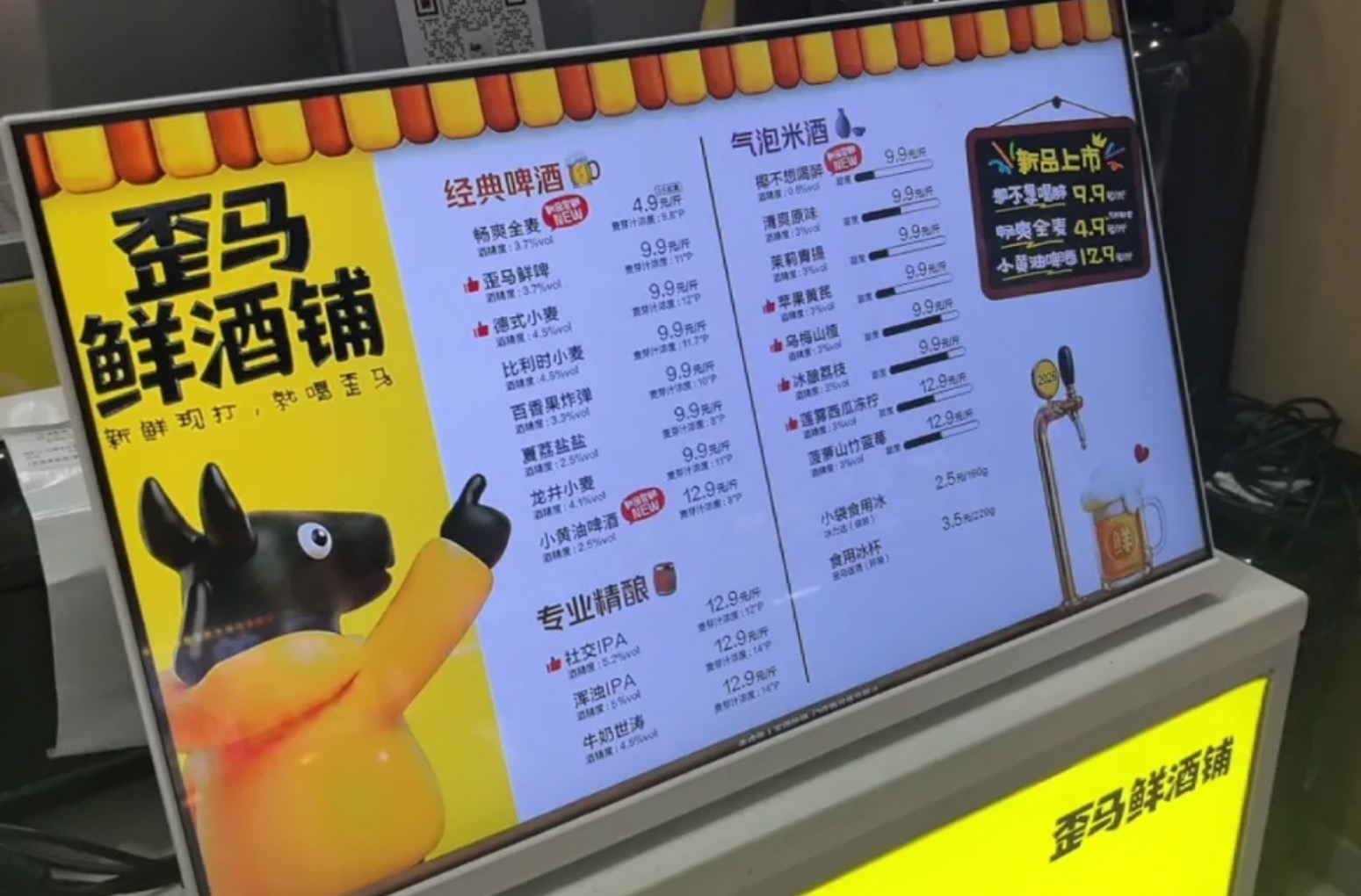
与传统烟酒店相比,歪马鲜酒铺主打的是低度、新鲜、便宜、即饮。门店多扎根居民社区,包含啤酒、气泡米酒、纯粮白酒等品类,可按需按量购买,新鲜现打,瞄准年轻人夜间小酌需求。

有数据显示,2025年我国散酒市场规模已达800亿元,增速逾15%,若保持这一态势,未来有望突破千亿元。传统酒业动销放缓之际,散酒赛道反而吸引了零售巨头、酒企再到茶饮品牌等多方参与者。

蜜雪冰城2025年9月以2.97亿元控股鲜啤福鹿家,后者门店已突破3000家;盒马于2026年5月在江苏开出盒马酒铺,以商超店中店形式试水现打散酒;古井贡酒推出“轻养社·古井打酒铺”,口子窖跟进“口子酒坊”;新式连锁品牌中,唐三两、斑马侠、关爷等率先出圈并获得资本青睐;古茗也在杭州一家门店低调上线现打啤酒,单杯15元左右。

歪马鲜酒铺的线下试水,同时建立在线上业务的强势增长之上。公开数据显示,歪马送酒门店已突破2400家,覆盖23个省份、200多个市县,2025年交易额预计突破60亿元。其核心能力在于“快”与“真”:骑手15分钟送达,美团统一采购确保货品真实,美团App酒水频道60%以上订单直接导流,这一流量入口优势其他玩家难以复制。

线下鲜酒铺在这个棋局中的角色,或许并非独立的增长引擎,而更像一个品牌触点:让“歪马”从手机里的一个图标,变成社区里看得见、闻得到酒香的一间铺子。

但打酒铺的生意并不好做。有实地调研显示,成都地区超半数打酒铺处于亏损状态,单店月入4万元才可能存活,行业尚未跑出绝对标杆。现打鲜酒的供应链半径有限,口感依赖短保配送,扩张速度也注定无法与前置仓模式相比。

亿邦持续追踪报道该情报,如想了解更多与本文相关信息,请扫码关注作者微信。

本文首发于 亿邦动力 官方网站

文章来源:亿邦动力

广告
微信
朋友圈

FAQ回顾

歪马送酒是什么?

歪马送酒是美团旗下的自营酒水即时零售品牌,核心能力是“快”与“真”:骑手15分钟送达,美团统一采购确保货品真实。截至2025年,其门店已突破2400家,覆盖23个省份、200多个市县,2025年交易额预计突破60亿元,美团App酒水频道贡献60%以上订单。

歪马鲜酒铺是什么?

歪马鲜酒铺是歪马送酒孵化的线下实体店项目,已在珠三角及川渝地区落地。与传统烟酒店相比,它主打低度、新鲜、便宜、即饮,门店扎根居民社区,包含啤酒、气泡米酒、纯粮白酒等品类,支持按需按量购买、新鲜现打,瞄准年轻人夜间小酌需求。

散酒/现打鲜酒市场前景怎么样?

散酒市场正处于增长期:2025年我国散酒市场规模已达800亿元,增速逾15%,未来有望突破千亿元。传统酒业动销放缓,而零售巨头、酒企、茶饮品牌等纷纷入局,如蜜雪冰城控股鲜啤福鹿家、盒马开出盒马酒铺,赛道热度明显上升。

开一家打酒铺能赚钱吗?

开打酒铺并不容易。实地调研显示,成都地区超半数打酒铺处于亏损状态,单店月入4万元才可能存活,行业尚未跑出绝对标杆。现打鲜酒的供应链半径有限,口感依赖短保配送,扩张速度注定无法与前置仓模式相比。

散酒/现打鲜酒赛道有哪些代表玩家?

散酒/现打鲜酒赛道玩家众多:蜜雪冰城2025年9月以2.97亿元控股鲜啤福鹿家,门店超3000家;盒马2026年5月在江苏开出盒马酒铺;古井贡酒推出“轻养社·古井打酒铺”,口子窖跟进“口子酒坊”;唐三两、斑马侠、关爷等新式连锁品牌获资本青睐;古茗也在杭州门店上线现打啤酒。

这么好看,分享一下?

朋友圈 分享

APP内打开

赞 +1
+1
微信好友 朋友圈 新浪微博 QQ空间
关闭
收藏成功
发送
/140 0