广告
加载中

这类飞行玩具将有新国标!

中外玩具网 2026-10-16 13:29
中外玩具网 2026/10/16 13:29

邦小白快读

EN
全文速览

总:新国标对飞行玩具提出更细更严的要求,消费者可通过几个要点识别合规产品。

1.看品类边界:合规飞行玩具属自备动力、全程人工操控、不载人、无拍摄无测控的遥控玩具,真高30米以下、起飞重量低于250克、无线距离100米内;凡是带摄像头、图传或自主航线的产品都不能按玩具购买,属于民用无人机管理。

2.看安全参数:平飞速度不超过每秒5米,高度由气压或固件限定且用户不可改,电机功率受限,桨叶应有全护圈、柔性桨等防护设计,跌落不漏液不起火。

3.看标识与警示:包装应标自备动力系统的飞行玩具,14岁以下产品还要符合通用玩具安全新国标,说明书需有限高、限速、适用年龄、螺旋桨可致伤等警示。

总:新国标征求意见稿让飞行玩具的安全设计成为品牌竞争的关键,产品研发和标识都必须跟上。

1.产品研发与定位:品牌需按照参数锁死要求开发产品,关闭高级模式或调速档,采用防篡改固件和结构,在桨叶、跌落、电池等方面达到安全指标,并以安全设计作为品牌卖点。

2.标识与品类管理:产品本体、说明书、外包装都要标自备动力系统的飞行玩具,避免因超边界被归为微型无人机或模型航空器,影响品牌定位和销售许可。

3.消费趋势洞察:新国标加通用玩具安全新国标后,14岁以下飞行玩具需双标并行,消费者会越来越看重安全和合规记录,品牌可通过检测报告和明确警示提升信任度,同时用限高限速、防篡改功能回应家长对儿童安全的关切。

总:新国标公示意味着飞行玩具市场将迎政策洗牌,卖家需及时调整选品和运营策略。

1.政策与时间窗:征求意见稿公示期为2026年10月14日至11月12日,正式发布后拟12个月实施,卖家可在过渡期做差距自测,淘汰超标库存。

2.风险提示:带摄像头、限高超限、速度多档、外包装未标自备动力系统的飞行玩具的SKU已判不符合,应优先淘汰或重新定型,避免后续处罚和客诉。

3.正面机会:符合边界的飞行玩具仍属玩具管理,免无人机唯一识别码和生产备案,作为低门槛品类有增长空间,合规产品可强调安全与资质。

4.应对措施:对照标准自查App、遥控器和固件,关闭解除限高、调速超速、改半径等功能;商品详情不要宣称远程图传或超出标准的性能。

总:工厂应依据征求意见稿预判产品设计、生产与送检要求,避免正式稿实施后被动整改。

1.设计与参数锁死:平飞速度≤5m/s,真高≤30米且用户不可改,无线半径≤100米,起飞重量<250g,不预留外挂点、绑扎孔或扩展电池插头;无刷电机防篡改不能用结构限位,需改用胶粘、一体成型、防拆螺丝或微波熔焊等组合。

2.动力电池约束:只用锂电等常规电动力,旋翼总拉力≤自重1.25倍,单电机功率≤104.2/N瓦;锂电池按GB31241.4执行,可换电池需标极性容量,机内充电时整机不可启动。

3.结构与材料:桨叶边缘修圆,优先全护圈或柔性桨;静态1.5倍自重载荷无裂纹、最大油门半使用时间不飞脱、满电10米六方向跌落不漏液不起火;金属温升≤36K、塑料≤55K,禁用赛璐珞等高燃材料。

4.送检准备:14岁以下产品还需叠加GB6675.1—4化学限制,可先按征求意见稿做固件锁参、预送样,正式稿发布后再按最终文本补全项。

总:新国标为企业带来合规改造与检测认证需求,服务商可围绕这些痛点提供方案。

1.行业趋势:飞行玩具从普通玩具中单列强标,安全要求大幅提升,检测认证市场将扩大,尤其是飞行专项加玩具安全新国标双重需求的客户。

2.客户痛点:大量在产SKU可能因摄像头、限高、多档速度、标识缺失等被判不符合;企业缺乏飞行参数锁死和防篡改设计能力,需要软件固件升级和结构整改。

3.解决方案:可提供差距自测、预送样服务,帮助企业关闭高级模式和调速功能,用胶粘、一体成型、防拆螺丝或微波熔焊等满足防篡改要求;无线电部分需按2.4G微功率标准设计,频率容限、杂散发射都要达标。

4.延伸服务:协助完善说明书警示、外包装标识,以及14岁以下产品叠加GB6675系列的化学检测,形成一站式合规服务。

总:平台商应把新国标纳入招商和运营管理,提前规避政策风险。

1.商品审核风向:重点关注带摄像头、图传、限高超限、速度多档、外包装未标自备动力系统的飞行玩具等不符合项,对违规SKU优先下架或要求整改。

2.招商标准:要求飞行玩具商家提供按新强标检测的报告,优先引入合规供应商;对不能确认品类的产品,引导商家按民用无人机管理思路办理实名备案。

3.运营管理:在标准正式发布后,按发布后12个月实施节奏设置平台合规过渡期,更新平台飞行玩具类目规则,明确禁止远程图传等易违规宣传。

4.风险规避提示:提醒商家关注公示期和正式稿,及时修改商品参数与描述,平台同步建立巡查机制,防止不合规商品引发投诉和监管处罚。

总:新国标征求意见稿体现飞行玩具监管从分散走向专项化,值得研究其对产业和公共安全的影响。

1.产业新动向:标准以自备动力系统、无拍摄测控等条件划清玩具与无人机的边界,既防止民用无人驾驶航空器借玩具之名逃避监管,也补足飞行玩具的安全标准缺口,反映分类监管思路。

2.技术规制特点:通过参数锁死、固件加密、防篡改、无线电微功率等手段提高违规成本,代表强制性标准对产品软件和硬件双重约束的新模式。

3.政策启示:征求意见稿与新版玩具安全GB6675.1—4-2025形成通用加专项的叠加体系,14岁以下产品需双标并行,相关执行细则和实施时间需要企业提前适应。

4.研究建议:可进一步跟踪正式稿发布、实施过渡期表现,分析飞行玩具合格率变化,评估标准对产品创新和孩子安全的影响。

返回默认

声明:快读内容全程由AI生成,请注意甄别信息。如您发现问题,请发送邮件至 run@ebrun.com 。

我是 品牌商 卖家 工厂 服务商 平台商 研究者 帮我再读一遍。

Quick Summary

Overview: The new national standard imposes more detailed and stringent requirements on flying toys, and consumers can identify compliant products by checking a few key points.

1. Understand the category boundary: Compliant flying toys are remote-controlled toys with self-contained power, fully manual control, no passengers, and no camera, telemetry, or measurement/control functions. They must operate below a true altitude of 30 meters, have a takeoff weight under 250 grams, and a wireless range within 100 meters. Any product with a camera, image transmission, or autonomous route cannot be purchased as a toy and falls under civil unmanned aircraft management.

2. Check safety parameters: Level flight speed must not exceed 5 meters per second; altitude is limited by air pressure or firmware and cannot be changed by users; motor power is restricted; propellers should have full guards, flexible blades, and other protective designs; and the product must not leak liquid or catch fire after a drop.

3. Look at markings and warnings: The packaging should indicate that it is a flying toy with a self-contained power system. Products for children under 14 must also comply with the new general toy safety national standard. The instruction manual must include warnings about altitude limits, speed limits, applicable age, and the risk of propeller injury.

Overview: The draft national standard makes safety design a key competitive factor for brands in the flying toy market, and both product development and labeling must keep pace.

1. Product R&D and positioning: Brands need to develop products in line with the parameter-locking requirements, disable advanced modes or speed gears, adopt tamper-resistant firmware and structures, meet safety indicators for propellers, drops, batteries, and use safety design as a brand selling point.

2. Labeling and category management: The product body, instruction manual, and outer packaging must all identify the product as a flying toy with a self-contained power system, to avoid being classified as a micro unmanned aircraft or model aircraft due to boundary violations, which could affect brand positioning and sales permits.

3. Consumer trend insights: With the new national standard plus the new general toy safety standard, flying toys for children under 14 must comply with both standards concurrently. Consumers will increasingly value safety and compliance records. Brands can build trust through test reports and clear warnings, while responding to parents' concerns about children's safety with altitude/speed limits and tamper-resistant features.

Overview: The public comment period for the new national standard signals a policy reshuffle in the flying toy market, and sellers need to adjust their product selection and operational strategies promptly.

1. Policy and timeline: The draft standard is open for public comment from October 14 to November 12, 2026, and is expected to be implemented 12 months after official release. Sellers can conduct gap self-assessments during the transition period and phase out excess non-compliant inventory.

2. Risk warnings: SKUs with cameras, altitude limits exceeding the standard, multiple speed gears, or outer packaging not labeled as a flying toy with a self-contained power system are deemed non-compliant. These should be prioritized for removal or re-qualification to avoid penalties and customer complaints.

3. Positive opportunities: Flying toys that stay within the boundary remain under toy management, are exempt from the unique identification code and production filing requirements for drones, and have growth potential as a low-barrier category. Compliant products can emphasize safety and certification.

4. Action items: Compare your apps, remote controllers, and firmware against the standard, and disable functions that unlock altitude limits, enable over-limit speed, or change the operating radius. Do not claim long-distance image transmission or performance beyond the standard in product descriptions.

Overview: Factories should anticipate product design, production, and testing requirements based on the draft national standard, avoiding reactive corrective actions after the final standard is implemented.

1. Design and parameter locking: Level flight speed ≤ 5 m/s, true altitude ≤ 30 meters and not user-adjustable, wireless range ≤ 100 meters, takeoff weight < 250 g, and no reserved external mounting points, lashing holes, or expansion battery plugs. For brushless motors, tamper resistance cannot rely on mechanical stops; use a combination of adhesive bonding, one-piece molding, tamper-proof screws, or microwave welding.

2. Battery and power constraints: Use only conventional electric power such as lithium batteries; total rotor thrust ≤ 1.25 times the aircraft's own weight; single motor power ≤ 104.2/N watts. Lithium batteries must comply with GB31241.4. Replaceable batteries must be marked with polarity and capacity; when charging via the built-in port, the aircraft must not be able to start.

3. Structure and materials: Propeller edges should be rounded, with full guards or flexible propellers preferred; no cracks under a static load of 1.5 times the aircraft's own weight; no propeller detachment after running at full throttle for half the service life; no liquid leakage or fire after a six-direction drop from 10 meters at full charge; metal temperature rise ≤ 36 K, plastic ≤ 55 K; high-flammability materials such as celluloid are prohibited.

4. Testing preparation: Products for children under 14 must also meet the chemical restrictions of GB6675.1-4. You can lock firmware parameters and send pre-samples based on the draft standard, then complete all items per the final text after official release.

Overview: The new national standard creates demand for compliance upgrades, testing, and certification. Service providers can offer solutions around these pain points.

1. Industry trends: Flying toys are now subject to a dedicated mandatory standard separate from general toys, significantly raising safety requirements. The testing and certification market will expand, particularly for clients who need both flight-specific testing and the new general toy safety standard.

2. Client pain points: A large number of existing SKUs may be deemed non-compliant due to cameras, excessive altitude limits, multiple speed gears, or missing labels. Companies often lack the capability to lock flight parameters and implement tamper-resistant designs, requiring software/firmware upgrades and structural modifications.

3. Solutions: Offer gap self-assessments and pre-sampling services, help companies disable advanced modes and speed adjustment functions, and meet tamper-resistance requirements through adhesive bonding, one-piece molding, tamper-proof screws, or microwave welding. For the radio part, designs should follow the 2.4G micro-power standard, with frequency tolerance and spurious emissions meeting requirements.

4. Extended services: Assist with improving manual warnings, outer packaging labels, and chemical testing under the GB6675 series for products for children under 14, providing a one-stop compliance service.

Overview: Marketplace platforms should incorporate the new national standard into their merchant recruitment and operations management, managing policy risks in advance.

1. Product review direction: Focus on non-compliance issues such as cameras, image transmission, excessive altitude limits, multiple speed gears, and outer packaging lacking the self-contained power system label. Prioritize delisting non-compliant SKUs or requiring corrective action.

2. Recruitment standards: Require flying toy sellers to provide test reports under the new mandatory standard, and prioritize compliant suppliers. For products whose category cannot be confirmed, guide sellers to complete real-name filing in line with civil unmanned aircraft management.

3. Operations management: After the standard is officially published, set a platform compliance transition period consistent with the 12-month implementation timeline, update category rules for flying toys, and clearly prohibit potentially non-compliant claims such as long-distance image transmission.

4. Risk mitigation reminders: Remind sellers to monitor the public comment period and the final text, modify product parameters and descriptions in a timely manner, and establish a platform review mechanism to prevent non-compliant products from triggering complaints and regulatory penalties.

Overview: The draft national standard reflects a shift in flying toy regulation from fragmented rules to a dedicated framework, and its impact on industry and public safety merits study.

1. New industry dynamics: The standard draws a clear boundary between toys and drones using conditions such as self-contained power systems and no camera/telemetry functions. This prevents civil unmanned aircraft from evading regulation under the guise of toys, fills the safety standard gap for flying toys, and reflects a classified regulatory approach.

2. Technical regulatory features: By using parameter locking, firmware encryption, tamper resistance, and micro-power radio transmission to raise the cost of non-compliance, the standard represents a new model of mandatory standards imposing dual constraints on product software and hardware.

3. Policy implications: The draft national standard, together with the new toy safety standard GB6675.1-4-2025, forms an overlapping system of general and special requirements. Products for children under 14 must meet both standards, and companies need to adapt in advance to the implementation rules and timeline.

4. Research suggestions: Further tracking of the final standard's release and the transition period, analysis of changes in flying toy pass rates, and evaluation of the standard's impact on product innovation and children's safety are recommended.

Disclaimer: The "Quick Summary" content is entirely generated by AI. Please exercise discretion when interpreting the information. For issues or corrections, please email run@ebrun.com .

I am a Brand Seller Factory Service Provider Marketplace Seller Researcher Read it again.

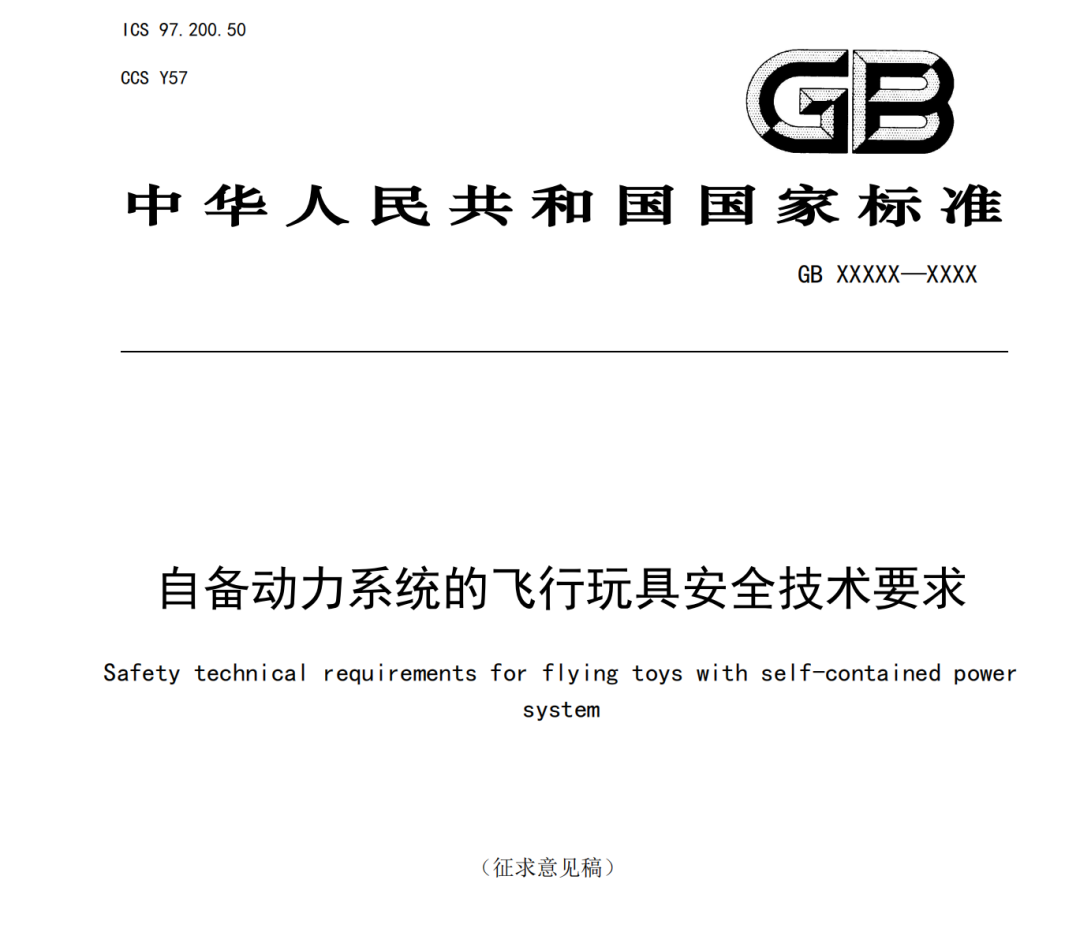
10月14日,工信部公示《自备动力系统的飞行玩具安全技术要求》强制性国家标准征求意见稿,目的很直接:堵三类漏洞——一是防止部分民用无人驾驶航空器生产企业假借自备动力系统的飞行玩具之名逃避监管,二是防范部分飞行玩具使用方擅自篡改性能参数,三是补足飞行玩具标准缺口,提高其安全要求,有效防范安全风险,保障人身安全、财产安全及国家安全。

图片

标准由工信部提出、全国玩具标委会(TC253)执行,电子标准院、深圳质检院、江苏赛西、中轻联认证等40余家单位参编,计划号20256704-Q-339。根据征求意见稿及编制说明,中外玩具网整理了以下要点,遥控飞机、迷你无人机、儿童飞行器等相关工厂建议提前根据要求改进自家产品。

一、先判定产品落不落标

标准适用“自备动力系统、全程人工操控、不载人、可带限高/定高辅助但无拍摄无测控”的遥控玩具;本体、说明书、外包装都要标“自备动力系统的飞行玩具”,以此和A级模型航空器、微型无人机区分。按66号部令边界:真高≤30米、起飞重量<0.25kg、水平≤100米、速度≤18km/h、无线电微功率、无拍摄测控;飞行玩具免唯一识别码、免无人机生产备案。超任一边界、带摄像头/图传/自主航线,就别按“玩具”卖,按民用无人机走强标和实名。

二、飞行参数要“锁死”

平飞速度≤5m/s;真高≤30m用气压/超声/激光或固件限定且用户不可改;无线半径≤100m(限发射功率/接收灵敏度/固件锁),线控≤5m且不准用光纤;起飞重量<250g,不预留外挂点、绑扎孔、扩展电池插头。企业自查App、遥控器和固件,凡有“高级模式/解除限高/调速档超5m/s/改半径”的一律关掉。

三、动力和电池收口径

只用电动力,不用氢、燃料电池、>1F超级电容、金属空气电池;旋翼总拉力≤自重1.25倍,单电机最大功率≤104.2/N瓦(N为旋翼数)。锂电按GB 31241.4玩具电池做,可换电池室标型号/极性/容量/电压,机内充电时整机不可启动。无刷电机若走“结构限位”防篡改会被判失效,要改胶粘、一体成型、防拆螺丝或微波熔焊等组合方案。

四、桨叶、结构和跌落别省

接触眼球边缘修圆;优先全护圈/笼式/柔性桨。静态1.5倍自重复合载荷无裂纹,最大油门半使用时间动力载荷无飞脱,满电10米六方向自由跌落不漏液不起火。温升按电玩具:金属可触及≤36K、塑料等≤55K;赛璐珞类高燃材料禁用。

五、无线电只留2.4G微功率

2400—2483.5MHz,e.i.r.p.≤10mW,跳频,占用带宽≤3MHz,频率容限100×10⁻⁶;杂散按30MHz—12.75GHz分段,最大发射30M—1G≤-36dBm、1G—12.75G≤-30dBm,待机均≤-47dBm。用其他频段、标“远程图传”的,不在本强标友好区。

六、化学与年龄叠加

14岁以下产品除本标外,还要叠GB 6675.1—4:DBP/BBP/DEHP/DIBP总和≤0.1%,多环芳烃单类≤0.5mg/kg,PVC短链氯化石蜡<0.15%,金属可触及铅≤0.1%、镉≤0.01%、六价铬≤0.1%。说明书必须写限高/限重/限速/满电续航/适用年龄/视线飞行/更换桨步骤,外包装加“螺旋桨可致伤、先读手册”等警示。

七、防篡改和标识是抽检重点

无扩展电池接口、无外挂托架、单一电源;控制端无跳线/短路帽/隐藏调试口,软件加密防改高改远。编制说明验证中,带摄像头、限高超限、速度多档、外包装未标“自备动力系统的飞行玩具”的样品已判不符合——这类在产SKU应优先淘汰或重新定型。


▌值得关注的是,新版强制性国家标准《玩具安全》GB 6675.1~4-2025已于2025年10月5日发布,2026年11月1日起实施——这是所有玩具的通用安全底线(机械、易燃、化学迁移、标识)。

而《自备动力系统的飞行玩具安全技术要求》则是专项叠加,目前仍是征求意见稿,公示期2026年10月14日—11月12日,反馈邮箱kjbz@miit.gov.cn、电话010-64102958/010-68205261。正式发布时间以工信部、国标委公布为准,按编制口径拟“发布后12个月”实施。

企业现在可以按征求意见稿做差距自测、固件锁参、预送样;正式稿发布后再按最终文本补全项送检。正式飞行强标落地后,14岁以下相关产品必须双标并行——先过飞行专项,再叠玩具安全新国标。

注:文/中外玩具网,文章来源:中外玩具网(公众号ID:ctoy-gdta),本文为作者独立观点,不代表亿邦动力立场。

文章来源:中外玩具网

广告
微信
朋友圈

FAQ回顾

什么是自备动力系统的飞行玩具?新国标对这类玩具有什么要求?

自备动力系统飞行玩具指自带动力、全程人工操控、不载人、可带限高或定高辅助但无拍摄无测控的遥控玩具。新国标《自备动力系统的飞行玩具安全技术要求》要求其平飞速度≤5m/s,真高≤30m,无线半径≤100m,起飞重量<250g,且用户不可修改飞行参数,以防篡改和超范围飞行。

自备动力系统的飞行玩具与民用无人机如何区分?

按66号部令边界,飞行玩具需同时满足真高≤30米、起飞重量<0.25kg、水平≤100米、速度≤18km/h、无线电微功率、无拍摄测控。若超出任一界限,或带摄像头/图传/自主航线,就不能按玩具售卖,需按民用无人机管理,执行强制标准和实名登记。

飞行玩具新国标对生产企业有哪些关键要求?

核心要求包括:动力只用电动力,旋翼总拉力≤自重1.25倍;桨叶边缘修圆并优先全护圈;按GB 31241.4管理锂电池,机内充电时整机不可启动;无线电仅限2.4G微功率2400—2483.5MHz,e.i.r.p.≤10mW;14岁以下产品还要叠加GB 6675.1~4化学与机械安全要求,并在外包装标注警示。

飞行玩具新国标什么时候实施?企业现在该做什么?

目前该标准为征求意见稿,公示期2026年10月14日至11月12日。按编制口径拟“发布后12个月”实施,正式发布时间以工信部、国标委公布为准。企业现在可按征求意见稿做差距自测、固件锁参、预送样;正式稿发布后再按最终文本补全项送检。

14岁以下儿童飞行玩具要符合哪些安全标准?

14岁以下相关产品必须双标并行:先过《自备动力系统的飞行玩具安全技术要求》飞行专项,再叠《玩具安全》GB 6675.1~4-2025。新版《玩具安全》已于2025年10月5日发布,2026年11月1日实施,对机械、易燃、化学迁移、标识等有通用安全底线,另外还要求特定邻苯、多环芳烃限量等。

这么好看,分享一下?

朋友圈 分享

APP内打开

赞 +1
+1
微信好友 朋友圈 新浪微博 QQ空间
关闭
收藏成功
发送
/140 0