广告
加载中

重磅:亿邦智库×连连数字联合发布《外贸新增长—新兴市场B2B商业机会洞察》

亿邦智库 2026-10-15 20:33
亿邦智库 2026/10/15 20:33

邦小白快读

EN
全文速览

总体来看,外贸增长重心正转向新兴市场,普通读者可重点关注东南亚、中东、拉美和非洲的机会。

1.需求端:新兴市场进口增速为发达市场近两倍,采购从低价转向齐套、稳定交付和标准升级,订单更碎片化、补货更频繁。

2.供给与政策:中国制造业全门类配套能力、中间品出口首次过半,叠加RCEP、共建一带一路、对53个非洲国家零关税等政策红利,为出海提供支撑。

3.区域机会:东南亚看电子、家电、基建能源;中东看工程设备、汽配和消费品;拉美看汽车后市场;非洲看电力新能源、建材和民生供给。

4.实操提醒:交易难点普遍在认证、汇率、到账周期和本地收款,可通过本地账户、合规结汇和实时汇兑缩短资金回笼时间。

从品牌商视角,新兴市场并非单纯低价市场,而是需求升级带来的品牌和产品机会。

1.消费趋势:采购标准从单一低价升级为齐套、稳定交付和标准升级,订单碎片化、补货高频化,品牌需提升产品稳定性与按需补货能力。

2.区域产品机会:东南亚家电、3C、家居等消费扩容;中东工程设备、建材、汽车汽配和适配型消费品;拉美汽车保有量超8500万辆,制动零部件等后市场空间大;非洲电力、新能源、建材和民生供给刚需放量。

3.产品研发与本地化:中国供应链具备全门类、打样快、起订量低的优势,便于针对区域认证和本地规则做适配开发。

4.渠道与定价:中东渠道型采购和项目型采购各成体系,经销商账期、本币波动、关税叠加会直接影响定价和渠道现金流,需把本地收款和合规结汇纳入渠道管理。

新兴市场B2B是明确增量,卖家可从四区域政策红利和品类机会切入。

1.政策解读:RCEP成员国贸易对当年外贸增长贡献率达44.4%,共建一带一路国家进出口占外贸总额50.9%,中国-东盟自贸区3.0版已签署,自2026年5月1日起对53个非洲建交国实施零关税,降低部分市场进入成本。

2.增长市场与消费需求:东南亚产业投资、消费扩容、基建能源三大需求并存;中东非油经济驱动项目型与渠道型采购;拉美汽车后市场扩张;非洲电力新能源、建材与民生供给刚需放量。采购呈现碎片化、高频化,稳定交付比单纯低价更重要。

3.风险提示:国别规则碎片化、目的国认证如SASO/SABER和ECAS、本币与美元结算波动、美元配额紧张、非正规换汇冻卡、经销商账期长导致资金占用。

4.应对与可学习点:案例商家通过本地收款账户、多币种本币直收、7×24实时汇兑、合规结汇来提升回款效率;中东代采公司借此升级为渠道伙伴,可作为资金链和合作模式参考。

新兴市场需求为中国工厂提供明确订单机会,支付顺畅度也直接影响产能和研发投入。

1.生产与设计需求:东南亚电子、汽车、新能源产线,中东建材与光伏储能,拉美汽车后市场零部件,非洲电力与基建,均对产品规格和本地认证有要求;中国全门类工业和产业集群打样快、起订量低的优势能快速响应。

2.商业机会:中间品出口上半年增长29.2%、占出口比重首次过半,说明更多工厂有机会嵌入跨国产业链;订单碎片化和补货高频化要求工厂具备柔性生产和稳定交付能力。

3.数字化和电商启示:案例制造企业通过本地收款、实时汇兑、多币种统一管理,缩短回款周期,释放资金用于研发和产能扩张;工厂应把数字化支付与财务合规纳入外贸运营,改善现金流,支撑更大订单。

新兴市场B2B扩容带动跨境服务需求,尤其是资金跨境与合规服务。

1.发展趋势:发展中国家进口增速约为发达国家两倍,需求升级和订单碎片化使服务商面对更多中小商家和多区域交易场景。

2.客户痛点:客户普遍面临国别规则碎片化、多币种结算和汇率波动、银行到账周期长、买家美元配额不足、代付换汇冻卡、税务合规留痕等资金链问题;不同区域还有认证和验收节点差异。

3.解决方案:连连提供本地收款账户、本币直收、7×24实时汇兑、集中管理收款汇兑付款,并以本地团队和线上留痕满足税务合规;案例显示该方案可提升资金周转和订单执行效率,可复制到东南亚、中东、拉美、非洲。

新兴市场B2B交易对平台能力提出更高要求,支付与资金服务正在成为平台撮合以外的重要基础设施。

1.商业对平台的需求:卖家在东南亚、中东、拉美、非洲面临的共性问题,是本地收款、合规结汇、汇率避险和资金周转;平台若能集成这些能力,可提升交易完成率。

2.平台最新做法:连连数字以本地账户、多币种直收、实时汇兑和线上留痕形成支付平台闭环,并发展渠道伙伴模式,帮助代采商合规链接买卖双方。

3.运营管理:平台需要支持商户集中管理收款、汇兑和付款,提供7×24服务,并配备本地团队;用实时到账提高回款速度,减少资金占用。

4.风险规避:面对认证要求、美元配额、非正规换汇冻卡、第三方代付风控等,平台应强调合规交易链路留痕、税务留痕和本地公户收款,协助商户做风险隔离。

报告呈现外贸新增长的结构性变化,值得关注新兴市场、中国供应链和政策制度三者叠加的机理。

1.产业新动向:全球外贸重心向新兴市场迁移,发展中国家的进口增速约为发达国家两倍;采购行为从低价导向转向稳定交付和标准升级,订单碎片化和补货高频化成为新常态。

2.中国供应链升级:制造业增加值占全球约30%,中间品出口占比首次过半,说明中国出口正从成品输出向产业链中间环节延伸,数实融合和产业集群支撑了快速响应能力。

3.制度与政策启示:RCEP、中国-东盟自贸区3.0版、非洲零关税等安排创造了制度红利;但区域规则碎片化、认证、汇率和结算障碍仍构成交易成本,需要更细化的监管和金融服务配套。

4.商业模式观察:四个案例显示,本地收款账户、本币直收、实时汇兑和合规留痕的跨境支付解决方案,是新兴市场B2B闭环的关键;支付企业可借此形成平台化、渠道化的商业合作模式。

返回默认
声明:快读内容全程由AI生成,请注意甄别信息。如您发现问题,请发送邮件至 run@ebrun.com 。

我是 品牌商 卖家 工厂 服务商 平台商 研究者 帮我再读一遍。

Quick Summary

Overall, the center of gravity in foreign trade growth is shifting toward emerging markets. General readers should focus on opportunities in Southeast Asia, the Middle East, Latin America, and Africa.

1. Demand: Emerging markets are importing at nearly twice the pace of developed markets. Procurement is moving from low price toward complete product kits, reliable delivery, and upgraded standards, with orders becoming more fragmented and replenishment more frequent.

2. Supply and policy: China's full-category manufacturing capabilities and the fact that intermediate goods exports have for the first time exceeded half of total exports, together with policy dividends such as RCEP, the Belt and Road Initiative, and zero tariffs for 53 African countries, support the expansion of overseas business.

3. Regional opportunities: Southeast Asia offers opportunities in electronics, home appliances, and infrastructure energy; the Middle East in engineering equipment, auto parts, and consumer goods; Latin America in the automotive aftermarket; and Africa in power and new energy, building materials, and daily necessities.

4. Practical reminders: Transaction challenges generally center on certification, exchange rates, payment arrival cycles, and local collection. These can be mitigated through local accounts, compliant settlement, and real-time currency conversion to shorten capital turnover time.

From a brand perspective, emerging markets are not simply low-price markets; they represent brand and product opportunities driven by demand upgrades.

1. Consumer trends: Procurement standards have shifted from a single focus on low price to complete product kits, reliable delivery, and upgraded standards. Orders are becoming fragmented and replenishment high-frequency, so brands need to improve product consistency and on-demand replenishment capabilities.

2. Regional product opportunities: Southeast Asia is seeing consumption expansion in home appliances, 3C electronics, and household goods; the Middle East offers opportunities in engineering equipment, building materials, auto parts, and adapted consumer goods; Latin America has over 85 million vehicles, with a large aftermarket for brake components and other parts; Africa is seeing rising demand for power, new energy, building materials, and daily necessities.

3. Product development and localization: China's supply chain offers advantages in full-category coverage, fast sampling, and low minimum order quantities, making it easier to adapt products to regional certifications and local regulations.

4. Channels and pricing: In the Middle East, channel-based and project-based procurement operate as distinct systems. Distributor payment terms, local currency fluctuations, and tariff accumulation directly affect pricing and channel cash flow. Local collection and compliant settlement should be integrated into channel management.

Emerging-market B2B represents clear incremental growth. Sellers can enter by leveraging policy dividends and category opportunities across four regions.

1. Policy highlights: Trade with RCEP members contributed 44.4% to the year's foreign trade growth. Imports and exports with Belt and Road countries accounted for 50.9% of total foreign trade. The China-ASEAN FTA 3.0 has been signed, and zero tariffs will be applied to 53 African countries with diplomatic ties starting May 1, 2026, lowering entry costs for some markets.

2. Growth markets and consumer demand: Southeast Asia has three simultaneous demand drivers: industrial investment, consumption expansion, and infrastructure/energy. The Middle East's non-oil economy drives project-based and channel-based procurement. Latin America's automotive aftermarket is expanding. Africa is seeing strong demand for power, new energy, building materials, and daily necessities. Procurement is fragmented and high-frequency, making reliable delivery more important than low price alone.

3. Risk warnings: Fragmented country-specific rules, destination-country certifications such as SASO/SABER and ECAS, settlement volatility between local currencies and the US dollar, tight dollar quotas, frozen bank cards from informal currency exchange, and long distributor payment terms that lock up capital.

4. Responses and lessons: Case-study merchants have improved collection efficiency through local collection accounts, direct multi-currency local receipts, 7×24 real-time currency conversion, and compliant settlement. Middle East procurement agents have upgraded into channel partners using these tools, offering a reference for capital chains and cooperation models.

Demand from emerging markets presents clear order opportunities for Chinese factories, and smooth payments directly affect production capacity and R&D investment.

1. Production and design requirements: Southeast Asia's electronics, automotive, and new energy production lines; the Middle East's building materials and PV/storage sectors; Latin America's automotive aftermarket parts; and Africa's power and infrastructure projects all have specific product specifications and local certification requirements. China's full-category industrial and cluster advantages, with fast sampling and low minimum order quantities, allow quick responses.

2. Business opportunities: In the first half of the year, intermediate goods exports grew 29.2% and exceeded half of total exports for the first time, indicating that more factories have the chance to embed themselves in cross-border industrial chains. Fragmented orders and high-frequency replenishment require flexible production and reliable delivery capabilities.

3. Digital and e-commerce insights: Case-study manufacturers have shortened payment cycles through local collection, real-time currency conversion, and unified multi-currency management, freeing up capital for R&D and capacity expansion. Factories should integrate digital payments and financial compliance into their foreign trade operations to improve cash flow and support larger orders.

The expansion of emerging-market B2B is driving demand for cross-border services, particularly in fund movement and compliance.

1. Trends: Developing countries are importing at roughly twice the pace of developed countries. Demand upgrades and fragmented orders expose service providers to more SMEs and multi-region transaction scenarios.

2. Client pain points: Clients commonly face fragmented country-specific rules, multi-currency settlement and exchange-rate volatility, long bank arrival cycles, insufficient buyer dollar quotas, frozen cards from payment agency and currency exchange, and the need for tax compliance records. Certification and acceptance milestones also vary by region.

3. Solutions: LianLian provides local collection accounts, direct local-currency receipts, 7×24 real-time currency conversion, and centralized management of collection, conversion, and payment. Local teams and digital records support tax compliance. Case studies show this solution improves capital turnover and order execution efficiency, and it can be replicated in Southeast Asia, the Middle East, Latin America, and Africa.

Emerging-market B2B transactions place higher demands on platform capabilities. Payment and fund services are becoming critical infrastructure alongside platform matching.

1. Business demands on platforms: Sellers in Southeast Asia, the Middle East, Latin America, and Africa commonly face local collection, compliant settlement, exchange-rate hedging, and capital turnover challenges. Platforms that integrate these capabilities can improve transaction completion rates.

2. Latest platform moves: LianLian Digital has formed a closed-loop payment platform with local accounts, direct multi-currency receipts, real-time currency conversion, and online audit trails. It has also developed a channel-partner model to help procurement agents compliantly connect buyers and sellers.

3. Operations and management: Platforms need to support merchants in centrally managing collection, conversion, and payments, provide 7×24 services, and maintain local teams. Real-time settlement accelerates capital return and reduces capital occupation.

4. Risk mitigation: Facing certification requirements, dollar quotas, frozen cards from informal exchange, and third-party payment risk controls, platforms should emphasize compliant transaction audit trails, tax documentation, and local corporate account collection to help merchants isolate risk.

The report reveals structural changes in foreign trade growth, and the interaction of emerging markets, China's supply chain, and policy institutions merits attention.

1. New industrial trends: The center of gravity of global trade is shifting toward emerging markets, with developing countries importing at roughly twice the pace of developed countries. Procurement behavior is moving from low-price orientation to reliable delivery and standard upgrades, and fragmented orders with high-frequency replenishment have become the norm.

2. Upgrading of China's supply chain: Manufacturing value-added accounts for about 30% of the global total, and intermediate goods exports have exceeded half of total exports for the first time. This indicates that China's exports are extending from finished goods to intermediate links in industrial chains. Digital-industrial integration and industrial clusters support rapid-response capabilities.

3. Institutional and policy implications: Arrangements such as RCEP, the China-ASEAN FTA 3.0, and zero tariffs for African countries have created institutional dividends. However, fragmented regional rules, certification, exchange-rate, and settlement barriers still constitute transaction costs, requiring more refined regulatory and financial service support.

4. Business model observations: Four case studies show that cross-border payment solutions combining local collection accounts, direct local-currency receipts, real-time currency conversion, and compliant audit trails are key to closing the emerging-market B2B loop. Payment companies can use this to build platform-based and channel-based business cooperation models.

Disclaimer: The "Quick Summary" content is entirely generated by AI. Please exercise discretion when interpreting the information. For issues or corrections, please email run@ebrun.com .

I am a Brand Seller Factory Service Provider Marketplace Seller Researcher Read it again.

【亿邦原创】2026年10月15日,第140届中国进出口商品交易会(广交会)在广州琶洲开幕。素有我国外贸“晴雨表”之称的广交会,其到会客商来源结构近年持续演变。主办方数据显示,截至2026年5月4日,第139届广交会共吸引来自220个国家和地区的31.4万名境外采购商到会;新增采购商主要来自共建“一带一路”国家,拉美、非洲增长尤为迅速。客商结构之变,进一步折射出我国外贸重心的转移。

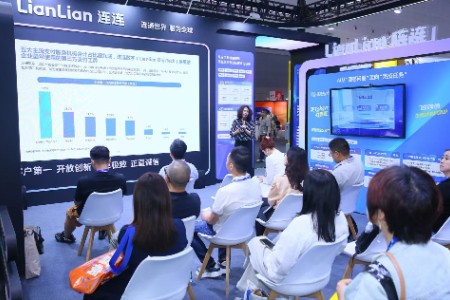
同日,亿邦智库与连连数字联合发布《外贸新增长—新兴市场B2B商业机会洞察》(下称《洞察》)。《洞察》指出,新兴市场增量来自需求升级、中国供应链优势与制度红利的同向叠加;并以东南亚、中东、拉美及非洲四大区域为"机会地图",厘清各区域代表品类与交易难点,借助四个商家实践样本,完整呈现不同市场交易环境下确保安全回款的有效路径。

01

新兴市场为何成为外贸新引擎?

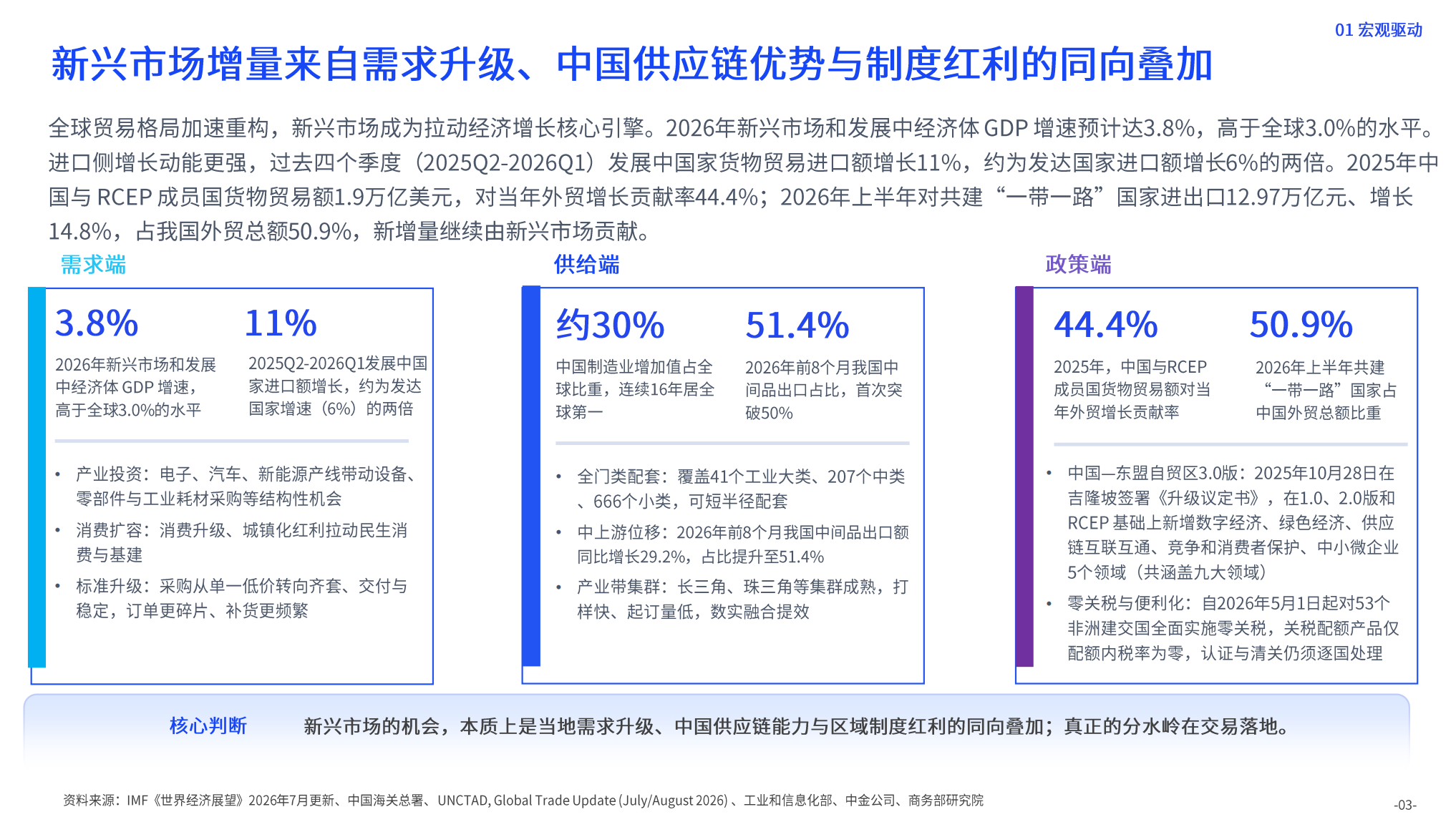
1、需求端:进口增速强劲,采购标准升级

国际货币基金组织数据显示,2026年新兴市场和发展中经济体GDP增速预计达3.8%,高于全球3.0%的水平。进口侧增长动能更为强劲,根据UNCTAD数据,过去四个季度(2025Q2-2026Q1),发展中国家货物贸易进口额增长11%,约为发达国家增速(6%)的两倍。采购需求正从单一低价转向齐套、稳定交付与标准升级,订单碎片化、补货高频化成为新常态。

2、供给端:中国供应链优势向中上游位移

中国制造业增加值占全球比重约30%,连续16年居全球第一,具备覆盖41个工业大类、207个中类、666个小类的全门类配套能力。2026年前8个月,我国中间品出口额增长29.2%,占比升至51.4%,首次过半。长三角、珠三角等产业带集群成熟,打样快、起订量低,数实融合持续提效。

3、政策端:制度性红利持续释放

区域贸易协定与关税政策为新兴市场贸易铺平道路。2025年,中国与RCEP成员国货物贸易额达1.9万亿美元,对当年外贸增长贡献率达44.4%;2026年上半年,对共建“一带一路”国家进出口12.97万亿元,增长14.8%,占外贸总额50.9%。此外,中国—东盟自贸区3.0版议定书已签署,自2026年5月1日起对53个非洲建交国全面实施零关税(配额产品仅配额内为零)。

02

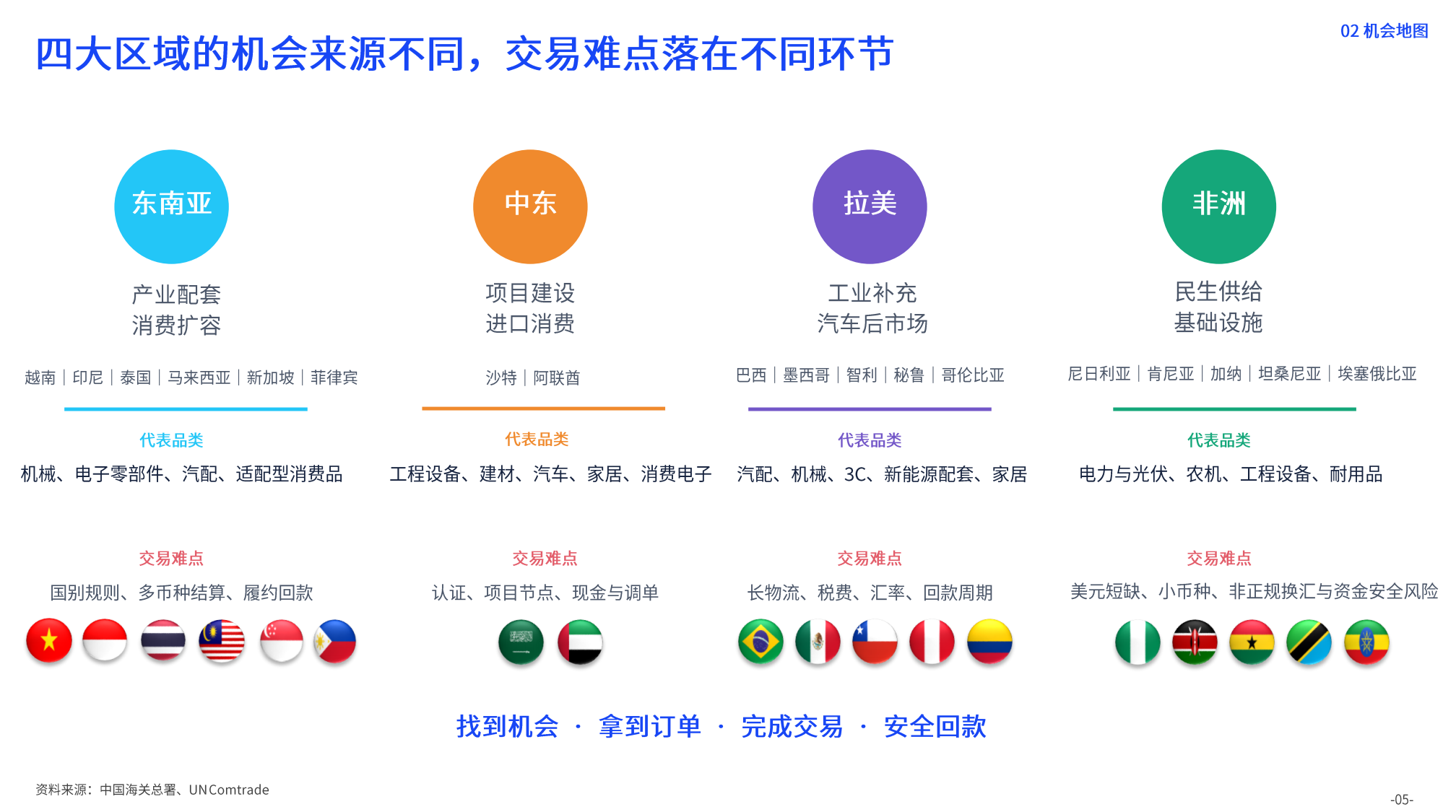
四大区域机会地图与交易难点

1、东南亚:产业链本地化提速释放双重机会

市场机会:2026年上半年,中国—东盟贸易总值达6261.4亿美元,同比增长22.5%,其中对东盟出口3962.3亿美元,增长22.9%。需求结构呈现产业投资驱动(电子、汽车、新能源产线)、消费扩容驱动(家电、3C、家居)与基建能源驱动(电力、光伏、储能)并存的特征。

交易难点:国别规则碎片化(标签与进口主体规则各异)、多币种结算与汇率波动改变报价利润、传统银行审核到账周期长增加资金占用。

2、中东:非油经济驱动采购多元化

市场机会:2025年一季度海合会非石油活动占实际GDP比重达73.2%。2026年上半年中阿非石油贸易约492亿美元,增长约18%。需求从基建项目建设向渠道消费延展:项目型采购对应工程设备、建材、光伏储能配套;渠道型采购对应汽车汽配、消费电子及适配型消费品。

交易难点:供应商注册与目的国认证先行(如SASO/SABER、ECAS);分阶段付款与验收质保节点决定现金流;现金与第三方代付普遍,需本地公户收款与税务合规留痕。

3、拉美:工业补充与汽车后市场扩张

市场机会:2026年一季度区域进口额增长9.7%,上半年中国对拉美出口1594.3亿美元,增长12.8%。区域汽车保有量超8500万辆,中国占其成品制动零部件进口的35%—40%。墨西哥近岸外包带动配套件需求,巴西、智利、秘鲁、阿根廷等国各具结构性机会。

交易难点:运输链路长、港口拥堵与中转费波动大;HS归类、进口关税与本地税叠加;BRL、MXN等本币波动大;经销商账期长,资金占用成为扩张瓶颈。

4、非洲:民生与基建刚需同步放量

市场机会:非洲是全球最年轻的大陆,2025年人口年龄中位数仅为20.3岁,城镇化率约45%(相当于中国2007年前后水平)。2026年上半年中非贸易额达2035.5亿美元,增长24%,其中对非出口1300.1亿美元,增长26.2%。需求集中在电力与新能源、建材与城市化、民生供给等主线。

交易难点:买家付款能力与最终付款人核验;部分国家美元配额紧张、小币种结算普遍;非正规换汇易触发冻卡风险;到账周期长制约接单与补货。

03

从商家实践看经验与启示

四个实践案例分别来自东南亚、中东、拉美和非洲。市场不同、痛点各异,但都指向同一个关键:订单达成之后,本地收款、合规结汇与资金周转能否顺畅衔接,直接决定交易能否真正落地。

东南亚|深圳市粤阳光电有限责任公司:电子元器件与LED光源制造企业,原材料采购依赖现金支付,对预付款到账时效要求极高;汇率波动影响报价与利润,资金速度直接关系抢货与锁货。

连连提供新加坡、泰国、菲律宾、印尼本地账户及六大币种本币直收,支持灵活汇兑避险与本土化团队服务,实现收款、汇兑和付款集中管理,实时到账,大幅提升资金周转效率与订单执行效率。

中东|迪拜龙城某代采贸易公司:代无公户的外国买家采购并垫付货款,收款后无法直接结汇人民币,私下换汇面临冻卡与合规风险。

连连提供迪拜本地账户,迪拉姆最快1—2小时到账、秒结秒到,全程线上留痕,税务合规并有本地团队上门服务,合规结汇,代采付款链路全线打通,企业升级为连连渠道伙伴,业务与收益双增长。

拉美|裕鑫丰集团:LED汽车照明头部代工企业,拉美五国货款币种分散,小币种换汇成本高,汇率波动带来资金安全风险,回款慢制约研发与产能投入。

连连提供巴西、墨西哥、阿根廷、秘鲁、哥伦比亚本地收款账户,五大币种阳光入账,7×24实时汇兑,支持一站式多币种统一管理。本地账户、本币入账与实时汇兑形成完整链路,回款直接支撑产能与研发投入。

非洲|蚂蚁汽车:中国重汽授权二手车商,2025年出口额3.6亿元、一年翻两倍多。买家常因美元配额不足导致付款难出境,电汇到账需3—7天且易挂账,第三方代付还可能触发风控冻结,多账户分散亦推高对账成本。

连连以十二种非洲本地币种极速入账,7×24实时汇兑,并可美元直付供应商,适配各国本地市场结算规则,合规交易链路全程留痕。

欲了解更多内容,请点击链接获取完整版《外贸新增长—新兴市场B2B商业机会洞察》

本文首发于 亿邦动力 官方网站

文章来源:亿邦动力

广告
微信
朋友圈

FAQ回顾

新兴市场为什么成为中国外贸增长的新引擎?

国际货币基金组织数据显示,2026年新兴市场和发展中经济体GDP增速预计3.8%,高于全球3.0%;UNCTAD数据显示,过去四个季度发展中国家货物贸易进口额增长11%,约为发达国家6%增速的两倍。需求升级、中国供应链优势(制造业增加值占全球约30%)与制度性红利同向叠加,共同推动新兴市场成为外贸增长新引擎。

外贸企业进入东南亚、中东、拉美、非洲面临哪些主要交易难点?

东南亚的难点是国别规则碎片化、多币种结算与汇率波动、银行审核到账周期长;中东需提前完成SASO/SABER、ECAS等认证,并应对分阶段付款与本地公户收款要求;拉美运输链路长、关税和本币波动大、经销商账期长;非洲需核验买家付款能力,应对美元配额紧张、小币种结算和非正规换汇冻卡风险。

新兴市场采购需求出现了哪些新变化?

采购需求正从单一低价转向齐套、稳定交付与标准升级,订单碎片化、补货高频化成为新常态。具体看,东南亚呈产业投资、消费扩容与基建能源驱动并存;中东非油经济带动项目型与渠道型采购;拉美工业补充与汽车后市场扩张;非洲民生与基建刚需同步放量。

外贸企业如何解决新兴市场本地收款和合规结汇问题?

连连数字可提供新加坡、泰国、菲律宾、印尼、迪拜、巴西、墨西哥、阿根廷、秘鲁、哥伦比亚等本地收款账户,支持本币极速入账、7×24实时汇兑,并可用美元直付供应商。迪拉姆最快1—2小时到账,非洲支持十二种本地币种;全程线上留痕、税务合规,帮助企业缩短到账周期、降低汇率和冻卡风险。

这么好看,分享一下?

朋友圈 分享

APP内打开

赞 +1
+1
微信好友 朋友圈 新浪微博 QQ空间
关闭
收藏成功
发送
/140 0