广告
加载中

双11不只拼低价 京东加码“服务消费”

李金津 2026-10-15 19:21
李金津 2026/10/15 19:21

邦小白快读

EN
全文速览

总:今年京东双11不只有低价,普通读者可以重点抓住价格补贴、服务促销和内容场景三类干货。

1. 低价玩法上,京东继续官方直降,升级“低价热卖”机制,用AI模型加采销人员人工校验筛选性价比商品;同时推出“多买多返”,买带标识商品可获返利,单个用户最高返2000元购物卡,并可跨品类累计。

2. 服务促销上,10月28日是超级服务日,重点覆盖家政、汽车、健康、维修、安装、搬家等15大服务品类;例如家政保洁套餐可额外送26次服务,油烟机全拆洗活动价125元,部分服务补贴最高4680元。

3. 内容场景上,京东双11设置爱玩、爱家、健康、风尚、吃喝玩乐、暖暖等惊喜日,还推出直播挑战赛、测评直播和短视频;消费者可以边看内容边买,留意新品首发、试用和拍卖频道。

总:对品牌商而言,京东双11释放的信号是:低价仍重要,但平台正把流量导向跨品类、内容化和生活服务场景,品牌需跳出单品促销思维。

1. 定价与价格竞争:京东升级“低价热卖”机制,不是只靠商家报名和补贴,而是用AI性价比筛选模型加采销人工校验,从商品池中筛商品;品牌商要在同样品质下优化价格和供应链效率,才能进入低价曝光池。

2. 营销与场景渗透:京东用“多买多返”鼓励跨品类累计返利,消费者最高返2000元,品牌可与不同品类组合触达;爱玩、爱家、健康、风尚、吃喝玩乐、暖暖等惊喜日,提示品牌按家庭、出行、健康、季节等场景设计产品和营销主题。

3. 消费趋势与用户行为:平台加码生活服务,家政、养老照护、宠物服务、机器人维修等增长较快,说明消费者愿意为省心服务付费;直播和短视频在购买决策中的作用增强,测评直播、明星互动等内容会影响非计划性消费,品牌应储备内容素材和测评资源。

总:京东今年双11给卖家的核心信息是:不能只盯低价爆款,还要抓住服务消费、内容流量和跨品类返利带来的新增机会,同时注意平台筛选规则的变化。

1. 机会点:京东将家政、养老照护、宠物服务、机器人维修等15大服务品类纳入双11促销,并设超级服务日;如果卖家有服务或服务型产品供给,可借势进入这一增长市场。

2. 合作与玩法:多买多返活动覆盖自营和参与活动的第三方商家商品,消费者最高得2000元返利,可提高连带购买;京东还加码直播、短视频,直播开播量增长120%,数字人开播量增长340%,卖家可尝试直播挑战赛、测评直播和短视频内容获得流量。

3. 风险与应对:京东升级“低价热卖”机制,由AI筛选和人工校验精选价格竞争力商品,单纯靠商家报名制造低价爆款的空间可能缩小;卖家应优化成本、供应链和内容能力,避免只在价格端硬拼。

总:工厂可从京东双11玩法中读出产品设计、生产方向和数字化电商的新启示:性价比筛选、场景化套购、服务型消费三线并行。

1. 生产与成本:京东强调AI驱动的性价比筛选模型和采销校验,工厂需要把成本控制和品质稳定性作为竞争力,才能进入平台低价曝光池;单纯压价不是长久办法。

2. 产品设计与场景:京东设置爱玩、爱家、健康、风尚、吃喝玩乐、暖暖等惊喜日,以及居家、出行、大健康三大生活服务体系,提示工厂在研发新品时按人群和使用场景做组合,例如家电家居对应“爱家”,健康消费对应“健康”。

3. 数字化与服务化启示:京东尝试把AI技术、智能设备和机器人引入服务履约,并拓展机器人维修业务,说明智能硬件保有量在上升,工厂可关注产品的可维修性、标准化接口和配套服务;同时通过直播、短视频等内容渠道获取订单,要求工厂具备快速反应和柔性生产能力。

总:京东将生活服务作为双11重点,给服务商展示了趋势、痛点和解决方案:服务消费正从分散供给走向标准化、平台化运营。

1. 行业趋势:京东生活性服务已覆盖居家、出行、大健康三大领域近百种细分场景,并把家政、养老照护、宠物服务、机器人维修等列为快速增长品类;10月28日设超级服务日,15大服务品类参与双11促销。

2. 客户痛点:京东服务负责人吴可人总结为价格不透明、服务标准参差不齐、售后保障不足;消费者寻找家政等服务需要承担高筛选和沟通成本,服务产品供给分散是难点。

3. 解决方案与新技术:京东推出“333”服务计划,强调明码标价、服务人员培训、标准化作业和售后可追溯;已建约50万平方米培训场地,形成多品类人员培训体系,并尝试将AI技术、智能设备和机器人引入服务履约环节。服务商可借鉴标准化、培训体系和数字化履约能力,或与平台共建服务供给。

总:对平台商而言,京东双11的样本意义在于:低价是基础但不再是唯一筹码,平台需用服务标准化、跨品类返利和内容生态提升用户活跃和交易频次。

1. 最新做法:京东推出“官方直降”和升级后“低价热卖”机制,用AI筛选模型加采销人工校验从商品池中选出价格竞争力商品;同时用“多买多返”跨品类累计返利,单个用户最高返2000元购物卡,鼓励消费者多买多逛。

2. 服务运营:京东把分散家政、汽车、健康、维修等服务集中到超级服务日和15大重点品类,统一价格、履约和售后标准,提出“333”服务计划;平台商可参照其用标准化降低服务消费不确定性,并把服务作为新增长品类。

3. 内容与风控:京东加码直播、短视频,开播量和视频订单量增长明显,还推出测评直播和互动综艺;但在吸引非计划性消费时,平台商应像京东一样强调商品筛选、人工校验和售后可追溯,避免低价战和服务质量失控带来的信任风险。

总:京东双11是一次观察平台经济新模式的研究样本:从低价竞争转向服务消费、内容驱动和精细化运营,并提出服务标准化的平台治理方案。

1. 产业新动向:双11不再只是集中式价格促销,京东用“多买多返”跨品类返利和“爱玩、爱家、健康、风尚、吃喝玩乐、暖暖”主题日,把竞争重心转向购买频次与消费场景运营,电商链路从“人找货”扩展到“货找人”。

2. 新问题与新治理:生活服务供给分散、价格不透明、标准参差和售后不足,京东推出“333”服务计划,建设约50万平方米培训场地,尝试AI、智能设备和机器人进入服务履约;这反映平台在服务类目上从轻运营走向重资产标准化治理。

3. 政策与商业模式启示:京东通过AI驱动性价比筛选模型加人工校验来管理低价商品,显示算法平台需兼顾效率和公平;服务消费需要明码标价、从业人员培训、作业标准化和售后可追溯等制度设计,平台可成为规则制定者和公共基础设施提供者。

返回默认
声明:快读内容全程由AI生成,请注意甄别信息。如您发现问题,请发送邮件至 run@ebrun.com 。

我是 品牌商 卖家 工厂 服务商 平台商 研究者 帮我再读一遍。

Quick Summary

Overall: This year's JD.com Double 11 is about more than just low prices. General readers should focus on three types of value: price subsidies, service promotions, and content-driven shopping scenarios.

1. On the low-price front, JD.com continues with official direct price cuts and has upgraded its "low-price bestsellers" mechanism, using AI models plus manual verification by sourcing staff to screen cost-effective products. It also launched "buy more, get more rebates," where shoppers purchasing tagged items can earn rebates, up to RMB 2,000 in shopping cards per user, accumulative across categories.

2. On service promotions, October 28 is Super Service Day, covering 15 major service categories including home cleaning, automotive, health, repair, installation, and moving. For example, home cleaning packages come with 26 extra service sessions, range hood deep-cleaning is offered at RMB 125, and some services carry subsidies of up to RMB 4,680.

3. On content scenarios, JD.com's Double 11 features themed surprise days such as Fun, Home, Health, Style, Food & Drink, and Warmth, along with livestream challenges, review livestreams, and short videos. Shoppers can browse and buy while watching content, keeping an eye on new product launches, trials, and auction channels.

Overall: For brands, JD.com's Double 11 signals that low prices still matter, but the platform is steering traffic toward cross-category, content-driven, and lifestyle-service scenarios. Brands need to move beyond single-product price promotions.

1. Pricing and competition: JD.com has upgraded its "low-price bestsellers" mechanism, which relies not just on merchant sign-ups and subsidies but on an AI cost-performance screening model plus manual sourcing verification to select products from the pool. Brands must optimize pricing and supply-chain efficiency at equal quality to gain access to low-price exposure.

2. Marketing and scenario penetration: JD.com's "buy more, get more rebates" encourages cross-category accumulative rebates, with up to RMB 2,000 per consumer, enabling brands to reach shoppers in combination with different categories. Themed surprise days such as Fun, Home, Health, Style, Food & Drink, and Warmth suggest that brands should design products and marketing themes around family, travel, health, and seasonal use cases.

3. Consumption trends and user behavior: The platform is expanding lifestyle services, with home cleaning, elderly care, pet services, and robot repair growing quickly, indicating that consumers are willing to pay for convenience and peace of mind. Livestreaming and short videos are playing a stronger role in purchase decisions; review livestreams and celebrity interactions can drive unplanned purchases, so brands should build up content assets and review resources.

Overall: For sellers, the key takeaway from JD.com's Double 11 is not to focus solely on low-price bestsellers, but to seize new opportunities in service consumption, content traffic, and cross-category rebates, while adapting to changes in the platform's screening rules.

1. Opportunities: JD.com has included 15 major service categories, such as home cleaning, elderly care, pet services, and robot repair, in its Double 11 promotions and has set a Super Service Day. Sellers with service offerings or service-oriented products can leverage this growing market.

2. Partnership and playbook: The "buy more, get more rebates" campaign covers products from both JD's self-operated and participating third-party sellers, with consumers receiving up to RMB 2,000 in rebates, which can boost cross-selling. JD.com is also doubling down on livestreaming and short videos, with livestream starts up 120% and digital human streams up 340%; sellers can try livestream challenges, review streams, and short videos to gain traffic.

3. Risks and responses: JD.com has upgraded its "low-price bestsellers" mechanism, using AI screening and manual review to select competitively priced products, so relying purely on merchant-driven low-price offers may have less room to work. Sellers should optimize costs, supply chains, and content capabilities rather than competing on price alone.

Overall: Factories can draw new insights from JD.com's Double 11 playbook for product design, production direction, and digital e-commerce, as cost-performance screening, scenario-based bundles, and service-oriented consumption advance in parallel.

1. Production and cost: JD.com emphasizes an AI-driven cost-performance screening model with sourcing verification, so factories must treat cost control and quality stability as competitive advantages to gain access to the platform's low-price exposure. Simply cutting prices is not a sustainable approach.

2. Product design and scenarios: JD.com has set up themed surprise days such as Fun, Home, Health, Style, Food & Drink, and Warmth, plus three major lifestyle service systems covering home, travel, and health. This suggests factories should design new products around audience segments and usage scenarios, such as home appliances and furnishing for "Home" and health-related spending for "Health."

3. Digitalization and servitization: JD.com is introducing AI technology, smart devices, and robots into service fulfillment and expanding robot repair services, indicating rising installed base of smart hardware. Factories should pay attention to product repairability, standardized interfaces, and supporting services. Meanwhile, using livestreaming and short-video content to win orders requires factories to be fast, flexible, and capable of agile production.

Overall: By making lifestyle services a key focus of Double 11, JD.com has revealed trends, pain points, and solutions for service providers: service consumption is shifting from fragmented supply to standardized, platform-based operations.

1. Industry trends: JD.com's lifestyle services now cover nearly a hundred sub-scenarios across home, travel, and health, with home cleaning, elderly care, pet services, and robot repair listed as fast-growing categories. October 28 is designated Super Service Day, with 15 service categories joining Double 11 promotions.

2. Client pain points: Wu Keren, head of JD services, summarizes them as opaque pricing, inconsistent service standards, and inadequate after-sales support. Consumers face high search and communication costs when finding services like home cleaning, partly because service supply is fragmented.

3. Solutions and new technologies: JD.com has launched the "333" service plan, emphasizing clear pricing, staff training, standardized operations, and traceable after-sales. It has built about 500,000 square meters of training facilities, formed a multi-category personnel training system, and is piloting AI technology, smart devices, and robots in service fulfillment. Service providers can learn from standardization, training systems, and digital fulfillment capabilities, or co-build service supply with the platform.

Overall: For platform operators, JD.com's Double 11 is a reference case: low prices are the baseline but no longer the only lever. Platforms need to use service standardization, cross-category rebates, and content ecosystems to boost user engagement and transaction frequency.

1. Latest moves: JD.com has rolled out "official direct price cuts" and an upgraded "low-price bestsellers" mechanism, using an AI screening model plus sourcing verification to pick cost-competitive products from the pool. It also launched a "buy more, get more rebates" cross-category accumulative rebate, with up to RMB 2,000 in shopping cards per user, encouraging shoppers to buy and browse more.

2. Service operations: JD.com has consolidated fragmented services such as home cleaning, automotive, health, and repair into Super Service Day and 15 key categories, unifying pricing, fulfillment, and after-sales standards under the "333" service plan. Other platforms can adopt standardization to reduce uncertainty in service consumption and treat services as a new growth category.

3. Content and risk control: JD.com is scaling up livestreaming and short videos, with significant increases in stream counts and video orders, and is introducing review livestreams and interactive variety shows. But when attracting unplanned consumption, platforms should follow JD.com's emphasis on product screening, manual verification, and traceable after-sales to avoid trust risks from price wars and service-quality failures.

Overall: JD.com's Double 11 serves as a research sample for observing the new model of platform economics: a shift from low-price competition to service consumption, content-driven engagement, and refined operations, along with a platform governance approach centered on service standardization.

1. New industry dynamics: Double 11 is no longer just centralized price promotion. With its "buy more, get more rebates" cross-category rebates and themed days like Fun, Home, Health, Style, Food & Drink, and Warmth, JD.com is shifting competitive focus to purchase frequency and scenario operations, extending the e-commerce chain from "people searching for goods" to "goods finding people."

2. New problems and governance: In lifestyle services, supply is fragmented, prices are opaque, standards are uneven, and after-sales is inadequate. JD.com has introduced the "333" service plan, built about 500,000 square meters of training facilities, and is testing AI, smart devices, and robots in service fulfillment. This reflects a move from light-touch operations to asset-heavy standardized governance in service categories.

3. Policy and business model implications: JD.com combines an AI-driven cost-performance screening model with manual verification to manage low-price goods, showing that algorithm platforms must balance efficiency and fairness. Service consumption requires institutional design including transparent pricing, worker training, standardized procedures, and traceable after-sales; platforms can become rule-setters and providers of public infrastructure.

Disclaimer: The "Quick Summary" content is entirely generated by AI. Please exercise discretion when interpreting the information. For issues or corrections, please email run@ebrun.com .

I am a Brand Seller Factory Service Provider Marketplace Seller Researcher Read it again.

【亿邦原创】今年双11,京东不仅要卖便宜的商品,还想让消费者购买更多服务。

在2026年京东双11启动会上,除了官方直降、多买多返、直播等大促玩法,京东还集中展示了覆盖居家、出行、大健康三大场景的生活服务体系,并推出超级服务日,将家政、养老照护、宠物服务、汽车维修等纳入重点促销范围。

服务消费并不是京东今年才开始做的生意。2025年双11期间,京东家政成交额就曾在阶段性统计中实现同比超4倍增长。今年以来,京东又陆续拓展养老照护、宠物服务和机器人维修等业务。

不同的是,今年京东将这些服务放到一个更统一的体系中运营。

一方面,通过超级服务日和15大重点服务品类,将原本分散在不同业务中的服务集中推向消费者;另一方面,通过统一的价格、履约和售后标准,降低服务消费中的不确定性。

与此同时,京东还在商品端升级低价筛选机制,推出跨品类累计返利,并继续加码直播、短视频等内容生态。

当低价越来越难成为电商平台的独特优势,如何让消费者购买更多品类、产生更多交易,成为今年京东双11的一条重要经营思路。

01低价之外,京东想让消费者多买一点

低价仍然是今年京东双11的基础。

京东零售平台营销中心平台运营部负责人介绍,今年京东继续采用官方直降的优惠形式,并对618期间推出的“低价热卖”机制进行升级。

具体而言,京东通过AI驱动的性价比筛选模型,结合采销人员人工校验,从平台商品池中筛选更具价格竞争力的商品。

相比单纯依靠商家报名、平台补贴制造低价爆款,这套机制更强调平台的商品筛选能力。背后依然是京东希望发挥商品供应链和采销体系的优势。

低价之外,京东还希望消费者买得更多。

今年双11,京东推出“多买多返”玩法。消费者购买带有活动标识的商品,可获得相应返利,活动期间单个用户最高可获得2000元返利。返利以双11购物卡形式发放,并可在后续购物时抵扣。活动同时覆盖京东自营商品和参与活动的第三方商家商品。

对于平台而言,“多买多返”的作用不只是让消费者感知到优惠,还在于通过跨品类累计返利,鼓励消费者增加购买品类和购买频次。

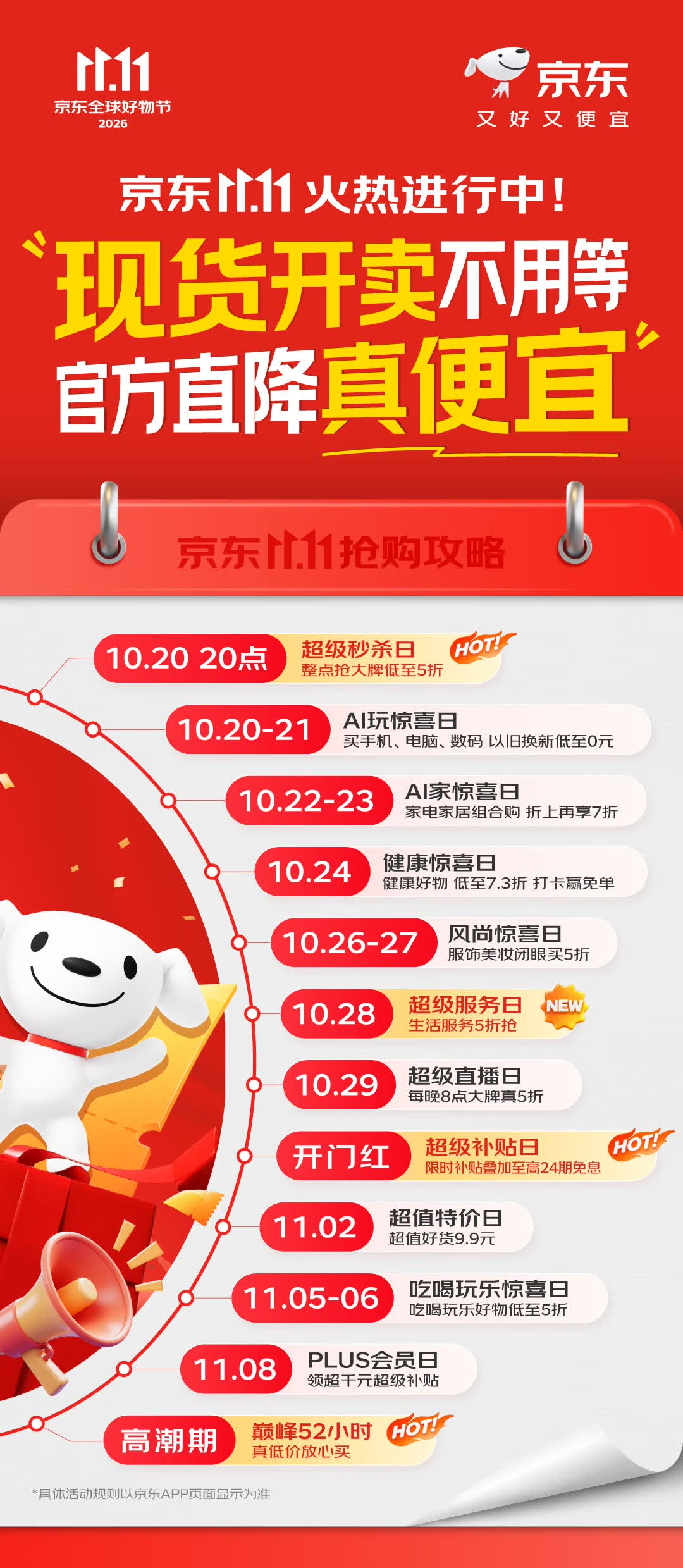
大促的组织方式也在进一步细分。今年双11,京东设置了爱玩、爱家、健康、风尚、吃喝玩乐、暖暖等不同主题的惊喜日,分别对应数码换新、家电家居、健康消费、服饰美妆和季节性消费需求。新品首发、试用、拍卖等频道也被纳入双11营销体系。

从这些安排来看,京东希望通过更细分的消费场景,让用户在整个大促周期内持续产生购买行为。双11的竞争,也由集中式价格促销,进一步走向对消费需求的精细化运营。

02 家政、养老、宠物服务,成为双11的促销商品

生活服务是今年京东双11另一个值得关注的部分。

发布会上,京东服务负责人吴可人介绍,目前京东生活性服务已覆盖近百种细分服务场景,主要围绕居家、出行和大健康三大领域展开。其中,养老照护、宠物服务、机器人维修等被京东视为正在快速增长的品类。

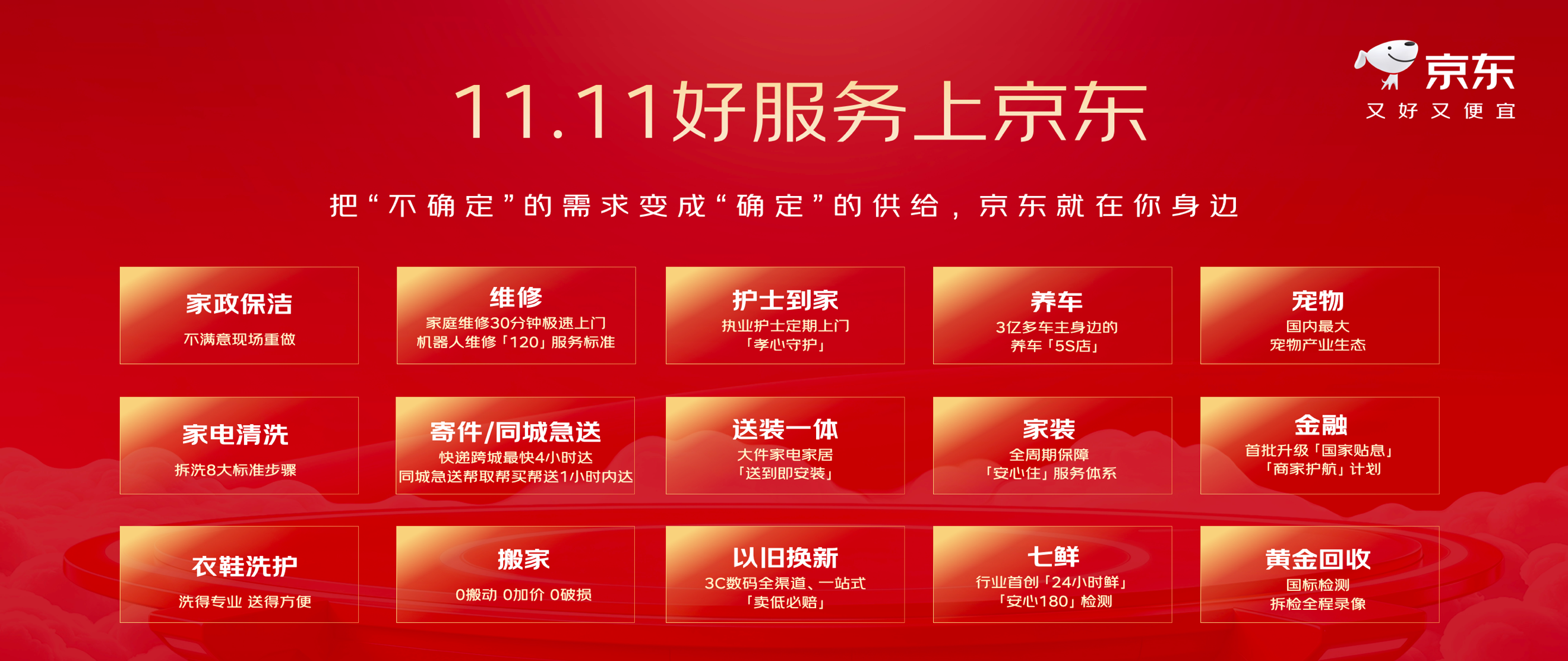
今年双11,京东重点推出15大服务品类,涉及家政、汽车、健康、维修、安装、搬家等多个领域。这些服务被设计成可以直接购买的产品,并参与双11促销。

例如,京东推出全年家政保洁服务产品,购买相应服务套餐可额外获得26次免费服务;油烟机全拆洗服务推出125元的活动价格,部分服务产品的补贴金额最高可达4680元。京东还将10月28日设置为超级服务日,集中推广生活服务产品。

这些需求并不新鲜,难点在于供给。与标准化商品相比,服务产品的供给更加分散,价格、服务质量和售后保障也更难统一。

消费者购买一台洗衣机,可以比较品牌、价格、参数和评价;但寻找一名可靠的家政服务人员,往往需要承担更高的筛选和沟通成本。

吴可人将当前服务行业的痛点概括为价格不透明、服务标准参差不齐和售后保障不足。针对这些问题,京东提出覆盖价格、服务规范和售后保障的“333”服务计划,强调明码标价、服务人员培训、标准化作业以及售后可追溯。

目前,京东已建设约50万平方米的培训场地,并形成覆盖多种服务品类的人员培训体系,每年开展大规模一线劳动者培训。京东还在尝试将AI技术、智能设备和机器人引入服务履约环节。

这些投入能否转化为消费者愿意持续购买的服务体验,将影响生活服务业务的增长空间。

03 直播和短视频,京东还在补另一块拼图

在拓展服务消费的同时,京东也在继续加码内容生态。

发布会上,京东零售平台营销中心内容生态部负责人披露,今年京东直播开播量增长120%,数字人开播量增长340%;视频直接产生的订单量增长80%,视频浏览时长增长50%。

从业务方向来看,京东在加大对直播和短视频的投入。

今年双11,京东继续推出直播挑战赛、明星直播、测评直播、抢购直播等内容形式,并计划在10月31日推出以《清明上河图》中的汴京场景为背景的互动式“赛博联欢会”。

京东还联合内容平台推出喜剧微综艺,并将部分综艺节目、明星互动与商品促销结合。

这些玩法在电商行业并不新鲜,但对京东有另一层意义。京东长期以来的优势在于商品供应链、物流履约以及3C家电等品类的消费心智。消费者带着明确的购买需求进入平台,搜索商品、比较价格并完成下单。

直播和短视频则把消费链路往前延伸。用户不一定先有明确的购买计划,也可能视频内容发现商品,再完成购买。从“人找货”到增加“货找人”的机会,背后争夺的是更多非计划性消费和用户停留时间。

尤其是在新品首发、数码测评、家电选购等领域,内容不仅承担营销功能,也可能参与消费者的购买决策。京东今年重点推广的测评直播,就是希望将平台原有的商品评价、专业测评资源与直播购物结合。

从低价促销到内容营销,再到生活服务,京东尝试覆盖更多消费需求。对于已经习惯日常低价的消费者而言,双11的吸引力不再只取决于商品便宜多少。如何让消费者买得更多、更频繁,甚至购买过去不习惯在线上下单的服务,成为京东寻找新增量的方向。

亿邦持续追踪报道该情报,如想了解更多与本文相关信息,请扫码关注作者微信。

本文首发于 亿邦动力 官方网站

文章来源:亿邦动力

广告
微信
朋友圈

FAQ回顾

京东双11除了商品低价还有哪些优惠玩法?

2026年京东双11在官方直降基础上推出“多买多返”玩法,消费者购买带活动标识的商品可获得返利,单个用户最高累计2000元,以双11购物卡形式发放;同时设置爱玩、爱家、健康等主题惊喜日,并推出直播挑战赛、测评直播、互动式“赛博联欢会”等内容玩法。

京东家政服务怎么样?双11有什么优惠?

京东家政在2025年双11期间成交额同比超4倍增长。2026年双11期间,京东推出全年家政保洁服务套餐,购买相应套餐可额外获得26次免费服务;油烟机全拆洗活动价格为125元,部分服务产品补贴金额最高达4680元。

京东“333”服务计划是什么?

“333”服务计划是京东为解决服务消费痛点推出的体系,针对价格不透明、服务标准参差不齐和售后保障不足等问题,强调明码标价、服务人员培训、标准化作业以及售后可追溯。京东已建设约50万平方米培训场地,并形成覆盖多种服务品类的人员培训体系。

京东生活服务覆盖哪些领域?

京东生活性服务已覆盖近百种细分场景,主要围绕居家、出行和大健康三大领域展开,包含家政、汽车、健康、维修、安装、搬家等。2026年双11重点推出15大服务品类,并将10月28日设为超级服务日集中推广。养老照护、宠物服务、机器人维修被视为快速增长品类。

这么好看,分享一下?

朋友圈 分享

APP内打开

赞 +1
+1
微信好友 朋友圈 新浪微博 QQ空间
关闭
收藏成功
发送
/140 0