广告
加载中

华电商城:数字人深度落地 释放多维采购价值

亿邦智库 2026-10-13 09:56
亿邦智库 2026/10/13 09:56

邦小白快读

EN
全文速览

总:华电商城把AI数字人“云宝”用到采购服务中,普通用户在平台上可通过自然对话完成咨询、查单和简单业务办理,不用再翻阅手册或等人工客服。

1. 四引擎怎么用:智答回答“华电超市怎么下单”等操作和政策问题;智导根据意图推荐商品,支持“2000元以内有销量的打印机”这种场景化检索;智查查订单、合同、发票;智办可直接完成开票申请、进度查询和“帮我签收第四笔订单”等操作。

2. 服务保障:400热线是12小时人工加12小时智能客服,平均30秒内响应,人工呼入接起率99%以上;复杂问题会交给人工处理。

3. 安全提示:系统采用数据不出域和私有化国产大模型,跨系统办理高风险操作时有确认机制,用户可以放心使用。

总:华电商城案例对品牌商的价值集中在央企采购渠道准入、品牌资产运营和价格竞争规则三个层面。

1. 渠道分销机会:2025—2027年度华电超市采购项目公开招标,广博集团、鑫方盛、咸亨国际、齐心集团、京东、得力等头部供应商中标,服务办公用品与通用工业品,品牌商可通过投标进入华电系统采购网络。

2. 品牌传播与资产:AI数字人“云宝”完成国家版权局美术作品登记,成为统一智能服务入口,并与人工客服协同;平台还提出价格监督与数字人“双轮驱动”,从价格信任和品牌传播两方面提升华电ECP品牌影响力。

3. 定价和用户行为:商城采用“竞争上架+动态竞价销售”模式,并有“防为主、人防为辅”的商品价格监督体系,品牌商需适应透明比价;平台基于用户行为分析做智能推荐,品牌商可借助场景化检索(如“2000元以内有销量的打印机”)提升曝光和转化。

总:华电商城给卖家展示了一个交易规模大、供应商增速快、规则透明的央企采购渠道,既有进入机会,也有价格和履约压力。

1. 市场增长与规模:平台采购用户从381家增至1317家,增幅245%,供应商由9928家增至81648家,增幅约724%,平台供应商总数达19万家;2024年商城交易额46.07亿元,利润总额18566.8万元。

2. 机会点:华电超市商品14万余个、58万个SKU,年成交超46亿元;2025—2027年度公开招标引入广博、鑫方盛、咸亨国际、齐心、京东、得力等头部供应商,覆盖办公用品和通用工业品,说明持续供货需求明确。

3. 规则与风险:平台实行“四统一”和“竞争上架+动态竞价销售”,价格竞争透明且持续存在;多维度量化履约考评覆盖履约过程,供应商需避免因服务或质量影响交易记录。

4. 应对启示:重视供应商智能画像体系,华电已累计生成17万余份供应商精准画像,供应商的资质业绩、交易记录、履约评价、信用惩戒等数据会直接影响后续合作。

总:工厂从华电商城案例中可看到央企采购的产品品类结构、标准化供货要求和智能化评审趋势,这些都会影响产品设计与产能布局。

1. 品类机会:商城覆盖办公用品和通用工业品两大核心品类,并开设大宗物资专区、自营专区、联储专区、区域专区,以及职业装、网信基础设施、乡村振兴等特色入口,工厂可根据专区定位寻找供货切口。

2. 产品竞争要求:平台上采用“竞争上架+动态竞价销售”模式,统一采购渠道、模式、价格和交易规则,工厂需要把产品价格、规格和交付能力做得更透明、更标准化,才能参与竞价。

3. 数字化启示:AI智能体已用于风电机组、化学产品、主变、开关柜等复杂品类的智能辅助评审;工厂应推进产品参数结构化,方便平台做智能推荐、智能评审和全流程履约跟踪。

4. 履约影响:平台实施多维度量化履约考评和供应商全生命周期画像,华电已生成17万余份供应商画像,工厂的历史订单履约表现会成为后续获取订单的关键依据。

总:华电商城为采购服务商提供了一个完整的“AI数字人+全场景服务”落地案例,技术路线、安全架构和运营模式都值得参考。

1. 新技术组合:自研数字人“云宝”采用私有化部署国产大模型、RAG检索、提示词工程、多级语义映射、模糊搜索和智能体编排,搭建智答、智导、智查、智办四引擎,覆盖采购全流程六大环节。

2. 客户痛点:用户面对海量商品和复杂流程时操作成本高、人工客服压力大;“云宝”基于396项业务知识构建向量知识库,用7×24小时智能问答把人工客服释放出来处理复杂问题。

3. 安全解决方案:数据不出域架构打通ERP等系统,同时满足政策答疑、多维比价和流程办理;高风险操作加入执行确认机制,既提高效率又控制风险。

4. 运营协同:服务运营采用12小时人工+12小时智能客服的“400”热线,平均响应30秒内,人工呼入接起率99%以上,说明数字人和人工客服协同能形成服务闭环。

5. 生态拓展:中国华电基于“华电智”大模型衍生300余个智能体,并建设“华电链”,服务商可结合区块链、大模型和智能体技术拓展央国企采购市场。

总:华电商城在平台治理、招商模式和AI服务上给出了完整升级路径,对同类采购平台有直接借鉴意义。

1. 运营管理:用“四统一”(统一采购渠道、统一采购模式、统一采购价格、统一交易规则)解决零星、高频、低值物资的采购效率和规范性问题;商城形成华电超市、大宗物资、自营、联储、区域等专区矩阵,并开设职业装、网信基础设施、乡村振兴等特色入口。

2. 招商与供给:通过2025—2027年度华电超市采购项目公开招标,引入广博、鑫方盛、咸亨国际、齐心集团、京东、得力等头部供应商;平台供应商总数达19万家,证明公开招标可以快速扩充供给并提升履约能力。

3. 服务升级:以数字人“云宝”作为统一智能入口,提供智答、智导、智查、智办,意图识别率99%,支持自然语言完成下单、签收、开票、对账等操作,减少人工服务压力。

4. 风险规避:建立“防为主、人防为辅”的商品价格监督体系,应用多维度量化履约考评,并汇聚供应商资质业绩、交易记录、履约评价、信用惩戒、市场舆情等数据,累计生成17万余份供应商画像,用智能风控支撑采购决策。

总:华电商城是研究央国企采购数字化、智能化转型的典型样本,其发展路径覆盖业务模式、技术架构与治理机制三类议题。

1. 产业新动向:从2020年上线到形成招标、非招标、商城采购“三位一体”采购体系,再到2025年启动“AI+招采”、发布“华电智”行业大模型并衍生300余个智能体,显示采购数字化正从流程线上化走向全链条智能决策。

2. 商业模式创新:央企自建加市场化运营结合,商城设置华电超市、大宗物资、自营、联储、区域等专区,并通过公开招标引入京东、得力、咸亨国际等社会化头部供应商,形成集约化采购与外部生态协同的模式。

3. 治理与政策启示:用“四统一”、动态竞价、“防为主、人防为辅”价格监督、多维度履约考评、区块链“华电链”和供应商全过程画像等方式,解决采购效率和透明合规问题;数据不出域和私有化国产大模型为央国企数据安全提供参考。

4. 可研究的数据与案例:华电ECP采购用户增至1317家、供应商达19万家,2024年交易额46.07亿元,云宝意图识别率99%并完成版权登记,这些数据适合作为产业互联网和新质生产力研究的案例素材。

返回默认

声明:快读内容全程由AI生成,请注意甄别信息。如您发现问题,请发送邮件至 run@ebrun.com 。

我是 品牌商 卖家 工厂 服务商 平台商 研究者 帮我再读一遍。

Quick Summary

Summary: Huadian Mall has integrated its AI digital human "Yunbao" into procurement services, allowing regular users to complete consultations, order inquiries, and simple transactions through natural conversation on the platform, without needing to browse manuals or wait for human customer service.

1. How the four engines work: Zhida answers operational and policy questions such as "How do I place an order on Huadian Mall?"; Zhidao recommends products based on intent and supports scenario-based searches like "printers under 2,000 RMB with sales volume"; Zhacha handles order, contract, and invoice lookups; Zhiban directly completes actions such as invoice applications, progress tracking, and "Help me sign for the fourth order."

2. Service assurances: The 400 hotline combines 12 hours of human support with 12 hours of AI customer service, with an average response time under 30 seconds and a human call connection rate above 99%; complex issues are escalated to human agents.

3. Safety notes: The system uses a data-not-leaving-domain architecture and a privatized domestic large language model, and includes confirmation mechanisms for high-risk cross-system operations, so users can use it with confidence.

Summary: The Huadian Mall case offers brand owners value in three areas: access to central state-owned enterprise procurement channels, brand asset management, and pricing competition rules.

1. Distribution opportunities: The 2025–2027 Huadian Mall procurement project was opened to public bidding, with leading suppliers such as Guangbo Group, Xinfangsheng, Xianheng International, Qixin Group, JD.com, and Deli winning contracts to serve office supplies and general industrial goods. Brand owners can enter Huadian's procurement network through bidding.

2. Brand communication and assets: The AI digital human "Yunbao" has been registered as an artwork with the National Copyright Administration, becoming a unified intelligent service entry point that works alongside human customer service; the platform also promotes a "twin-engine" approach of price supervision and digital human, enhancing the Huadian ECP brand through price trust and brand communication.

3. Pricing and user behavior: The mall adopts a "competitive listing + dynamic bidding sales" model and a price supervision system that prioritizes prevention with manual oversight as a supplement, forcing brand owners to adapt to transparent price comparisons; the platform uses user behavior analysis for intelligent recommendations, so brand owners can leverage scenario-based searches (e.g., "printers under 2,000 RMB with sales volume") to improve exposure and conversion.

Summary: Huadian Mall showcases a central SOE procurement channel with large transaction volume, fast-growing supplier numbers, and transparent rules, offering entry opportunities alongside pricing and fulfillment pressures.

1. Market growth and scale: Platform procurement users grew from 381 to 1,317, an increase of 245%; suppliers grew from 9,928 to 81,648, up about 724%, with total suppliers reaching 190,000; in 2024, mall transaction value reached 4.607 billion RMB, with total profit of 185.668 million RMB.

2. Opportunities: Huadian Mall carries over 140,000 products and 580,000 SKUs, with annual transactions exceeding 4.6 billion RMB; the 2025–2027 public bidding introduced leading suppliers such as Guangbo, Xinfangsheng, Xianheng International, Qixin, JD.com, and Deli, covering office supplies and general industrial goods, indicating clear continuous supply demand.

3. Rules and risks: The platform implements "four unifications" and a "competitive listing + dynamic bidding sales" model, making price competition transparent and ongoing; multi-dimensional quantitative fulfillment assessments cover the entire fulfillment process, and suppliers must avoid service or quality issues that could affect their transaction records.

4. Strategic implications: Suppliers should pay attention to the intelligent supplier profiling system; Huadian has generated over 170,000 precise supplier profiles, and data on qualifications, transaction history, fulfillment evaluations, and credit penalties will directly affect future cooperation.

Summary: Factories can learn from the Huadian Mall case about product category structures, standardized supply requirements, and intelligent review trends in central SOE procurement, all of which affect product design and capacity planning.

1. Category opportunities: The mall covers two core categories—office supplies and general industrial goods—and features specialized zones for bulk materials, self-operated products, reserve supplies, and regional sourcing, as well as special entrances for workwear, network infrastructure, and rural revitalization. Factories can identify supply entry points based on zone positioning.

2. Product competition requirements: The platform uses a "competitive listing + dynamic bidding sales" model with unified procurement channels, models, prices, and trading rules. Factories must make their pricing, specifications, and delivery capabilities more transparent and standardized to participate in bidding.

3. Digitalization insights: AI agents have been used for intelligent assisted review of complex categories such as wind turbines, chemical products, main transformers, and switchgear; factories should push for structured product parameters to enable intelligent recommendations, intelligent review, and end-to-end fulfillment tracking.

4. Fulfillment impact: The platform implements multi-dimensional quantitative fulfillment assessments and full-lifecycle supplier profiling; Huadian has already generated over 170,000 supplier profiles, making historical order fulfillment performance a key factor for securing future orders.

Summary: Huadian Mall provides procurement service providers with a complete "AI digital human + full-scenario service" implementation case, offering valuable reference in technology approach, security architecture, and operating model.

1. New technology stack: The self-developed digital human "Yunbao" uses privatized deployment of domestic large language models, RAG retrieval, prompt engineering, multi-level semantic mapping, fuzzy search, and agent orchestration, building four engines—Zhida, Zhidao, Zhacha, and Zhiban—that cover six stages of the procurement process.

2. Customer pain points: Users face high operational costs and heavy pressure on human customer service when dealing with massive product catalogs and complex processes; "Yunbao" builds a vector knowledge base from 396 business knowledge items, and 7×24 intelligent Q&A frees human agents to handle complex issues.

3. Security solutions: The data-not-leaving-domain architecture connects ERP and other systems while supporting policy Q&A, multi-dimensional price comparison, and process handling; high-risk operations include an execution confirmation mechanism, balancing efficiency with risk control.

4. Operational collaboration: Service operations use a "400" hotline with 12 hours of human plus 12 hours of AI customer service, average response under 30 seconds, and human call connection rate above 99%, demonstrating that digital human and human customer service collaboration can create a closed service loop.

5. Ecosystem expansion: China Huadian has derived more than 300 agents from its "Huadian Zhi" large model and built "Huadian Chain"; service providers can combine blockchain, large models, and agent technology to expand into central and state-owned enterprise procurement markets.

Summary: Huadian Mall presents a complete upgrade path in platform governance, supplier recruitment, and AI services, offering direct reference value for similar procurement platforms.

1. Operations management: The "four unifications" (unified procurement channel, unified procurement model, unified procurement price, and unified trading rules) solve efficiency and compliance issues in sporadic, high-frequency, low-value materials; the mall has formed a zone matrix including Huadian Mall, bulk materials, self-operated, reserve, and regional zones, with special entrances for workwear, network infrastructure, and rural revitalization.

2. Supplier recruitment and supply: Through the 2025–2027 public bidding, leading suppliers such as Guangbo, Xinfangsheng, Xianheng International, Qixin Group, JD.com, and Deli were introduced; total suppliers reached 190,000, proving that public bidding can rapidly expand supply and improve fulfillment capability.

3. Service upgrade: The digital human "Yunbao" serves as a unified intelligent entry point, providing Zhida, Zhidao, Zhacha, and Zhiban with 99% intent recognition accuracy, supporting natural language operations such as ordering, signing, invoicing, and reconciliation, reducing manual service pressure.

4. Risk mitigation: The platform establishes a price supervision system of "prevention first, manual oversight as supplement," applies multi-dimensional quantitative fulfillment assessments, and aggregates data on supplier qualifications, transaction history, fulfillment evaluations, credit penalties, and market sentiment, generating over 170,000 supplier profiles to support procurement decisions with intelligent risk control.

Summary: Huadian Mall is a typical sample for studying the digitalization and intelligent transformation of central SOE procurement, with its development path covering business model, technology architecture, and governance mechanisms.

1. Industrial trends: From its launch in 2020, to forming an integrated "tendering, non-tendering, and mall procurement" system, and then launching "AI + procurement" in 2025 with the "Huadian Zhi" industry large model and over 300 derived agents, it shows procurement digitalization moving from process digitalization toward intelligent decision-making across the entire chain.

2. Business model innovation: The combination of central SOE self-building with market-oriented operation; the mall sets up zones such as Huadian Mall, bulk materials, self-operated, reserve, and regional sourcing, and introduces socialized leading suppliers like JD.com, Deli, and Xianheng International through public bidding, forming a model of intensive procurement coordinated with an external ecosystem.

3. Governance and policy implications: The use of "four unifications," dynamic bidding, "prevention first, manual oversight as supplement" price supervision, multi-dimensional fulfillment assessment, the blockchain-based "Huadian Chain," and full-process supplier profiling addresses procurement efficiency and transparent compliance; data-not-leaving-domain and privatized domestic large models provide a reference for data security in central and state-owned enterprises.

4. Researchable data and cases: Huadian ECP procurement users grew to 1,317, suppliers reached 190,000, 2024 transaction value was 4.607 billion RMB, and Yunbao achieved 99% intent recognition and completed copyright registration—these figures are suitable as case material for research on the industrial internet and new quality productive forces.

Disclaimer: The "Quick Summary" content is entirely generated by AI. Please exercise discretion when interpreting the information. For issues or corrections, please email run@ebrun.com .

I am a Brand Seller Factory Service Provider Marketplace Seller Researcher Read it again.

【亿邦原创】华电商城的诞生,始于中国华电对物资采购集约化、数字化、透明化的持续探索。2020年1月1日,在集团公司物资管理部指导下,由中国华电集团物资有限公司开发建设的“华电商城”正式上线运行,开启了具有华电特色的电子商务服务新模式,标志着涵盖招标、非招标、商城采购“三位一体”的数字化物资采购体系基本成型。华电商城依托现有华电电子商务平台(ECP平台)(https://www.chdtp.com/),面向集团公司系统内部开展网上商城采购业务,完全由物资公司自主设计开发,通过两次封闭开发,系统设计开发仅用时四个月[1]。

在能源央企数字化采购加速演进的大背景下,华电商城以“智能数字人+全场景服务”为核心抓手,走出了一条具有华电特色的电子商务服务创新之路。由北京华电电子商务技术有限公司(华电数智云链公司)自研的AI数字人“云宝”,作为华电商城统一智能服务入口,正深度落地于采购服务全场景。依托私有化国产大模型、RAG检索与智能体编排技术,“云宝”搭建起智答、智导、智查、智办四大引擎,实现了从“被动响应”到“主动服务”的升级。以AI之力重塑采购服务供给方式,正是华电数智云链公司积极发展新质生产力、推动采购管理向供应链管理转型升级的生动实践,为电力行业采购服务数智化转型提供了可复制的样本。

“四统一”解决采购效率和规范问题

经过多年发展,华电商城已从单一的办公用品、通用工业品网上商城,成长为中国华电系统内覆盖多品类、多业态的集约化采购平台。依托华电ECP平台十余年沉淀的运营经验,华电商城已形成涵盖华电超市、大宗物资专区、自营专区、联储专区、区域专区等专区的业务矩阵,有效提升高频采购大宗物资、品牌商品的集约化高效化采购水平[2]。在集团电子商务平台上,华电商城还设置了职业装专区、网信基础设施专区、助力乡村振兴专区等特色入口。

作为商城的重要组成部分,华电超市三期在运营中积淀形成“四个统一”,即统一采购渠道、统一采购模式、统一采购价格、统一交易规则,有效解决零星、高频、低值物资的采购效率和业务规范性等问题。目前,华电超市商品总数达14万余个,涉及58万个SKU,年成交金额超46亿元,为华电超市4.0建设奠定坚实基础[2]。

在运营模式上,华电商城创新建立“竞争上架+动态竞价销售”模式,构建“防为主、人防为辅”的商品价格监督体系,应用多维度量化履约考评体系,研发基于用户行为分析的智能推荐技术,持续创新赋能商城运营和服务水平提升。华电商城价格监督与数字人的“双轮驱动”,从价格信任和品牌传播两个关键层面协同发力,有效提升了华电ECP品牌的知名度和影响力[2]。

从平台整体看,华电ECP平台的采购用户数由上线之初的381家增至1317家,增幅245%;当期供应商用户家数由9928家增至81648家,增幅约724%,目前平台供应商数已达19万家。平台平均每日4万独立IP访问系统60万次以上,日均登录用户1万人次以上。2024年,华电ECP平台服务招标标段数5026个,非招标采购订单118199个,华电商城交易额达46.07亿元,实现利润总额18566.8万元,超额完成年度预算指标的132.62%[2]。

与此同时,华电商城的市场化运营生态不断深化。2025—2027年度华电商城华电超市采购项目公开招标,广博集团、鑫方盛、咸亨国际、齐心集团、京东、得力等多家头部供应商中标,服务覆盖办公用品与通用工业品两大核心品类[3],为商城持续扩充优质供给、提升履约能力提供了支撑。

四大AI数字人引擎落地采购服务全场景

在平台规模持续扩大的同时,华电商城将服务体验升级作为重点方向,创新引入基于华电商城的智能数字人系统,利用数字人提供智能化AI服务场景,进一步优化服务界面与服务工具,推进构建新质生产力[2]。华电商城自研AI数字人“云宝”,依托国产大模型、RAG检索和智能体编排,搭建智答、智导、智查、智办四大引擎。

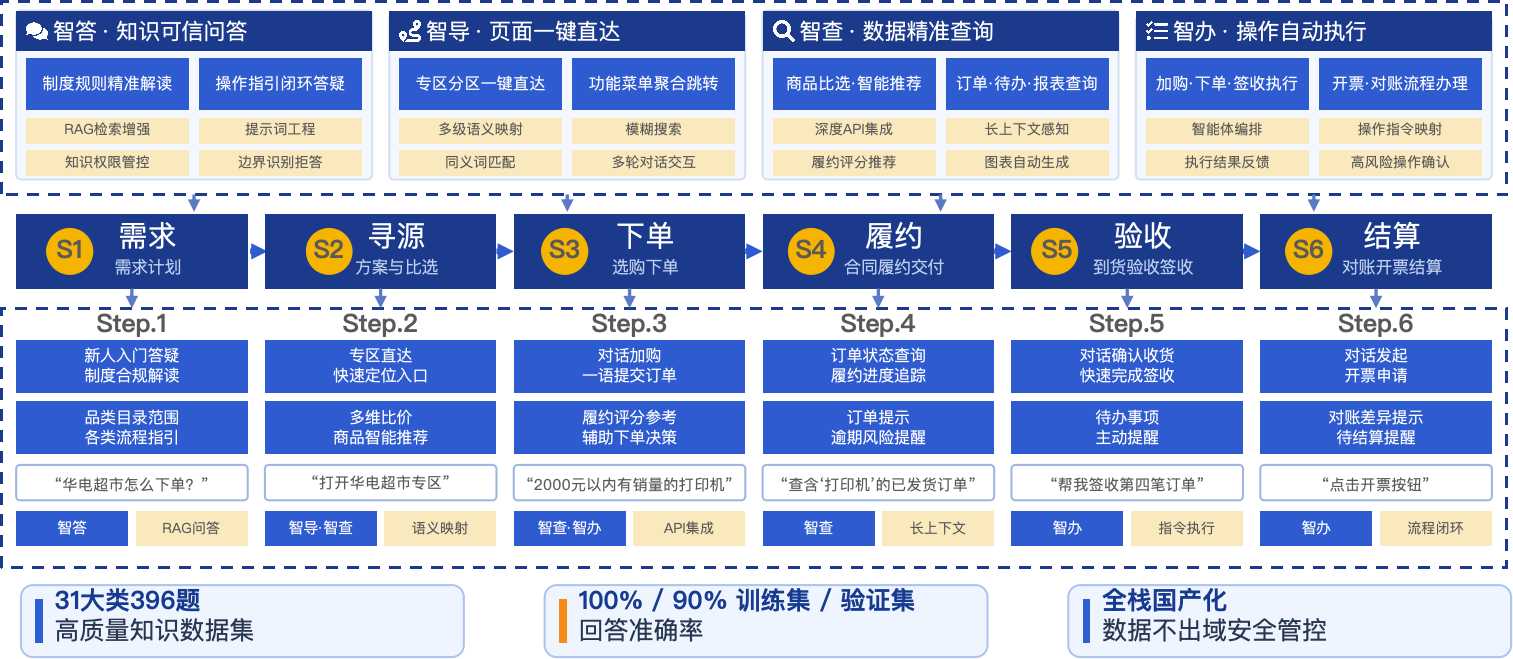
作为华电商城统一智能服务入口,“云宝”的四大引擎各司其职:智答引擎提供7×24小时智能问答,覆盖平台操作、政策法规、业务流程等常见问题,支撑“华电超市怎么下单”“打开华电超市专区”等自然语言咨询;智导引擎根据用户意图与行为,主动推荐相关商品、服务或操作指引,支持“2000元以内有销量的打印机”等场景化检索;智查引擎支持自然语言查询订单、合同、发票等业务数据,可响应“查含打印机的已发货订单”等数据查询;智办引擎则通过智能体编排,实现部分高频业务的自动化办理,如开票申请、进度查询,甚至通过对话直接完成“帮我签收第四笔订单”等履约操作。在技术实现上,“云宝”通过RAG技术实时检索华电商城396项业务知识构建的向量知识库,确保回答的准确性与时效性。

值得关注的是,“云宝”已作为美术作品完成国家版权局著作权登记,著作权人为北京华电数智云链科技有限公司[4]。这一知识产权布局,体现了运营主体对数字人形象资产与品牌资产的规范化管理。

国产大模型构建“数据不出域”安全底座

“云宝”的技术底座坚持自主可控原则。平台采用数据不出域架构,打通ERP等系统,支持政策答疑、多维比价和流程办理,并通过知识库沉淀业务内容,将复杂操作转化为对话式服务。在模型层面,“云宝”采用私有化部署的国产大模型,确保数据安全与自主可控;在算法层面,RAG检索增强技术结合提示词工程、多级语义映射、模糊搜索等能力,支撑自然语言问答与复杂意图理解;在智能体层面,智能体编排技术使“云宝”具备任务分解与多步执行能力,可处理跨系统、跨流程的复杂业务,覆盖需求、寻源、下单、履约、验收、结算采购全流程六大环节,并在下单、签收、开票、对账等高风险操作中引入执行确认机制,兼顾效率与安全。

从服务效果看,“云宝”的意图识别率达99%,能够精准理解用户复杂、模糊的自然语言表达。“云宝”的深度落地,显著提升了用户体验与服务效率:用户无需再翻阅手册或等待人工客服,通过自然对话即可获取所需信息与服务;同时释放了大量人工客服资源,使其专注于复杂问题处理与增值服务提供。

数字人服务的背后,是华电ECP平台持续优化的综合服务体系。ECP平台服务运营团队按照“接通即答,接问即办”的高标准原则,建立12小时人工客服+12小时智能客服的“400”综合服务热线,平均响应速度提升至30秒内,电话咨询量约20万通,人工呼入接起率稳定保持在99%以上,实现“响应零延迟、处置全闭环、能力可持续”的服务目标[2]。数字人与人工客服的协同,共同构成了华电商城“人机协同”的服务保障网络。

“AI+招采”构建供应链智能生态

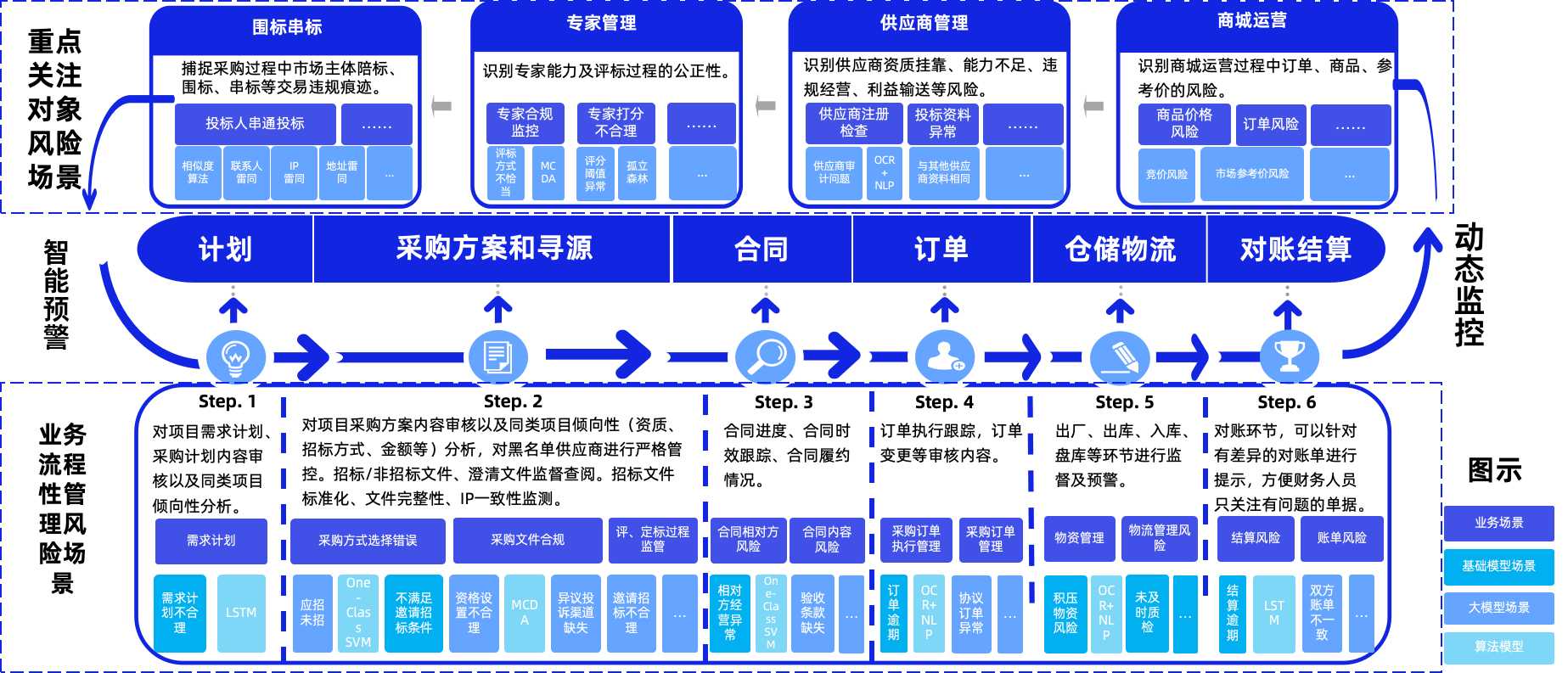
“云宝”的落地,是华电数智化采购战略的一个缩影。近年来,中国华电坚持以技术创新与数字化转型为引擎,全力推进“AI+招采”体系建设。2025年3月,“AI+”智能采购系统建设正式启动,六大核心应用场景全部开发完成,并于2025年6月30日正式上线试运行,系统与现有采购计划系统、电子招投标系统深度融合、无缝衔接[5]。华电物资数智云链公司率先构建发电行业招采领域首个全链条AI深度应用智能体,成功实现风电机组、化学产品、主变、开关柜等复杂品类的全部评审条款智能辅助评审,实现招采业务全流程智能化穿透式监管,稳步推进华电商城建设,为集团公司提供更加规范、高效、便捷的采购服务体验[6]。

在数据与模型底座层面,2025年11月,中国华电发布“华电智”行业大模型,以“华电智”大模型为核心,形成AI供给与治理两大关键能力,夯实六类技术支柱,赋能五大业务领域,衍生300余个智能体,共同构建起华电特色的“人工智能+”应用创新体系[7]。与此同时,中国华电汇聚供应商资质业绩、交易记录、履约评价、信用惩戒、市场舆情等内外部全量数据,构建覆盖供应商准入、交易、履约、退出全生命周期的智能画像体系,累计生成供应商精准画像17万余份,推动采购决策从“单一价格导向”向“综合价值导向”转变[5]。华电数智云链公司还积极探索区块链、人工智能、大数据等技术在业务场景中的应用,建成“华电链”,推动华电商城运营模式创新,完成“区块链+物资采购”等场景落地[2]。

华电数智云链公司在平台能力建设上持续加码,先后取得40余项计算机软件著作权、4项发明专利,发表核心期刊论文6篇,通过CMMI三级认证、ISO9001、ISO27001、ISO20000管理体系认证及电子招投标系统三星认证,连续三次通过“国家高新技术企业”认定,获得“国家区块链技术(能源领域)创新中心”、北京市“创新型”中小企业、“专精特新”中小企业等称号[2]。这些能力为华电商城及整个ECP平台的数智化升级提供了坚实的技术支撑。

从2020年上线时近50万种商品的“网上商城”,到2025年交易额超46亿元、服务1300多家采购单位与19万家供应商的数智化采购平台[2],华电商城用数年时间完成了从交易工具到服务枢纽的跃迁。随着AI数字人“云宝”在采购服务全场景的深度落地,以及“华电智”大模型、全链条AI智能体等数智能力的持续注入[6][7],华电商城正加速构建智能化、人性化的采购服务生态,为能源央企采购供应链的数智化转型提供创新范式。

信息来源

[1] 中国华电集团官网:《“华电商城”正式上线运行》https://www.chd.com.cn/webfront/webpage/web/contentPage/id/32c4045531f846148bcf132bbc74c44d

[2] 华电数智云链公司:《以管理创新促进新质生产力发展的探索实践》https://www.ccnpub.com/yyde-2-121679

[3] 证券时报:《咸亨国际中标华电商城华电超市采购项目》https://www.stcn.com/article/detail/3608585.html

[4] 国家版权局作品著作权登记信息:《华电商城智能数字人“云宝”》https://banquan.tianyancha.com/zp/oe14e94co3893872cbb14b1b8l9fea19

[5] 国务院国资委网站:《中国华电:深化智能招采实践 构建阳光高效招采体系》http://www.sasac.gov.cn/n4470048/n22624391/n23826238/n23826274/n23859376/c35426557/content.html

[6] 中国华电集团官网:《【全会精神直达一线】中国华电各基层企业深入学习贯彻党的二十届四中全会精神②》https://www.chd.com.cn/webfront/webpage/web/contentPage/id/43942609d9a0493297b9a55a74329a66

[7] 中国华电集团官网:《中国华电举办2025年新型电力系统技术创新论坛 发布“华电智”大模型》https://www.chd.com.cn/webfront/webpage/web/contentPage/id/2e11dcbb24d54fc4aed486199fafda50

亿邦智库持续关注央国企数字化采购领域的最新进展,如想了解更多与本文相关信息,请扫码关注作者微信或发送邮箱。联系邮箱:zhangjing@ebrun.com

作为TO B领域年度风向标,“2026第八届亿邦产业互联网年会暨首届产业智能体大会”将于11月20日在北京召开。主题定为“AI与出海带来的模态进化”,聚焦产业智能体落地、AI供应链价值重构、数据要素与TOKEN经济、产业出海新生态等前沿议题深度思辨。大会将集结学界权威、央国企标杆、产业龙头、投资机构、服务生态伙伴,汇聚产业核心力量、拆解产业数智化转型路径、分享前沿实战经验。同期还将发布年度产业互联网报告及标杆案例,举办决策人闭门会、“千峰奖”颁奖盛典。


本文首发于 亿邦动力 官方网站

文章来源:亿邦动力

广告
微信
朋友圈

FAQ回顾

华电商城是什么?

华电商城是中国华电集团面向集团内部的数字化采购平台,2020年1月1日上线,由集团物资有限公司开发建设。平台涵盖招标、非招标、商城采购“三位一体”体系,设有华电超市、大宗物资专区、自营专区等业务矩阵,有效提升高频采购物资的集约化、高效化水平。

华电AI数字人“云宝”有哪些功能?

云宝是华电数智云链公司自研的AI数字人,作为华电商城统一智能服务入口,依托国产大模型、RAG检索和智能体编排技术,搭建智答、智导、智查、智办四大引擎,可提供7×24小时智能问答、场景化推荐、订单数据查询以及开票申请、订单签收等高频业务自动办理,意图识别率达99%。

华电ECP平台的采购规模如何?

华电ECP平台采购用户数从381家增至1317家,增幅245%;供应商从9928家增至81648家,增幅约724%,目前达19万家。2024年服务招标标段5026个,非招标采购订单118199个,华电商城交易额46.07亿元,利润总额18566.8万元,超额完成年度预算指标的132.62%。

中国华电如何推进采购数智化转型?

中国华电通过“AI+招采”体系和AI数字人“云宝”落地推进采购数智化转型。2025年3月启动“AI+”智能采购系统建设,同年6月30日上线试运行,并发布“华电智”行业大模型,构建覆盖供应商全生命周期的智能画像体系,累计生成精准画像17万余份,推动采购决策从“单一价格导向”向“综合价值导向”转变。

这么好看,分享一下?

朋友圈 分享

APP内打开

赞 +1
+1
微信好友 朋友圈 新浪微博 QQ空间
关闭
收藏成功
发送
/140 0