广告
加载中

亿邦智库参与编制《中小企业跨境电商实践指南》在雅加达发布

亿邦智库 2026-09-22 09:36
亿邦智库 2026/09/22 09:36

邦小白快读

EN
全文速览

这篇文章核心通报了一份高实用度的跨境出海实操指南发布信息,包含大量无门槛可复用的出海干货,有跨境出海需求的普通读者可重点关注。

1. 指南基础信息明确:2026年9月该指南在印尼雅加达正式发布,由世界互联网大会组织编制、亿邦智库参与调研撰写,全文约3.4万字,是专为全球中小卖家打造的出海“导航手册”,历时半年经过多轮企业走访、专家研讨打磨完成。

2. 可直接取用的实操内容覆盖出海全流程:包含八大重点市场的选择三步法与30天启动清单、不同发展阶段适配的商业模式选择标准、选品/供应链/物流/定价的具体落地方法、AI工具选型与风险规避提示,附录还配套平台入驻指南、政策订阅渠道、实用工具包等资源,读者可扫码下载获取。

本次发布的《中小企业跨境电商实践指南》包含大量品牌跨境出海可参考的趋势研判、运营方法与风险提示,能为品牌全球化布局提供系统化实操支撑。

1. 趋势层面需重点把握:当前全球跨境电商市场规模预计突破5万亿美元,东南亚、中东、拉美、非洲等新兴市场活力持续释放,是品牌出海的核心增量方向;但中小品牌普遍面临经营同质化、合规成本上升、市场试错成本高的共性问题,提前布局需做好风险预判。

2. 实操层面可直接复用成熟方法:渠道选择上可对照不同模式对资金、团队、供应链的要求,匹配企业发展阶段选择独立站、平台、社媒电商等路径;产品定价可参考“引流款+利润款+形象款”的结构搭建体系;营销环节可分阶段应用AI工具提效,同时注意规避内容侵权、文化冒犯、数据隐私、品牌趋同等风险,做好本地化适配。

本次发布的《中小企业跨境电商实践指南》是专为全球跨境卖家打造的全链路实操导航,明确了出海的增量机会、可选路径与风险提示,卖家可直接对照内容落地执行。

1. 核心机会与配套资源清晰:当前全球跨境电商市场规模预计突破5万亿美元,东南亚、中东、拉美、非洲等新兴市场活力持续释放,是未来的核心增长市场;指南配套的八大市场准入指引、30天启动清单、主流平台入驻指南、政策动态订阅渠道等资源,可大幅降低卖家的市场调研成本。

2. 落地方法可直接复用:可按照启动、扩张、成熟的不同发展阶段,匹配DTC独立站、B2C、B2B、社媒电商、平台全托管/半托管等不同商业模式;运营端可照搬选品方法、双轨供应商体系、快慢线物流组合、三层定价结构等成熟经验;AI应用可按提效、辅助决策、业务融合、原生智能四阶段逐步推进,提前规避合规、文化冲突、品牌同质化等风险。

本次发布的跨境电商实践指南为工厂转型跨境电商、对接出海需求明确了方向与落地路径,梳理了大量可把握的商业机会与数智化转型启示。

1. 可重点把握的商业机会充足:当前全球跨境电商规模预计突破5万亿美元,东南亚、中东、拉美、非洲等新兴市场需求旺盛,工厂依托供应链优势切入跨境赛道有较大增长空间,可重点对接上述新兴市场的卖家、平台需求,匹配本地化选品方向优化产品设计与生产安排。

2. 转型落地有明确参考路径:可对照指南梳理的不同跨境商业模式对供应链的要求,匹配自身能力选择合作方向,比如对接平台全托管/半托管卖家、服务独立站品牌等;供应链搭建可参考双轨供应商体系思路提升响应效率;可借助AI工具逐步推进数智化转型,从基础提效替代起步逐步深化应用,降低转型试错成本。

本次发布的《中小企业跨境电商实践指南》系统梳理了跨境电商行业的发展趋势、中小客户的核心痛点与落地需求,可为服务商的业务布局、产品开发提供明确方向参考。

1. 行业趋势与客户痛点清晰:当前全球跨境电商保持较快增长,新兴市场活力充足,但广大中小跨境经营主体普遍面临经营同质化、合规成本上升、市场试错成本高的共性难题,在市场准入研判、模式选择、全链路运营、AI工具应用等环节都存在明确的未被满足的服务需求。

2. 业务拓展方向可参考:可围绕客户痛点打造对应解决方案,比如市场准入的合规咨询、分阶段的商业模式陪跑、选品/物流/支付/营销全链路的运营服务、适配中小商家的轻量化AI工具产品等,同时可配套提供政策动态同步、工具资源整合等增值服务,帮助客户规避内容侵权、文化冒犯、数据隐私等常见风险。

本次发布的《中小企业跨境电商实践指南》凝结了多轮行业调研、多方主体研讨的共识,明确了中小跨境商家的核心诉求与行业发展风向,可为平台的招商、商家运营服务优化提供参考。

1. 商家核心需求明确:当前中小商家出海普遍面临试错成本高、合规压力大、运营方法不足、AI落地难等问题,对平台的市场准入指引、模式适配指导、全链路运营支撑、易用AI工具有较强需求;东南亚、中东等新兴市场的增长潜力,也要求平台针对性完善对应区域的服务能力。

2. 运营与招商可优化方向清晰:可对照指南框架完善商家服务体系,比如上线新商家30天启动指引、分阶段匹配全托管/半托管等模式的适配建议、选品/物流/营销等环节的实操培训、合规风险提示,尤其要明确AI应用的相关规则,帮助商家规避侵权、文化冒犯、数据隐私等问题,降低商家经营成本,提升平台招商吸引力。

本次世界互联网大会组织编制、亿邦智库参与完成的《中小企业跨境电商实践指南》,基于历时半年的多轮企业走访、专家访谈、行业研讨形成,为跨境电商产业研究提供了最新的观察样本与方向参考。

1. 产业最新动向值得关注:当前全球跨境电商市场规模预计突破5万亿美元,东南亚、中东、拉美、非洲等新兴市场成为核心增长极,AI在跨境领域的应用逐步深化,从基础提效向业务融合、原生智能方向演进;平台全托管、半托管、社媒内容电商、DTC独立站等多元商业模式并行,为中小主体出海提供了多元选择路径。

2. 产业新问题具备研究价值:当前中小企业出海仍面临经营同质化、合规成本上升、试错成本较高的共性难题,AI应用过程中还存在内容侵权、文化冒犯、数据隐私、品牌趋同等新风险,后续可围绕中小主体的合规服务体系搭建、AI落地路径、新兴市场规则适配等方向开展进一步研究,为产业政策优化、支撑体系建设提供参考。

返回默认

声明:快读内容全程由AI生成,请注意甄别信息。如您发现问题,请发送邮件至 run@ebrun.com 。

我是 品牌商 卖家 工厂 服务商 平台商 研究者 帮我再读一遍。

Quick Summary

This article highlights the release of a highly practical, actionable guide to cross-border e-commerce expansion, packed with accessible, reusable takeaways for general readers looking to launch or grow overseas business efforts.

1. Core guide details: Officially launched in Jakarta, Indonesia, in September 2026, the guide was compiled by the World Internet Conference with research support from Ebrun Think Tank. At roughly 34,000 Chinese characters, it is designed as a navigation manual for global small and medium-sized sellers, developed over six months through multiple rounds of corporate visits and expert consultations.

2. Actionable, end-to-end content for cross-border operations: The guide covers a three-step framework for selecting among eight priority markets, a 30-day launch checklist, stage-appropriate business model selection criteria, concrete implementation methods for product sourcing, supply chain management, logistics and pricing, plus guidance on AI tool selection and risk mitigation. Appendices include platform onboarding guides, policy update subscription channels and practical toolkits, all available for download via QR code.

The newly released *Cross-Border E-Commerce Practice Guide for Small and Medium-Sized Enterprises* provides actionable trend analysis, operational frameworks and risk mitigation guidance to support brands in building systematic global expansion strategies.

1. Key trend takeaways: The global cross-border e-commerce market is projected to exceed US$5 trillion in size, with emerging markets including Southeast Asia, the Middle East, Latin America and Africa emerging as core growth drivers. That said, small and medium-sized brands commonly face pain points including operational homogenization, rising compliance costs and high market trial-and-error expenses, requiring proactive risk assessment before market entry.

2. Replicable, ready-to-use operational frameworks: For channel selection, brands can match their current development stage to DTC independent sites, third-party marketplaces or social commerce based on each model’s capital, team and supply chain requirements. For product pricing, brands can adopt the three-tier structure of traffic-driving SKUs, profit-generating SKUs and brand-building flagship SKUs. For marketing, teams can deploy AI tools in phases to drive efficiency, while prioritizing localization to mitigate risks such as content copyright infringement, cultural missteps, data privacy violations and brand homogenization.

The newly released *Cross-Border E-Commerce Practice Guide for Small and Medium-Sized Enterprises* is an end-to-end operational playbook built for global cross-border sellers, outlining clear growth opportunities, viable expansion paths and risk guardrails that sellers can implement directly.

1. Clear growth opportunities and supporting resources: The global cross-border e-commerce market is projected to exceed US$5 trillion in size, with emerging markets including Southeast Asia, the Middle East, Latin America and Africa serving as core future growth engines. The guide includes market access guidance for eight priority markets, a 30-day launch checklist, onboarding instructions for major platforms, and channels to subscribe to real-time policy updates, significantly cutting sellers’ upfront market research costs.

2. Replicable, ready-to-implement operational methods: Sellers can align business models — including DTC independent sites, B2C, B2B, social commerce, and fully managed/semi-managed platform models — to their startup, expansion or maturity stage. For daily operations, teams can directly adopt proven frameworks covering product selection methods, dual-track supplier systems, combined fast/slow logistics networks, and three-tier pricing structures. For AI adoption, sellers can roll out tools across four sequential stages: basic efficiency gains, decision support, business integration and native intelligence, while proactively mitigating risks related to compliance, cultural conflict and brand homogenization.

The newly released cross-border e-commerce practice guide provides clear direction and implementation pathways for manufacturers looking to transition into cross-border e-commerce and tap into overseas demand, outlining actionable commercial opportunities and digital transformation takeaways.

1. Substantial accessible commercial opportunities: The global cross-border e-commerce market is projected to exceed US$5 trillion in size, with strong consumer demand across emerging markets in Southeast Asia, the Middle East, Latin America and Africa. Leveraging their inherent supply chain advantages, manufacturers have significant room to grow in the cross-border space by partnering with sellers and platforms targeting these emerging markets, and adjusting product design and production plans to match localized product selection preferences.

2. Clear reference pathways for transformation: Manufacturers can align partnership models — including supplying sellers on fully managed/semi-managed platform programs, or serving DTC independent site brands — to their own capabilities, based on the supply chain requirements of different cross-border business models outlined in the guide. For supply chain construction, teams can reference the dual-track supplier framework to improve response efficiency. Manufacturers can also advance digital and intelligent transformation in phases via AI tools, starting with basic efficiency replacement to reduce trial-and-error costs during the transition.

The newly released *Cross-Border E-Commerce Practice Guide for Small and Medium-Sized Enterprises* systematically maps cross-border e-commerce industry trends, core pain points of small and medium-sized clients and their practical operational needs, providing clear direction for service providers’ business planning and product development.

1. Clear industry trends and client pain points: Global cross-border e-commerce maintains robust growth, with strong momentum across emerging markets. However, the vast majority of small and medium-sized cross-border operators face shared challenges including operational homogenization, rising compliance costs and high market trial-and-error expenses, creating unmet demand for services covering market entry assessment, business model selection, end-to-end operations and AI tool implementation.

2. Actionable business expansion directions: Service providers can build targeted solutions aligned to these pain points, including market entry compliance consulting, phased business model incubation, end-to-end operational services covering product sourcing, logistics, payment and marketing, and lightweight AI tools tailored for small and medium-sized merchants. Providers can also offer value-added services such as real-time policy updates and integrated tool resource libraries, to help clients avoid common risks including copyright infringement, cultural missteps and data privacy violations.

The newly released *Cross-Border E-Commerce Practice Guide for Small and Medium-Sized Enterprises* consolidates consensus from multiple rounds of industry research and multi-stakeholder consultations, outlining core demands of small and medium-sized cross-border merchants and key industry development trends to inform platforms’ merchant recruitment and operational service optimization.

1. Clear core merchant needs: Small and medium-sized merchants expanding overseas commonly face high trial-and-error costs, mounting compliance pressure, gaps in operational know-how and barriers to AI implementation, creating strong demand for platforms to provide market entry guidance, business model adaptation support, end-to-end operational resources and easy-to-use AI tools. The growth potential of emerging markets such as Southeast Asia and the Middle East also requires platforms to build targeted service capabilities for these regions.

2. Clear optimization directions for operations and recruitment: Platforms can refine their merchant service systems aligned to the guide’s framework, including rolling out 30-day launch guidance for new merchants, phased adaptation recommendations for fully managed and semi-managed models, practical training for product selection, logistics and marketing, and clear compliance risk alerts. In particular, platforms should define clear rules for AI application to help merchants avoid issues related to copyright infringement, cultural missteps and data privacy, reducing merchant operating costs and strengthening recruitment appeal.

The *Cross-Border E-Commerce Practice Guide for Small and Medium-Sized Enterprises*, compiled by the World Internet Conference with research contributions from Ebrun Think Tank, was developed over six months via multiple rounds of corporate visits, expert interviews and industry seminars, providing new observational samples and directional reference for cross-border e-commerce industry research.

1. Notable latest industry trends: The global cross-border e-commerce market is projected to exceed US$5 trillion in size, with emerging markets in Southeast Asia, the Middle East, Latin America and Africa becoming core growth poles. AI application in the cross-border sector is deepening, evolving from basic efficiency improvement to business integration and native intelligence. Parallel development of diverse business models — including fully managed and semi-managed platform models, social content commerce and DTC independent sites — is providing multiple expansion pathways for small and medium-sized overseas operators.

2. Valuable emerging industry research questions: Small and medium-sized enterprises expanding overseas still face shared challenges including operational homogenization, rising compliance costs and high trial-and-error expenses. AI adoption also introduces new risks including content copyright infringement, cultural missteps, data privacy violations and brand convergence. Future research can focus on areas including the construction of compliance service systems for small and medium-sized operators, AI implementation pathways, and adaptation to emerging market rules, to provide reference for industry policy optimization and support system building.

Disclaimer: The "Quick Summary" content is entirely generated by AI. Please exercise discretion when interpreting the information. For issues or corrections, please email run@ebrun.com .

I am a Brand Seller Factory Service Provider Marketplace Seller Researcher Read it again.

【亿邦原创】《指南》由世界互联网大会组织编制,为全球中小卖家提供跨境出海实操“导航手册”

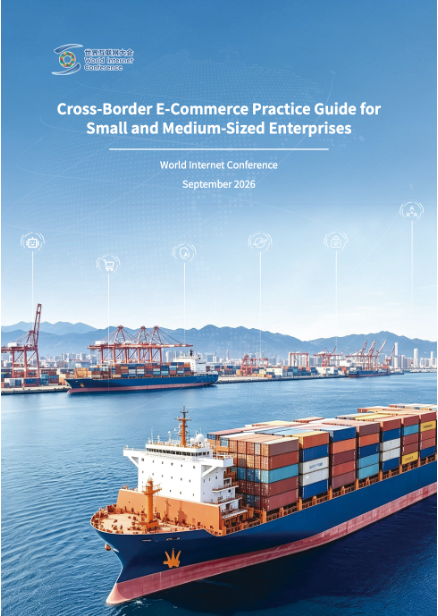
当地时间2026年9月3日,由世界互联网大会组织编制的《中小企业跨境电商实践指南》(以下简称《指南》),在印度尼西亚雅加达举办的世界互联网大会“丝路联商 智贸共赢”跨境电商国际研讨会上正式发布。研究团队代表、亿邦智库执行院长王姗在发布现场向中外嘉宾介绍《指南》核心内容。

当前,全球跨境电商保持较快发展,市场规模预计突破5万亿美元,东南亚、中东、拉美、非洲等新兴市场活力持续释放。与此同时,中小企业跨境出海仍普遍面临经营同质化、合规成本上升、市场试错成本较高等现实难题。《指南》面向全球中小企业的实际需求,围绕企业出海完整经营逻辑,提供一套从前期研判到落地执行的标准化实操指引。

《指南》中文版约3.4万字,设置前言和四大主体板块,并配套实操资源附录:

一是目标市场准入指南。系统梳理北美、欧洲、中国、日韩、东南亚、中东、拉美、非洲等八大重点市场画像,提出“宏观评估、竞争筛选、小成本验证”的市场选择三步法,配套30天启动清单和常见风险提示,帮助企业避免盲目开拓。

二是商业模式选择指南。比较DTC独立站、B2C、B2B、社媒内容电商以及平台全托管、半托管等模式对企业资金、团队和供应链的要求,按启动期、扩张期、成熟期提供分阶段发展路径。

三是全链路运营指南。覆盖选品与本地化、供应链与物流履约、金融与支付、营销与广告四个核心环节,提炼选品方法、双轨供应商体系、物流快慢线组合、“引流款+利润款+形象款”定价结构等可直接应用的实操方法。

四是AI应用实操指南。将中小企业应用AI划分为提效替代、决策辅助、业务融合、原生智能四个阶段,提出工具选型原则,并提示内容侵权、文化冒犯、数据隐私、品牌趋同等风险。附录还提供主流平台入驻指南、政策动态订阅渠道、工具包链接和中英术语表。

受世界互联网大会委托,亿邦智库组建研究团队推进相关工作。4月,研究团队配合世界互联网大会在北京召开开题研讨会,联合国国际贸易中心(ITC)、亚洲中小企业理事会(ASBF)、马来西亚中国总商会等国际组织代表,以及国内学界和跨境电商平台、企业代表线上线下相结合方式参加研讨,就报告框架与内容重点充分交流;此后,研究团队先后赴杭州、深圳参加行业博览会开展企业访谈,并随世界互联网大会调研组赴浙江宁波、舟山实地走访跨境电商企业、物流港口和产业园区。7月,在2026年世界互联网大会数字丝路发展论坛上,亿邦智库主持“AI时代中小企业电商实践”圆桌对话,与Jumia、Ozon、赛维时代、易点天下、中金公司等平台和企业代表共同研讨中小企业AI落地路径。《指南》的编制通过企业走访、服务商深度访谈、行业专家研讨等多轮调研打磨,历时半年完成。

亿邦智库长期跟踪研究电子商务、跨境电商及产业数智化领域,依托亿邦动力二十年行业积累,持续为政府部门、国际组织和行业机构提供高质量研究参考。

扫描二维码下载《指南》


本文首发于 亿邦动力 官方网站

文章来源:亿邦动力

广告
微信
朋友圈

FAQ回顾

中小企业开展跨境电商业务普遍面临哪些痛点?

中小企业开展跨境电商业务普遍面临经营同质化、合规成本上升、市场试错成本较高等现实难题。当前全球跨境电商市场规模预计突破5万亿美元,东南亚、中东、拉美、非洲等新兴市场活力持续释放,出海空间广阔。

《中小企业跨境电商实践指南》包含哪些实用内容?

该指南围绕中小企业出海完整经营逻辑,提供从前期研判到落地执行的标准化实操指引,涵盖目标市场准入、商业模式选择、全链路运营、AI应用实操四大板块,配套平台入驻指南、工具包、中英术语表等实用附录,覆盖全球八大重点跨境市场。

中小企业选择跨境电商目标市场有什么可参考的方法?

中小企业选择跨境目标市场可采用“宏观评估、竞争筛选、小成本验证”三步法,对照北美、欧洲、中国、日韩、东南亚等八大重点市场画像做决策,配套30天启动清单和常见风险提示,可有效降低盲目开拓市场的风险。

中小企业应用AI开展跨境电商需要注意哪些问题?

中小企业跨境场景下的AI应用可分为提效替代、决策辅助、业务融合、原生智能四个阶段,工具选型需匹配自身发展阶段,同时要注意防范内容侵权、文化冒犯、数据隐私、品牌趋同等四类应用风险。

这么好看,分享一下?

朋友圈 分享

APP内打开

+1
+1
微信好友 朋友圈 新浪微博 QQ空间
关闭
收藏成功
发送
/140 0