广告
加载中

天猫同行 穿越周期:凯诘在生态经销大会上谈AI时代的进化

龚作仁 2026-08-07 16:06
龚作仁 2026/08/07 16:06

邦小白快读

EN
全文速览

本文核心是天猫生态经销商业务大会传递的AI时代经销行业变革信息,给想要进入经销行业或是正在做经销的普通从业者提供了清晰的行动方向,核心干货如下:

1. 行业核心判断:当前市场已经从品牌主导转向消费者主导,传统靠赚信息差、价差的经销商生存空间被挤压,能做好用户洞察、反向驱动供应链的新型经销商价值反而会越来越高。

2. 普通从业者可落地的进化方向:首先要把核心竞争力从懂货转向懂用户,依托平台AI能力挖掘用户需求做反向定制,打造专属稀缺货盘掌握主动权;其次要调整自身业务和组织,向品牌战略合伙人身份升级;最后要主动拥抱AI工具,用智能工具实现全链路经营提效,做不被淘汰的进化型从业者。

本次大会释放了经销渠道和消费端的最新趋势,对品牌商布局渠道、匹配供应链有重要参考价值,核心干货如下:

1. 消费与渠道趋势:当前市场已经从品牌主导转向消费者主导,传统经销商的价值被挤压,新型“零售支援型”经销商价值凸显,这类经销商可以成为品牌不可替代的战略合伙人。

2. 渠道合作方向:品牌可以优先选择完成能力升级的新型经销商合作,这类经销商可依托天猫AI能力挖掘用户需求,反向给品牌的产品研发提供方向,还能通过AI工具实现全链路经营提效,成为品牌的增长动力,而非成本项。

3. 行业共识显示,具备组织壁垒的经销商会成为下一个十年经销端的核心力量,品牌提前对接这类经销商可以抢占市场先机,还可依托天猫生态的全链路扶持降低渠道运营成本。

本次天猫生态经销商大会给经销卖家释放了明确的机会方向和利好政策,核心干货整理如下:

1. 行业趋势与风险提示:传统靠信息差、价差盈利的经销模式生存空间会持续被挤压,但经销商行业不会被淘汰,AI时代只会淘汰不进化的经销商,完成能力升级的卖家会获得更大的增长空间,只要提前建好组织壁垒就能拿到下一个十年的入场券。

2. 明确的进化路径:首先要把核心竞争力从懂货转向懂人,依托天猫AI能力挖掘用户需求做反向定制,用专属稀缺货盘掌握主动权;其次要深耕本地供应链、拓展品类、重构组织,从普通销售升级为品牌战略合伙人,建立专业壁垒;最后要全面拥抱AI,用智能工具实现全链路提效。

3. 天猫给出了全链路扶持,从政策、运营、金融到组织保障都有配套支持,解决卖家升级的后顾之忧,卖家可依托天猫生态完成升级转型。

本次大会传递的消费端和经销端新变化,对工厂调整生产、抓住新商业机会有重要启发,核心干货如下:

1. 生产设计需求变化:当前市场已经转向消费者主导,新型经销商可以依托天猫AI能力精准挖掘用户需求,开始推进反向定制,工厂需要调整生产模式,适配小批量、定制化的专供货盘生产需求,匹配新的市场变化。

2. 新的商业机会:新型经销商升级过程中,需要稳定、能够适配反向定制需求的供应链支持,深耕本地供应链的工厂可以对接这类新型经销商,获得稳定的订单合作机会,打开新的增长空间。

3. 数字化转型启示:未来经销端会越来越依赖数据和AI挖掘需求,对供应链的响应速度、数字化能力要求更高,工厂需要加快推进数字化升级,适配新的合作模式,才能跟上行业变化,抓住本轮经销升级带来的产业机会。

本次大会透露出经销行业升级的新趋势,对服务商把握行业机会、优化自身业务有很高的参考价值,核心干货如下:

1. 行业发展趋势:当前传统经销商正集体向“零售支援型”经销商、品牌战略合伙人升级,整个行业对AI技术、数字化工具的需求大幅提升,AI驱动全链路经营提效已经成为行业共识,行业整体升级给服务商带来了新的业务增量。

2. 客户核心痛点:多数传统经销商当前面临生存空间被挤压的困境,想要完成升级却缺乏方向、工具和资源支持,对能力升级、组织重构、数字化落地有迫切的需求,急需外部服务商提供专业支持。

3. 服务商可拓展的业务方向:可以围绕经销商升级的全链路需求,推出AI工具落地辅导、组织重构咨询、供应链对接、数字化运营等相关解决方案,抓住本轮经销行业升级的风口,拓展自身客户群体,实现业务增长。

本次天猫生态经销业务的布局,给平台商打造共生生态、运营管理经销业务提供了很多可参考的经验,核心干货如下:

1. 平台需要明确行业方向,赋能商家成长:天猫本次面向经销商群体完成了生态经销业务的系统亮相,明确了新型经销商的价值方向,帮经销商找准自身定位,给经销商指明了升级路径,增强了经销商对平台的认同感。

2. 平台需要完善全链路扶持,解决商家痛点:为了让经销商扎根平台,天猫推出了从政策、运营、金融到组织保障的全链路支持举措,解决经销商升级的后顾之忧,“背后有人、手中有粮”的扶持体系能大幅提升经销商对平台的粘性,帮助平台留住优质商家。

3. 平台需要结合新技术赋能商家:天猫给经销商提供了AI工具、趋势判断、场域支持,帮助经销商完成能力升级,最终打造了平台、经销商、品牌共生的生态,共同开辟新的增长空间,这种模式值得所有平台参考。

本次大会透露出电商经销领域的最新产业变革动向,对研究数字经济时代的经销产业升级有很高的研究价值,核心干货整理如下:

1. 产业新动向:当前消费市场已经完成了从品牌主导到消费者主导的转变,经销商群体正在被重新定义,传统赚信息差、价差的经销商逐渐被淘汰,具备用户洞察、反向驱动供应链能力的“零售支援型”经销商成为新的主流,经销商的身位正在从执行层、承担层、洞察层向共建层升级,最终成为品牌的战略合伙人。

2. 新技术带来的产业变革:AI已经深入渗透到经销行业,改变了经销行业的核心竞争力,依托AI做需求挖掘、反向定制、全链路经营提效成为新的行业方向,行业已经提出了从GMV到AI-MV的新发展判断。

3. 新的商业模式:形成了平台提供技术、政策、运营全链路赋能,经销商完成能力升级,品牌、经销商、平台生态共建的新商业模式,为研究数字零售产业生态提供了新的样本。

返回默认

声明:快读内容全程由AI生成,请注意甄别信息。如您发现问题,请发送邮件至 run@ebrun.com 。

我是 品牌商 卖家 工厂 服务商 平台商 研究者 帮我再读一遍。

Quick Summary

This article distills key takeaways on AI-driven distribution industry transformation from Tmall's Ecosystem Distributor Business Conference, offering clear guidance for practitioners new to or already working in the distribution sector:

1. Core industry outlook: The market has shifted from brand-driven to consumer-driven. Traditional distributors that profit from information asymmetry and price spreads face shrinking margins, while new-age distributors capable of consumer insights and reverse supply chain driving are seeing rapidly growing value.

2. Actionable evolution paths for practitioners: First, shift your core competitiveness from product expertise to consumer understanding. Leverage Tmall's AI capabilities to uncover user demand for reverse customizations, and build exclusive, scarce product portfolios to gain market control. Second, restructure your business and organization to upgrade into a strategic partner for brands. Third, proactively adopt AI tools to improve full-link operational efficiency and remain competitive.

This conference released the latest trends in distribution channels and consumer demand, offering critical insights for brands looking to optimize channel layouts and align supply chains:

1. Consumer and channel trends: The market has shifted from brand-driven to consumer-driven. Traditional distributors are losing value, while a new "retail-enabled" distributor model is growing in importance. These new distributors can serve as irreplaceable strategic partners for brands.

2. Directions for channel cooperation: Brands should prioritize partnering with upgraded new distributors. These players leverage Tmall's AI to uncover consumer demand, provide input to guide brands' product R&D, and improve full-link operational efficiency via AI tools, acting as a growth driver rather than a cost center.

3. Industry consensus holds that distributors with organizational moats will become the core players in distribution over the next decade. Partnering with these distributors early allows brands to capture first-mover advantage and reduce channel operating costs via Tmall ecosystem's full-link support.

Tmall's Ecosystem Distributor Conference outlined clear growth opportunities and favorable policies for distribution-focused sellers. Key takeaways are as follows:

1. Industry trends and risk alerts: Traditional distribution models that rely on information asymmetry and price spreads will continue to face shrinking profit space, but the distribution industry itself will not be eliminated. Only non-evolving distributors will become obsolete in the AI era; sellers that complete capability upgrades will unlock greater growth opportunities, and building organizational moats early will secure a place in the market for the next decade.

2. Clear evolution path: First, shift core competitiveness from product expertise to consumer understanding. Leverage Tmall's AI capabilities to uncover user demand for reverse customizations, and gain market control via exclusive, scarce product portfolios. Second, deepen local supply chain integration, expand product categories, restructure organizations, upgrade from ordinary resellers to strategic partners for brands, and build professional barriers. Third, fully embrace AI and adopt intelligent tools to improve full-link efficiency.

3. Tmall offers full-link supporting coverage including policy, operation, finance and organizational guarantees to eliminate sellers' concerns during transformation, allowing sellers to complete upgrades relying on the Tmall ecosystem.

The new shifts in consumer and distribution sectors shared at the conference offer important insights for factories adjusting production and capturing new business opportunities:

1. Shifts in production and design demand: The market is now consumer-driven, and new distributors can accurately uncover user demand via Tmall's AI to drive reverse customization. Factories need to adjust production models to accommodate small-batch, customized production for exclusive product portfolios to align with new market changes.

2. New business opportunities: As new distributors upgrade, they need stable supply chains capable of supporting reverse customization. Factories with deep roots in local supply chains can partner with these new distributors to secure stable order flow and unlock new growth.

3. Insights for digital transformation: Going forward, the distribution sector will increasingly rely on data and AI to uncover demand, raising requirements for supply chain responsiveness and digital capabilities. Factories need to speed up digital upgrades to adapt to new cooperation models, keep up with industry changes, and capture industrial opportunities brought by the current round of distribution upgrades.

The conference outlined new trends in distribution industry upgrading, offering valuable reference for service providers to capture industry opportunities and optimize their business:

1. Industry development trends: Traditional distributors are collectively upgrading into "retail-enabled" distributors and strategic brand partners. The entire industry is seeing surging demand for AI technology and digital tools, and AI-driven full-link operational efficiency improvement has become industry consensus. The overall industry upgrade is bringing new business growth opportunities for service providers.

2. Core customer pain points: Most traditional distributors face shrinking operating space. They lack direction, tools and resources to complete upgrades, and have urgent demand for capability building, organizational restructuring, and digital implementation, requiring professional support from external service providers.

3. Expanding business directions: Service providers can build full-link solutions aligned with distributors' upgrade needs, including AI tool implementation coaching, organizational restructuring consulting, supply chain matching, and digital operation services. This allows them to capitalize on the distribution industry upgrade boom, expand their customer base, and drive business growth.

Tmall's layout of ecosystem distribution business offers valuable reference for platforms looking to build a symbiotic ecosystem and manage distribution operations:

1. Platforms need to clarify industry direction and empower merchant growth: Tmall formally launched its ecosystem distribution business for distributors, defined the value proposition of new distributors, helped distributors clarify their positioning, outlined clear upgrade paths, and strengthened distributors' identification with the platform.

2. Platforms need to improve full-link support to resolve merchant pain points: To help distributors root on the platform, Tmall launched full-line support covering policy, operation, finance and organizational guarantees to eliminate distributors' concerns during transformation. This support system that "has your back and provides the resources you need" significantly improves distributor loyalty and helps platforms retain high-quality merchants.

3. Platforms need to leverage new technologies to empower merchants: Tmall provides distributors with AI tools, trend insights, and domain support to help them complete capability upgrades, ultimately building a symbiotic ecosystem of platform, distributors and brands that unlocks new shared growth. This model offers valuable reference for all platforms.

The conference revealed the latest industrial transformation trends in e-commerce distribution, offering high research value for studying distribution industry upgrading in the digital economy:

1. New industrial trends: The consumer market has completed a shift from brand-driven to consumer-driven, and the role of distributors is being redefined. Traditional distributors profiting from information asymmetry and price spreads are being phased out, while "retail-enabled" distributors with capabilities in user insight and reverse supply chain driving are becoming the new mainstream. Distributors are upgrading from the execution, bearing and insight layers to the co-creation layer, and will ultimately become strategic partners for brands.

2. Industrial transformation driven by new technology: AI has deeply penetrated the distribution industry, reshaping its core competitiveness. Leveraging AI for demand mining, reverse customization, and full-link operational efficiency improvement has become the new industry direction, and the sector has put forward a new development orientation shifting from GMV to AI-MV.

3. New business model: A new business model has emerged, where the platform provides full-link empowerment in technology, policy and operation, distributors complete capability upgrades, and brands, distributors and the platform co-build an ecosystem. This offers a new case study for research on digital retail industrial ecosystems.

Disclaimer: The "Quick Summary" content is entirely generated by AI. Please exercise discretion when interpreting the information. For issues or corrections, please email run@ebrun.com .

I am a Brand Seller Factory Service Provider Marketplace Seller Researcher Read it again.

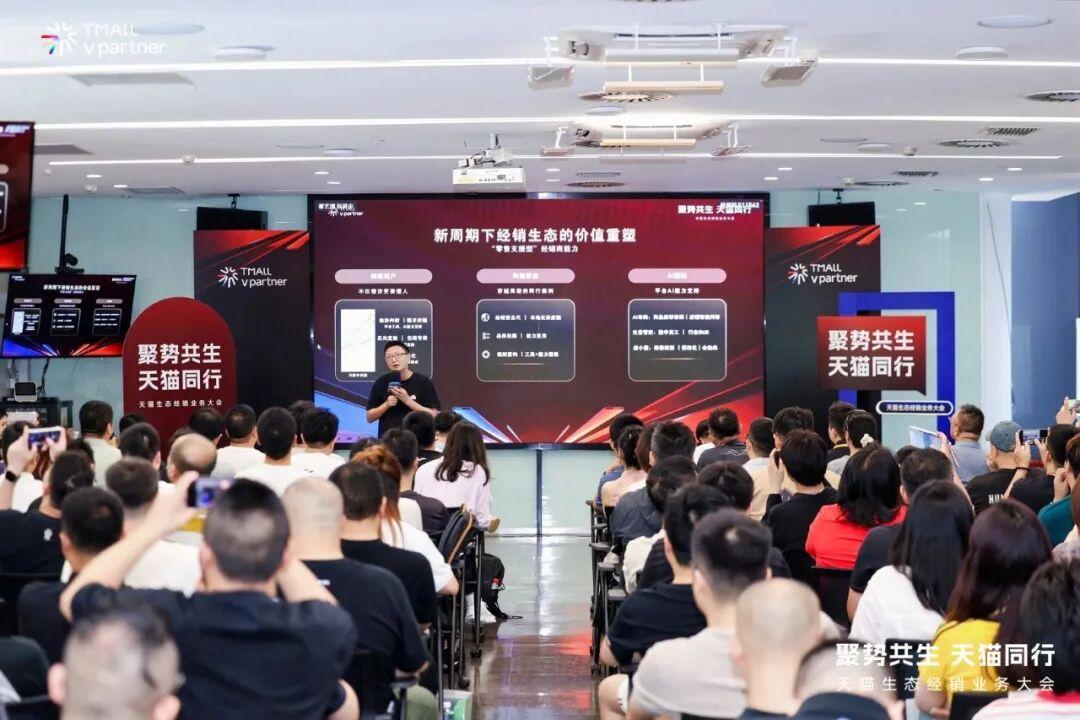
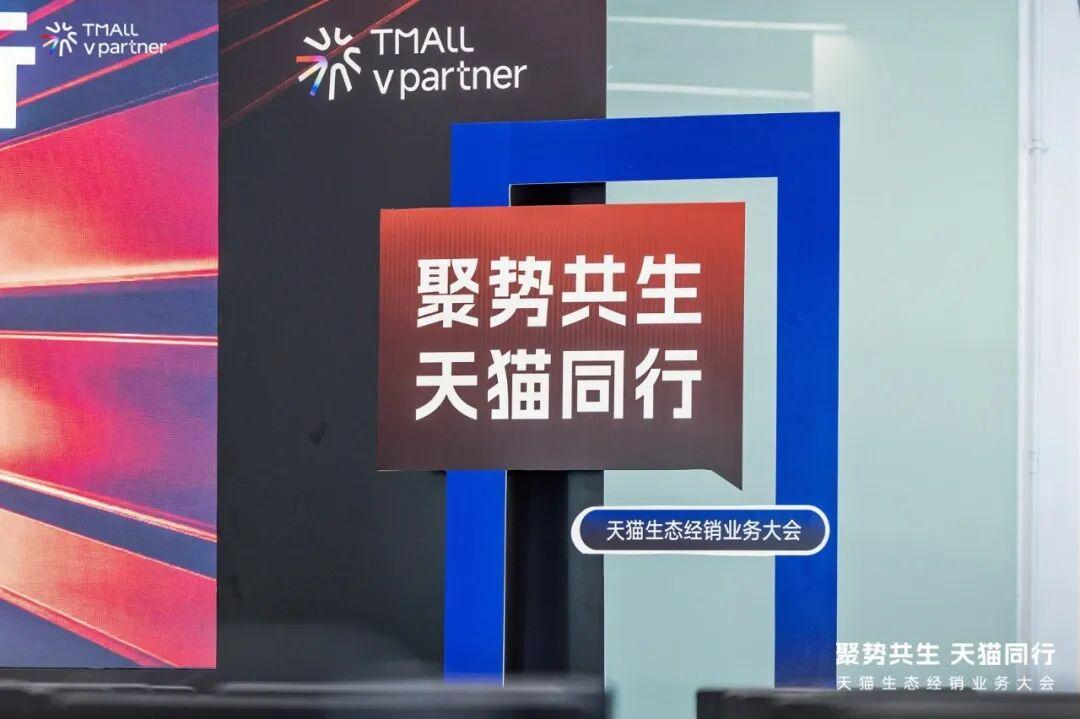
8月5日,以“聚势共生、天猫同行”为主题的天猫生态经销商业务大会在杭州举办。这是天猫生态经销业务面向经销商群体的一次系统亮相,也是天猫与生态经销商之间一次更深入的交流。凯诘电商董事总经理韩松育在现场带来了《进化的经销》主题分享。

图片

图片

会议开场,天猫商家成长中心天猫生态业务负责人颀硕通过对消费史的深度复盘提出:市场正从品牌主导转向消费者主导,在这个过程中,传统的赚取信息差和价差的经销商确实在面临挤压,但具备洞察用户、反向驱动供应链、甚至定义市场能力的“零售支援型”经销商,其价值反而愈发凸显。

这一逻辑为现场经销商提供了全新的视角,通过在天猫生态中扎深能力根基, 依托平台的AI工具、趋势判断和场域支持,经销商完全可以成为品牌不可替代的“战略合伙人”。

首先,核心竞争力从懂货转向懂人,依托天猫AI能力实现需求挖掘与反向定制,以稀缺的专供货盘变被动为主动。

其次,通过深耕本地供应链、品类拓展及组织重构,经销商正实现从普通销售方到品牌总代与战略合伙人的身位进阶,筑起难以逾越的专业壁垒。

最后,全面拥抱AI驱动,利用数字员工与智能工具实现全链路经营提效。这种能力的沉淀,让经销商不再是品牌的附庸,而是拥有自主增长权力的生态核心支柱。

图片

图片

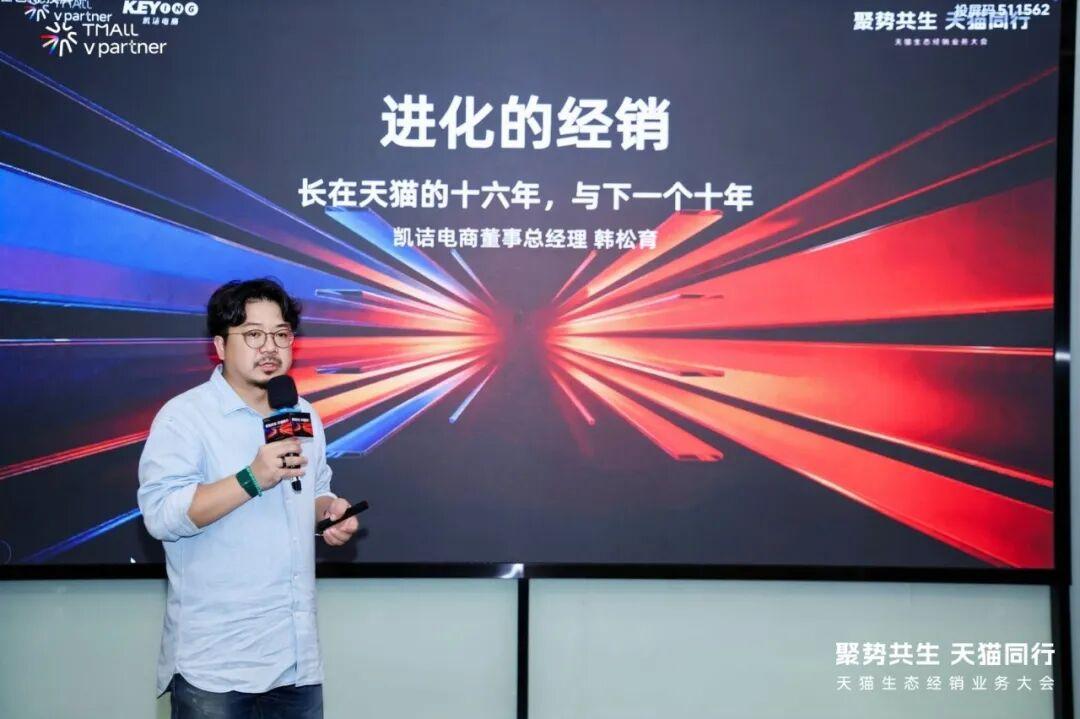
深耕天猫十六年的凯诘,作为天猫生态连续多年的六星级服务商,董事总经理韩松育带来《进化的经销》的主题分享。从2010年与天猫双向奔赴至今,凯诘走过了从“帮品牌卖”的服务商,到“自己买来卖”的经销伙伴,再到今天“生态共建者”的三级跃迁。他提出经销身位的四级阶梯——从执行层、承担层、洞察层到共建层,“每往上走一层,你就从品牌的成本项,更靠近品牌的增长项”。面向AI时代,他抛出“从GMV到 AI-MV”的判断,也留下全场最有分量的一句:“AI时代不会淘汰经销商,只会淘汰不进化的经销商。”

图片

同时,现场还有深耕3C数码赛道、母婴赛道的专业经销商也分享了成长经历和典型案例,大家形成了共识:经销商的终局不是被挤压,而是被重新定义——谁先把组织建成壁垒,谁就拿到下一个十年的入场券。

图片

大会尾声,为了让经销商“背后有人、手中有粮”,天猫生态中心经销生态业务负责人秦楼宣布了一系列重磅支持举措,从政策、运营、金融到组织保障,全链路为经销商解忧。

尽管外部环境充满变化,大会却传递出坚定而清晰的信心:通过能力升级、生态协同与技术进步,经销商不仅能从容应对挑战,更能开创出全新的增长空间 —— 从传统的分销角色,进化为承担市场定义职责的共建者。

未来,凯诘将与天猫生态并肩同行,共同穿越周期,重塑价值。

注:文/龚作仁,文章来源:Laborer,本文为作者独立观点,不代表亿邦动力立场。

文章来源:Laborer

广告
微信
朋友圈

FAQ回顾

AI时代经销商要怎么实现转型升级?

AI时代经销商可从三方面升级:一是核心竞争力从懂货转向懂人,依托天猫AI能力挖掘用户需求反向定制,推出专供货盘;二是深耕本地供应链、拓展品类、重构组织,进阶为品牌总代与战略合伙人;三是全面拥抱AI驱动,用数字员工与智能工具提效。

天猫生态可为经销商提供哪些扶持支持?

天猫生态可为经销商提供AI工具、趋势判断和场域支持,还推出全链路扶持举措,涵盖政策、运营、金融、组织保障四大维度,助力经销商扎深能力根基,从传统分销角色进化为品牌不可替代的战略合伙人。

凯诘电商在天猫生态的发展历程是怎样的?

凯诘电商深耕天猫十六年,是连续多年的天猫六星级服务商,发展历经三级跃迁:最早是帮品牌卖货的服务商,之后转型为自主进货销售的经销伙伴,现在已成为天猫生态的共建者,可作为经销商转型的参考样本。

这么好看,分享一下?

朋友圈 分享

APP内打开

+1
+1
微信好友 朋友圈 新浪微博 QQ空间
关闭
收藏成功
发送
/140 0