广告
加载中

零一万物与哈萨克斯坦能源部等签署合作备忘录 以AI智能体推动能源数智化|FM 01.AI

龚作仁 2026-08-07 11:25
龚作仁 2026/08/07 11:25

邦小白快读

EN
全文速览

本文核心信息为零一万物与哈萨克斯坦官方及高校达成AI赋能能源行业的合作,是双方AI合作落地的新进展

1. 核心事件:8月4日哈萨克斯坦能源部组织AI for Energy行业研讨会,共有来自当地燃料与能源领域的300多家机构代表参会,零一万物CEO李开复作为特邀嘉宾分享了AI技术发展趋势以及AI在能源、公共治理领域应用的国际经验。

2. 合作成果:本次研讨会中,哈萨克斯坦能源部、零一万物、阿里·法拉比哈萨克国立大学三方签署合作备忘录,将围绕能源行业AI技术应用、产业数字化转型、本土AI人才培养共同落地相关项目。

3. 合作进展:本次合作是双方之前战略共识的深化,此前双方已经推出联合大模型AlemLLM,成立合资AI公司Q.AI,本次签约标志着双方合作从战略共建拓展到能源垂直产业落地阶段。

本文展现了中国AI品牌出海布局的新路径,以及AI产业的最新发展趋势,给AI相关品牌商提供了参考

1. 产业趋势:当前全球范围内无论是企业还是各国政府,都将AI转型升级为关乎核心竞争力的一号工程,能源这类传统核心产业对AI数智化转型需求明确,AI智能体结合行业知识落地能大幅提升生产效率,是重要的新增增长赛道。

2. 出海合作模式参考:零一万物出海采用先高层战略对接、再联合本土政府和高校共建生态、最后落地垂直产业项目的路径,能很好适配本土对主权AI能力的要求,降低出海合作的门槛和阻力,更容易获得本土支持。

3. 业务拓展方向:AI品牌可以依托自身技术优势,对接全球各国传统产业数字化转型需求,逐步拓展业务边界,实现技术的产业化落地。

本文透露出AI垂直应用出海的新增长机会,给AI服务领域的卖家提供了方向和参考

1. 新增市场机会:目前全球多个国家都在推进传统核心产业的数字化转型,哈萨克斯坦这类新兴市场对AI赋能能源产业有明确的政策支持和实际需求,是尚未充分开发的增量市场,有较多创业和拓展机会。

2. 合作模式参考:可参考零一万物的合作模式,和当地官方机构、本土高校联合开展研发和人才培养,落地符合本土要求的本地化AI能力,更容易获得信任推进项目落地。

3. 风险与机会提示:当前AI落地已经从概念进入产业化阶段,提前布局垂直行业AI服务能获得先发优势;拓展全球市场时要主动对接本土官方资源,贴合当地对AI主权的要求,降低政策风险。

本文给能源及相关传统工厂推进数字化转型带来了多方面的启示,也透露出新的商业机会

1. 生产升级方向:能源行业对生产的安全性、稳定性、效率要求极高,AI智能体和行业知识、实时生产数据、专业流程深度结合之后,能在生产预测、设备运维、调度决策等环节创造明显价值,是工厂数字化升级的重要方向。

2. 商业机会:当前AI赋能传统产业的落地项目越来越多,能源相关工厂可以对接AI技术服务商,共同开展数字化升级项目,也可以参与国际合作项目,获得新的发展空间。

3. 转型启示:工厂的AI转型不能只停留在技术层面,需要管理层作为核心一号工程推进,结合自身行业的特性,将AI深度融入生产全流程,才能真正释放技术价值,提升自身竞争力。

本文给AI技术服务类服务商拓展产业客户提供了干货参考,明确了行业发展方向

1. 行业发展趋势:当前AI赋能传统产业已经从概念验证阶段进入到垂直领域落地的新阶段,能源这类重资产传统核心产业对AI数智化转型需求明确,市场空间广阔,是服务商接下来重点拓展的赛道。

2. 客户核心痛点:一方面能源行业对AI系统的安全性、稳定性、可靠性要求远高于通用场景,另一方面很多国家都希望拥有可控的本地化主权AI能力,这是当前To B AI服务商需要解决的核心客户需求。

3. 落地方案参考:服务商可以参考零一万物的落地模式,和当地政府、本土科研机构合作,共同推进人才培养和技术研发,打造本地化、可持续、可控的AI能力,再结合垂直行业知识落地应用,更容易获得客户认可。

本文给AI相关平台的全球化发展和运营管理提供了不少启示,明确了新的发展方向

1. 市场需求洞察:当前全球各国政府和产业端都在推进传统产业的数字化转型,对本地化AI大模型、产业AI智能体应用有明确且迫切的需求,AI平台可以抓住这个机会拓展全球业务,获得新的增长曲线。

2. 全球化运营启示:平台开展全球化业务时,要主动对接当地官方机构和本土科研机构,共同建设本地化AI生态,满足当地对主权AI能力的要求,有效规避政策层面的风险。

3. 业务拓展方向:能源领域对AI的需求清晰,落地场景明确,平台可以将能源数智化作为重点方向,开展针对性招商,整合产业链资源带动平台内企业共同出海,提升平台整体竞争力。

本文展现了当前AI产业发展和AI出海的最新动向,给产业研究提供了新的样本和方向

1. 产业新动向:当前全球AI产业合作已经从早期的技术交流、通用大模型研发阶段,进入到垂直产业落地的新阶段,中国AI技术开始规模化向全球输出,合作领域拓展到能源这类国家核心产业,是AI产业全球化发展的新特征。

2. 新型出海商业模式:本次合作展现了一套完整的AI出海路径,即“高层战略对接-本土生态能力建设-合资企业搭建-垂直产业项目落地”,这种模式贴合当地对AI主权的需求,比单纯的技术输出更易落地,是AI出海的创新模式。

3. 研究方向启示:研究者可以围绕AI赋能高要求传统产业的落地路径、中国AI出海的新型合作模式等方向开展研究,进一步总结AI产业全球化发展的规律,挖掘产业发展的新趋势。

返回默认

声明:快读内容全程由AI生成,请注意甄别信息。如您发现问题,请发送邮件至 run@ebrun.com 。

我是 品牌商 卖家 工厂 服务商 平台商 研究者 帮我再读一遍。

Quick Summary

This article covers a new milestone in AI collaboration between 01.AI and Kazakhstan's government and academic institutions, focusing on AI-enabled development for the country's energy sector.

1. Core event: On August 4, Kazakhstan's Ministry of Energy hosted the AI for Energy industry workshop, attended by over 300 representatives from local fuel and energy organizations. 01.AI CEO Kai-Fu Lee was invited as a guest speaker to share global trends in AI development and international experience of AI applications in energy and public governance.

2. Collaboration outcome: At the workshop, Kazakhstan's Ministry of Energy, 01.AI and Al-Farabi Kazakh National University signed a memorandum of understanding to jointly implement projects focused on AI adoption in the energy sector, industrial digital transformation, and local AI talent development.

3. Progress update: This collaboration deepens the two parties' prior strategic consensus. They previously launched the joint large language model AlemLLM and established the joint AI venture Q.AI. This new signing marks the expansion of their cooperation from strategic co-development to vertical industry implementation in energy.

This article outlines a new path for Chinese AI brands going global and tracks the latest trends in the AI industry, offering key insights for AI brands.

1. Industry trend: Today, both companies and governments worldwide have positioned AI transformation as a top priority to boost core competitiveness. Core traditional industries such as energy have clear demand for AI-powered digital transformation. Embedding AI agents with industry-specific knowledge to drive on-the-ground adoption can significantly improve production efficiency, making this a high-growth emerging track.

2. Go-global collaboration model reference: 01.AI adopted a step-by-step expansion path: starting with high-level strategic alignment, then co-building an ecosystem with local government and universities, and finally rolling out vertical industry projects. This approach aligns with local requirements for sovereign AI capabilities, lowers barriers and resistance to cross-border collaboration, and makes it easier to secure local support.

3. Business expansion direction: AI brands can leverage their technical advantages to address demand for digital transformation across traditional industries worldwide, gradually expand their business boundaries, and achieve commercial industrial implementation of their technologies.

This article highlights new growth opportunities for AI vertical applications in overseas markets, offering clear direction for AI service providers and sellers.

1. New market opportunities: Multiple countries around the world are advancing digital transformation for their core traditional industries. Emerging markets like Kazakhstan have explicit policy support and on-the-ground demand for AI-enabled energy development, representing an underpenetrated incremental market with abundant opportunities for entrepreneurship and business expansion.

2. Collaboration model reference: Sellers can follow 01.AI's example by partnering with local government institutions and universities for joint R&D and talent development, to build localized AI capabilities that meet local requirements. This approach makes it easier to build trust and推进 project delivery.

3. Opportunity and risk notes: AI adoption has now moved from the concept phase to industrial implementation. Entering the vertical AI service space early allows players to capture first-mover advantage. When expanding globally, proactively partnering with local official stakeholders and aligning with local requirements for AI sovereignty can help reduce policy risk.

This article offers multiple insights for energy and traditional manufacturing facilities pursuing digital transformation, and signals new commercial opportunities.

1. Production upgrading direction: The energy sector has extremely high requirements for production safety, stability and efficiency. When AI agents are deeply integrated with industry knowledge, real-time production data and specialized workflows, they can deliver significant value in production forecasting, equipment maintenance, scheduling and decision-making. This makes it a key direction for digital upgrading of factories.

2. Commercial opportunities: As more AI-enabled projects launch in traditional industries, energy-related factories can partner with AI technology service providers to co-develop digital transformation projects, or participate in international collaborative projects to unlock new growth opportunities.

3. Transformation insights: AI transformation for factories cannot remain limited to the technical level. It requires top-level commitment from management as a core strategic priority, and deep integration of AI into full production workflows tailored to the specific characteristics of the industry, to truly unlock technological value and improve competitiveness.

This article provides actionable insights for AI technology service providers looking to acquire industrial clients and clarifies key industry development directions.

1. Industry development trend: AI-enabled transformation of traditional industries has moved from the proof-of-concept stage to a new phase of vertical industry implementation. Heavy-asset core traditional industries like energy have clear demand for AI-powered digital transformation and offer large market potential, making this a key growth track for service providers to prioritize.

2. Core customer pain points: On one hand, the energy sector has far higher requirements for AI system safety, stability and reliability than general use cases. On the other hand, many countries aim to build controllable, localized sovereign AI capabilities. Addressing these two demands is the core challenge for B2B AI service providers today.

3. Implementation reference: Service providers can adopt 01.AI's implementation model: partnering with local government and research institutions to jointly advance talent development and R&D, build localized, sustainable and controllable AI capabilities, then integrate vertical industry knowledge to deliver applications. This approach significantly improves chances of winning customer trust and approval.

This article offers insights for the global development and operational management of AI-related platforms, and outlines new development directions.

1. Market demand insight: Governments and industries worldwide are pushing forward digital transformation for traditional sectors, with clear and urgent demand for localized large AI models and industrial AI agent applications. AI platforms can capitalize on this opportunity to expand global business and unlock new growth curves.

2. Global operations insight: When expanding globally, platforms should proactively partner with local official institutions and research organizations to co-build a localized AI ecosystem, meet local requirements for sovereign AI capabilities, and effectively mitigate policy-related risks.

3. Business expansion direction: The energy sector has clear demand and well-defined implementation scenarios for AI. Platforms can prioritize energy digitalization, launch targeted recruitment initiatives, integrate industry chain resources to help platform-based enterprises expand overseas together, and boost the platform's overall competitiveness.

This article presents the latest developments in AI industry growth and AI global expansion, offering a new case study and research direction for industry researchers.

1. New industry trends: Global AI industry collaboration has evolved from the early stage of technical exchange and general large model R&D to a new phase of vertical industry implementation. Chinese AI technology is now scaling up for global export, with collaboration expanding into core national industries such as energy, marking a new characteristic of AI industry globalization.

2. Innovative go-global business model: This collaboration demonstrates a complete AI expansion path: "high-level strategic alignment → local ecosystem building → joint venture establishment → vertical industry project implementation". This model aligns with local demand for AI sovereignty, and is easier to implement than pure technology export, making it an innovative model for AI globalization.

3. Research direction inspiration: Researchers can focus on topics such as implementation paths for AI enabling high-standard traditional industries, new collaboration models for Chinese AI going global, further summarize patterns of AI industry globalization and uncover new industry development trends.

Disclaimer: The "Quick Summary" content is entirely generated by AI. Please exercise discretion when interpreting the information. For issues or corrections, please email run@ebrun.com .

I am a Brand Seller Factory Service Provider Marketplace Seller Researcher Read it again.

以下文章整合自哈萨克斯坦能源部新闻中心、哈萨克斯坦驻华大使馆微信公众号推文及哈萨克国际通讯社等媒体报道。

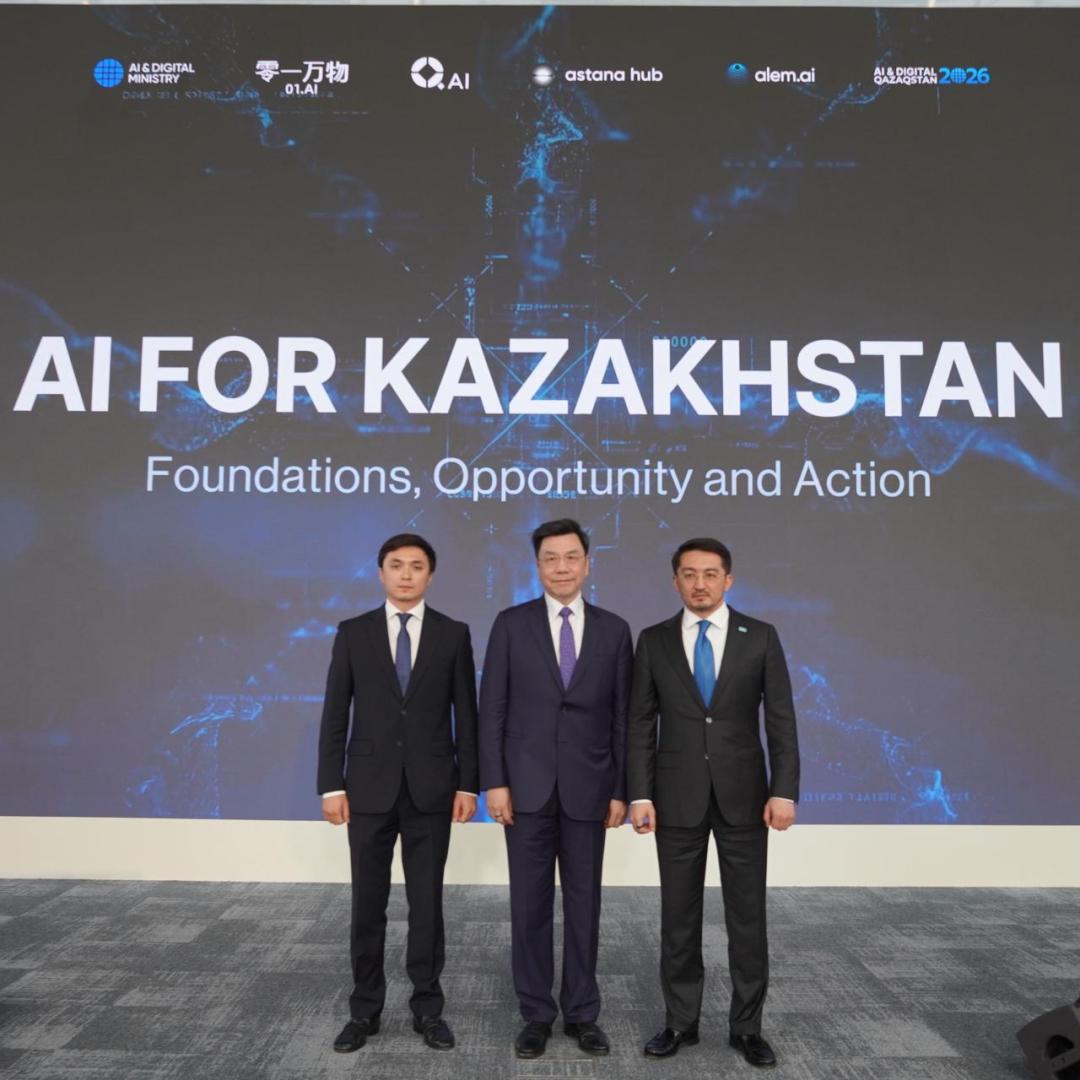
8月4日,哈萨克斯坦Alem.ai国际人工智能中心举办了由哈萨克斯坦能源部组织的“AI for Energy”(人工智能助力能源)行业培训研讨会,聚焦人工智能技术在燃料与能源综合体中的实际应用。

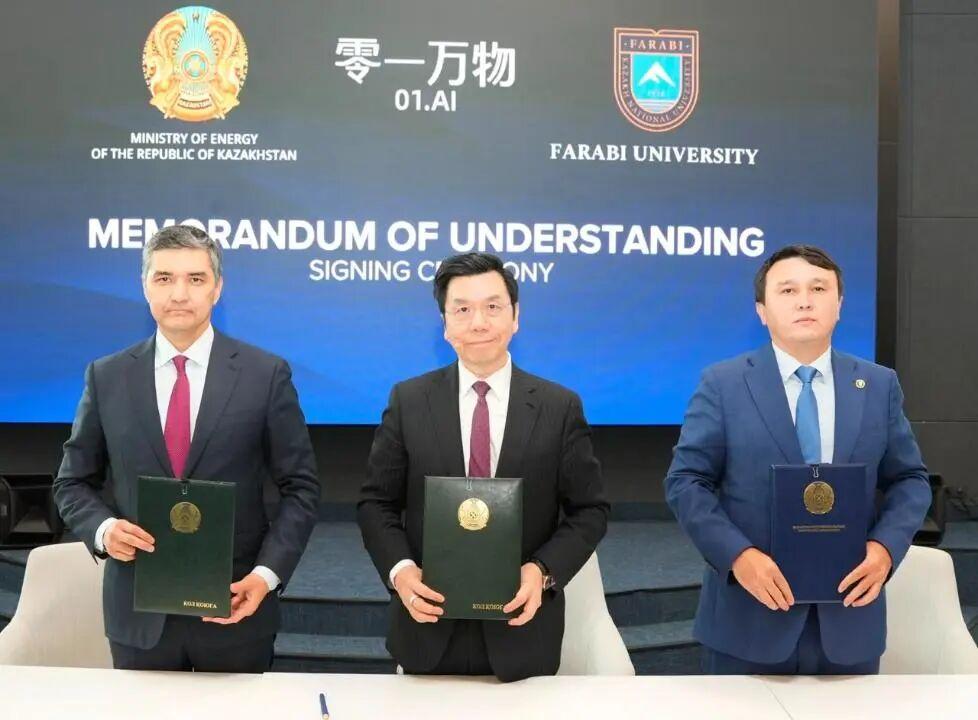
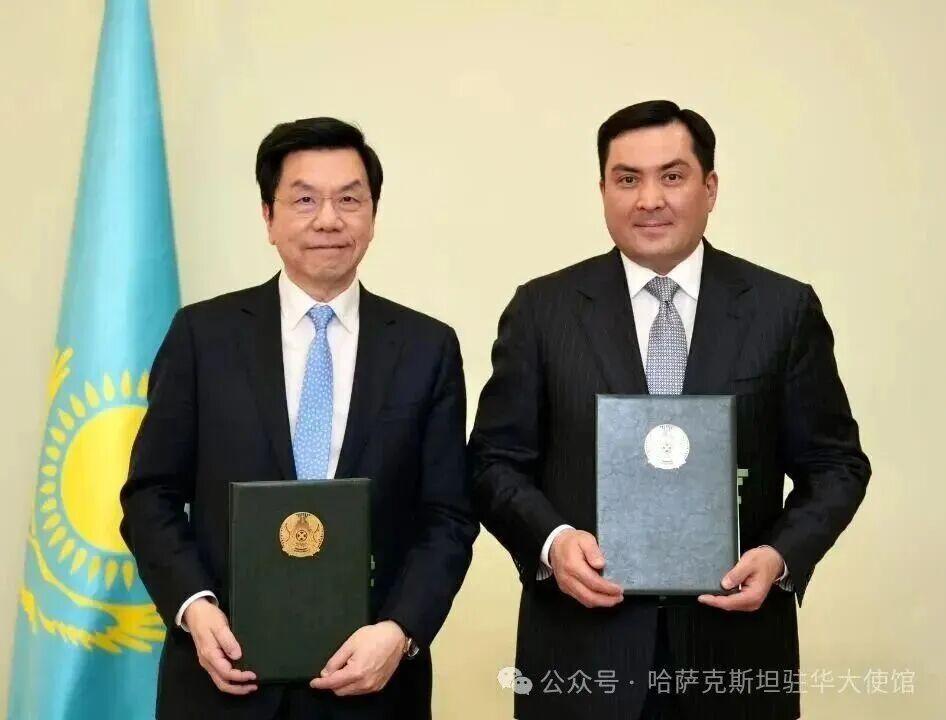
在研讨会上,哈萨克斯坦能源部、零一万物与阿里·法拉比哈萨克国立大学签署合作备忘录(MOU)。三方将围绕推进数字化转型、人才培养以及人工智能技术在能源行业的应用,共同实施相关项目。

图片

哈萨克斯坦能源部副部长巴赫特詹·伊利亚斯(左一)、零一万物CEO李开复博士(左二)、阿里·法拉比哈萨克国立大学副校长伊布拉伊莫夫·马尔古兰·卡塞诺维奇(右一)在MOU签约现场

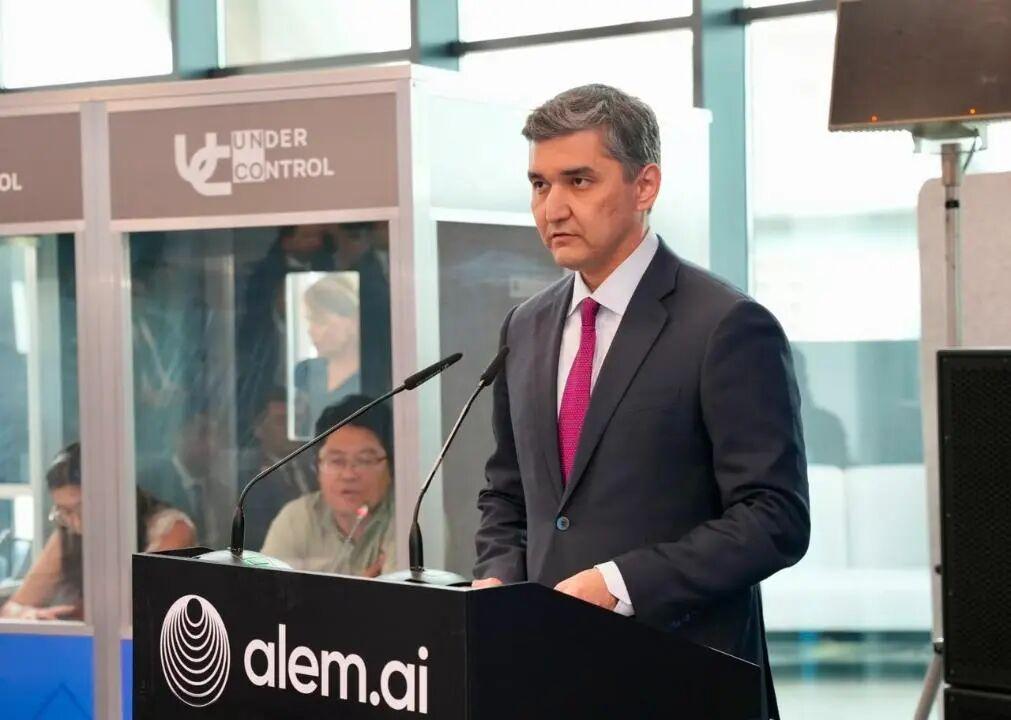
哈萨克斯坦能源部副部长巴赫特詹·伊利亚斯在开幕致辞中指出,将人工智能技术引入能源行业,正成为提高生产流程效率、增强能源基础设施可靠性与安全性的关键因素之一。他表示,数字化解决方案为企业预测、管理和优化生产经营活动带来了新的可能。

图片

哈萨克斯坦能源部副部长巴赫特詹·伊利亚斯开幕致辞

来自政府部门、国家级企业、能源行业企业、专家机构及国际合作伙伴的代表参加了此次培训。共有来自燃料与能源综合体300多家机构的代表参与研讨会。国际知名人工智能专家、零一万物首席执行官、哈萨克斯坦人工智能发展委员会成员李开复博士作为特邀嘉宾出席了研讨会。

图片

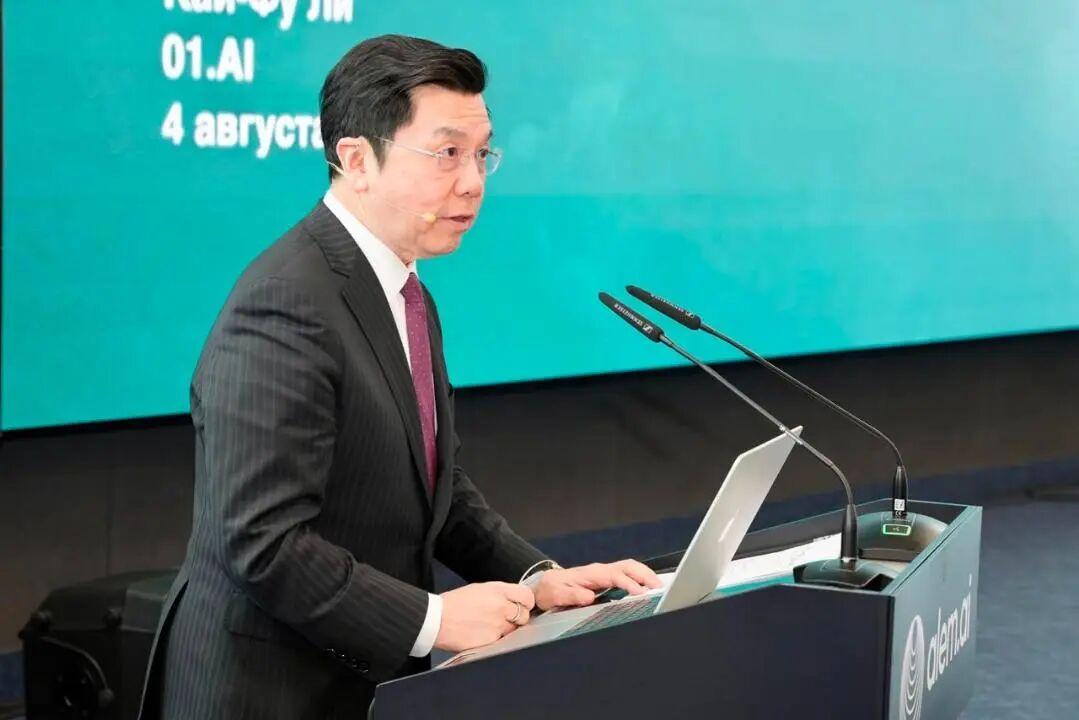
李开复博士在研讨会上发表演讲

研讨会期间,李开复介绍了人工智能在公共治理和能源领域应用的国际经验,并分享了当前人工智能技术的发展趋势。

与会代表共同探讨了国际先进实践、智能化解决方案的应用前景,以及哈萨克斯坦燃料与能源综合体下一阶段的数字化发展举措。

又讯 (据哈萨克斯坦国际通讯社等媒体综合报道)近年来,零一万物与哈萨克斯坦在人工智能领域持续推进合作。

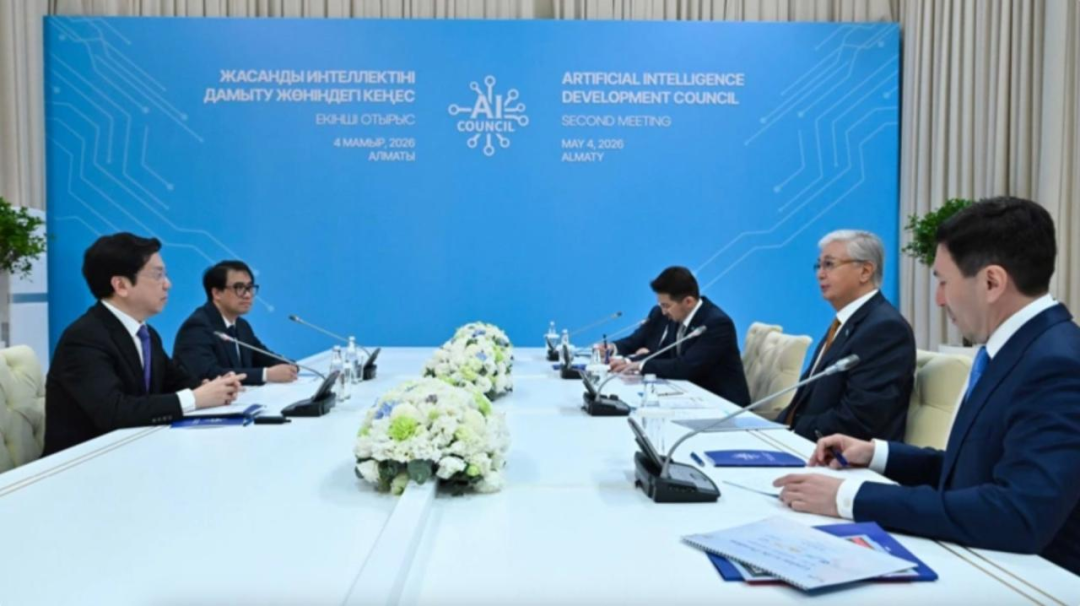
2025年10月、2026年5月,哈萨克斯坦总统托卡耶夫先后会见李开复博士,听取了哈方与零一万物联合推出AlemLLM语言模型的情况,并于2026年5月的会见中讨论了进一步发展合作和实施联合项目的问题。

图片

哈萨克斯坦托卡耶夫总统会见李开复博士   图源:哈萨克斯坦驻华大使馆

此次零一万物与哈萨克斯坦能源部、阿里·法拉比哈萨克国立大学的三方签约MOU,是今年2月合作共识的进一步深化。

2026年2月,零一万物CEO李开复博士与哈萨克斯坦能源部部长叶尔兰·阿克肯杰诺夫签署了关于在燃料与能源综合体数字化及人工智能技术引入领域开展合作的谅解备忘录,明确将推动相关领域的长期合作。

图片

哈萨克斯坦能源部部长叶尔兰·阿克肯杰诺夫与李开复博士签署备忘录   图源:哈萨克斯坦驻华大使馆

继哈萨克斯坦总统令要求落实李开复博士提出的AI赋能教育建议、哈萨克斯坦与零一万物成立合资公司Q.AI后,此次哈萨克斯坦能源部、零一万物与阿里·法拉比哈萨克国立大学签署合作备忘录,标志着双方AI合作正从战略交流、能力建设与生态共建,进一步拓展至能源领域,推动大模型转化为可研发、可部署、可持续优化的产业智能体应用。

图片

哈萨克斯坦副总理兼人工智能和数字发展部部长扎苏兰·马迪耶夫(右)、零一万物CEO李开复博士(中)、前哈萨克斯坦人工智能和数字发展部副部长、Q.AI首任CEO德米特里·穆恩(左)在Q.AI成立现场

此次与哈萨克斯坦能源部、阿里·法拉比哈萨克国立大学达成合作,是零一万物推动大模型技术服务全球产业智能化的重要实践。

零一万物CEO李开复博士表示:“过去一年,全球企业正将AI转型从技术项目提升为关乎未来竞争力的‘一号位工程’,需要CEO、部长、校长和产业领导者共同推动。能源系统复杂,对安全、稳定和可靠性要求极高,AI智能体与行业知识、实时数据和专业流程深度结合,将在预测、运维、调度和决策等环节释放重要价值。零一万物希望推动‘一号位工程’出海,与哈萨克斯坦政府、高校和产业伙伴共建本地化、可持续、可控的AI能力,助力能源数智化、主权AI基础设施和本地生态建设。”

未来,零一万物将以中国作为创新与实践的大本营,持续发挥在产业大模型和决策AI等方面的技术优势,与全球合作伙伴开展本地化共创,探索AI在能源、科研、政企服务等领域的创新应用,为产业数字化转型、主权AI能力建设提供支持。

注:文/龚作仁,文章来源:Laborer,本文为作者独立观点,不代表亿邦动力立场。

文章来源:Laborer

广告
微信
朋友圈

FAQ回顾

AI智能体在能源行业有哪些应用价值?

AI智能体可与能源行业知识、实时数据、专业流程深度结合,在预测、运维、调度和决策等环节释放重要价值,能提高生产流程效率,增强能源基础设施的可靠性与安全性,助力企业优化生产经营活动。

零一万物与哈萨克斯坦在AI领域有哪些合作进展?

零一万物已与哈萨克斯坦联合推出AlemLLM语言模型,成立合资公司Q.AI,先后与哈能源部签署多份合作备忘录,合作范围从战略交流、能力建设、生态共建拓展至能源领域,共同推动大模型转化为可落地的产业智能体应用。

当前企业AI转型呈现什么发展趋势?

近年全球企业正将AI转型从普通技术项目提升为关乎未来竞争力的“一号位工程”,需要企业管理者、政府部门、高校及产业各方领导者共同协作推进,才能更好实现技术落地与产业价值释放。

零一万物的全球化AI业务布局方向是什么?

零一万物以中国为创新实践大本营,发挥产业大模型、决策AI等技术优势,与全球合作伙伴开展本地化共创,探索AI在能源、科研、政企服务等领域的创新应用,为全球产业数字化转型、主权AI能力建设提供支持。

这么好看,分享一下?

朋友圈 分享

APP内打开

赞 +1
+1
微信好友 朋友圈 新浪微博 QQ空间
关闭
收藏成功
发送
/140 0