广告
加载中

旧关税退场,美国301新关税接棒:对华税率12.5%,总税负上限延续此前谈判成果

王昱 2026-07-24 12:40
王昱 2026/07/24 12:40

邦小白快读

EN
全文速览

本文核心是美国旧关税到期后,301新关税于7月25日正式接棒,中国出口商品适用12.5%税率,总税负不超过此前谈判约定上限,以下是核心干货信息:

1. 政策背景与规则:此前旧关税被美国最高法院裁定无效,本次换用曾被裁定合法的301条款作为法律依据,司法风险更低,新关税有效期150天,覆盖美国99.4%的进口总额,和旧关税无缝衔接,7月28日之前到港的在途货物可享受关税豁免。

2. 税率与豁免安排:本次关税按国别分档,14个签署互惠承诺的经济体适用10%税率,包括中国在内的46个经济体适用12.5%税率,石油、钢铁、汽车等商品及符合美墨加协定的商品可豁免关税,纺织品还设有特殊配额减税机制。

3. 市场与官方态度:分析认为本次调整不会引发剧烈市场震荡,中美已经确定首批约300亿美元非敏感商品作为未来降关税范围,中方此前已明确反对该保护主义措施,认为其违反世贸规则。

本次美国301新关税调整,对出海品牌的成本、供应链布局都有影响,相关干货整理如下:

1. 成本与定价影响:中国出海品牌出口美国的商品统一适用12.5%关税,会带来一定程度的成本上涨,品牌需要提前做好定价调整预案,同时本次关税明确不突破此前约定的关税上限,不会出现额外加税的情况,成本预期可控。

2. 规则利用空间:本次关税明确多个品类可享受豁免,石油天然气、钢铁铝铜、汽车、部分食品以及符合美墨加协定规则的商品都不需要缴纳本次加征的关税,对应品类品牌可以利用规则优化供应链降本;纺织服装品牌还可以依托美国棉花纤维出口额度申请特殊配额减税,进一步压缩成本。

3. 长期趋势判断:目前中美已经启动首轮降关税谈判,确定300亿美元非敏感商品作为首批降关税范围,市场预期稳定,不会出现剧烈震荡,品牌不用过度恐慌,可以提前布局对应品类,也可考虑将部分产能转移至适用10%税率的经济体降本。

本次美国关税调整对出海卖家的政策影响、风险与机会整理如下:

1. 核心政策解读:本次新关税7月25日生效,有效期150天,中国卖家出口美国商品关税为12.5%,明确不会超过此前谈判约定的关税上限,不会出现突发加税涨成本的情况;同时7月28日之前到港的在途货物可豁免新关税,已经发货的卖家不需要承担额外的关税成本,降低了突发风险。

2. 风险提示:本次加征关税会直接推高出口成本,对走低价路线的标品类卖家利润挤压比较明显,需要提前做好应对,不过市场分析普遍认为本次调整不会引发类似去年的剧烈市场震荡,整体经营环境可控。

3. 机会提示:目前中美已经敲定首批约300亿美元非敏感商品将降低或取消关税,卖家可以提前布局对应品类抢占先机;同时卖家可以利用关税规则,要么匹配豁免要求合规降本,要么调整货源布局到适用10%税率的经济体,纺织品卖家还可以申请特殊配额减税,降低整体成本。

本次美国301新关税调整对出海生产工厂的影响和机会整理如下:

1. 生产端影响梳理:中国出口美国的商品本次适用12.5%的关税,会带来一定的成本上涨,压缩工厂利润,需要工厂调整生产端的成本控制策略;但并非所有品类都受影响,石油天然气、钢铁铝铜、汽车等品类本身不在本次征税范围,对应工厂不受本次调整影响。

2. 合规降本的商业机会:工厂可以利用本次关税的规则设计降低成本,符合美墨加协定规则的产品可以全额豁免关税,纺织类工厂可以依托美国对产地的纤维、棉花出口额度申请特殊配额减税,直接降低关税支出。有条件的工厂也可以调整产能布局,将部分产能转移到适用10%关税的经济体,进一步拉低整体关税成本。

3. 长期发展启示:目前中美已经确定首批300亿美元非敏感商品作为降关税范围,未来关税压力有望逐步缓解,工厂可以提前布局对应品类的产能,同时要持续关注政策变动,灵活调整生产和供应链计划,依托规则优化结构降低整体风险。

本次美国关税调整给跨境贸易相关服务商带来的行业变化、客户痛点和机会整理如下:

1. 行业发展趋势判断:本次美国关税完成了合法框架的切换,整体关税水平延续此前谈判结果,没有突破上限,不会引发大幅市场震荡,同时中美保持贸易对话渠道,确定了首批降关税商品范围,整体市场预期稳定,中美贸易需求不会出现大幅下滑,跨境相关服务需求整体保持稳定。

2. 客户核心痛点梳理:出口卖家和工厂普遍面临关税成本上涨的压力,对关税规则解读、豁免申请、特殊配额申请等合规服务的需求大幅提升;不少有长期布局规划的客户还有产能转移、供应链重构的需求,需要相关的资源对接服务;另外在途货物的豁免窗口期较短,很多客户不清楚清关合规流程,急需专业指导避免产生额外税费。

3. 解决方案方向:服务商可以针对客户需求,推出关税规则咨询、豁免与配额申请代办、清关合规指导等专项服务,还可以针对有产能转移需求的客户,对接10%税率经济体的产能、合规资源,满足客户降本需求,抓住本次政策调整带来的业务增长机会。

本次美国301新关税调整对跨境平台的影响,以及平台可调整的方向整理如下:

1. 商家端需求变化:平台上中国出海商家普遍面临关税成本上涨的压力,对合规降本服务、供应链优化指导的需求明显提升,不少商家开始产生布局多产地货源的需求;本次调整后市场预期整体稳定,不会出现剧烈震荡,商家整体经营风险可控,不会出现大规模商家退出的情况。

2. 招商与运营调整方向:平台可以调整招商策略,加大引入适用10%税率经济体的优质商家入驻,满足市场对低成本商品的需求;同时可以推出关税规则解读、合规咨询、配额申请对接等增值服务,帮助现有商家应对成本上涨,针对纺织品类商家还可以推出专项对接服务,帮助商家享受减税政策。

3. 风向规避方向:中美贸易仍然存在一定的不确定性,平台需要提前向商家提示政策变动风险,提醒商家关注后续谈判进展,提前做好库存和定价调整;同时可以围绕首批拟降关税的300亿商品相关品类打造专项活动,拉动消费,对冲政策带来的不确定性影响。

本次美国关税调整是中美贸易关系中的新事件,对研究美国贸易政策、全球经贸规则都有重要价值,相关干货整理如下:

1. 产业与政策新动向:本次美国换用301条款接替被最高法院否决的旧关税,本质是通过更换法律框架解决关税的合法性问题,降低了司法风险,同时整体延续了此前的关税水平,遵守了之前谈判约定的关税上限,说明美国维持对华加征关税的基本方向没有变,但也保持了谈判的空间,目前中美已经成立联合贸易委员会,确定首批300亿美元非敏感商品降关税,双方依然保持对话渠道,贸易对抗不会轻易升级。

2. 暴露的新问题:美国本次再次滥用301调查程序,无视世贸组织专家组此前作出的“美对华301关税违反世贸规则”的裁决,将国内法凌驾于国际规则之上,是典型的保护主义行径,严重破坏全球产业链供应链稳定,扰乱国际经贸秩序,凸显了当前全球经贸治理体系面临的挑战,保护主义抬头的趋势进一步明显。

3. 研究启示:本次调整为研究美国贸易政策的合规性调整逻辑提供了新的案例,也为研究中美贸易关系走向、全球经贸规则演变提供了新的研究样本,后续可重点关注150天关税到期后美国的政策调整方向,以及中美谈判的下一步进展。

返回默认

声明:快读内容全程由AI生成,请注意甄别信息。如您发现问题,请发送邮件至 run@ebrun.com 。

我是 品牌商 卖家 工厂 服务商 平台商 研究者 帮我再读一遍。

Quick Summary

This article summarizes the key takeaways from the U.S. Section 301 tariff replacement that took effect on July 25, following the expiration of previous tariffs: Chinese exports to the U.S. will face a 12.5% tariff, which stays within the upper limit agreed upon in prior negotiations.

1. Policy Background and Rules: The previous tariffs were ruled invalid by the U.S. Supreme Court. The new tariffs rely on Section 301, which has previously been ruled legally valid, cutting judicial risk. The new 150-day tariff covers 99.4% of total U.S. imports, creating a seamless transition from the old regime. Goods already in transit that arrive by July 28 are exempt from the new tariff.

2. Tariff Schedule and Exemptions: Tariffs are tiered by economy. 14 economies that have signed reciprocal commitments face a 10% rate, while 46 economies including China face a 12.5% rate. Oil, steel, automobiles, and goods qualifying under the USMCA agreement are exempt. Textiles also have a special quota-based tax reduction mechanism.

3. Market and Official Stance: Analysts do not expect the adjustment to trigger severe market volatility. China and the U.S. have already agreed on an initial batch of roughly $30 billion in non-sensitive goods for future tariff cuts. China has previously explicitly opposed this protectionist measure, stating it violates WTO rules.

The new U.S. Section 301 tariff adjustment impacts the costs and supply chain strategies of China-based cross-border brands. Key takeaways are as follows:

1. Impact on Costs and Pricing: Chinese export brands shipping to the U.S. face a uniform 12.5% tariff, which will drive moderate cost increases. Brands should prepare pricing adjustment plans in advance. That said, the new tariff does not exceed the previously agreed upper limit, meaning no unexpected additional tariffs and cost expectations remain manageable.

2. Opportunities to Leverage Policy Rules: Multiple product categories are exempt from the new tariff, including oil and gas, steel, aluminum, copper, automobiles, certain food products, and goods meeting USMCA rules of origin. Brands in these categories can leverage these exemptions to optimize supply chains and cut costs. Textile and apparel brands can also apply for special quota-based tax reductions based on U.S. cotton and fiber export quotas, further lowering costs.

3. Long-Term Trend Outlook: China and the U.S. have launched the first round of tariff cut negotiations, agreeing to an initial $30 billion in non-sensitive goods for tariff reductions. Market expectations remain stable and severe volatility is not expected. Brands do not need to overreact; they can proactively position for relevant product categories, or consider shifting some production capacity to economies eligible for the 10% tariff rate to cut costs.

Below is a summary of the policy impacts, risks and opportunities of the new U.S. tariff adjustment for cross-border sellers:

1. Core Policy Breakdown: The new tariff entered into force on July 25 and is valid for 150 days. Chinese sellers shipping to the U.S. face a 12.5% tariff, which is explicitly capped at the level agreed in prior negotiations, eliminating the risk of unexpected additional tax increases. Goods in transit arriving by July 28 are exempt from the new tariff, meaning sellers that already shipped orders will not incur extra tariff costs, reducing sudden risk.

2. Risk Warnings: The new tariff directly pushes up export costs, and will significantly compress profit margins for low-cost, standardized product sellers, who need to prepare responses in advance. However, most market analysis agrees the adjustment will not trigger severe market volatility like that seen last year, and overall operating conditions remain manageable.

3. Opportunity Notes: China and the U.S. have already agreed that an initial batch of roughly $30 billion in non-sensitive goods will see tariffs reduced or eliminated. Sellers can proactively position in these categories to gain first-mover advantage. Sellers can also leverage tariff rules to cut costs compliantly by qualifying for exemptions, or shift sourcing to economies eligible for the 10% tariff rate. Textile sellers can additionally apply for special quota reductions to lower overall costs.

Below is a summary of the impacts and opportunities of the new U.S. Section 301 tariff adjustment for export-oriented Chinese manufacturers:

1. Impact on Production: Chinese exports to the U.S. now face a 12.5% tariff, which will drive moderate cost increases and compress factory profit margins, requiring manufacturers to adjust production-side cost control strategies. However, not all categories are affected: oil and gas, steel, aluminum, copper, automobiles and other categories are excluded from the new tariff, so factories in these sectors face no impact from this adjustment.

2. Commercial Opportunities for Compliant Cost Reduction: Factories can leverage the design of the new tariff rules to cut costs. Products meeting USMCA rules of origin qualify for full exemption, and textile factories can apply for special quota reductions based on U.S. quotas for origin-based fiber and cotton exports, directly cutting tariff expenses. Eligible factories can also adjust capacity布局, shifting some production to economies eligible for the 10% tariff rate to further lower overall tariff costs.

3. Implications for Long-Term Development: China and the U.S. have already designated an initial $30 billion in non-sensitive goods for tariff cuts, meaning tariff pressure is expected to gradually ease over time. Factories can proactively build capacity for these product categories, while continuing to monitor policy changes, flexibly adjust production and supply chain plans, and optimize structure based on rules to reduce overall risk.

Below is a summary of industry changes, client pain points and opportunities brought by the new U.S. tariff adjustment for cross-border trade service providers:

1. Industry Trend Outlook: The U.S. has completed a switch to a legally valid framework for its tariffs, and the overall tariff level follows the outcome of prior negotiations without exceeding the agreed cap. No major market volatility is expected. At the same time, China and the U.S. maintain trade dialogue channels and have agreed on an initial scope of goods for tariff cuts, keeping overall market expectations stable. China-U.S. trade demand is not expected to see a sharp decline, and overall demand for cross-border related services will remain stable.

2. Core Client Pain Points: Export sellers and factories broadly face pressure from rising tariff costs, driving a sharp increase in demand for compliant services including tariff rule interpretation, exemption application and special quota application. Many clients with long-term layout plans also have demand for capacity shifting and supply chain restructuring, requiring related resource matching services. In addition, the exemption window for in-transit goods is short, and many clients lack clarity on customs clearance compliance procedures, creating urgent demand for professional guidance to avoid extra tax costs.

3. Solution Directions: Service providers can launch specialized services tailored to client demand, including tariff rule consulting, exemption and quota application agency, and customs clearance compliance guidance. For clients seeking to shift production capacity, providers can also connect them with production and compliance resources in economies eligible for the 10% tariff rate to meet clients' cost-cutting needs, capturing the business growth opportunity brought by this policy adjustment.

Below is a summary of the impact of the new U.S. Section 301 tariff adjustment on cross-border marketplaces and adjustments platforms can make:

1. Changes in Merchant Demand: Chinese export sellers on marketplaces broadly face pressure from rising tariff costs, driving clear growth in demand for compliant cost reduction services and supply chain optimization guidance. Many sellers are now looking to diversify sourcing across multiple production locations. Following the adjustment, overall market expectations remain stable, severe volatility is not expected, overall operating risk for merchants is manageable, and large-scale merchant exit is unlikely.

2. Adjustments to Recruitment and Operations: Platforms can adjust merchant recruitment strategies to increase onboarding of high-quality merchants from economies eligible for the 10% tariff rate, to meet market demand for lower-cost goods. Platforms can also launch value-added services including tariff rule interpretation, compliance consulting, and quota application connection, to help existing merchants address rising costs. For textile merchants, platforms can launch specialized connection services to help merchants access tax reduction policies.

3. Risk Mitigation Directions: China-U.S. trade still carries some uncertainty, so platforms should proactively alert merchants to policy change risks, remind them to follow the progress of upcoming negotiations, and prepare inventory and pricing adjustments in advance. Platforms can also launch targeted promotions around categories covered by the initial $30 billion in planned tariff cuts, to drive consumption and hedge against the uncertainty brought by the policy change.

This U.S. tariff adjustment is a new development in China-U.S. trade relations, with important value for research on U.S. trade policy and global economic and trade rules. Key insights are as follows:

1. New Industrial and Policy Trends: The U.S. replaced the old tariffs, which were struck down by the Supreme Court, with Section 301 tariffs, essentially resolving the legitimacy issue of tariffs by switching legal frameworks and reducing judicial risk. The overall tariff level remains consistent with prior levels and adheres to the agreed upper limit from previous negotiations, indicating the U.S. has not changed its basic direction of maintaining tariffs on China, but has also retained space for negotiations. Currently, China and the U.S. have established a joint trade commission, designated an initial $30 billion in non-sensitive goods for tariff cuts, and maintain dialogue channels, meaning trade confrontation is unlikely to escalate easily.

2. New Issues Exposed: The U.S. has once again abused the Section 301 investigation process, ignoring the WTO panel's prior ruling that U.S. Section 301 tariffs on China violate WTO rules. Placing domestic law above international rules, this is a typical protectionist action that severely undermines the stability of global industrial and supply chains, disrupts the international economic and trade order, highlights the challenges facing the current global economic governance system, and further underscores the rising trend of protectionism.

3. Research Implications: This adjustment provides a new case for studying the logic of compliance adjustments in U.S. trade policy, as well as a new research sample for studying the trajectory of China-U.S. trade relations and the evolution of global economic and trade rules. Future research should focus on the U.S.'s policy direction after the 150-day tariff expires, as well as the next progress of China-U.S. negotiations.

Disclaimer: The "Quick Summary" content is entirely generated by AI. Please exercise discretion when interpreting the information. For issues or corrections, please email run@ebrun.com .

I am a Brand Seller Factory Service Provider Marketplace Seller Researcher Read it again.

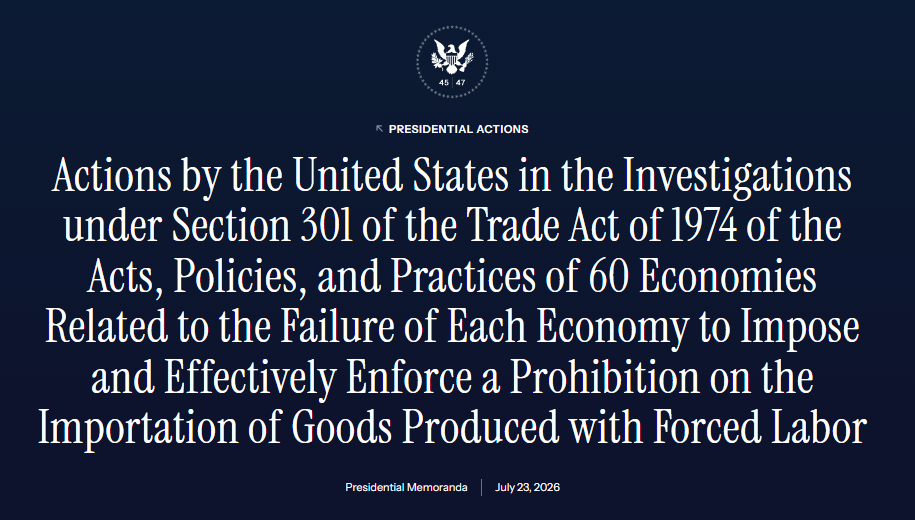
【亿邦原创】7月24日消息,日前,特朗普政府宣布,将于本周五依据1974年《贸易法》第301条,对60个贸易伙伴的商品分别征收10%与12.5%的新一轮临时关税。

此举标志着此前依据《国际紧急经济权力法》(IEEPA)实施的“对等”关税在到期后,由新的法律框架正式接棒,美国进口商品的关税“地板价”得以延续。

这一政策转向的直接背景可追溯至今年2月。

彼时,美国最高法院驳回了特朗普政府去年以国家紧急状态法为依据、为缩小贸易逆差而实施的10%至50%“对等”关税。面对这一法律挫折,白宫方面选择换用第301条作为新的授权路径,以期在合规性更为稳固的基础上,补齐此前的税额缺口。

与此前被否决的关税相比,第301条在过往的法律挑战中曾被裁定有效,因而面临的司法风险相对较低。

根据《联邦公报》发布的最终裁定,新一轮关税为期150天,覆盖美国进口总额的99.4%,将于美国东部时间7月25日凌晨12时01分正式生效,与到期的IEEPA关税实现无缝衔接。

值得注意的是,运输途中的货物可获得豁免,豁免期持续至美国东部时间7月28日凌晨12时01分。

在商品范围上,石油、天然气、化肥、部分食品,以及已受第232条国家安全关税约束的汽车、钢铁、铝和铜等商品均不在此次征税之列;此外,符合《美墨加协定》贸易规则的商品同样享受豁免。

在税率结构上,新一轮关税呈现明显的国别差异。

10%的额外关税适用于14个已签署互惠贸易相关承诺或已实施部分管控的经济体:

包括加拿大、墨西哥、欧盟、印度尼西亚、厄瓜多尔、巴基斯坦、阿根廷、孟加拉国、柬埔寨、萨尔瓦多、危地马拉、马来西亚、中国台湾省及英国。

其余46个经济体则适用12.5%的税率:

涵盖中国大陆及中国香港、越南、泰国、日本、韩国、印度、巴西、澳大利亚、瑞士等主要贸易伙伴。

此外,针对纺织品领域,美方还配套设立了特殊配额减税机制,依据美国对相应经济体的纤维、棉花出口额度,核定部分服装纺织品可享受下调后的301关税。

在涉及中国的安排上,白宫方面表示,打算将特朗普第二任期对华商品的关税重新提升至2025年11月达成贸易休战时所商定的水平,但明确不会超过该上限。

美国贸易代表格里尔此前亦曾公开承诺,对于已与美国达成贸易协议、设定关税上限的国家,新一轮关税不会使其关税水平超出协议约定。

市场层面,分析人士普遍认为,此次关税调整不太可能引发类似去年“解放日关税”那样的剧烈市场震荡。

一方面,特朗普政府在关税问题上反复调整、时有让步,政策的冲击力已较此前有所弱化;另一方面,中美双方已同意成立联合贸易委员会,并计划初步确定约300亿美元的“非敏感商品”,作为双方未来降低或取消关税的首批商品范围。这一谈判预期在一定程度上稳定了市场情绪。

截至发稿,中国商务部和外交部尚未就美国7月23日最终公布的301关税决定发布新的官方回应。

不过,在此前美国启动同一项301调查时,商务部曾表示,美方以“强迫劳动”为由发起调查并构建贸易壁垒,具有单边性、武断性和歧视性,是典型的保护主义行径,并表示中方将保留采取一切必要措施维护自身正当权益。

“世界贸易组织专家组早已裁决美对华301关税措施违反世贸组织规则,美方再次滥用301调查程序,将国内法凌驾于国际规则之上,是错上加错,严重破坏全球产业链供应链安全稳定,严重扰乱国际经贸秩序。”商务部新闻发言人在3月份的一场记者问答中指出。

而中国外交部发言人也曾强调,中方一贯反对各种形式的单边关税措施。关税战、贸易战不符合任何一方利益,经贸问题应该在平等、尊重、互惠基础上通过对话协商解决。中国不存在所谓“强迫劳动”,并反对以此为借口搞政治操弄。


亿邦持续追踪报道该情报,如想了解更多与本文相关信息,请扫码关注作者微信。

文章来源:亿邦动力

广告
微信
朋友圈

FAQ回顾

美国新一轮301关税的生效时间是什么时候?

美国新一轮301关税将于美国东部时间7月25日凌晨12时01分正式生效,为期150天,覆盖美国进口总额的99.4%,运输途中的货物可享受豁免至7月28日凌晨12时01分。

美国新一轮301关税针对中国的税率是多少?

美国新一轮301关税中,中国大陆及中国香港适用12.5%的税率,美方明确表示对华商品征收的关税总水平不会超过2025年11月中美贸易休战谈判商定的上限。

哪些商品可以豁免美国新一轮301关税?

石油、天然气、化肥、部分食品,已受第232条国家安全关税约束的汽车、钢铁、铝、铜,以及符合《美墨加协定》贸易规则的商品,均不在此次301关税征税范围内。

为什么美国要改用301条款征收关税?

此前美国依据《国际紧急经济权力法》实施的关税被最高法院驳回,第301条在过往法律挑战中曾被裁定有效,以此为征税依据面临的司法风险相对较低,可实现关税政策无缝衔接。

这么好看,分享一下?

朋友圈 分享

APP内打开

+1
+1
微信好友 朋友圈 新浪微博 QQ空间
关闭
收藏成功
发送
/140 0