广告
加载中

网易有道将推出AI耳机 刘韧磊:Agent重新定义AI价值

吕哲彤 2026-07-22 09:48
吕哲彤 2026/07/22 09:48

邦小白快读

EN
全文速览

本次世界人工智能大会上,网易有道公布了在AI Agent领域的多项产品落地成果,核心思路是用Agent能力把AI接入真实用户场景,带来多款实用产品,核心干货如下

1. 已有开源桌面级Agent产品LobsterAI,能根据用户指令完成资料查找、信息筛选、报告撰写、PDF生成等全流程任务,代码、数据、权限都可审计,目前在GitHub获得超5600星,日均交互数十万次,已经覆盖学习、办公、营销多类场景。

2. 即将推出AI耳机OpenPods,不盲目比拼硬件参数,主打语音交互结合工作流,可以帮用户完成会议记录、翻译、信息整理,充电盒可脱离手机独立完成拾音同传,已经通过苹果MFi认证,还可依托“子曰”大模型实现译文音色克隆,匹配讲话人声音。

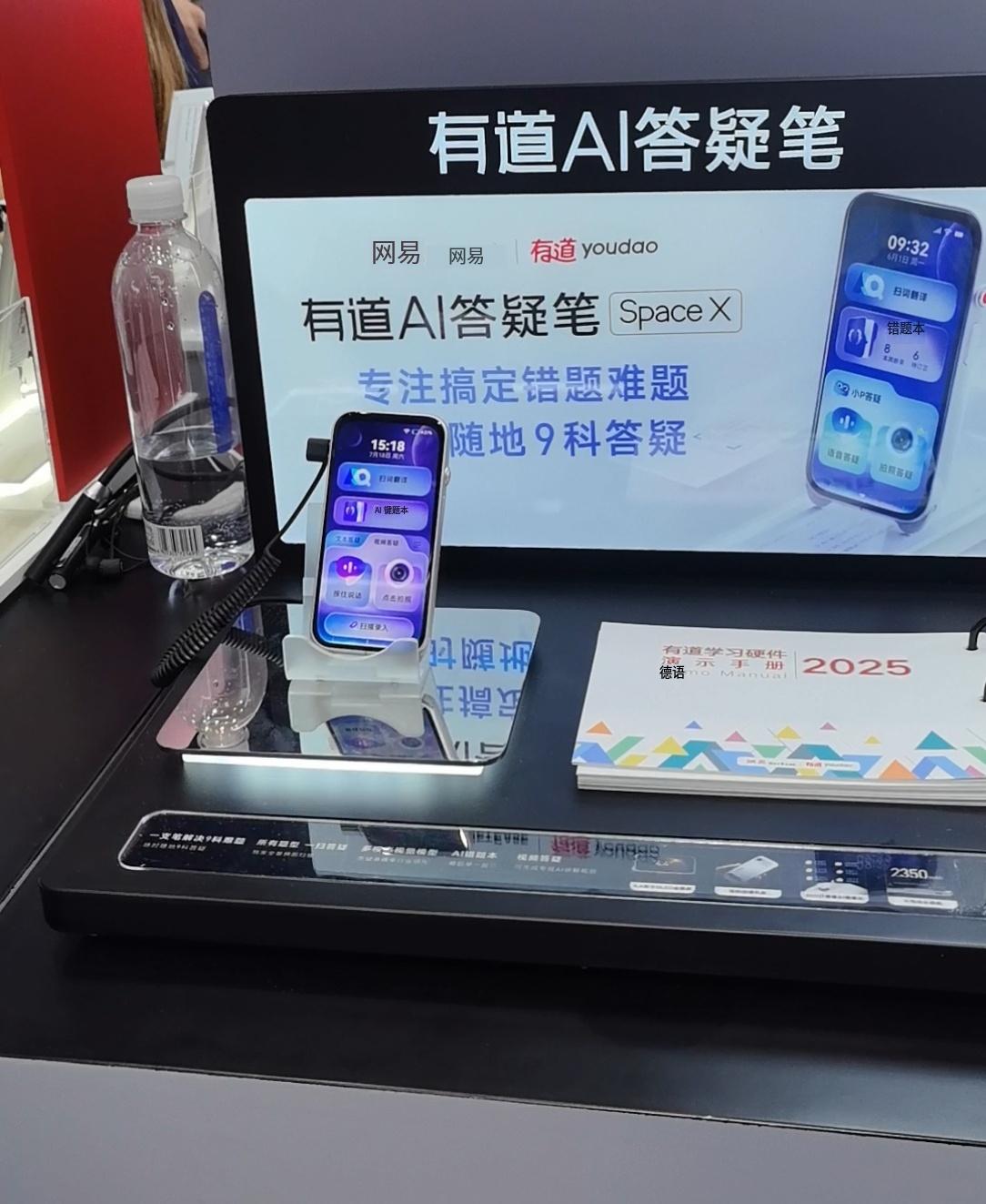
3. 教育领域推出有道答题笔,定位学生专用,不带娱乐功能,主打启发式作业辅导,不会直接给答案,而是引导学生自主思考。

网易有道本次公布的AI产品实践,为AI时代品牌的产品研发、渠道布局和盈利模式设计提供了参考,也反映了当前AI产品的消费趋势,核心内容如下

1. 产品研发方向:当前AI产品的核心竞争力已经不再是硬件参数比拼,而是围绕用户实际任务用AI Agent能力交付结果,把AI能力嵌入用户真实的工作流、学习流,比如AI耳机主打任务落地、答题笔主打启发式学习,都精准命中用户真实需求。

2. 渠道布局规划:有道AI耳机后续计划线上覆盖京东、天猫等主流电商平台,线下依托有道全国门店销售,采用线上线下融合的渠道模式,适合AI硬件品牌参考。

3. 盈利模式创新:有道计划尝试“硬件入口加AI服务订阅”的模式,改变传统硬件一次性盈利的思路,开辟持续变现的路径,符合当前AI产品的主流变现趋势。

本次大会透露的AI产品落地动向,给各类卖家指明了新的增长方向和机会,也提供了可借鉴的经验,核心干货如下

1. 市场机会方向:AI+硬件、AI+垂直场景(学习、办公、会议、教育)是当前高速增长的赛道,用户需求已经从AI回答问题转向AI完成完整闭环任务,Agent类产品市场需求旺盛,卖家可以切入相关赛道寻找机会。

2. 可借鉴商业模式:网易有道采用的“硬件入口+AI服务订阅”模式,既靠硬件获取用户,又能持续获得服务收入,盈利性比单纯卖硬件更好,适合相关品类卖家参考。

3. 竞争与合作提示:AI产品竞争不要再单纯卷硬件参数,要聚焦场景落地能力打造差异化,同时有道AI耳机即将上线主流电商平台,相关配套品类卖家可以寻求合作机会,对接新品流量获得增长。

网易有道的AI产品实践,给AI时代硬件工厂的产品设计、业务拓展和数字化转型带来了多方面启示,核心干货如下

1. 产品生产设计方向转变:当前AI硬件的市场需求已经不再比拼硬件参数,核心要求是结合AI能力,围绕用户具体任务设计产品功能,比如AI耳机主打语音交互+全流程工作任务处理,答题笔主打无娱乐+启发式学习,都贴合真实场景需求,工厂做产品研发需要贴合这个方向调整设计思路。

2. 新商业机会:AI+垂直场景的硬件(学习、办公、教育类)市场需求旺盛,工厂可以对接网易有道这类科技品牌,开展合作切入这一新兴赛道,开辟新的增长空间,摆脱传统硬件的价格竞争。

3. 数字化转型启示:工厂可以借鉴有道Agent落地的思路,将数字化能力围绕具体生产运营任务打造闭环,推进自身的数字化升级,提升实际运营效率,避免为了数字化而数字化。

从网易有道的AI Agent实践中,可以明确AI服务行业的发展趋势、客户核心痛点和可行的解决方案方向,核心干货如下

1. 行业发展趋势:AI产业已经从大模型比拼参数阶段,进入到Agent落地真实场景的阶段,围绕用户具体任务打造执行闭环是接下来的核心发展方向,目前已经覆盖学习、办公、教育、会议等多个场景,市场空间广阔。

2. 客户核心痛点:当前用户对AI的需求已经不满足于获得问题回答,而是需要AI帮用户完成完整的任务,解决大模型“只能说不能干”的痛点。

3. 解决方案方向:无论To C还是To B服务,都可以参考有道的思路:把AI能力嵌入用户现有工作流、学习流,围绕完整任务交付结果,同时开放可审计的数据权限,提升用户信任,解决用户对数据安全的担忧,符合当前市场需求。

网易有道的AI产品落地实践,给各类平台的招商、运营和风险规避带来了参考,核心干货如下

1. 招商布局方向:AI Agent结合硬件、AI结合垂直场景的产品是接下来的热门新品类,有道AI耳机等新品即将上线主流电商平台,平台可以重点招募这类贴合场景的AI新品,丰富平台品类,吸引新增流量。

2. 运营适配需求:越来越多AI品牌采用“硬件+服务订阅”的新商业模式,平台需要针对性开发适配订阅模式的功能模块,满足品牌的运营需求,适应行业新变化。

3. 风险规避方向:AI新品大多涉及大量用户数据处理,平台可以参考有道产品可审计的特点,提前建立数据安全相关的准入规范,把数据安全可控作为准入标准,规避合规风险,同时满足用户对数据安全的需求。

网易有道在AI Agent领域的落地实践,反映了当前大模型产业落地的新动向,为AI产业研究提供了真实的案例参考,核心干货如下

1. 产业发展新动向:大模型产业已经从基础大模型研发的阶段,进入到Agent落地垂直场景的新阶段,大模型解决“怎么想”的问题,Agent解决“怎么干”的问题,Agent能够围绕具体任务形成执行闭环,是大模型走进真实应用场景的核心路径,这是产业发展的新方向。

2. 商业模式创新:AI硬件领域出现了“硬件入口+AI服务订阅”的新商业模式,区别于传统一次性卖硬件的模式,开辟了可持续变现的新路径,值得深入研究。

3. 产品创新逻辑变化:AI产品创新已经不再比拼参数大小,转而以用户真实场景任务为核心,将AI能力嵌入现有工作流,实现从回答问题到完成任务的升级,这个新的创新逻辑为产业研究提供了新的课题,也为后续产业发展指明了方向。

返回默认

声明:快读内容全程由AI生成,请注意甄别信息。如您发现问题,请发送邮件至 run@ebrun.com 。

我是 品牌商 卖家 工厂 服务商 平台商 研究者 帮我再读一遍。

Quick Summary

At the recent World Artificial Intelligence Conference (WAIC), NetEase Youdao unveiled multiple commercialized product offerings leveraging AI Agent technology. Its core strategy is to integrate AI into real user scenarios through Agent capabilities to deliver practical tools. Key takeaways are as follows:

1. Youdao has open-sourced LobsterAI, a desktop AI Agent that can complete end-to-end tasks including data search, information filtering, report writing and PDF generation per user instructions. All its code, data and permissions are auditable. The project has gained over 5,600 stars on GitHub, averages hundreds of thousands of daily interactions, and already supports multiple scenarios including learning, office work and marketing.

2. The company will soon launch OpenPods, an AI-powered wireless earbud. Instead of competing purely on hardware specifications, OpenPods is built around voice-interactive workflow automation: it helps users with meeting note-taking, translation and information organization. Its charging case supports independent audio pickup and on-the-go simultaneous interpretation without connecting to a phone, and has received Apple MFi certification. Leveraging Youdao's "ZiYue" large language model, it also supports voice cloning for translated output to match the original speaker's tone.

3. For the education sector, Youdao launched a dedicated student answer pen. It comes with no entertainment functions and focuses on heuristic homework guidance: instead of providing direct answers, it guides students to think independently.

NetEase Youdao's newly unveiled AI product practices offer valuable references for product R&D, channel strategy and monetization model design for brands in the AI era, and reflect current consumer trends for AI products. Key takeaways are as follows:

1. Product R&D direction: The core competitiveness of AI products no longer lies in competing on hardware specifications. Instead, it centers on delivering end-to-end results via AI Agent capabilities tailored to real user tasks, embedding AI into users' existing daily workflows and learning routines. For example, the AI earbuds focus on task completion, while the answer pen prioritizes heuristic learning, both of which accurately address real user needs.

2. Channel layout strategy: Youdao plans to distribute its AI earbuds across major online e-commerce platforms including JD.com and Tmall, while leveraging its national offline retail network for in-person sales. This omnichannel, online-offline integrated model is a useful reference for AI hardware brands.

3. Monetization innovation: Youdao plans to adopt a "hardware entrance + AI service subscription" model, moving beyond the traditional one-time hardware profit model to build a path for sustained recurring revenue, which aligns with the mainstream monetization trend for AI products today.

The AI product developments revealed at the conference point to new growth directions and opportunities for all types of sellers, and share actionable, replicable insights. Key takeaways are as follows:

1. Market opportunity direction: AI + hardware, and AI for vertical scenarios (learning, office work, meetings, education) are currently high-growth tracks. User demand has shifted from AI that answers questions to AI that completes full end-to-end tasks, and the market demand for Agent-based products is booming. Sellers can explore opportunities by entering these related tracks.

2. Replicable business model: The "hardware entrance + AI service subscription" model adopted by NetEase Youdao acquires users through hardware while generating sustained recurring service revenue, delivering higher profitability than selling standalone hardware. This is a strong reference for sellers in relevant categories.

3. Competition and cooperation notes: AI product competition should no longer focus solely on hardware specifications. Instead, brands should build differentiation by focusing on in-scenario execution capabilities. Meanwhile, as Youdao's AI earbuds are set to launch on major e-commerce platforms, sellers of complementary product categories can pursue partnership opportunities to tap into the new product's traffic and drive growth.

NetEase Youdao's AI product practices offer multi-faceted insights for hardware factories on product design, business expansion and digital transformation in the AI era. Key takeaways are as follows:

1. Shift in product design direction: Market demand for AI hardware no longer centers on competing on specifications. The core requirement is integrating AI capabilities to design product features around specific user tasks. For example, the AI earbuds focus on voice interaction + end-to-end work task processing, while the answer pen prioritizes entertainment-free heuristic learning, both aligned with real in-scenario needs. Factories need to adjust their R&D and design strategies to align with this direction.

2. New business opportunities: Demand for AI-powered hardware for vertical scenarios (learning, office work, education) is booming. Factories can partner with technology brands like NetEase Youdao to enter this emerging track, open up new growth space, and move away from cutthroat price competition in traditional hardware markets.

3. Insights for digital transformation: Factories can draw on Youdao's approach to Agent implementation: build closed-loop digital capabilities around specific production and operation tasks to advance digital upgrade and improve actual operational efficiency, rather than pursuing digital transformation for transformation's sake.

NetEase Youdao's AI Agent practices clarify the development direction of the AI service industry, core customer pain points, and feasible solution paths. Key takeaways are as follows:

1. Industry development trend: The AI industry has moved beyond the stage of competing on large model parameter sizes, and entered the phase of deploying Agents in real-world scenarios. Building closed-loop execution around specific user tasks will be the core development direction going forward, with multiple scenarios already covered including learning, office work, education and meetings, representing vast untapped market space.

2. Core customer pain points: Users are no longer satisfied with AI that only answers questions. They need AI to complete full end-to-end tasks for them, solving the key pain point of large models that "can talk but cannot act".

3. Solution direction: Both B2C and B2B AI service providers can learn from Youdao's approach: embed AI capabilities into users' existing workflows and learning routines, deliver end results for full tasks, and open up auditable data permissions to build user trust and address concerns over data security, which aligns with current market demand.

NetEase Youdao's AI product deployment practices offer references for platform recruitment, operation and risk mitigation. Key takeaways are as follows:

1. Recruitment strategy direction: Products that combine AI Agents with hardware, and AI solutions for vertical scenarios, will be high-growth new categories in the near term. With new offerings such as Youdao's AI earbuds set to launch on major e-commerce platforms, platforms can prioritize recruiting these scenario-focused AI products to enrich category assortment and attract new user traffic.

2. Operational adaptation needs: A growing number of AI brands are adopting the new "hardware + service subscription" business model. Platforms need to develop custom functional modules that support subscription models to meet brands' operational needs and adapt to industry changes.

3. Risk mitigation direction: Most new AI products process large volumes of user data. Platforms can reference Youdao's auditable product design to establish pre-entry data security standards, making secure and controllable data management an entry requirement. This helps avoid compliance risks while meeting user demand for data security.

NetEase Youdao's deployment practices in the AI Agent field reflect new trends in the current industrial landing of large language models, and provide a real-world case reference for AI industry research. Key takeaways are as follows:

1. New industry development trends: The large model industry has moved beyond the foundational model R&D phase into a new stage centered on deploying Agents in vertical scenarios. Large models solve the problem of "how to think", while Agents solve the problem of "how to act". Agents can form closed execution loops around specific tasks, and are the core path for bringing large models into real-world application scenarios, representing the new direction of industrial development.

2. Business model innovation: A new "hardware entrance + AI service subscription" business model has emerged in the AI hardware sector. Distinct from the traditional one-time hardware sales model, it opens a new path for sustainable monetization that deserves in-depth research.

3. Shifts in product innovation logic: AI product innovation no longer revolves around competing on model or hardware parameter sizes. Instead, it centers on real user in-scenario tasks, embedding AI capabilities into existing workflows to achieve a shift from answering questions to completing tasks. This new innovation logic creates new research topics for industrial research and points the direction for future industry development.

Disclaimer: The "Quick Summary" content is entirely generated by AI. Please exercise discretion when interpreting the information. For issues or corrections, please email run@ebrun.com .

I am a Brand Seller Factory Service Provider Marketplace Seller Researcher Read it again.

7月18日,2026世界人工智能大会(WAIC)“从大模型到智能体:迈向自主智能新纪元”论坛在上海举行。

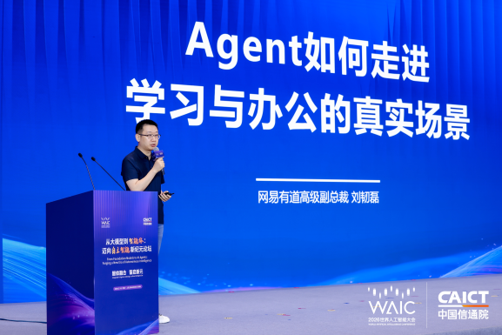
本次论坛由中国信通院承办,主题为“智体融合 智启新元”。中科院院士王建宇、加拿大工程院外籍院士梅涛,以及来自阿里巴巴达摩院、华为等机构和企业的代表参加论坛。网易有道高级副总裁刘韧磊发表主题演讲《Agent如何走进学习与办公的真实场景》,分享了有道在AI Agent领域的探索和产品实践。

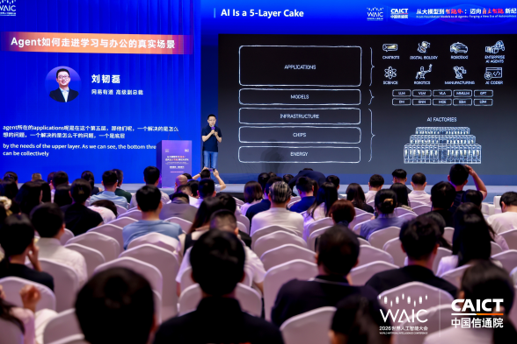
借用黄仁勋提出的“AI五层蛋糕”框架,刘韧磊在演讲中表示,大模型更多解决“怎么想”的问题,而Agent进一步面向“怎么干”。在他看来,Agent的价值在于能够围绕具体任务形成执行闭环,让模型能力进入实际使用场景。他从用户数据、开发者行为和行业趋势三个角度提出判断:“模型在努力理解这个世界,而Agent是模型走进真实世界的答案。”

在产品实践部分,刘韧磊以生成一份行业分析报告为例,说明传统LLM与Agent之间的差异。传统LLM通常输出一段文本,而有道LobsterAI作为桌面级Agent,可以根据“帮我生成行业分析报告”这样的指令,完成资料查找、信息筛选、结构搭建、初稿撰写和PDF生成等流程。

据介绍,LobsterAI是开源桌面级Agent,代码、权限、数据和执行链路可审计。目前,该项目在GitHub上获得超过5.6k Stars,日均交互数十万次,并曾获得OpenClaw创始人公开评价。

刘韧磊表示,LobsterAI只是有道Agent实践的一部分。目前,有道已将Agent能力应用到学习、办公、营销等场景,形成覆盖多类任务的AI Agent产品矩阵。

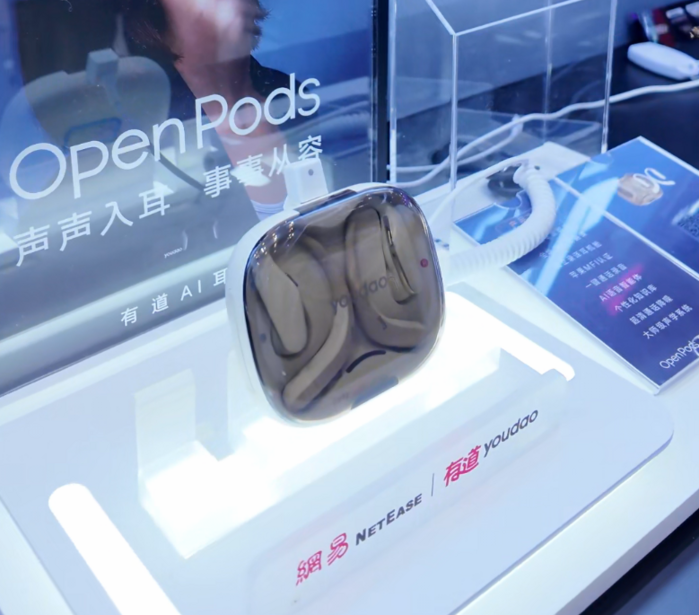
本次WAIC期间展出的有道AI耳机OpenPods,则聚焦语音交互与工作流结合,尝试让用户通过耳机完成会议记录、信息整理、翻译等任务。刘韧磊表示:“我们不是在硬件本身卷参数,是用Agent的思维重新定义这个耳机能帮你做什么。”

据工作人员介绍,该产品的充电盒可以在脱离手机的情况下,独立承担现场拾音和双向同传等任务;同时,该耳机已经通过苹果MFi认证,可以在iOS系统中一键启动录音与翻译。而在翻译中,耳机可依托“子曰”大模型实现音色克隆,生成与讲话人音色相近的译文。

后续销售方面,有道AI耳机目前暂未确定最终价格,后续预计将在线上覆盖京东、天猫等平台,线下则依托有道全国门店进行销售,并可能采用“硬件入口加AI服务订阅”的模式。

演讲最后,刘韧磊总结称,无论是LobsterAI还是有道AI耳机,产品形态不同,但思路一致:将AI能力嵌入用户的实际场景,并围绕任务交付结果。他表示:“这就是有道在做的事——回到用户身边,用Agent帮用户把事办成。”

论坛之外,网易有道还在WAIC展区展示了面向教育场景的“子曰”大模型,以及依托该模型能力的教育类AI硬件。

其中,有道答题笔被定位为“学生专用小手机”,主要面向学习场景,不支持娱乐功能。在作业辅导方面,该产品并不直接给出答案,而是通过提示引导学生思考,尽量模拟教师在教学过程中的启发式辅导。

从展区产品来看,有道正在把AI Agent能力从单一对话延伸到更具体的学习、办公和会议任务中。无论是答题笔中的学习辅导,还是AI耳机中的录音、翻译与会议处理,其共同点都是将模型能力嵌入实际工作流,让AI从回答问题进一步进入任务执行环节。

文章来源:亿邦动力

广告
微信
朋友圈

FAQ回顾

AI Agent和传统大模型有什么区别?

大模型更多解决“怎么想”的问题,AI Agent进一步面向“怎么干”,可围绕具体任务形成执行闭环,让模型能力进入实际使用场景。比如生成行业分析报告时,传统大模型仅输出文本,Agent可完成从资料查找到PDF生成的全流程。

网易有道AI耳机有哪些核心功能?

网易有道AI耳机OpenPods聚焦语音交互与工作流结合,可完成会议记录、信息整理、翻译等任务,充电盒脱离手机可独立承担现场拾音、双向同传,已通过苹果MFi认证,翻译时可依托“子曰”大模型实现音色克隆。

网易有道在AI Agent领域有哪些落地产品?

网易有道已形成覆盖多类任务的AI Agent产品矩阵,包括开源桌面级Agent LobsterAI、有道AI耳机OpenPods、面向教育场景的有道答题笔,相关能力已落地学习、办公、营销等多个场景。

这么好看,分享一下?

朋友圈 分享

APP内打开

+1
+1
微信好友 朋友圈 新浪微博 QQ空间
关闭
收藏成功
发送
/140 0