广告
加载中

27亿!90后博士拿下AI 3D生成领域最大单笔融资:3年估值破百亿 ARR冲破6000万美元

晨阳 2026-07-21 11:53
晨阳 2026/07/21 11:53

邦小白快读

EN
全文速览

本文核心是AI 3D生成赛道头部公司Meshy完成近4亿美元B轮融资,投后估值超百亿元,刷新了全球AI 3D赛道单轮融资和估值的纪录,是赛道最新的标志性事件。

1. 核心背景:Meshy创始人是90后清华姚班毕业的MIT博士胡渊鸣,团队历经两次转型,从做底层技术工具转向直接做AI生成3D资产产品,是全球首批推出公开可用AI 3D生成产品的公司。

2. 普通用户可享的实操便利:Meshy支持文字转3D、图片转3D,生成的模型可以直接用于3D打印、个人创作、游戏开发等场景。原来专业团队需要两周完成的建模工作,现在只需要一分钟、一美元就能完成,普通用户也能轻松生成自定义3D模型,目前平台已经积累1200万注册用户,累计生成模型超1亿个。

本文梳理了AI 3D生成赛道的发展现状和商业化趋势,能为品牌商的产品研发和业务拓展提供参考。

1. 消费趋势变化:当前3D打印已经从小众走向大众市场,2025年四季度2500美元以下入门级3D打印机出货量同比增长47%,收入增长53%,用户对自定义3D资产的需求快速上涨,AI技术进一步降低了生成门槛,撬动了更多新增需求。

2. 产品研发优化:AI 3D生成能将专业团队两周的建模工作压缩到一分钟,成本降到一美元,品牌可以用这项技术快速生成产品设计原型、打样,大幅缩短新产品研发周期,降低设计成本,目前已有Hugo Boss等品牌开始使用相关服务。

3. 合作参考:当前资本集中押注头部玩家,头部玩家已经跑通商业化,品牌选择和成熟头部平台合作,能有效降低试错成本。

当前AI 3D生成已经从技术验证期进入商业化兑现期,给卖家带来了新的增长机会,也明确了需要规避的风险。

1. 新增机会:3D打印、游戏开发、内容创作领域对3D资产的需求爆发,个性化定制模型的需求快速增长,卖家可以接入头部AI 3D生成平台的能力,降低建模成本,面向C端用户提供个性化3D模型定制、定制化3D打印服务,头部平台数据显示,一半以上的增长可以来自自然流量,获客成本较低。

2. 商业模式参考:头部玩家已经验证了B端+C端双轮驱动的商业模式,B端对接科技公司、游戏厂商、3D打印企业,C端服务个人创作者,头部平台毛利可达85%,LTV/CAC大于4,单位经济模型健康。

3. 风险提示:赛道技术门槛极高,需要同时掌握图形学和大模型训练两套能力,中小卖家不要盲目自研,优先对接成熟平台的服务更稳妥。

AI 3D生成技术的商业化落地,给工厂带来了新的商业机会,也为工厂推进数字化转型提供了启示。

1. 生产设计需求变化:当前消费端对个性化定制产品的需求持续提升,AI 3D生成解决了个性化定制最大的痛点——建模成本高、周期长的问题,能支撑工厂批量承接个性化定制订单,不需要为小订单付出高额的设计成本。

2. 新增商业机会:现在头部3D打印品牌已经接入AI 3D生成服务,打通了从生成模型到打印成品的全链路,工厂可以依托自身的生产能力,和AI 3D平台合作,对接C端个性化需求,拓展定制化生产业务,打开新的增长空间。此外工业领域对生产级3D资产的需求增长,工厂也可以开展按需制造的新业务。

3. 数字化转型启示:工厂可以引入AI 3D生成技术,加快新产品的设计、打样流程,缩短研发周期,降低设计成本,推进自身生产和研发的数字化升级。

AI 3D生成赛道当前已经完成早期技术验证,进入商业化兑现阶段,行业发展趋势清晰,给面向3D领域的服务商指明了新的发展方向。

1. 行业发展趋势:AI 3D生成是多模态AI中技术壁垒最高的方向,被认为是未来物理世界AI的核心基座,市场空间广阔。当前资本已经从早期的撒网式布局转向集中押注头部玩家,赛道正在快速收敛,头部效应明显。

2. 客户核心痛点:过去客户生成可投入生产的3D模型,存在门槛高、周期长、成本高的问题,专业团队两周才能完成的工作,无法满足快速增长的个性化定制需求,这个痛点已经被AI技术解决。

3. 解决方案方向:服务商不需要盲目投入巨资自研技术,可以对接头部AI 3D生成平台的API能力,将AI 3D生成能力融入自身的服务流程,为3D打印、游戏设计、产品设计等垂直领域的客户提供一体化服务,抓住赛道的增长红利。

AI 3D生成赛道的商业化落地,给各类内容平台、3D生态平台带来了可借鉴的经验,也明确了需要规避的风险。

1. 市场需求变化:当前平台用户核心需求已经从工具转向可直接使用的3D资产,用户不愿意为复杂的建模工具付费,愿意为可用的模型付费,平台需要接入成熟的AI 3D生成能力满足用户的自定义需求,比如拓竹的MakerWorld平台已经接入Meshy,用户上传照片两分钟就能拿到可直接打印的模型,大幅提升了用户体验。

2. 可参考的运营方法:头部AI 3D平台采用B端+C端双轮驱动的增长模式,靠产品力拉动自然增长,超过一半的增长来自自然流量,获客成本低,单位经济模型健康,值得各类平台借鉴。

3. 风险规避:赛道技术壁垒高,自研投入大、失败风险高,中小平台不需要盲目自研技术,对接成熟头部玩家的能力即可;同时要注意,未来技术红利摊薄后,核心竞争力是嵌入产业工作流的能力,平台要优先落地真实场景,不要盲目追逐技术概念。

本文梳理了全球AI 3D生成赛道的最新产业动向,展现了行业发展的新特征,对产业领域研究者具备较高的参考价值。

1. 产业最新动向:当前AI 3D生成已经成为全球资本和科技领域的热点赛道,2026年以来头部玩家合计融资超过15亿美元,资本布局从撒网转向集中押注头部,行业已经从早期的技术验证期进入商业化兑现期,多家头部玩家已经实现了高速增长的营收,Meshy当前ARR已经达到6000万美元,过去一年增长12倍,长期保持20%-30%的月环比增长。

2. 新商业模式验证:行业已经验证了B端+C端双轮驱动的商业模式,头部玩家同时服务B端产业客户和C端个人创作者,头部玩家毛利达到85%,LTV/CAC大于4,证明AI 3D生成已经具备健康的单位经济模型。

3. 待研究的新问题:当前行业核心待解决的问题是,技术红利逐步摊薄后,企业能否持续将产品嵌入产业工作流,维持长期健康增长,这也是未来该领域需要重点研究的核心方向。

返回默认
声明:快读内容全程由AI生成,请注意甄别信息。如您发现问题,请发送邮件至 run@ebrun.com 。

我是 品牌商 卖家 工厂 服务商 平台商 研究者 帮我再读一遍。

Quick Summary

This article centers on Meshy, a leading player in the AI-powered 3D generation space, which has recently closed a Series B funding round of nearly $400 million, pushing its post-money valuation above 10 billion yuan. This financing sets new records for both the largest single-round funding and highest valuation in the global AI 3D industry, marking the latest landmark event for the sector.

1. Core Background: Meshy was founded by Yuanming Hu, a 1990-born MIT PhD and graduate of China's Tsinghua University Yao Class, an elite program for computer science talent. The team pivoted twice, shifting from building underlying infrastructure tools to launching direct-to-user AI-generated 3D asset products, making it one of the first companies globally to offer a publicly available AI 3D generation product.

2. Practical Benefits for General Users: Meshy supports text-to-3D and image-to-3D generation, with outputs ready for direct use in 3D printing, personal creation, game development and other scenarios. What used to take a professional modeling team two weeks to complete can now be done in one minute for just $1, putting custom 3D modeling within reach for ordinary users. To date, the platform has accumulated 12 million registered users and facilitated the generation of more than 100 million 3D models.

This article outlines the current development status and commercialization trends of the AI 3D generation industry, offering actionable insights for brand product R&D and business expansion.

1. Shifting Consumer Trends: 3D printing has moved from a niche hobby to the mass market. In Q4 2025, shipments of entry-level 3D printers priced under $2,500 grew 47% year-over-year, with corresponding revenue up 53%. Consumer demand for custom 3D assets is rising rapidly, and AI has drastically lowered the barrier to generation, unlocking substantial new demand.

2. Optimized Product R&D: AI 3D generation cuts a two-week professional modeling workflow down to one minute and reduces costs to just $1. Brands can leverage this technology to rapidly generate product design prototypes and samples, drastically shortening new product development cycles and cutting design costs. Leading brands including Hugo Boss have already started adopting related services.

3. Partnership Guidance: Capital is now concentrated on leading players, which have already proven commercially viable. Partnering with an established leading platform allows brands to effectively reduce trial-and-error costs.

AI 3D generation has moved beyond technical validation into the commercialization phase, opening new growth opportunities for sellers while outlining key risks to avoid.

1. New Growth Opportunities: Demand for 3D assets is exploding across 3D printing, game development and content creation, with particularly fast growth in demand for personalized custom models. Sellers can integrate capabilities from leading AI 3D generation platforms to cut their own modeling costs, then offer custom 3D model design and custom 3D printing services to end consumers. Data from leading platforms shows that over half of growth can come from organic traffic, keeping customer acquisition costs low.

2. Proven Business Model Reference: Leading players have validated a healthy dual-driven B2B+B2C business model: serving enterprise technology companies, game studios and 3D printing businesses on the B2B side, while catering to individual creators on the B2C side. Top platforms achieve gross margins as high as 85%, with an LTV/CAC ratio above 4, indicating a healthy unit economic model.

3. Risk Warning: The sector has extremely high technical barriers, requiring expertise in both computer graphics and large language model training. Small and medium-sized sellers should not attempt to build proprietary technology in-house; integrating with the services of an established mature platform is a far more reliable strategy.

The commercial adoption of AI 3D generation technology has opened new business opportunities for factories and offers key insights for factories advancing digital transformation.

1. Shifting Production and Design Demand: Consumer demand for personalized custom products continues to rise. AI 3D generation solves the core pain point of personalized customization: high cost and long lead times for 3D modeling. It enables factories to accept large volumes of personalized custom orders without bearing high design costs for small-batch requests.

2. New Business Opportunities: Leading 3D printing brands have already integrated AI 3D generation services, building a fully connected end-to-end workflow from model generation to finished printed product. Factories can leverage their existing production capacity to partner with AI 3D platforms, connect directly to end-consumer demand for personalization, and expand into custom manufacturing to unlock new growth. In addition, growing demand for production-grade 3D assets in the industrial sector also allows factories to launch new on-demand manufacturing businesses.

3. Insights for Digital Transformation: Factories can adopt AI 3D generation technology to speed up new product design and sampling processes, shorten R&D cycles, cut design costs, and advance digital upgrading of their R&D and production operations.

The AI 3D generation sector has completed early-stage technical validation and entered the commercialization phase, with clear industry development trends that point to new growth directions for 3D-focused service providers.

1. Industry Development Trends: AI 3D generation is the most technically demanding subfield of multimodal AI, and is widely seen as a core foundational layer for future AI applications for the physical world, with enormous market potential. Capital has shifted from broad, early-stage bets across multiple players to concentrated investments in leading companies, leading to rapid industry consolidation and a clear winner-takes-most dynamic.

2. Core Customer Pain Points: Previously, generating production-ready 3D models was high-barrier, time-consuming and expensive, with work taking professional teams two weeks to complete, unable to meet fast-growing demand for personalized customization. This pain point has now been fully addressed by AI technology.

3. Solution Pathway: Service providers do not need to make massive, risky investments to build proprietary technology. Instead, they can integrate API capabilities from leading AI 3D generation platforms to add AI-powered 3D generation to their existing service workflows, delivering end-to-end services to clients in verticals including 3D printing, game design and product design, and capture a share of the sector's growth.

The commercialization of AI 3D generation offers actionable lessons for content platforms and 3D ecosystem platforms of all types, while outlining key risks to avoid.

1. Shifting Market Demand: Core user demand on platforms has already shifted from modeling tools to ready-to-use 3D assets. Users are unwilling to pay for complex modeling tools, but will pay for usable models. Platforms need to integrate mature AI 3D generation capabilities to meet user demand for custom assets. For example, Bambu Lab's MakerWorld platform has already integrated Meshy's technology, allowing users to upload a photo and get a print-ready model in just two minutes, drastically improving user experience.

2. Actionable Operating Lessons: Leading AI 3D platforms use a dual B2B+B2C growth model, driving organic growth through product quality. More than half of their growth comes from organic traffic, keeping customer acquisition costs low and unit economics healthy, making this a strong model for other platforms to replicate.

3. Risk Mitigation: The sector has very high technical barriers, so in-house development carries large capital requirements and high failure risk. Small and medium-sized platforms do not need to pursue proprietary technology; integrating with the capabilities of established leading players is sufficient. At the same time, platforms should note that as technical benefits are gradually commoditized, the core competitive advantage will be the ability to embed into industry workflows. Platforms should prioritize deployment in real-world use cases rather than chasing unproven technical hype.

This article outlines the latest industry developments in the global AI 3D generation sector, highlighting new characteristics of industry growth, and offers high-value reference for industry researchers.

1. Latest Industry Developments: AI 3D generation has become a hot sector for global capital and technology players. Since 2026, leading players have raised more than $1.5 billion in total funding, and capital allocation has shifted from broad bets to concentrated investments in top players. The industry has moved from early-stage technical validation to full commercialization, with multiple leading players already achieving rapid revenue growth. Meshy currently has an annual recurring revenue (ARR) of $60 million, representing 12x growth over the past year, and has maintained a 20-30% month-over-month growth rate over the long term.

2. Validation of a New Business Model: The industry has validated a healthy dual-driven B2B+B2C business model, where leading players serve both enterprise industrial clients and individual creator consumers. Top players achieve 85% gross margins and an LTV/CAC ratio above 4, proving that AI 3D generation already has a healthy unit economic model.

3. Open Research Questions: The core unsolved question for the industry is how companies can continue embedding their products into industry workflows and maintain long-term healthy growth as technological dividends gradually erode. This is the key core direction for future research in the field.

Disclaimer: The "Quick Summary" content is entirely generated by AI. Please exercise discretion when interpreting the information. For issues or corrections, please email run@ebrun.com .

I am a Brand Seller Factory Service Provider Marketplace Seller Researcher Read it again.

作者丨晨阳

编辑丨小龙

当文字、图像与视频相续被大模型彻底重构,生成式AI的终极之战正式推向了最为复杂、也最具物理深度的维度——3D空间智能。

7月20日,AI 3D内容生成平台Meshy宣布完成近4亿美元B轮融资,投后估值超过100亿元人民币。

本轮由IDG资本、经纬中国、Monolith砺思资本等顶级投资机构和战略投资方共同投资,Granite Asia、红杉中国、BAI资本、源码资本等现有股东超额跟投,持续加注。

这是Meshy成立以来首次对外公布估值,一举刷新了AI 3D赛道单轮融资规模与估值两项纪录,也是全球AI 3D领域迄今最高的估值。

这家三年前推出全球首个可公开访问的3D生成式AI产品的公司,如今已积累超过1200万注册用户,累计生成模型超过1亿个。

就在上月,Meshy的3D生成技术还作为典型案例出现在苹果全球开发者大会的主题演讲中,也是AI 3D领域唯一的一家。

从姚班到百亿:

一位图形学天才的创业征途

Meshy的创始人兼CEO胡渊鸣,1994年出生,初中时便在亚洲与太平洋地区信息学奥林匹克竞赛中拿下银牌;高中进入江苏扬州中学后,高一斩获全国青少年信息学奥林匹克联赛一等奖,锁定清华保送资格,高二再夺全国青少年信息学奥林匹克竞赛金牌;2013年,他被保送进入清华大学“姚班”。

本科毕业后,他赴麻省理工学院(MIT)攻读博士,进入CSAIL(计算机科学与人工智能实验室)深造,师从计算机图形学与计算摄影学领域的顶级泰斗——Frédo Durand教授(ACM Fellow,Halide语言共同发明人,其研究被广泛应用于Google Pixel图像引擎及Adobe系列软件)与William T.Freeman教授(ACM/IEEE Fellow)。

在MIT的日子里,他开启了更加惊人的“加速度”模式:仅博一期间便在SIGGRAPH、NeurIPS等顶级学术会议发表6篇论文;13个月完成硕士论文,3年半便拿到博士学位。

博士期间,他独立全栈开发出开源并行计算框架「太极」(Taichi),突破了单GPU十亿粒子的仿真极限。

2020年年底,他用99行代码实现了原本需要数千行才能完成的材料点法模拟,复刻了《冰雪奇缘》中的雪花特效,登上了各大社交平台的热搜。

“太极”在计算机图形学领域产生了深远影响,至今在GitHub获得超2.7万Star,已成为全球图形学与高能计算的重要底层基础设施。

2021年,胡渊鸣博士毕业后回国创立了太极图形,联合创始人兼CTO匡冶同样履历耀眼——清华大学学士、哈佛大学计算机科学硕士、前Google软件工程师。公司专注于图形学、编译器、高性能计算与人工智能相关技术,很快便宣布完成5000万美元A轮融资。

然而,创业的剧本并没有沿着“天才光环”的预期走下去。团队最早试图推动Taichi这类底层技术的商业化,后来又沿着图形学能力去做渲染器、做3D工具,18个月里连续两次转型,市场反馈却始终不够乐观。

真正的转折来自一次用户反馈。

2022年,团队做了一款3D工具推给用户试用,得到的回复却相当直接:“我不会为你们这个软件付费,但你把里面的3D模型拿出来卖,一个5块钱,我倒可能会买。”

这句话打翻了团队之前的所有努力——花了大量时间打磨的软件本身,并不是用户眼里的付费对象。

但否定之中藏着转机。

既然语言、图片都在被重新生产,3D资产会不会也开始进入同一个阶段?胡渊鸣意识到,如果用户真正愿意掏钱买的是模型本身,而不是背后的软件,那么公司应该去做的,也许不是继续证明底层技术有多好,而是直接把“生成3D资产”这件事做成产品。

2023年,Meshy正式推出,成为全球首批将AI驱动的3D生成作为公开产品推向市场的公司之一。

在团队构成上,Meshy汇聚了来自计算机图形学、人工智能与3D艺术领域的全球顶尖人才,团队成员毕业于MIT、斯坦福、伯克利等世界一流高校,并曾任职于英伟达、谷歌、Meta、微软等高科技企业。

这支兼具学术深度与产业经验的团队,是Meshy能够在图形学与大模型训练两套能力上都保持领先的根本保障。

从“可用”到“生产”:

产品力与商业化的双重验证

Meshy做的事情就是用AI把一段文字、一张图,变成一个能直接拿来用的3D模型。

平台支持文字转3D、图像转3D、AI上色、动画以及API工作流。

用户可以从文本描述、参考图片或创意概念出发,生成可预览、可编辑、可导出的3D资产,随时投入游戏开发、3D打印、AR/VR、产品设计、教育和内容创作使用。

技术层面的核心突破在于,Meshy率先把AI生成的3D从“屏幕上看起来可用”推进到“能够真正投入生产”。

生成的模型既可直接用于游戏,也能被3D打印为实物。

过去需要专业美术团队、两周时间才能完成的工作,如今一分钟、一美元即可完成。用户只需输入一行文字或一张图片,就能快速生成可用的3D模型。

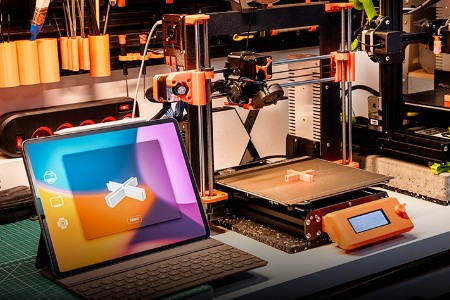
以3D打印为例,Meshy-6将生成链路第一次做到了足够顺。一张照片上传,一分钟出基础模型,再过一分钟补完PBR贴图。整个链路已经不是只做演示的状态,更像一个可以接进后续工作流的工具。

2026年3月,拓竹科技把Meshy接进了MakerWorld的MakerLab——一张照片上传,两分钟后就能下载到一个可以直接切片打印的3MF文件。

这件事放在一年前还做不到,当时AI生成的3D模型精度过不了3D打印最现实的几道门槛。

过去一年,Meshy的ARR增长约12倍,目前ARR已达6000万美元。

过去两年内长期保持20%到30%的月环比增长。毛利85%,LTV/CAC大于4,一半以上的增长来自自然流量。

在多数AI公司仍难以跑通商业化的当下,Meshy以真实的营收持续巩固其在AI 3D领域的领先地位。

增长的动力来自B端和C端两端。

B端方面,全球市值与估值排名前十的科技公司中,已有一半成为Meshy的客户。客户与合作机构涵盖游戏领域的Nexon、网易游戏、三七互娱,3D打印领域的拓竹、创想三维、爱乐酷、闪铸、xTool,以及Hugo Boss、瑞典艺术与设计博物馆等全球知名品牌与文化机构。

C端的增长则主要来自3D打印和游戏两个垂直行业。

3D打印本身正在走出小众——市场研究机构CONTEXT的数据显示,2025年四季度,2500美元以下的入门级机型出货量同比增长47%,收入增长53%。

而AI把生成的门槛进一步降低:早年用户想打印点什么,多半只能去社区里翻别人上传的现成模型;当AI把生成这件事做得越来越顺,愿意动手打印的人反而多了起来。

一场关于AI 3D生成的资本竞赛

Meshy所在的AI 3D生成赛道,正经历着一场前所未有的资本与技术的双重竞赛。

2026年以来,头部玩家在短短数月内合计融资超过15亿美元。

国内方面,影眸科技(Hyper3D)是这条赛道上不可忽视的力量。这家成立于2020年的公司,核心团队来自上海科技大学。(延伸阅读→被黄仁勋“pick”的3D生成初创公司,完成数亿元新融资,海外收入占八成)

2026年6月,影眸完成新一轮数亿元融资,由凯辉基金、上海国投先导领投,老股东持续跟投。

影眸以3D生成大模型Rodin为引擎,定位于面向真实工业流程的高质量、可控、生产级3D资产生成。2026年1月发布Rodin Gen-2 Edit,整合了“3D生成”与“3D编辑”功能;6月发布Hyper3D Rodin Gen-2.5,这是全球首个具备千万面级生成能力的3D大模型,首次将类大语言模型的“先思考、再生成”运行逻辑引入3D生成领域。

影眸的客户包括字节跳动、Unity、Figma、Canva等企业,海外收入占总收入约80%。英伟达CEO黄仁勋在CES 2026展示机器人时所呈现的3D画面,其生成任务也由Hyper3D完成。

另一家国内玩家VAST(三启万物),由前MiniMax联合创始人宋亚宸于2023年创立。(延伸阅读→97年文科生,两个月狂揽13亿)2026年7月,VAST完成超10亿元A3战略轮融资,投资方涵盖吉利资本、4399游戏、巨人网络、复星集团等产业方。

其核心产品Tripo Studio是一站式AI 3D资产生成工作台,用户可通过文本或图片在数秒至数分钟内生成可直接导入Unity、Unreal Engine等工业管线的生产级3D模型。旗舰模型Tripo P1.0能在约2秒内直接输出拓扑干净、布线合理、符合工业标准的清洁模型。

截至2026年中,Tripo平台已累计服务超650万全球创作者,生成3D资产接近1亿个,ARR达1200万美元,80%以上用户来自海外。

国际市场上,Luma AI是Meshy最直接的全球对手之一。

这家成立于2021年的美国公司,技术布局覆盖图像、3D与视频生成领域。2025年11月,Luma完成9亿美元C轮融资,由沙特公共投资基金旗下HUMAIN领投,AMD Ventures参投,估值约40亿美元。截至2026年初,Luma已累计融资超10亿美元,服务超过3000万注册用户。

Luma的实景3D捕捉(用手机拍一圈照片生成3D模型)和视频转3D功能是其独有优势。Luma近期将总部从硅谷迁至伦敦,目标在2026年底前覆盖欧洲12国制造业客户,拿下3D生成式AI市场25%的份额。

从融资节奏来看,这条赛道正在快速“收敛”——资本不再撒网式布局,而是集中押注头部玩家。

资本的热情背后是一个清晰的逻辑:3D被公认为多模态里最硬的一块,因为它要求一支团队同时掌握图形学和大模型训练两套能力。也正因为难,它更可能成为未来物理世界AI的一块基座。

AI 3D生成正在从“技术验证期”走向“商业化兑现期”。

但喧嚣之下,真正的考验才刚刚开始——当技术红利逐渐摊薄,产品能否真正嵌入产业工作流、能否持续产生健康的单位经济模型,才是决定谁能“留在牌桌上”的关键。

3D是物理世界的数字镜像,而AI正在以惊人的速度缩短镜像与现实之间的距离。这条赛道的故事远未结束,甚至才刚刚进入最精彩的部分。

注:文/晨阳,文章来源:创业邦(公众号ID:ichuangyebang ),本文为作者独立观点,不代表亿邦动力立场。

文章来源:创业邦

广告
微信
朋友圈

FAQ回顾

AI 3D生成平台Meshy有哪些核心功能?

Meshy支持文字转3D、图像转3D、AI上色、动画以及API工作流,用户可输入文本描述或参考图片生成可预览、可编辑、可导出的3D资产,可应用于游戏开发、3D打印、AR/VR、产品设计等场景,过去需专业团队两周完成的3D制作工作,如今一分钟、一美元即可完成。

AI 3D生成赛道当前有哪些头部企业?

国内AI 3D生成赛道头部玩家包括Meshy、影眸科技(Hyper3D)、VAST(三启万物),国际市场代表玩家为美国的Luma AI;2026年以来头部玩家合计融资超15亿美元,资本已开始集中押注头部企业,赛道正从技术验证期走向商业化兑现期。

Meshy的商业化运营数据表现如何?

Meshy目前ARR达6000万美元,过去一年ARR增长约12倍,近两年长期保持20%至30%的月环比增长,毛利85%,LTV/CAC大于4,一半以上的增长来自自然流量,全球市值前十的科技公司中已有半数成为其B端客户。

这么好看,分享一下?

朋友圈 分享

APP内打开

+1
+1
微信好友 朋友圈 新浪微博 QQ空间
关闭
收藏成功
发送
/140 0