广告
加载中

从“赛博逛展WAIC”到机甲徒步 傲鲨VIATRIX如何走向真实户外?

龚作仁 2026-07-20 13:27
龚作仁 2026/07/20 13:27

邦小白快读

EN
全文速览

这篇文章介绍了傲鲨智能推出的消费级户外外骨骼品牌VIATRIX,从工业场景落地大众户外场景的发展过程,核心干货如下

1. VIATRIX消费级外骨骼可以为走路、站立、徒步登山等场景提供下肢助力,能抵消30-60%的体能负荷,减轻腿部负担,降低体能消耗,普通人也能借助它降低户外出行的体能门槛

2. 产品核心优势来自三大技术:自研车规级动力系统提供稳定助力,AI运动部署能跟随用户步态调整助力节奏,浮动式髋关节架构减少动作束缚,可实现人机无感协同,长时间穿戴也比较舒适

3. 目前品牌已经打造了机甲徒步IP,在多个户外地点开放体验,还和多所高校户外社团合作,普通人可以参与体验这类新型户外装备

本文为新科技消费品牌的产品研发和品牌营销提供了可参考的实践样本,核心干货如下

1. 产品研发层面,可以依托原有B端工业技术积累延伸切入C端新赛道,不要只追求参数亮眼,要围绕真实使用场景打磨用户体验,针对复杂户外场景优化算法和机械结构,解决用户最关心的穿戴舒适度、动作跟随性问题

2. 品牌营销层面,借助权威大型展会WAIC做场景化体验营销,先从逛展这种低门槛的城市场景切入,让用户直观理解产品价值,再逐步延伸到核心户外场景

3. 用户教育层面,针对新兴品类打造专属活动IP,通过布局多个户外点位、和高校社团合作积累社群,逐步建立用户认知,打造品类辨识度

本文揭示了户外科技领域的新增长机会,也给出了新品类落地的经验和风险提示,核心干货如下

1. 机会层面,当前户外科技装备正从基础防护、状态感知向运动能力增强方向升级,消费级外骨骼作为全新品类,可以帮助普通人降低徒步、登山的体能门槛,吸引更多人参与户外运动,市场增长空间广阔

2. 经营启示:新科技消费品不要只停留在参数展示阶段,要深入真实使用场景打磨产品,通过场景化体验完成用户教育,逐步建立用户对新品类的认知

3. 风险提示:未来消费级外骨骼的竞争核心不再是参数高低比拼,而是谁能率先找到稳定的使用场景,让产品融入用户的行动方式,没能完成场景落地的玩家会被市场淘汰

本文为制造工厂尤其是有工业机器人、外骨骼生产经验的工厂,提供了转型方向和商业机会参考,核心干货如下

1. 商业机会层面,当前户外消费市场持续升级,用户对能够增强运动能力的科技装备需求兴起,消费级户外外骨骼是全新的蓝海赛道,有相关制造基础的工厂可以切入相关产业链,分享新赛道红利

2. 产品生产设计启示:产品开发不能只堆技术参数,要围绕真实使用场景优化设计,针对户外场景坡度变化、步幅重心变化的特点,优化算法和机械结构,提升用户穿戴体验

3. 转型启示:原本做工业级产品的工厂,可以依托已有的技术积累,延伸开发消费级产品线,切入大众消费市场,拓展新的增长空间,AI动作识别这类数字化技术是产品开发的核心竞争力,需要提前布局

本文梳理了消费级外骨骼行业的发展趋势和当前行业痛点,给相关服务商带来了不少干货参考,核心干货如下

1. 行业发展趋势:外骨骼已经完成从工业生产应用向大众消费户外场景的延伸,未来很可能像智能手表、智能眼镜一样,成为户外科技装备体系的常规组成部分,行业整体会持续增长,会衍生出大量相关服务需求

2. 客户核心痛点:当前消费级外骨骼属于全新品类,品牌方最核心的需求是完成用户认知教育,落地真实使用场景,大部分品牌缺乏成熟的户外场景资源和社群运营经验

3. 业务机会:服务商可以针对性开拓新业务,比如为品牌提供户外场景资源对接、新品类社群运营服务,也可以围绕外骨骼的场景测试、算法优化提供专业技术服务,抢占新赛道的服务机会

本文为科技和户外类平台把握行业新趋势,优化运营招商提供了参考,核心干货如下

1. 行业需求:当前科技和户外品类融合趋势明显,新兴消费级户外外骨骼品牌需要平台提供曝光支持、用户触达渠道,而C端用户也对这类新奇科技体验产品有旺盛需求,平台可以抓住这个趋势拓展新品类

2. 运营优化方向:平台可以结合大型科技展会、户外赛事等活动,打造新兴科技装备的体验场景,既可以吸引流量,也能帮助品牌完成用户教育,还可以逐步建立新品类的评价标准,引导行业发展

3. 风险规避:消费级外骨骼还处于早期发展阶段,平台招商时要优先选择已经完成真实户外场景打磨、有实际落地成果的品牌,避开只堆参数没有实际体验优势的项目,降低平台的选品风险

本文记录了外骨骼产业发展的最新动向,提供了新兴科技从B端转向C端落地的鲜活研究样本,核心干货如下

1. 产业新动向:外骨骼已经不再局限于工业生产领域,开始正式切入大众消费户外场景,打破了传统机器人设备的认知边界,有望成为下一代户外科技装备的核心品类,推动整个户外装备行业升级

2. 商业模式创新:傲鲨探索出“展会低门槛体验+IP化户外活动+社群运营”的用户教育路径,为技术导向的新品类建立用户认知、完成从展品到消费品的转化提供了可研究的新模式

3. 研究启示:新兴科技消费品的竞争核心,已经从技术参数的比拼转向了场景落地能力,未来产业发展的关键是找到稳定的使用场景,推动产品融入用户现有的行动体系,这为研究科技成果转化提供了新的研究方向

返回默认
声明:快读内容全程由AI生成,请注意甄别信息。如您发现问题,请发送邮件至 run@ebrun.com 。

我是 品牌商 卖家 工厂 服务商 平台商 研究者 帮我再读一遍。

Quick Summary

This article introduces VIATRIX, the consumer-grade outdoor exoskeleton brand launched by Shanghai As Robotics, and traces its expansion from industrial applications to the mass consumer outdoor space. Key takeaways are as follows:

1. VIATRIX consumer-grade exoskeletons provide lower-body assistance for activities including walking, standing, hiking and mountaineering. They offset 30% to 60% of physical load, reduce strain on the legs and cut energy consumption, lowering the physical barrier to outdoor activities for average users.

2. The product’s core advantages stem from three core technologies: a self-developed automotive-grade power system delivers stable assistance; AI motion adjustment adapts assistance rhythm to the user’s gait; and a floating hip joint structure reduces movement restriction, enabling seamless human-machine coordination and long-term wearing comfort.

3. The brand has already built a mecha hiking IP, opened trial experience sessions at multiple outdoor locations, and partnered with outdoor clubs at multiple universities, allowing average consumers to try out this new type of outdoor equipment.

This article provides a actionable practical reference for product R&D and brand marketing for new technology consumer brands. Key takeaways are as follows:

1. For product R&D: Brands can leverage existing B-end industrial technical expertise to expand into the new C-end market. Rather than only chasing impressive specifications, brands should refine user experience around real-world use cases, optimize algorithms and mechanical structures for complex outdoor environments, and address users’ top concerns: wearing comfort and movement tracking accuracy.

2. For brand marketing: Leverage authoritative large-scale exhibitions such as WAIC for scenario-based experiential marketing. Start with low-coverage urban scenarios such as exhibition visits to let users intuitively understand product value, then gradually expand into core outdoor use cases.

3. For user education: Build a dedicated activity IP for emerging categories, accumulate community traction by setting up multiple outdoor experience spots and partnering with university outdoor clubs, gradually build user awareness and establish category recognition.

This article outlines new growth opportunities in the outdoor tech space, shares lessons for launching new categories and includes risk warnings. Key takeaways are as follows:

1. Opportunities: Outdoor tech equipment is currently upgrading from basic protection and activity tracking to performance enhancement. As an entirely new category, consumer-grade exoskeletons lower the physical barrier to hiking and mountaineering for average users, encouraging more people to participate in outdoor activities, and have broad market growth potential.

2. Operational lessons: New technology consumer products should not stop at displaying specifications. Brands must refine products through testing in real use cases, complete user education via scenario-based experience, and gradually build user awareness of the new category.

3. Risk warning: Competition in the consumer-grade exoskeleton industry will no longer center on specification comparison in the future. Instead, the key advantage will be the ability to identify stable use cases and integrate products into users’ daily activity patterns. Players that fail to achieve successful scenario adoption will be eliminated from the market.

This article provides reference on transformation directions and business opportunities for manufacturing factories, especially those with experience producing industrial robots and exoskeletons. Key takeaways are as follows:

1. Business opportunities: The outdoor consumer market continues to upgrade, and user demand for performance-enhancing tech equipment is growing rapidly. Consumer-grade outdoor exoskeletons represent an entirely new blue-ocean market. Factories with relevant manufacturing foundation can enter the industry chain and capture the dividends of this new track.

2. Product design and manufacturing lessons: Product development should not only focus on stacking technical specifications. Instead, design should be optimized around real use cases: for outdoor scenarios with changing slopes, stride lengths and center of gravity, brands should refine algorithms and mechanical structures to improve the overall wearing experience.

3. Transformation lessons: Factories that originally produced industrial products can leverage their existing technical积累 to develop consumer-grade product lines, enter the mass consumer market, and open up new growth space. Digital technologies such as AI motion recognition are core competitive advantages for product development, and should be deployed in advance.

This article sorts out development trends and current pain points in the consumer-grade exoskeleton industry, and provides actionable insights for relevant service providers. Key takeaways are as follows:

1. Industry development trends: Exoskeletons have completed their expansion from industrial production applications to mass consumer outdoor scenarios. In the future, they are likely to become a standard part of the outdoor tech equipment ecosystem, just like smart watches and smart glasses. The overall industry will continue to grow, and a large number of related service demands will emerge.

2. Core client pain points: As consumer-grade exoskeletons are still an entirely new category, brand owners’ top priority is building user awareness and achieving real-world scenario adoption. Most brands lack mature access to outdoor scenario resources and community operation experience.

3. Business opportunities: Service providers can develop targeted new business lines. For example, they can offer brands outdoor resource matching and new category community operation services, or provide professional technical services for scenario testing and algorithm optimization for exoskeletons, to capture service opportunities in this new track.

This article provides reference for technology and outdoor platforms to grasp new industry trends and optimize operations and merchant recruitment. Key takeaways are as follows:

1. Industry demand: The integration of technology and outdoor categories is accelerating. Emerging consumer-grade outdoor exoskeleton brands need platforms to provide exposure support and user access channels, while end consumers have strong demand for these novel tech experience products. Platforms can seize this trend to expand into the new category.

2. Operational optimization: Platforms can build experience scenarios for emerging tech equipment by partnering with large-scale tech exhibitions and outdoor events. This not only drives traffic, but also helps brands complete user education, and allows platforms to gradually establish evaluation standards for the new category to guide industry development.

3. Risk mitigation: Consumer-grade exoskeletons are still in an early development stage. When recruiting merchants, platforms should prioritize brands that have already refined their products in real outdoor scenarios and achieved tangible on-the-ground results, and avoid projects that only stack specifications without actual experience advantages, to reduce platform selection risk.

This article documents the latest developments in the exoskeleton industry, and provides a vivid research case of emerging technology transitioning from B2B to B2C adoption. Key takeaways are as follows:

1. New industry developments: Exoskeletons are no longer limited to industrial production applications, and have officially entered the mass consumer outdoor market, breaking the traditional cognitive boundary of robotic equipment. They are expected to become a core category of next-generation outdoor tech equipment, driving the upgrade of the entire outdoor equipment industry.

2. Business model innovation: As Robotics has developed a user education path of "low-threshold exhibition experience + IP-based outdoor activities + community operation", which provides a researchable new model for technology-driven new categories to build user awareness and complete the conversion from exhibit to consumer product.

3. Research insights: The core competition for emerging technology consumer products has shifted from a race of technical specifications to scenario adoption capability. The key to future industry development is to identify stable use cases and integrate products into users’ existing activity patterns. This provides a new research direction for the study of technology commercialization.

Disclaimer: The "Quick Summary" content is entirely generated by AI. Please exercise discretion when interpreting the information. For issues or corrections, please email run@ebrun.com .

I am a Brand Seller Factory Service Provider Marketplace Seller Researcher Read it again.

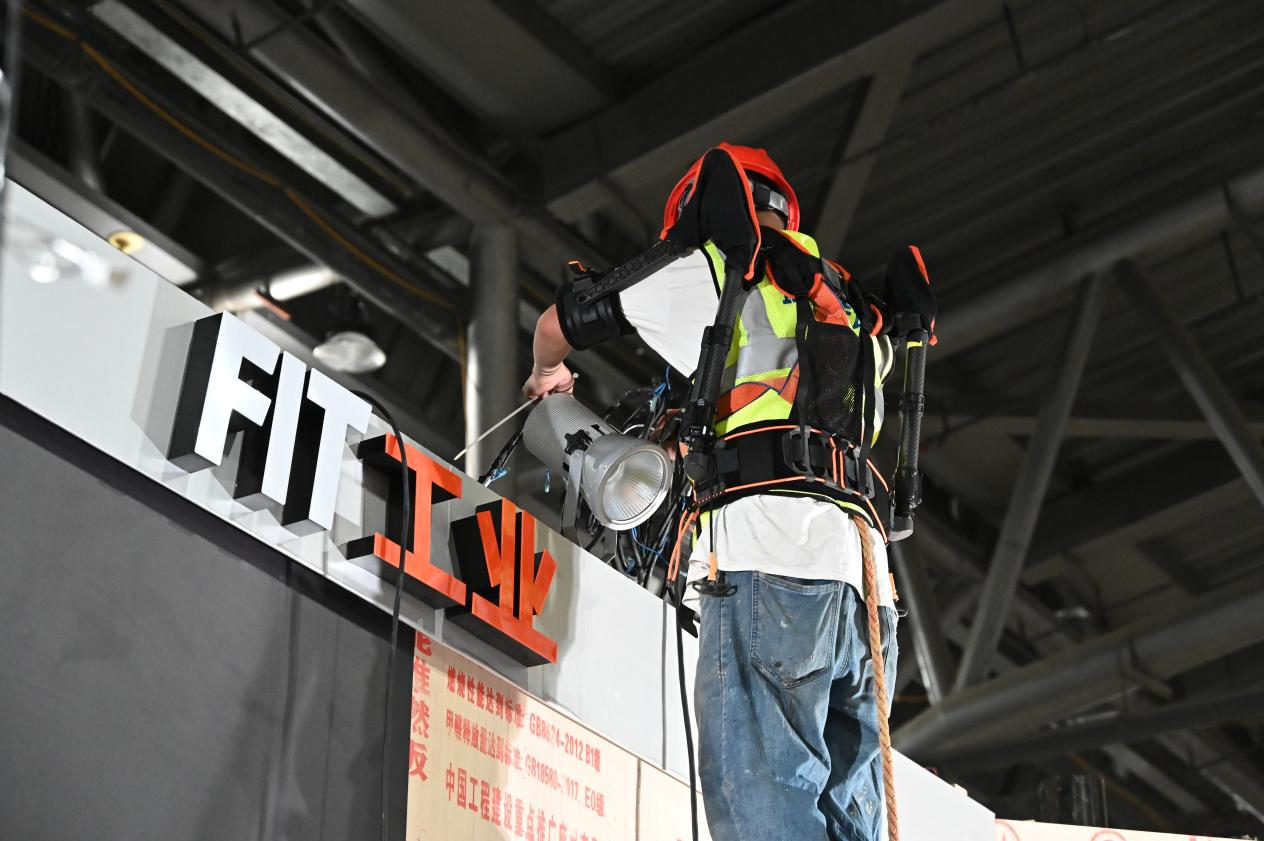
在2026世界人工智能大会开幕前,一批“展品”已经提前进入场馆,深度参与物料搬运、设备托举和站台搭建。

这是傲鲨智能展台的“机甲搭建”工作模式,也是WAIC展台搭建现场第一次引入外骨骼机器人。工人们身穿傲鲨工业级外骨骼机器人,能抵消30-60%的体能负荷,更轻松地完成施工任务。开展后,傲鲨旗下消费级外骨骼品牌VIATRIX则化身逛展神器,为观众带来新奇的“赛博逛展”体验。

从工业行业应用到大众户外消费,外骨骼正成为生产与生活中的实用装备。对于消费级外骨骼而言,徒步、登山等户外场景更能集中检验其综合能力。WAIC则像是提供了一个行业观察窗口:当外骨骼真正进入复杂环境,需要接受哪些技术检验?

“赛博逛展”,为什么不能只看参数?

展台幕后搭建检验的是工业级应用,而“赛博逛展”,则是一次面向普通用户的消费级体验落地。

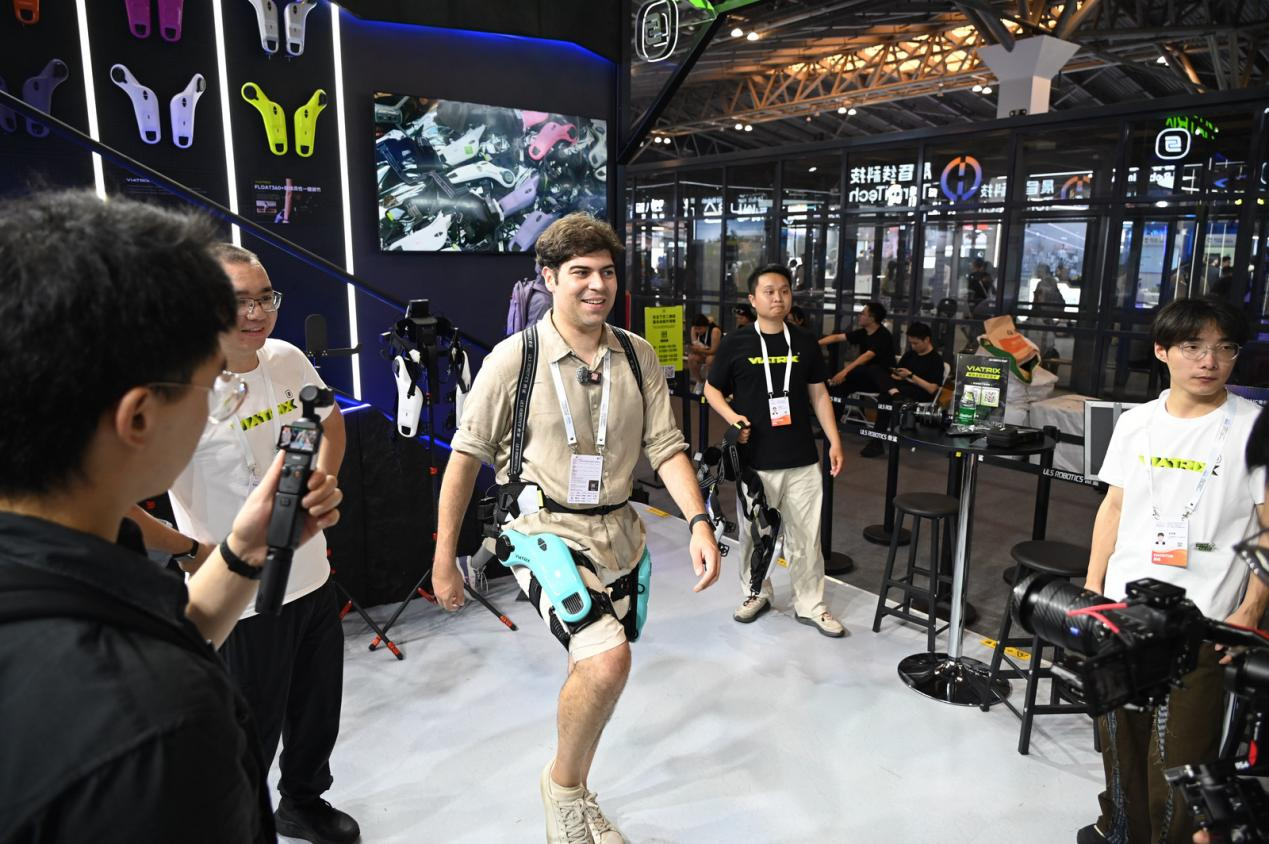
大型展会意味着长时间的步行,以及频繁启停、转向、变速和长时间站立。VIATRIX提供的下肢助力,能够让普通用户直接感受到腿部负担的减轻和体能消耗的降低。

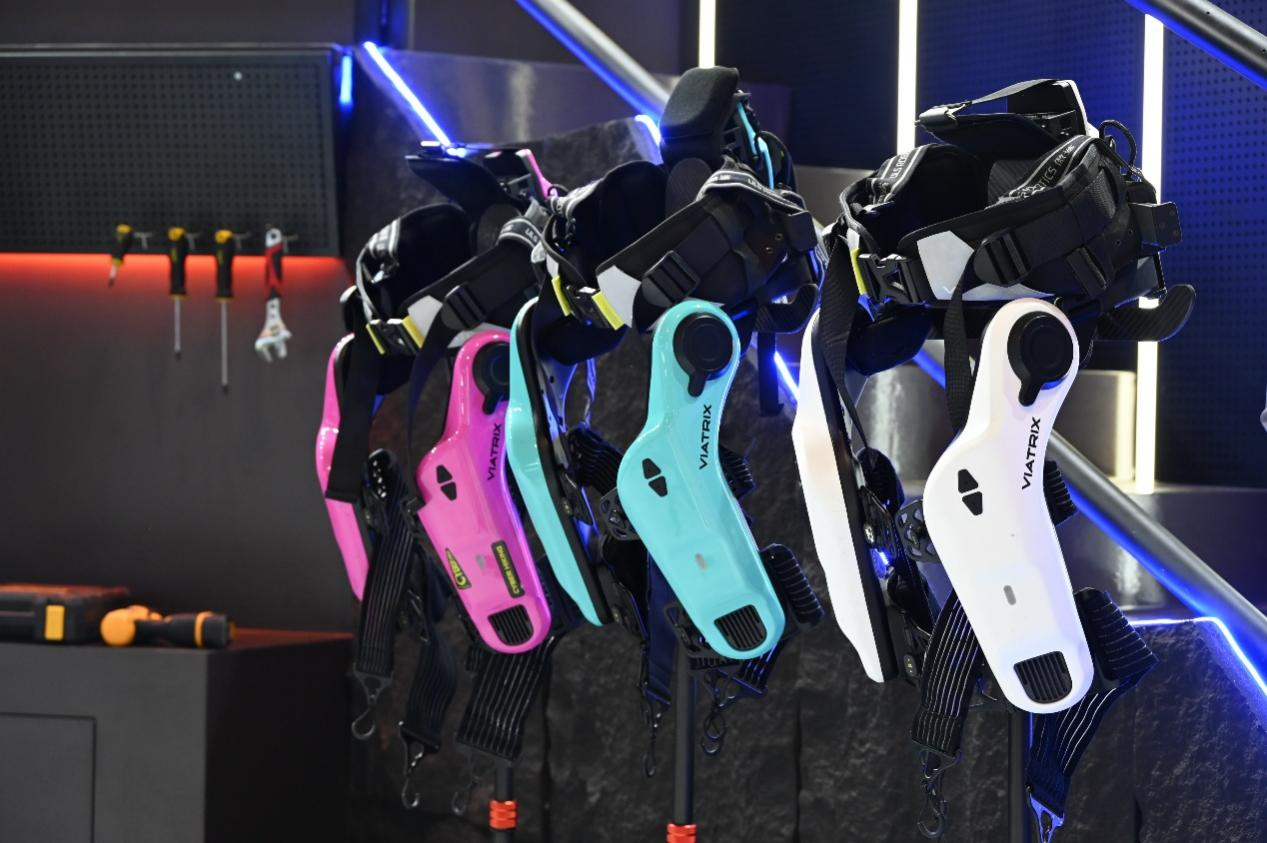
对于消费级外骨骼而言,难点不在于助力行走,还要让设备的动力持续平顺输出,并跟得上人的动作,尽量减少机械束缚感。VIATRIX具备三大核心技术:自研车规级动力系统,在行走和爬升过程中提供强劲稳定的助力,AI运动部署可根据使用者的步态和运动状态调整助力节奏,Flaot360浮动式髋关节架构则为转身、跨步等多方向动作保留活动空间。

在运动过程中,算法系统会持续采集动作和环境数据,并结合机械架构的反馈实时修正,二者形成动态闭环,使助力随步态不断调整,减少设备对自然行走的干扰,实现人机无感协同。

这也解释了消费级外骨骼为什么必须走出参数展示。助力比例、重量和续航固然重要,但普通用户最终关心的,是它是否容易穿戴,能否跟上自己的步伐,走上几个小时后是否依然舒适。

不过,逛展并不是最能体现VIATRIX产品价值的场景。相比展馆内平整的地面,徒步、登山等场景需要面对坡度变化、复杂路面,及不断变化的步幅和身体重心。此时,产品不仅需要识别用户步态,还要根据动作变化持续调整助力。

这也使VIATRIX的技术特点与户外场景形成了更直接的对应:AI能力应对不断变化的运动状态,机械架构降低复杂动作中的结构束缚;续航、响应速度和长时间穿戴舒适度,也只有在真实户外线路中才能得到更充分的检验。

因此,“赛博逛展”更像是一次城市样本,让消费者先理解外骨骼能做什么,再将能力延伸至真正的户外场景。

从展馆走向山野,“机甲徒步”让外骨骼进入户外人群

去年WAIC期间,傲鲨正式发布VIATRIX,进入消费级外骨骼市场。时隔一年再次回到WAIC,VIATRIX已经不再只是一款等待被认识的新品,而是带着过去一年在户外场景中的阶段性成果亮相。

围绕VIATRIX户外消费级外骨骼品牌的产品定位,傲鲨打造了“机甲徒步”活动IP,持续拓展户外实践,目前已进入杭州金紫尖、新疆库尔德宁、昆明马头山、深圳梅林后山等多个户外地点,并与清华、哈工大、上海交大等高校户外社团开展合作。让消费者直观感受到外骨骼在爬升、长距离行走中的下肢助力效果,在真实的户外环境下感受机甲徒步与机甲登山的独特体验。

对于一个仍然新鲜的消费品类而言,用户首先需要建立一套能够理解它的语言。随着线路、活动和社群持续积累,“机甲徒步”在户外圈和AI科技圈已逐渐形成一定辨识度,也为观察消费级户外外骨骼能否进入下一代户外可穿戴科技装备体系,提供了一个现实样本。

下一代户外科技装备,会是一副外骨骼吗?

从产品形态看,VIATRIX正在试图突破传统机器人设备的认知边界。

当智能手表能够记录心率、轨迹和身体状态,智能眼镜能够拍摄并分享第一视角,户外科技装备已经从基础防护与辅助,逐渐走向对运动过程的感知和交互。消费级外骨骼则更进一步,通过识别步态和提供动力辅助增强人的行动能力,直接介入运动过程。

这也为户外科技装备市场提供了新的想象空间。未来,外骨骼未必只是一个独立的机器人品类,也可能像智能手表、眼镜一样,成为户外科技装备体系中的新成员。它的价值不只是让专业玩家走得更轻松,也可能帮助更多普通人降低参与徒步、登山的体能门槛。

从WAIC展馆中的“赛博逛展”,到山野间的“机甲徒步”,VIATRIX正在完成一次从都市体验到户外应用的场景延伸。傲鲨所探索的,也不只是如何销售一款消费级外骨骼,而是在为一种新的户外科技装备建立认知、体验方式和使用文化。

当外骨骼逐渐从技术展品变成生产与生活中的实用装备,下一步的竞争将不再只是参数高低,而是谁能率先找到稳定的使用场景,并让产品真正融入用户的行动方式。

注:文/龚作仁,文章来源:Laborer,本文为作者独立观点,不代表亿邦动力立场。

文章来源:Laborer

广告
微信
朋友圈

FAQ回顾

消费级外骨骼可以应用在哪些场景?

消费级外骨骼可应用于大型展会逛展、徒步、登山等场景,能帮助用户降低长时间步行、爬升过程中的腿部负担与体能消耗;工业级外骨骼还可用于展台搭建、物料搬运等施工场景,抵消30-60%的体能负荷。

VIATRIX消费级外骨骼的核心技术有哪些?

VIATRIX消费级外骨骼拥有三大核心技术,分别是自研车规级动力系统、AI运动部署技术、Flaot360浮动式髋关节架构,可实现动力稳定输出、随步态动态调整助力、多方向动作无束缚,达成人机无感协同效果。

机甲徒步是什么活动?

机甲徒步是傲鲨围绕旗下消费级外骨骼品牌VIATRIX打造的活动IP,目前已落地杭州金紫尖、新疆库尔德宁等多个户外地点,还与清华、哈工大等多所高校户外社团合作,可让用户直观感受外骨骼的下肢助力效果。

消费级外骨骼未来的发展趋势是什么?

消费级外骨骼未来有望成为继智能手表、智能眼镜之后的新一代户外科技装备,行业竞争将不再以参数高低为核心,而是聚焦稳定使用场景探索,降低普通用户参与徒步、登山等户外活动的体能门槛。

这么好看,分享一下?

朋友圈 分享

APP内打开

+1
+1
微信好友 朋友圈 新浪微博 QQ空间
关闭
收藏成功
发送
/140 0