广告
加载中

集群品牌+AI 工业品加入全球化战队:脉链徐伟强将出席2026全球化新品牌AI竞争力大会

亿邦会展 2026-06-30 17:17
亿邦会展 2026/06/30 17:17

邦小白快读

EN
全文速览

总:本文主要披露了即将举办的全球化跨境电商行业盛会核心信息,以及工业品出海的创新实操模式,核心干货如下

1. 行业盛会基本信息:第十届全球跨境电商峰会暨2026全球化新品牌AI竞争力大会将于7月23日在杭州举办,主题为“抢跑科技美学”,由亿邦动力主办,汇聚了B2B、B2C平台决策层,各领域服务商代表以及红杉中国等知名机构投资人,覆盖全品类出海案例分享,是跨境出海领域的年度风向标盛会。

2. 脉链的创新出海成果:脉链由深耕五金行业三十年的徐伟强打造,目前已经汇聚500多家生产企业,业务遍及全球100多个国家,创新推出“集群品牌+AI”抱团出海模式,打造了4个产业集群品牌,在非洲已经建成覆盖3.5万个零售终端的供应链网络,还入选了2025浙商出海非洲经典案例。

总:本文为工业品品牌商出海提供了趋势判断、可借鉴的品牌建设路径和渠道拓展经验,核心内容如下

1. 行业与消费趋势判断:当前中国制造业品牌在海外市场占比仅3%,未来十年将提升至50%到60%,中国出海企业未来核心利润来源是服务利润,工业品出海整体增长空间巨大。

2. 品牌建设创新模式:可走“集群品牌+AI”路线,整合产业资源共同打造多个差异化定位的集群品牌,依托AI驱动数字化提升运营效率,解决海外用户信任问题,比单个中小品牌单独出海成本更低、风险更小。

3. 渠道建设经验:可以同时布局欧美成熟市场和一带一路、非洲、新兴经济体市场,依托产业带选品中心联动全球双循环服务中心,发展区域合伙人拓展本地零售渠道,快速下沉市场。

总:本文为出海卖家提供了明确的市场机会、可复制的创新商业模式以及资源对接渠道,核心干货如下

1. 新的增长机会判断:工业品出海目前处于蓝海阶段,中国制造业品牌海外占比极低,未来十年有近20倍的增长空间,一带一路沿线、非洲、中亚南亚新兴市场都有大量未被满足的需求,增量机会多。

2. 可借鉴的低风险出海模式:可以参考脉链的“平台+机制+合伙人”模式,依托平台的品牌、渠道、数字化能力,以合伙人身份参与出海,各擅所长、各拿收益,不用单独承担全链条成本,降低出海风险。

3. 资源对接机会:7月在杭州举办的全球跨境电商峰会汇聚了平台、资本、服务商等全链路资源,卖家可以参与对接合作,获取最新行业信息。

总:本文为国内工业品生产工厂提供了清晰的出海方向、商业合作机会和数字化转型启示,核心内容如下

1. 可对接的出海商业机会:脉链目前已经建成覆盖全球100多个国家的渠道网络,还和浙江中国科技五金城集团共建了“永武缙五金产业带选品中心”,面向中小企业开放赋能,国内工厂可以接入平台,直接对接全球渠道资源,不用自行搭建出海体系。

2. 产品方向启示:当前出海已经从代工生产转向品牌化运营,平台需要多品类的工业品供给,涵盖电动工具、手工具、园林工具等13个大类,工厂可以根据平台需求调整生产和设计,匹配海外市场需求。

3. 转型启示:未来中国工厂出海不能只赚生产加工的利润,要依托产业集群和平台,走品牌化、数字化路线,分享品牌和服务的利润,整体利润空间会更大。

总:本文为出海服务商呈现了行业发展新趋势、客户核心痛点和可参考的成熟解决方案,核心内容如下

1. 行业发展新趋势:工业品出海已经从传统的单个企业代工出口,转向产业集群抱团品牌化出海,AI数字化赋能是行业核心需求,中国工业品出海整体增长空间大,对产业服务基础设施的需求会持续增长。

2. 客户核心痛点:大量中小制造企业想要出海,但普遍缺品牌、缺海外渠道、缺数字化运营能力,单个企业出海成本高、风险大,很难依靠自身能力完成全球化布局。

3. 可复制的解决方案:参考脉链的模式,搭建产业服务互联网平台,制定透明规则,用AI驱动数字化提效获信,整合行业龙头和中小工厂,以合伙人模式绑定各方利益,整合资源共同出海,既解决了客户痛点,也能实现自身发展。

总:本文为出海产业服务平台提供了可借鉴的运营模式、招商拓展方向和风险规避思路,核心内容如下

1. 可借鉴的生态运营模式:平台不需要包揽所有业务,只需要搭建产业服务基础设施、制定透明公开的规则,用AI驱动数字化提升效率,吸引行业龙头作为生态合伙人,把传统的雇佣关系转为合作共赢关系,调动各方积极性,降低平台自身的运营成本。

2. 招商和拓展方向:一方面可以深度对接地方产业带,和地方产业集团合作共建选品中心,批量吸纳优质中小生产企业入驻;另一方面可以发展全球区域合伙人,快速拓展新兴市场的本地渠道,降低全球化拓展的风险。

3. 品牌布局方向:可以打造多个差异化定位的产业集群品牌,覆盖不同品类不同层级的市场需求,匹配不同区域用户的偏好,提升整体市场占有率。

总:本文为产业研究者呈现了中国工业品出海领域的最新产业动向、创新商业模式和核心行业判断,具备较高的研究价值,核心内容如下

1. 最新产业新动向:中国工业品出海已经完成了从代工出口到品牌化出海的转型,当前出现了产业集群整合出海的新趋势,AI+产业互联网成为出海的核心驱动力量,出海市场也从传统欧美市场延伸到一带一路、非洲等新兴市场,整体增长空间巨大。

2. 创新商业模式研究:诞生了“集群品牌+AI”“平台+机制+合伙人”的抱团出海新模式,区别于传统单个企业出海或者代工模式,通过整合全产业资源,按能力分润,有效降低了中小主体出海的门槛和风险,已经验证了可行性,脉链的案例入选了浙商出海经典案例。

3. 核心行业判断:提出中国制造业品牌海外占比将从当前的3%,十年内提升至50%-60%,出海企业未来要赚服务利润的核心观点,为产业研究提供了新的研究方向。

返回默认
声明:快读内容全程由AI生成,请注意甄别信息。如您发现问题,请发送邮件至 run@ebrun.com 。

我是 品牌商 卖家 工厂 服务商 平台商 研究者 帮我再读一遍。

Quick Summary

This article discloses key details of an upcoming major global cross-border e-commerce industry event and introduces an innovative practical go-global model for Chinese industrial goods. Key takeaways are as follows:

1. Basic information about the industry event: The 10th Global Cross-Border E-Commerce Summit & 2026 Global New Brands AI Competitiveness Conference, hosted by Yibang Power, will be held in Hangzhou on July 23 with the theme "Get a Head Start on Tech Aesthetics". The annual flagship event for cross-border go-global will gather decision-makers from B2B and B2C platforms, representatives of service providers across all sectors, and prominent investors such as Sequoia China, and will feature case studies covering all cross-border categories, serving as a key industry bellwether.

2. Innovative go-global achievements from Mailian: Founded by Xu Weiqiang, who has deep roots in the hardware industry for 30 years, Mailian has brought together more than 500 Chinese manufacturers and operates in over 100 countries worldwide. It has pioneered the "cluster brand + AI" collective go-global model and built four industrial cluster brands. It has established a supply chain network covering 35,000 retail terminals in Africa, and its case has been selected as one of the 2025 Classic Cases of Zhejiang Businesses Going Global to Africa.

This article provides trend insights, actionable brand building pathways and channel expansion experience for industrial goods brands going global. Key content is as follows:

1. Industry and consumer trend analysis: Chinese manufacturing brands currently hold only a 3% market share in overseas markets, and this figure is projected to rise to 50-60% over the next decade. For Chinese go-global enterprises, service revenue will become the core source of profit going forward, and the overall growth potential for Chinese industrial goods going global is enormous.

2. Innovative brand building model: Brands can adopt the "cluster brand + AI" approach, integrating industrial resources to co-build multiple cluster brands with differentiated positioning. AI-driven digitalization improves operational efficiency and resolves trust issues for overseas users, delivering lower costs and lower risks compared with small and medium-sized brands going global independently.

3. Channel expansion experience: Brands can build presence in both mature European and North American markets and emerging markets along the Belt and Road, Africa and other emerging economies. Leveraging industrial belt sourcing centers linked to global dual-cycle service centers, brands can develop regional partners to expand local retail channels and achieve rapid market penetration.

This article outlines clear market opportunities, a replicable innovative business model and resource matching opportunities for cross-border sellers. Key takeaways are as follows:

1. New growth opportunity analysis: Industrial goods going global remains a largely untapped blue ocean market. Chinese manufacturing brands currently hold very low overseas market share, with nearly 20-fold growth potential projected over the next decade. There is massive unmet demand and abundant incremental opportunities in emerging markets along the Belt and Road, Africa, Central Asia and South Asia.

2. A replicable low-risk go-global model: Sellers can adopt Mailian's "platform + mechanism + partner" model. As partners, sellers can leverage the platform's brand, channel and digital capabilities, divide labor and share returns based on each party's strengths, and avoid bearing full-chain costs independently, effectively reducing go-global risks.

3. Resource matching opportunity: The Global Cross-Border E-Commerce Summit to be held in Hangzhou this July gathers full value chain resources including platforms, capital and service providers. Sellers can attend for partnership matching and access the latest industry insights.

This article provides clear go-global directions, business cooperation opportunities and digital transformation insights for domestic Chinese industrial goods manufacturers. Key content is as follows:

1. Accessible go-global business opportunities: Mailian has already built a channel network covering more than 100 countries worldwide, and co-established the "Yongwu Jin Hardware Industrial Belt Sourcing Center" with Zhejiang China Science and Technology Hardware City Group, which opens empowerment support to small and medium-sized enterprises. Domestic factories can access the platform to connect directly with global channel resources, without the need to build an independent go-global system from scratch.

2. Product direction insights: Cross-border go-global has shifted from OEM manufacturing to brand-led operations. The platform demands a wide range of industrial goods across 13 categories including power tools, hand tools and garden tools. Factories can adjust their production and design to align with the platform's needs and match overseas market demand.

3. Transformation insights: Going forward, Chinese factories should not only rely on manufacturing and processing profits. By leveraging industrial clusters and platforms to pursue brand-building and digitalization, factories can capture profits from brands and services, unlocking much larger profit margins.

This article presents new industry development trends, core client pain points and a replicable mature solution for cross-border go-global service providers. Key content is as follows:

1. New industry development trends: Industrial goods go-global has evolved from traditional OEM exports by individual enterprises to collective, brand-led go-global by industrial clusters. AI-driven digital empowerment has become the core industry demand. With enormous overall growth potential for Chinese industrial goods going global, demand for industrial service infrastructure will continue to rise.

2. Core client pain points: A large number of small and medium-sized manufacturing enterprises are eager to go global, but generally lack brands, overseas channels and digital operation capabilities. Independent go-global brings high costs and high risks, making it difficult for most enterprises to complete global layout on their own.

3. A replicable solution: Service providers can follow Mailian's model to build an industrial service internet platform, set up transparent rules, leverage AI to drive digital efficiency and trust-building, integrate industry leaders and small and medium-sized factories, and align the interests of all parties through a partnership model. This approach resolves core client pain points while enabling sustainable growth for service providers.

This article provides a referenceable operation model, investment and expansion directions and risk mitigation strategies for industrial go-global service platforms. Key content is as follows:

1. A referenceable ecosystem operation model: Platforms do not need to handle all business functions in-house. Instead, they only need to build industrial service infrastructure, establish transparent and open rules, leverage AI to drive digital efficiency, and attract industry leaders as ecosystem partners. This transforms traditional employment relationships into win-win cooperation, mobilizes the enthusiasm of all participants, and reduces the platform's own operating costs.

2. Investment and expansion directions: On one hand, platforms can deeply connect with local industrial belts, co-build sourcing centers with local industrial groups, and onboard high-quality small and medium-sized manufacturers in batches. On the other hand, platforms can develop regional partners globally to rapidly expand local channels in emerging markets and reduce risks associated with global expansion.

3. Brand layout strategy: Platforms can build multiple industrial cluster brands with differentiated positioning to cover market demands across different categories and tiers, match user preferences in different regions, and boost overall market share.

This article presents the latest industry developments, innovative business models and core industry judgments on Chinese industrial goods going global, offering high research value. Key content is as follows:

1. Latest industry developments: Chinese industrial goods going global has completed the transition from OEM exports to brand-led go-global, and a new trend of integrated go-global by industrial clusters has emerged. AI plus industrial internet has become the core driving force for expansion. Go-global markets have also expanded from traditional European and North American markets to emerging markets such as those along the Belt and Road and Africa, with enormous overall growth potential.

2. Innovative business model research: A new collective go-global model of "cluster brand + AI" and "platform + mechanism + partner" has emerged. Unlike traditional go-global by individual enterprises or the OEM model, this new model integrates full industrial resources and distributes profits based on capabilities, effectively lowering the entry barrier and risk for small and medium-sized market entities. Its feasibility has already been verified, and the Mailian case has been selected as a classic case of Zhejiang businesses going global.

3. Core industry judgment: The article puts forward the core view that Chinese manufacturing brands' overseas market share will rise from the current 3% to 50%-60% within a decade, and that go-global enterprises will rely on service profits for growth going forward, opening up new directions for industrial research.

Disclaimer: The "Quick Summary" content is entirely generated by AI. Please exercise discretion when interpreting the information. For issues or corrections, please email run@ebrun.com .

I am a Brand Seller Factory Service Provider Marketplace Seller Researcher Read it again.

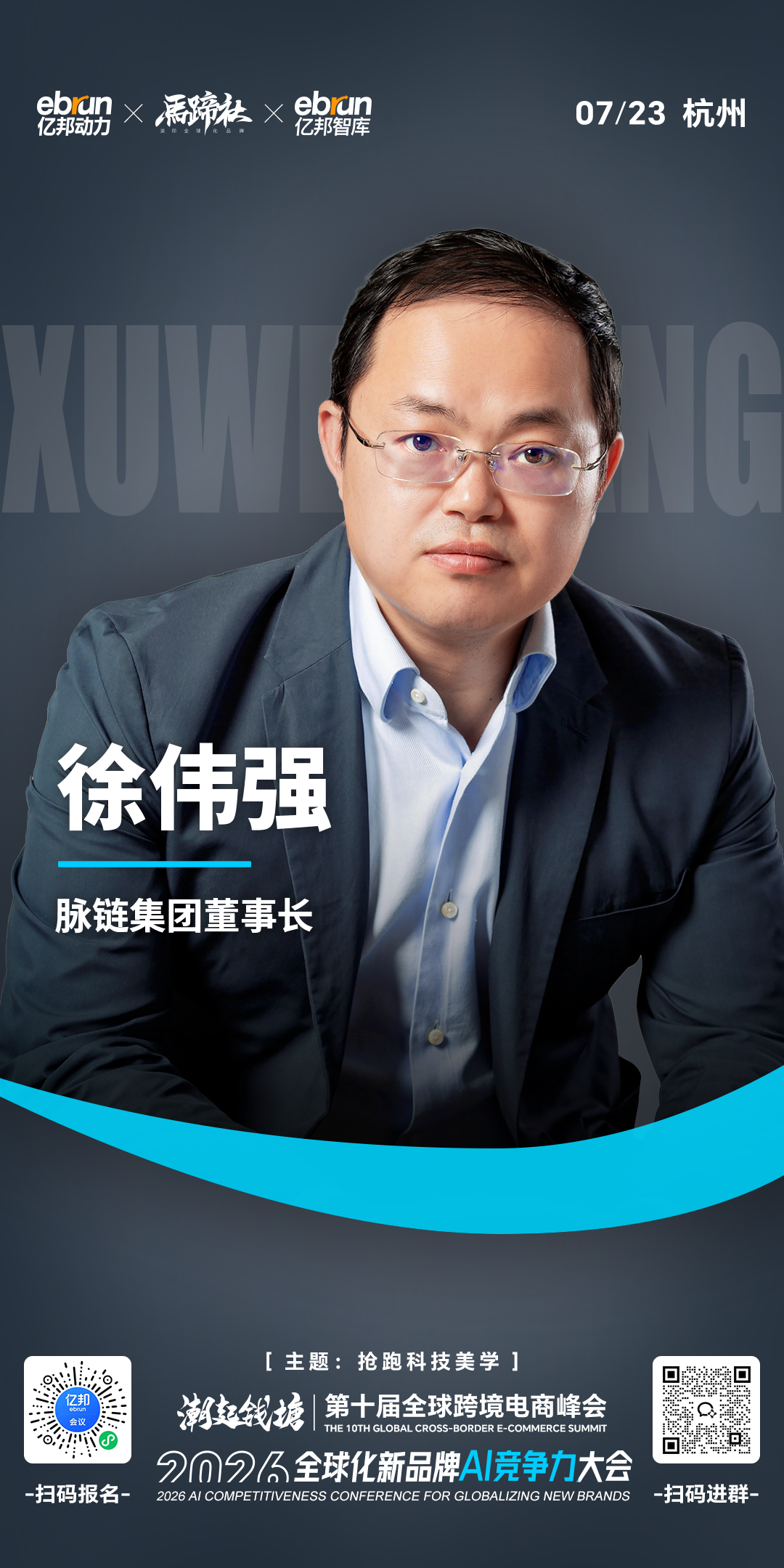
7月23日,以“抢跑科技美学”为主题,第十届全球跨境电商峰会暨2026全球化新品牌AI竞争力大会将在杭州举办。脉链集团董事长徐伟强已确认出席,将围绕“工品出海”主题,分享“集群品牌+AI”如何以全球化视角实现工业品品牌出海的共赢路径。

徐伟强先生深耕五金工具行业三十余年,其家族企业皇冠电动工具厂创办于1983年。2018年,徐伟强牵头打造全新业务脉链,依托原有皇冠品牌推进集团战略升级;企业彼时已由制造商转型为品牌服务商,借脉链业务向产业互联网服务平台进阶。如今,脉链平台已汇聚500多家生产端企业、455家五金产业带买家,业务遍及100多个国家。

脉链打造了"平台+机制+合伙人"的抱团出海新模式:平台搭建产业服务基础设施、制定透明规则,AI驱动数字化提效建信任;行业龙头作为生态合伙人,各擅所长、各拿收益,从雇佣关系转向合作共赢,共同出海。平台产品涵盖电动工具、手工具、园林工具、焊接工具等13大品类,形成CROWN(皇冠)、DWT(迪威拓)、TOSAN(托盛)、MYTOL(脉拓)4个产业集群品牌。业务遍及“一带一路”及欧美100多个国家。在非洲市场,脉链已织就一张覆盖3.5万个零售终端的供应链网络。脉链凭借“产业数字化出海”模式,入选“2025浙商出海非洲经典案例” 。

2026年4月,脉链与浙江中国科技五金城集团携手共建“永武缙五金产业带选品中心”,以平台化、数字化、品牌化全面赋能中小企业,项目将联动全球16个国家的双循环服务中心。同期,首批“可复制脉链合伙人”签约落地,覆盖哈萨克斯坦、乌克兰、俄罗斯、孟加拉、印度等5国多品类。徐伟强判断,当前中国制造业品牌在海外市场占比仅3%,但未来十年将提升至50%至60%以上,中国企业要赚的是服务的利润。

第十届全球跨境电商峰会暨2026全球化新品牌AI竞争力大会由亿邦动力主办,马蹄社、亿邦智库、全球跨境电商知识服务中心协办,是跨境及品牌全球化领域的年度风向标级盛会。大会将囊括消费品、工业品等多个品类品牌案例经验,邀请了大型B2C、B2B平台决策层,独立站、营销、物流、售后等科技服务领域代表企业或人物,还特别邀请了国家服贸基金、红杉中国、峰瑞资本、华兴资本等知名投资人,为大家呈现全球全域全品类看出海的新格局。

大会议程

文章来源:亿邦动力

广告
微信
朋友圈

FAQ回顾

脉链的工业品出海模式是什么样的?

脉链打造“平台+机制+合伙人”的抱团出海新模式,平台搭建产业服务基础设施、制定透明规则,AI驱动数字化提效建信任,行业龙头作为生态合伙人各擅所长、各拿收益,从雇佣关系转向合作共赢共同出海,目前业务已覆盖100多个国家。

中国制造业品牌出海未来发展空间怎么样?

当前中国制造业品牌在海外市场占比仅3%,预计未来十年占比将提升至50%至60%以上,中国企业可通过数字化、品牌化的出海路径,逐步从赚制造利润转向赚服务利润,整体出海发展空间十分广阔。

2026全球化新品牌AI竞争力大会有哪些参会主体?

该大会是跨境及品牌全球化领域的年度风向标级盛会,参会主体涵盖消费品、工业品等品类品牌方,大型B2C、B2B平台决策层,营销、物流等科技服务领域代表,还有国家服贸基金、红杉中国等知名投资机构投资人。

脉链在五金工品出海领域取得了哪些成果?

脉链平台已汇聚500多家生产端企业、455家五金产业带买家,业务遍及100多个国家,在非洲建成覆盖3.5万个零售终端的供应链网络,还凭借产业数字化出海模式入选2025浙商出海非洲经典案例。

这么好看,分享一下?

朋友圈 分享

APP内打开

+1
+1
微信好友 朋友圈 新浪微博 QQ空间
关闭
收藏成功
发送
/140 0