广告
加载中

松延动力携手开源鸿蒙 消费级人形机器人切入开源鸿蒙全场景生态

龚作仁 2026-06-15 17:19
龚作仁 2026/06/15 17:19

邦小白快读

EN
全文速览

本文核心信息为松延动力在华为开发者大会HDC2026上,发布了行业首款搭载开源鸿蒙的消费级人形机器人OpenHarmony版N2,同时推出行业创新生态计划,干货内容如下:

1.这款新产品解决了当前消费级人形机器人的普遍痛点,依托开源鸿蒙的微内核、跨设备联动优势,机器人可以和家中各类智能设备无缝协作,既可以当家庭智能管家打造全屋智能体验,也可以作为教育陪伴设备提供互动教学,体验比传统独立产品更好。

2.松延动力同步推出百人百机开发者共创计划,面向开发者免费提供人形机器人硬件与完善的开发环境,帮助开发者落地创新创意,未来会有更多面向普通消费者的实用功能推出,人形机器人正加速走进普通人的家庭生活。

本文梳理了消费级人形机器人行业的现状痛点与创新发展路径,对布局该赛道的品牌商有较高参考价值,干货如下:

1. 当前行业核心痛点:多数消费级人形机器人都是独立硬件,形成生态孤岛,无法和主流智能设备深度互联,跨设备开发流程繁琐,抬高研发成本拉长迭代周期,传统系统不符合轻量化低功耗趋势,制约规模化普及。

2. 品牌破局方向:可对接顶级开放生态,借助开源鸿蒙的技术优势解决行业痛点,打造跨场景互联能力,构筑除硬件外的核心竞争力。同时可借鉴生态共建思路,推出开发者扶持计划,开放资源吸引创新,还能获得生态伙伴的曝光背书,提升品牌行业影响力,巩固自身在细分赛道的领先地位。

本文给布局人形机器人赛道的卖家梳理了行业变化与机会,干货内容如下:

1. 当前行业已经从技术竞赛进入场景应用阶段,消费、教育两大核心赛道已经实现规模化落地,获得了市场认可,是明确的增长方向。

2. 新的市场机会:用户对智能互联的需求越来越高,传统产品生态孤岛的痛点突出,能对接开源鸿蒙全场景生态、可实现跨设备联动的人形机器人,适配家庭全屋智能、教育陪伴等主流需求,存在很大的市场空白。

3. 可借鉴经验与风险提示:卖家可借鉴松延动力的做法,绑定头部开放生态提升产品竞争力,布局开放生态吸引开发者丰富场景;如果只聚焦硬件、不做生态布局,很容易在后续竞争中落入下风,需要提前布局相关能力。

本文给人形机器人相关生产工厂,梳理了产品需求方向与商业机会、数字化转型启示,干货内容如下:

1. 产品生产设计需求:当前消费级人形机器人的行业发展趋势是轻量化、低功耗,传统外置系统普遍体积大、资源占用率高,不符合产品发展需求,工厂在硬件设计阶段就需要适配新型轻量化系统架构,匹配低功耗设计要求。

2. 商业机会:当前消费、教育赛道的人形机器人已经实现规模化落地,市场需求逐步释放,工厂可提前对接头部品牌,布局这两大赛道的产能,抓住行业增长红利。

3. 数字化转型启示:开放生态是行业未来的核心方向,工厂可对接开源鸿蒙这类开放生态,提升产品的互联互通能力,同时借助开放开发工具加快产品迭代,降低研发适配成本。

本文给人形机器人领域相关服务商,梳理了行业趋势、客户痛点与可落地的解决方案方向,干货内容如下:

1. 行业发展趋势:当前人形机器人行业已经从技术验证阶段进入场景落地阶段,开放生态共建是接下来行业发展的核心方向,跨设备互联互通是行业普遍需求,开源鸿蒙已经正式切入人形机器人领域,生态化发展趋势明确。

2. 客户核心痛点:当前行业全链路都存在未被满足的需求,品牌商面临生态搭建难、研发成本高的问题,开发者有创意算法却缺硬件与开发环境,整个行业面临开发门槛高、应用场景单一的问题。

3. 业务切入方向:服务商可围绕开源鸿蒙人形机器人开发配套工具链,提供底层适配、开发环境部署等服务,对接品牌商与开发者的需求,参与开放生态建设,分享行业增长红利。

本文给人形机器人相关平台商,梳理了行业需求与可参考的运营方向,干货内容如下:

1. 行业对平台的核心需求:人形机器人行业还处于发展早期,全行业都需要开放的生态支持,开发者需要低成本获得硬件与成熟开发环境,品牌商需要丰富的应用场景,中小玩家需要降低开发门槛,都离不开平台的聚合与扶持。

2. 可参考的平台运营做法:可以联合头部品牌与底层生态方,推出类似百人百机的开发者扶持计划,开放硬件资源、配套开发工具,兼容多生态与主流开发框架,降低开发者准入门槛,激活全行业创新活力。

3. 风向规避:要避免走封闭生态路线,当前行业创新需要开放协同,封闭生态会限制应用场景拓展,难以吸引开发者和品牌商入驻,开放共建才是符合行业趋势的发展路径。

本文给人形机器人领域研究者,提供了产业最新动向与创新模式参考,干货内容如下:

1. 产业最新动向:开源鸿蒙全场景生态正式切入消费级人形机器人领域,人形机器人已经成为开源鸿蒙连接家庭智能场景的重要品类,行业发展已经从早期技术竞赛进入场景落地竞争阶段,生态协同、应用拓展能力已经取代单一硬件实力,成为品牌核心竞争力。

2. 创新商业模式参考:松延动力正在探索新的产业定位,从单一的人形机器人产品制造商,转型为具身智能生态共建者,通过开放硬件、开放开发工具推出开发者共创计划,聚合行业创新丰富应用场景,形成了生态共赢的创新商业模式。

3. 待研究方向:当前行业仍存在生态孤岛、开发门槛高、硬件成本高、应用场景单一等共性问题,开放生态合作是当前已经验证的可行探索方向,还有待进一步研究规模化落地的路径。

返回默认

声明:快读内容全程由AI生成,请注意甄别信息。如您发现问题,请发送邮件至 run@ebrun.com 。

我是 品牌商 卖家 工厂 服务商 平台商 研究者 帮我再读一遍。

Quick Summary

This article covers key updates from Huawei Developer Conference 2026: Songyan Power has launched the N2 OpenHarmony, the industry's first consumer humanoid robot powered by OpenHarmony, alongside a new industry innovation ecosystem program.

1. The new robot addresses longstanding pain points of existing consumer humanoid robots. Leveraging OpenHarmony's microkernel architecture and cross-device connectivity, it seamlessly collaborates with all types of household smart devices. It can function as a smart home manager to deliver a fully connected smart home experience, or serve as an educational companion for interactive learning, offering a far better experience than traditional standalone devices.

2. Songyan Power also launched the "100 Developers, 100 Robots" co-creation program, which provides free humanoid robot hardware and a complete development environment to help developers bring their creative ideas to life. More practical features for general consumers will be rolled out in the future, accelerating the adoption of humanoid robots in ordinary households.

This article outlines current pain points and innovation pathways in the consumer humanoid robot industry, offering valuable insights for brands active in this space.

1. Core industry pain points: Most existing consumer humanoid robots operate as standalone hardware, forming isolated ecosystems that cannot deeply integrate with mainstream smart devices. Cumbersome cross-device development processes raise R&D costs and lengthen product iteration cycles, while traditional operating systems fail to align with the industry's trend toward lightweight, low-power design—all of which hold back mass market adoption.

2. Pathways to break through: Brands can resolve these pain points by integrating with a leading open ecosystem and leveraging OpenHarmony's technical advantages to build cross-scenario connectivity, developing core competitiveness beyond hardware. Brands can also adopt the ecosystem co-construction model by launching developer support programs, opening up resources to attract innovation, and gaining exposure and endorsement from ecosystem partners to boost industry influence and solidify leading positions in niche segments.

This article summarizes industry shifts and opportunities for sellers entering the humanoid robot track.

1. The industry has moved beyond pure technology competition and entered the stage of scenario application. The core consumer and education segments have already achieved mass market adoption and gained market recognition, representing clear growth directions.

2. Emerging market opportunities: As consumer demand for smart connectivity grows, the pain point of isolated product ecosystems in traditional offerings has become increasingly prominent. Humanoid robots that integrate with OpenHarmony's full-scenario ecosystem and support cross-device connectivity fit well with mainstream demand for smart home management and educational companionship, leaving significant untapped market potential.

3. Lessons and risk alerts: Sellers can follow Songyan Power's example by partnering with a leading open ecosystem to boost product competitiveness and inviting developers to expand scenario offerings. Sellers that focus solely on hardware and skip ecosystem building will likely fall behind in future competition, so relevant capabilities should be built in advance.

This article outlines product design directions, business opportunities, and digital transformation insights for humanoid robot manufacturers.

1. Product design and manufacturing requirements: The consumer humanoid robot industry is trending toward lightweight, low-power design. Traditional external operating systems are typically bulky and resource-intensive, misaligning with industry demand. Manufacturers need to adapt to new lightweight system architectures and meet low-power design requirements starting from the hardware design phase.

2. Business opportunities: Humanoid robots for the consumer and education segments have already achieved mass market adoption, with market demand gradually expanding. Manufacturers can partner with leading brands in advance and expand production capacity for these two segments to capture industry growth dividends.

3. Digital transformation insights: Open ecosystems will be the core of the industry's future. Manufacturers can integrate with open ecosystems like OpenHarmony to improve product connectivity, while leveraging open development tools to speed up product iteration and lower R&D and adaptation costs.

This article summarizes industry trends, client pain points, and actionable solution directions for service providers in the humanoid robot sector.

1. Industry trends: The humanoid robot industry has progressed from technology validation to scenario commercialization, and open ecosystem co-construction will be the core direction for future development. Cross-device connectivity is a universal industry demand, and OpenHarmony has now officially entered the humanoid robot space, with a clear trend toward ecosystem-based development.

2. Core client pain points: Unmet needs exist across the entire industry value chain. Brands face challenges in ecosystem building and high R&D costs, while developers have creative ideas and algorithms but lack access to hardware and development environments. The industry as a whole struggles with high development barriers and limited application scenarios.

3. Business entry points: Service providers can build supporting toolchains for OpenHarmony-powered humanoid robots, offering services such as underlying system adaptation and development environment deployment. By connecting the needs of brands and developers, service providers can participate in open ecosystem construction and share industry growth dividends.

This article summarizes industry demand and actionable operational directions for platform operators in the humanoid robot space.

1. Core industry demand from platforms: The humanoid robot industry is still in its early stages, and the entire sector needs open ecosystem support. Developers need low-cost access to hardware and mature development environments, brands need a diverse range of application scenarios, and small and mid-sized players need to lower development barriers—all of which rely on platform aggregation and support.

2. Recommended operational practices: Platforms can partner with leading brands and underlying ecosystem providers to launch developer support programs similar to the "100 Developers, 100 Robots" initiative. Opening up hardware resources and supporting development tools, compatible with multiple ecosystems and mainstream development frameworks, lowers entry barriers for developers and unlocks industry-wide innovation.

3. Pitfalls to avoid: Platforms should avoid building closed ecosystems. Innovation in the current industry requires open collaboration; closed ecosystems limit scenario expansion and struggle to attract developers and brands. Open co-construction is the only development path aligned with industry trends.

This article provides the latest industry updates and innovation model references for humanoid robot researchers.

1. Latest industry developments: OpenHarmony's full-scenario ecosystem has officially entered the consumer humanoid robot space, and humanoid robots have become a key product category for OpenHarmony to connect smart home scenarios. The industry has moved beyond early-stage technology competition and entered the stage of scenario commercialization competition. Ecosystem collaboration and application expansion capabilities have replaced standalone hardware performance as the core source of brand competitiveness.

2. Innovative business model reference: Songyan Power is exploring a new industry positioning, transitioning from a pure humanoid robot product manufacturer to an embodied intelligence ecosystem co-builder. Through launching a developer co-creation program that opens up hardware and development tools, the company aggregates industry innovation to expand application scenarios, forming an innovative win-win ecosystem business model.

3. Future research directions: The industry still faces common challenges including ecosystem silos, high development barriers, high hardware costs, and limited application scenarios. Open ecosystem collaboration has proven to be a viable exploration direction, but the path to large-scale commercialization still requires further research.

Disclaimer: The "Quick Summary" content is entirely generated by AI. Please exercise discretion when interpreting the information. For issues or corrections, please email run@ebrun.com .

I am a Brand Seller Factory Service Provider Marketplace Seller Researcher Read it again.

6月13日,行业首款开源鸿蒙消费级人形机器人——松延动力的OpenHarmony版N2亮相华为开发者大会HDC2026。作为开源鸿蒙生态在人形机器人领域的重要合作伙伴,松延动力在此次大会全面展示系统融合与技术探索的最新成果,加速推进技术落地与产业生态共建。

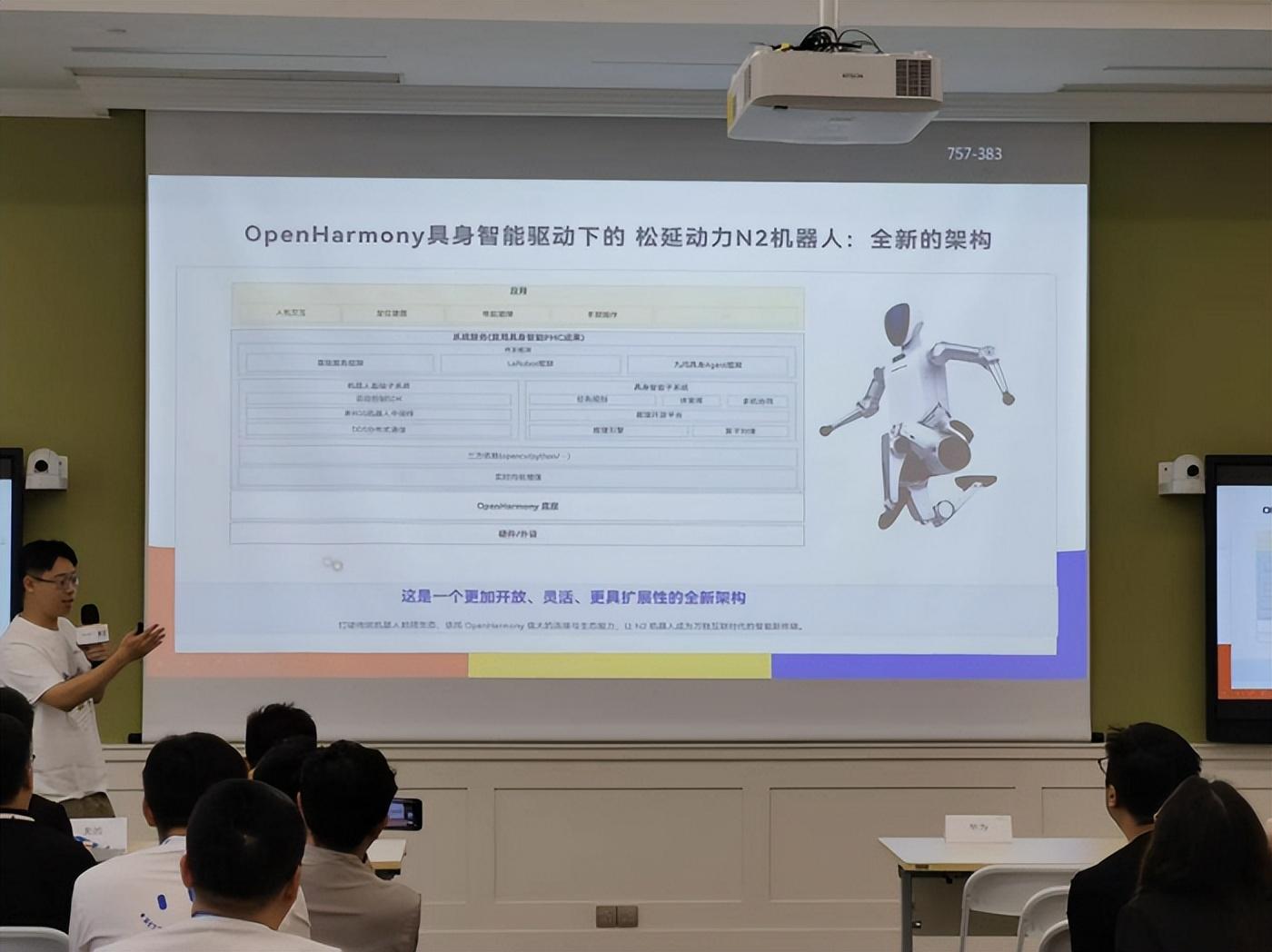
在大会OpenHarmony生态论坛上,松延动力产品副总裁唐子洋发表《开源鸿蒙与人形机器人融合案例分享》主题演讲,分享松延动力在人形机器人产品创新、系统融合和开发者生态建设方面的最新进展。

松延动力产品副总裁唐子洋发言

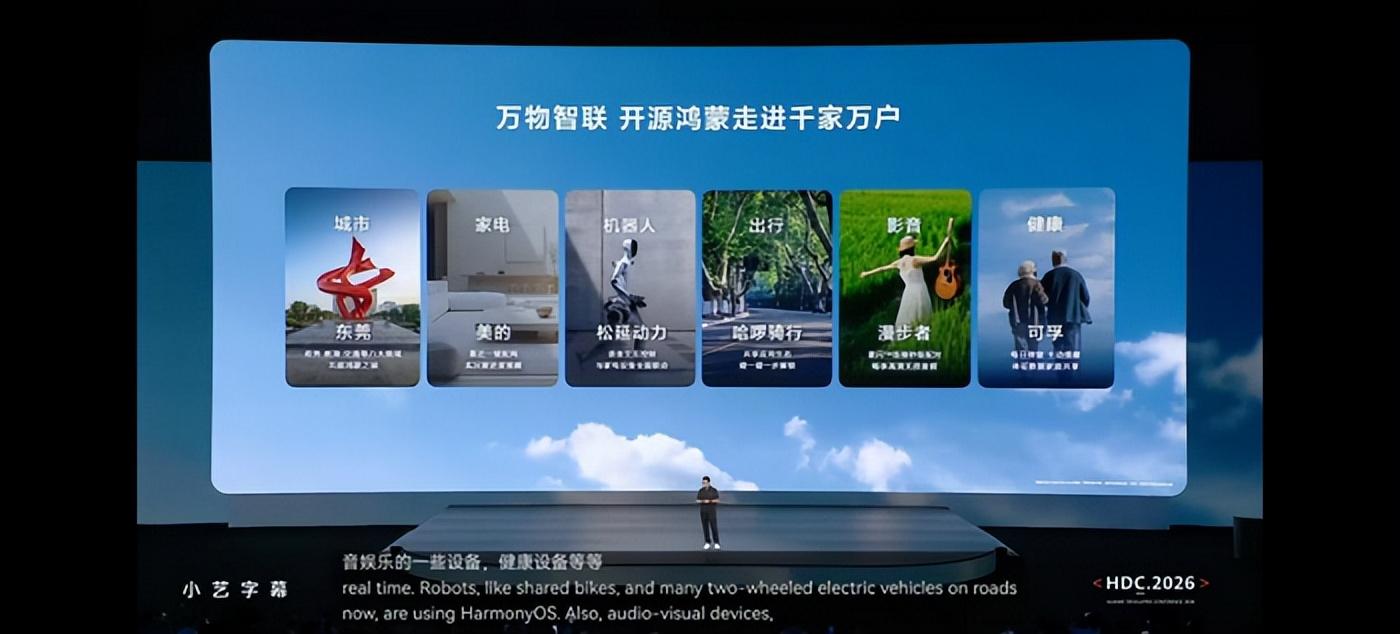
此外,在本次大会主题演讲中,华为常务董事、产品投资评审委员会主任、终端BG董事长余承东将松延动力作为“开源鸿蒙走进千家万户”六大品类中机器人方向的典型代表进行重点展示。

这不仅体现松延动力在人形机器人消费级落地方面的探索价值,也意味着人形机器人正在成为开源鸿蒙生态连接家庭、生活和未来智能终端的重要一环,加速开启人形机器人的万物互联时代。

1 行业首款开源鸿蒙机型 赋能人形机器人生态融合

作为一家专注人形机器人产品化与场景落地的创新企业,松延动力一直在推动人形机器人从“能运动、能展示”走向“能连接、能交互、能服务”。

“依托多年技术深耕,我们旗下人形机器人在硬件算力、运动控制、等方面积累了扎实的技术功底,主力机型搭载高性能主控芯片,搭配成熟的底层架构,可流畅完成双足行走、舞蹈、高难度肢体动作等功能,在消费、教育两大核心赛道实现规模化落地,收获了市场与用户的广泛认可。”唐子洋介绍。

但放眼整个行业,当前消费级人形机器人普遍面临应用生态与长期发展的多重痛点。多数产品仍停留在独立硬件终端的形态,难以与手机、智慧屏、智能家居、教育硬件等主流智能设备实现深度互联互通,久而久之形成生态孤岛,极大限制了多场景融合体验的打造。

与此同时,传统系统架构下的跨设备开发流程繁琐,网络协议适配、异构数据转换等工作大幅抬高研发门槛与成本,拉长产品迭代周期。

再加之外置系统普遍体积偏大、资源占用率高,与人形机器人轻量化、低功耗的行业发展趋势相悖,这些问题都成为制约消费级人形机器人规模化普及、业态升级的关键阻碍。

唐子洋表示,依托开源鸿蒙微内核架构、高安全性与跨终端联动优势,AI系统智能体语音交互控制、长程任务自规划能力,机器人未来可与家庭场景下的各类智能终端无缝协作,既能化身家庭智能管家,联动家电、安防设备打造全屋智能体验,也能依托多设备协同能力,强化教育陪伴、互动教学等核心场景体验,进一步释放产品的场景价值,也为行业解决共性痛点提供了可行参考。

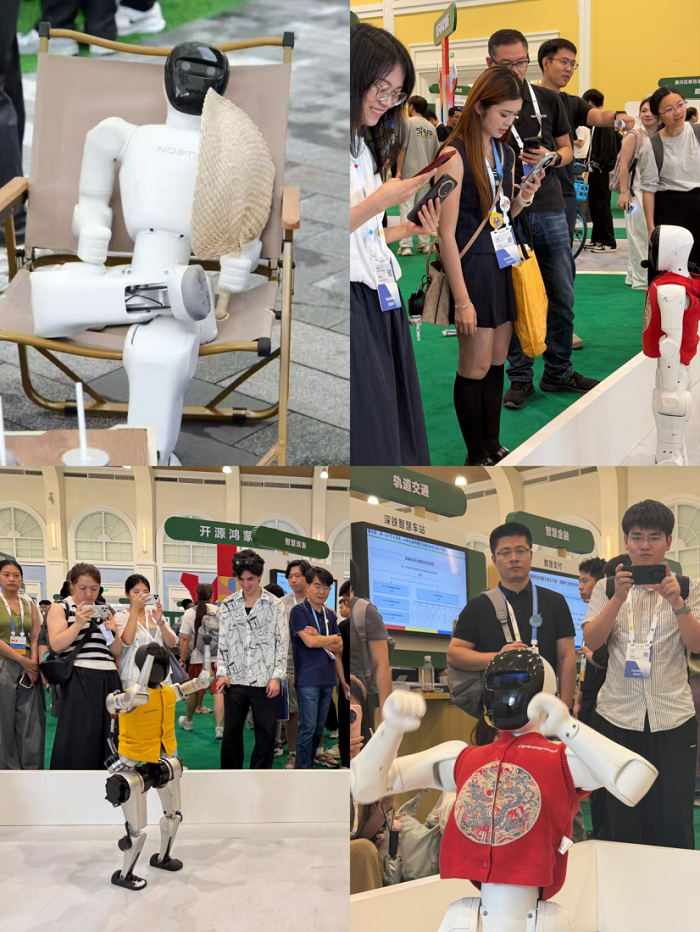
HDC2026大会现场松延动力的机器人

对于松延动力而言,本次对开源鸿蒙融合实践,不仅是单款产品的技术迭代,更是品牌助力行业突破发展困局、布局全场景生态的重要一步。当前人形机器人行业竞争日趋激烈,除产品硬件实力外,操作系统、生态协同、应用拓展能力已经成为品牌构筑核心竞争力的关键。

借助开源鸿蒙庞大的开发者社区与成熟的软硬件生态,松延动力进一步拓宽了产品的应用边界,也为后续持续优化产品体验、挖掘场景价值打下坚实基础,持续巩固自身在消费级、教育级人形机器人赛道的领先地位。

2 “百人百机”计划 共建人形机器人开发者生态

会上,松延动力还宣布开启“百人百机”开发者共创计划。

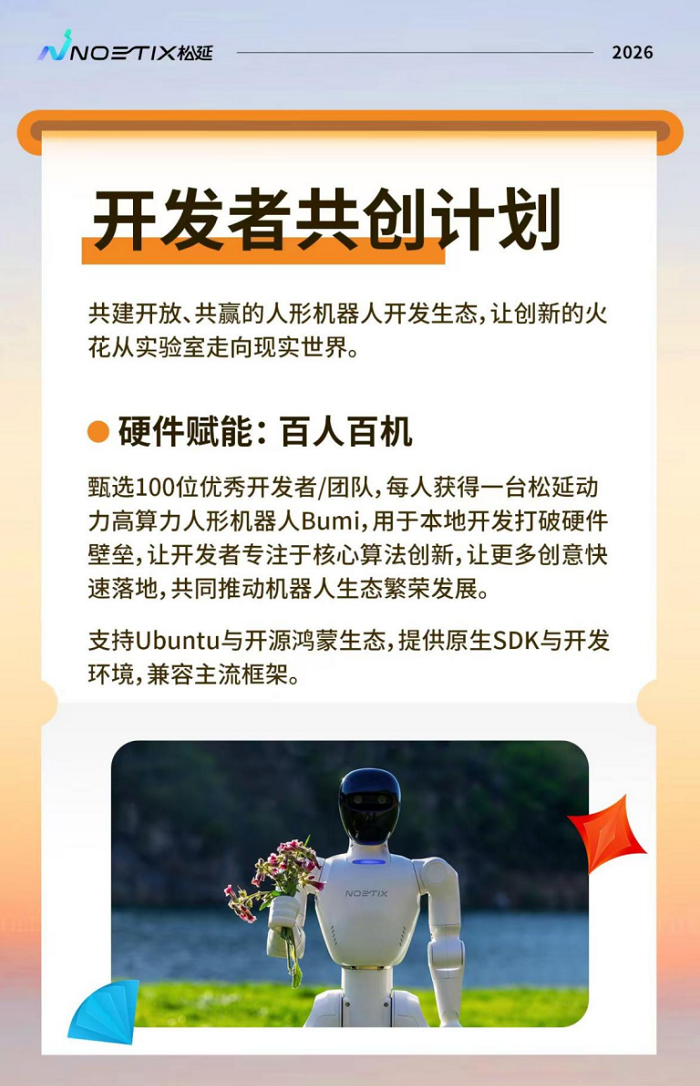
HDC2026大会现场公布“百人百机”开发者共创计划

当下人形机器人行业正处于高速发展阶段,市场热度持续攀升,但行业整体仍面临开发门槛高、硬件成本高昂、应用场景单一等现实问题。多数开发者拥有优秀的创意与算法能力,却受限于硬件设备、开发环境不足,难以将创新想法落地,这也在一定程度上制约了整个行业的应用创新与规模化发展。

松延动力深耕人形机器人赛道多年,深知生态共建对于行业发展的重要性,因此在此次大会上正式推出“百人百机”开发者共创计划,希望以开放姿态携手全行业开发者,激活产业创新活力。

该计划面向优秀开发者和开发团队,开放高算力人形机器人硬件支持,甄选100位开发者或团队,每人提供一台人形机器人用于本地开发。

唐子洋表示,松延动力希望通过这一计划,大幅降低人形机器人领域的硬件准入门槛,让开发者无需为设备成本发愁,将精力聚焦在具身智能、人机交互、运动控制、多设备协同等方面,更好在家庭、教育、办公等细分场景进行创新探索。

根据松延动力规划,“百人百机”开发者共创计划将同时支持Ubuntu与开源鸿蒙生态,配套提供原生SDK、完整开发环境,并兼容业内主流开发框架。完善的配套工具能够帮助开发者快速完成算法验证、功能开发与场景落地,减少底层环境适配的重复工作。

无论是深耕运动控制的技术团队,还是专注于场景应用的创新开发者,都能在这套开放体系中高效开展研发工作。通过开放硬件、开放工具和开放生态,松延动力希望与开发者共同推动人形机器人应用从实验室走向真实世界。

当前,人形机器人行业正在从技术竞赛进入场景应用。谁能够率先建立开放生态、吸引开发者参与、形成可持续的应用场景,谁就有机会在下一阶段竞争中占据主动。松延动力此次携手华为,不仅是一次产品发布,更是一次面向人形机器人开发者生态的主动布局。

从首款搭载开源鸿蒙的消费级人形机器人,到“百人百机”开发者共创计划,松延动力正在将自身定位从人形机器人产品公司进一步延展为具身智能生态共建者。随着开源鸿蒙进入人形机器人领域,松延动力也将与华为及更多生态伙伴一起,推动人形机器人真正走向家庭、走进生活、服务千行百业。

注:文/龚作仁,文章来源:Laborer,本文为作者独立观点,不代表亿邦动力立场。

文章来源:Laborer

广告
微信
朋友圈

这么好看,分享一下?

朋友圈 分享

APP内打开

+1
+1
微信好友 朋友圈 新浪微博 QQ空间
关闭
收藏成功
发送
/140 0