广告
加载中

榴莲产业迎来“黑科技”京东京喜上线“榴莲AI检测机”

龚作仁 2026-06-12 11:32
龚作仁 2026/06/12 11:32

邦小白快读

EN
全文速览

本次东南亚榴莲上市旺季,京东京喜推出AI检测榴莲,解决消费者挑榴莲踩坑的痛点,同时给出了价格优惠和售后保障,普通消费者可以获得更好的选购体验

1. 此前消费者挑榴莲全靠经验,很容易碰到死包、空果、果房少的问题,相当于开盲盒,本次京东京喜投入商用AI无损检测机,不用破壳就能探测果肉状态,准确率超95%,每颗合格榴莲都有一物一码,扫码就能看到出肉率、果房数、成熟度等数据,选购从赌运气变成看数据选品。

2. 本次京喜包销500万斤东南亚进口榴莲,源头直采降低成本,同品质榴莲价格比市面便宜5%-10%,还推出坏果少房包赔服务,航空冷链运输比传统渠道快2-3天,更新鲜,消费者打开京东搜索“京喜榴莲季”即可选购,还有9.9元限时抢的活动。

本次京东京喜的榴莲运营实践,给生鲜品牌从业者提供了很多可参考的方向,契合当下榴莲消费市场的趋势

1. 消费趋势层面:当前消费者对榴莲的品质透明度要求越来越高,长期存在的开盲盒痛点没有得到解决,同时消费者追求更高性价比的优质榴莲,品牌可以针对这些痛点做产品和服务升级。

2. 运营层面,可借鉴通过技术打造品牌优势的路径:用AI无损检测做标准化品控,建立可溯源的品质体系,提升品牌的用户信任度;渠道端对接源头直采,砍掉多层分销的加价空间,通过大规模包销降低流通成本,同品质降价5%-10%打造价格优势,还可以配套坏果赔付服务降低消费者决策门槛,进一步提升品牌口碑。

当前榴莲产业迎来新的增长机会,也给生鲜卖家提供了可学习的运营经验,明确了新的发展方向

1. 机会层面:2026年东南亚榴莲进入丰产大年,整体总产量提升约三成,泰国、越南、马来西亚产区的货源充足、品质优于往年,叠加当前正值榴莲消费旺季,市场需求旺盛,行业有较大的增长空间。

2. 可学习的经验:可以学习京东京喜的做法,引入智能化品控手段解决消费者开盲盒的痛点,提升用户信任;对接源头供应商做直采,砍掉中间环节降低流通成本,打造清晰的价格优势;同时搭配坏果少房包赔的服务,降低消费者选购的顾虑,还可以依托大平台的供应链能力,缩短运输时长,保证鲜果品质,进一步提升用户体验。

榴莲产业的智能化升级,给相关生产、设备工厂带来了新的商业机会和转型启示

1. 需求层面:长期以来榴莲分选都依赖人工经验,误差大,行业内缺少成熟的自动化分选设备,对标准化、智能化的无损检测设备需求十分迫切,京东京喜首批商用AI检测机落地,证明了这类设备的市场价值,打开了榴莲专用检测设备的市场空间。

2. 转型启示:传统榴莲生产分选环节要向数字化智能化转型,融合AI算法、探测技术的自动化设备,能大幅提升分选效率和准确率,从源头解决劣质果问题,适配行业升级需求。工厂可以加大这类专用智能化设备的研发投入,同时可以对接平台的直采模式,抓住当前榴莲丰产、产业升级的风口,拓展自身的业务空间。

榴莲产业当前的痛点和升级趋势,给相关科技、流通服务商指明了新的发展方向

1. 客户痛点层面:目前行业核心痛点有两个,一是缺少标准化无损检测手段,人工分选误差大,劣质果无法提前剔除,导致售后问题多;二是传统分销环节多,流通成本高,运输时效长影响鲜果品质,这些都是服务商可以切入的市场机会。

2. 技术和解决方案方向:已经得到验证的AI无损检测方案,融合AI算法、超高频电磁波探测、高光谱成像、云计算四大技术,检测准确率稳定在95%以上,可复制性强。相关技术服务商可以优化这类技术,拓展到更多生鲜品类的分选场景,还可以围绕标准化分选、一物一码溯源搭建配套服务,物流服务商可以优化产地到销地的冷链运输方案,提升运输时效,满足行业需求。

京东京喜这次的榴莲运营实践,给做生鲜品类的平台商提供了可借鉴的运营经验,也明确了品类升级的方向

1. 需求层面:当前消费者对生鲜品类的核心需求是品质透明、性价比高,商家端也需要标准化的品控方案降低售后风险,平台需要对接供需两端的需求,推动品类升级。

2. 可借鉴的运营做法:紧抓产区丰产窗口期,对接三大产区头部进口商做源头直采,通过大规模包销降低流通成本,打出价格优势;引入AI智能化检测技术,建立行业统一的榴莲品质标准,从源头剔除不合格果品,搭配坏果少房包赔服务提升用户信任;结合618大促节点推出专属会场,搭配限时低价抢活动拉动流量和销量。

3. 风险规避:通过前置品控降低售后风险,用航空冷链缩短运输时长,保证鲜果品质,降低品控风险。

本次京东京喜的榴莲产业实践,为榴莲乃至整个进口生鲜产业的研究提供了新的样本,展现了产业发展的新动向

1. 产业新动向:长期困扰榴莲产业的标准化品控难题,迎来了可行的技术解决方案,AI无损检测技术的商用落地,推动榴莲分选从人工经验判断向智能化标准化转型,帮助行业建立可复制的品质分选标准,整个产业正在迎来系统性升级。

2. 新商业模式研究:本次实践形成了“AI品控+源头直采+大规模包销+直供消费者”的全新商业模式,砍掉了多层分销环节,降低了流通成本,通过技术赋能实现了生鲜“又好又便宜”的目标,为东南亚优质农产品对接中国消费市场,提供了可借鉴可复制的路径。

3. 后续可重点研究智能化技术对生鲜产业标准化的推动作用,以及平台直连产地模式对流通效率的提升效果,总结可推广的产业升级经验。

返回默认
声明:快读内容全程由AI生成,请注意甄别信息。如您发现问题,请发送邮件至 run@ebrun.com 。

我是 品牌商 卖家 工厂 服务商 平台商 研究者 帮我再读一遍。

Quick Summary

During this year's peak durian harvest season in Southeast Asia, JD Jingxi has launched AI-powered durian inspection to eliminate the common pain point of customers picking low-quality fruits, while also offering discounted prices and after-sales guarantees to deliver a better shopping experience for general consumers.

1. Previously, choosing a good durian relied entirely on personal experience, and customers often ended up with dead pods, hollow fruits or underdeveloped fruit segments, turning the process into a guessing game. Jingxi has now rolled out commercial AI non-destructive inspection machines that can detect the condition of the flesh without opening the shell, with an accuracy rate exceeding 95%. Every qualified durian gets a unique QR code; scanning it displays data including expected flesh yield, number of fruit segments and ripeness, turning a game of chance into an informed data-driven purchase decision.

2. This season, Jingxi has underwritten 2.5 million kilograms of imported Southeast Asian durians through direct farm sourcing to cut costs. Same-quality durians are priced 5% to 10% lower than the market average. The platform also offers a compensation guarantee for bad or underdeveloped fruits, and air cold-chain delivery that arrives 2 to 3 days faster than traditional channels for better freshness. Consumers can purchase by searching for "Jingxi Durian Season" on JD, and there is also a limited-time flash sale for 9.9 RMB per fruit.

JD Jingxi's operational practice for durians offers many actionable insights for fresh produce brand owners, aligning well with current trends in the durian consumer market.

1. Consumer trends: Today's customers increasingly demand greater transparency around durian quality. The long-standing "blind box" pain point has yet to be resolved, while consumers also seek high-quality durians at more competitive price points. Brands can upgrade their products and services to address these unmet needs.

2. Operational takeaways: Brands can follow Jingxi's example of building competitive advantage through technology: implementing AI non-destructive inspection for standardized quality control, establishing a traceable quality system to boost consumer trust. On the channel side, direct sourcing from producing regions cuts out markup from multiple layers of intermediaries, and large-scale underwriting reduces distribution costs, enabling a 5-10% price cut for same-quality products to build price advantage. Pairing this with a bad fruit compensation policy lowers consumer decision barriers and further improves brand reputation.

The durian industry is entering a new phase of growth, offering actionable operational insights and clear new development directions for fresh produce sellers.

1. Growth opportunities: By 2026, Southeast Asia will enter a bumper durian harvest cycle, with total output projected to rise roughly 30% year-over-year. Supplies from Thailand, Vietnam and Malaysia will be ample and higher quality than in previous years. Combined with the current peak durian consumption season and strong market demand, the industry holds significant room for growth.

2. Key lessons: Sellers can adopt JD Jingxi's approach by introducing intelligent quality control to solve the "blind box" pain point and build consumer trust; partnering directly with upstream suppliers for direct sourcing to cut out intermediaries and reduce distribution costs, building clear price advantage. Pair this with a compensation guarantee for bad or underdeveloped fruits to ease consumer purchasing concerns. Sellers can also leverage large platforms' supply chain capabilities to shorten transit times and maintain fresh fruit quality for a better overall customer experience.

The ongoing intelligent upgrade of the durian industry is creating new business opportunities and transformation insights for relevant production and equipment manufacturers.

1. Demand outlook: Durian sorting has long relied on manual experience, with high error rates, and the industry lacks mature automated sorting equipment. There is strong urgent demand for standardized, intelligent non-destructive inspection equipment. The first commercial deployment of Jingxi's AI inspection machines validates the market value of this equipment, opening up new market space for durian-specific inspection tools.

2. Transformation insights: Traditional durian production and sorting needs to transition to digital and intelligent operations. Automated equipment integrating AI algorithms and detection technology can greatly improve sorting efficiency and accuracy, eliminate low-quality fruits at the source, and meet the industry's upgrade demands. Manufacturers can increase R&D investment in this type of specialized intelligent equipment, and partner with platform direct sourcing models to capitalize on the current boom of bumper harvests and industry upgrading, and expand their business scope.

The current pain points and upgrade trend of the durian industry point to clear new development directions for relevant technology and distribution service providers.

1. Addressable customer pain points: The industry currently has two core pain points. First, it lacks standardized non-destructive inspection methods; manual sorting has high error rates and cannot eliminate low-quality fruits in advance, leading to frequent after-sales issues. Second, traditional distribution involves multiple intermediaries, pushing up distribution costs, and long transit times hurt fresh fruit quality. Both of these pain points represent market entry opportunities for service providers.

2. Technology and solution directions: The already validated AI non-destructive inspection solution integrates four core technologies: AI algorithms, ultra-high frequency electromagnetic wave detection, hyperspectral imaging and cloud computing, delivering a stable detection accuracy of over 95% with strong replicability. Relevant technology service providers can optimize this technology to expand into sorting scenarios for more fresh produce categories, and build supporting services around standardized sorting and one-code-per-item traceability. Logistics service providers can optimize cold-chain delivery routes from producing regions to consumption markets to improve transit speed and meet industry demands.

JD Jingxi's durian operation practice offers replicable operational insights and a clear direction for category upgrading for fresh produce-focused e-commerce platforms.

1. Demand alignment: Today's consumers core demands for fresh produce are transparent quality and high cost-performance, while merchants need standardized quality control solutions to reduce after-sales risk. Platforms need to match the demands of both supply and demand to drive category upgrading.

2. Replicable operational practices: Capitalize on the window of bumper harvest in producing regions by partnering with top importers from the three major producing regions for direct source sourcing; cut distribution costs through large-scale underwriting to build price advantage. Introduce AI intelligent inspection technology to establish a unified industry quality standard for durians, eliminate unqualified fruits at the source, and pair this with a bad fruit compensation guarantee to boost consumer trust. Launch a dedicated event page aligned with the 618 shopping festival, and combine it with limited-time flash sales to drive traffic and sales.

3. Risk mitigation: Upstream quality control reduces after-sales risk, while air cold-chain delivery shortens transit time to preserve fresh fruit quality and lower quality control risks.

JD Jingxi's industrial practice in the durian sector provides a new research sample for studies on the durian industry and the broader imported fresh produce sector, and highlights new trends in industry development.

1. New industry trends: A viable technical solution has emerged for the long-standing problem of standardized quality control plaguing the durian industry. The commercial deployment of AI non-destructive inspection technology is driving the shift from manual experience-based sorting to intelligent, standardized sorting, helping the industry establish a replicable quality sorting standard, and the entire industry is entering a phase of systematic upgrading.

2. New business model research: This practice has formed a brand-new business model of "AI quality control + direct source sourcing + large-scale underwriting + direct-to-consumer distribution", which cuts out multiple layers of intermediaries, reduces distribution costs, and delivers on the goal of "better quality at lower prices" for fresh produce through technology enablement. It provides a replicable, actionable pathway for connecting high-quality Southeast Asian agricultural products to the Chinese consumer market.

3. Future research priorities can focus on the role of intelligent technology in driving standardization in the fresh produce industry, as well as the impact of the platform-direct-to-farm model on improving distribution efficiency, to summarize scalable experiences for industry-wide upgrading.

Disclaimer: The "Quick Summary" content is entirely generated by AI. Please exercise discretion when interpreting the information. For issues or corrections, please email run@ebrun.com .

I am a Brand Seller Factory Service Provider Marketplace Seller Researcher Read it again.

东南亚榴莲集中上市,一年一度的榴莲消费旺季如期到来。往年消费者购买榴莲,受相关技术限制,仅凭外观挑选极易踩坑,频频碰到死包、空果、果房偏少的问题;多层分销环节层层加价,也让榴莲售价长期居高不下。

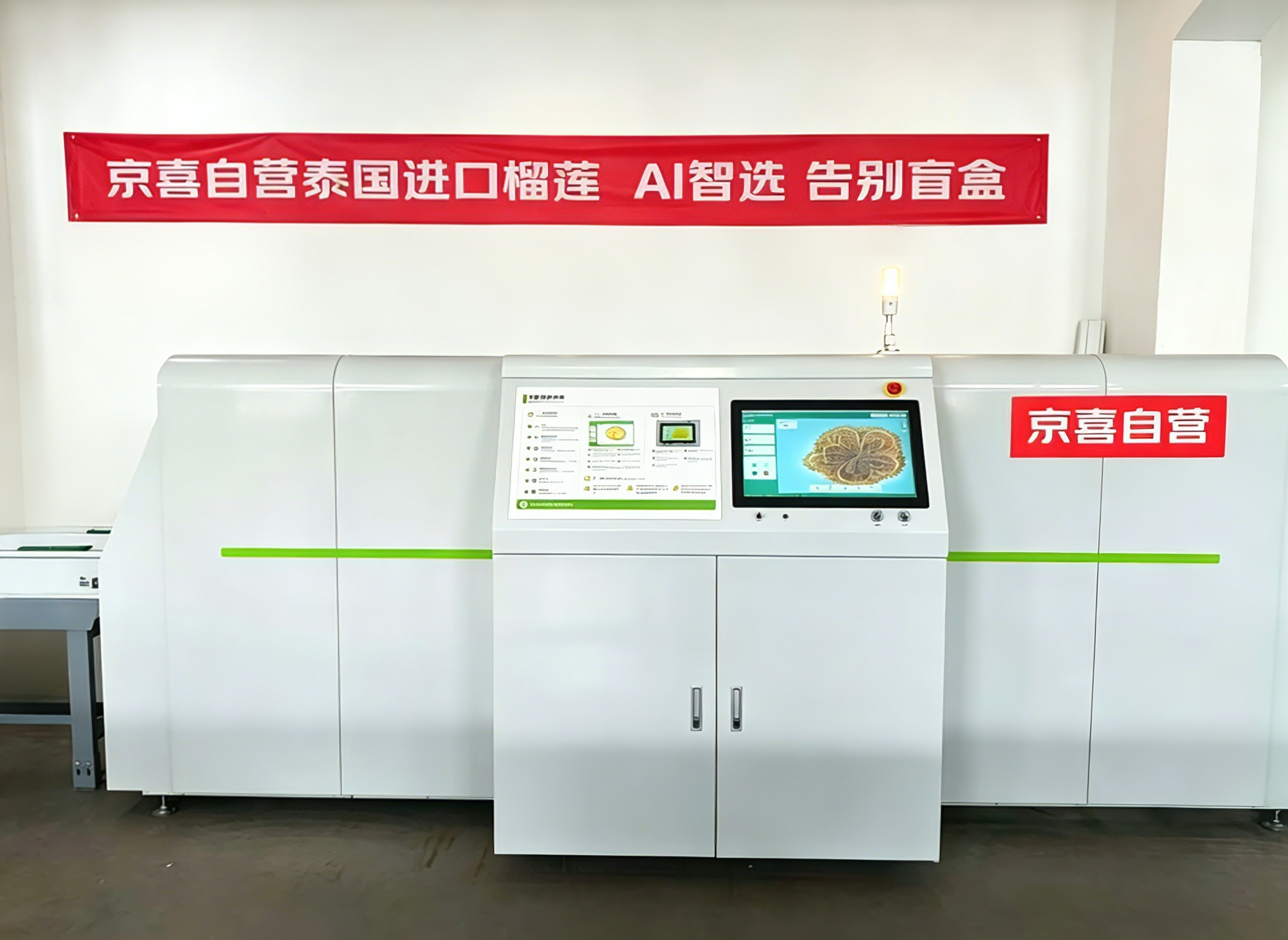
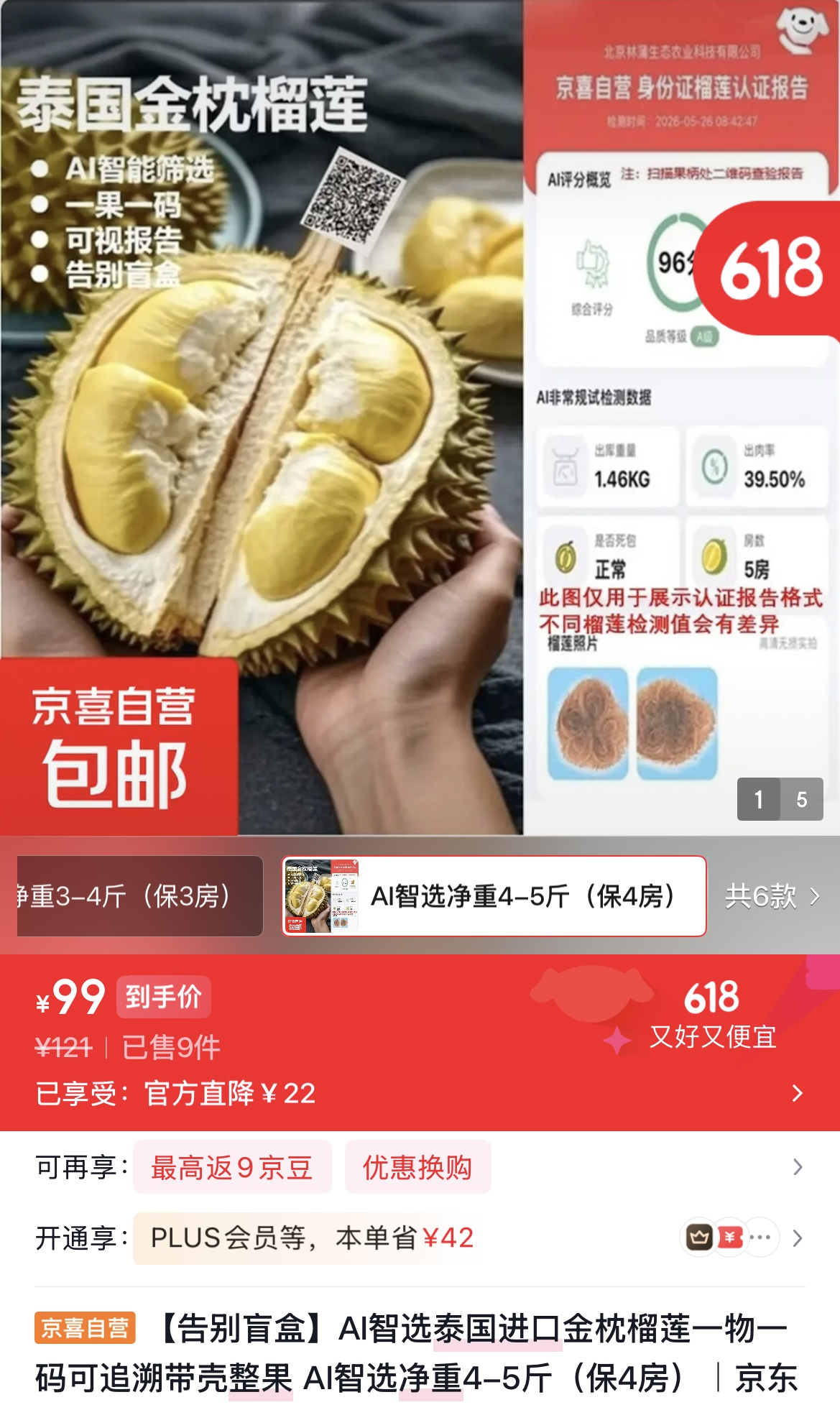
恰逢6月榴莲产季高峰和京东618来临,京东京喜自营今年首次使用榴莲AI无损检测系统,首批AI榴莲检测机已正式投入使用,推出京喜甄选AI智选泰国金枕榴莲,推动榴莲从“开盲盒”走向“一果一码、品质可视”。

同时,京喜自营与泰国、越南、马来西亚头部进口商达成直采合作,包销500万斤榴莲,通过源头直采、大规模包销降低流通成本,同品质下价格便宜5%-10%,让利消费者,助力实现“榴莲自由”。

AI无损检测技术“黑科技” 解决消费者开榴莲盲盒痛点

长期以来,榴莲产业始终缺少标准化无损检测手段,全行业分选普遍依靠工人从业经验,肉眼、手敲筛选,没有成熟的自动化分选设备,人工筛选误差大、劣质果难以提前筛除,这也是“榴莲盲盒”问题长年无法根治的关键原因。

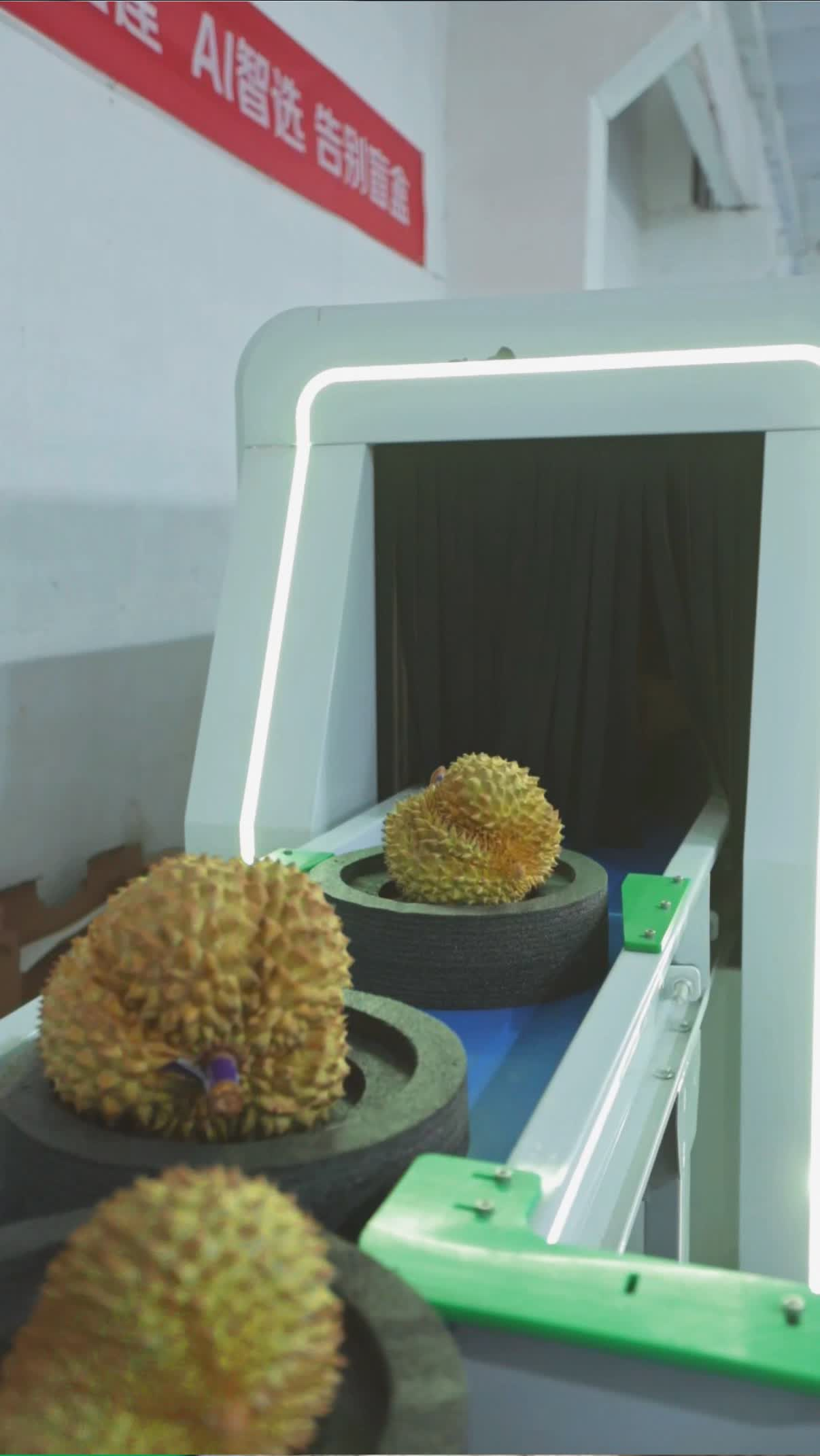
针对行业痛点,京东京喜自营今年首次使用榴莲AI无损检测系统,已落地首批4台商用级榴莲专用AI检测机。

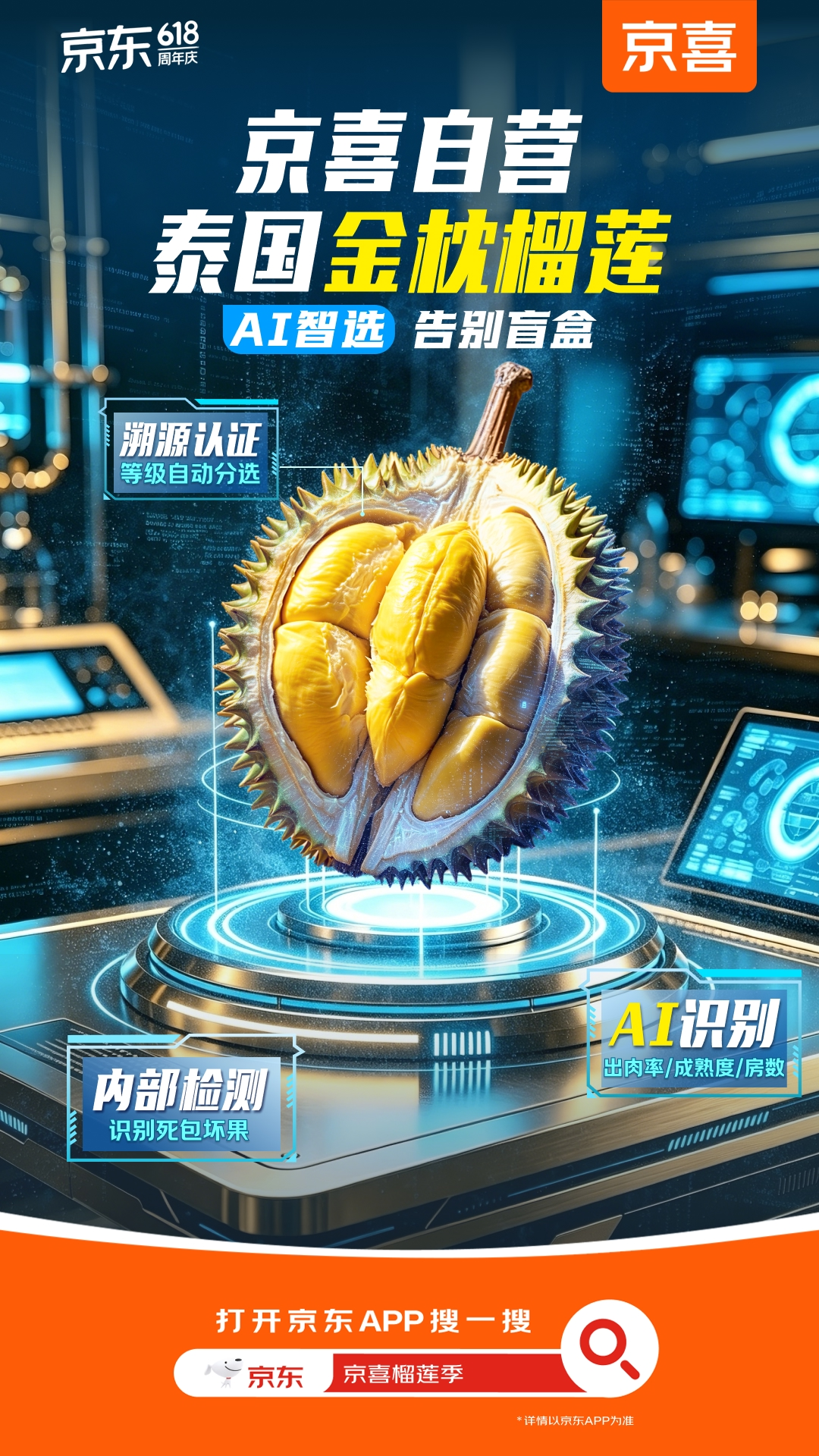
据介绍,该套系统深度融合AI算法、超高频电磁波探测、高光谱成像、云计算四大技术,模拟给榴莲做全身“CT体检”,全程无需破壳就能穿透果皮探测内部果肉状态,设备流水线自动化运转,自动筛选死包、空包、果肉发育不足、成熟度不达标的不合格果品,综合检测准确率稳定在95%以上。

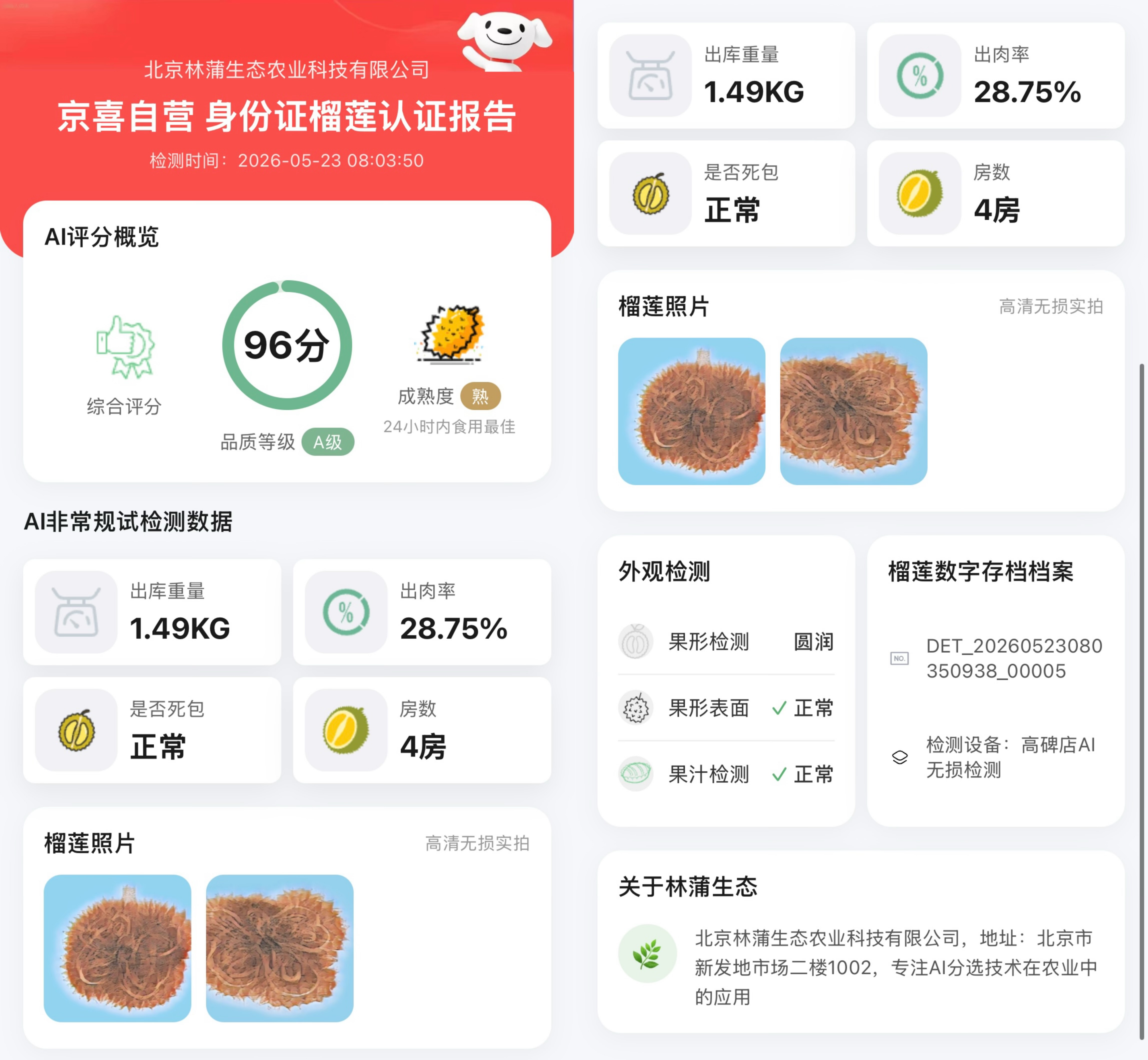
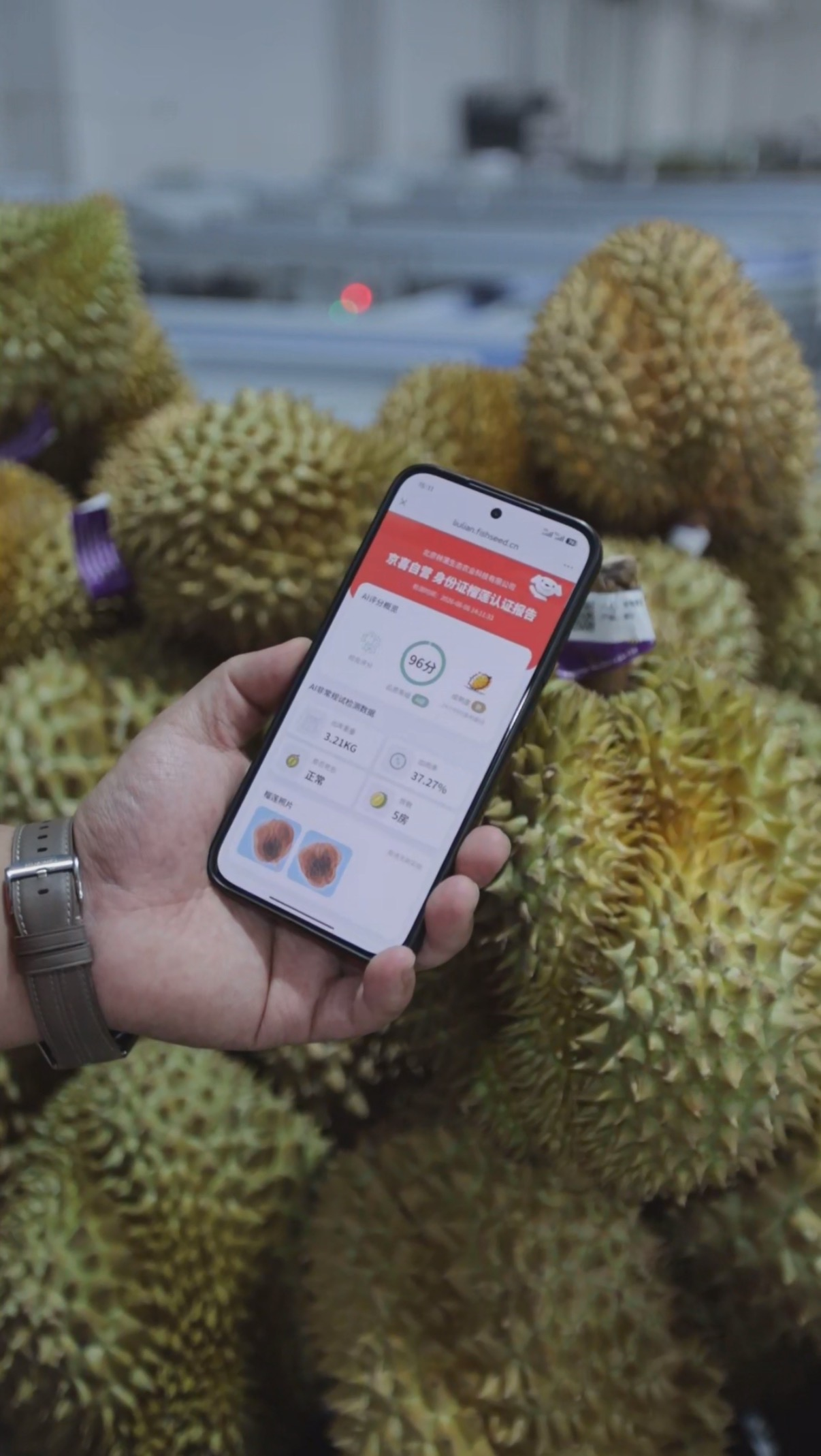
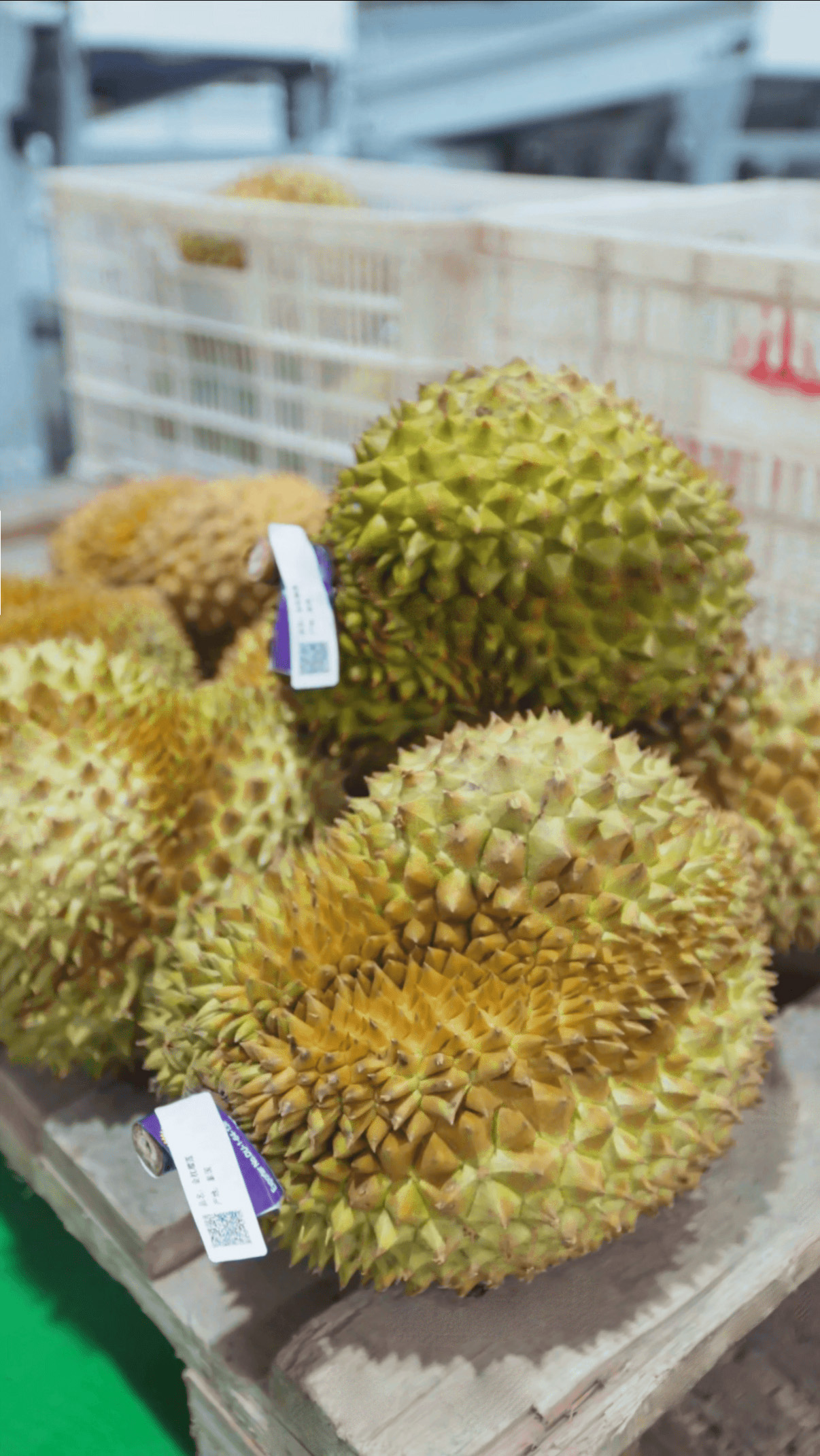
每一颗通过全项检测的榴莲,系统都会自动生成一份“一物一码”的溯源标签,同步生成专属唯一AI电子质检报告,报告清晰收录单果净重、实测出肉率、有效果房数量、AI成熟评分、产品品质等级等实测数据。消费者收货后扫码即可查看榴莲AI认证报告,选购从“凭手感赌运气”变成“看数据选鲜果”,从源头根治“开盲盒”消费痛点。

依托相关技术系统,京喜正进一步构建榴莲标准化分选体系,提升榴莲品质,为行业建立一套可复制的标准,为用户带来又好又便宜的京喜榴莲。

产地直采、坏果少房包赔 京喜包销500万斤东南亚进口榴莲

京东京喜今年首次使用的榴莲AI无损检测系统,主要针对泰国进口金枕榴莲的鲜果,这也是京喜今年主推的榴莲品种之一。

这款京喜甄选泰国金枕榴莲,产自泰国核心产区,果实自然挂果120天以上,肉厚核小,出肉率高,清香回甘。通过人工进行采摘,全部货品具备正规海关进口资质。有了黑科技检测技术,该款榴莲同时还推出“少房坏房,均可赔付”的服务举措,进一步降低选购“踩坑”风险。

2026年东南亚榴莲迎来丰产大年,整体总产量同比提升约三成:泰国全年预估产量189万吨,同比上涨21%;越南榴莲种植面积达18万公顷,总产量预计突破150万吨;马来西亚各大榴莲产区收成同步走高,全品类榴莲果品品质优于常年,为平台大规模集采创造优质货源条件。

紧抓丰产窗口期,京喜自营直连三大产区头部进口商,将包销500万斤榴莲。通过源头直采、大规模包销、厂货百补等降低流通成本,京喜自营榴莲同品质下价格便宜5%-10%,助力消费者实现“榴莲自由”。

同时,依托京东超级供应链能力,京喜榴莲采用产地直发,航空冷链6天直达国内,较传统分销渠道缩短运输时长2天-3天,最大限度留存鲜果原生口感。

依托源头直采+黑科技品控双重优势,不管是入门榴莲新手,还是深耕多年的榴莲“老饕”,都能在京东京喜自营买到价格透明、品质在线的东南亚核心产区进口好榴莲。即日起,用户只需打开京东APP,搜索“京喜榴莲季”,即可进入会场选购京喜榴莲,还有榴莲9.9元限时抢。京喜以科技驱动品质升级、以规模化采购反哺价格,为生鲜水果如何实现“又好又便宜”提供了样本,也为东南亚优质农产品对接中国市场、推动产业标准化升级,提供了可借鉴的路径。

未来,京东京喜自营将持续完善生鲜标准化体系,凭借技术革新与全链路供应链优势,持续带给消费者“又好又便宜”的鲜果,助力进口生鲜水果提质向好发展。

注:文/龚作仁,文章来源:Laborer,本文为作者独立观点,不代表亿邦动力立场。

文章来源:Laborer

广告
微信
朋友圈

这么好看,分享一下?

朋友圈 分享

APP内打开

+1
+1
微信好友 朋友圈 新浪微博 QQ空间
关闭
收藏成功
发送
/140 0