广告
加载中

有品牌已开出800+店!这个千亿品类的新风口来了?

红餐编辑部 2026-06-10 11:37
红餐编辑部 2026/06/10 11:37

邦小白快读

EN
全文速览

本文核心介绍当前卤味市场的新风口热卤赛道,以及头部品牌李华泽热卤鸭头的发展情况,核心干货如下:

1. 行业整体情况:传统卤味增速放缓,热卤逆势增长,红餐产业研究院数据显示,2025年热卤市场规模预计达620亿元,同比增长18.5%,远超卤味行业整体增速,目前头部品牌李华泽全国门店已经突破800家。

2. 消费体验相关:李华泽主打一锅一卤带汤热吃,口感比冷卤更软烂多汁,设置明档操作和堂食区域,SKU超过50款,招牌嗦嗦多汁鸭头获得热卤鸭头全国销量领先认证,采用按个按份明码定价,套餐价格16.8-28.8元,还搭配主食可满足饱腹需求,覆盖一日三餐。

3. 市场反馈:李华泽90%门店开在社区,客流稳定,会员月度复购率超过40%,部分老店复购达到60%以上,消费粘性很高,是日常就餐不错的选择。

热卤作为千亿卤味市场的新增长点,为卤味餐饮品牌提供了很多可参考的发展经验,核心干货如下:

1. 消费趋势机会:当前消费者偏好热食、烟火气体验,热卤将卤味从休闲零食场景拓展到一日三餐刚需场景,门店选址侧重社区,租金低客流稳定,复购率远高于传统卤味门店,符合高频刚需的消费趋势。

2. 产品研发参考:李华泽主打差异化带汤热卤,锚定核心品牌心智不动摇,同时保持小步快跑的研发节奏,每月推出1-2款新品测试市场,每季度调整菜单适配时令需求,既保持新鲜感又不模糊品牌定位。

3. 营销与扩张经验:打造热卤文化节这类体验型活动IP,结合抖音、小红书内容种草积累线上会员,获取免费流量;采用后端做重前端做轻的模式,通过标准化供应链降低门店操作难度,成熟一个市场再复制扩张,不盲目追求开店速度,稳定性更高。

热卤赛道当前增长势能强劲,给想开卤味店的创业者、加盟商带来了新的机会,核心干货如下:

1. 赛道机会判断:传统卤味增速放缓,热卤逆势增长,2025年市场规模预计达620亿元,同比增速18.5%,远超行业平均,已经跑出了跑通模式的头部品牌李华泽,赛道前景清晰。

2. 头部品牌加盟支持:李华泽构建了覆盖选址评估、技术培训、运营指导、营销策划的八大支持体系,选址采用大数据分析+线下测流,选址预估准确率达95%,后端供应链全流程标准化,前端门店操作难度低,适合新手创业者。

3. 风险提示与经验参考:热卤本质切入竞争激烈的快餐赛道,容易出现同质化竞争,需要依托品牌打造差异化壁垒;扩张要稳扎稳打,成熟一个市场再复制,不能单纯追求开店数量,要保障门店存活率和盈利性,这点值得所有卖家参考。

热卤赛道的快速扩张,给卤味生产加工工厂带来了新的商业机会,也提供了数字化转型的参考方向,核心干货如下:

1. 产品生产需求变化:热卤品牌主打标准化带汤现卤,对核心原料的标准化程度要求远高于传统卤味,比如鸭头等产品需要统一大小、新鲜度,预制标准化半成品的需求大幅提升,工厂可以调整产能适配这类需求。

2. 数字化转型参考:头部热卤品牌已经开始用AI视觉识别系统做原料分选,全生产流程数据化管控,总部中台实现实时云监控,这种数字化管控模式可以保障产品品质稳定,值得生产工厂参考学习。

3. 商业合作机会:目前头部热卤品牌李华泽全国门店已经突破800家,接下来计划在华北大区新开400家以上门店,全国扩张加速,对稳定、标准化的供应链需求非常大,工厂可以对接头部热卤品牌获取长期合作机会。

4. 生产端适配方向:热卤品牌保持小步快跑的新品节奏,工厂需要配合品牌快速开发适配时令的新品,提升响应速度。

热卤赛道的品牌化扩张,给餐饮相关服务商带来了新的市场机会,核心干货如下:

1. 行业发展趋势:热卤原本长期被困在菜市场档口,如今已经走向品牌化、全国化扩张,越来越多新玩家进入赛道,品牌对标准化运营、数字化工具、营销获客的需求非常旺盛,是餐饮服务商新的增量市场。

2. 客户核心痛点:热卤行业过去的核心痛点是现场加工依赖师傅手艺,标准化程度低,难以规模化扩张;热卤品牌拓店时,加盟商需要从选址到运营的全链路支持,同时缺线上获客、内容运营的能力。

3. 解决方案方向:服务商可以针对热卤行业的需求,开发专门的选址大数据分析工具、供应链数字化管控系统,帮助品牌解决标准化问题;还可以推出针对热卤品牌的营销服务,包括线上内容运营、活动IP策划,匹配热卤品牌做社交传播、获客的需求,帮品牌解决流量问题。

热卤赛道的快速崛起,给各类餐饮平台、本地生活平台带来了新的运营和招商机会,核心干货如下:

1. 品牌端对平台的需求:热卤品牌全国扩张过程中,需要选址大数据、会员管理、线上点单、供应链管控等数字化工具支持,平台可以针对热卤品类的特性,开发适配的功能模块,更好服务热卤品牌。

2. 招商机会:热卤是当前卤味赛道增速最快的细分领域,头部品牌拓店需求旺盛,大量中小热卤品牌也在崛起,平台可以推出专门的热卤品牌招商专场,吸引优质品牌入驻,打造品类差异化优势。

3. 运营管理与风向规避:热卤主打社区门店,依托线上内容种草获客,平台可以针对热卤品类推出本地流量扶持计划,提升转化;同时需要注意规避赛道过热带来的同质化商家扎堆问题,做好品类规划,筛选差异化品牌,保障品类健康发展。

热卤赛道的崛起是卤味行业近年重要的产业新动向,对研究餐饮品类创新和连锁扩张具有很高的研究价值,核心干货如下:

1. 产业新动向:传统卤味行业分为休闲卤味和佐餐卤味两大类,热卤创新产品形态,开拓了一日三餐刚需场景,将卤味从低频休闲食品升级为高频日常饮食,撬动了新的增长空间,数据显示2025年热卤市场规模预计达620亿元,同比增长18.5%,成为千亿卤味市场的新增长点。

2. 创新商业模式:头部品牌李华泽探索出后端做重前端做轻的可复制连锁扩张模式,将依赖人工的制作环节转移到后端供应链,通过数字化实现标准化,给加盟商提供全链路支持,坚持成熟一个市场再复制的节奏,不盲目追求门店数量,这种模式解决了热卤过去难以规模化的问题。

3. 行业新问题:热卤切入竞争最激烈的快餐赛道,新玩家大量进入导致同质化风险提升,如何持续加固品牌壁垒,全国扩张模式能否在不同区域复制成功,都是值得深入研究的新问题。

返回默认
声明:快读内容全程由AI生成,请注意甄别信息。如您发现问题,请发送邮件至 run@ebrun.com 。

我是 品牌商 卖家 工厂 服务商 平台商 研究者 帮我再读一遍。

Quick Summary

This article introduces the hot braised dishes (re lu) segment, the fastest-growing new track in China's braised food market, and the growth of leading player Li Huaze Spicy Hot Braised Duck Head. Key takeaways are as follows:

1. Industry overview: Growth of the traditional braised food market has slowed, while hot braised dishes are growing against the trend. According to Red Meal Industry Research Institute, the hot braised market is projected to reach 62 billion yuan by 2025, with an 18.5% year-over-year growth rate, far outpacing the overall growth of the braised food industry. Leading brand Li Huaze already operates more than 800 stores across China.

2. Consumer experience: Li Huaze specializes in "one pot per batch" hot braised dishes served in broth, which are softer and juicier than cold braised alternatives. The brand features open cooking stations and in-store dining areas, carries over 50 SKUs, and its signature juicy braised duck head holds the national sales leadership certification for hot braised duck head products. It offers transparent per-item and per-portion pricing at 16.8 to 28.8 yuan for combo sets, pairs braised items with staple foods to satisfy full-meal needs, and covers all three daily meal occasions.

3. Market performance: 90% of Li Huaze's stores are located in residential communities with stable foot traffic. Its monthly member repurchase rate exceeds 40%, and repurchase rates for long-operating stores can reach over 60%, showing strong consumer stickiness as a go-to option for daily dining.

As the new growth driver in the 1-trillion-yuan braised food market, the hot braised segment offers valuable actionable insights for existing and aspiring braised food brands. Key takeaways are as follows:

1. New consumer trend opportunities: Modern consumers increasingly prefer hot meals and casual, authentic dining experiences. Hot braised dishes have expanded braised food from the snack category into the daily three-meal necessity segment. With community-focused store locations, the model delivers lower rent, stable foot traffic and far higher repurchase rates than traditional braised food stores, aligning perfectly with the trend of high-frequency daily demand.

2. Product development insights: Li Huaze has stuck firmly to its differentiated positioning of broth-served hot braised dishes to build core brand awareness, while maintaining an agile product development rhythm: it tests 1 to 2 new products monthly and adjusts menus quarterly to align with seasonal demand, keeping the brand fresh without diluting its core positioning.

3. Marketing and expansion lessons: Li Huaze built experiential event IPs such as the Hot Braised Food Culture Festival, and grew its online member base through content seeding on Douyin and Xiaohongshu to acquire free organic traffic. It adopts a "heavy back-end, light front-end" model that reduces on-site operational complexity via a standardized supply chain, and only expands to new markets after establishing a strong foothold in existing ones. This deliberate approach avoids blind overexpansion and delivers much higher operational stability.

The hot braised segment currently holds strong growth momentum, creating new opportunities for aspiring entrepreneurs and franchisees looking to open a braised food business. Key takeaways are as follows:

1. Track opportunity analysis: Growth of traditional braised food has slowed, while hot braised is growing against the trend, projected to hit 62 billion yuan in market size by 2025 with 18.5% year-over-year growth — far above the industry average. The track already has a proven scaled leader in Li Huaze, making its growth outlook clear.

2. Leading brand franchise support: Li Huaze offers an 8-point support system covering site assessment, technical training, operational guidance and marketing planning. Its site selection process combines big data analysis with on-site foot traffic testing, delivering a 95% forecast accuracy. A fully standardized back-end supply chain simplifies front-end store operations, making it ideal for first-time entrepreneurs.

3. Risk warnings and lessons: Hot braised competes in the already crowded fast food segment, and faces high risks of homogenization. Brands and operators need to build differentiated barriers around their brand; expansion should be deliberate, with new market entry only after existing markets are fully mature, rather than prioritizing store count alone. This focus on preserving store survival and profitability is a valuable lesson for all operators.

The rapid expansion of the hot braised segment has created new business opportunities for braised food processing factories, as well as a reference for digital transformation. Key insights are as follows:

1. Changing production demand: Hot braised brands focus on standardized in-broth freshly braised preparation, requiring far higher standardization of core raw materials than traditional braised food — for example, duck head products must have uniform size and consistent freshness. Demand for prefabricated, standardized semi-finished products has surged, and factories can adjust their production capacity to meet this demand.

2. Digital transformation reference: Leading hot braised brands already use AI visual recognition for raw material sorting, implement data-driven control across the full production process, and enable real-time cloud monitoring via the headquarters central platform. This digital control model ensures consistent product quality, making it well worth learning for processing factories.

3. Business cooperation opportunities: Leading hot braised brand Li Huaze already operates more than 800 stores nationwide, and plans to open over 400 new stores in North China as it accelerates national expansion. This creates strong demand for stable, standardized supply chain partners, and factories can pursue long-term cooperation opportunities by partnering with leading hot braised brands.

4. Production adaptation guidance: Hot braised brands maintain an agile new product development rhythm, so factories need to cooperate with brands to quickly develop seasonal new products and improve response speed.

The branded national expansion of the hot braised segment has created new market opportunities for catering-related service providers. Key insights are as follows:

1. Industry trend: Long confined to market stalls, hot braised has now entered a phase of branded, national expansion, with a growing number of new players entering the track. Brands have strong demand for standardized operations, digital tools, and marketing and customer acquisition, making the segment a new high-growth market for catering service providers.

2. Core customer pain points: For a long time, the core pain point of the hot braised industry was that on-site preparation relied heavily on skilled chefs, resulting in low standardization and difficulty scaling. When expanding, hot braised brands' franchisees need end-to-end support from site selection to daily operations, and often lack capabilities for online customer acquisition and content operation.

3. Solution direction: Service providers can develop segment-specific products for hot braised brands, including big data site selection tools and digital supply chain management systems to help brands solve standardization challenges. They can also offer tailored marketing services for hot braised brands, including online content operation and event IP planning, to meet brands' needs for social communication and customer acquisition and solve their traffic pain points.

The rapid rise of the hot braised segment has created new operational and investment opportunities for catering platforms and local life service platforms. Key insights are as follows:

1. Platform demand from brands: During national expansion, hot braised brands need digital tools for site selection big data, member management, online ordering and supply chain control. Platforms can develop customized functional modules tailored to the unique characteristics of the hot braised segment to better serve these brands.

2. Investment attraction opportunities: Hot braised is the fastest-growing sub-segment in the overall braised food market, with leading brands holding strong expansion demand and a large number of small and medium-sized hot braised brands emerging. Platforms can launch dedicated hot braised brand recruitment events to attract high-quality brands and build category differentiation advantages.

3. Operation management and risk mitigation: Most hot braised brands focus on community stores and acquire customers via online content seeding. Platforms can launch local traffic support programs tailored for the hot braised category to boost conversion; meanwhile, they need to mitigate the risk of homogenization that comes with overheated track growth, by implementing proactive category planning and curating differentiated brands to support the healthy development of the category.

The rise of the hot braised segment is a major new industrial development in China's braised food industry in recent years, with high research value for the study of catering category innovation and chain expansion. Key observations are as follows:

1. New industrial trend: The traditional braised food industry is divided into two categories: snack braised and meal accompaniment braised. Hot braised innovates the product form, expands into the daily three-meal necessity occasion, upgrades braised food from a low-frequency snack to a high-frequency daily dining option, and unlocks new growth space. Data projects the hot braised market will reach 62 billion yuan by 2025 with 18.5% year-over-year growth, becoming the new growth driver in the 1-trillion-yuan overall braised food market.

2. Innovative business model: Leading brand Li Huaze has developed a scalable "heavy back-end, light front-end" chain expansion model, which moves labor-reliant preparation work to the back-end supply chain and achieves standardization via digitalization. It provides end-to-end support for franchisees and adheres to the principle of only expanding to new markets after existing ones are fully mature, avoiding the blind pursuit of store count growth. This model solves the long-standing challenge of scaling hot braised operations.

3. New industry research questions: Hot braised competes in the most intensely competitive fast food track, and the influx of new players has increased homogenization risk. How can brands continuously strengthen their brand barriers, and can the national expansion model be successfully replicated across different regions? These are new questions worthy of in-depth research.

Disclaimer: The "Quick Summary" content is entirely generated by AI. Please exercise discretion when interpreting the information. For issues or corrections, please email run@ebrun.com .

I am a Brand Seller Factory Service Provider Marketplace Seller Researcher Read it again.

热卤的风,正席卷1600亿卤味消费市场。

本文由红餐网(ID:hongcan18)原创首发,作者:周里希;编辑:王秀清。

传统卤味增速放缓,热卤却在逆势增长。

最近,市面上的热卤门店明显增多,卤味巨头也纷纷加码。绝味鸭脖推出了热卤杯,煌上煌开出了热卤专门店,周黑鸭孵化子品牌“3斤拌·小锅鲜卤”。红餐产业研究院数据显示,2025年热卤市场规模预计达620亿元,同比增长18.5%,远超卤味行业整体增速。

伴随品类走红,热卤赛道的头部品牌也在加速扩张。红餐网从李华泽热卤鸭头(后文简称“李华泽”)近期举办的品牌发布会了解到,其全国门店数已突破800家。

一锅一卤、带汤售卖,热卤似乎正在改写卤味赛道的规则。

主打带汤热卤、瞄准一日三餐,

东北跑出一匹热卤黑马

最近不少消费者发现,身边的热卤门店不知不觉变多了,带着锅气的带汤热卤正成为街头新宠。以李华泽为例,仅在北京,其门店数量就已超过一百家,常常出现在区域小吃热门榜单的前列。

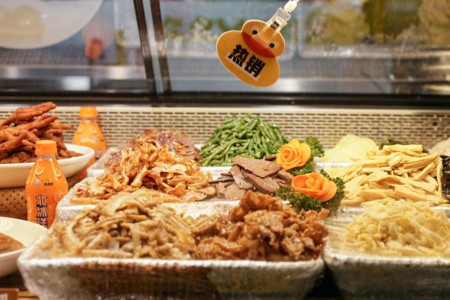
李华泽热卤店和常见的卤味店有着不少区别。消费者走进门店,除了能看见产品展示柜,还有明档操作台。它们通常也设置了堂食区域,顾客不用即买即走,可以坐下来趁热吃。整体来看其面积更大,约20-50平方米。

最核心的差异在于,李华泽采用一锅一卤的出品方式,主打带汤热食的新吃法。

热腾的小锅里骨汤为底、草本香料入味,店员熟练地下入鸭头、翅尖、虎皮凤爪,不到3分钟,再将它们一一捞起来,一碗带汤的热卤就出锅了。这种做法让卤味保持温度、口感更软烂多汁,与冷卤在口感上明显区分开来。

“一锅一汤给顾客去卤,把卤出来的产品和汤全部打包。明档操作,既有烟火气,也让食品安全看得见。”李华泽热卤鸭头华北区域运营总监荣亮告诉红餐网。

产品层面,热卤门店相较于传统卤味往往更加丰富。李华泽点单小程序显示,其产品SKU超过50款,基本涵盖了所有常见的荤素卤味。

其中,“嗦嗦多汁鸭头”是招牌,一个鸭头可以吃到鸭皮、鸭脑、鸭舌、鸭下巴肉等6种肉质的不同口感,该产品获得了由弗若斯特沙利文颁布的2024年“热卤鸭头全国销量领先”的认证证书。

此外,计价方式也与传统门店的散装称重有所不同。热卤门店的鸭头、鸭舌、鸭掌等不少商品往往按个售卖,明码标价。李华泽还推出了“小黄碗”套餐模式,价格从16.8元至28.8元不等。简单来说,就是按份定价,顾客自由搭配荤素。

值得一提的是,除了鸭头、鸭翅等招牌鸭货卤味,菜单上还出现了鸭腿面、鸭胗面等主食。

在过去的行业分类里,卤味根据消费场景不同被划分为休闲卤味和佐餐卤味两大类。类似于李华泽主打的带汤热卤模式则进一步拓展了场景——既可以作为小吃,也能满足顾客的饱腹需求,让卤味从零食场景延伸至一日三餐。

产品、套餐的价格是既定的。如此一来,消费者点单时一目了然,降低决策成本。而将热卤和主食打包成套餐售卖,进一步让卤味融入日常饮食,提升消费频次。

为了适应这样的高频刚需,热卤门店在选址策略上通常更接地气。目前李华泽在北京落地的100家门店里,90%是以社区为核心阵地。

“一方面,社区门店相较于购物商场的店租更低,另一方面,客流也更稳定、复购率高。”荣亮介绍。

据透露,李华泽北京门店日均实收约5000元。复购数据也印证了热卤的消费粘性。大众点评、小红书等平台上,消费者给出“一周吃三天都不腻”“汤底是灵魂,每次都要打包回家煮面”等评价。

李华泽数据显示,其会员月度复购率超过40%,部分社区老店的熟客复购率甚至达到60%以上,品牌也仅用7年时间,实现了从吉林到东北市场、进而拓展至全国的“三级跳”。

后端做重、前端做轻,

一套可复制的扩张模型

事实上,消费者对热卤其实并不陌生。但掣肘于需要现场加工、标准化程度低、模式偏重,它们过去长期被困在菜市场档口和生鲜超市里。如今,李华泽们正在打破僵局。

不过,真正支撑起全国化扩张,还考验着门店背后的系统能力,尤其在高速拓店中维持品质稳定。

李华泽的选择是在供应链上持续加码,将传统卤味制作中依赖员工手艺的环节转化为可量化、可复制的标准化流程。例如,其AI视觉识别系统用于原料分选,能确保每一批鸭头的大小、新鲜度符合统一标准。

“我们内部有一句话,‘前端门店能做到多轻就多轻,后端供应链和工厂能做多重就多重。’”荣亮告诉红餐网,从原料采购、清洗切割、腌制入味到冷链配送,产品生产的全过程均在数据化管控下完成,且总部中台可以实现实时云监控。

同时,门店持续扩张的背后,是一个由加盟商构成的庞大网络。如何让合作伙伴开得出来、活得下去,是热卤品牌能否持续扩张的关键。

据了解,在运营支持层面,李华泽构建了覆盖选址评估、技术培训、运营指导、营销策划等在内的八大支持体系。

例如,为了降低选址失误风险,在北京市场开拓前,团队先做了400个商圈的网格化规划,用大数据软件分析1公里范围内的人口结构、年龄、收入、消费频率,再结合线下测流和外卖平台数据,测算新店线上线下的预估月销,准确率达到了95%。

此外,在流量碎片化的当下,李华泽正设法让热卤不只停留在社区生意,而是升级成年轻人愿意主动分享、自发传播的消费选择。以“热卤文化节”为代表的活动IP,将市集、音乐、潮玩和热卤打包在一起,把吃鸭头变成一种带有体验感的社交活动。

与此同时,品牌还联合媒体资源进行深度内容共创。抖音、小红书等平台上,关于“李华泽小黄碗”“嗦嗦多汁鸭头”的短视频和笔记持续发酵,话题性内容不断为门店导入新客。据品牌方透露,目前李华泽已积累超过290万线上会员,品牌声量突破25亿次曝光。

热卤走向全国,

比速度更重要的是什么?

诚然,摆在李华泽等热卤品牌面前的难题还有不少。

最直接的压力来自赛道选择——当热卤开始切入一日三餐,它本质上切进了竞争最激烈的快餐赛道,那些卷到极致的快餐、面馆、小火锅,都成了对手。

与此同时,一个细分赛道越热,也意味着会引来越来越多玩家的入局、模仿,导致越来越同质化。一锅一卤、带汤热食、明档操作,这些在品牌诞生之初构成差异化体验的元素,也会被越来越多品牌复刻。

李华泽的应对思路是,把能构成壁垒的环节持续加固。

产品端,其研发节奏为“数据与供应链双驱动、小步快跑”,每个月推出1至2款具有话题性或贴合时令的单品试探市场反应,每季度做一次较大的菜单调整,冬天侧重滋补暖胃,夏天搭配清爽解腻的辅菜。

但所有创新都扣在“带汤热卤”这条主线上,内核不动。这种节奏的好处在于,既保持菜单的新鲜感,又不让消费者觉得陌生。围绕“骨汤现煮、热食带汤”展开,让消费者提到热卤,就自然联想到李华泽,进一步将“带汤热卤”从产品形态沉淀为品牌心智。

其次是改造消费场景。近期李华泽推出了3.0版本的门店形象,明亮的黄色与原木色调铺满整个空间,从装潢到碗具都带着统一的记忆点。这种设计上的刻意为之,让它更有记忆点,同时也更加贴近年轻人的消费习惯。

这些能力的打磨,让全国化提速有了底气。北京跑通之后,下一步是河北和天津。荣亮在发布会上表示,团队在北京市场摸索出的标准化运营和本地化打法,正在向周边城市复制,目标是在华北大区开出400家以上门店,先在北方站稳脚跟。

值得一提的是,李华泽的扩张并不求快。 “成熟一个、复制一个”,把北京跑通的产品标准、供应链保障、加盟赋能和营销打法完整带到新市场,用已验证的经验为门店护航。用荣亮的话说,“本质上,我们是和加盟商一起把生意做稳、做好,而不是单纯追求门店数量。”

注:文/红餐编辑部,文章来源:红餐网(公众号ID:hongcan18),本文为作者独立观点,不代表亿邦动力立场。

文章来源:红餐网

广告
微信
朋友圈

这么好看,分享一下?

朋友圈 分享

APP内打开

赞 +1
+1
微信好友 朋友圈 新浪微博 QQ空间
关闭
收藏成功
发送
/140 0