广告
加载中

煤矿里的“脏累险” 会长出一个机器人赛道吗?

龚作仁 2026-06-08 12:44
龚作仁 2026/06/08 12:44

邦小白快读

EN
全文速览

本文核心讲政策推动下,煤矿井下辅助作业机器人成为新的待开发赛道,核心干货信息整理如下

1. 当前矿山智能化正在从核心的主采主运环节,向一线脏累险的辅助作业场景延伸,2026年5月国家两部门已经启动矿山机器人应用验证试点,推动把人工承担的巷道清理、搬运等危险琐碎作业交给机器人完成。

2. 这个细分场景此前长期被低估,单个场景不起眼但每天都发生,直接影响煤矿安全和作业效率,该领域技术门槛较高,井下环境复杂、工况差异大,通用机器人简单改装无法使用,必须量身定制。

3. 国内已有企业布局,随擎机器人聚焦该场景,和大型能源央企联合开发,目前已有千万元级在手订单,核心产品正在做安全认证,团队有深厚技术和工程经验。

当前煤矿辅助作业机器人赛道即将崛起,给相关机器人品牌商明确了发展方向和市场机会,核心信息如下

1. 政策与市场趋势:2026年国家两部门发布政策启动矿山机器人应用验证试点,叠加煤矿安全治理的需求,井下脏累险作业的机器替代已经提上日程,赛道红利明确。

2. 产品研发方向:行业此前都聚焦大型采煤、掘进、运输机器人,辅助作业是长期被低估的广阔市场,这类场景数量多、分布广,需求迫切,是新的增长点。

3. 产品研发要点:该场景不能走通用机器人改装的路线,必须贴合井下低照度、高粉尘、高瓦斯、狭窄空间等特殊环境,针对性打磨环境感知、运动控制、防爆、能源管理等核心能力,要和大客户联合开发做场景验证,满足客户对稳定运行、便于维护的要求。

对于做矿山设备相关的卖家来说,当前煤矿辅助作业机器人领域出现了明确的增长机会,也有需要注意的风险,核心干货整理如下

1. 政策与机会:2026年国家矿山安监局、工信部联合启动矿山机器人应用验证试点,政策大力推动井下危险作业机器替代,辅助作业场景长期被忽略,需求未被满足,属于全新的增量增长市场。

2. 可学习的发展路径:参考头部创业企业随擎机器人的做法,不做通用改装,瞄准细分场景量身开发产品,和大型能源央企开展联合开发与场景验证,贴合现场需求持续优化产品,目前已经拿到千万元级在手订单。

3. 风险提示:该赛道技术与工程门槛较高,井下环境复杂、工况差异大,客户核心要求是产品稳定运行、融入现场流程、便于维护,没有核心技术和工程积累的玩家很难切入,盲目进入容易失败。

对于生产矿山相关设备的工厂来说,煤矿辅助作业机器人的兴起带来了新的商业机会,也明确了产品生产设计的方向,核心内容整理如下

1. 商业机会:当前矿山智能化已经从主采主运的核心环节,延伸到分布广泛的一线辅助作业场景,政策推动人工替代,该场景需求庞大尚未充分开发,是工厂转型和新增营收的重要方向。

2. 产品生产设计需求:该领域不能采用通用机器人底盘加部件改装的生产思路,必须围绕井下低照度、高粉尘、高瓦斯、积水湿滑、狭窄空间等特殊环境,以及工况差异大的特点,针对性开发环境感知、运动控制、安全防爆、能源管理、精密执行五大核心模块,产品要覆盖多个细分作业,同时满足稳定运行、便于维护的要求。

3. 发展启示:要提前积累工程化量产能力,多和下游大客户联合开发,开展实地场景验证,依托已有技术经验逐步切入市场。

对于服务矿山和机器人行业的服务商来说,煤矿辅助作业机器人新赛道的兴起带来了新的业务机会,核心行业信息整理如下

1. 行业发展趋势:国内矿山智能化已经从主干的采掘运输环节,向末梢分散的辅助作业环节延伸,政策大力推动脏累险作业的机器替代,一个新的细分机器人赛道正在形成,未来市场需求会快速释放。

2. 客户核心痛点:一方面煤矿端长期缺乏能覆盖辅助作业场景的成熟产品,现有通用改装产品无法满足稳定作业的要求;另一方面机器人创业企业缺乏井下场景资源、验证渠道和工程化落地支持,难以快速推出合格产品。

3. 可拓展的业务方向:服务商可以围绕该赛道,开展矿区场景对接验证服务、矿用产品安全认证咨询服务、现场运维服务,也可以为机器人企业提供大客户对接、工程化落地支撑服务,帮助企业快速推进产品落地。

对于机器人产业平台、矿山设备交易平台这类平台商来说,新赛道的兴起带来了新的运营和招商方向,核心干货整理如下

1. 市场需求变化:当前煤矿端对辅助作业机器人的需求迫切,该场景长期被行业忽略,政策推动下需求会快速增长,市场供给严重不足,平台需要提前布局该细分品类,抓住赛道增长红利。

2. 招商布局方向:可以重点引入随擎机器人这类深耕细分场景、具备核心技术和工程化交付能力的创业企业,这类企业已经拿到千万元级订单,产品即将落地,增长潜力大;同时可以对接大型能源央企的需求,搭建供需对接的专属通道,提升平台粘性。

3. 运营风险规避:该赛道对技术和工程能力要求很高,缺乏场景积累和核心能力的企业很难推出合格产品,平台招商筛选时要侧重考察技术团队的工程经验和场景落地能力,规避赛道泡沫风险,还可以搭建场景验证对接机制,帮助入驻企业快速完成产品测试。

对于产业研究人员来说,本文披露了国内矿山智能化领域的最新产业动向,提供了新的研究样本,核心信息整理如下

1. 产业新动向:国内矿山智能化发展已经进入深水区,从核心的主采主运环节逐步延伸到末端分散的辅助作业场景,2026年国家主管部门已经启动矿山机器人应用验证试点,企业已经开始布局,一个更务实、更贴近现场需求的新机器人细分赛道正在形成。

2. 行业新问题:该细分赛道和通用机器人、大型矿山机器人都有明显差异,存在独特的行业门槛,需要解决弱光粉尘环境感知、非结构化复杂路面运动控制、矿用防爆安全、定制化工况适配等多个新问题,通用机器人简单改装的路径行不通。

3. 商业模式研究方向:本文给出了成熟的落地样本,随擎机器人采用聚焦细分场景+联合大型客户开发+依托工程经验逐步落地的模式,重场景验证、重工程化能力,已经实现千万元级订单,该模式是值得深入研究的新特种机器人商业化路径。

返回默认

声明:快读内容全程由AI生成,请注意甄别信息。如您发现问题,请发送邮件至 run@ebrun.com 。

我是 品牌商 卖家 工厂 服务商 平台商 研究者 帮我再读一遍。

Quick Summary

This article outlines that under policy impetus, underground coal mine auxiliary operation robots have emerged as a new untapped market segment. Key takeaways are as follows:

1. China's smart mine development is expanding from core coal extraction and main transportation operations to frontline "dirty, dangerous and labor-intensive" auxiliary operation scenarios. In May 2026, two Chinese government departments launched a pilot program for application verification of mining robots, which aims to replace human workers in dangerous, trivial tasks such as tunnel cleaning and material handling with robots.

2. This niche segment has long been undervalued. While individual scenarios may seem insignificant, these operations occur on a daily basis and directly impact coal mine safety and operational efficiency. The sector has high technical barriers: complex underground environments and large variations in working conditions mean off-the-shelf general-purpose robots cannot be used with simple modifications — custom solutions are required.

3. A number of Chinese companies have already entered this space. Suiqing Robotics, a startup focused exclusively on this segment, is co-developing products with large state-owned energy giants. It currently holds RMB 10 million-level orders, its core products are undergoing mine safety certification, and its team has extensive technical and engineering experience.

The coal mine auxiliary operation robot track is poised for growth, offering clear development direction and market opportunities for relevant robotics brands. Key insights are as follows:

1. Policy and market trends: In 2026, two Chinese government ministries launched a national pilot program for application verification of mining robots. Combined with growing demand for coal mine safety improvement, robot replacement for dangerous underground auxiliary work is now officially on the agenda, making the growth potential of this track clear.

2. Product R&D direction: The industry has long focused on large-scale coal cutting, tunneling and transportation robots. Auxiliary operations, a large market long undervalued, are an urgent new growth area with numerous widely distributed scenarios.

3. R&D priorities: Generic robot modifications will not work for this segment. Solutions must be adapted to special underground conditions including low light, high dust, high gas concentration, and narrow spaces. Core capabilities such as environmental perception, motion control, explosion protection and energy management must be tailored to the scenario. Companies should carry out joint development and on-site verification with large key clients to meet requirements for stable operation and easy maintenance.

For sellers of mining equipment, the coal mine auxiliary operation robot sector presents clear growth opportunities along with notable risks. Key takeaways are as follows:

1. Policy and opportunities: In 2026, the National Mine Safety Administration and the Ministry of Industry and Information Technology jointly launched the mining robot application verification pilot. Strong policy support is driving robot replacement for dangerous underground work. This long-overlooked auxiliary operation segment is an entirely new incremental market with unmet demand.

2. A actionable development path: Leading startup Suiqing Robotics offers a proven model: instead of modifying general-purpose robots, it develops custom solutions for niche scenarios, carries out joint development and on-site verification with large state-owned energy enterprises, and iterates products continuously to match on-site demand. To date, it has secured RMB 10 million-level orders.

3. Risk warning: This track has high technical and engineering barriers, due to complex underground environments and highly variable working conditions. Clients prioritize stable operation, integration into existing workflows and easy maintenance. Players without core technology and engineering expertise will struggle to enter the market, and blind entry carries a high risk of failure.

For manufacturers of mining-related equipment, the rise of coal mine auxiliary operation robots brings new business opportunities and clear direction for product design. Key insights are as follows:

1. Business opportunities: China's smart mine development has expanded from core coal extraction and transportation links to widely distributed frontline auxiliary operation scenarios. Policy-driven labor replacement has created huge untapped demand in this segment, making it a key direction for factory transformation and new revenue growth.

2. Product design and manufacturing requirements: The "general robot chassis + modified parts" approach cannot meet the needs of this sector. Manufacturers must develop five core modules tailored to special underground conditions: environmental perception, motion control, explosion-proof safety, energy management, and precision actuation. Products must adapt to low light, high dust, high gas, wet and slippery conditions, narrow spaces and large variations in working conditions, cover multiple auxiliary operation types, and meet requirements for stable operation and easy maintenance.

3. Development takeaways: Manufacturers should build mass production and engineering capabilities in advance, collaborate more with large downstream clients for joint development and on-site scenario verification, and enter the market gradually based on existing technical experience.

For service providers serving the mining and robotics industries, the emergence of this new track brings new business opportunities. Key industry insights are as follows:

1. Industry development trends: China's smart mine development is expanding from core extraction and transportation links to decentralized end-of-line auxiliary operations. Strong policy support for robot replacement of dangerous manual work is giving rise to a new niche robotics segment, and market demand is set to grow rapidly in the coming years.

2. Core client pain points: On one hand, coal mine operators have long lacked mature products for auxiliary operation scenarios, and existing modified general-purpose robots cannot meet requirements for stable operation. On the other hand, robotics startups lack access to underground scenario resources, verification channels and engineering implementation support, making it difficult to launch qualified products quickly.

3. Expandable business directions: Service providers can develop new offerings around this track, including mine scenario connection and verification services, consulting for mining product safety certification, and on-site operation and maintenance services. They can also provide robotics startups with key client connections and engineering implementation support to help accelerate product launch.

For platform operators including robotics industry platforms and mining equipment trading platforms, the rise of this new track brings new directions for operation and merchant recruitment. Key takeaways are as follows:

1. Changing market demand: Coal mine operators have urgent demand for auxiliary operation robots. This segment has long been overlooked by the industry, and policy support will drive rapid demand growth while market supply remains severely insufficient. Platforms should布局 this niche category in advance to capture growth dividends.

2. Merchant recruitment direction: Platforms should prioritize onboarding startups like Suiqing Robotics that focus on this niche segment and have core technology and engineering delivery capabilities. Suiqing already holds RMB 10 million-level orders, its products are nearing launch, and it has strong growth potential. Platforms can also connect demand from large state-owned energy enterprises, build dedicated supply-demand matching channels, and improve user retention.

3. Operational risk mitigation: This track imposes high requirements for technical and engineering capabilities, and companies without scenario experience and core capabilities struggle to launch qualified products. When recruiting merchants, platforms should focus on evaluating the engineering experience and scenario implementation capabilities of technical teams to avoid the risk of market bubble. Platforms can also build a scenario verification and matching mechanism to help onboarded enterprises complete product testing quickly.

For industry researchers, this article discloses the latest industry developments in China's smart mining sector and provides a new research sample. Key information is as follows:

1. New industry developments: China's smart mining development has entered a deeper stage, expanding gradually from core extraction and transportation links to decentralized end-line auxiliary operation scenarios. In 2026, national regulatory authorities launched the mining robot application verification pilot, and companies have already started布局, giving rise to a new pragmatic niche robotics segment that is closer to on-site demand.

2. New industry challenges: This niche segment differs significantly from both general-purpose robots and large mining robots, with unique industry barriers. It requires solving new challenges including environmental perception in low-light and high-dust environments, motion control on unstructured complex terrain, mine explosion-proof safety, and adaptation to customized working conditions. The path of simple modification of general-purpose robots is not feasible.

3. Business model research direction: This article provides a mature implementation sample: Suiqing Robotics adopts a model of focusing on niche scenarios, joint development with large clients, and gradual implementation based on engineering experience, with a focus on scenario verification and engineering capabilities. The company has already secured RMB 10 million-level orders, making this model a new commercialization path for special-purpose robots worthy of in-depth research.

Disclaimer: The "Quick Summary" content is entirely generated by AI. Please exercise discretion when interpreting the information. For issues or corrections, please email run@ebrun.com .

I am a Brand Seller Factory Service Provider Marketplace Seller Researcher Read it again.

矿山智能化正在从主采主运环节,继续向更细碎、更靠近一线的场景延伸。2026年6月,第25个全国“安全生产月”启动;5月22日,国家矿山安全监察局综合司、工业和信息化部办公厅发布矿安综〔2026〕7号文,启动矿山机器人应用验证试点。政策和安全治理压力共同指向一个问题:煤矿井下那些长期由人承担的“脏累险”辅助作业,能否逐步交给机器人完成?

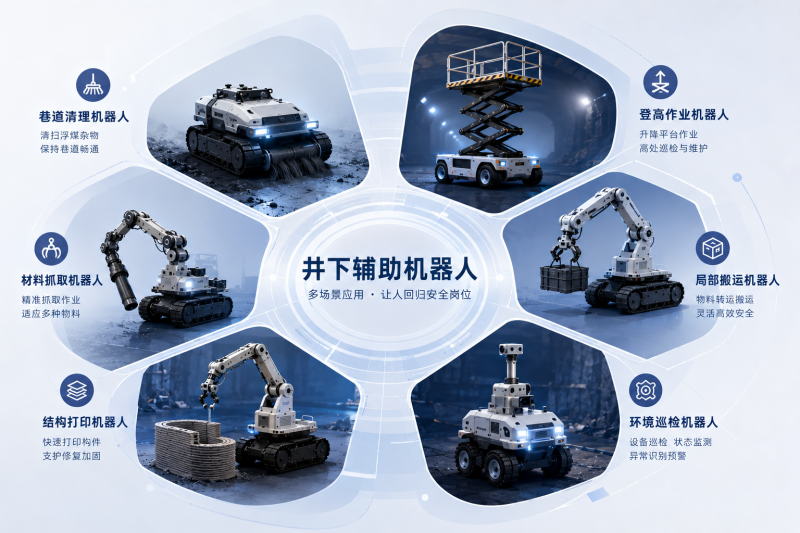
过去谈煤矿机器人,外界更容易想到采煤机、掘进机、无人运输等大型装备。相比之下,井下辅助作业并不显眼:巷道清理、局部搬运、材料抓取、环境巡检、危险区域探测等任务,单个场景未必醒目,却每天都在发生,并直接影响一线作业效率和安全管理水平。

辅助作业为什么难做

辅助作业难,不只是因为井下环境复杂。低照度、高粉尘、高湿度、高瓦斯浓度风险、狭窄空间、路面湿滑和通信不稳定,往往同时出现;不同矿区、不同巷道、不同作业任务的工况差异大,执行动作也变化多。设备既要走得稳,也要抓得准、放得下、管得住。

因此,一个通用底盘加上传感器和机械臂,并不能自动变成煤矿井下可用的机器人。感知能力要适应粉尘和弱光,运动控制要面对坡度、积水和不规则路面,安全防爆和能源管理必须服务于井下要求,精密执行机构还要完成真实作业动作。矿山客户最终关注的是设备能否稳定运行、便于维护,并真正融入现场流程。

随擎机器人的解法

随擎机器人正是围绕这一细分场景展开产品研发的企业之一。公司聚焦煤矿井下辅助作业,始终坚持与大型能源央企开展多款产品的联合开发和井下场景验证,目前在手订单逾千万元,核心产品正在进行煤矿矿用产品安全标志(MA)认证。

面对井下辅助作业的多重难点,随擎机器人不是把通用机器人简单改装下井,而是根据煤矿井下真实场景量身设计,并依据现场反馈持续优化。围绕低照度、高粉尘、高湿度、高瓦斯浓度风险和狭窄空间等环境特点,以及工况差异大、执行动作变化多的工艺特点,公司潜心打磨环境感知、运动控制、精密执行、安全防爆和能源管理等核心能力,推出巷道清理、局部搬运、材料抓取、结构打印、危险区域探测等系列化机器人产品。

这些能力对应的,正是辅助作业的真实痛点:在弱光和粉尘环境中识别环境,在狭窄湿滑空间中稳定移动,在复杂工况下完成抓取、清理、搬运等动作,并通过防爆结构、能源管理和现场运维体系提升安全性与可用性。

工程化能力与交付基础

随擎机器人创始团队既懂机器人核心技术,又深刻理解工程现场和大型客户的实际需求。核心创始人王博士毕业于同济大学,主持过多款特种工程机器人的研发和产品化;毕业于南洋理工大学的杨博士深耕机器人智能感知与运动控制研究;毕业于上海交通大学的冯博士拥有军工特种机器人工程经验;毕业于重庆大学的梁经理长期负责重大工程设备经营和大客户服务。

随擎体系内已沉淀特种机器人研发、生产、应用和推广能力,在水电设施、桥梁基建、建筑等复杂工程场景中积累了多传感器融合、智能规划控制、机械臂作业、现场施工和客户交付经验。旗下全资子公司拥有高新技术企业、苏州市姑苏科技领军创业企业、吴中区东吴科技领军创业企业等资质,为井下辅助作业机器人量产和交付提供了工程化基础。

如果说采掘和运输是矿山智能化的主干,那么辅助作业就是数量多、分布广、长期被低估的末梢。随着应用验证试点推进,煤矿里的“脏累险”正在被重新看见,也可能长出一个更务实、更贴近现场的机器人赛道。

注:文/龚作仁,文章来源:Laborer,本文为作者独立观点,不代表亿邦动力立场。

文章来源:Laborer

广告
微信
朋友圈

这么好看,分享一下?

朋友圈 分享

APP内打开

+1
+1
微信好友 朋友圈 新浪微博 QQ空间
关闭
收藏成功
发送
/140 0