广告
加载中

PPIO入选非凡产研2026 Global AI 100 以AI实力领跑出海新浪潮

龚作仁 2026-05-29 12:05
龚作仁 2026/05/29 12:05

邦小白快读

EN
全文速览

本文核心介绍了AI出海领域的最新行业动向,以及PPIO入选非凡产研2026 Global AI 100榜单的相关信息,整理核心干货如下:

1. 当前AI出海已经进入真实落地阶段,据测算2026年第一季度AI相关产品占总出口比重升至21.7%,同比增速达到40.2%,已经成为出口增长的最大拉动力,中国AI企业全球化发展明显提速。

2. 当前AI出海企业普遍面临两大核心难题:一是海外算力与模型等资源价格高、供应紧张;二是跨国部署受网络、成本、合规问题限制,本地化建设门槛高、响应速度慢。

3. 对于想要开展AI出海业务的个人开发者来说,可以选择PPIO的一站式服务,不需要投入高额成本自建基础设施,就可以调用全球算力、模型、智能体开发工具等资源,以更低成本完成出海布局。

本文为计划布局AI出海的品牌商整理了行业趋势、痛点解决方案等核心干货,具体内容如下:

1. 行业消费与产业趋势:AI出海已经进入真实落地阶段,AI相关产品已经成为中国出口增长的最大拉动力,2026年一季度占出口比重达21.7%,同比增速40.2%,全球化是AI品牌未来的核心增长方向,市场空间广阔。

2. 品牌出海核心痛点:AI品牌出海普遍面临海外算力模型资源成本高、供应不稳定,跨国本地化部署受网络、合规限制,门槛高响应慢的问题,自建基础设施会大幅拉高品牌出海成本。

3. 可落地解决方案:品牌商可以依托PPIO的全栈式AI出海基础设施服务,覆盖全型号GPU算力、主流国产模型适配、智能体开发部署全链条,一站式获取所需能力,不用重复投入高昂成本,就能快速完成全球化部署,抢占市场先机。

本文为布局AI出海业务的卖家整理了最新行业机会、痛点提示和落地支持等干货,具体内容如下:

1. 最新增长机会:AI出海已经进入落地发展阶段,AI相关产品是当前中国出口增长的最大拉动力,2026年一季度同比增速达到40.2%,属于高速增长的新兴增量市场,卖家布局AI相关出海业务有较大的增长空间。

2. 行业风险与痛点提示:AI出海目前普遍存在两大难题,一是海外算力、模型资源价格高供应紧,成本压力大;二是跨国部署受网络、成本、合规多重限制,本地化建设门槛高,响应市场速度慢,容易错过发展时机。

3. 官方认可的落地支持:PPIO是2025年上海市数字出海服务平台试点单位,还加入了浦东新区数字出海行动计划,能够为卖家提供一站式全栈服务,帮助卖家降低出海成本,缩短开发周期,快速完成全球化布局。

本文为想要推进数字化转型、拓展出海业务的工厂整理了商业机会、转型启示等核心干货,具体内容如下:

1. 新商业机会:当前AI相关产品已经成为中国出口增长的最大拉动力,2026年一季度占出口总比重达21.7%,同比增速高达40.2%,智能制造是AI出海的核心场景之一,工厂布局AI赋能的智能制造产品出海,有非常大的增长空间。

2. 数字化转型的启示:工厂想要推进AI相关的生产升级和出海布局,不需要投入高昂成本自建算力、模型等底层基础设施,可以依托第三方专业服务商,大幅降低转型和出海的门槛,控制转型成本。

3. 可用的落地支撑:PPIO打造了覆盖全球的分布式算力网络,可以满足工厂AI训练、推理的多元算力需求,还能提供模型服务和智能体开发部署支持,围绕智能制造场景输出全栈云服务,帮助工厂以低成本快速完成AI相关产品的全球化落地。

本文为AI出海相关的服务商整理了行业发展趋势、客户痛点和可参考的业务方向,核心干货如下:

1. 行业发展趋势:AI出海已经进入真实落地阶段,AI相关产品成为中国出口增长的最大拉动力,市场对AI出海底层基础设施服务的需求正在高速增长。从行业数据来看,PPIO日均Token调用量较2025年同比增长超7倍,Agent沙箱业务上线不到一年规模增长超50倍,足以说明赛道增长速度极快,发展空间广阔。

2. 客户核心痛点:当前出海企业的核心痛点集中在两点,一是海外算力与模型资源价格高、供应紧张,二是跨国部署受网络、成本、合规等因素影响,本地化建设门槛高、响应速度慢,无法快速适配市场变化。

3. 可参考的业务方向:服务商可以参考PPIO的发展模式,构建全球化分布式算力基础设施,打造覆盖算力调度、MaaS模型服务、Agent基础设施的全栈式产品矩阵,满足出海企业一站式需求,为企业降低出海成本。

本文为做AI出海相关服务的平台商整理了市场需求、可借鉴的运营经验和发展方向,核心干货如下:

1. 市场核心需求:当前AI出海企业对底层服务平台的核心需求十分明确,一是需要性价比高、供应稳定的海外算力、模型资源,二是需要解决跨国部署过程中的网络、成本、合规问题,降低本地化建设的门槛,提升响应速度。

2. 可借鉴的平台运营做法:平台可以参考PPIO的发展路径,以构建全球化分布式算力网络为核心,打造覆盖云边端协同的AI原生一体化服务,逐步拓展出覆盖算力调度、MaaS模型服务、智能体开发部署的全链条产品,形成全栈式产品矩阵,满足出海企业的一站式需求。

3. 发展方向提示:平台要积极对接官方数字出海相关扶持政策,获取官方资质认可,持续完善合规能力,拓展服务生态,提升自身公信力。PPIO就是获批上海数字出海服务平台试点,加入官方数字出海行动计划,获得了官方背书,更利于业务拓展。

本文为AI出海领域的研究者提供了最新产业动向、产业新问题和代表性商业模式案例,核心干货如下:

1. 最新产业新动向:当前中国AI出海已经进入真实落地阶段,AI相关产品已经成为中国出口增长的最大拉动力,据测算2026年第一季度AI相关产品占总出口比重升至21.7%,同比增速达到40.2%,中国AI企业全球化进程明显提速,AI出海底层基础设施服务已经成为一个高速增长的核心细分赛道。

2. 产业新问题:AI出海当前暴露出两大核心痛点,一是海外算力与模型资源价格高、供应紧张,二是跨国部署受网络、成本、合规多重限制,本地化建设门槛高、响应速度慢;同时随着AI应用从Chatbot向Agent演进,底层基础设施也迎来了更高的要求。

3. 代表性商业模式:PPIO探索出了面向AI出海企业的全栈式基础设施服务商业模式,形成了从全球算力调度到MaaS模型服务再到Agent基础设施的完整产品矩阵,为出海企业提供一站式服务,帮助企业大幅降低出海成本,该模式已经获得官方认可,具备较高的研究价值。

返回默认

声明:快读内容全程由AI生成,请注意甄别信息。如您发现问题,请发送邮件至 run@ebrun.com 。

我是 品牌商 卖家 工厂 服务商 平台商 研究者 帮我再读一遍。

Quick Summary

This article outlines the latest industry developments in China's AI going-global sector, and shares information on PPIO being named to Feifan Research's 2026 Global AI 100 list. Key takeaways are as follows:

1. China's AI going-global has entered a phase of real落地 commercialization. It is estimated that by Q1 2026, AI-related products will account for 21.7% of China's total exports, with a 40.2% year-on-year growth. The sector has become the largest driver of China's export growth, and the global expansion of Chinese AI companies is clearly accelerating.

2. Chinese AI companies venturing overseas generally face two core challenges: first, high costs and tight supply of overseas resources including computing power and AI models; second, cross-border deployment is constrained by network, cost and compliance issues, resulting in high barriers to localized setup and slow market response.

3. For individual developers looking to launch an AI going-global business, PPIO's one-stop service eliminates the need for high upfront investment in building proprietary infrastructure. Developers can access global computing power, pre-trained models, and agent development tools through the platform to establish an overseas presence at a much lower cost.

This article summarizes key insights on industry trends and pain point solutions for brands planning to expand their AI-powered business globally. Core takeaways are as follows:

1. Industry and consumer trends: AI going-global has entered the real commercial落地 phase, and AI-related products have become the largest driver of China's export growth. AI products will account for 21.7% of total exports in Q1 2026, with 40.2% year-on-year growth. Going global is the core growth direction for AI brands moving forward, with enormous untapped market potential.

2. Core pain points for global AI brands: AI brands expanding overseas generally face high costs and unstable supply of overseas computing power and model resources. Cross-border localized deployment is also restricted by network and compliance requirements, leading to high entry barriers and slow response times. Building proprietary infrastructure from scratch drastically increases the cost of global expansion.

3. Actionable solution: Brands can leverage PPIO's full-stack AI going-global infrastructure service, which covers all GPU compute models, supports adaptation for major domestic Chinese AI models, and offers end-to-end support for agent development and deployment. The one-stop service eliminates redundant high-cost investment, allowing brands to complete global deployment quickly and capture first-mover advantage.

This article compiles the latest industry opportunities, pain point warnings and落地 support for sellers expanding AI-powered overseas business. Key insights are as follows:

1. Latest growth opportunities: AI going-global has entered the phase of commercial落地, and AI-related products are currently the largest driver of China's export growth, with 40.2% year-on-year growth projected for Q1 2026. This is a fast-growing emerging incremental market, leaving large room for growth for sellers that enter the AI going-global space.

2. Industry risks and pain points: AI going-global currently has two widespread core challenges. First, overseas computing power and model resources are expensive and supply-constrained, creating heavy cost pressure. Second, cross-border deployment is restricted by multiple factors including network conditions, cost and compliance, leading to high barriers to localized setup and slow market response that makes it easy to miss growth opportunities.

3. Officially recognized落地 support: PPIO is a 2025 pilot unit for Shanghai's digital going-global service platform, and has joined the Pudong New Area digital going-global action plan. It provides sellers with one-stop full-stack service that helps reduce expansion costs, shorten development cycles, and complete global布局 quickly.

This article summarizes business opportunities and digital transformation insights for factories looking to advance digital transformation and expand overseas business. Key takeaways are as follows:

1. New business opportunities: AI-related products will become the largest driver of China's export growth by Q1 2026, accounting for 21.7% of total exports with 40.2% year-on-year growth. Smart manufacturing is one of the core scenarios for AI going-global, so factories that export AI-enabled smart manufacturing products have enormous room for growth.

2. Insights for digital transformation: For factories looking to advance AI-powered production upgrades and expand overseas, there is no need to make high-cost investments to build proprietary underlying infrastructure such as computing power and models. Partnering with a professional third-party service provider can drastically lower barriers to transformation and global expansion, while keeping transformation costs under control.

3. Available落地 support: PPIO has built a globally distributed computing network that can meet diverse compute demands for factories' AI training and inference tasks. It also provides model services and support for agent development and deployment, delivering full-stack cloud services tailored for smart manufacturing scenarios to help factories complete the global落地 of AI-related products quickly at low cost.

This article整理ed industry development trends, customer pain points and reference business directions for service providers in the AI going-global space. Key insights are as follows:

1. Industry development trends: AI going-global has entered the phase of real commercial落地, and AI-related products have become the largest driver of China's export growth, driving rapid growth in market demand for underlying AI going-global infrastructure services. Industry data shows that PPIO's daily average Token call volume has grown more than 7-fold year-on-year from 2025, and its Agent sandbox business has scaled more than 50-fold less than a year after launch, demonstrating the extremely fast growth and enormous potential of this sector.

2. Core customer pain points: The core pain points for companies going global with AI center on two issues: first, high prices and tight supply of overseas computing power and model resources; second, cross-border deployment is constrained by network, cost, compliance and other factors, leading to high barriers to localized setup and slow response that makes it hard to adapt quickly to market changes.

3. Reference business direction: Service providers can learn from PPIO's development model: build a global distributed computing infrastructure, and develop a full-stack product matrix covering computing scheduling, MaaS model services, and Agent infrastructure to meet the one-stop needs of companies going global, and help lower their expansion costs.

This article summarizes market demand, reference operational experience and development directions for platform providers offering AI going-global related services. Key takeaways are as follows:

1. Core market demand: The core demands of AI going-global enterprises for underlying service platforms are clear: first, they need cost-effective, stably supplied overseas computing power and model resources; second, they need solutions to address network, cost and compliance issues during cross-border deployment, to lower barriers to localized setup and improve response speed.

2. Reference platform operational practices: Platforms can follow PPIO's development path: focus on building a global distributed computing network, develop cloud-edge-end collaborative AI-native integrated services, and gradually expand to a full product line covering computing scheduling, MaaS model services, and agent development and deployment, forming a full-stack product matrix that meets the one-stop needs of companies going global.

3. Development direction提示: Platforms should actively connect with official supporting policies for digital going-global, obtain official qualification recognition, continuously improve compliance capabilities, expand service ecosystems, and build public credibility. PPIO, for example, has been approved as a pilot for Shanghai's digital going-global service platform and joined the official digital going-global action plan, gaining official endorsement that supports faster business expansion.

This article provides the latest industry developments, emerging industrial issues and a representative business model case for researchers in the AI going-global field. Key insights are as follows:

1. Latest industrial developments: China's AI going-global has entered the phase of real commercial落地, and AI-related products have become the largest driver of China's export growth. It is estimated that AI-related products will account for 21.7% of total exports in Q1 2026, with 40.2% year-on-year growth. The globalization of Chinese AI companies is clearly accelerating, and underlying infrastructure services for AI going-global have become a fast-growing core niche sector.

2. Emerging industrial issues: AI going-global currently faces two core pain points: first, high prices and tight supply of overseas computing power and model resources; second, cross-border deployment is constrained by network, cost and compliance factors, leading to high barriers to localized setup and slow response speed. At the same time, as AI applications evolve from chatbots to agents, underlying infrastructure is facing higher performance requirements.

3. Representative business model: PPIO has developed a full-stack infrastructure service business model for AI going-global enterprises, building a complete product matrix from global computing scheduling to MaaS model services and Agent infrastructure. It provides one-stop service for enterprises going global that drastically reduces their expansion costs, and this model has already obtained official recognition, making it high-value for research.

Disclaimer: The "Quick Summary" content is entirely generated by AI. Please exercise discretion when interpreting the information. For issues or corrections, please email run@ebrun.com .

I am a Brand Seller Factory Service Provider Marketplace Seller Researcher Read it again.

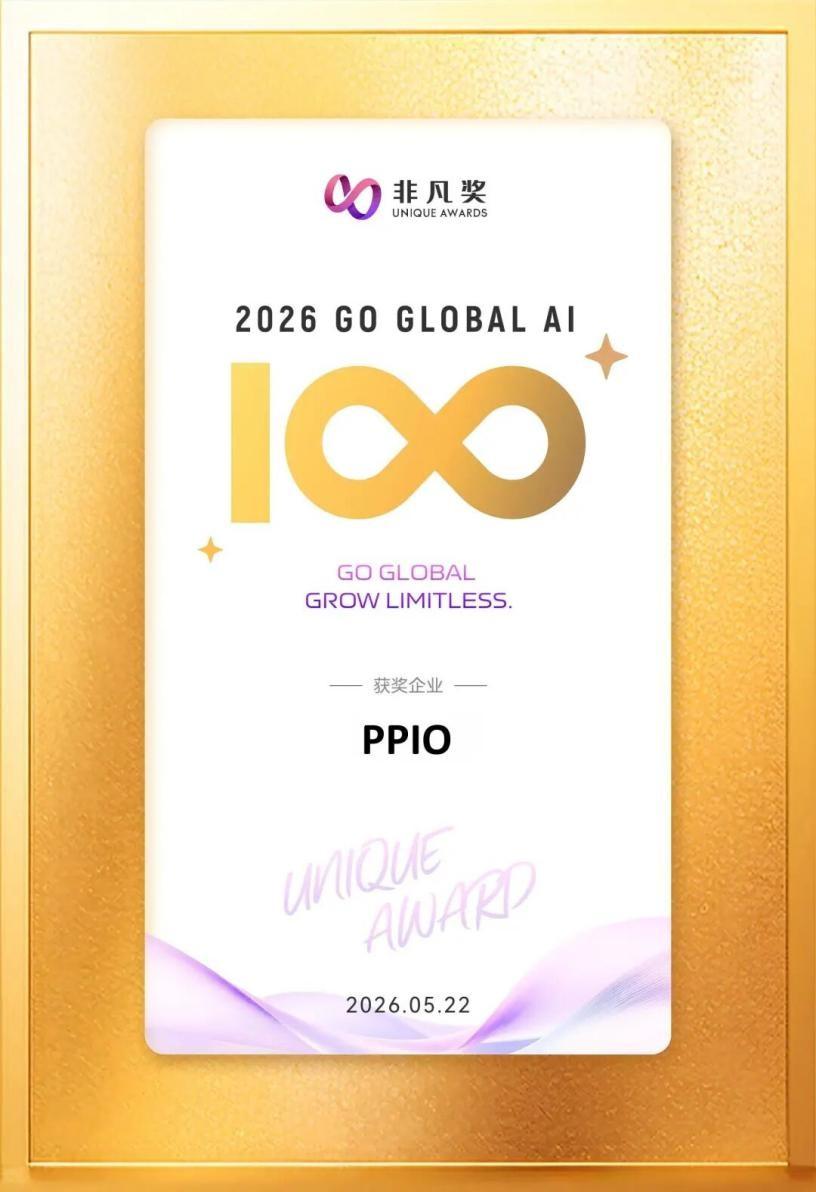
近日,PPIO入选非凡产研发布的「2026 Global AI 100」年度最具影响力企业榜单。

该榜单由非凡产研主办的非凡大赏——年度AI全球化增长峰会评选,致力于发掘并赋能具备全球化视野的Go Global AI Native Company,推动AI技术在全球商业与社会场景中的深度融合,覆盖Agent、多模态、生产力工具、智能硬件等前沿领域。

作为目前国内规格最高、聚焦AI出海的顶级峰会之一,非凡大赏的获奖认可代表着对PPIO在技产品实力与全球化能力的高度肯定,也折射出中国AI企业全球化提速的宏观图景。

PPIO以 AI实力领跑出海新浪潮

AI出海,正在进入真实落地阶段。根据申银万国证券研究所测算,2026年第一季度,AI相关产品占总出口比重已升至21.7%,同比增速高达40.2%,成为出口增长的最大拉动力。

目前,出海企业面临两大难题:一是海外算力与模型等资源价格高、供应紧;二是跨国部署受制于网络、成本与合规,导致本地化建设门槛高、响应慢。

PPIO以构建全球化的分布式算力基础设施为核心,提供覆盖云边端协同的AI原生一体化服务。平台整合全球算力节点,形成低时延、高带宽、高可用的算力网络,围绕人工智能、数字文娱、跨境电商、智能制造等企业出海典型场景,输出即开即用的全栈式云服务。

在算力层面,PPIO集群覆盖全型号GPU配置,可满足大规模训练与推理等多元场景的算力需求。依托大容量带宽与全球化节点能力,PPIO能显著提升模型下载、数据传输与访问效率,大幅缩短开发周期,帮助企业在激烈的市场竞争中抢占先机。

在模型服务层面,PPIO模型平台基于自研推理加速引擎,对主流模型进行day0适配,已上线DeepSeek、GLM、MiniMax、Kimi、Qwen等国产前沿模型,为企业提供按需付费、接入便捷的MaaS服务。

同时,随着AI应用从Chatbot走向Agent,底层基础设施也面临更高要求。为此,PPIO创新性推出智能体平台,提供Agent沙箱,支持智能体应用的快速构建、部署与安全运行,高速迭代快速响应企业出海数字化应用需求。

截至2026年 4月,PPIO整合了全球4800+ 分布式算力节点,日均Token调用量超过10000亿,较2025年同比增长超7 倍 ,业务场景的单请求Token量增长30倍。PPIO Agent沙箱在上线不到一年的时间里,沙箱业务规模增长超50倍。PPIO平台的累计开发者用户超57万。

从全球算力调度,到模型即服务,再到Agent基础设施,PPIO正在形成面向AI出海企业的全栈式产品矩阵。对于希望开拓海外市场的企业而言,这意味着其无需在新市场重复投入高昂成本自建算力设施,即可通过PPIO平台一站式调用全球高性能算力、主流模型与智能体基础设施等能力,以更低成本、更高效率完成全球化部署。

PPIO的跨境算力服务、数字出海技术支撑能力也获得了官方认可。在2025上海数字城市活动月主题日活动中,PPIO被授予 “2025年上海市数字出海服务平台” 试点单位;此外,PPIO还加入了浦东新区数据局数字出海行动计划(GDA),成为“GDA引航·服务地图”的发起方之一,并入选首批“GDA领航·服务站”,以坚实的技术设施与服务生态,助力中国数字企业扬帆远航。

未来,PPIO将继续扩展其全球基础设施边界,深化合规与服务能力,与生态伙伴一起,为中国数字经济的全球化发展提供稳定、高效、合规的底层动力,护航中国企业行稳致远。

注:文/龚作仁,文章来源:Laborer,本文为作者独立观点,不代表亿邦动力立场。

文章来源:Laborer

广告
微信
朋友圈

这么好看,分享一下?

朋友圈 分享

APP内打开

+1
+1
微信好友 朋友圈 新浪微博 QQ空间
关闭
收藏成功
发送
/140 0