广告
加载中

天猫上线“天猫设计家”:用AI标准化5000项工艺,终结家装供应链割裂顽疾

石磊 2026-05-15 16:51
石磊 2026/05/15 16:51

邦小白快读

EN
全文速览

本次天猫上线行业首个AI家装操作平台天猫设计家,针对家装行业长期存在的供应链割裂、卷款跑路等痛点,推出全流程标准化服务,普通消费者可获得更优质省心高性价比的家装服务,核心信息与实操干货如下:

1.核心服务优势:平台依托AI能力实现全流程标准化,覆盖设计、选品、施工、支付全环节,解决“卷款跑路”“恶意欠款”等行业顽疾,最终能为消费者提供更个性化的家装服务,交付速度更快,装修总价更低,后续还会在杭州、宁波等多城开设线下体验店,消费者可实地参观样板间、选材体验。

2.内测申请实操:目前平台已经开启内测,首批放出200个内测名额,不管是消费者还是家装从业者,都可以打开淘宝App搜索天猫设计家旗舰店申请内测,后续平台还会上线淘宝小程序,使用更便捷。

天猫设计家的上线,给家装品牌带来了新的渠道增长机会,也契合当前家装行业的发展趋势,核心干货整理如下:

1.消费趋势层面:当前家装市场正迎来结构性增长窗口,新房“好房子”建设加速推进,存量房翻新、局部改造需求持续释放,消费者对个性化家装的需求不断提升,未来小而美组织提供个性化服务将成主流。

2.渠道与营销机会:天猫设计家从装修设计阶段就介入消费决策,相比过去平台在硬装完成后才等待消费,能提前触达有家装需求的用户,品牌入驻平台供应链可提前获取用户流量。平台首批汇聚10万款全品类家装货品,面向设计师等从业者开放集采,品牌可依托集采模式走量,还能借助平台标准化改造解决行业同质化竞争问题。

天猫推出天猫设计家平台,给家装相关卖家尤其是中小家装从业者带来了新的增长机会,明确了行业未来发展方向,核心干货整理如下:

1.市场机会层面:当前家装市场处于结构性增长红利期,新房建设加速叠加存量房翻新需求释放,个性化家装需求持续提升,未来小而美的家装从业者将成为行业主力,卖家可围绕该方向提前布局。

2.平台赋能利好:中小家装从业者不需要投入重资产,就能通过平台获得AI设计、全品类供应链集采底价、工人匹配、担保交易等一整套整装交付能力,大幅降低运营成本,提升服务能力和市场竞争力。

3.行动提示:目前平台开放内测,首批仅有200个名额,卖家可尽早申请内测抢占早期红利,后续线下体验店和小程序上线后可获得更多流量倾斜。

天猫设计家上线推动家装行业全流程标准化改造,给家装相关生产工厂带来了新的商业机会,也指明了数字化转型方向,核心干货整理如下:

1.产品生产设计需求变化:未来家装行业走向个性化家装,由小而美从业者服务消费者,行业对产品适配标准化工艺的要求提升,工厂需要调整生产设计,匹配平台总结的5000项标准工艺要求,接入平台的全品类供应链体系。

2.商业合作机会:平台面向广大设计师、工长等从业者开放集采,首批已经汇聚10万款全品类家装货品,工厂可入驻平台供应链,获得稳定的B端集采订单,还能依托平台提前对接前端消费需求,打开新的出货渠道,降低渠道成本。

3.数字化转型启示:行业已经开始用AI整合零散的工种经验,转化为标准化能力,工厂可抓住行业升级机会,推进自身数字化改造,适配新的产业基础设施,提升自身市场竞争力。

天猫设计家上线,明确了家装行业当前的核心痛点和未来发展趋势,给家装相关服务商带来了新的发展方向,核心干货整理如下:

1.行业核心痛点:家装行业是万亿级市场,但长期受困于同质化竞争、供应链割裂,一直缺少“设计可落地、施工可追溯、资金可担保”的标准化基础设施,存在卷款跑路、上游恶意欠款、交付无保障等多个痛点,中小从业者没有重资产能力搭建全流程体系,无法满足消费者需求。

2.行业发展趋势:未来AI会赋能家装全流程实现标准化,行业会走向轻量化,设计师、工长等中小从业者会成为“超级个体”,成为行业服务主力,平台提供基础设施,第三方服务商提供配套服务的模式会逐渐成熟。

3.服务商机会:服务商可对接天猫设计家平台,围绕行业需求提供监理服务、工人培训服务等配套服务,依托平台流量获取客户,分享行业升级的红利。

天猫推出天猫设计家的实践,给各类布局家装行业的平台提供了可参考的经验,也明确了行业对平台的核心需求,核心干货整理如下:

1.行业对平台的核心需求:家装行业长期存在供应链割裂的顽疾,不管是从业者还是消费者,都需要第三方平台提供一整套标准化基础设施,解决设计落地难、资金无保障、交付不可控的问题。

2.可参考的平台运营做法:平台可以用AI整合行业多年的工种经验,转化为标准化工艺,覆盖设计、选品、施工、支付、线下体验全流程,开放能力赋能中小从业者,同时可以将业务边界从后端零售延伸到前端设计环节,提前介入消费决策,打开新的增长空间。

3.风险规避方向:平台需要搭建担保交易体系,落实工人实名制,解决卷款跑路、恶意欠款等行业顽疾,同时结合线上小程序和线下体验店,给消费者更好的服务体验,提升用户信任度。

天猫上线天猫设计家是家装产业互联网升级的新动向,衍生了全新的商业模式,为产业研究提供了新的样本,核心干货整理如下:

1.产业新动向:万亿家装市场多年的改造都没能打通产业毛细血管,没能解决供应链割裂的问题,本次天猫推出全链路AI标准化平台,填补了行业标准化基础设施的空白,推动行业走向轻量化运营,催生了AI赋能超级个体的新产业结构,同时也推动电商平台在家装行业的业务边界向前延伸,打开了新的增长空间。

2.新商业模式总结:该模式为平台提供全流程标准化基础设施,赋能中小家装从业者,依托供应链集采、平台服务获得收益,解决了传统家装重资产、交付差、信任缺失的核心问题,是家装行业破局的新尝试。

3.研究启示:该案例说明传统产业的互联网改造,核心是搭建开放的标准化基础设施,赋能中小参与者,而非平台自身做重资产运营,该思路对其他传统产业的升级改造也有参考意义。

返回默认

声明:快读内容全程由AI生成,请注意甄别信息。如您发现问题,请发送邮件至 run@ebrun.com 。

我是 品牌商 卖家 工厂 服务商 平台商 研究者 帮我再读一遍。

Quick Summary

Tmall has launched Tmall Designer, the industry's first AI-powered home renovation operating platform, to address long-standing pain points in the home improvement sector including fragmented supply chains and contractor absconding with client funds. The platform offers end-to-end standardized services to deliver higher-quality, more reliable and cost-effective home renovation solutions for general consumers. Key takeaways and practical guides are below:

1. Core service advantages: Leveraging AI capabilities, the platform standardizes the entire process covering design, product selection, construction and payment to solve persistent industry problems like fund misappropriation and malicious arrears. It ultimately delivers more personalized home renovation services with faster delivery and lower total costs. Tmall Designer will also open offline experience stores in multiple cities including Hangzhou and Ningbo, where consumers can visit showrooms and test materials in person.

2. How to apply for internal testing: The platform has launched an internal testing program with an initial batch of 200 spots. Both consumers and home improvement industry practitioners can apply by searching the "Tmall Designer Flagship Store" on the Taobao App. A Taobao mini-program will be launched in the future for more convenient access.

The launch of Tmall Designer brings new channel growth opportunities for home improvement brands, and aligns with current development trends of the industry. Key takeaways are as follows:

1. Consumer trends: The home improvement market is currently entering a window of structural growth. Driven by the accelerated development of high-quality new residential properties and continuously growing demand for existing home renovation and partial remodeling, consumer demand for personalized home decoration is rising steadily. Going forward, personalized services provided by small, agile players will become the mainstream.

2. Channel and marketing opportunities: Unlike traditional platforms that only engage consumers after hard decoration is completed, Tmall Designer介入 consumer decision-making as early as the design stage, allowing it to reach users with home improvement needs earlier. Brands that join the platform's supply chain can access this user traffic ahead of competitors. The platform already aggregates 100,000 SKUs of full-category home improvement products and opens collective purchasing to practitioners such as designers. Brands can scale sales volume through the collective purchasing model, and leverage the platform's standardization transformation to solve the problem of homogeneous industry competition.

Tmall's launch of the Tmall Designer platform brings new growth opportunities for home improvement-related sellers, especially small and medium-sized home improvement practitioners, and clarifies the future development direction of the industry. Key takeaways are as follows:

1. Market opportunities: The current home improvement market is in a period of structural growth dividend. Accelerated new residential construction combined with surging demand for existing home renovation is driving continuous growth in demand for personalized home improvement. Small and agile home improvement practitioners will become the main force of the industry in the future, and sellers can position themselves in advance along this direction.

2. Benefits from platform empowerment: Without heavy capital investment, small and medium-sized home improvement practitioners can gain a full set of turnkey delivery capabilities through the platform, including AI design, bulk purchasing at bottom prices from a full-category supply chain, worker matching and secured transaction services. This significantly reduces operational costs and improves service capabilities and market competitiveness.

3. Action note: The platform is currently open for internal testing with only 200 spots in the first batch. Sellers should apply early to seize early adopter dividends, and will gain more traffic support after the launch of offline experience stores and the mini-program.

The launch of Tmall Designer promotes end-to-end standardization transformation of the home improvement industry, brings new business opportunities for home improvement-related manufacturing factories, and clarifies the direction of digital transformation. Key takeaways are as follows:

1. Changes in product design and production requirements: As the home improvement industry moves toward personalized services delivered by small, agile practitioners, requirements for products to adapt to standardized processes are increasing. Factories need to adjust their production and design to align with the 5,000 standard process requirements summarized by the platform, and access the platform's full-category supply chain system.

2. Business cooperation opportunities: The platform opens collective purchasing to a wide range of practitioners including designers and foremen, and has already aggregated 100,000 SKUs of full-category home improvement products. Factories that join the platform's supply chain can gain stable B-end collective purchasing orders, connect with front-end consumer demand in advance through the platform, open up new sales channels and reduce channel costs.

3. Insights for digital transformation: The industry has started using AI to integrate fragmented craftsmanship experience and convert it into standardized capabilities. Factories can seize this industry upgrade opportunity to推进 their own digital transformation, adapt to the new industrial infrastructure and improve their market competitiveness.

The launch of Tmall Designer clarifies the core pain points and future development trends of the home improvement industry, and points out new development directions for home improvement-related service providers. Key takeaways are as follows:

1. Core industry pain points: Home improvement is a trillion-dollar market, but it has long been plagued by homogeneous competition and fragmented supply chains. The industry has long lacked standardized infrastructure that delivers implementable design, traceable construction and secured capital, leading to pain points including contractor fund absconding, malicious arrears from upstream players and unguaranteed delivery. Small and medium-sized practitioners lack the capital to build a full-process system on their own, leaving them unable to meet consumer demand.

2. Industry development trends: AI will empower end-to-end standardization of home improvement in the future, driving industry lightweighting. Small and medium practitioners such as designers and foremen will evolve into "super individuals" and become the main service providers of the industry. The model where the platform provides infrastructure and third-party service providers offer supporting services will gradually mature.

3. Opportunities for service providers: Service providers can partner with Tmall Designer to offer supporting services matching industry demand, such as supervision and worker training, acquire customers through platform traffic, and share the dividends from industry upgrade.

Tmall's launch of Tmall Designer offers referenceable experience for all platforms布局 the home improvement industry, and clarifies core industry demands for platforms. Key takeaways are as follows:

1. Core industry demand for platforms: Supply chain fragmentation is a long-standing persistent problem in the home improvement industry. Both practitioners and consumers need third-party platforms to provide a full set of standardized infrastructure to solve problems including difficult design implementation, unprotected funds and uncontrollable delivery.

2. Referenceable platform operation practices: Platforms can use AI to integrate years of accumulated craftsmanship experience from the industry and convert it into standardized processes, covering the full process of design, product selection, construction, payment and offline experience, open capabilities to empower small and medium practitioners. Meanwhile, platforms can extend their business boundary from back-end retail to the front-end design stage,介入 consumer decision-making earlier and open up new growth space.

3. Risk mitigation directions: Platforms need to build a secured transaction system and implement real-name registration for workers to solve persistent industry problems such as fund absconding and malicious arrears. They should also combine online mini-programs with offline experience stores to deliver a better consumer experience and improve user trust.

Tmall's launch of Tmall Designer marks a new trend in the industrial internet upgrade of the home improvement sector, has spawned a brand-new business model, and provides a new sample for industrial research. Key takeaways are as follows:

1. New industrial trend: Years of industry transformation have failed to打通 the "capillaries" of the trillion-dollar home improvement market or solve the problem of fragmented supply chains. Tmall's launch of a full-link AI-powered standardized platform fills the gap in industry standardized infrastructure, drives the industry toward lightweight operation, and gives rise to a new industrial structure of AI-empowered "super individuals". It also pushes e-commerce platforms to extend their business boundary further upstream in the home improvement industry, opening up new growth space.

2. Summary of the new business model: In this model, the platform provides full-process standardized infrastructure to empower small and medium-sized home improvement practitioners, and generates revenue through supply chain collective purchasing and platform services. It solves the core problems of traditional home improvement: heavy assets, poor delivery and lack of trust, making it a new attempt to break the industry's impasse.

3. Research implications: This case shows that the core of internet transformation for traditional industries is to build open standardized infrastructure to empower small and medium participants, rather than the platform itself operating with heavy assets. This approach also provides reference for the upgrade and transformation of other traditional industries.

Disclaimer: The "Quick Summary" content is entirely generated by AI. Please exercise discretion when interpreting the information. For issues or corrections, please email run@ebrun.com .

I am a Brand Seller Factory Service Provider Marketplace Seller Researcher Read it again.

【亿邦原创】“万亿级家装市场从不缺乏破局者,但过往改造始终未能打通产业毛细血管。”天猫设计家CEO马学军表示,家装行业长期受困于同质化竞争、供应链割裂,缺少一套让“设计可落地、施工可追溯、资金可担保”的标准化基础设施。

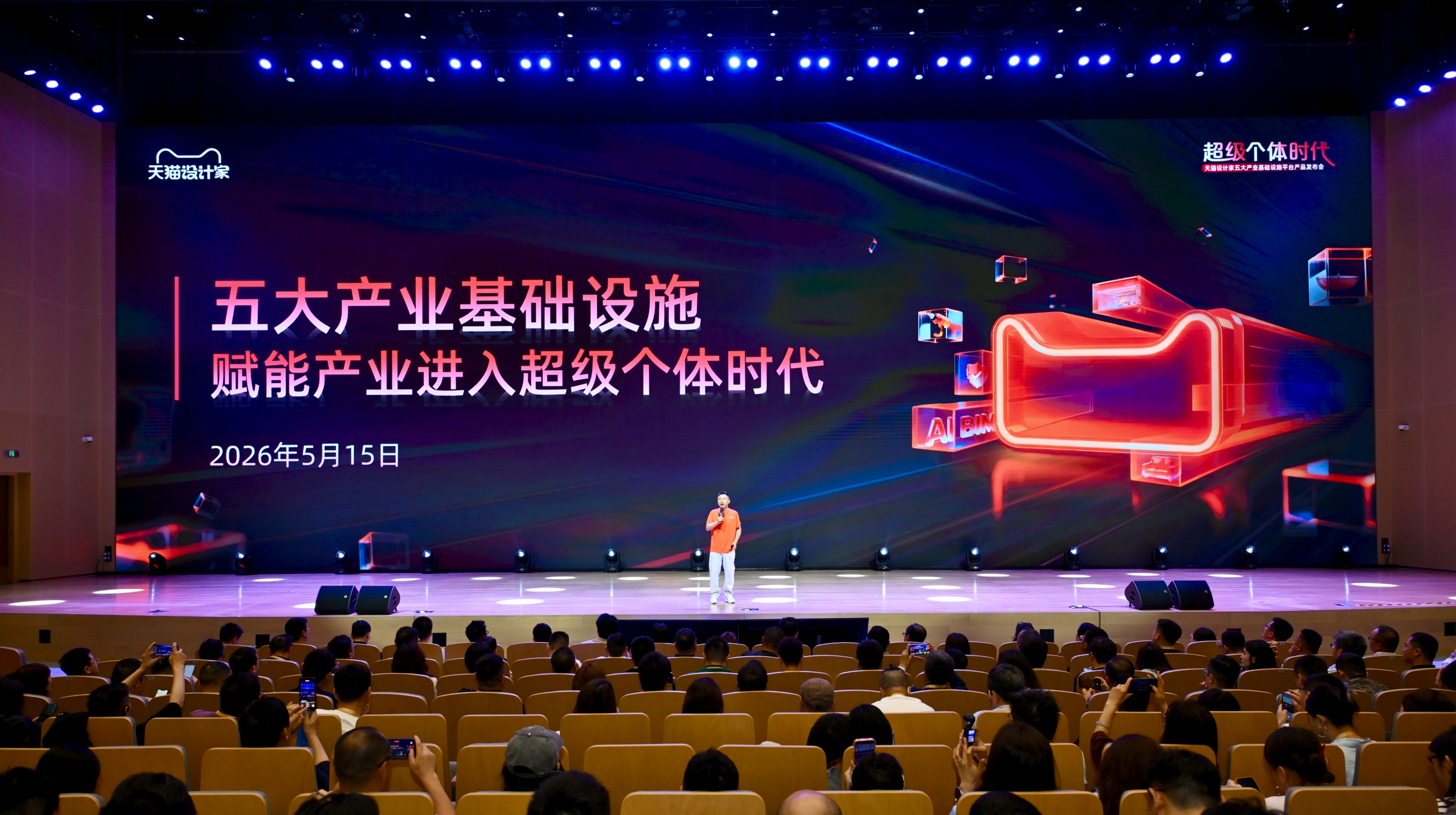
5月15日,天猫推出行业首个AI家装操作平台“天猫设计家”,提供AI设计、施工工艺、全品类供应链、施工履约、担保交易等一整套标准化能力。独立设计师、项目经理等中小从业者,无需重资产投入也能具备规模化装修公司的整装交付能力。

今年,天猫设计家还将在杭州、宁波等城市开设体验店,同步上线淘宝小程序。目前,天猫设计家已开启内测,首批200个名额,在淘宝App搜索“天猫设计家旗舰店”即可申请。

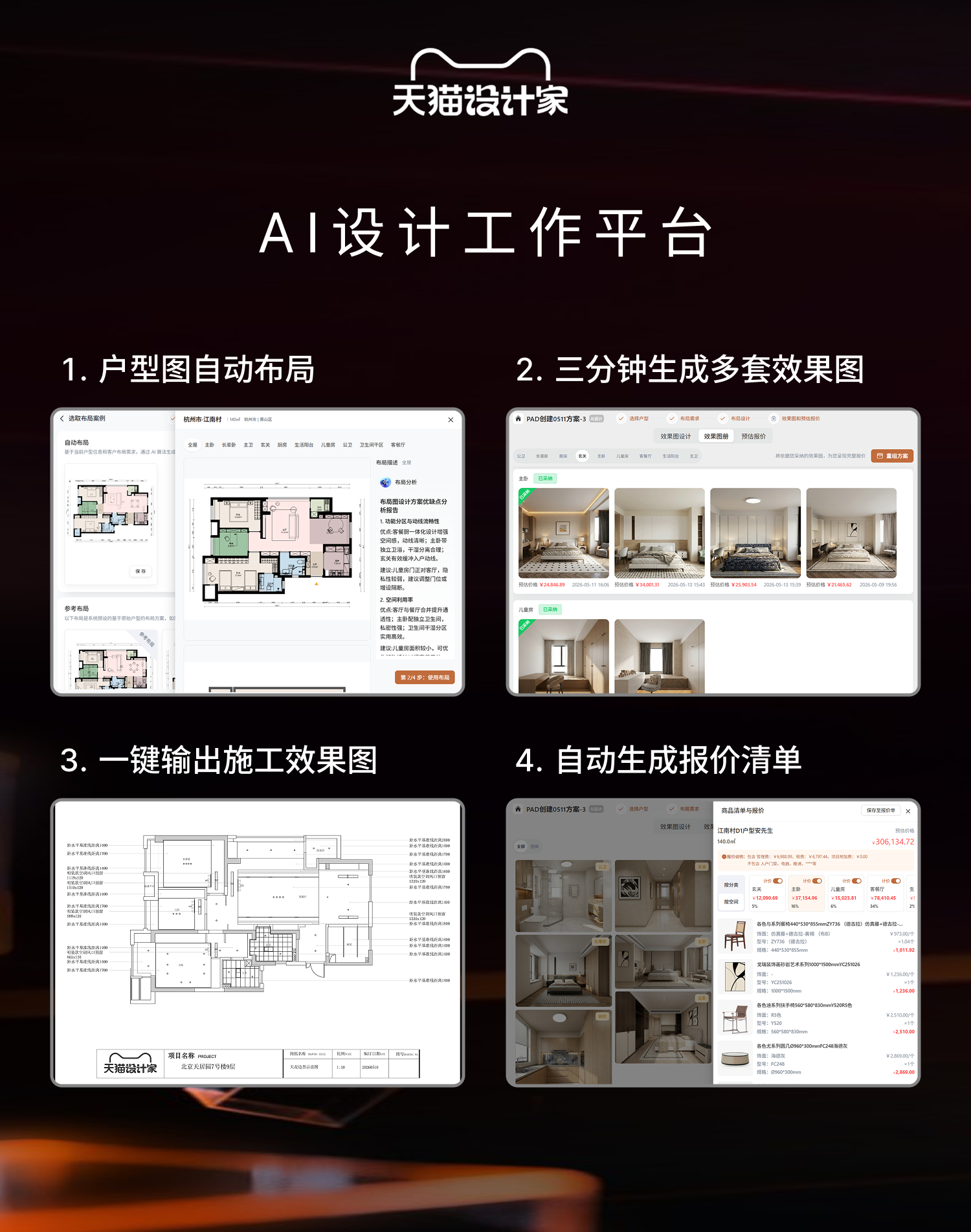
设计环节,上线“全统筹设计工作平台”,用AI能力将30多个工种经验,转化为5000余项标准工艺。可以在3分钟生成多套可落地的效果图,并输出施工图、工艺标准、报价清单。

选品环节,上线“全品类精选供应链平台”,依托天猫商品供给,首批汇聚10万款家装全品类货品,覆盖水泥砂浆、家具、电器、软装等全品类品牌正品,设计师等从业者可享集采底价。

施工环节,上线“全工种精工履约平台”,匹配全工种工人,实现验收合格后自动分账。工人实行实名制,服务能力与评分在线化。

支付环节,上线“全角色支付宝担保平台”,全程担保交易,专业监理验收、消费者确认后自动分账至工人、设计师、供应商等各参与方,规避“卷款跑路”“上游恶意欠款”等行业顽疾。

体验环节,“全共享城市超级体验店”将在宁波、杭州等多城落地,提供场景化主题体验馆、好房子样板间、选材馆,供客户实地体验。据悉,面向消费者开放的装修小程序还将在淘宝上线。

“未来小而美的组织为消费者提供个性化装修的体验将全面提升,不仅更个性化、更省心,交付更快且总价更低。”马学军表示,依托天猫AI家装全统筹操作平台,设计师、工长、拎包商等从业者,将成为全能设计师、全能改造师、全能交付官,进阶为AI时代的三类“超级个体”。

新房市场“好房子”建设加速推进,叠加存量房翻新与局部改造需求持续释放,家装市场正迎来结构性增长窗口。 分析人士指出,天猫设计家的上线,也让天猫的业务边界向前延伸。过去,平台在消费者硬装完成后被动等待购买;如今,天猫得以在设计阶段即介入消费决策,“从装修源头主动承接系统性需求”,打开新的增长空间。

亿邦持续追踪报道该情报,如想了解更多与本文相关信息,请扫码关注作者微信。

文章来源:亿邦动力

广告
微信
朋友圈

这么好看,分享一下?

朋友圈 分享

APP内打开

+1
+1
微信好友 朋友圈 新浪微博 QQ空间
关闭
收藏成功
发送
/140 0