广告
加载中

财报解析丨贝泰妮Q1营收创新高 薇诺娜不再“死磕”二类械?

亿邦动力 2026-05-07 17:56
亿邦动力 2026/05/07 17:56

邦小白快读

EN
全文速览

贝泰妮2026年Q1财报表现积极,营收和净利润双双增长

1.总营收11.18亿元,同比增长17.84%,创近6年最高值

2.归母净利润0.66亿元,同比增长132.76%,但低于2021年同期水平

3.营业成本同比增长39.41%,毛利率从77.47%降至73.35%,成本压力显著

2025年集团调整效果显现

1.营收下降6.58%至53.59亿元,但净利润增长4.45%,费用首次下降(销售费用减少1.9亿元)

2.渠道分化:线上增长进入平台期,线下渠道营收下降27.91%,抖音系增长17.25%

品牌转型新动向

1.薇诺娜升级为医美全周期皮肤健康管理平台,推出妆械联合战略,结合日常护肤与专业修护

2.2025年薇诺娜营收下降9.73%,其他品牌如瑷科缦增长115.09%

贝泰妮品牌营销与渠道建设策略

1.薇诺娜从敏感肌修护品牌升级为医美平台,强化妆械联合,绑定医美修护场景

2.推出311屏障系列新品(妆字号),针对敏感肌和医美人群,协同械字号产品

品牌定价与产品研发变化

1.医疗器械品类因二类械市场内卷、价格战,营收下降25.39%,毛利率暴跌至56.44%

2.护肤品和彩妆毛利率提升,显示定价优化;新收购品牌初普正研发三类械产品

消费趋势与用户行为观察

1.线上渠道中抖音系增长17.25%,阿里系和京东系下降,反映用户偏好转移

2.医美相关需求上升,薇诺娜转型瞄准医美前后修护人群

增长市场与消费需求变化

1.抖音渠道营收增长17.25%,成为新机会点;线下渠道严重下滑27.91%,风险提示

2.品类表现:彩妆线上增长约0.7亿元,护肤品和医疗器械线下均下滑超1.5亿元

事件应对与商业模式更新

1.贝泰妮妆械联合战略,结合妆字号日常产品和械字号专业修护,提供综合解决方案

2.集团收购初普品牌并研发三类械,拓展产品线;瑷科缦品牌增长115.09%,可学习点

风险与机会提示

1.营业成本高企(2026年Q1同比增长39.41%),正面影响是销售费用率下降至53.03%

2.医疗器械内卷导致价格战,机会在于医美相关产品需求上升

产品生产与设计需求

1.营业成本同比增长39.41%,毛利率下降,提示生产优化需求;医疗器械成本上升,因二类械内卷

2.妆械联合战略需协同生产妆字号和械字号产品,如311屏障系列新品

商业机会与数字化启示

1.线上渠道表现:抖音增长17.25%,启示电商平台多样化;线下下滑27.91%,需调整布局

2.贝泰妮2025年费用控制成功(销售费用减少1.9亿元),提供成本管理启示

推进数字化机会

1.渠道数据:阿里系和京东系下降,抖音系崛起,显示数字化营销重点转移

2.新品牌如瑷科缦增长115.09%,机会在于产品创新

行业发展趋势与客户痛点

1.二类械市场内卷严重,价格战导致贝泰妮医疗器械营收下降25.39%,毛利率暴跌

2.线上渠道分化:抖音系增长17.25%,阿里系和京东系下降,反映平台竞争加剧

新技术与解决方案

1.贝泰妮妆械联合战略,提供医美全周期解决方案,结合妆字号和械字号产品协同

2.薇诺娜升级为皮肤健康管理平台,针对客户痛点如敏感肌和医美修护需求

客户痛点启示

1.营业成本高企(2026年Q1营业成本增长39.41%),痛点在于成本控制

2.品牌转型需求:薇诺娜营收连续下降,解决方案包括产品线扩展

商业对平台需求与问题

1.平台表现:阿里系营收下降0.67%,京东系下降16.06%,抖音系增长17.25%,显示需求转移

2.线下渠道问题:营收下降27.91%,风险在于渠道萎缩;线上整体增长进入平台期

平台招商与运营管理

1.贝泰妮渠道优化:销售费用率从56.04%降至53.03%,启示成本控制;抖音成新增长点,招商机会

2.品牌扩展如收购初普,可能带来平台合作需求;新品牌瑷科缦增长115.09%,显示潜力

风向规避

1.医疗器械品类下滑25.39%,因二类械内卷,提示规避相关风险

2.营业成本上升问题,需加强平台运营效率

产业新动向与新问题

1.贝泰妮从增收不增利到增利且增收,2026年Q1营收创新高但净利润未恢复历史水平

2.二类械市场内卷、价格战,导致医疗器械营收下降25.39%,毛利率暴跌至56.44%

政策法规启示与商业模式

1.贝泰妮获批二类医疗器械注册证27项,但市场挑战提示政策风险;新品牌初普研发三类械,显示法规适应

2.妆械联合商业模式:薇诺娜转型医美平台,结合妆字号和械字号产品,探索新路径

产业启示

1.渠道结构变化:线上平台期,线下萎缩,抖音崛起,反映消费行为演变

2.费用控制成功(2025年销售费用首次下降),为行业提供管理启示

返回默认

声明:快读内容全程由AI生成,请注意甄别信息。如您发现问题,请发送邮件至 run@ebrun.com 。

我是 品牌商 卖家 工厂 服务商 平台商 研究者 帮我再读一遍。

Quick Summary

Betaine's Q1 2026 financial report shows positive performance, with both revenue and net profit increasing.

1. Total revenue reached 1.118 billion yuan, a year-on-year increase of 17.84%, marking the highest value in nearly six years.

2. Net profit attributable to the parent company was 66 million yuan, up 132.76% year-on-year, but still below the level of the same period in 2021.

3. Operating costs rose 39.41% year-on-year, with gross margin dropping from 77.47% to 73.35%, indicating significant cost pressures.

Group restructuring effects became visible in 2025.

1. Revenue fell 6.58% to 5.359 billion yuan, but net profit increased by 4.45%, with expenses declining for the first time (sales expenses reduced by 190 million yuan).

2. Channel divergence: Online growth plateaued, offline channel revenue dropped 27.91%, while Douyin-related revenue grew 17.25%.

New developments in brand transformation.

1. Winona was upgraded to a full-cycle skin health management platform for medical aesthetics, launching a cosmetic-medical device integration strategy that combines daily skincare with professional repair.

2. In 2025, Winona's revenue declined 9.73%, while other brands like Aikeman grew 115.09%.

Betaine's brand marketing and channel development strategy.

1. Winona transitioned from a sensitive skin repair brand to a medical aesthetics platform, strengthening cosmetic-medical device integration and targeting post-procedure recovery scenarios.

2. Launch of the new 311 Barrier series (cosmetic-grade), targeting both sensitive skin and medical aesthetics consumers, synergizing with medical-grade products.

Changes in brand pricing and product R&D.

1. Medical device category revenue fell 25.39% due to intense competition and price wars in the Class II medical device market, with gross margin plummeting to 56.44%.

2. Gross margins for skincare and cosmetics improved, indicating pricing optimization; the newly acquired brand TriPollar is developing Class III medical device products.

Consumer trends and user behavior observations.

1. Douyin-related channels grew 17.25% within online channels, while Alibaba and JD platforms declined, reflecting a shift in user preferences.

2. Rising demand for medical aesthetics-related products, with Winona's transformation targeting pre- and post-procedure care consumers.

Changes in growth markets and consumer demand.

1. Douyin channel revenue grew 17.25%, becoming a new opportunity; offline channels declined severely by 27.91%, indicating risk.

2. Category performance: Online cosmetics sales increased by approximately 70 million yuan, while offline skincare and medical devices both declined by over 150 million yuan.

Event response and business model updates.

1. Betaine's cosmetic-medical device integration strategy combines daily-use cosmetic products with professional medical-grade repair, offering comprehensive solutions.

2. The group acquired TriPollar and is developing Class III medical devices to expand product lines; Aikeman brand grew 115.09%, offering learnable points.

Risk and opportunity alerts.

1. High operating costs (Q1 2026 up 39.41% YoY), with the positive being a decline in the sales expense ratio to 53.03%.

2. Intense competition in medical devices leading to price wars, with opportunities in rising demand for medical aesthetics-related products.

Product production and design requirements.

1. Operating costs rose 39.41% YoY, with declining gross margins highlighting the need for production optimization; medical device costs increased due to Class II device market competition.

2. The cosmetic-medical device integration strategy requires coordinated production of cosmetic and medical-grade products, such as the new 311 Barrier series.

Business opportunities and digital insights.

1. Online channel performance: Douyin grew 17.25%, indicating the need for e-commerce platform diversification; offline declined 27.91%, requiring layout adjustments.

2. Successful cost control in 2025 (sales expenses reduced by 190 million yuan) offers cost management insights.

Advancing digital opportunities.

1. Channel data: Decline in Alibaba and JD platforms, rise of Douyin, showing a shift in digital marketing focus.

2. New brands like Aikeman grew 115.09%, highlighting opportunities in product innovation.

Industry trends and client pain points.

1. Severe competition in the Class II medical device market, with price wars causing Betaine's medical device revenue to fall 25.39% and gross margin to plummet.

2. Online channel divergence: Douyin-related growth of 17.25%, while Alibaba and JD platforms declined, reflecting intensified platform competition.

New technologies and solutions.

1. Betaine's cosmetic-medical device integration strategy provides full-cycle medical aesthetics solutions, combining cosmetic and medical-grade product synergy.

2. Winona's upgrade to a skin health management platform addresses client pain points like sensitive skin and post-procedure repair needs.

Client pain point insights.

1. High operating costs (Q1 2026 operating costs up 39.41% YoY), with the pain point being cost control.

2. Brand transformation needs: Winona's consecutive revenue decline requires solutions including product line expansion.

Business demands and issues for platforms.

1. Platform performance: Alibaba-related revenue down 0.67%, JD down 16.06%, Douyin up 17.25%, indicating a shift in demand.

2. Offline channel issues: Revenue fell 27.91%, with risk in channel contraction; overall online growth has plateaued.

Platform merchant recruitment and operations management.

1. Betaine's channel optimization: Sales expense ratio dropped from 56.04% to 53.03%, highlighting cost control; Douyin becomes a new growth point, offering recruitment opportunities.

2. Brand expansion, such as acquiring TriPollar, may bring platform collaboration needs; new brand Aikeman's 115.09% growth shows potential.

Risk avoidance trends.

1. Medical device category declined 25.39% due to Class II device market competition, suggesting related risks to avoid.

2. Rising operating costs necessitate improved platform operational efficiency.

New industry developments and issues.

1. Betaine shifted from revenue growth without profit growth to profit and revenue growth; Q1 2026 revenue hit a record high, but net profit has not recovered to historical levels.

2. Intense competition and price wars in the Class II medical device market caused medical device revenue to fall 25.39%, with gross margin plummeting to 56.44%.

Policy and regulatory insights and business models.

1. Betaine obtained 27 Class II medical device registrations, but market challenges indicate policy risks; new brand TriPollar's Class III device R&D shows regulatory adaptation.

2. Cosmetic-medical device integration business model: Winona's transformation into a medical aesthetics platform, combining cosmetic and medical-grade products, explores new pathways.

Industry insights.

1. Channel structure changes: Online growth plateauing, offline contracting, Douyin rising, reflecting evolving consumer behavior.

2. Successful cost control (2025 saw the first decline in sales expenses) offers management lessons for the industry.

Disclaimer: The "Quick Summary" content is entirely generated by AI. Please exercise discretion when interpreting the information. For issues or corrections, please email run@ebrun.com .

I am a Brand Seller Factory Service Provider Marketplace Seller Researcher Read it again.

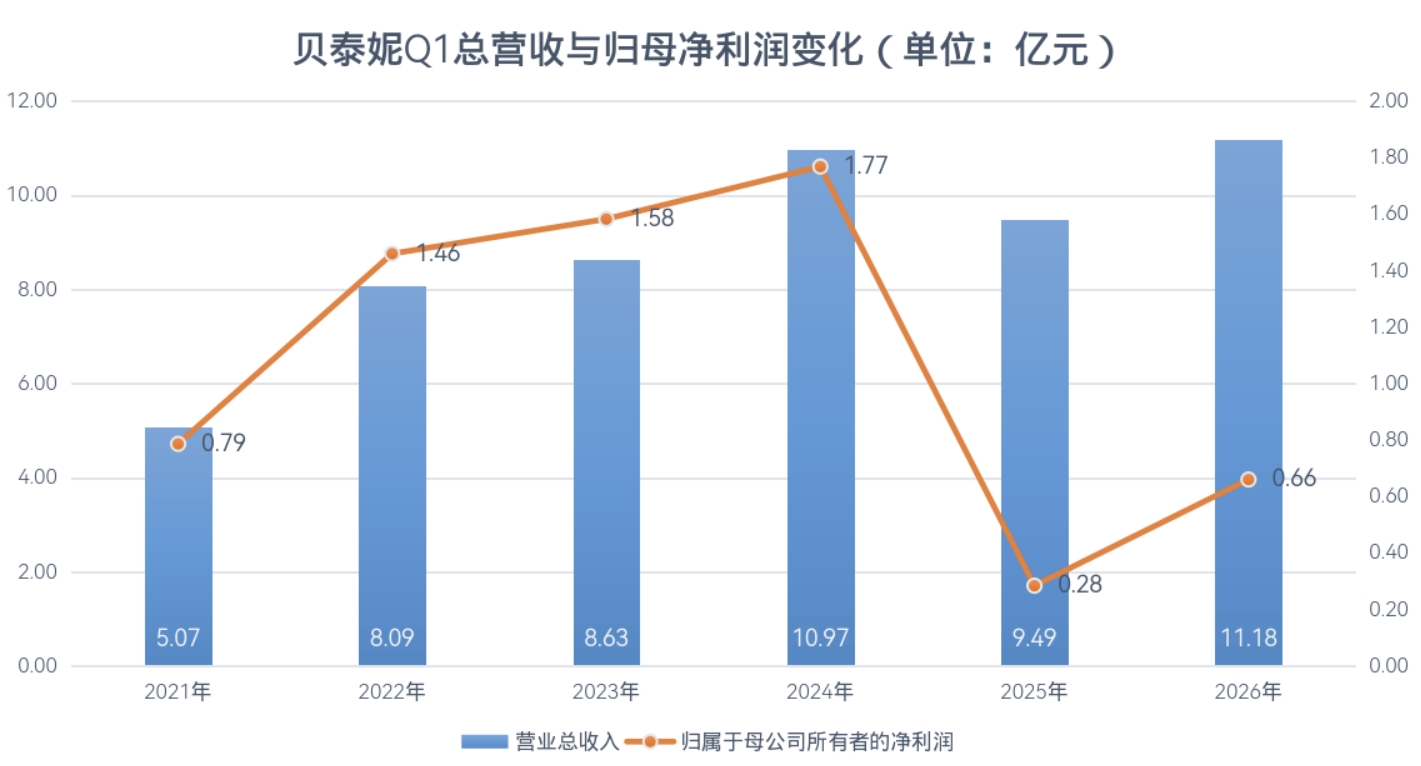
【亿邦原创】日前,贝泰妮发布2026年第一季度财报:总营收11.18亿元,同比增长17.84%;归母净利润0.66亿元,同比增长132.76%。该季度总营收创下近6年(2021年至2026年)最高值。

作为通常全年营收最低的季度,本季度实现增长,是贝泰妮2026年恢复增长的积极信号。剔除基数效应,对比5年前的2021年Q1,2026年Q1虽营收翻倍,但归母净利润不及2021年同期水平。主要原因在于,虽然营收达到近6年最高,但营业总成本也创下近6年新高,其中营业成本和销售费用居高不下。

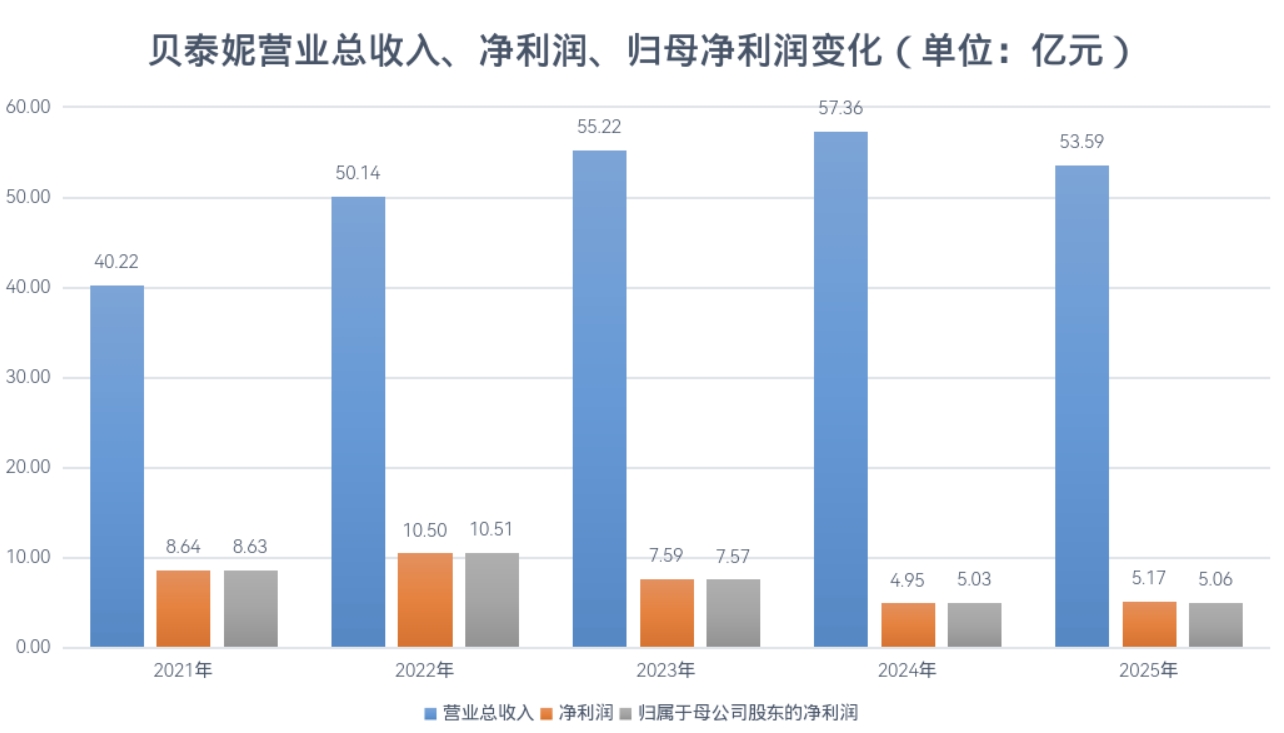
对比2023年和2024年的“增收不增利”以及2025年的“增利不增收”,贝泰妮今年开年实现营收和归母净利润双双增长,无疑是积极信号。与此同时,主品牌薇诺娜及整个集团正在经历转型。

01

从“增收不增利”到“增利且增收”

贝泰妮进入调整阶段

实际上,从2025年起,贝泰妮就在努力改善集团“增收不增利”的状况。

2025年,贝泰妮的营收出现近5年首次下降:营收53.59亿元,同比下降6.58%。但净利润和归母净利润结束了连续3年的下跌,终于迎来增长:净利润5.17亿元,同比增长4.45%;归母净利润5.06亿元,同比增长0.53%。毛利率也有所回升,从2024年的73.74%提升至74.46%。

从年报来看,整体费用大幅下降是净利润增长的重要原因。其中,销售费用从28.66亿元降至26.76亿元,减少了1.9亿元;研发费用减少0.58亿元,管理费用减少0.18亿元,三者均为近5年来首次下降。此外,营业成本减少1.37亿元,一定程度上缓解了毛利压力;资产减值损失从-1.75亿元收窄至-0.70亿元,相当于减少了1.05亿元的损失,对利润产生了显著的正面贡献。

这一改善在2026年开年取得成果。从2026年Q1财报来看,贝泰妮实现“增收又增利”。但对比5年前的2021年Q1,2026年Q1虽营收翻倍,归母净利润却不及当年。

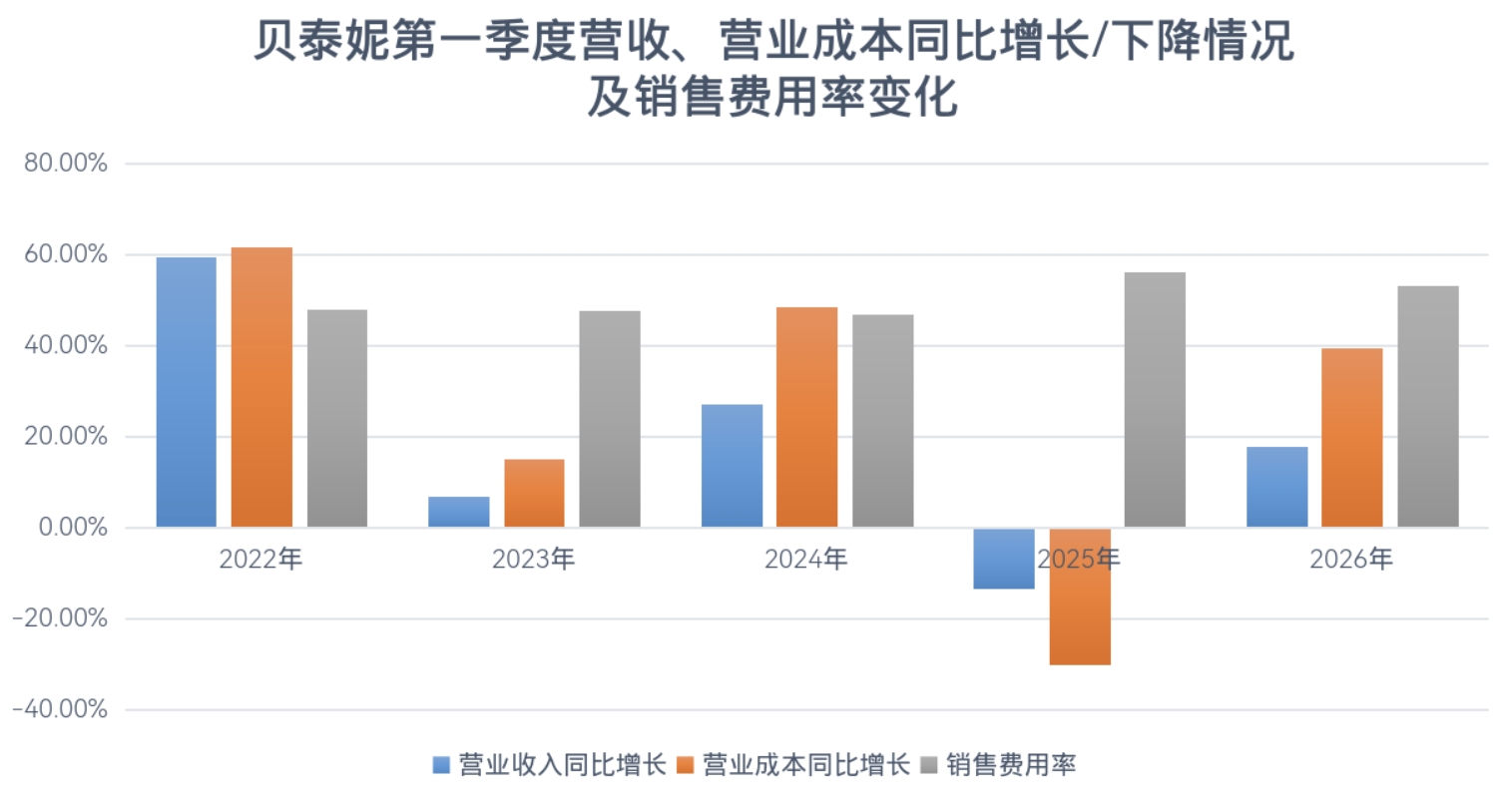
主要原因在于成本和费用整体增长:营业总成本10.47亿元,同比增长12.49%。其中营业成本2.98亿元,同比增长39.41%。营业成本的同比增速是营收增速的两倍多,导致毛利率从2025年Q1的77.47%下降至73.35%。同时,销售费用5.93亿元,同比增长11.53%,但销售费用率为53.03%,相较去年同期的56.04%有所下降。

从渠道来看,线上增长进入平台期,难以弥补其他渠道的下滑:2025年,线上渠道营收39.51亿元,同比增长1%;OMO渠道营收4.63亿元,同比下降11.20%;线下渠道营收9.18亿元,同比下降27.91%;线下渠道服务及其他营收0.26亿元,同比下降9.03%。

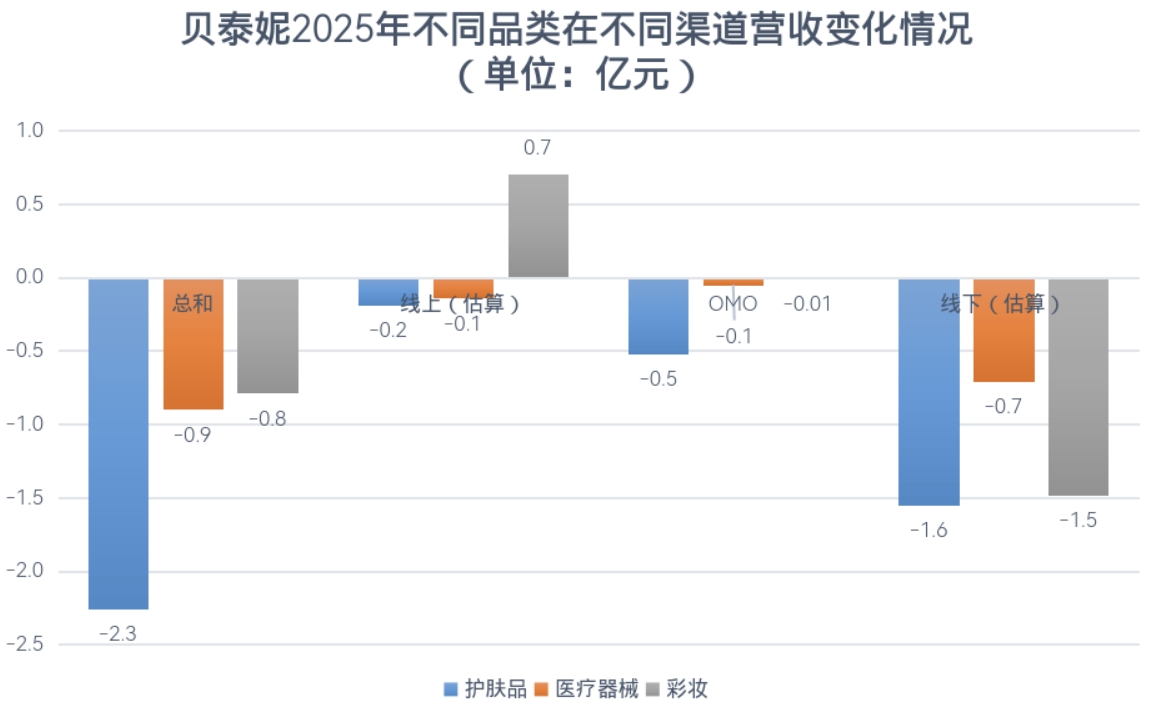
然而,线上的增长可能并非来自核心业务——护肤品。根据财报现有数据估算,2025年护肤品线上营收下滑0.2亿元,医疗器械线上营收下滑0.1亿元,而彩妆增长约0.7亿元。

从数值上看,营收下滑最严重的是线下渠道,减少3.55亿元。线下也是各品类下降的主要原因:根据财报现有数据估算,护肤品线下营收下滑约1.6亿元;彩妆线下营收下滑约1.5亿元;医疗器械线下营收下滑约0.7亿元。

注:图表部分数据根据现有数据估算得出,故仅供参考

在主要线上渠道中,阿里系和京东系营收均有所下降,其中阿里系营收17.14亿元,同比下降0.67%;京东系营收4.22亿元,同比下降16.06%。抖音系则有所增长,营收9.7亿元,同比增长17.25%。

02

主品牌薇诺娜转型

贝泰妮或想用“妆械联合”讲新故事

贝泰妮2025年年报显示,2025年三个主品类的营收均有所下降。其中,护肤营收45.75亿元,同比下降4.71%;医疗器械营收2.65亿元,同比下降25.39%;彩妆营收4.72亿元,同比下降14.35%。

值得注意的是,虽然护肤品和彩妆的营收下降,但毛利率均有所提升。而医疗器械的毛利率却出现暴跌:从2024年的79.47%骤降至56.44%,主要原因是营收下降的同时成本上升。

从资质来看,贝泰妮的医疗器械以二类械为主,截至2025年12月31日,累计已获批二类医疗器械注册证27项。但目前二类械市场内卷严重,甚至已进入价格战阶段。这一行业现状或许是贝泰妮医疗器械品类营收和毛利率下降、成本上升的原因之一。目前医疗器械已成为三个主品类中营收最低的一个,也可能是集团主动调整的结果。

同时,“妆械联合”成为主品牌薇诺娜的调整方向之一,即妆字号产品用于日常护肤,械字号产品用于专业修护,与医美修护强绑定。

在4月27日举行的第七届敏感性皮肤高峰论坛上,薇诺娜宣布从“敏感肌修护品牌”升级为“医美全周期皮肤健康管理平台”。当日发布的311屏障系列3款新品均为妆字号产品,卖点之一是与薇诺娜的械字号产品协同修护。从产品最新动向来看,311屏障系列新品适用人群除敏感肌外,还包括医美前后需要修护的人群。

核心品牌薇诺娜的转型显得较为迫切。2025年,薇诺娜营收44.32亿元,同比下降9.73%,为近4年最低值。实际上,薇诺娜2024年的营收已有所下降,而2025年的下降幅度和金额均进一步扩大。

姬芮和薇诺娜宝贝这两个在集团中营收排名第二和第三的品牌,并未能弥补核心品牌薇诺娜的下滑。其中,姬芮营收4.52亿元,同比下降3.24%;薇诺娜宝贝营收2.35亿元,同比增长17.02%。此外,瑷科缦营收1.29亿元,同比增长115.09%;泊美营收0.47亿元,同比下降9.61%。2025年新收购的品牌初普,贝泰妮并未披露其营收情况。财报显示,初普将完成射频产品三类械注册。

总体来看,贝泰妮2026年开年交出了一份“增收又增利”的财报,扭转了此前几年的失衡局面,释放出积极信号。集团正通过品牌升级与“妆械联合”战略寻求突破,后续效果仍需持续观察。

亿邦持续追踪报道该情报,如想了解更多与本文相关信息,请扫码关注作者微信。

文章来源:亿邦动力

广告
微信
朋友圈

这么好看,分享一下?

朋友圈 分享

APP内打开

+1
+1
微信好友 朋友圈 新浪微博 QQ空间
关闭
收藏成功
发送
/140 0