广告
加载中

Ozon Global:超七成俄买家认可中国商品质量改善 近六成预计增购

王昱 2026-04-27 13:05
王昱 2026/04/27 13:05

邦小白快读

EN
全文速览

文章总结了俄罗斯消费者对中国商品的新认知和市场机会,提供实操信息。

1. 质量认可提升:73%买家认为过去5年中国商品质量改善,仅5%认为变差,尤其18-25岁年轻群体对“显著改善”比例最高,初始印象良好。

2. 品类需求分布:服装鞋类占比62%遥遥领先,家居装饰用品和电子产品各占约40%,手工用品、化妆品等细分品类占15-27%,显示多品类加速覆盖。

3. 买家特征分析:高频购买者(每月数次)中,高收入家庭(月收入150K+卢布)占比37%,是低收入家庭的1.5倍;26-35岁群体购买频率最高,消费预期最积极。

4. 未来购买预期:58%受访者预计未来3-5年增加中国商品购买比例,26-35岁年轻人和中等收入群体最乐观,男性比女性预期更高。

5. 实操建议:中国卖家需从短期拉新获客转向长期复购留存策略,以维持高粘性买家群体。

文章揭示了品牌商可关注的消费趋势和用户行为变化,为品牌营销和产品研发提供方向。

1. 消费趋势洞察:年轻消费者(18-25岁)对中国商品更关注先进技术、创新设计和时尚现代感,显著高于其他年龄组,这指示产品研发应强调这些元素。

2. 用户行为观察:高频购买集中在高收入家庭和26-35岁群体,他们是消费主力与未来决策者重叠区,品牌渠道建设可针对此群体强化忠诚度。

3. 品牌营销机会:质量改善认知(73%认可)和未来购买预期(58%增加)显示品牌信任提升,品牌定价可基于高认可度优化;同时,年轻群体偏好可驱动品牌故事和营销定位。

4. 消费趋势延伸:调研显示中国商品已建立高市场认知,品牌商可参考品类分布(如服装鞋类62%需求)规划产品线,利用复购留存建议提升品牌黏性。

文章为卖家提供增长市场机会、需求变化和可学习点,以应对挑战和抓住机遇。

1. 增长市场分析:俄罗斯消费者对中国商品需求提升,多品类加速覆盖(服装鞋类62%为首),提供跨境销售增长空间;26-35岁群体和高收入家庭是高频买家,可作为重点目标。

2. 消费需求变化:质量认可显著提升(73%改善认知),年轻群体初始印象好,58%买家预计增加购买比例,这要求卖家调整策略应对高预期。

3. 机会提示:中等收入家庭(月收入100-150K卢布)和26-35岁群体复购意愿最强,是中国卖家可聚焦的高潜力增长群体;风险提示:需防范质量认知不一致(5%认为变差)对留存影响。

4. 可学习点和应对措施:建议从拉新获客转向复购留存策略,如优化服务和产品;最新商业模式参考Ozon平台调研数据,合作方式可通过电商平台深化跨境交易。

文章指出产品设计需求和商业机会,为工厂提供数字化电商启示。

1. 产品设计需求:年轻消费者偏好中国商品的先进技术、创新和时尚设计,这要求工厂调整生产以强调创新元素,满足18-25岁群体需求。

2. 商业机会挖掘:俄罗斯市场潜力大,品类如服装鞋类(62%需求)、家居装饰用品(40%)、手工用品等加速增长,工厂可扩展生产这些高需求产品线。

3. 推进数字化启示:调研显示电商平台如Ozon Global在促进跨境销售,工厂可借势数字化渠道优化供应链;同时,质量改善认知(73%认可)启示提升产品质量以增强竞争力。

文章展示行业趋势和客户痛点,为服务商提供解决方案基础。

1. 行业发展趋势:中国商品在俄罗斯市场质量认可提升(73%改善认知),多品类覆盖加速,跨境电商增长;技术元素如创新设计受年轻群体关注,指示技术服务需求增加。

2. 客户痛点分析:卖家需应对消费者高预期(58%增加购买)和复购留存挑战,痛点包括如何维持质量信任和优化买家黏性。

3. 解决方案方向:提供数据洞察服务如调研分析,帮助卖家基于买家特征(如26-35岁群体)开发营销工具;同时,针对年轻群体偏好,可设计创新技术支持方案。

文章揭示平台需求和平台做法,为平台商优化招商和运营提供参考。

1. 商业对平台需求:卖家需基于消费者数据(如质量认可73%、购买预期58%)进行决策,平台需提供精准分析以满足招商需求,吸引中国卖家。

2. 平台最新做法:Ozon Global发布消费者调研,覆盖1000名买家样本,运营管理可聚焦高复购群体(如26-35岁、高收入家庭)进行市场定位。

3. 平台招商机会:调研显示俄罗斯市场高潜力(如服装鞋类62%需求),平台可强化招商吸引中国卖家;风向规避建议:需监测质量认知风险(5%认为变差)以优化平台规则。

文章探讨产业动向和新问题,为研究者提供商业模式和政策启示。

1. 产业新动向:中国商品在俄罗斯市场进入高认可、高粘性阶段,消费者行为正向变化(质量改善73%认可),多品类覆盖加速,显示跨境电商新趋势。

2. 新问题分析:年轻群体(18-25岁)初始印象建立在质量基础上,偏好技术设计,引发研究问题如长期市场影响;同时,复购留存策略建议指示商业模式转型需求。

3. 政策法规启示:基于调研数据,可建议政策支持出口电商优化;商业模式参考从拉新到留存转变,产业动向如Ozon平台角色提供研究案例。

返回默认

声明:快读内容全程由AI生成,请注意甄别信息。如您发现问题,请发送邮件至 run@ebrun.com 。

我是 品牌商 卖家 工厂 服务商 平台商 研究者 帮我再读一遍。

Quick Summary

The article summarizes Russian consumers' evolving perceptions of Chinese products and market opportunities, providing practical insights.

1. Quality perception improves: 73% of buyers believe Chinese product quality has improved over the past five years, with only 5% reporting deterioration. The 18-25 age group shows the highest proportion recognizing "significant improvement," indicating favorable initial impressions.

2. Category demand distribution: Apparel and footwear lead at 62%, followed by home decor and electronics (each ~40%). Niche categories like crafts and cosmetics account for 15-27%, reflecting accelerated multi-category penetration.

3. Buyer profile analysis: High-frequency buyers (purchasing multiple times monthly) include 37% from high-income households (monthly income 150K+ RUB)—1.5x more than low-income groups. The 26-35 age group shows the highest purchase frequency and most optimistic consumption outlook.

4. Future purchase intent: 58% of respondents plan to increase Chinese product purchases in the next 3-5 years, with the 26-35 cohort and middle-income groups being most optimistic. Male respondents show higher intent than females.

5. Strategic shift: Chinese sellers should transition from short-term customer acquisition to long-term retention strategies to maintain high-loyalty buyer groups.

The article reveals consumer trends and behavioral shifts for brands to leverage in marketing and product development.

1. Youth-driven trends: Younger consumers (18-25) prioritize advanced technology, innovative design, and modern aesthetics in Chinese products—significantly higher than other age groups—guiding R&D focus.

2. Core buyer alignment: High-frequency purchasing concentrates among high-income households and the 26-35 cohort, representing both current spenders and future decision-makers. Brands should strengthen loyalty programs for this segment.

3. Brand equity opportunities: With 73% acknowledging quality improvements and 58% planning increased purchases, brands can optimize pricing based on enhanced trust. Youth preferences should inform storytelling and positioning.

4. Category expansion: Chinese products enjoy broad recognition; brands can align offerings with high-demand categories (e.g., 62% for apparel/footwear) and leverage retention strategies to boost brand stickiness.

The article outlines growth opportunities, demand shifts, and actionable insights for sellers navigating the Russian market.

1. Market expansion potential: Rising demand for Chinese products across categories (62% for apparel/footwear) creates cross-border sales opportunities. The 26-35 age group and high-income households are key targets as frequent buyers.

2. Evolving expectations: With 73% noting quality improvements and 58% expecting to buy more, sellers must adapt strategies to meet higher standards, especially among youth with positive initial impressions.

3. High-potential segments: Middle-income households (100-150K RUB/month) and the 26-35 cohort show the strongest repurchase intent. Sellers should monitor quality consistency risks (5% reporting decline) affecting retention.

4. Strategic pivot: Shift from customer acquisition to retention via service/product optimization. Leverage e-commerce platforms like Ozon Global for cross-border trade facilitation.

The article highlights product design demands and commercial opportunities, offering digital commerce insights for manufacturers.

1. Design priorities: Younger consumers (18-25) prefer Chinese products with technological innovation and fashionable designs, necessitating production adjustments to emphasize these elements.

2. High-demand categories: Russian market potential is strong for apparel/footwear (62% demand), home decor (40%), and crafts. Factories can expand production lines for these growing segments.

3. Digital transformation: E-commerce platforms like Ozon Global are boosting cross-border sales, urging factories to optimize supply chains via digital channels. Quality improvements (73% recognition) underscore competitive differentiation through enhanced manufacturing standards.

The article identifies industry trends and client pain points, forming a basis for solution development.

1. Market dynamics: Chinese products gain quality recognition (73% improvement) and multi-category traction in Russia, driving cross-border e-commerce growth. Youth focus on innovation signals rising demand for technical services.

2. Client challenges: Sellers face high consumer expectations (58% purchase intent increase) and retention difficulties, including maintaining quality trust and buyer loyalty.

3. Solution pathways: Offer data analytics services (e.g., consumer profiling for the 26-35 cohort) to develop targeted marketing tools. Design innovation-support solutions aligned with youth preferences.

The article outlines platform demands and operational strategies for marketplace optimization.

1. Seller needs: Platforms must provide precise analytics (e.g., 73% quality approval, 58% purchase intent) to attract Chinese sellers seeking data-driven decision-making.

2. Platform practices: Ozon Global’s consumer survey (1,000 buyers) demonstrates focus on high-repurchase segments (26-35 age group, high-income households) for market positioning.

3. Merchant acquisition: Leverage high-potential categories (e.g., 62% apparel/footwear demand) to attract Chinese sellers. Mitigate risks by monitoring quality perception gaps (5% decline) through platform policy refinements.

The article examines industry shifts and emerging questions, offering implications for business models and policy.

1. Market evolution: Chinese products in Russia enter a high-approval, high-loyalty phase, with positive behavioral shifts (73% quality improvement) and accelerated multi-category expansion reflecting new cross-border e-commerce trends.

2. Research questions: Youth (18-25) base initial impressions on quality but favor technological design, raising inquiries into long-term market impacts. Retention strategy recommendations signal business model transformation needs.

3. Policy implications: Survey data supports policy recommendations for export e-commerce optimization. The shift from acquisition to retention and platforms like Ozon provide case studies for research.

Disclaimer: The "Quick Summary" content is entirely generated by AI. Please exercise discretion when interpreting the information. For issues or corrections, please email run@ebrun.com .

I am a Brand Seller Factory Service Provider Marketplace Seller Researcher Read it again.

【亿邦原创】4月27日消息,近日,Ozon Global发布了有关俄罗斯跨境电商消费者的调研。其指出,中国商品在俄罗斯消费者中已建立较高的市场认知和信任基础,进入以高认可、高粘性、高预期为特征的新发展阶段。

据悉,该调研围绕平台买家的跨境购物习惯、对中国商品的印象、消费决策及购物旅程等方面展开,样本涵盖超1000名18至55岁的Ozon平台消费者,男女比例为1:1。

俄罗斯消费者对中国商品的质量认可度显著提升,超七成认为过去5年中国商品质量有所改善;同时未来购买预期高度乐观,近六成预计未来三年将增加中国商品购买比例。

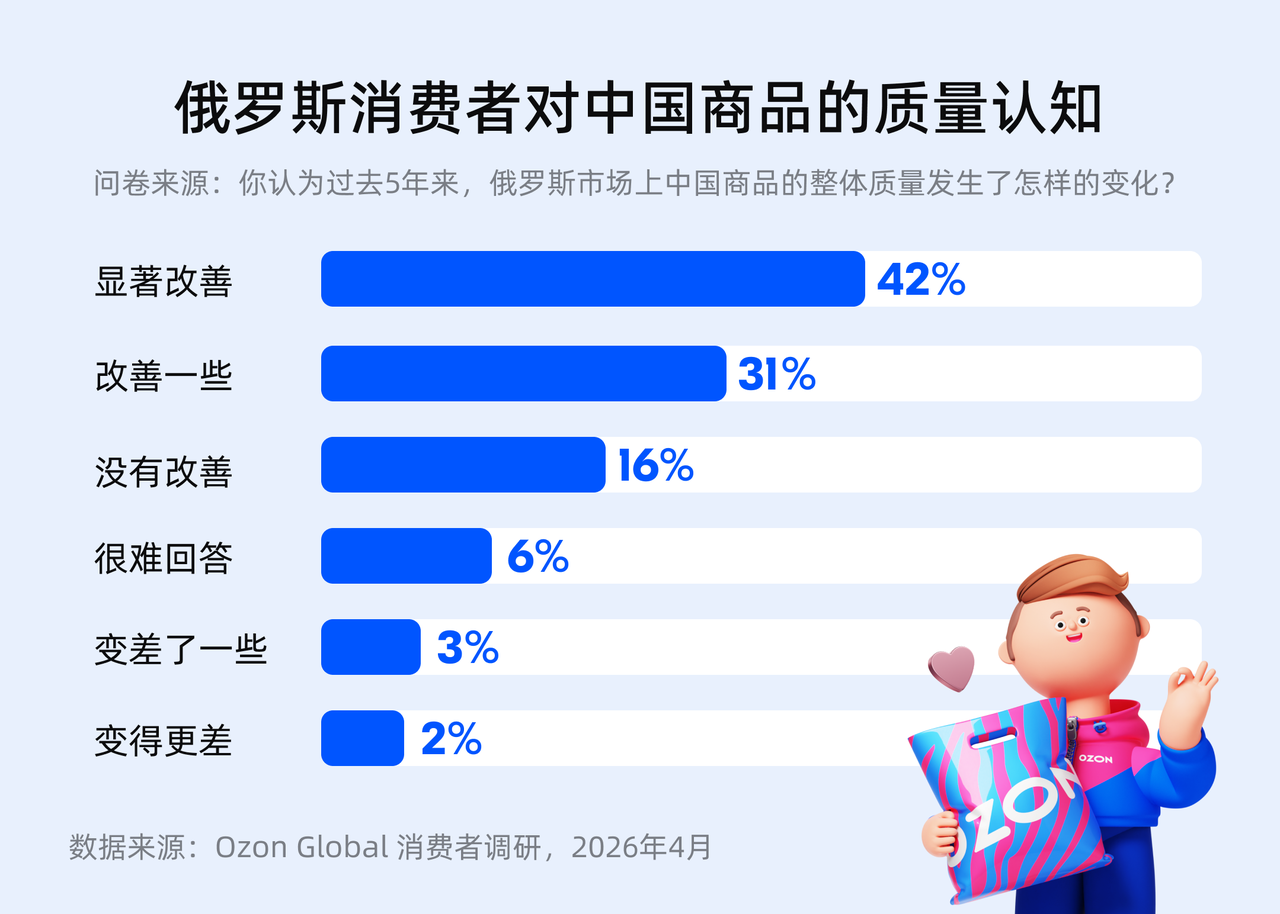
调研显示,俄罗斯消费者对中国商品质量的认知已发生显著正向变化。73%的受访者认为过去5年中国商品质量有所改善,仅5%认为变差。

尤其值得注意的是,18-25岁年轻群体中认为“显著改善”的比例最高,说明新一代俄罗斯消费者对中国商品的初始印象已经建立在“质量不错”的基础上。

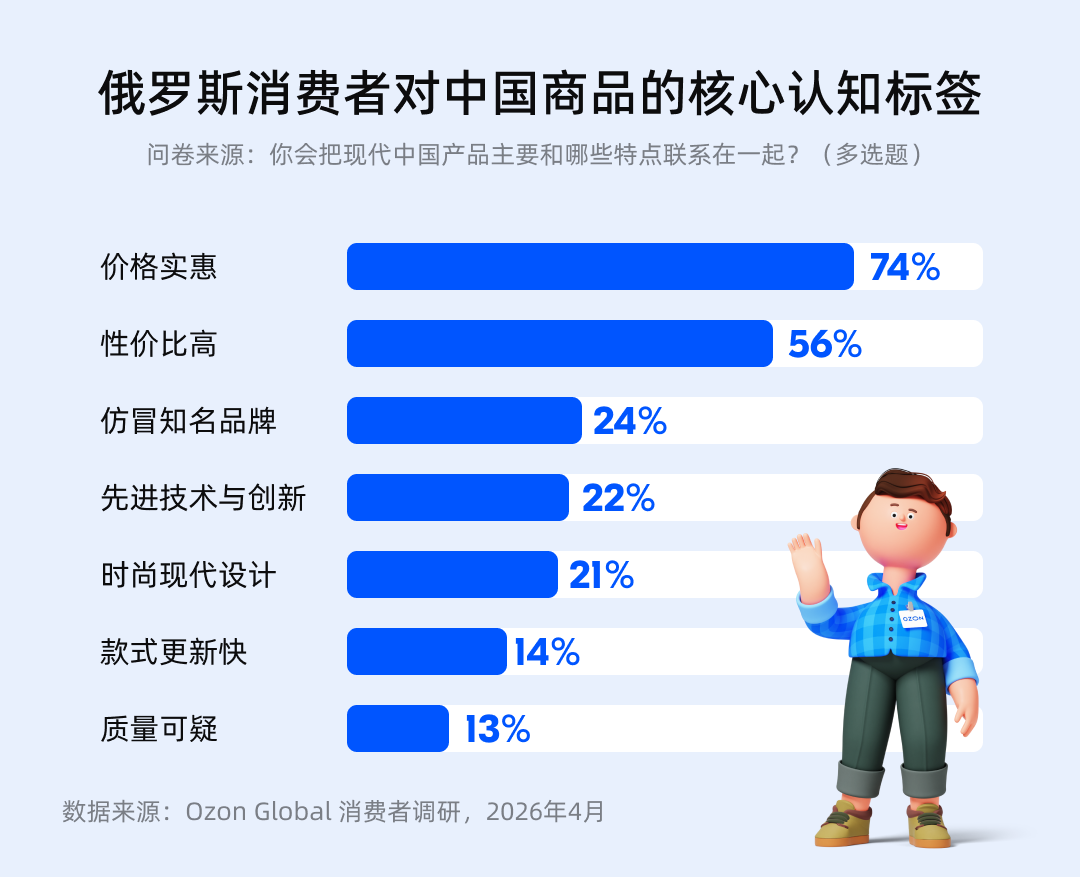
值得一提的是,18-25岁年轻群体对中国商品的认知更偏向先进技术与创新、时尚与现代感的设计,显著高于其他年龄组群体。这表明,中国商品已经在俄罗斯新一代消费者中建立起了良好的市场认知基础。

中国的多样化商品品类已经广泛进入俄罗斯消费者的跨境购买清单。其中,服装与鞋类以62%的占比遥遥领先,家居与装饰用品、电子产品与数码配件约占40%。此外,手工用品、化妆品、儿童用品、工具、汽车摩托车用品等细分品类的购买比例在15%至27%之间,呈现多品类加速覆盖态势。

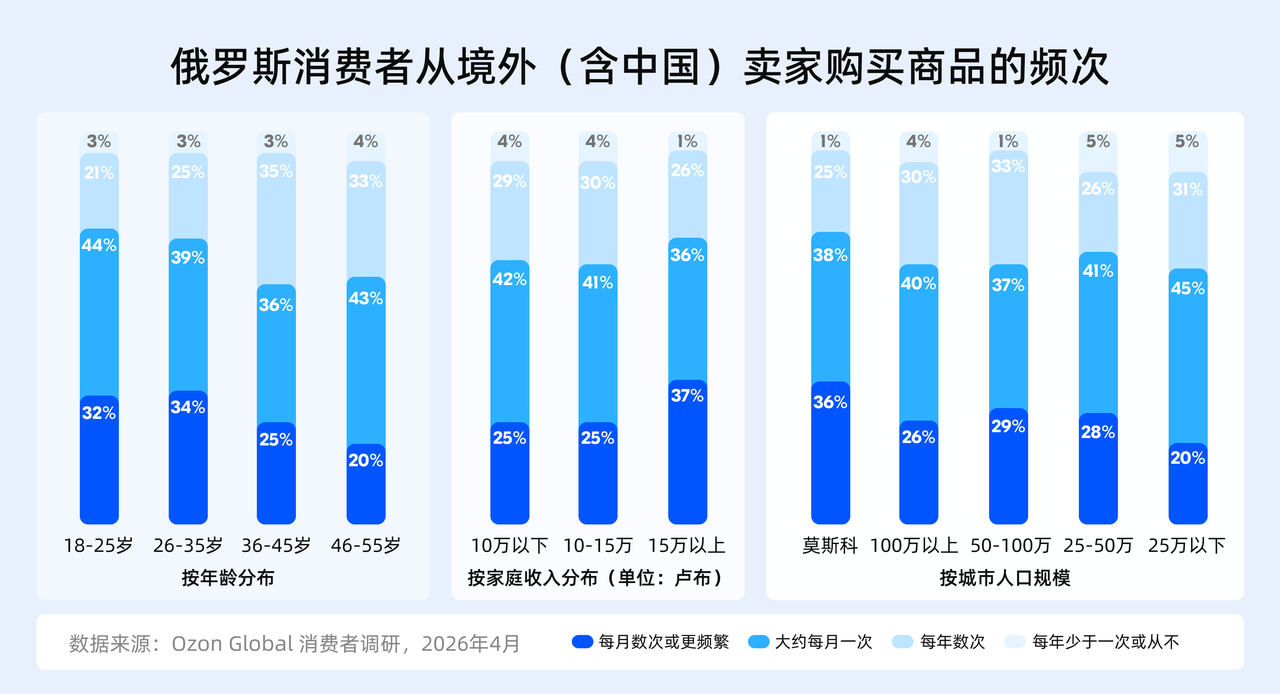
其中,高频购买者(每月数次或更频繁)中,高收入家庭(月收入150K+卢布)占比达37%,是低收入家庭的近1.5倍。26-35岁中青年群体高频购买比例最高,且未来消费预期最积极、对中国产品质量改善认知显著。这表明,中国商品在俄罗斯市场正迎来高粘性、高认可度、高消费的活力买家群体。

对于中国卖家而言,这意味着市场份额的增长,需要从短期的“拉新获客”思维转向长期的“复购留存”思维。

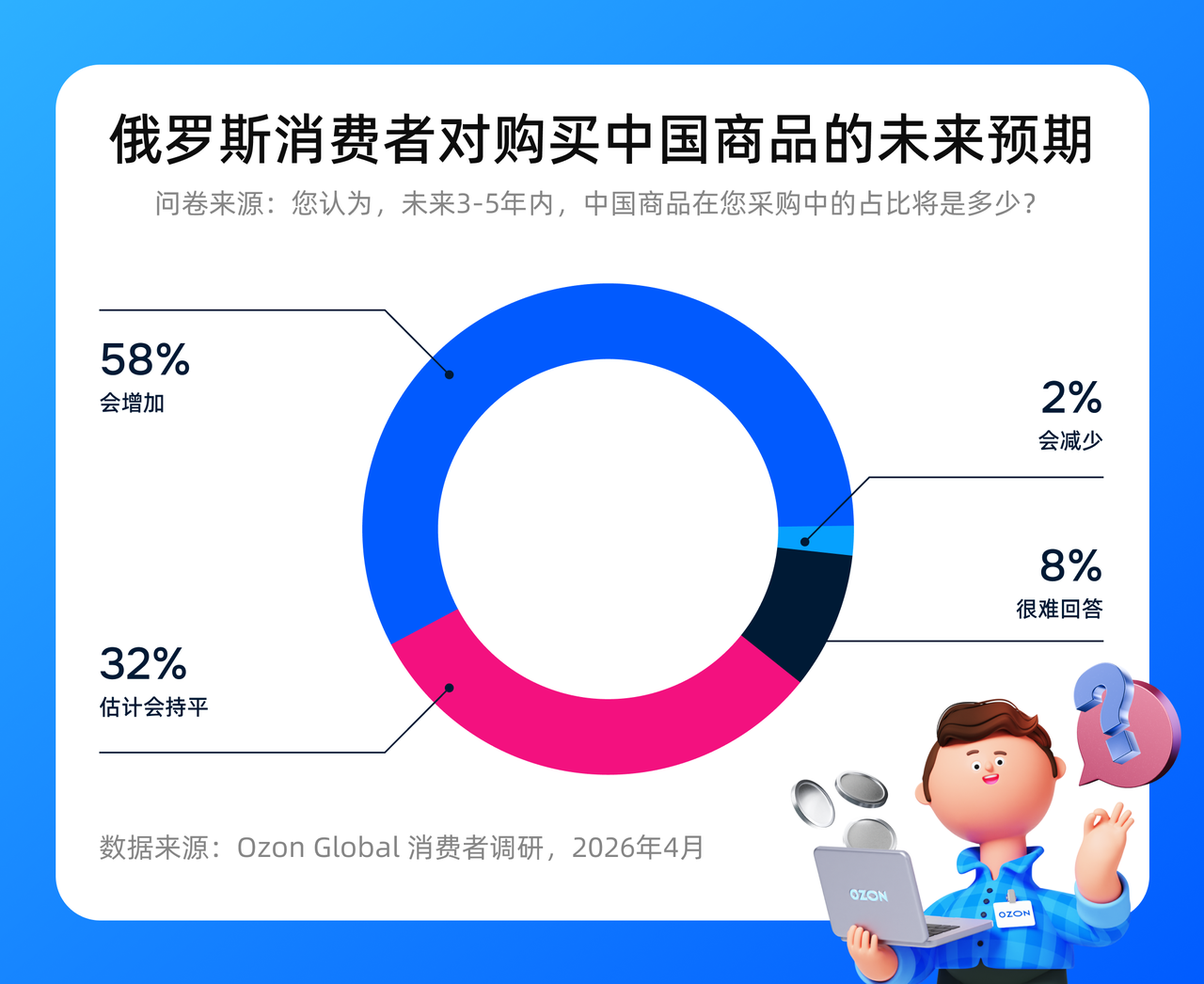
俄罗斯消费者对中国商品的未来购买预期高度乐观。在被问到未来3-5年中国产品的购买份额时,58%的受访者预计购买中国商品的比例将增加,32%认为保持不变,仅2%预计减少,男性预期比女性更为乐观。

其中,最乐观的群体是26-35岁年轻人(62%)和家庭月收入100-150K卢布的中等收入群体(64%)。这两个群体正是复购意愿最强、质量改善认知最积极的群体,他们是当前消费主力与未来家庭消费决策者的重叠区,是中国卖家可以重点关注的高潜力增长群体。

亿邦持续追踪报道该情报,如想了解更多与本文相关信息,请扫码关注作者微信。

文章来源:亿邦动力

广告
微信
朋友圈

这么好看,分享一下?

朋友圈 分享

APP内打开

+1
+1
微信好友 朋友圈 新浪微博 QQ空间
关闭
收藏成功
发送
/140 0