广告
加载中

宁波海关落地跨境电商零售出口分单模式:从“攒单”到“单票即走”

亿邦动力 2026-03-30 14:15
亿邦动力 2026/03/30 14:15

邦小白快读

EN
全文速览

宁波海关推出的跨境电商零售出口“分单模式”,解决了中小微企业出口痛点,操作更灵活高效。

1. 新模式允许企业单票申报出口,每个包裹对应一票清单,无需像以前“总单模式”那样攒单组货达到一定数量。

2. 中小微企业订单具有“小批量、多批次、高频率”特点,分单模式显著减少因查验导致的整批货物等待,提升出口效率。

3. 当前业务量已超4.8万件、货值逾160万元,预计首月突破10万件,实操性强且效果显著。

分单模式优化品牌出口渠道,适应消费趋势变化,推动品牌建设。

1. 该模式提升出口效率,品牌商可更灵活响应小批量订单需求,利于品牌渠道建设,减少库存积压风险。

2. 针对用户行为观察,中小微企业占比超90%,订单特征“小批量、多批次、高频率”,新模式促进品牌产品研发快速迭代,适应新兴消费趋势。

3. 数据方面,业务量达4.8万件、货值160万元,显示新模式可助力品牌商降低出口成本,增强价格竞争力。

分单模式政策解读为卖家带来增长机会,提供可学习操作点。

1. 政策突破传统“总单模式”,企业无需攒单即可单票出口,解决中小微卖家因查验导致的整批延迟问题,降低风险。

2. 机会提示:新模式支持“小批量、高频率”订单,契合消费需求变化,卖家可借此拓展市场,学习最新商业模式如单票申报。

3. 扶持政策体现在业务量超4.8万件、预计首月10万件,卖家可快速应用,应对出口事件,实现高效增长。

分单模式为工厂创造商业机会,启示推进数字化电商转型。

1. 产品生产需求方面,中小微企业订单特征“小批量、多批次”,工厂可优化设计,供应灵活小批量产品,匹配出口模式。

2. 商业机会显著:新模式简化供应链,工厂能更高效对接中小微客户,提升订单响应速度,扩大市场覆盖。

3. 推进数字化启示:海关监管创新从“攒单”到“单票即走”,工厂可借鉴此电商化模式,整合数字化流程提升生产效率。

分单模式代表行业发展趋势,提供客户痛点解决方案。

1. 客户痛点:中小微企业需攒单出口,导致查验延误,新模式直接解决此问题,以申报清单单元监管,缩短等待时间。

2. 解决方案:分单模式作为新技术创新,实现“一个包裹也能出口”,服务商可开发配套工具支持企业操作。

3. 行业趋势:政策向灵活监管发展,业务量超4.8万件显示需求增长,服务商需关注此方向,提供高效出口服务方案。

分单模式满足平台需求,优化运营管理,提供风险规避策略。

1. 商业对平台需求:平台需高效出口渠道支持中小微卖家,新模式实现单票申报,提升平台服务吸引力,利于招商。

2. 平台最新做法:可整合分单模式简化运营管理,减少查验延误风险,宁波海关案例显示业务量增长,平台可复制此模式规避风向。

3. 运营启示:针对“小批量、高频率”订单特点,平台优化流程,支撑卖家灵活出货,强化平台竞争力。

分单模式反映产业新动向,提供政策法规启示,分析商业模式创新。

1. 产业新动向:宁波海关首推分单模式,解决中小微企业占比90%的出口瓶颈,显示监管向灵活化转型。

2. 政策法规建议:新模式优化海关监管作业,启示法规需支持“单票即走”,减少查验滞后,提升贸易效率。

3. 商业模式:从“攒单”到单票出口,创新了电商出口模式,业务量超4.8万件验证可行性,研究者可分析其对产业链的影响。

返回默认
声明:快读内容全程由AI生成,请注意甄别信息。如您发现问题,请发送邮件至 run@ebrun.com 。

我是 品牌商 卖家 工厂 服务商 平台商 研究者 帮我再读一遍。

Quick Summary

Ningbo Customs has launched a "Split Declaration Mode" for cross-border e-commerce retail exports, addressing pain points for small and micro enterprises and making operations more flexible and efficient.

1. The new model allows businesses to declare exports on a per-shipment basis, with each package corresponding to a single declaration, eliminating the need to accumulate orders into bulk shipments as required under the previous "Consolidated Declaration Mode."

2. Small and micro enterprises typically handle orders characterized by "small batches, multiple frequencies, and high repetition," and the split declaration mode significantly reduces delays caused by inspections of entire batches, thereby improving export efficiency.

3. Current transaction volume has exceeded 48,000 shipments with a value of over 1.6 million RMB, and is projected to surpass 100,000 shipments in the first month, demonstrating strong practicality and effectiveness.

The Split Declaration Mode optimizes export channels for brands, aligns with evolving consumer trends, and supports brand building.

1. This model enhances export efficiency, enabling brands to respond more flexibly to small-batch orders, which aids in channel development and reduces inventory risks.

2. Observations indicate that small and micro enterprises account for over 90% of users, with orders characterized by "small batches, multiple frequencies, and high repetition." The new model facilitates rapid product iteration and adaptation to emerging consumer trends.

3. With transaction data reaching 48,000 shipments and a value of 1.6 million RMB, the model demonstrates potential to lower export costs for brands and enhance price competitiveness.

The Split Declaration Mode policy offers growth opportunities for sellers and provides actionable insights.

1. The policy breaks from the traditional "Consolidated Declaration Mode," allowing sellers to export single shipments without order accumulation, reducing risks associated with inspection delays for small and micro sellers.

2. Key opportunity: The model supports "small-batch, high-frequency" orders, aligning with shifting consumer demand. Sellers can leverage this to expand market reach and adopt modern practices like per-shipment declarations.

3. Support is evidenced by transaction volumes exceeding 48,000 shipments, projected to reach 100,000 in the first month, enabling sellers to quickly implement the model and achieve efficient growth.

The Split Declaration Mode creates commercial opportunities for factories and highlights the importance of digital e-commerce transformation.

1. To meet production demands for "small-batch, multiple-frequency" orders from small and micro enterprises, factories can optimize designs and supply flexible, small-batch products compatible with the export model.

2. Significant commercial opportunity: The simplified supply chain enables factories to efficiently serve small and micro clients, improving order response speed and expanding market coverage.

3. Digital transformation insight: Customs' shift from "order accumulation" to "immediate single-shipment processing" offers a model for factories to integrate digital workflows and enhance production efficiency.

The Split Declaration Mode represents an industry trend and offers solutions to client pain points.

1. Client pain point: Small and micro enterprises previously had to accumulate orders for export, leading to inspection delays. The new model addresses this by allowing declaration per shipment, shortening wait times.

2. Solution: As an innovative approach enabling "export of a single package," service providers can develop supporting tools to help businesses operationalize the model.

3. Industry trend: Policy is shifting toward flexible supervision, with over 48,000 shipments indicating growing demand. Service providers should focus on this direction to deliver efficient export solutions.

The Split Declaration Mode meets platform needs, optimizes operations, and provides risk mitigation strategies.

1. Platform demand: Platforms require efficient export channels to support small and micro sellers. The new model's per-shipment declaration enhances service appeal and aids merchant acquisition.

2. Latest practice: Platforms can integrate the split declaration mode to simplify operations, reduce inspection delays, and replicate the Ningbo Customs model, which has seen transaction growth, to mitigate risks.

3. Operational insight: By optimizing processes for "small-batch, high-frequency" orders, platforms can support flexible seller shipments and strengthen competitiveness.

The Split Declaration Mode reflects industry shifts, offers policy insights, and illustrates business model innovation.

1. Industry trend: Ningbo Customs' pioneering model addresses export bottlenecks for small and micro enterprises, which comprise over 90% of users, signaling a shift toward flexible supervision.

2. Policy implication: The model optimizes customs procedures, suggesting regulations should support "immediate single-shipment processing" to reduce inspection lag and improve trade efficiency.

3. Business model innovation: Transitioning from "order accumulation" to per-shipment exports represents an e-commerce export innovation, with over 48,000 shipments validating its feasibility. Researchers can analyze its impact on supply chains.

Disclaimer: The "Quick Summary" content is entirely generated by AI. Please exercise discretion when interpreting the information. For issues or corrections, please email run@ebrun.com .

I am a Brand Seller Factory Service Provider Marketplace Seller Researcher Read it again.

【亿邦原创】日前,跨境电商零售出口“分单模式”在宁波国际邮件互换中心正式启动,成为浙江省内首个落地该模式的业务现场。

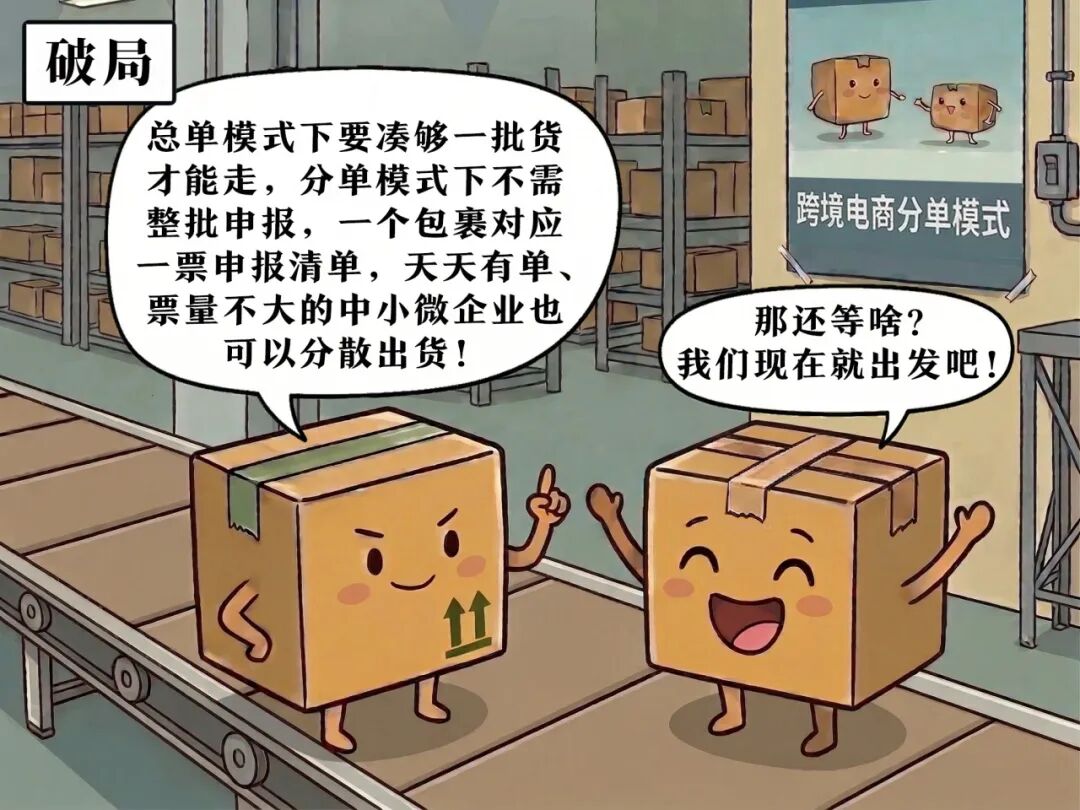
据悉,一直以来,跨境电商零售出口通关普遍采用“总单模式”,企业要在申报清单的基础上传输提运单,并通过物流运单将申报清单与提运单相关联。这是一种以提运单为单元实施监管的作业模式,比较适合大批量出货的大型电商企业。但对中小微电商企业而言,往往需要“攒单”组货达到一定数量后才能申报出口,若其中一个包裹需要查验,整批货物都要等待查验结束才能统一放行。

“分单模式”的推出,恰恰是直击中小微跨境电商企业的痛点。它是指海关直接以申报清单为单元实施布控、查验、放行、结关的监管作业模式。在该模式下,一个包裹对应一票申报清单,企业无须将包裹整批申报即可出口,实现了“一个包裹也能做跨境电商出口”。

据宁波海关统计,截至2025年底,宁波市网络零售出口中小微跨境电商企业占比超过90%。这类企业的订单普遍具有“小批量、多批次、高频率”的特点,分单模式更加适合他们分散出货的情况。

据悉,目前已有多家企业在宁波国际邮件互换中心开展分单模式业务,业务量超过4.8万件、货值逾160万元,首月业务量预计超过10万件。

文章来源:亿邦动力

广告
微信
朋友圈

这么好看,分享一下?

朋友圈 分享

APP内打开

+1
+1
微信好友 朋友圈 新浪微博 QQ空间
关闭
收藏成功
发送
/140 0