广告
加载中

站内结账遇冷后 ChatGPT开始转向“AI导购” 支持商品发现及AI比价

亿邦动力 2026-03-26 15:42
亿邦动力 2026/03/26 15:42

邦小白快读

EN
全文速览

ChatGPT优化购物体验,转向AI导购功能,提供实用操作指导。

1. 支持产品发现:用户可根据预算、偏好筛选商品,上传图片搜索类似款式,获取实时更新的商品信息。

2. 提供比价功能:以并列形式展示商品图片、价格、评价和功能细节,帮助消费者直观对比不同选项。

3. 操作流程简化:取消站内即时结账,改为商家引导结算,用户需在商家自有网站完成购买,避免无效步骤。

4. 实际案例参考:沃尔玛数据显示站内结账转化率仅为跳转官网后的三分之一,提示用户习惯在对话中浏览而非直接下单。

5. 商家接入方式:通过ACP协议分享商品数据,未来将扩展个性化推荐等功能,用户可关注美国地区先行体验。

ChatGPT作为新营销渠道,提供品牌曝光和用户互动机会。

1. 品牌渠道建设:通过ACP协议分享商品数据和促销信息,在ChatGPT中完整展示商品目录,提升品牌可见度。

2. 消费趋势观察:用户行为转向产品探索而非直接购买,品牌需适应对话式购物场景,优化产品展示逻辑。

3. 品牌定价策略:比价功能影响价格竞争,品牌应关注并列展示的商品细节如价格和评价,以提升竞争力。

4. 产品研发启示:根据用户偏好筛选功能,品牌可研发匹配AI推荐的款式,如响应上传图片搜索的类似产品需求。

5. 代表企业案例:头部零售商如Target、Sephora接入ACP,显示市场趋势和合作机会,品牌可借鉴其数字化策略。

ChatGPT策略调整带来新增长机会和风险警示。

1. 增长市场机会:接入ChatGPT展示商品,吸引用户浏览和比价,商家可登记信息获取流量,支持自助式数据接入扩展更多地区。

2. 消费需求变化:用户习惯转向产品发现,事件应对需优化响应速度和商品覆盖范围,提供实时更新的商品详情。

3. 风险提示:站内结账失败显示用户转化率低,风险包括对话中购物习惯未形成,商家应避免依赖即时结账功能。

4. 可学习点:采用商家引导结算模式,购买行为在自有网站完成,可提高转化率,如沃尔玛案例所示。

5. 合作方式与扶持政策:通过ACP协议分享数据源和促销信息,ChatGPT计划扩展商家平台,提供本地库存查询等未来功能支持。

AI电商趋势提供生产和设计需求启示。

1. 产品生产需求:根据用户预算和偏好筛选功能,工厂需优化产品设计以满足AI推荐标准,如支持上传图片搜索的类似款式需求。

2. 商业机会:头部零售商接入ACP显示市场需求,工厂可为品牌提供符合商品发现功能的多样化产品,抓住数字化机遇。

3. 推进数字化启示:通过ACP协议分享商品数据,工厂应整合电商系统,确保商品目录完整呈现,提升响应速度和关联度。

4. 案例参考:沃尔玛转向嵌入聊天机器人,启示工厂关注用户行为变化,开发适应对话场景的生产方案。

行业发展趋势揭示新技术和解决方案。

1. 行业趋势:AI购物转向产品发现和比价,强调实时商品信息覆盖,服务商需关注用户行为如浏览习惯变化。

2. 新技术应用:ACP协议支持商品数据共享,未来将实现个性化推荐、本地库存查询等功能,服务商可开发相关工具优化客户体验。

3. 客户痛点:用户对话中直接下单习惯不足,痛点包括响应速度慢和商品覆盖不全,ChatGPT优化后提升及时性和可用性。

4. 解决方案:转向商家引导结算模式,服务商可提供数据整合服务,如通过ACP帮助客户分享促销信息,解决转化率低问题。

平台优化运营和招商策略应对市场需求。

1. 平台最新做法:取消即时结账功能,聚焦产品发现,提升响应速度和关联度,支持用户浏览商品和比价。

2. 平台招商:商家可登记企业信息接入ACP,扩展自助式数据平台至更多国家和地区,吸引更多零售商如Target、Sephora合作。

3. 运营管理:通过ACP协议分享商品数据源,确保搜索结果及时和完整,管理风险如用户习惯问题,转向可行模式。

4. 风向规避:避免站内结账失败风险,强调商家自有结账系统,平台应优化商品覆盖范围和推荐算法以规避转化率低问题。

产业新动向揭示商业模式和政策启示。

1. 产业新动向:ChatGPT从结账转向产品探索,反映用户行为挑战,如对话中购物习惯未形成,沃尔玛案例显示实际转化率问题。

2. 新问题:用户习惯不足导致站内结账冷遇,研究需关注AI购物策略调整的深层影响和解决方案。

3. 商业模式:采用商家引导结算模式,购买在自有网站完成,研究者可分析这种模式的效率和可扩展性。

4. 政策法规启示:扩展ACP协议支持数据共享,研究者可建议开放数据标准,促进个性化推荐和库存查询功能发展,以应对产业变化。

返回默认
声明:快读内容全程由AI生成,请注意甄别信息。如您发现问题,请发送邮件至 run@ebrun.com 。

我是 品牌商 卖家 工厂 服务商 平台商 研究者 帮我再读一遍。

Quick Summary

ChatGPT is enhancing the shopping experience by shifting to an AI shopping assistant role, providing practical guidance.

1. Supports product discovery: Users can filter products by budget and preferences, upload images to search for similar styles, and access real-time product information.

2. Offers price comparison: Displays product images, prices, reviews, and features side-by-side for easy visual comparison.

3. Simplified checkout process: Removes in-chat instant checkout, redirecting users to complete purchases on the merchant's own website to eliminate unnecessary steps.

4. Real-world case study: Walmart data shows in-chat checkout conversion rates are only one-third of those on its official website, indicating users prefer browsing within conversations.

5. Merchant integration: Merchants share product data via the ACP protocol; future features like personalized recommendations will be available first in the U.S.

ChatGPT serves as a new marketing channel, offering brand exposure and user engagement opportunities.

1. Brand channel development: Share product catalogs and promotions via the ACP protocol to enhance visibility within ChatGPT.

2. Consumer trend insights: Users are shifting toward product exploration over direct purchases, requiring brands to adapt to conversational shopping scenarios.

3. Pricing strategy: The comparison feature intensifies price competition; brands must optimize details like pricing and reviews to stay competitive.

4. Product development inspiration: Leverage user preference filters to design products aligned with AI recommendations, such as styles matching image-based searches.

5. Case examples: Major retailers like Target and Sephora adopting ACP signal market trends, offering digital strategy insights for brands.

ChatGPT’s strategy shift presents growth opportunities and risks for sellers.

1. Market expansion: Showcase products on ChatGPT to attract browsing and comparison; sellers can register for traffic access and expand to more regions via self-service data integration.

2. Evolving consumer behavior: Users prioritize product discovery; optimize response speed and product coverage with real-time updates.

3. Risk alert: Low in-chat checkout conversion rates (e.g., Walmart’s data) indicate unmet user habits; avoid over-relying on instant checkout features.

4. Key takeaway: Adopt merchant-guided checkout, directing purchases to your website to boost conversions, as demonstrated by Walmart.

5. Collaboration and support: Share data and promotions via ACP; ChatGPT plans to expand merchant tools with future features like local inventory checks.

AI e-commerce trends signal shifts in production and design demands.

1. Production needs: Align product design with AI recommendation criteria, such as supporting image-based searches for similar styles based on user budgets and preferences.

2. Business opportunities: Major retailers adopting ACP reveal market demand; factories can supply diverse products tailored for discovery-focused shopping.

3. Digital integration: Use ACP to share product data, ensuring full catalog visibility and improving response efficiency across e-commerce systems.

4. Case insight: Walmart’s chatbot integration highlights the need to adapt production strategies to conversational shopping behaviors.

Industry trends highlight new technologies and solutions for service providers.

1. Trend observation: AI shopping emphasizes product discovery and comparison, requiring real-time data coverage and attention to browsing habit shifts.

2. Technology application: ACP protocol enables product data sharing; future features like personalized recommendations and local inventory checks present tool-development opportunities.

3. Customer pain points: Low user adoption of in-chat checkout, slow response times, and incomplete product coverage are key challenges addressed by ChatGPT’s optimizations.

4. Solutions: Support clients with data integration services via ACP, such as sharing promotions, to mitigate low conversion rates under the merchant-guided checkout model.

Platforms are optimizing operations and merchant strategies to meet market demands.

1. Platform updates: Removing instant checkout to focus on product discovery, improving response speed and relevance for browsing and comparison.

2. Merchant acquisition: Businesses can register for ACP integration, with self-service data platforms expanding to more regions to attract retailers like Target and Sephora.

3. Operational management: Use ACP to ensure timely, complete search results while managing risks like user habit gaps; pivot to sustainable models.

4. Risk mitigation: Avoid in-chat checkout failures by emphasizing merchant-owned systems; optimize product coverage and algorithms to address low conversion.

Industry shifts reveal implications for business models and policies.

1. Trend analysis: ChatGPT’s pivot from checkout to product exploration reflects challenges in user behavior, such as unconsummated conversational shopping habits (e.g., Walmart’s low conversion rates).

2. Emerging issues: Research should examine the root causes of low in-chat checkout adoption and evaluate strategic adjustments in AI shopping.

3. Business models: Analyze the efficiency and scalability of merchant-guided checkout, where purchases are completed on brand websites.

4. Policy implications: Advocate for open data standards via ACP expansion to support personalized recommendations and inventory queries, addressing industry evolution.

Disclaimer: The "Quick Summary" content is entirely generated by AI. Please exercise discretion when interpreting the information. For issues or corrections, please email run@ebrun.com .

I am a Brand Seller Factory Service Provider Marketplace Seller Researcher Read it again.

【亿邦原创】日前,OpenAI宣布优化ChatGPT内的购物体验,将重心转向产品探索(Product Discovery),支持用户在站内浏览商品、获取实时更新的商品信息,并进行比价。

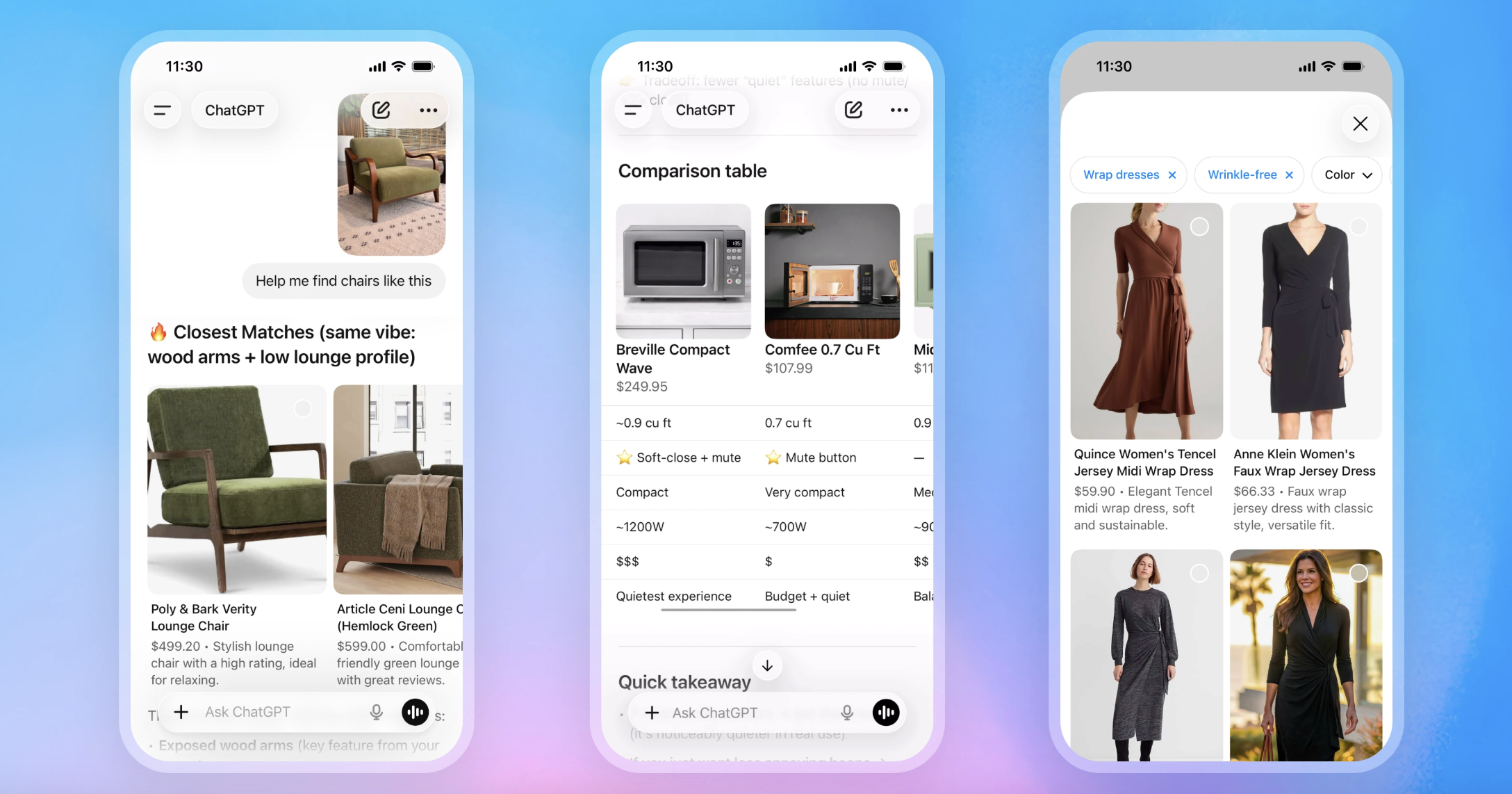
具体而言,ChatGPT能够根据用户的预算、偏好及限制条件,精准筛选并呈现匹配的商品。用户可以直接浏览相关信息,也可以上传图片让ChatGPT搜索相近的款式;ChatGPT还能够将商品以并列的形式进行呈现,并列出价格、评价、功能等细节,帮助消费者进行对比。同时,OpenAI宣称,ChatGPT还提升了响应速度、关联度及商品覆盖范围,让搜索结果变得更为及时、可用。

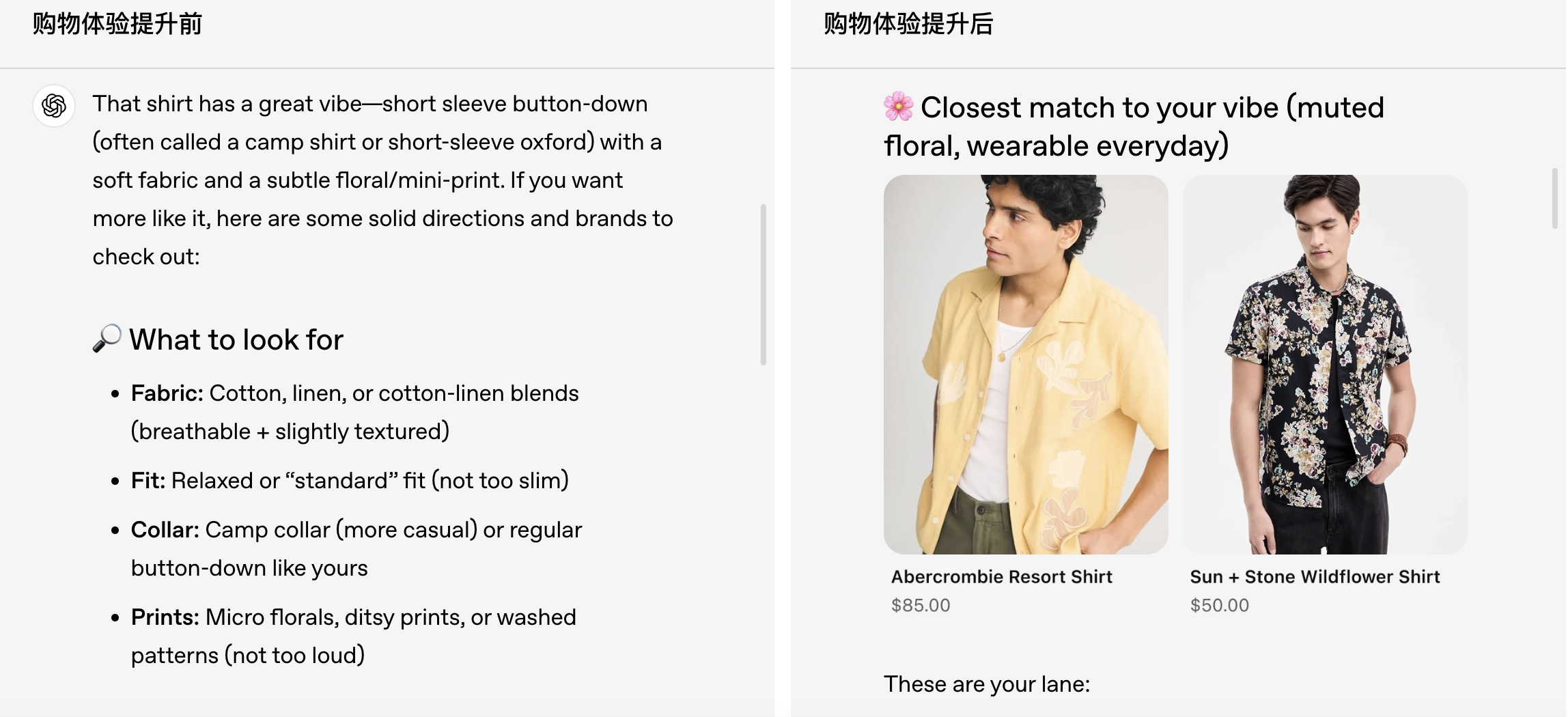
比如,在官方所给出的示例中,ChatGPT过往在推荐商品前,会根据消费者的提问进行分析,提供一长段没有任何实质帮助的内容后才会推荐商品;优化后,ChatGPT将会调用真实的商品数据,直接展示商品图片、定价、商品详情,更符合传统的购物逻辑,并向消费者推荐更多可能感兴趣的商品。

“我们正在逐步取消ChatGPT中的独立‘即时结账’体验,转而提供更出色的商品发现功能,以及由商家自主引导的结算体验。用户可以在ChatGPT中发现并评估商品,但购买行为需要在商家自有的网站或应用中完成。”OpenAI方面表示。

本月初,ChatGPT被曝出正在调整其在AI购物方面的策略,暂停站内结账功能。部分原因在于,站内结账的表现不达预期。一些市场分析机构称,用户尚未形成在对话场景中直接下单的消费习惯;作为最早接入该功能的平台之一,沃尔玛方面也表示,用户在ChatGPT内直接下单的转化率,仅为跳转至其官网后的约三分之一。沃尔玛开始转向在其系统中嵌入自家的聊天机器人Sparky,引导用户从ChatGPT直接进入沃尔玛。

“我们发现,最初版本的即时结账功能未能提供我们所追求的灵活性。因此,在我们将精力集中于产品探索 (product discovery) 的同时,将允许商家使用其自有的结账系统。”OpenAI方面称。

此外,OpenAI还表示,其正在扩展智能体电商协议(Agentic Commerce Protocol,简称ACP),以支持商品发现,将更完整、更相关、更及时的信息直接引入ChatGPT。

通过ACP,商家可以分享商品数据源 (feed) 及促销信息,从而确保其商品目录在ChatGPT中得到完整呈现。随着时间的推移,ACP还将逐步实现个性化推荐、查询本地库存,以及预计到达时间 (ETA) 等功能。

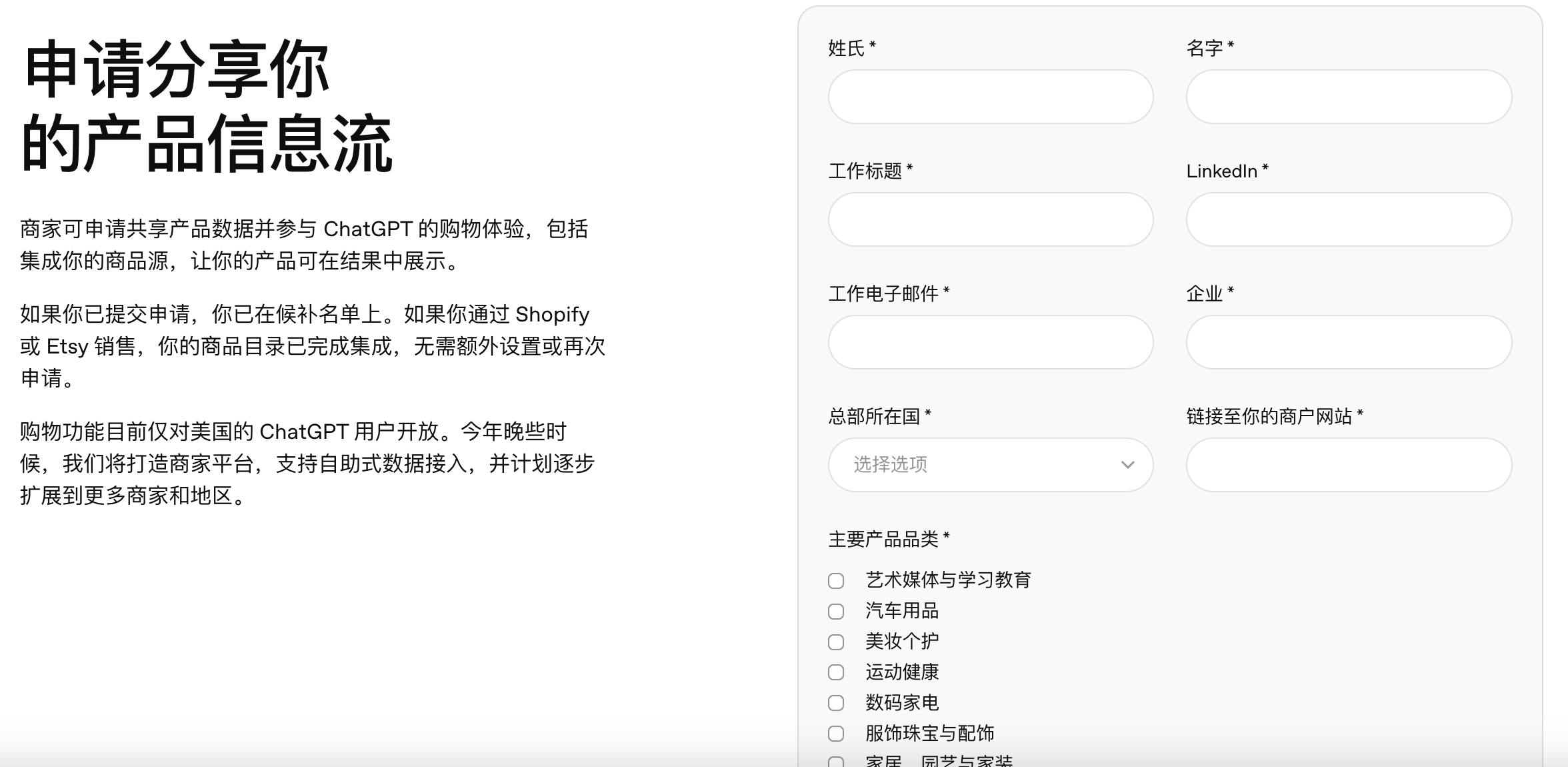
在ChatGPT的官网上,商家已经可以填写、登记自己的企业、商品信息。这一功能目前仅对美国用户开放。ChatGPT称,今年晚些时候,将打造商家平台,支持自助式数据接入,并逐渐扩展至更多国家和地区。

目前,已有多家头部零售商接入了ACP以支持商品探索功能,其中包括Target、Sephora、Nordstrom、Lowe’s、Best Buy、The Home Depot和Wayfair。

文章来源:亿邦动力

广告
微信
朋友圈

这么好看,分享一下?

朋友圈 分享

APP内打开

+1
+1
微信好友 朋友圈 新浪微博 QQ空间
关闭
收藏成功
发送
/140 0