广告
加载中

行业首推“全程溯源”:京东七鲜超市给生鲜每天“更新简历”

龚作仁 2026-03-24 17:53
龚作仁 2026/03/24 17:53

邦小白快读

EN
全文速览

京东七鲜超市推出的全程溯源模式让消费者能全程追踪生鲜产品信息,确保新鲜与安全,操作简单实用。

1. 操作方式:购买前点击商品页面“全程溯源”标识或扫描外包装二维码,即可查看全链路信息,包括种植基地实景、采收加工照片、三轮农残检测报告(初检、复检和终检)、运输及配送日期。

2. 动态更新优势:系统最快每天更新各批次检验报告和配送信息,确保信息实时准确,避免“溯源信息与实际不符”的痛点,让消费者买得安心。

3. 实际案例参考:以菠菜为例,源头为天津武清基地,消费者可精准核查全链路检测报告,形成安全闭环,彻底打破信息黑箱。

4. 消费益处:该模式已覆盖蔬菜、水果、猪肉、鸡蛋等核心品类,消费者行为转变显示扫描溯源成为习惯,显著提升信任和体验。

京东七鲜的全程溯源系统通过透明化生鲜流通,提升品牌信任和产品价值,响应消费趋势。

1. 品牌营销策略:利用全程溯源作为差异化卖点,将“极致新鲜”从抽象承诺转化为可感知体验,增强消费者忠诚度和品牌形象。

2. 消费趋势洞察:消费者对食品安全高度关注,购买前扫描溯源二维码成为新习惯,显示用户行为向透明化转移。

3. 产品研发创新:系统覆盖非加工类蔬菜、水果等核心品类,动态更新设计解决行业痛点,为产品研发提供可复用的技术范本。

4. 渠道建设启示:通过全链路可视化,强化品牌渠道透明度,如展示种植基地和检测报告,提升用户信任。

5. 代表企业案例:京东七鲜作为行业先驱,在食品安全宣传周期间上线该系统,推动生鲜零售规范化。

京东七鲜的全程溯源模式揭示生鲜零售增长机会,提供可学习点应对行业变化。

1. 市场机会与需求变化:消费者对食品安全和透明度需求上升,扫描溯源标识成为习惯,显示消费需求向全链路可追溯转移。

2. 可学习商业模式:系统实现从产地到终端的动态更新,覆盖核心品类,卖家可借鉴该模式应对信息不透明风险,提升运营效率。

3. 风险与机会提示:行业痛点如“单点溯源”无法满足需求,京东方案通过自动化系统减少误差,卖家需关注动态更新以避免信息不符风险。

4. 事件应对措施:在食品安全宣传周期间上线,响应政策导向,卖家可借类似事件推广透明化策略,增强消费者信任。

5. 合作启示:系统整合供应商信息,卖家可探索与平台合作,利用溯源吸引更多消费者。

京东七鲜全程溯源系统为工厂提供生产优化和数字化启示,创造商业机会。

1. 产品生产需求:系统强调源头基地如天津武清菠菜种植基地,工厂需确保种植、采收和加工环节可追溯,满足全链路品控要求。

2. 商业机会:覆盖蔬菜、水果、猪肉等品类,工厂可对接京东平台,供应优质产品以纳入溯源体系,提升市场竞争力。

3. 推进数字化启示:通过自动化系统自动采集检测报告、物流数据,减少人工误差,工厂可借鉴此技术优化生产流程,实现信息实时同步。

4. 电商应用案例:系统展示从仓储到门店的复检和终检,工厂可学习如何整合冷链和仓储环节,推进电商化转型。

京东七鲜全程溯源系统揭示行业趋势和新技术,提供客户痛点解决方案。

1. 行业发展趋势:生鲜零售向全链路动态溯源迈进,京东方案打破“单点溯源”局限,推动行业规范化透明化。

2. 新技术应用:系统采用专属集成自动化技术,自动采集和同步检测报告、物流信息,减少人工成本,提升准确性和时效性。

3. 客户痛点分析:行业存在信息不透明、品控风险等痛点,京东通过动态更新解决“溯源信息与实际不符”问题。

4. 解决方案参考:覆盖核心品类如蔬菜水果,服务商可复用该技术为其他企业提供类似系统,如自动化数据采集模块。

5. 案例启示:以菠菜溯源为例,展示三轮检测报告,服务商可开发工具帮助客户实现全链路可视化。

京东七鲜全程溯源模式响应商业需求,优化平台运营和风险规避。

1. 商业需求和问题:消费者对生鲜信息透明化需求强烈,平台需解决冗长流通链中的品控风险,如信息黑箱问题。

2. 平台最新做法:京东推出动态溯源系统,覆盖蔬菜、水果等品类,实现自动信息采集和实时更新,提升招商吸引力。

3. 运营管理优化:通过自动化减少人工录入误差,整合仓储、门店数据,平台可学习此模式提升效率,如设置三轮检测流程。

4. 风向规避:系统每日更新批次报告,避免信息不符风险,平台需强化此类动态机制以规避品控问题。

5. 合作方式启示:整合供应商基础信息,平台可借此吸引更多合作伙伴,推动生态建设。

京东七鲜全程溯源系统揭示产业新动向和商业模式,提供政策启示。

1. 产业新动向:生鲜零售迈入“全程可追溯”新阶段,京东方案打破行业壁垒,推动全链路透明化和规范化。

2. 新问题分析:行业痛点如单点溯源无法覆盖全环节,该系统通过动态更新解决信息不透明问题,研究者可探讨其技术挑战。

3. 政策法规建议:在食品安全宣传周期间上线,响应政策导向,研究者可建议推广类似法规,强化生鲜品控标准。

4. 商业模式启示:可复制范本如自动化系统减少误差,研究者可分析其经济性和可扩展性,推动行业高质量转型。

5. 代表企业案例:京东七鲜作为先驱,提供实证数据如消费者行为变化,研究者可评估其社会影响。

返回默认
声明:快读内容全程由AI生成,请注意甄别信息。如您发现问题,请发送邮件至 run@ebrun.com 。

我是 品牌商 卖家 工厂 服务商 平台商 研究者 帮我再读一遍。

Quick Summary

JD.com's 7FRESH supermarket has launched a comprehensive traceability system that allows consumers to track the entire journey of fresh produce, ensuring freshness and safety through a simple, user-friendly process.

1. How it works: Before purchase, click the "Full Traceability" icon on the product page or scan the QR code on the packaging to view the entire supply chain information, including real-time images of the farm, harvesting and processing photos, three-stage pesticide residue test reports (initial, re-inspection, and final), and transport and delivery dates.

2. Dynamic updates advantage: The system updates batch inspection reports and delivery information daily, ensuring real-time accuracy and eliminating the common industry pain point of "mismatched traceability data," providing consumers with peace of mind.

3. Real-world example: Using spinach sourced from the Wuqing base in Tianjin as a case study, consumers can precisely verify the entire chain of test reports, creating a safety assurance loop and completely breaking down information black boxes.

4. Consumer benefits: The model already covers core categories like vegetables, fruits, pork, and eggs. A shift in consumer behavior shows that scanning for traceability is becoming habitual, significantly enhancing trust and shopping experience.

JD.com's 7FRESH full traceability system enhances brand trust and product value by bringing transparency to the fresh produce supply chain, aligning with evolving consumer trends.

1. Brand marketing strategy: Leveraging full traceability as a key differentiator, it transforms the abstract promise of "ultimate freshness" into a tangible, verifiable experience, strengthening consumer loyalty and brand image.

2. Consumer trend insight: Heightened consumer focus on food safety is evident, with pre-purchase QR code scanning becoming a new habit, indicating a clear shift towards demand for transparency.

3. Product development innovation: Covering core non-processed categories like vegetables and fruits, the system's dynamic update feature addresses a key industry pain point, providing a reusable technological blueprint for product R&D.

4. Channel development insight: Full-chain visualization, such as showcasing farms and test reports, strengthens channel transparency and builds user trust.

5. Representative case: As an industry pioneer, JD.com's 7FRESH launched this system during the Food Safety Publicity Week, promoting standardization in fresh food retail.

JD.com's 7FRESH full traceability model highlights growth opportunities in fresh retail and offers actionable insights for sellers navigating industry changes.

1. Market opportunity & demand shift: Rising consumer demand for food safety and transparency is clear, with traceability scanning becoming habitual, indicating a market shift towards full-chain traceability.

2. Learnable business model: The system enables dynamic updates from farm to store, covering key categories. Sellers can adopt similar models to mitigate risks from information opacity and improve operational efficiency.

3. Risk & opportunity alert: Traditional "single-point traceability" is insufficient. JD's automated system reduces errors; sellers should prioritize dynamic updates to avoid data mismatch risks.

4. Event-driven strategy: Launched during Food Safety Publicity Week, it aligns with policy trends. Sellers can leverage similar events to promote transparency and build consumer trust.

5. Collaboration insight: The system integrates supplier data. Sellers can explore platform partnerships to use traceability as a consumer attraction tool.

JD.com's 7FRESH full traceability system offers factories insights for production optimization and digitalization, creating new business opportunities.

1. Production requirements: The system emphasizes traceability from the source, like the Wuqing spinach base. Factories must ensure traceable planting, harvesting, and processing to meet full-chain quality control standards.

2. Business opportunity: Covering categories like vegetables, fruits, and pork, factories can partner with JD to supply high-quality products for the traceability system, boosting market competitiveness.

3. Digitalization insight: Automated collection of test reports and logistics data reduces manual errors. Factories can adopt similar technologies to optimize production and enable real-time data synchronization.

4. E-commerce application: The system demonstrates re-inspection and final checks from warehouse to store. Factories can learn how to integrate cold chain and logistics for e-commerce transformation.

JD.com's 7FRESH traceability system reveals industry trends and new technologies, offering solutions to common client pain points.

1. Industry trend: Fresh retail is moving towards dynamic, full-chain traceability. JD's model overcomes the limitations of "single-point traceability," driving industry standardization and transparency.

2. New technology application: The system uses specialized integrated automation to collect and sync test reports and logistics data automatically, reducing labor costs and improving accuracy and timeliness.

3. Client pain point analysis: Key industry issues include information opacity and quality control risks. JD's dynamic updates solve the "mismatched traceability data" problem.

4. Solution reference: Covering core categories like vegetables and fruits, service providers can adapt this technology to offer similar systems, such as automated data collection modules, to other businesses.

5. Case study insight: The spinach traceability case, showing three-stage testing, demonstrates how service providers can develop tools for clients to achieve full-chain visibility.

JD.com's 7FRESH traceability model addresses core business needs, optimizing platform operations and risk management.

1. Business needs & challenges: Strong consumer demand for transparency requires platforms to solve quality control risks in long supply chains, such as information black boxes.

2. Platform innovation: JD's dynamic traceability system covers categories like vegetables and fruits, automating data collection and enabling real-time updates, enhancing its appeal to merchants.

3. Operational optimization: Automation reduces manual entry errors and integrates warehouse and store data. Platforms can adopt this model to improve efficiency, e.g., by implementing multi-stage inspection processes.

4. Risk mitigation: Daily batch report updates prevent data mismatch risks. Platforms should strengthen such dynamic mechanisms to avoid quality control issues.

5. Partnership insight: Integrating supplier base information can help platforms attract more partners and foster ecosystem growth.

JD.com's 7FRESH traceability system reveals new industry dynamics and business models, offering insights for policy and research.

1. Industry evolution: Fresh food retail is entering a "fully traceable" phase. JD's model breaks down industry barriers, promoting full-chain transparency and standardization.

2. Problem analysis: Traditional single-point traceability is inadequate. The system's dynamic updates address information opacity; researchers can explore associated technical challenges.

3. Policy implications: Launched during Food Safety Publicity Week, it aligns with policy direction. Researchers can recommend promoting similar regulations to strengthen fresh food quality standards.

4. Business model insight: The replicable template, using automation to reduce errors, offers a case for analyzing economic viability and scalability, potentially driving high-quality industry transformation.

5. Representative case: As a pioneer, JD 7FRESH provides empirical data, such as shifts in consumer behavior, enabling researchers to assess its broader social impact.

Disclaimer: The "Quick Summary" content is entirely generated by AI. Please exercise discretion when interpreting the information. For issues or corrections, please email run@ebrun.com .

I am a Brand Seller Factory Service Provider Marketplace Seller Researcher Read it again.

在生鲜零售领域,新鲜与安全始终是消费者的核心关注点。然而,生鲜产品从产地到餐桌的流通链路冗长复杂,涵盖种植、加工、冷链、仓储、门店等多个关键环节,每个环节都存在品控风险,“来路不明”“信息不透明”等问题,长期让消费者在选购生鲜时心存顾虑。半年来,京东七鲜超市行业首推的“全程溯源”模式,率先打破行业壁垒,构建起可视化、透明化的生鲜流通全链路,将“极致新鲜”从抽象承诺转化为可感知、可验证的消费体验,更引领生鲜零售行业迈入“全程可追溯”的规范化新阶段。

2025年9月全国食品安全宣传周期间,京东七鲜正式上线自研“食安品质全链路”溯源系统,在业内首次推出生鲜“全程溯源”模式。经过半年的迭代优化与规模化推进,该溯源体系已实现核心品类全面覆盖,目前已涵盖所有非加工类蔬菜、水果、猪肉、鸡蛋,同时覆盖绝大部分冰鲜、活鲜肉类及水产。从消费端反馈来看,购买前点击商品页面“全程溯源”标识、扫描外包装溯源二维码,已成为越来越多七鲜消费者的选购习惯。这一消费行为的转变,既彰显了消费者对食品安全的高度重视,更印证了全程溯源模式在重塑消费信任、提升消费体验方面的显著成效。

事实上,生鲜溯源并非行业新鲜概念,但当前多数平台的溯源体系仍停留在“单点溯源”或“静态溯源”层面,仅能展示部分环节信息,无法实现全链路无死角覆盖,难以满足消费者对“每一个环节都安全”的核心期待。与之不同,京东七鲜的全程溯源模式,真正实现了从产地源头到餐桌终端的全链路贯通,将消费者关心的所有食品安全关键信息,均清晰、直观地呈现在溯源界面中,让“盘中餐”的来路一目了然。

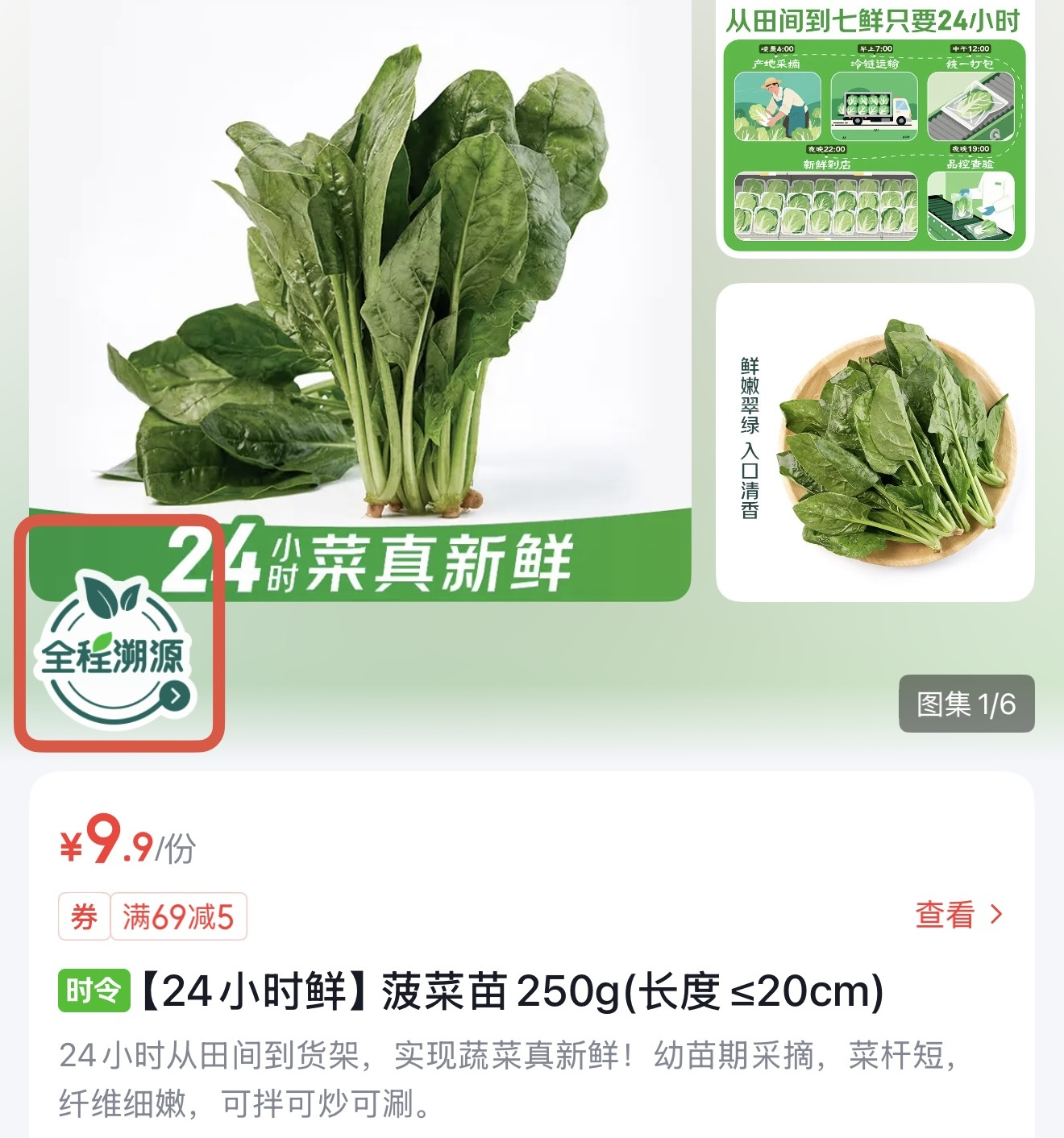
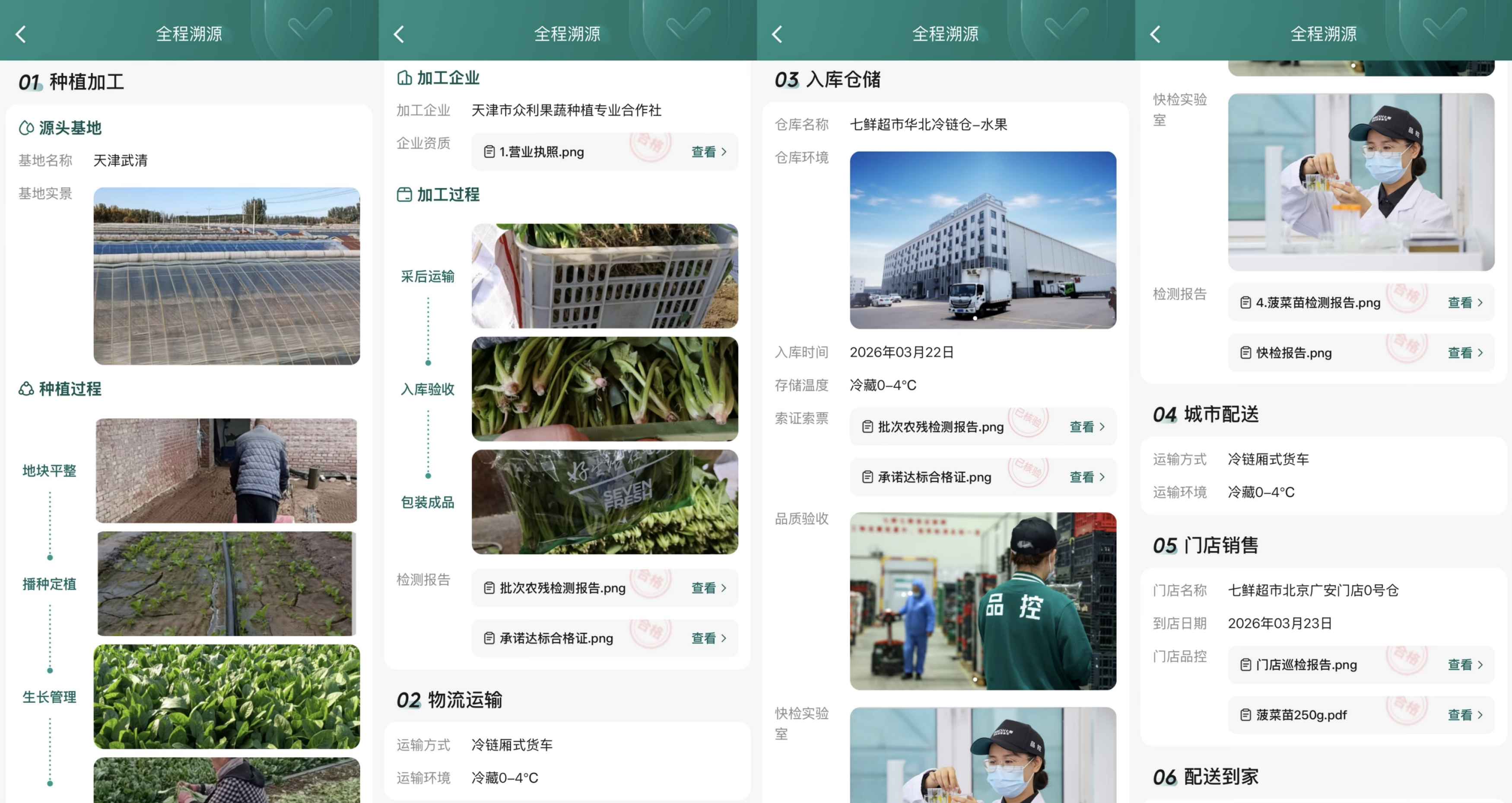
以餐桌常见且农残风险较高的菠菜为例,京东七鲜“24小时鲜 菠菜苗”的全程溯源界面,明确标注其源头为天津武清优质菠菜种植基地,消费者不仅能直观查看种植基地的实景画面、采收与加工现场照片,更能精准核查所购批次蔬菜的全链路农残检测报告——从基地采收后的初检,到仓储入库的复检,再到门店上架前的终检,三轮严格检测的报告全程公示,形成环环相扣的安全闭环。同时,运输方式、配送及到店日期等关键流通信息同步呈现,彻底打破生鲜流通的“信息黑箱”,让消费者真正“看透盘中餐来时路”,买得安心、吃得放心。

更值得行业关注的是,京东七鲜的“全程溯源”并非“一劳永逸”的静态展示,而是一套动态实时更新的溯源体系。界面中既包含供应商基础信息、全链路固定流程等静态内容,更有最快每天更新的各批次检验报告、配送信息——这种动态更新的模式,意味着每一款产品、每一个批次,都能呈现“当日真实状态”,彻底避免了“溯源信息与实际不符”的行业痛点。

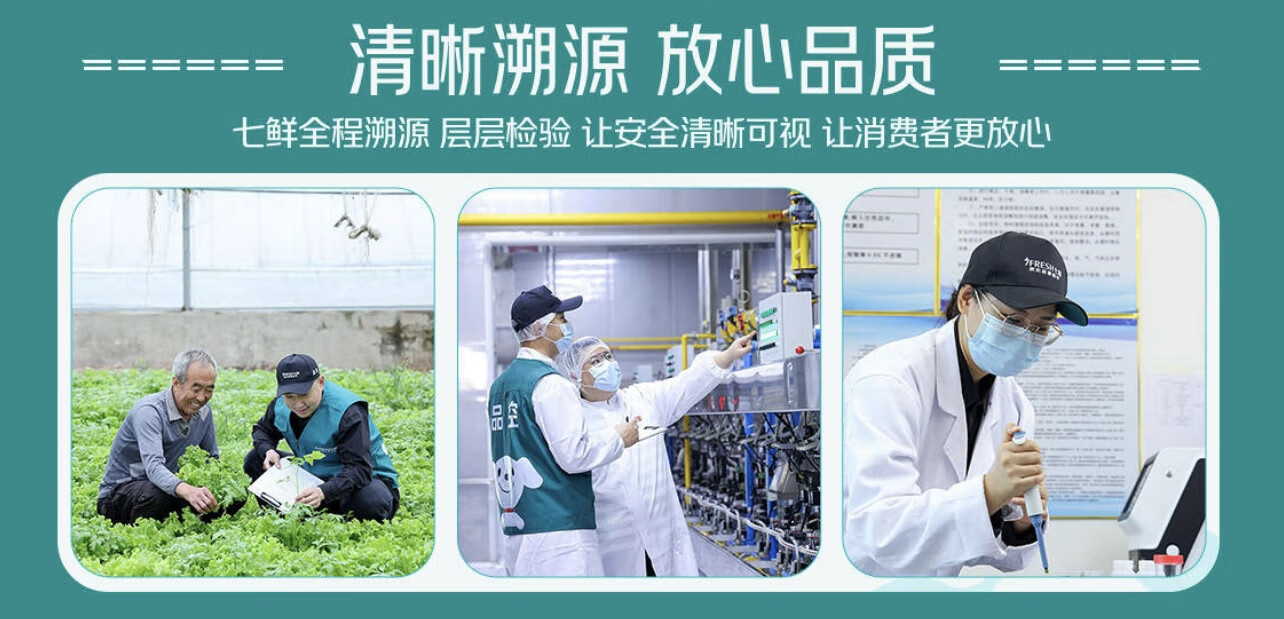
从行业技术层面来看,动态溯源的背后,是对生鲜供应链数智化能力的极高要求。生鲜品类SKU繁多、批次复杂,每一款产品的溯源信息更新都需要大量的人力与技术支撑,这也是多数平台难以实现全链路动态溯源的核心原因。而京东七鲜通过打造专属集成自动化系统,实现了各环节信息的自动采集、自动同步与实时展示——无论是商品批次检测报告、实验室检测数据,还是物流信息、门店运营数据,均能通过系统自动获取并同步更新,既减少了人工录入的成本与误差,也进一步提升了溯源信息的准确性与时效性,这种“科技赋能品控”的模式,为行业提供了可复用的技术参考。

生鲜零售的品质升级,始终是全行业共同探索的课题。京东七鲜率先落地的全程溯源模式,以全链路透明化、信息动态化的实践,打破了生鲜溯源长期存在的行业痛点,为行业提供了可复制、可落地的品质管控范本。这一先行实践,或将持续推动生鲜零售行业向更透明、更规范、更高质量的方向迈进,让消费者越来越实现“买得安心、吃得放心”。

注:文/龚作仁,文章来源:Laborer,本文为作者独立观点,不代表亿邦动力立场。

文章来源:Laborer

广告
微信
朋友圈

这么好看,分享一下?

朋友圈 分享

APP内打开

+1
+1
微信好友 朋友圈 新浪微博 QQ空间
关闭
收藏成功
发送
/140 0