广告
加载中

财报解析丨医用敷料竞争加剧 巨子生物迎来首份下滑年报

亿邦动力 2026-03-20 12:24
亿邦动力 2026/03/20 12:24

邦小白快读

EN
全文速览

巨子生物2025年业绩整体下滑,下半年表现尤其不佳。

1. 全年营收55.19亿元,同比下降0.37%;年内经调整净利润19.6亿元,同比下降8.91%。

2. 下半年营收24.06亿元,同比下降19.76%;净利润7.55亿元,同比下降32.90%;毛利率降至78.60%,跌破80%。

渠道调整和行业竞争加剧是主因。

1. DTC渠道(如天猫、抖音)营收下降5.16%至34.02亿元,下半年降幅达20.08%。

2. 自营平台(京东、唯品会)营收增长34.84%至5.09亿元;线下直销增长32.25%至2.25亿元。

3. 医用敷料营收微降4.77%至11.6亿元,可复美品牌下降1.58%。

舆论风波和市场竞争带来负面影响。

1. 2025年5月与华熙生物商战,涉及产品含量争议,双11销售额下滑。

2. 国货品牌如珀莱雅、上美股份进入医美术后恢复市场,国际品牌如海蓝之谜推出竞品。

未来增长点包括新注射产品。

1. 重组胶原蛋白面部注射剂获批,计划2026年上市,可能弥补医用敷料下滑。

品牌渠道建设方面,巨子生物通过自营和线下直销实现增长。

1. 自营平台(如京东、唯品会)营收同比增长34.84%至5.09亿元,归功于自播战略和精细化运营。

2. 线下直销营收增长32.25%至2.25亿元,源于门店扩张和场景拓展。

品牌定价和价格竞争突出,行业调整加剧。

1. 医用敷料营收下降因主动加强渠道管控维护价格体系。

2. 可复美品牌下降1.58%主因外部冲击和行业价格战,国货巨头珀莱雅、上美股份等新入局加剧竞争。

产品研发和消费趋势显示市场潜力与挑战。

1. 医美术后恢复市场增长,但竞品增多,国际品牌海蓝之谜推出修护产品。

2. 巨子研发重组胶原蛋白注射剂获批,显示技术升级趋势。

用户行为观察表明渠道偏好变化。

1. DTC渠道下降反映消费者转向自营和线下;达播端下滑,自播策略提升用户粘性。

增长市场机会存在于自营和医美领域。

1. 自营平台营收增长34.84%,显示电商精细化运营潜力;线下直销增长32.25%,归因于门店增加。

2. 医美术后恢复市场虽竞争加剧,国货品牌如可丽金增长9.21%,体现需求层面变化。

事件应对措施包括渠道管控和公关回应。

1. 针对价格战,巨子加强渠道销售管控稳定价格体系。

2. 舆论风波中发布检测结果回应质疑,国家网信办介入处理炒作信息。

风险提示和机会提示需关注竞争和政策。

1. 行业竞争加剧风险:珀莱雅、上美股份新入局,医用敷料营收微降;国际品牌加入加剧风险。

2. 机会点:重组胶原蛋白注射剂获批,2026年上市可能带来新增长;自播战略可学习。

正面影响和负面影响的案例。

1. 负面影响:双11促销疲软,销售额下滑;机构下调评级和预期。

2. 正面影响:线上自营增长,科研影响力提升。

产品生产和设计需求聚焦敷料和注射剂。

1. 功效性护肤品营收43.37亿元基本维稳,医用敷料微降4.77%,显示生产重心调整。

2. 新研发重组胶原蛋白注射剂获批,面部注射产品投入生产,2026年上市计划启示高附加值品需求。

商业机会在医美和电商领域。

1. 医美术后恢复市场增长,国货品牌涌入,工厂可探索类似珀莱雅布局。

2. 巨子线下直销增长32.25%,产品使用场景拓展,提供多元化合作机会。

推进数字化和电商启示显著。

1. 自营平台营收增长34.84%,显示电商数字化运营价值;自播战略带动收入,启示工厂提升线上自营能力。

2. DTC渠道下降暴露达播问题,工厂需注重渠道管控,优化供应链。

行业发展趋势显示重组胶原蛋白竞争白热化。

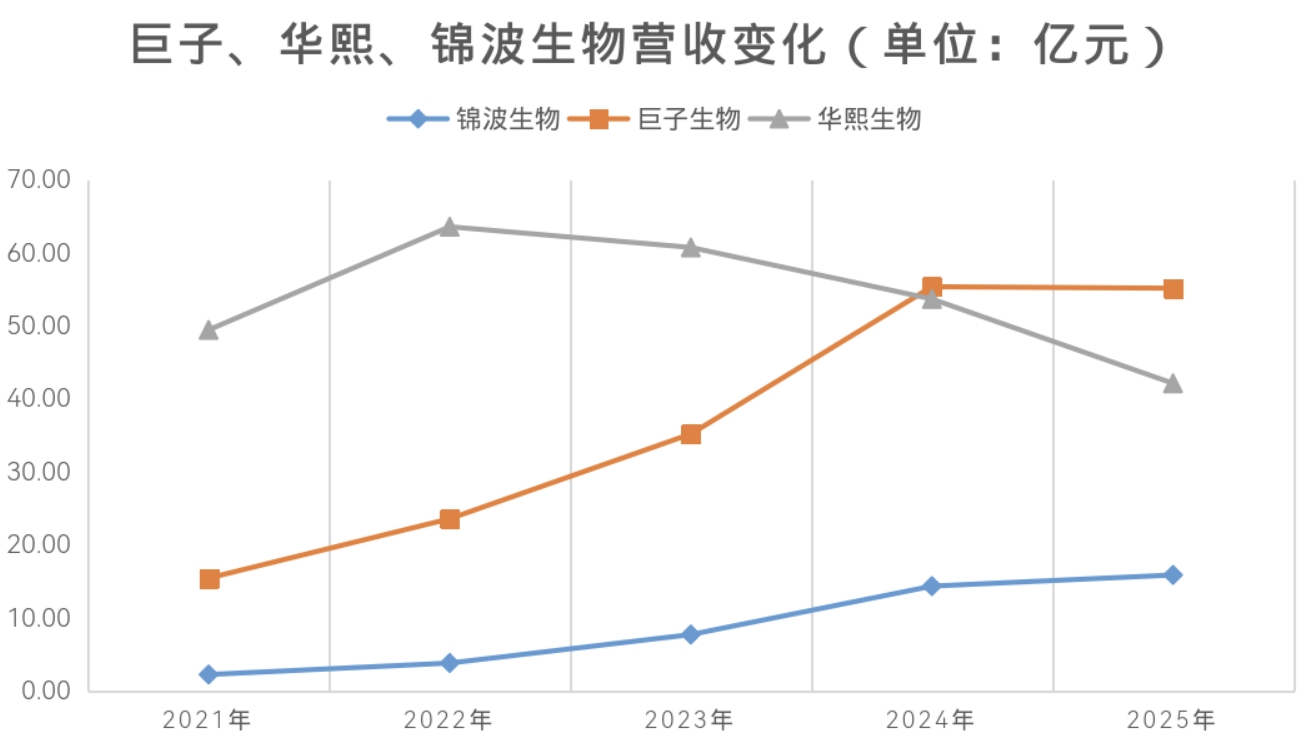
1. 巨子、华熙生物、锦波生物均进入调整周期,营收增速放缓或下降;国货品牌珀莱雅、上美股份新入局。

2. 医美术后恢复市场增长,国际品牌如海蓝之谜推出产品,趋势向高端化。

新技术涉及检测方法和科研创新。

1. 检测争议:华熙生物提出HPLC-HRMS方法检测重组胶原蛋白含量,呼吁行业开发新标准。

2. 巨子获批重组胶原蛋白注射剂,标志技术突破;科研影响力提升。

客户痛点和解决方案聚焦渠道和标准问题。

1. 痛点:价格战导致渠道管控难;检测方法局限性引发纠纷,如大嘴博士事件。

2. 解决方案:巨子用自播战略应对渠道下滑;行业合作探讨精确检测标准,规避风险。

平台的最新做法在自营和渠道调整。

1. DTC平台(天猫、抖音)营收下降5.16%,下半降幅20.08%,反映平台依赖问题。

2. 自营平台如京东、唯品会增长34.84%,自播战略强化自营端,平台需优化招商策略。

平台招商和运营管理需求凸显。

1. 经销商渠道下降1.52%,显示平台需加强合作方管理;达播端下滑启示自播替代。

2. 精细化运营应对价格战,平台可学习巨子渠道管控模式。

风向规避关注舆论和政策风险。

1. 舆论风波如商战事件,双11销售额下滑,平台需管理声誉,规避类似炒作。

2. 政策风险:国家网信办处理信息影响市场秩序,平台应关注合规运营。

产业新动向包括企业调整和注射剂发展。

1. 巨子、华熙生物、锦波生物均现业绩波动:华熙营收降21.49%但利润增;锦波营收增10.57%但利润降;巨子整体下滑。

2. 重组胶原蛋白注射剂获批,国货入局医美市场,显示产业转型。

新问题涉及检测标准和竞争法规。

1. 检测方法争议:巨子声明标准局限性;华熙呼吁交叉验证开发新方法。

2. 政策法规事件:国家网信办认定炒作影响秩序,产业需统一标准建议。

商业模式和政策启示。

1. 渠道调整模式:自营平台增长,自播战略提升收入,启示数字化运营。

2. 科研竞争启示:华熙和巨子争夺话语权,科研投入减少销售费用,如华熙销售费用降30%。

返回默认
声明:快读内容全程由AI生成,请注意甄别信息。如您发现问题,请发送邮件至 run@ebrun.com 。

我是 品牌商 卖家 工厂 服务商 平台商 研究者 帮我再读一遍。

Quick Summary

Giant Biotech's 2025 performance declined overall, with a particularly weak second half.

1. Full-year revenue reached 5.519 billion yuan, down 0.37% year-on-year; adjusted net profit was 1.96 billion yuan, down 8.91%.

2. Second-half revenue was 2.406 billion yuan, down 19.76%; net profit was 755 million yuan, down 32.90%; gross margin fell to 78.60%, dropping below 80%.

Channel adjustments and intensified industry competition were the primary causes.

1. DTC channel revenue (e.g., Tmall, Douyin) fell 5.16% to 3.402 billion yuan, with a 20.08% decline in H2.

2. Self-operated platform revenue (e.g., JD.com, Vipshop) grew 34.84% to 509 million yuan; offline direct sales grew 32.25% to 225 million yuan.

3. Medical dressing revenue dipped 4.77% to 1.16 billion yuan, while the Curederm brand declined 1.58%.

Public controversies and market competition had negative impacts.

1. A May 2025 rivalry with Bloomage Biotech involved disputes over product composition, leading to Singles' Day sales decline.

2. Domestic brands like Proya and Shanghai Jahwa entered the post-cosmetic procedure recovery market, while international brands like La Mer launched competing products.

Future growth drivers include new injectable products.

1. A recombinant collagen facial injectable received approval and is slated for a 2026 launch, potentially offsetting declines in medical dressings.

In channel development, Giant Biotech achieved growth through self-operated platforms and offline direct sales.

1. Self-operated platform revenue (e.g., JD.com, Vipshop) grew 34.84% year-on-year to 509 million yuan, attributed to in-house livestreaming strategies and refined operations.

2. Offline direct sales revenue grew 32.25% to 225 million yuan, driven by store expansion and scenario diversification.

Pricing and price competition intensified amid industry adjustments.

1. Medical dressing revenue declined due to proactive channel control to protect pricing systems.

2. The Curederm brand's 1.58% drop stemmed from external shocks and industry price wars, exacerbated by new entrants like Proya and Shanghai Jahwa.

R&D and consumer trends indicate market potential and challenges.

1. The post-cosmetic procedure recovery market grew but faced increased competition, including La Mer's repair products.

2. Giant's approved recombinant collagen injectable signals a technology upgrade trend.

User behavior shows shifting channel preferences.

1. DTC channel decline reflects consumer migration to self-operated and offline channels; influencer livestreaming declined while in-house streams boosted user loyalty.

Growth opportunities exist in self-operated platforms and the aesthetic medicine sector.

1. Self-operated platform revenue grew 34.84%, showing potential for refined e-commerce operations; offline direct sales grew 32.25% due to store expansion.

2. Despite intensified competition, the post-procedure recovery market saw domestic brands like Curingskin grow 9.21%, reflecting demand shifts.

Event responses included channel control and public relations.

1. To counter price wars, Giant strengthened channel sales management to stabilize pricing.

2. During controversies, it released test results to address doubts, with regulators intervening against misinformation.

Risks and opportunities involve competition and policy.

1. Risks: New entrants like Proya and Shanghai Jahwa intensified competition; medical dressing revenue dipped slightly; international brands added pressure.

2. Opportunities: Approved recombinant collagen injectable (2026 launch) may drive growth; in-house livestreaming strategies are learnable.

Case studies of positive and negative impacts.

1. Negatives: Weak Singles' Day promotions led to sales decline; institutions downgraded ratings and forecasts.

2. Positives: Online self-operated growth; enhanced scientific influence.

Production and design focus on dressings and injectables.

1. Functional skincare revenue held steady at 4.337 billion yuan, while medical dressings dipped 4.77%, indicating a production shift.

2. New recombinant collagen injectable approval and planned 2026 launch highlight demand for high-value products.

Commercial opportunities lie in aesthetic medicine and e-commerce.

1. Growth in the post-procedure recovery market and domestic brand entries (e.g., Proya) offer partnership models.

2. Giant's 32.25% offline direct sales growth and scenario expansion enable diversified collaborations.

Digital and e-commerce lessons are significant.

1. Self-operated platform growth (34.84%) demonstrates digital operation value; in-house livestreaming boosted revenue, urging factories to enhance online self-operation.

2. DTC decline exposed influencer livestreaming issues, necessitating channel control and supply chain optimization.

Industry trends show fierce recombinant collagen competition.

1. Giant, Bloomage, and Jinbo entered adjustment cycles with slowed or declining growth; new domestic players like Proya and Shanghai Jahwa emerged.

2. The post-procedure recovery market grew, with premiumization trends like La Mer's product launches.

New technologies involve testing methods and R&D innovation.

1. Testing disputes: Bloomage proposed HPLC-HRMS for collagen content, urging new industry standards.

2. Giant's injectable approval marked a technical breakthrough; scientific influence increased.

Client pain points and solutions center on channels and standards.

1. Pain points: Price wars complicated channel control; testing limitations sparked disputes (e.g., Dr. Big Mouth incident).

2. Solutions: Giant used in-house livestreaming to counter channel declines; industry collaboration on precise testing standards mitigates risks.

Platform strategies emphasize self-operation and channel adjustments.

1. DTC platform revenue (Tmall, Douyin) fell 5.16%, with a 20.08% H2 drop, revealing overreliance issues.

2. Self-operated platforms (e.g., JD.com, Vipshop) grew 34.84%, with in-house livestreaming boosting self-operation, urging platform optimization of merchant recruitment.

Merchant management and operations needs are highlighted.

1. Distributor channel decline (-1.52%) requires stricter partner management; influencer livestreaming下滑 signals in-house streaming substitution.

2. Refined operations counter price wars; platforms can learn from Giant's channel control model.

Risk avoidance focuses on public opinion and policy.

1. Controversies like rivalries led to Singles' Day sales drops, necessitating reputation management to avoid similar炒作.

2. Policy risks: Regulatory actions against misinformation disrupted market order, requiring compliance focus.

Industry shifts include corporate adjustments and injectable development.

1. Giant, Bloomage, and Jinbo showed volatility: Bloomage revenue fell 21.49% but profits rose; Jinbo revenue grew 10.57% but profits fell; Giant declined overall.

2. Recombinant collagen injectable approvals and domestic entries into aesthetic medicine indicate industry transformation.

Emerging issues involve testing standards and competition regulations.

1. Testing disputes: Giant highlighted standard limitations; Bloomage advocated cross-validation for new methods.

2. Policy events: Regulators deemed炒作 disruptive, urging unified standard proposals.

Business model and policy implications.

1. Channel adjustment models: Self-operated platform growth and in-house livestreaming boosted revenue, highlighting digital operation value.

2. Scientific competition: Rivalry between Bloomage and Giant for discourse power reduced sales expenses (e.g., Bloomage's 30% cut).

Disclaimer: The "Quick Summary" content is entirely generated by AI. Please exercise discretion when interpreting the information. For issues or corrections, please email run@ebrun.com .

I am a Brand Seller Factory Service Provider Marketplace Seller Researcher Read it again.

【亿邦原创】连续大涨后,巨子生物跌了。

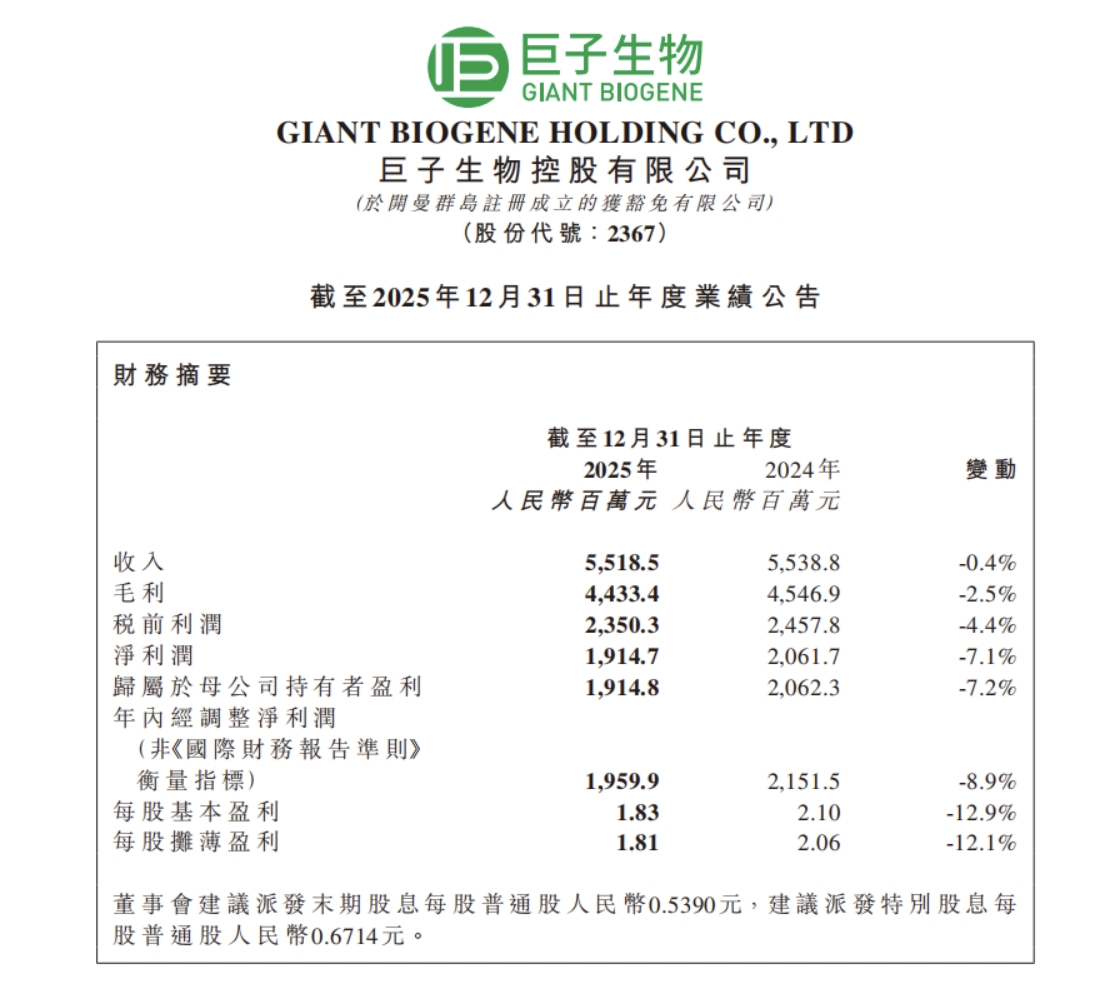
3月19日,巨子生物发布2025年报:营收55.19亿元,同比下降0.37%;年内经调整净利润19.6亿元,同比下降8.91%。

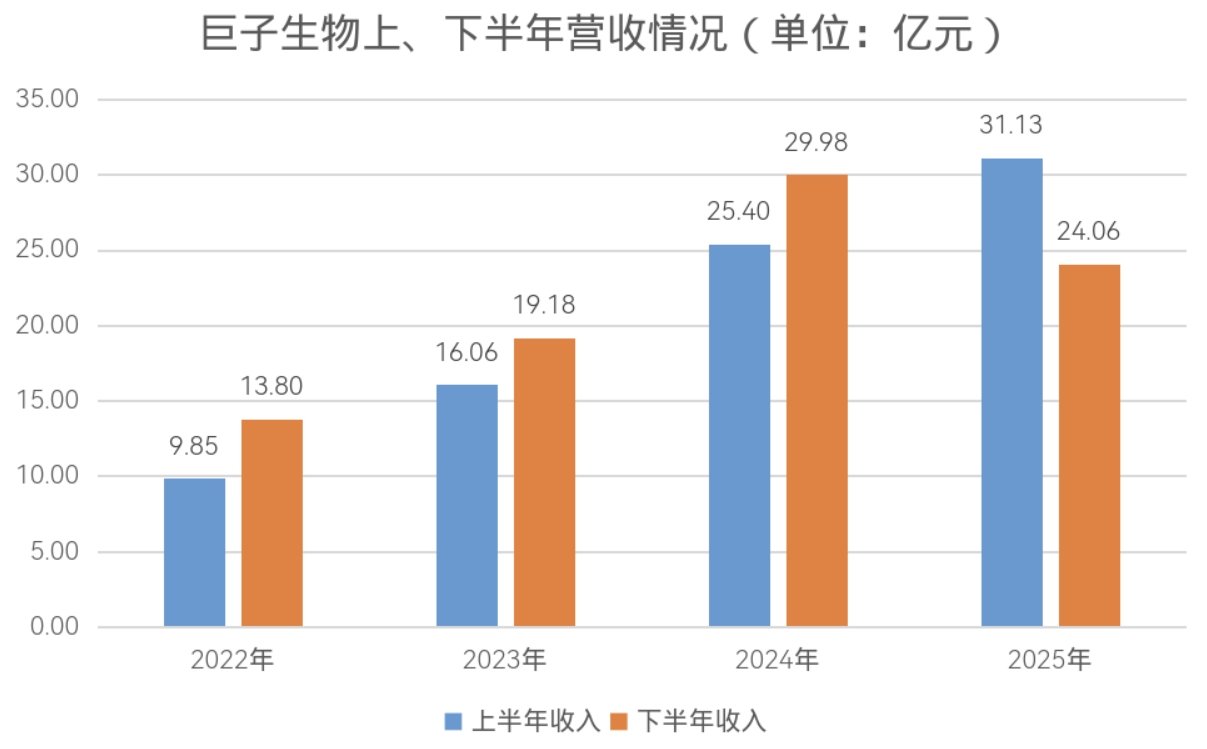
从过往数据看,巨子下半年收入和盈利一般优于上半年。但在2025年,无论是营收还是利润,巨子上半年还在涨,却“跌”在了下半年:

上半年营收31.13亿元,同比增长22.52%,下半年营收24.06亿元,同比下降19.76%。上半年经调整净利润12.05亿元,同比增长17.39%,下半年7.55亿元,同比下降32.90%。巨子自上市以来毛利率便始终高于80%,但在2025下半年毛利率为78.60%,跌破80%。

是年中舆论危机导致销售受影响,还是姓“生物”、很早开始械字号妆字号两手抓的企业都有下降趋势,从敷料走向注射的重组胶原蛋白,是否能给巨子带来新增长?

01 渠道调整与行业竞争加剧

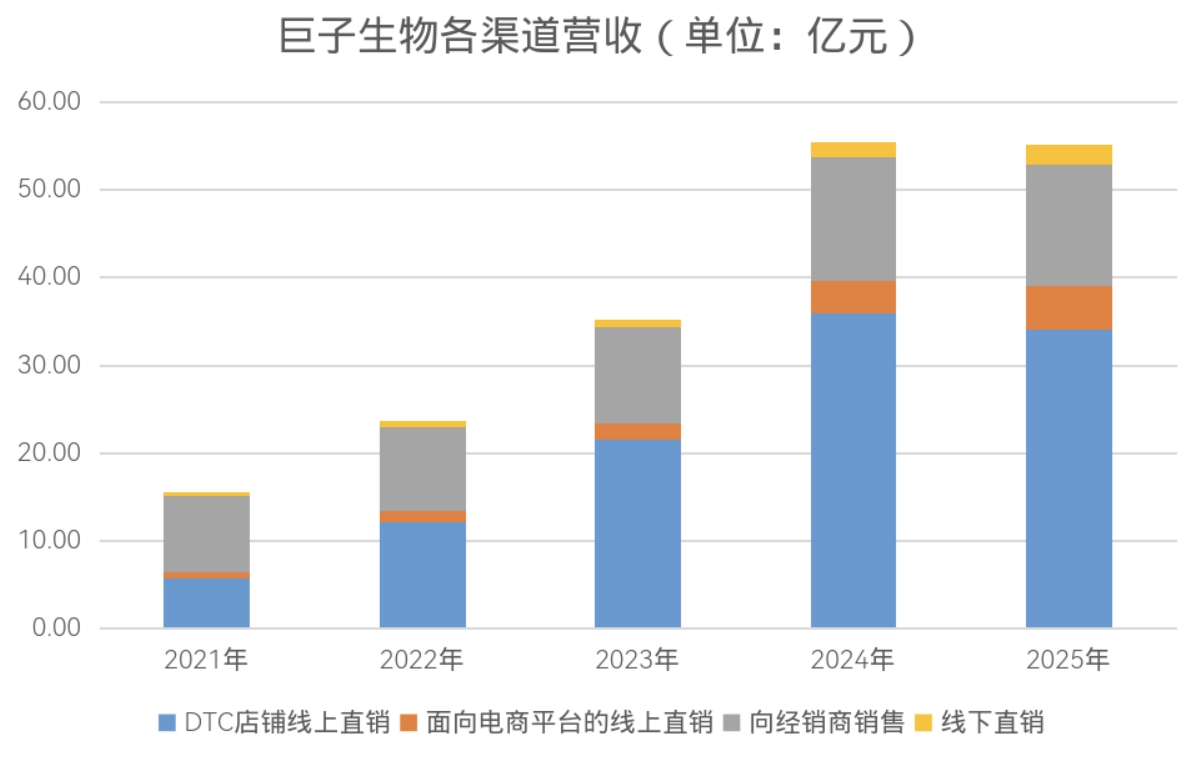
从渠道上看,巨子的天猫、抖音等DTC渠道,在巨子营收中占比最高,营收值却迎来下降:营收34.02亿元,同比下降5.16%。从往年数据来看,该渠道在下半年的营收往往高于上半年,但2025年情况正相反:下半年营收15.86亿元,同比下降20.08%,低于上半年的18.16亿元。

巨子将其归咎于价格战和外部冲击、达播端收入下滑,正在通过自播和精细化自营调整。实际上,“没握在自己手里”的,除了达播,还有经销商渠道:向经销商销售营收13.83亿元,同比下降1.52%。

“握在自己手里”的业务的确得到增长,如自播战略带动自营端收入增长,京东、唯品会等自营平台,营收5.09亿元,同比增长34.84%。

同时,线下直销也迎来一定增长:营收2.25亿元,同比增长32.25%,原因是门店和品牌专卖店增加,以及产品使用场景不断拓展。

从主营业务的营收情况来看,相比于下跌,巨子生物更多在调整:

功效性护肤品营收43.37亿元,基本维稳,但增速大幅放慢。医用敷料营收11.6亿元,同比微降4.77%,主要原因是“公司为维护产品价格体系,主动加强渠道销售管控”。

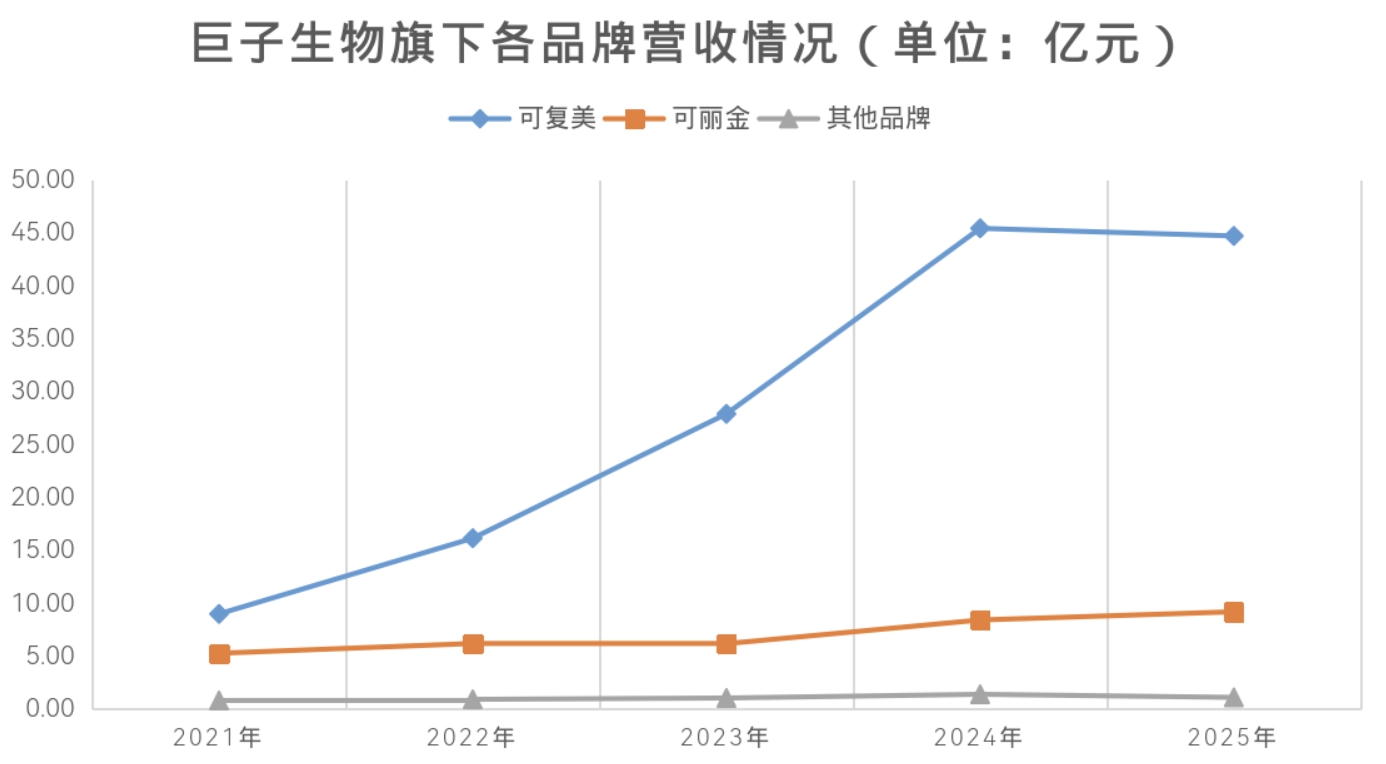
对应的,以医用敷料为重要卖点的可复美,迎来微降:可复美营收44.7亿元,同比下降1.58%,主因是“外部冲击及行业价格竞争加剧”。可丽金营收9.18亿元,同比增长9.21%。

医美术后恢复这块市场,国货巨头在往里面挤,竞品增多且逐步成熟、市场竞争加剧,可能是巨子生物医用敷料下降的原因。国货两巨头——珀莱雅和上美股份,都在2025年挤入这一赛道:

上美股份1月投资成立上海朗慕达生物科技有限公司,珀莱雅5月推出医用重组胶原蛋白敷贴,进军械字号。实际上早在2024年,上海家化、丸美生物等上市美妆公司便推出了医美修护类产品,与巨子产品有相似之处。

国际巨头也试图分一杯羹。2025上半年,海蓝之谜推出浓缩修护精华膏,据悉可在黄金微针项目后修护屏障。

实际上,这种竞争加剧,三家“姓”生物、很早开始械妆两手抓的企业,2025年似乎都进入了调整周期:

锦波生物的营收增速大幅放缓,利润下降:2025年预计营收15.95亿元,同比增长10.57%;利润总额7.6亿元,同比下降11.34%;归母净利润6.51亿元,同比下降11.08%。

华熙生物则与之相反,营收下降,但利润恢复增长:预计营收42.17亿元,同比下降21.49%,营业利润3.34亿元,同比增长54.63%,利润总额3.34亿元,同比增长56.42%,归母净利润2.91亿元,同比增长67.03%。

值得注意的是,华熙和巨子的销售费用都有所收敛:华熙销售费用下降约30%至17.25亿元,巨子销售及经销成本20.56亿元,对比2024年的20.08亿元同比微增2.37%。

02 舆论风波与话语权之争

“跌”在下半年,很难不联想到2025年5月巨子与华熙的那场“商战”。

事件起因,是5月17日华熙发文控诉某企业在多个证券研报中“踩一捧一”,“踩”透明质酸、“捧”重组胶原蛋白,而这些研报多与巨子有关。

5月24日,美妆博主大嘴博士公布检测报告,质疑巨子生物旗下的可复美胶原棒重组胶原蛋白含量低于标注的0.1%。

大嘴博士于6月1日晚得到华熙生物的声援,巨子于6月4日晚发布检测结果,证明可复美胶原棒1.0含有足量的重组胶原蛋白,并再次受到大嘴博士质疑检测结果的合理性。

6月23日,巨子发声明承认现有质量标准、检测方法和标签标识在某些方面已逐渐显现出局限性。在检测方法有局限性的前提下,巨子依旧否认第三方博主“含量不足0.1%甚至不含”的结论,另一方面肯定自家送检“含量超0.1%”的结果。9月,国家网信办认定大嘴博士“账号发布炒作测评信息影响市场秩序”。

多篇媒体文章指出,可复美等品牌在双11期间促销活动相对疲软,销售额下滑。年底,有机构下调对巨子的评级,同时瑞银、中信证券等多家机构下调对巨子的业绩预期。

实际上,华熙已在争夺重组胶原蛋白乃至科研层面的话语权。

6月30日,华熙生物发文称,公司已联合国家级权威检测及标准化定制机构,用HPLC-HRMS方法检测了旗下“润百颜紧致充盈次抛精华液”中重组胶原蛋白含量。

文中,华熙认为,在无标准和同一方法时,仍应提出更优秀或更准确的检测方法并公布其结果,或用双方或第三方独立实验室采用多种方法进行交叉验证,与同行共同探讨后,努力开发更精确、更具普适性的检测标准。

在科研层面,巨子也在逐步提升其科研影响力,标志性事件之一,是2025年10月,其自主研发的中国首个重组I型天然序列胶原蛋白面部注射剂正式获批。巨子生物称,自2026年起将加快推进已获批产品的上市准备工作。

巨子的新注射产品将如何取得市场信任?是否能弥补因市场竞争带来的医用敷料的下滑?往后巨子将如何对待618、双11等大促?亿邦持续追踪报道该情报,如想了解更多与本文相关信息,请扫码关注作者微信。

文章来源:亿邦动力

广告
微信
朋友圈

这么好看,分享一下?

朋友圈 分享

APP内打开

+1
+1
微信好友 朋友圈 新浪微博 QQ空间
关闭
收藏成功
发送
/140 0