广告
加载中

TikTok Shop销售额预计达1万亿美元 有望跻身全球前三大零售商

王昱 2026-02-27 11:22
王昱 2026/02/27 11:22

邦小白快读

EN
全文速览

文章预测TikTok Shop到2030年销售额将达1万亿美元,占全球电商市场14.6%份额,跻身全球前三零售商,展示平台发展势头。

1. 当前数据支撑增长:2025年第三季度全球GMV约190亿美元,美国市场贡献45亿美元,交易规模已逼近eBay等老牌平台。

2. 卖家扩张迅猛:覆盖17个国家,全球卖家数量约1500万,美国卖家自2023年增长5000%至47.5万家,带动商品多元化。

3. 品类结构聚焦:美妆是核心增长引擎,美妆品牌Medicube等畅销,健康保健、家居用品及女装快速扩张,并涉足奢侈品转售。

4. 平台优势显著:TikTok月活超10亿用户,通过内容生态与算法推荐,实现内容、流量与交易闭环,无需依赖付费流量。

TikTok Shop为品牌营销提供巨大机遇,销售潜力占全球电商14.6%份额,适合品牌渠道建设和新品研发。

1. 消费趋势明显:美妆品类驱动增长,健康保健和家居用品等也在扩张,美妆品牌如Medicube位居畅销榜前列,提示品类定位方向。

2. 用户行为观察:平台涉足奢侈品转售,如Hermès和Chanel商品,结合AI鉴定与直播销售,显示向高客单价品类延伸,提升品牌信任。

3. 品牌渠道建设启示:依托10亿月活用户和内容带货模式,内容创作者通过联盟链接与可购物视频参与带货,促进深度融合品牌推广。

平台扩张带来增长机会,卖家数量从数千增至47.5万家(5000%增长),覆盖17国市场,提示可学习销售策略。

1. 消费需求变化:美国市场成为最大单一市场(GMV 45亿美元),商品多元化增强吸引力,健康保健、女装等品类需求上升。

2. 事件应对与机会提示:内容带货模式是亮点,内容创作者融合交易,可借鉴提升销售;风险提示奢侈品领域涉足需高信任门槛。

3. 增长市场支持:GMV数据接近eBay,展示交易规模潜力;扶持政策虽未提及,但卖家扩张带来合作可能,学习平台流量优势。

品类需求提示生产机会,美妆等核心品类扩张推动商品生产和设计,数字化模式启示电商转型。

1. 产品生产需求:美妆是增长引擎,健康保健、家居用品及女装品类快速扩张,需增加供给;奢侈品转售如Hermès商品提示新商业机会。

2. 商业机会基于数据:卖家增长至1500万,推动商品多元化,工厂可参与供应链;品类结构变化(如向高客单价延伸)优化产品设计。

3. 推进数字化启示:TikTok内容与交易融合模式(如直播销售)展示电商整合路径,激励工厂数字化升级以适应平台需求。

行业趋势显示电商高速增长,技术应用如AI鉴定解决痛点,提示服务解决方案方向。

1. 行业发展趋势:TikTok Shop预计2030年销售额1万亿美元,占全球市场14.6%,显示服务增长空间;品类多元化(美妆、奢侈品)提供新机会。

2. 新技术应用:平台涉足奢侈品转售结合AI鉴定技术,解决真伪信任问题;算法推荐机制实现流量闭环,提供客户痛点解决方案。

3. 客户痛点和解决:相比独立平台依赖付费流量,TikTok依托内容生态自然分发,为服务商提供流量管理启示;内容带货模式提供新服务场景。

平台策略包括覆盖17国、卖家1500万扩张,品类多元化,需管理招商和运营风险。

1. 招商和运营管理:卖家数量增长迅猛(美国年增5000%),全球覆盖提示招商潜力;品类如美妆优先扩展,健康、奢侈品涉足优化运营结构。

2. 商业需求和平台做法:GMV数据(190亿美元)对标eBay,展示交易规模;内容带货模式实现内容与交易融合,是平台最新做法示例。

3. 风向规避:平台从社交电商向全零售转型,需应对高信任门槛风险(如奢侈品转售);收入结构中电商成为增长支柱,提示管理依赖。

产业动向包括结构性转变,从社交电商到全球零售商,新问题如信任门槛提供政策启示。

1. 产业新动向:预测显示TikTok Shop跻身全球前三(1万亿美元销售额),重塑电商格局,Walmart实体门店跌至第五位,标志深度转型。

2. 新问题和商业模式:品类扩展涉足奢侈品转售,结合AI鉴定解决信任问题;商业模式启示内容流量闭环(算法推荐),提供交易效率模型。

3. 政策法规启示:数据支撑(GMV 190亿美元)可驱动研究;未来趋势如多元化品类推动法规建议,保持监管适应性。

返回默认

声明:快读内容全程由AI生成,请注意甄别信息。如您发现问题,请发送邮件至 run@ebrun.com 。

我是 品牌商 卖家 工厂 服务商 平台商 研究者 帮我再读一遍。

Quick Summary

Projections indicate TikTok Shop will reach $1 trillion in sales by 2030, capturing 14.6% of the global e-commerce market and ranking among the world's top three retailers, signaling strong growth momentum.

1. Current data supports expansion: In Q3 2025, global GMV reached approximately $19 billion, with the U.S. contributing $4.5 billion—bringing its transaction volume close to established platforms like eBay.

2. Seller growth is explosive: Operating in 17 countries, TikTok Shop hosts around 15 million sellers globally. U.S. sellers surged by 5000% since 2023 to 475,000, driving product diversification.

3. Category focus: Beauty is the core growth driver, with brands like Medicube leading sales. Health & wellness, home goods, and women’s apparel are expanding rapidly, while luxury resale is emerging.

4. Platform advantages: With over 1 billion monthly active users, TikTok leverages its content ecosystem and algorithm to create a closed loop of content, traffic, and transactions—without relying on paid traffic.

TikTok Shop offers significant opportunities for brand marketing, with projected sales capturing 14.6% of global e-commerce, making it ideal for channel development and new product innovation.

1. Clear consumption trends: Beauty drives growth, while health, home goods, and luxury resale expand—brands like Medicube rank among top sellers, indicating category positioning opportunities.

2. User behavior insights: Luxury resale (e.g., Hermès, Chanel) combined with AI authentication and livestream sales signals a shift toward high-value categories, enhancing brand trust.

3. Channel strategy implications: Leveraging 1 billion monthly active users and content-driven commerce, creators use affiliate links and shoppable videos to deepen brand integration and promotion.

Platform expansion creates growth opportunities: seller count surged to 475,000 in the U.S. (a 5000% increase) across 17 countries, offering lessons in sales strategy.

1. Evolving consumer demand: The U.S. is the largest single market ($4.5B GMV), with rising demand in health, women’s apparel, and diversified product offerings.

2. Tactics and risks: Content-driven commerce integrates creators and transactions—a model to emulate. Luxury resale presents high trust barriers, requiring caution.

3. Market support: GMV nearing eBay’s scale highlights transaction potential; seller growth opens collaboration avenues, while organic traffic offers a key advantage.

Category trends signal production opportunities, with beauty and other core segments driving demand for manufacturing and design, while digital models inspire e-commerce transformation.

1. Production needs: Beauty leads growth, followed by health, home goods, and women’s apparel. Luxury resale (e.g., Hermès) opens new business avenues.

2. Data-driven opportunities: 15 million global sellers fuel product diversification, inviting factory supply chain participation. Category shifts toward high-value items inform product design.

3. Digital integration: TikTok’s content-commerce fusion (e.g., livestream sales) demonstrates e-commerce integration, encouraging factories to upgrade digitally for platform compatibility.

Industry trends point to rapid e-commerce growth, with tech applications like AI authentication addressing pain points and guiding service solutions.

1. Market outlook: TikTok Shop’s projected $1 trillion sales by 2030 (14.6% global share) signals service growth potential; category diversification (beauty, luxury) creates new opportunities.

2. Tech applications: Luxury resale with AI authentication tackles authenticity trust issues; algorithmic traffic loops offer closed-loop solutions for client challenges.

3. Pain point solutions: Unlike platforms reliant on paid traffic, TikTok’s organic content ecosystem provides natural distribution—offering traffic management insights. Content-driven commerce opens new service scenarios.

Platform strategy spans 17 countries and 15 million sellers, with category diversification requiring careful merchant management and operational risk control.

1. Merchant operations: Seller growth (5000% YoY in the U.S.) highlights recruitment potential; category focus (beauty, health, luxury) optimizes operational structure.

2. Business alignment: $19B GMV rivals eBay, demonstrating scale; content-commerce integration represents a leading platform model.

3. Risk management: Transition from social commerce to full retail requires navigating high-trust categories (e.g., luxury resale). E-commerce’s growing revenue share underscores dependency risks.

Industry shifts include structural transformation from social commerce to global retail, with new challenges like trust barriers offering policy insights.

1. Market evolution: TikTok Shop is projected to become a top-three global retailer ($1T sales), reshaping e-commerce and displacing Walmart to fifth place—marking a deep industry transition.

2. Emerging models: Luxury resale with AI authentication addresses trust issues; content-traffic loops (algorithm-driven) provide efficient transaction models for study.

3. Policy implications: Data (e.g., $19B GMV) supports research; category diversification urges regulatory adaptability and forward-looking policy recommendations.

Disclaimer: The "Quick Summary" content is entirely generated by AI. Please exercise discretion when interpreting the information. For issues or corrections, please email run@ebrun.com .

I am a Brand Seller Factory Service Provider Marketplace Seller Researcher Read it again.

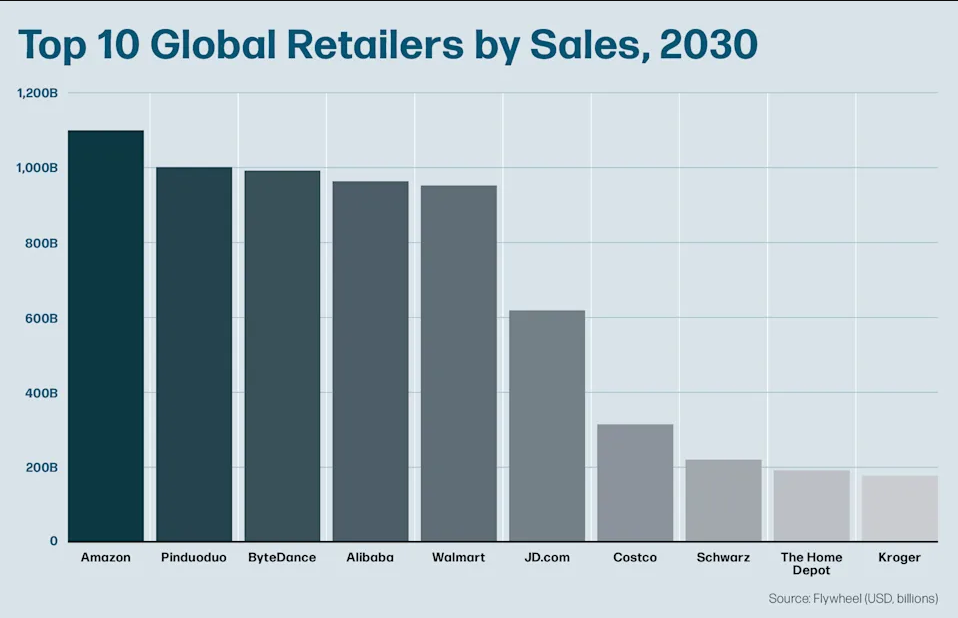
【亿邦原创】2月27日消息,日前,商业机构Flywheel发布的最新报告指出,TikTok Shop有望在2030年跻身全品类全球零售商前三名。报告预计,该平台年销售额可达约1万亿美元,占全球电商市场14.6%的份额。

按照Flywheel的测算,这一规模将使TikTok Shop位列全球零售商第二梯队前列,仅次于Amazon。

报告预计,亚马逊到2030年的销售额可达1.1万亿美元,继续位居首位;PDD Holdings排名第二。值得注意的是,这一排名体系下,当前全球最大零售商Walmart或将跌至第五位,成为前五名中唯一仍以实体门店销售为主的企业。

若上述预测最终兑现,将意味着一场深层次的结构性转变:TikTok Shop不再只是附带购物功能的社交媒体产品,而是以全球零售商的身份参与竞争,直接对标传统电商巨头及综合零售集团。

长期预测背后已有阶段性数据支撑。

2025年第三季度,TikTok Shop全球商品交易总额(GMV)约达190亿美元。其中,美国市场贡献约45亿美元,成为该平台当前最大的单一市场。作为对比,eBay同期GMV为201亿美元,这意味着TikTok Shop单季交易规模已逼近这家运营近三十年的老牌电商平台。

商家侧的扩张同样体现出平台强劲的增长速度。

TikTok Shop目前已覆盖17个国家,全球卖家数量约1500万。在美国市场,注册商家数量自2023年以来增长约5000%,从最初数千家迅速增至2025年年中约47.5万家店铺。商家规模的扩大带动了商品供给的多元化,也进一步增强了平台对消费者的吸引力。

伴随流量持续上升,越来越多内容创作者通过联盟链接与可购物视频参与带货,实现内容与交易的深度融合。

从品类结构看,美妆仍是TikTok Shop的核心增长引擎。Medicube、Tarte Cosmetics以及WavyTalk等品牌位居畅销榜前列。与此同时,健康保健、家居用品及女装等品类也在快速扩张,推动平台交易结构向多元化发展。

值得关注的是,TikTok Shop已开始涉足奢侈品转售领域。平台上出现了Hermès、Chanel以及Rolex等品牌商品,并结合AI鉴定与直播销售模式开展交易。这一动向显示,平台定位正在从以低价冲动消费为主的社交电商,逐步向更高客单价和更高信任门槛的品类延伸。

在流量基础方面,TikTok持续报告全球月活跃用户超过10亿,为其电商业务提供了天然的分发优势。相比独立电商市场平台需要依赖付费流量获取用户,TikTok依托内容生态与算法推荐机制,能够实现内容、流量与交易的闭环转化。

在收入结构上,TikTok广告业务近年来保持显著增长,为母公司ByteDance的整体商业化提供支撑。虽然字节跳动尚未单独披露TikTok Shop的收入数据,但第三方机构估算及季度GMV走势显示,电商业务正逐步成为其全球生态体系中的核心增长支柱。


亿邦持续追踪报道该情报,如想了解更多与本文相关信息,请扫码关注作者微信。

文章来源:亿邦动力

广告
微信
朋友圈

这么好看,分享一下?

朋友圈 分享

APP内打开

+1
+1
微信好友 朋友圈 新浪微博 QQ空间
关闭
收藏成功
发送
/140 0