广告
加载中

最终落锤!欧盟批准小包进口关税新规:包裹中每件不同类别货品均需缴纳3欧元

王昱 2026-02-24 03:53
王昱 2026/02/24 03:53

邦小白快读

EN
全文速览

欧盟小包进口关税新规核心要点

1. 新规将于2026年7月1日生效,废除价值低于150欧元包裹的关税豁免政策,终结小额免税红利。

2. 过渡期从2026年7月1日至2028年7月1日,期间每个包裹中每类不同商品(按海关税则小项分类)征收3欧元关税,如包裹含真丝上衣和羊毛上衣两类商品需缴6欧元。

3. 数据支持:2024年欧盟此类包裹达46亿件,91%源自中国市场,Temu和Shein贡献超七成订单,新规覆盖80%跨境包裹。

4. 实操提示:包裹寄送时需分类商品减少类别数以降低关税成本,避免多类别组合。

新关税政策对品牌的影响和策略

1. 品牌定价和竞争:关税增加成本(每类商品3欧元),可能需调整跨境定价策略以保持竞争力,避免价格战。

2. 消费趋势和用户行为:91%包裹来自中国,显示中国电商主导市场,Temu和Shein平台影响力强,启示品牌需关注用户偏好变化。

3. 产品研发机会:简化产品线减少类别数量可降低关税负担,例如避免组合多税则商品。

4. 品牌渠道建设:新规可能推动本地化库存或合作,优化供应链应对成本上升。

政策变化及卖家应对指南

1. 政策解读:2026年7月1日废除150欧以下包裹免税,过渡期每类商品征收3欧元关税,适用于所有包裹包括IOSS机制和邮政包裹。

2. 风险提示:包裹中多类别商品关税显著增加(如官方例子需6欧元),可能降低利润,覆盖80%跨境订单。

3. 机会提示:优化包裹内容减少类别数,或探索本地仓储规避关税,利用过渡期调整业务。

4. 应对措施:关注委员会评估贸易流向转移(2026年10月起),可能延长过渡期,及时学习平台如Temu的做法。

生产和商业机会启示

1. 产品设计和需求:生产时简化产品类别,避免多税则商品组合以减少包裹关税成本(每类3欧元)。

2. 商业机会:新规可能推动本地化生产或欧盟合作,规避进口关税,利用中国包裹占比91%的优势。

3. 推进数字化启示:电商影响要求工厂数字化管理库存分类,适应关税计算需求。

4. 数据洞察:Temu和Shein订单占七成,启示优化供应链以应对46亿件包裹市场。

行业趋势和解决方案分析

1. 行业发展趋势:关税改革将增加物流和关税计算需求,影响46亿件包裹市场。

2. 客户痛点:卖家面临每类商品3欧元关税的计算复杂性(如多类别包裹)和成本上升。

3. 解决方案:开发自动化工具帮助计算关税和优化包裹分类,提供数据服务如包裹数量预测。

4. 新技术应用:利用欧盟海关数据中心(预计2028年上线)启示,提前布局数字化解决方案。

平台运营管理和风险规避

1. 商业需求和问题:平台如Temu和Shein需处理新关税系统,覆盖七成订单,影响招商吸引力。

2. 平台最新做法:调整算法自动计算每类商品关税,简化卖家流程以保持竞争力。

3. 平台招商和运营:提供关税计算工具作为扶持政策,管理包裹分类合规。

4. 风险规避:监控委员会评估贸易流向转移和基础设施延期,及时更新系统避免违规。

产业动向和政策启示

1. 产业新动向:新规终结小额包裹免税,重塑跨境电商,影响46亿件包裹和Temu、Shein等平台。

2. 新问题:委员会将评估贸易流向转移(2026年起),可能提案延长过渡期或扩大覆盖范围。

3. 政策法规启示:条例明确过渡措施(如第2条),显示欧盟海关现代化方向,支持企业竞争力。

4. 商业模式分析:平台需创新应对成本增加,启示电商模式调整如简化商品结构。

返回默认
声明:快读内容全程由AI生成,请注意甄别信息。如您发现问题,请发送邮件至 run@ebrun.com 。

我是 品牌商 卖家 工厂 服务商 平台商 研究者 帮我再读一遍。

Quick Summary

Key Points of the EU's New Import Duty Rules for Small Parcels

1. The new regulation takes effect on July 1, 2026, abolishing the duty exemption for parcels valued under €150 and ending the tax-free benefit for low-value shipments.

2. A transition period from July 1, 2026, to July 1, 2028, will impose a €3 duty per category of goods (classified by customs tariff subheading) in each parcel. For example, a parcel containing a silk blouse and a wool sweater would incur €6 in duties.

3. Data Insight: In 2024, the EU received 4.6 billion such parcels, with 91% originating from China. Temu and Shein accounted for over 70% of orders, and the new rules will cover 80% of cross-border parcels.

4. Practical Tip: To reduce duty costs, minimize the number of product categories per parcel during shipment and avoid combining multiple categories.

Impact of New Tariff Policy on Brands and Strategic Responses

1. Brand Pricing and Competition: The €3 duty per product category increases costs, potentially requiring adjustments to cross-border pricing strategies to maintain competitiveness and avoid price wars.

2. Consumer Trends and User Behavior: With 91% of parcels coming from China, Chinese e-commerce dominates the market. The strong influence of Temu and Shein highlights the need for brands to monitor shifts in consumer preferences.

3. Product Development Opportunities: Simplifying product lines to reduce category counts can lower tariff burdens, such as avoiding combinations of goods from multiple tariff classifications.

4. Brand Channel Development: The new rules may accelerate localization of inventory or partnerships to optimize supply chains and mitigate rising costs.

Policy Changes and Seller Response Guide

1. Policy Interpretation: The €150 duty exemption for parcels will be abolished on July 1, 2026. During the transition period, a €3 duty per product category applies to all parcels, including those under the IOSS scheme and postal shipments.

2. Risk Alert: Parcels with multiple product categories will face significantly higher duties (e.g., €6 as per the official example), potentially reducing profit margins and affecting 80% of cross-border orders.

3. Opportunity Insight: Optimize parcel contents by minimizing category counts or explore local warehousing to avoid duties, using the transition period to adjust business strategies.

4. Response Measures: Monitor the European Commission's assessment of trade flow diversion (starting October 2026), which may lead to an extended transition period, and learn from platforms like Temu's practices promptly.

Implications for Production and Business Opportunities

1. Product Design and Demand: Simplify product categories during manufacturing to avoid multi-tariff combinations, reducing parcel duty costs (€3 per category).

2. Business Opportunities: The new rules may drive localization of production or EU partnerships to circumvent import duties, leveraging China's 91% share of parcel volume.

3. Digitalization Insight: E-commerce impacts require factories to adopt digital inventory and category management systems to adapt to tariff calculation needs.

4. Data Insight: With Temu and Shein comprising 70% of orders, optimize supply chains to address the 4.6-billion-parcel market.

Industry Trends and Solution Analysis

1. Industry Development Trend: Tariff reforms will increase demand for logistics and duty calculation services, affecting the 4.6-billion-parcel market.

2. Customer Pain Points: Sellers face complexity in calculating €3 duties per product category (e.g., for multi-category parcels) and rising costs.

3. Solutions: Develop automated tools for duty calculation and parcel category optimization, and offer data services like parcel volume forecasting.

4. New Technology Application: Leverage insights from the EU Customs Data Hub (expected 2028) to advance digital solutions early.

Platform Operations Management and Risk Mitigation

1. Business Needs and Issues: Platforms like Temu and Shein must adapt to the new tariff system, covering 70% of orders, which may impact merchant attraction.

2. Platform Best Practices: Adjust algorithms to auto-calculate duties per product category, simplifying seller processes to maintain competitiveness.

3. Platform Merchant Support and Operations: Offer duty calculation tools as part of support policies and ensure parcel category compliance.

4. Risk Mitigation: Monitor the Commission's assessment of trade flow diversion and infrastructure delays, updating systems promptly to avoid non-compliance.

Industry Trends and Policy Implications

1. Industry Developments: The new rules end duty-free small parcels, reshaping cross-border e-commerce and impacting 4.6 billion parcels and platforms like Temu and Shein.

2. Emerging Issues: The Commission will assess trade flow diversion (starting 2026), potentially proposing to extend the transition period or expand coverage.

3. Policy Insights: The regulation's transitional measures (e.g., Article 2) reflect the EU's customs modernization direction, supporting business competitiveness.

4. Business Model Analysis: Platforms must innovate to address cost increases, suggesting e-commerce model adjustments like simplified product structures.

Disclaimer: The "Quick Summary" content is entirely generated by AI. Please exercise discretion when interpreting the information. For issues or corrections, please email run@ebrun.com .

I am a Brand Seller Factory Service Provider Marketplace Seller Researcher Read it again.

【亿邦原创】2月24日消息,日前,欧盟委员会税务与海关联盟总司正式对外发布跨境电商进口监管改革方案。新规明确将于2026年7月1日正式生效实施。根据官方公布的内容,此次改革将废除长期以来针对价值低于150欧元小包裹的关税豁免政策,同时明确了过渡性征税措施和长期目标。

废除了针对价值低于150欧元的包裹的基于阈值的关税豁免政策;一旦欧盟海关数据中心(作为海关框架更广泛基础改革的一部分)投入运行,所有进入欧盟的商品都将适用正常关税——目前该中心预计将在2028年上线。

在此之前,欧盟各成员国已同意实施一项过渡性措施:

对价值低于150欧元、直接寄送给欧盟消费者的小包裹中的每类商品征收统一关税3欧元;自2026年7月1日起,每个包裹中不同商品类别(按海关税则小项分类)均需分别缴纳3欧元关税。

这一过渡期将从2026年7月1日持续至2028年7月1日,并可根据需要延长。

特别值得注意的是,新规细则指出,无论是适用“Directive 2006/112/EC第143条(1)(ca)项”免征增值税条款、在IOSS机制下远程进口销售时由平台代收代缴VAT的商品,还是属于“第2015/2446号授权条例第1条第(24)点”所定义的邮政包裹——即利用万国邮政体系寄送的传统邮包,都需要缴纳每件3欧元的过渡关税。

此外,新政特别明确,其将采取“类数计费制”:单一包裹中每件不同类别的货物,都需要分别缴纳3欧元关税。

当一个包裹里有多种商品关税编码不同的商品时,必须缴纳更高的进口费用。官方举例称,如果一个包裹中包含1件真丝上衣和2件羊毛上衣,由于两种商品属于不同税则小项,该包裹包含两类不同商品,应缴纳关税6欧元(3欧元 ×2类)。

据悉,欧盟官方数据显示,2024年欧盟区域内150欧元以下跨境包裹数量高达46亿件,其中91%的包裹源自中国市场,temu、shein两大平台贡献超过七成订单量。新规落地后,将直接覆盖欧盟境内80%的跨境电商包裹,这意味着长期支撑中欧跨境电商快速扩张的小额包裹免税红利将彻底成为历史。

对此,塞浦路斯共和国财政部长Makis Keravnos表示:

随着全球电子商务的快速发展,欧盟海关规则必须与时俱进。废除过时的小包裹关税豁免,将有助于支持欧盟企业,同时堵住不良卖家的投机漏洞。现在,我们需要在整体海关改革上果断推进,这也是提升欧盟竞争力和安全性的关键环节。

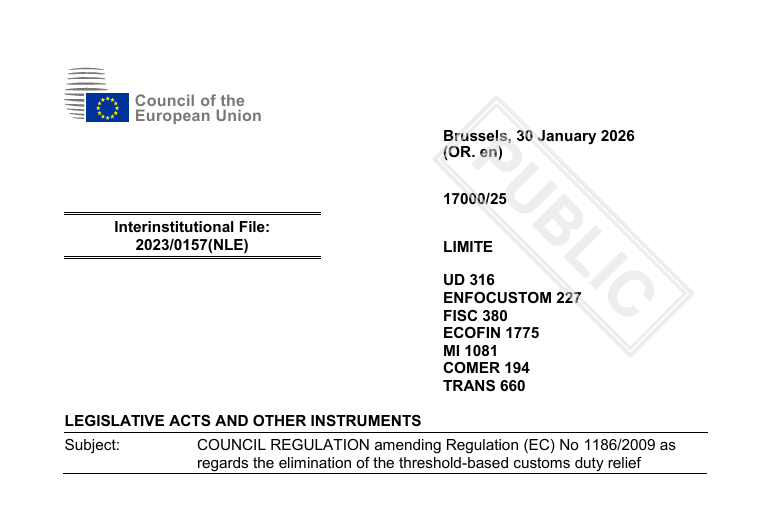
欧盟理事会条例相关更新部分译文如下。

第1条

第1186/2009号条例(EC)第二章第五章予以删除。

第2条

自2026年7月1日起至2028年7月1日止,对于内在总价值不超过150欧元的包裹中的每件货物,应征收3欧元关税,以替代根据本条例第1条废除的减免,适用条件如下:

(a)货物进口根据第2006/112/EC号指令第143条第(1)款第(ca)项免征增值税;或

(b)货物属于第2015/2446号授权条例(EU)第1条第(24)点所定义的邮政包裹。

第3条

委员会应于2026年10月1日及此后每月评估是否发生贸易流向转移。如委员会确定发生贸易流向转移,应酌情提交提案,将第2条规定的过渡措施扩大至涵盖内在总价值不超过150欧元的包裹中的所有货物。

委员会应于2027年12月1日前评估,用于对远程销售包裹征收进口关税的集中式联盟信息技术基础设施是否有望在2028年7月1日前投入运行。如委员会确定该日期前无法投入运行,应酌情提交提案,延长第2条规定的过渡措施。

第4条

本条例应自其在《欧盟官方公报》上公布之日起第二十天生效。

本条例应自2026年7月1日起适用。

本条例具有整体约束力,直接适用于所有成员国。


亿邦持续追踪报道该情报,如想了解更多与本文相关信息,请扫码关注作者微信。

文章来源:亿邦动力

广告
微信
朋友圈

这么好看,分享一下?

朋友圈 分享

APP内打开

+1
+1
微信好友 朋友圈 新浪微博 QQ空间
关闭
收藏成功
发送
/140 0