广告
加载中

TikTok Shop发布AI生成内容规则:明确使用标准及处罚措施 合规就不限流

亿邦动力 2026-02-09 16:46
亿邦动力 2026/02/09 16:46

邦小白快读

EN
全文速览

TikTok Shop新规允许AI生成内容,但需严格合规以避免处罚。

规则概述

1. 允许在合规场景下使用AI工具,包括视觉风格优化、编辑画质提升、翻译配音辅助、文案脚本创作等。

2. AI内容指视频、图像、音频或文本中完全或部分由AI生成、编辑或合成的部分,需符合平台政策。

使用要求

1. 必须主动披露AI使用:通过内容添加文字、水印或贴纸标注,或在发布时开启平台开关自动显示标签。

2. 平台可能自动识别并标注AI内容,达人无法移除标签,但合规内容不会因此受限。

禁止行为

1. 不得制作误导性或失实内容,如夸大商品效果或虚假宣传。

2. 未经授权使用第三方肖像、声音、商标等知识产权。

3. 商品推广中禁止虚假展示,必须真实呈现实物以避免买家误解。

处罚措施

1. 账号处罚:根据违规严重性,从警告整改到限流、封禁佣金提现或永久撤销权限。

2. 内容处罚:违规内容将被限流、移除商品链接或扣除达人健康分,影响曝光。

新规为品牌营销和用户行为观察提供新机遇与挑战。

品牌营销策略

1. AI工具可用于创作高效内容,如优化视觉风格或文案脚本,提升品牌展示吸引力。

2. 合规使用可避免限流风险,确保品牌信息在平台稳定传播。

用户信任建设

1. 披露AI使用要求增强透明度,帮助品牌建立消费者信任,避免负面感知。

2. 用户行为趋势显示AI内容接受度提高,品牌可借机创新互动方式。

风险与机会

1. 禁止虚假宣传和侵权行为,强调真实准确展示,保护品牌声誉。

2. 消费趋势向数字化倾斜,品牌可研发AI辅助产品展示,捕捉电商新需求。

合规启示

1. 学习平台规则以规避违规处罚,确保营销活动合法稳健。

新规解读揭示增长机会与风险应对措施。

政策核心

1. TikTok Shop允许卖家使用AI生成推广内容,但必须遵守社区准则和Shop政策。

2. 合规内容包括视觉优化、翻译等辅助场景,不因使用AI而受限。

机会提示

1. AI工具可提升内容创作效率,节省成本,捕捉消费需求变化中的新机会。

2. 最新商业模式支持披露工具,卖家可学习以优化合作方式。

风险提示

1. 违规如虚假商品展示或未披露,将面临账号限流、封禁或内容移除。

2. 正面影响是平台扶持合规用户,负面影响包括健康分扣除影响佣金。

应对措施

1. 主动披露AI使用,通过内容标注或平台开关避免处罚。

2. 避免误导内容,确保商品真实展示,以应对消费需求层面的变化。

新规启示产品设计和数字化电商推进方向。

产品生产需求

1. AI辅助工具可用于优化产品视觉设计,如风格化展示或画质编辑,响应市场需求。

2. 合规要求真实呈现商品,工厂需确保设计辅助不导致虚假展示。

商业机会

1. 提供AI生成内容相关服务,如文案或翻译工具,挖掘电商合作新空间。

2. 数字化启示是推进工厂采用AI技术,提升电商内容生产效率。

风险管控

1. 了解平台禁止侵权行为,避免未经授权使用第三方元素。

2. 机会在于合规使用AI可规避处罚,支持工厂数字化转型升级。

行业趋势和客户痛点指向解决方案开发需求。

行业发展趋势

1. AI生成内容在电商平台应用增长,新规支持技术整合成为主流方向。

2. 新技术包括自动识别和标注系统,服务商可跟进创新。

客户痛点分析

1. 达人面临合规披露问题,如未标注AI内容可能导致处罚风险。

2. 痛点包括避免误导性内容创作带来的用户信任危机。

解决方案建议

1. 开发工具帮助客户自动披露AI使用,或提供辅助技术如翻译优化服务。

2. 针对平台规则,服务商可输出合规指南,解决客户在内容创作中的难题。

平台最新做法优化运营管理及风险规避。

平台规则建设

1. TikTok Shop发布新规明确AI内容标准,响应商业需求,确保透明化。

2. 提供披露工具和自动识别功能,简化招商和管理流程。

运营管理机制

1. 分级处罚体系处理违规:从警告到限流、封禁,维护平台秩序。

2. 内容管理包括限流或移除链接,确保用户体验和商家合规。

风险规避策略

1. 禁止误导和侵权内容以规避法律风险,保护平台生态。

2. 风向规避通过自动标注和处罚机制,减少违规事件负面影响。

产业动向揭示新问题与政策启示。

产业新动向

1. AI生成内容监管框架在电商平台形成,成为产业数字化新趋势。

2. 新问题包括如何平衡技术创新与内容真实性,挑战用户信任建立。

政策法规启示

1. 平台自律措施如披露要求和处罚机制,提供法规制定借鉴。

2. 启示包括推动行业标准制定,以避免误导和侵权问题。

商业模式分析

1. 新规展示自我监管模式,研究者可探讨其对商业实践的启示。

2. 焦点在于解决AI内容合规性与创新需求之间的矛盾关系。

返回默认
声明:快读内容全程由AI生成,请注意甄别信息。如您发现问题,请发送邮件至 run@ebrun.com 。

我是 品牌商 卖家 工厂 服务商 平台商 研究者 帮我再读一遍。

Quick Summary

TikTok Shop now permits AI-generated content but mandates strict compliance to avoid penalties.

Key Rules

1. AI tools are allowed for compliant uses like visual style optimization, editing enhancement, translation/dubbing assistance, and copywriting.

2. AI content refers to videos, images, audio, or text fully or partially generated/edited by AI, which must adhere to platform policies.

Usage Requirements

1. Mandatory disclosure of AI use: Add text/watermark/stickers in content or enable platform toggle for automatic labeling during posting.

2. Platform may auto-detect and tag AI content; creators cannot remove labels, but compliant content won’t face restrictions.

Prohibited Actions

1. No misleading/false content, such as exaggerating product effects or false advertising.

2. Unauthorized use of third-party IP (e.g., portraits, voices, trademarks).

3. Banned fake product demonstrations in promotions; physical items must be shown authentically.

Penalties

1. Account penalties: Warnings to traffic throttling, commission withdrawal bans, or permanent suspension based on severity.

2. Content penalties: Restricted reach, removed product links, or creator health score deductions affecting exposure.

The new rules present opportunities and challenges for brand marketing and consumer behavior insights.

Marketing Strategy

1. AI tools enable efficient content creation (e.g., visual/style optimization, copywriting) to enhance brand appeal.

2. Compliance avoids traffic restrictions, ensuring stable brand messaging dissemination.

Trust Building

1. AI disclosure requirements boost transparency, helping brands build consumer trust and avert negative perceptions.

2. Rising user acceptance of AI content allows brands to innovate engagement methods.

Risks & Opportunities

1. Bans on false advertising and IP infringement emphasize authentic displays to protect brand reputation.

2. Digital consumption trends create opportunities for AI-assisted product showcases to capture e-commerce demand.

Compliance Insights

1. Master platform rules to avoid penalties and ensure lawful, robust marketing campaigns.

The policy update highlights growth opportunities and risk mitigation strategies.

Policy Essentials

1. TikTok Shop permits AI-generated promotional content if sellers comply with community and Shop policies.

2. Compliant uses (e.g., visual optimization, translation) are not restricted solely for AI involvement.

Opportunities

1. AI tools boost content efficiency, cut costs, and help tap evolving consumer demands.

2. New disclosure tools support sellers in optimizing collaboration models.

Risks

1. Violations (e.g., fake product displays, non-disclosure) risk account throttling, bans, or content removal.

2. Positive: Platform rewards compliant users; negative: Health score deductions impact commissions.

Actions

1. Proactively disclose AI use via labels/platform toggles to avoid penalties.

2. Avoid misleading content; ensure authentic product displays to align with consumer expectations.

The rules guide product design and digital e-commerce advancement.

Production Needs

1. AI tools aid product visual design (e.g., stylized displays, editing) to meet market trends.

2. Compliance requires authentic product representation; factories must avoid misleading AI-assisted designs.

Business Opportunities

1. Offer AI content services (e.g., copywriting/translation tools) to explore e-commerce partnerships.

2. Digital push: Adopt AI to enhance content production efficiency for e-commerce.

Risk Control

1. Understand bans on IP infringement (e.g., unauthorized third-party elements).

2. Compliant AI use avoids penalties, supporting factories’ digital transformation.

Industry trends and client pain points signal demand for solution development.

Trends

1. AI content adoption grows in e-commerce; new rules cement tech integration as a mainstream direction.

2. Innovations like auto-detection/labeling systems offer areas for service providers to innovate.

Client Pain Points

1. Creators struggle with compliance (e.g., unlabeled AI content leading to penalties).

2. Challenges include avoiding user trust crises from misleading content.

Solutions

1. Develop tools for automated AI disclosure or auxiliary services (e.g., translation optimization).

2. Provide compliance guides aligned with platform rules to address client content creation hurdles.

Platform updates optimize operations and risk management.

Rule Development

1. TikTok Shop’s new AI content standards respond to commercial needs while ensuring transparency.

2. Disclosure tools and auto-detection features streamline merchant onboarding and management.

Operational Mechanisms

1. Tiered penalties: Warnings to throttling/bans maintain platform order.

2. Content management (e.g., throttling/link removal) ensures user experience and merchant compliance.

Risk Mitigation

1. Prohibiting misleading/infringing content avoids legal risks and protects ecosystem integrity.

2. Auto-labeling and penalty systems reduce negative impacts from violations.

Industry shifts reveal new issues and policy implications.

Trends

1. Regulatory frameworks for AI content emerge on e-commerce platforms, signaling digitalization trends.

2. Challenges include balancing tech innovation with content authenticity to foster user trust.

Policy Insights

1. Platform self-regulation (e.g., disclosure rules, penalties) offers lessons for regulatory design.

2. Implications: Drive industry standards to prevent misinformation and IP violations.

Business Model Analysis

1. Rules exemplify self-regulatory models; researchers can study their impact on commercial practices.

2. Focus: Resolving tensions between AI content compliance and innovation needs.

Disclaimer: The "Quick Summary" content is entirely generated by AI. Please exercise discretion when interpreting the information. For issues or corrections, please email run@ebrun.com .

I am a Brand Seller Factory Service Provider Marketplace Seller Researcher Read it again.

【亿邦原创】日前,TikTok Shop发布新规,表示允许在遵守《TikTok Shop内容政策》和《TikTok社区自律公约》的情况下发布AI生成内容,并为使用AI工具的商家和达人设定了明确标准,也阐述了针对违规行为的处罚措施。

根据新规,AI生成内容指完全或部分通过人工智能技术生成、编辑或合成的视频、图像、音频、文本或直播内容,包括对人物、场景或事件进行模拟、修改或重构的内容,以及完全虚构或以特定艺术风格(如绘画、卡通或动画风格)呈现的内容。所有AI生成内容均须遵守平台规则及基本原则。

TikTok Shop强调,平台支持达人合理且负责任地使用AI技术进行内容创作。只要内容符合《TikTok社区准则》、TikTok Shop规则及所有相关的平台标准与要求,仅因使用AI技术不会导致内容受限或处罚。允许使用AI的场景包括但不限于视觉风格与效果,编辑与画质优化,翻译、配音与字幕,文案与脚本辅助,文案与脚本辅助等。

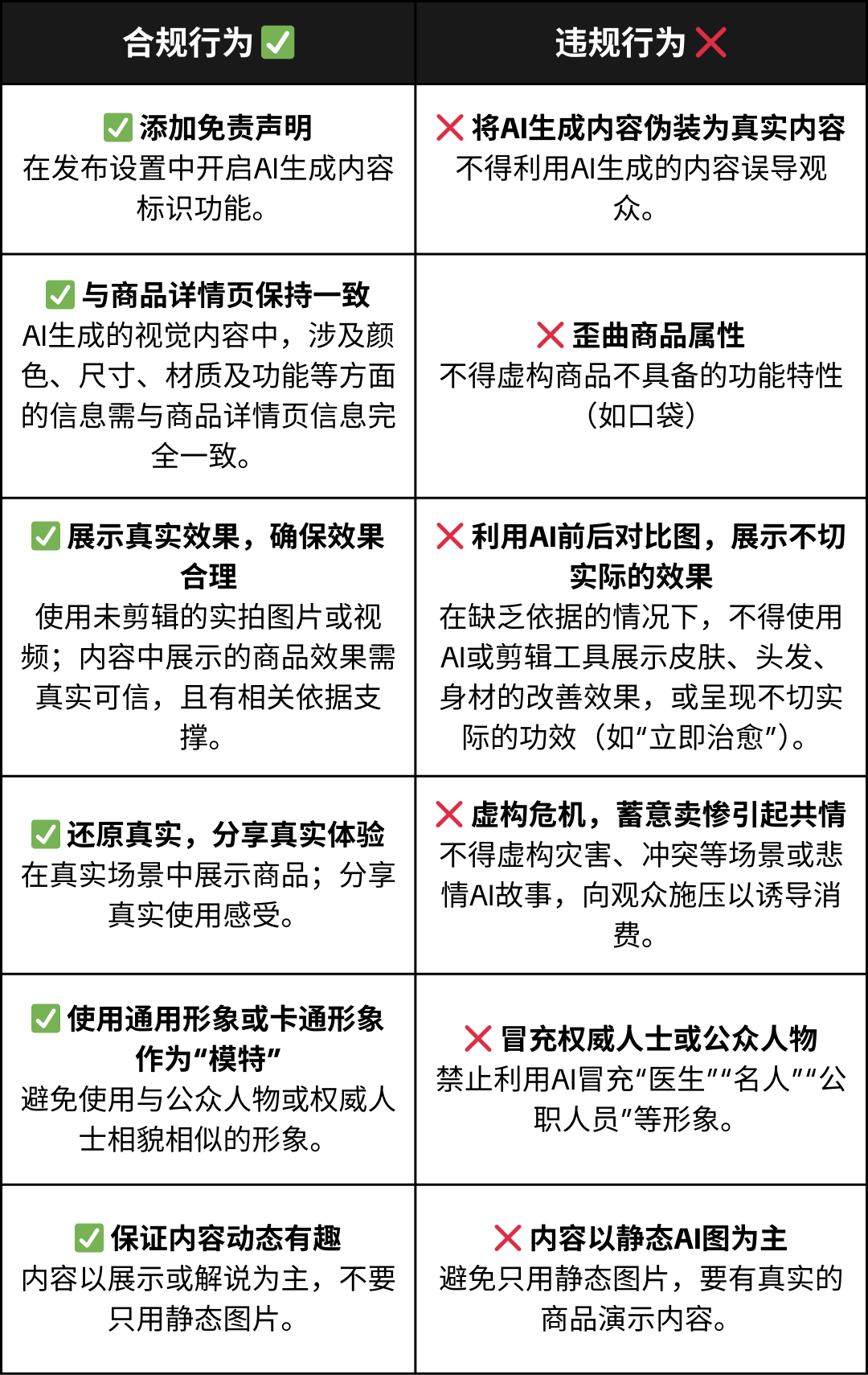
(AIGC创作注意事项)

不过,为了保障信息透明、建立用户信任,达人必须在内容中明确披露AI技术的使用情况——或在内容中披露(通过画面文字、水印、贴纸或在视频描述中添加说明,清晰标注内容为AI生成),或使用平台披露工具(发布内容时开启“AI生成内容”开关,内容左下角就会显示“内容经达人披露为AI生成”)。

除了达人主动披露,平台可能自动识别并标注部分AI生成内容。当AI生成内容包含特定技术元数据时,系统将自动添加“AI生成”标签。内容经平台自动标注后,达人无法移除该标签。但被自动披露的内容不会仅因该标签而受到额外处罚或流量限制。

与此同时,TikTok Shop在新规中明确指出,AI生成内容严格禁止的行为包括三大方面:1、误导性或失实内容(内容必须真实准确,不得包含夸大、虚假或误导性声明,包括商品的虚假宣传或虚假展示);2、未经授权使用第三方权利(未经合法授权,内容中不得使用第三方的肖像、声音、姓名、商标或其他知识产权);3、商品推广中的虚假呈现(商品推广视频必须清晰、准确地展示商品实物,不得使用AI替换商品或虚假展示,导致买家对实际商品产生误解)。

对于违反标准的AI生成内容及相关账号,平台将采取相应处罚措施。

一是账号维度的处罚。根据违规严重性与重复情况,账号可能面临不同级别的处罚:对于首次违规或影响较轻的违规,平台可能发出警告并要求整改;对于多次发布违规内容的账号,平台可能采取账号限制措施,包括限制发布功能、限流或永久关闭佣金提现权限;对于多次违规或单次违规造成重大负面影响的账号,可能适用额外处罚措施,包括暂停或永久撤销商品推广权限;对利用AI生成内容实施欺诈、传播违法信息或其他严重违法或不合规行为的账号,将予以永久封禁。

二是内容维度的处罚。利用虚构专业身份和虚假人设进行推广、使用AI制造虚假或夸大的商品效果、使用AI虚假展示商品(货不对板)等均为内容层级违规。对于内容违规,平台将根据违规严重程度采取限制内容传播或曝光、移除商品链接或购物车功能、扣除相应的达人健康分(CHR)等措施。

此外,值得一提的事,TikTok Shop发布AI生成内容规则,一个重要的背景是,当下,大量AI工具的出现为商家和达人降低了内容创作的门槛,但与此同时也不排除“泥沙俱下”的情况,平台需要在内容供给与用户体验保护之间寻求一个平衡。新规既承认了AI技术对填补内容缺口、降低创作门槛的客观价值,又通过明确披露义务和划定禁区来遏制乱象。对商家和达人而言,“AI内容合规能力”将是未来的一项核心竞争要素。


文章来源:亿邦动力

广告
微信
朋友圈

这么好看,分享一下?

朋友圈 分享

APP内打开

+1
+1
微信好友 朋友圈 新浪微博 QQ空间
关闭
收藏成功
发送
/140 0